Why You Might Need a NACS to J1772 Adapter
The North American Charging Standard (NACS) — originally Tesla's proprietary connector — has become the dominant EV charging plug in the United States. As of the 2025-2026 model years, nearly every major automaker has adopted NACS as the native charge port on new vehicles, from Ford and GM to Hyundai, Kia, Rivian, and Volvo. But millions of J1772-equipped EVs remain on the road, and most public Level 2 chargers at workplaces, apartments, and retail locations still use J1772 connectors.
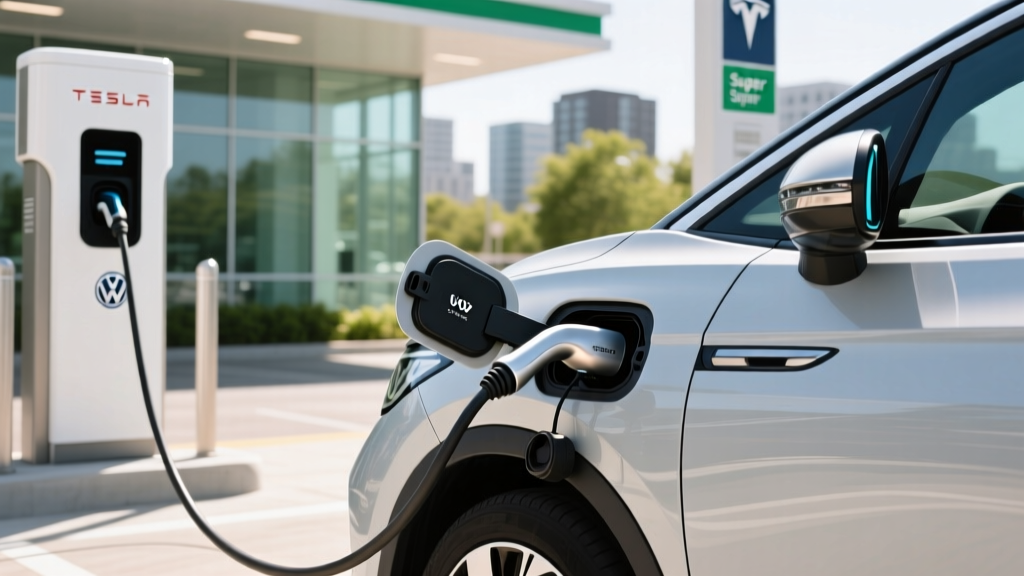
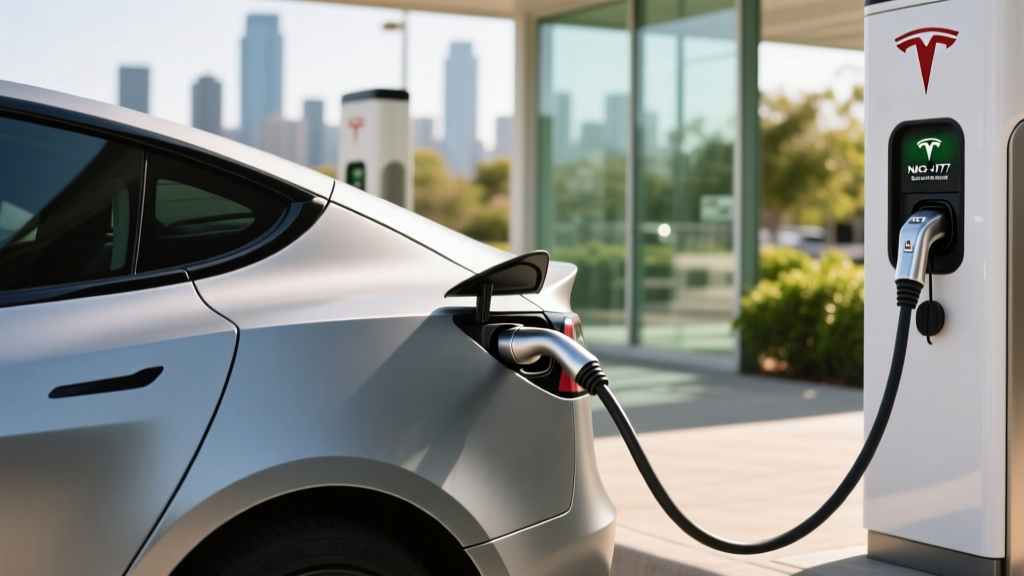
A NACS to J1772 adapter bridges this gap, letting you plug your J1772-equipped EV into NACS chargers — most critically, the Tesla Supercharger and Destination Charger networks. Whether you drive a 2024 Hyundai Ioniq 5 (pre-NACS port), a Chevrolet Bolt EV, a Nissan Leaf, or any other J1772-native vehicle, the right adapter unlocks access to over 25,000 additional charging stalls nationwide.
But not all adapters are equal. Some handle only Level 2 AC charging. Others support DC fast charging at full or reduced power. This guide covers exactly what works, what doesn't, and what it costs to charge across every scenario.
Charging Levels Explained: kW, Speeds, and Miles Per Hour
Before choosing an adapter, understand what each charging level delivers. The critical distinction: kW (kilowatts) measures power — how fast energy flows into your battery. kWh (kilowatt-hours) measures energy — how much your battery stores. Think of kW as the flow rate of a hose and kWh as the size of the bucket.
| Level | Voltage / Amps | Max Power (kW) | Miles of Range Added Per Hour | Typical Use Case |
|---|---|---|---|---|
| Level 1 | 120V / 12-16A | 1.4 - 1.9 kW | 3 - 5 mi/hr | Overnight trickle; emergency top-up |
| Level 2 | 240V / 16-80A | 3.8 - 19.2 kW | 14 - 75 mi/hr | Home charging; workplace; public AC stations |
| DC Fast Charging | 400-800V DC | 50 - 350+ kW | 150 - 1,000+ mi/hr (at peak) | Road trips; highway corridors; rapid top-ups |
For context, a 75 kWh battery (like the Ford Mustang Mach-E Extended Range) charging at a 48-amp Level 2 station (11.5 kW) goes from 10% to 80% in roughly 5.5 hours. That same battery on a 150 kW DC fast charger can reach 10-80% in about 28-35 minutes, depending on the vehicle's charge curve and battery temperature.
Most NACS to J1772 adapters are designed for Level 2 AC charging. A smaller, more expensive class of adapters supports DC fast charging — and this distinction matters enormously for road-trip planning.
Connector Compatibility: Which Adapter Fits Your EV?
The EV charging landscape currently runs on three primary connectors in North America. Here is how they map to vehicle brands:
| Connector | AC Charging | DC Fast Charging | Vehicle Brands (2025-2026 Models) |
|---|---|---|---|
| NACS (Tesla-style) | Yes | Yes | Tesla (all years), Ford (2025+), GM (2025+), Rivian (2025+), Hyundai/Kia (2026+), Volvo/Polestar (2025+) |
| J1772 (AC only) | Yes | No (needs CCS1 combo) | Pre-2025 non-Tesla EVs: Chevy Bolt, Nissan Leaf, older Hyundai/Kia, BMW i4/iX (pre-NACS), VW ID.4 (2021-2024) |
| CCS1 (Combo) | Yes (via J1772 upper portion) | Yes | Most non-Tesla EVs 2019-2024; being phased out in favor of NACS on new models |
| CHAdeMO | Yes (via J1772) | Yes (separate DC pins) | Nissan Leaf (all years), Mitsubishi Outlander PHEV (older); largely discontinued for new EVs |
DC Fast Charging Adapter Reality Check
Most affordable NACS to J1772 adapters ($100-$200) handle Level 2 AC only — typically rated for 48 amps / 11.5 kW or 60 amps / 14.4 kW. These let you use Tesla Destination Chargers, home wall connectors, and any NACS-wired Level 2 station.
For DC fast charging at Superchargers, you need a NACS-to-CCS1 DC adapter. These are more expensive ($250-$400) and have specific limitations:
- Peak power caps: Most adapters are rated for 200-250 kW maximum, but your vehicle's onboard charge curve is the real limiter. A Chevy Bolt EV, for example, peaks at only 55 kW DC regardless of adapter.
- Software compatibility: Tesla's Supercharger network requires handshake protocols. Ford, GM, and Rivian have native NACS ports with software integration. For J1772/CCS1 vehicles, Tesla's "NACS DC Adapter" program or third-party adapters like Lectron's DC model require the vehicle to be recognized by the Tesla app or an approved RFID card.
- Charging curve taper: Even with a 250 kW-rated adapter, expect sustained rates well below peak. A Hyundai Ioniq 5 (pre-NACS, CCS1 port) with a DC adapter might peak at 180-200 kW for 5-8 minutes before tapering to 100-120 kW through the 50-80% SoC range.
Home Charging Setup: Electrical Requirements and Installation Costs
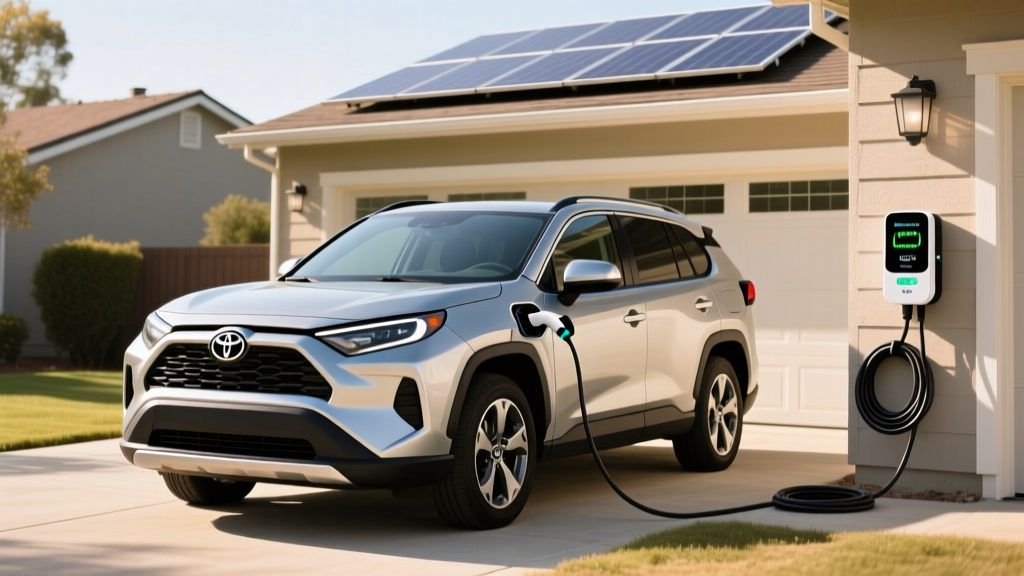
If you're installing a NACS wall connector at home and plan to use a NACS to J1772 adapter for your current vehicle, the electrical infrastructure is the same regardless of adapter. Here's what's involved:
Electrical Requirements
- Circuit: A dedicated 240V circuit on a double-pole breaker. For a 48-amp charger, the National Electrical Code (NEC) requires a 60-amp breaker (circuits must be rated at 125% of continuous load).
- Wire gauge: Typically 6 AWG copper for a 60-amp circuit; 4 AWG for longer runs (over 50 feet from panel) to minimize voltage drop.
- Panel capacity: Most modern 200-amp home panels can accommodate a 60-amp EV circuit. Older 100-amp panels or panels near capacity may require a service upgrade ($1,500-$3,500).
- GFCI protection: NEC 2020 and later require GFCI protection for EV circuits in garages. Many modern chargers have built-in GFCI, but your electrician will verify compliance.
Installation Cost Breakdown
| Component | Low Estimate | High Estimate | Notes |
|---|---|---|---|
| Level 2 Charger (hardware) | $350 | $750 | 48-amp NACS wall connector; smart WiFi models cost more |
| Electrician labor (standard install) | $500 | $1,200 | Short run from panel; surface-mount conduit; no drywall repair |
| Permit and inspection | $50 | $250 | Varies by municipality; some utilities bundle this |
| Electrical panel upgrade (if needed) | $1,500 | $3,500 | 100A to 200A service upgrade; not always required |
| NACS to J1772 adapter (Level 2) | $100 | $200 | 48A-60A rated; brands like Lectron, AKEEV, Teslogic |
| Total (no panel upgrade) | $900 | $2,150 | Most homes with 200A panel fall in this range |
| Total (with panel upgrade) | $2,400 | $5,650 | Older homes or high-load panels |
The IRS §30D clean vehicle credit does not cover home charger installation directly, but the separate Residential Clean Energy Credit (§25D) previously covered 30% of charger hardware and installation costs through 2032, subject to phase-down. Consult a tax professional for current-year eligibility, as rules have shifted under recent legislation.
Cost to Charge: Home, Public, and DC Fast Scenarios
One of the strongest arguments for EV ownership is fuel cost savings — but the savings depend heavily on where and when you charge. Here's a realistic breakdown using a 75 kWh battery (approximately 250-300 miles of range, depending on vehicle efficiency):
| Charging Scenario | Rate ($/kWh) | Cost for 75 kWh Fill | Cost Per Mile (est. 275 mi) | Gas Equivalent (25 MPG @ $3.50/gal) |
|---|---|---|---|---|
| Home off-peak (utility TOU rate) | $0.08 - $0.12 | $6.00 - $9.00 | $0.02 - $0.03 | $0.14/mi |
| Home standard rate | $0.14 - $0.18 | $10.50 - $13.50 | $0.04 - $0.05 | $0.14/mi |
| Public Level 2 (ChargePoint, EVgo L2) | $0.25 - $0.49 | $18.75 - $36.75 | $0.07 - $0.13 | $0.14/mi |
| DC Fast Charging (Electrify America, EVgo) | $0.35 - $0.56 | $26.25 - $42.00 | $0.10 - $0.15 | $0.14/mi |
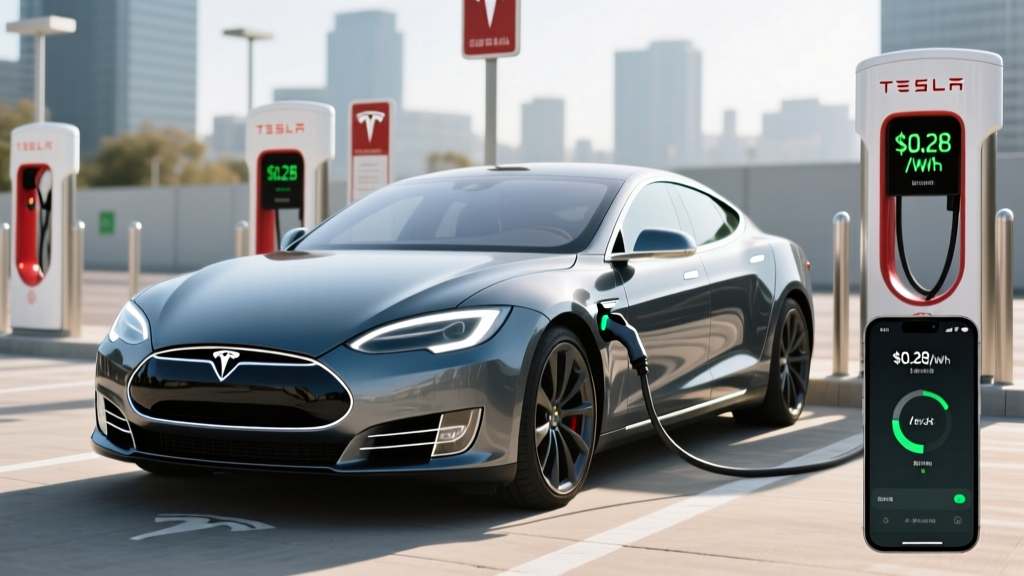
| Tesla Supercharger (NACS, member rate) | $0.25 - $0.38 | $18.75 - $28.50 | $0.07 - $0.10 | $0.14/mi |
Home charging on an off-peak rate delivers the most dramatic savings — typically 75-85% less per mile than gasoline. Public DC fast charging narrows the gap considerably, and in some markets with high utility demand charges (California, parts of the Northeast), DC fast charging can approach or exceed gasoline cost per mile on short trips. This is why home Level 2 installation remains the single most impactful ownership decision.
Equipment Recommendations: Chargers and Adapters
Here are specific, currently available products suited for a NACS-based home setup with J1772 adapter flexibility:
Level 2 NACS Wall Connectors
Tesla Wall Connector (NACS)
- Power: 48 amps / 11.5 kW (on 60A circuit)
- Cable length: 24 ft
- Smart features: WiFi, firmware updates, power sharing between units, Tesla app monitoring
- Price: ~$475
- Best for: Tesla and NACS-native vehicles; works with J1772 EVs via adapter
Emporia Level 2 Smart Charger (NACS)
- Power: 48 amps / 11.5 kW (configurable down to 16A)
- Cable length: 24 ft
- Smart features: WiFi, energy monitoring, solar integration, scheduling, load management
- Price: ~$399
- Best for: Budget-conscious buyers wanting granular energy data; solar-home integration
ChargePoint Home Flex (J1772 native, NACS via pigtail)
- Power: Up to 50 amps / 12 kW (adjustable)
- Cable length: 23 ft
- Smart features: WiFi, Alexa integration, detailed app analytics, flexible amperage
- Price: ~$649 (J1772 version); NACS pigtail ~$99
- Best for: Households with mixed J1772 and NACS vehicles
Grizzl-E Smart (J1772 or NACS)
- Power: 40 amps / 9.6 kW
- Cable length: 24 ft
- Smart features: OCPP-compatible, works with multiple apps, extreme cold rated (-40°F)
- Price: ~$449
- Best for: Cold-climate installations; outdoor mounting; rugged build
NACS to J1772 Adapters (Level 2 AC)
- Lectron NACS to J1772 Adapter (60A): Rated for 60 amps / 250V / 15 kW max. Compact, UL-listed. ~$150. Works with Tesla Destination Chargers and NACS Level 2 stations.
- AKEEV NACS to J1772 Adapter (48A): Rated for 48 amps / 11.5 kW. Good build quality, IP54 outdoor rating. ~$120.
- Tesla J1772 Adapter (official, NACS-to-J1772 direction): Tesla sells an official adapter rated at 48 amps. ~$150 via Tesla's shop. Best compatibility assurance for Tesla-branded chargers.
NACS to CCS1 DC Fast Charging Adapters
- Tesla NACS DC Adapter (for approved non-Tesla vehicles): Available to select CCS1 vehicles through Tesla's program. Supports up to 250 kW at V3 Superchargers. ~$250. Check Tesla's Non-Tesla Supercharger page for approved vehicle list.
- Lectron NACS to CCS1 DC Adapter: Third-party option rated for 200 kW. ~$350. Verify vehicle compatibility before purchase.
Charging Time Examples: 10% to 80% by Battery Size
Adapter compatibility is only useful if you know how long you'll wait. These estimates assume optimal battery temperature (preconditioned) and a charger capable of delivering the vehicle's peak rate:
| Vehicle (Battery kWh) | Level 2 @ 11.5 kW (NACS + Adapter) | DC Fast @ Peak Rate (10-80%) | DC Fast Charger Needed |
|---|---|---|---|
| Chevy Bolt EV (65 kWh) | ~4 hr 30 min | ~55 min @ 55 kW peak | 50+ kW CCS1 station |
| Hyundai Ioniq 5 (77.4 kWh) | ~5 hr 15 min | ~18 min @ 240 kW peak | 350 kW-capable station |
| Ford Mustang Mach-E ER (91 kWh usable) | ~6 hr 15 min | ~32 min @ 150 kW peak | 150+ kW station |
| VW ID.4 (82 kWh) | ~5 hr 40 min | ~29 min @ 170 kW peak | 175+ kW station |
| Nissan Leaf Plus (62 kWh) | ~4 hr 20 min | ~50 min @ 100 kW peak (CHAdeMO) | CHAdeMO station (no NACS adapter) |
Real-world caveat: DC fast charging times assume a preconditioned battery at moderate ambient temperature (60-80°F). In cold weather (below 32°F), expect 10-80% times to increase by 20-40% unless the vehicle actively preconditions the battery during navigation to the charger. The Hyundai Ioniq 5, for instance, may take 25-30 minutes in winter instead of 18. Additionally, charging slows significantly above 80% SoC — that final 20% can take as long as the first 80% due to the charge curve taper designed to protect battery health.
Safety and Code Considerations
Whether you're installing a NACS wall connector or using a portable adapter, safety compliance is non-negotiable:
- UL listing: Only use adapters and chargers that carry UL (Underwriters Laboratories) or ETL certification. Uncertified adapters from marketplace sellers may lack proper thermal protection and overcurrent safeguards.
- Outdoor rating: If your charger or adapter will be exposed to weather, verify an IP54 or higher ingress protection rating. NEMA 4 enclosure rating is required for outdoor-rated electrical connections.
- Dedicated circuit: Level 2 EV chargers must be on a dedicated circuit — sharing with other appliances is an NEC violation and a fire risk.
- Thermal monitoring: Quality adapters include built-in temperature sensors that throttle or halt charging if the connection overheats. This is critical at high amperage (48-60A) where resistive heating at the plug interface can be significant.
- Permit and inspection: Most jurisdictions require an electrical permit for EV charger installation. Skipping this can void homeowner's insurance coverage for electrical fires and cause issues during home sale inspections.
Frequently Asked Questions
How much does it cost to install a home EV charger?
A standard Level 2 home installation with a 60-amp circuit, 48-amp NACS wall connector, and short wire run typically costs $900 to $2,150 total (equipment + electrician + permit). If your home needs an electrical panel upgrade from 100A to 200A service, add $1,500 to $3,500. Always get at least two quotes from licensed electricians and verify they pull a permit.
How fast will each charging level add range?
Level 1 (120V) adds 3-5 miles per hour — adequate for PHEVs with small batteries but impractical for full BEVs. Level 2 at 48 amps (11.5 kW) adds roughly 35-45 miles per hour for a typical EV. DC fast charging at 150 kW can add 150-200+ miles in 15-20 minutes at peak rate, though the charge curve tapers substantially above 80% SoC.
Which connector and charger is compatible with my EV?
Check your vehicle's charge port: if it's a J1772 port (single round connector, pre-2025 non-Tesla), you can use any J1772 Level 2 charger natively, and any NACS Level 2 charger with a NACS-to-J1772 adapter. For DC fast charging, J1772 vehicles use CCS1 (the two extra DC pins below the J1772 portion) — you'd need a NACS-to-CCS1 DC adapter for Superchargers. CHAdeMO vehicles (Nissan Leaf) cannot use NACS adapters for DC charging; they require CHAdeMO stations.
How much does charging cost per mile vs gas?
Home charging on off-peak rates costs approximately $0.02-$0.03 per mile — roughly 80% less than gasoline at $3.50/gallon and 25 MPG ($0.14/mile). Public DC fast charging narrows the gap to $0.10-$0.15 per mile, sometimes approaching gas costs. For maximum savings, prioritize home Level 2 charging and use DC fast charging mainly for road trips.
What electrical upgrades might I need?
If your home has a 200-amp electrical panel with available breaker slots and remaining capacity, you likely need only a new 60-amp double-pole breaker and a wire run — no panel work required. If your panel is 100 amps, is already near capacity (common in older homes with electric heating, dryers, and ranges), or lacks physical space for new breakers, you may need a panel upgrade or a "smart panel" load-management device (like the Emporia VUE with automatic charger throttling) that avoids the full upgrade cost. A licensed electrician can perform a load calculation to determine your exact situation.
Can I use a NACS to J1772 adapter at Tesla Superchargers?
For Level 2 AC (Tesla Destination Chargers, home wall connectors): yes, a standard NACS-to-J1772 adapter works. For DC Superchargers: only if you have a DC-rated NACS-to-CCS1 adapter AND your vehicle is on Tesla's approved non-Tesla Supercharger list. As of early 2026, Tesla has opened Supercharger access to Ford, GM, Rivian, Volvo, and Polestar vehicles (which have native NACS ports or official adapters). Older CCS1-only vehicles may gain access through Tesla's Magic Dock built-in adapter at select stations — check the Tesla app for station compatibility.
Does using an adapter reduce charging speed?
For Level 2 AC, a properly rated adapter (48A or 60A) does not meaningfully reduce speed — the vehicle's onboard charger is the bottleneck (most accept 11.5 kW max, some 19.2 kW). For DC fast charging, an adapter adds a connection point that introduces slight resistive loss and thermal limits. In practice, the adapter's rated maximum (typically 200-250 kW) and the vehicle's own charge curve are the limiting factors, not the adapter itself.