Why Volkswagen Owners Are Looking at a Volkswagen Tesla Adapter
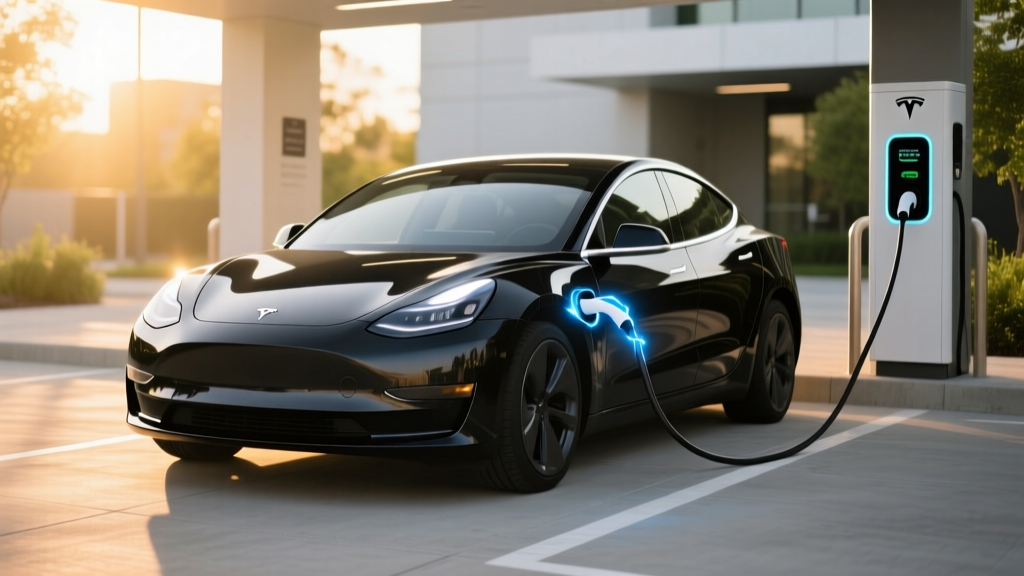
The North American Charging Standard (NACS) — originally Tesla's proprietary connector — has become the dominant charging connector in the United States. By 2026, Volkswagen has fully transitioned its North American EV lineup to NACS ports, starting with the refreshed ID.4 and the ID.7 sedan. But for owners of 2021–2024 Volkswagen ID.4 models equipped with CCS1 ports, accessing Tesla's expansive Supercharger network requires a Volkswagen Tesla adapter — specifically, a CCS1-to-NACS adapter that bridges the physical connector gap.
This guide covers everything you need to know about using a Volkswagen Tesla adapter on Superchargers, understanding charging levels and speeds, calculating home installation costs, and comparing the economics of charging versus gasoline. Whether you're a current ID.4 owner or evaluating a used CCS-equipped VW, the numbers below will help you plan your charging strategy with precision.
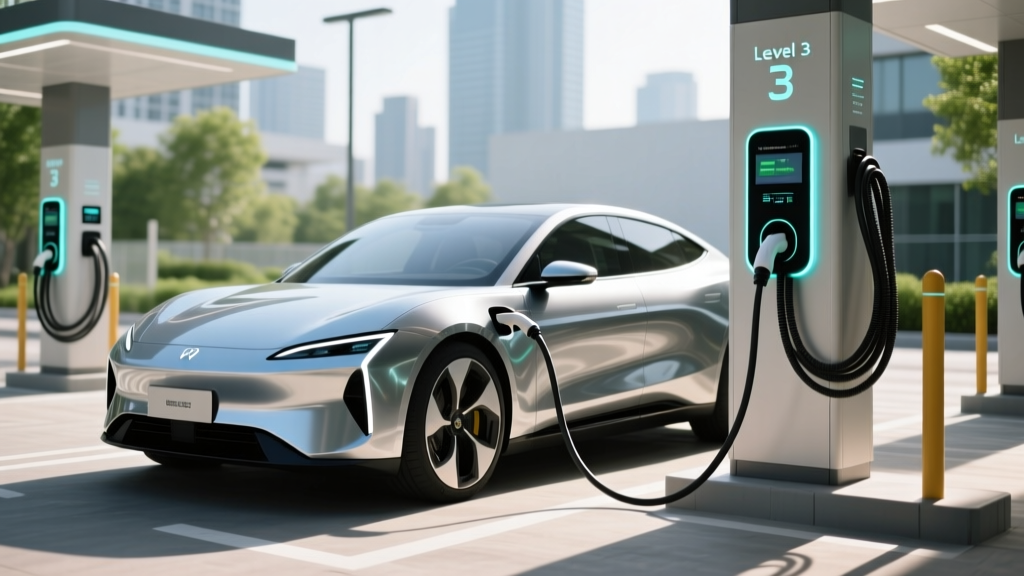
Charging Levels Explained: Speeds, Power, and Range Added
EV charging falls into three categories. The critical distinction: kW (kilowatts) measures power — the rate at which energy flows into your battery. kWh (kilowatt-hours) measures energy — the total capacity stored. Think of kW as the width of a pipe and kWh as the size of the tank.
| Level | Voltage | Max Power (kW) | Miles of Range Added per Hour | Typical Use Case |
|---|---|---|---|---|
| Level 1 | 120V AC | 1.4 kW | ~3–5 mi/hr | Overnight trickle, emergency top-up |
| Level 2 | 240V AC | 7.2–11.5 kW | ~22–37 mi/hr | Daily home/workplace charging |
| DC Fast Charging | 400V+ DC | 135–175 kW (peak) | ~150–220 mi in 30 min | Road trips, rapid top-ups |
For a Volkswagen ID.4 with its 82 kWh usable battery (77 kWh on earlier models), Level 2 at 11 kW will fully replenish the pack in roughly 7.5 hours — ideal for overnight charging. DC fast charging on the ID.4 peaks at 135 kW (2021–2023 models) or 175 kW (2024+ refresh), achieving a 10–80% charge in approximately 30–36 minutes under optimal conditions.
Connector Compatibility: NACS, CCS1, and the Volkswagen Tesla Adapter
The connector landscape has consolidated rapidly. Here's where Volkswagen models stand in 2026:
| Model / Year | Native Port | Tesla Supercharger Access | Adapter Required |
|---|---|---|---|
| ID.4 (2021–2023) | CCS1 | Via adapter | CCS1-to-NACS adapter (Volkswagen Tesla adapter) |
| ID.4 (2024+ refresh) | NACS | Native (with VW app activation) | None for NACS stations; NACS-to-CCS for older CCS stations |
| ID.7 (2025+) | NACS | Native | None for NACS stations |
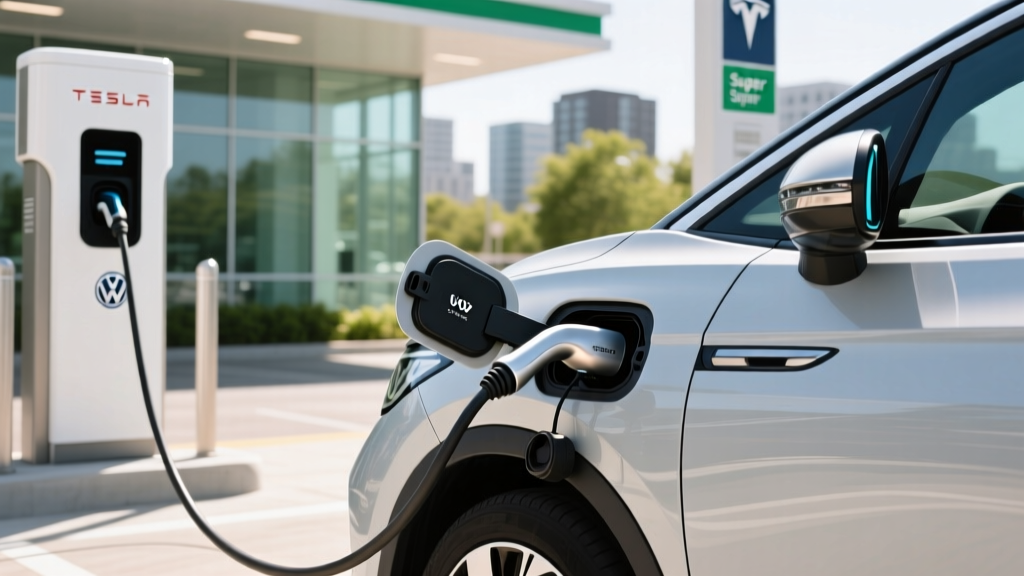
If you own a 2021–2023 ID.4, a CCS1-to-NACS adapter is your gateway to over 25,000 Tesla Supercharger stalls across North America. Volkswagen has offered an official adapter through its dealerships, and third-party options from reputable manufacturers like Lectron and A2Z EV are also available. Prices typically range from $150–$250.
When using a Volkswagen Tesla adapter at a Supercharger, the session is initiated through the Tesla app or a Supercharger activation RFID card (depending on VW's integration status). Volkswagen's ID.4 owner portal provides current instructions for Supercharger network access.
How Much Does It Cost to Install a Home EV Charger?
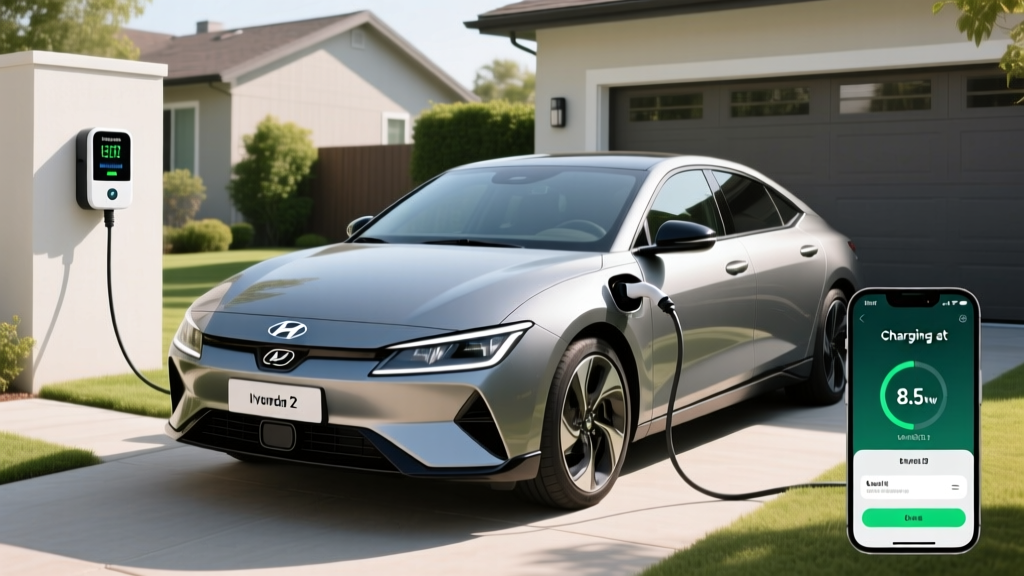
Home Level 2 charging is the backbone of practical EV ownership. Most Volkswagen EV owners install a 240V, 40-amp or 48-amp dedicated circuit to support 9.6–11.5 kW charging. Here's a realistic cost breakdown for 2026:
| Component | Low Estimate | High Estimate | Notes |
|---|---|---|---|
| Level 2 Charger (hardware) | $350 | $750 | 40A–48A smart charger, 25ft cable |
| Electrician labor | $500 | $1,500 | Depends on run length, wall type, conduit |
| Electrical permit | $50 | $200 | Varies by municipality |
| Panel upgrade (if needed) | $1,500 | $4,000 | Required if panel is 100A or has no spare slots |
| Total (no panel upgrade) | $900 | $2,450 | Typical scenario for 200A panel homes |
| Total (with panel upgrade) | $2,400 | $6,450 | Older homes with 100A service |
What Electrical Upgrades Might I Need?
A Level 2 charger drawing 40A continuous requires a dedicated 50A breaker (the National Electrical Code mandates circuits be rated 125% of continuous load). If your electrical panel is a modern 200A service with available breaker slots and sufficient load capacity, installation is straightforward. However, homes built before 1990 often have 100A panels that cannot safely support an additional 40–48A load alongside existing appliances.
Signs you may need a panel upgrade:
- Your panel is rated 100A or less (check the main breaker)
- No available breaker slots remain
- Your electrician's load calculation shows the panel is near capacity
- You have Federal Pacific or Zinsco panels (known hazards — replacement recommended regardless)
Some homeowners opt for a load-management device (such as the Emporia Smart Load Management system) instead of a full panel upgrade. These devices dynamically throttle charger amperage when other high-draw appliances are running, allowing a 40A charger on a panel that might otherwise not support it. Cost: $200–$400 additional hardware.
Safety and Code Considerations
Every Level 2 installation must meet NEC Article 625 requirements:
- Dedicated circuit: The charger cannot share a breaker with other outlets or appliances
- GFCI protection: Required for outdoor installations and garages in most jurisdictions (2023 NEC update)
- Outdoor rating: If mounted outside, the charger and receptacle must carry a NEMA 4 or NEMA 4X rating for weather resistance
- Hardwired vs. plug: Hardwired units (no plug) eliminate the need for a GFCI breaker in some jurisdictions and allow higher amperage (48A+); plug-in units (NEMA 14-50) offer portability but require GFCI protection per current code
- Permit and inspection: Required in virtually all jurisdictions — skipping this voids homeowner's insurance coverage for electrical fires
Level 2 Charger Equipment Recommendations for Volkswagen EVs
Based on real-world testing with the ID.4 and ID.7, here are three chargers that pair well with Volkswagen's charging architecture:
Emporia Vue Smart Charger
Power: 48A / 11.5 kW (240V)
Connector: NACS (J3400)
Cable: 24 ft
Smart features: Wi-Fi, scheduling, solar integration, energy monitoring, load management
Price: ~$399
Best for: Budget-conscious owners wanting full smart features and energy tracking
ChargePoint Home Flex
Power: Configurable 16A–50A / up to 12 kW (240V)
Connector: NACS or J1772 (configurable)
Cable: 23 ft
Smart features: Wi-Fi, app scheduling, Alexa integration, amperage adjustment via dip switches
Price: ~$549
Best for: Flexibility across circuit sizes; adjust amperage to match your panel
Tesla Wall Connector
Power: 48A / 11.5 kW (240V)
Connector: NACS native
Cable: 24 ft
Smart features: Wi-Fi, OTA updates, power sharing (up to 6 units on one circuit), access control
Price: ~$420
Best for: VW owners with NACS-port vehicles (2024+ ID.4, ID.7) who also use Superchargers
All three chargers will fully charge a Volkswagen ID.4 (82 kWh battery) from 10–100% overnight in approximately 7–8 hours at full amperage. For CCS1-port VW owners using a Volkswagen Tesla adapter primarily for road trips, a home charger with a J1772 or CCS-compatible connector is more practical for daily use.
Charging Cost vs. Gasoline: The Per-Mile Math
One of the strongest arguments for EV ownership is the fuel-cost advantage. Here's how charging a Volkswagen ID.4 compares to fueling a comparably sized gas SUV (28 MPG combined, like a VW Tiguan) at 2026 energy prices:
| Scenario | Rate | Cost per kWh | ID.4 Cost/Mile (3.2 mi/kWh) | Gas SUV Cost/Mile (28 MPG, $3.50/gal) |
|---|---|---|---|---|
| Home, off-peak utility rate | $0.11/kWh | $0.11 | $0.034 | $0.125 |
| Home, average US rate | $0.17/kWh | $0.17 | $0.053 | $0.125 |
| Public Level 2 (ChargePoint, EVgo) | $0.30/kWh | $0.30 | $0.094 | $0.125 |
| DC Fast (Tesla Supercharger avg.) | $0.35/kWh | $0.35 | $0.109 | $0.125 |
| DC Fast (Electrify America peak) | $0.48/kWh | $0.48 | $0.150 | $0.125 |
At home off-peak rates, the ID.4 costs roughly 73% less per mile than the gas equivalent. Even on DC fast chargers at average Supercharger rates, EV charging remains cheaper — though the gap narrows at peak pricing networks like Electrify America's Guest rate.
The ID.4 achieves approximately 3.2 miles per kWh (104 MPGe combined, per fueleconomy.gov). Multiply your local electricity rate by the inverse (0.3125 kWh/mi) to calculate your personal cost per mile.
Using the Volkswagen Tesla Adapter at Superchargers: What to Expect
When you connect a CCS1-to-NACS adapter to your 2021–2023 ID.4 at a Tesla Supercharger, here's the real-world experience:
- Initiating a session: Plug the adapter into the Supercharger cable, then into your ID.4's CCS port. Open the Tesla app (you'll need an account linked to your VIN via Volkswagen's Supercharger access program) or tap the RFID card to the station's reader.
- Charging speed: The ID.4 (2021–2023) will peak at approximately 135 kW at V3 Superchargers. Expect 10–80% in roughly 34–38 minutes. The charge curve tapers from ~135 kW at 10% SoC to ~50 kW at 80%.
- Station compatibility: Most V3 Superchargers (250 kW stalls) work seamlessly. Some older V2 Superchargers (150 kW, shared stalls) may not activate with non-Tesla vehicles — check the Tesla app for "open to non-Tesla" designation.
- Cable reach: Tesla's Supercharger cables are relatively short. The adapter adds ~3–4 inches of length. In some tight parking configurations, you may need to position the ID.4's charge port (rear passenger side) close to the stall.
- Level 1 (120V, 1.4 kW): 0–80% in ~47 hours (emergency use only)
- Level 2 (240V, 11 kW): 10–80% in ~5.2 hours
- DC Fast (135 kW peak, 2021–2023): 10–80% in ~36 minutes
- DC Fast (175 kW peak, 2024+): 10–80% in ~28 minutes
Frequently Asked Questions
Is the Volkswagen Tesla adapter safe for DC fast charging?
Yes, provided you use a properly rated adapter designed for DC fast-charging currents (up to 500A). Volkswagen's official CCS1-to-NACS adapter and reputable third-party options (Lectron, A2Z EV) are engineered and tested for this purpose. Avoid unbranded or suspiciously cheap adapters from unknown marketplaces — they may lack thermal protection or adequate pin plating.
Can I use a Tesla Wall Connector at home with my CCS1-port ID.4?
Not directly. The Tesla Wall Connector outputs a NACS plug. To charge a CCS1-port ID.4 at home, you'd need a NACS-to-J1772 adapter (for AC charging only — these do not support DC fast charging). Alternatively, choose a ChargePoint Home Flex or Emporia charger with a J1772 connector for native compatibility.
Does the Volkswagen ID.4 qualify for the federal EV tax credit?
The 2026 ID.4, assembled at Volkswagen's Chattanooga, Tennessee plant, is eligible for up to $7,500 under IRS §30D, subject to buyer income caps ($150K single / $300K joint), MSRP caps ($55K for SUVs), and critical-mineral/battery-component sourcing requirements. The credit can be transferred to the dealer at point of sale for an instant price reduction. Always verify current-year eligibility on the IRS website or with a tax professional, as sourcing rules tighten annually.
How fast will each charging level add range to my ID.4?
Level 1 (120V) adds roughly 3–5 miles of range per hour. Level 2 (240V, 48A) adds approximately 33–37 miles per hour. DC fast charging at 135 kW can add up to 150+ miles in 20 minutes under optimal conditions. Real-world speeds depend on battery temperature, State of Charge, and ambient conditions.
Will Volkswagen's transition to NACS make my CCS1 adapter obsolete?
No. CCS1 infrastructure remains widely available through Electrify America, EVgo, and other networks. Your adapter gives you access to both CCS1 and NACS networks. As more stations add NACS cables, you'll have more options, not fewer. The CCS1-to-NACS adapter is a bridge, not a dead end.