If you own a non-Tesla EV with a CCS1 charge port, the charging landscape shifted dramatically in 2024-2025. Ford, Rivian, GM, Volvo, and dozens of other automakers adopted the North American Charging Standard (NACS) for new vehicles — and opened access to Tesla's Supercharger network via adapters. A NACS-to-CCS adapter is now the single most important accessory for CCS-equipped EV owners who want reliable, widespread DC fast charging.
This guide covers everything you need to know: which adapters work, how fast you'll actually charge, what it costs, and how this fits into the broader home and public charging ecosystem.
Why the NACS-to-CCS Adapter Matters in 2026
Through 2025, most automakers transitioned new models to the NACS connector (the same physical plug Tesla has used since 2012). But millions of CCS1-equipped EVs remain on the road — models like the Hyundai Ioniq 5, Kia EV6, Ford Mustang Mach-E (pre-2025), Volkswagen ID.4, and BMW i4. These vehicles can't physically plug into a NACS/Supercharger stall without an adapter.
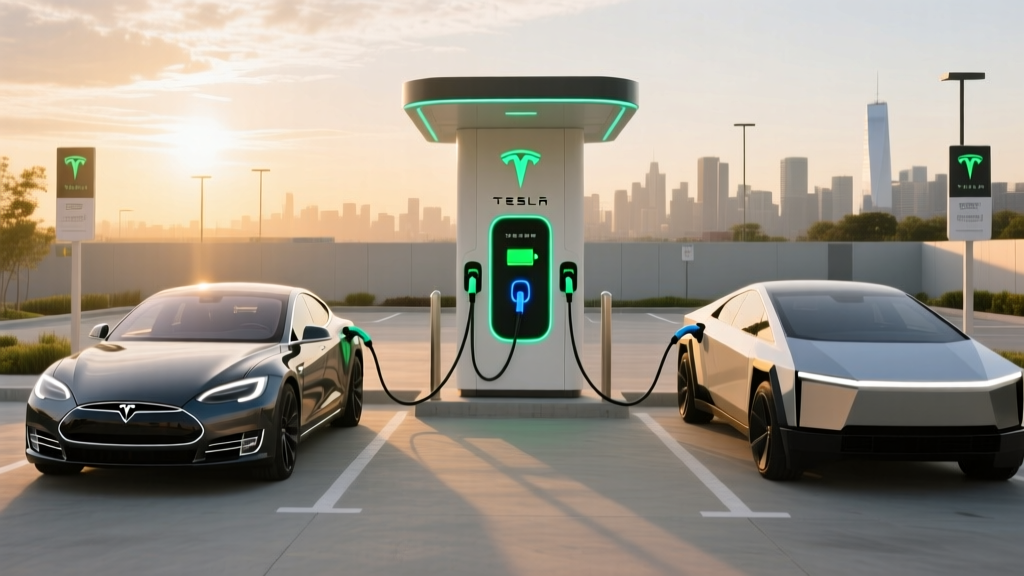
Meanwhile, Tesla's Supercharger network — now open to non-Tesla vehicles at many locations — offers over 25,000 stalls in North America with industry-leading uptime (consistently above 97%, compared to roughly 80-85% for many CCS networks according to J.D. Power studies). The NACS-to-CCS adapter bridges this gap, letting older CCS vehicles tap into the most reliable fast-charging infrastructure available.
Charging Levels Explained: Speeds and Real-World Range Added
Whether you're using an adapter at a Supercharger or plugging in at home, understanding the three charging levels is essential for planning.
| Level | Voltage | Power (kW) | Miles of Range Added per Hour | Typical Use |
|---|---|---|---|---|
| Level 1 | 120V AC | 1.0–1.4 kW | 3–5 mi/hr | Overnight top-up, emergency |
| Level 2 | 240V AC | 3.3–19.2 kW | 12–75 mi/hr | Home daily charging, workplace |
| DC Fast Charge | 400–800V DC | 50–350 kW | 150–1,000+ mi/hr (peak) | Road trips, rapid top-ups |
Real-world context: A Level 2 home charger at 11.5 kW (48A on a 60A circuit) adds roughly 40-44 miles of range per hour for a typical midsize EV like the Ioniq 5. That means an overnight session from 10 PM to 6 AM easily replenishes 300+ miles — more than most drivers use in a week.
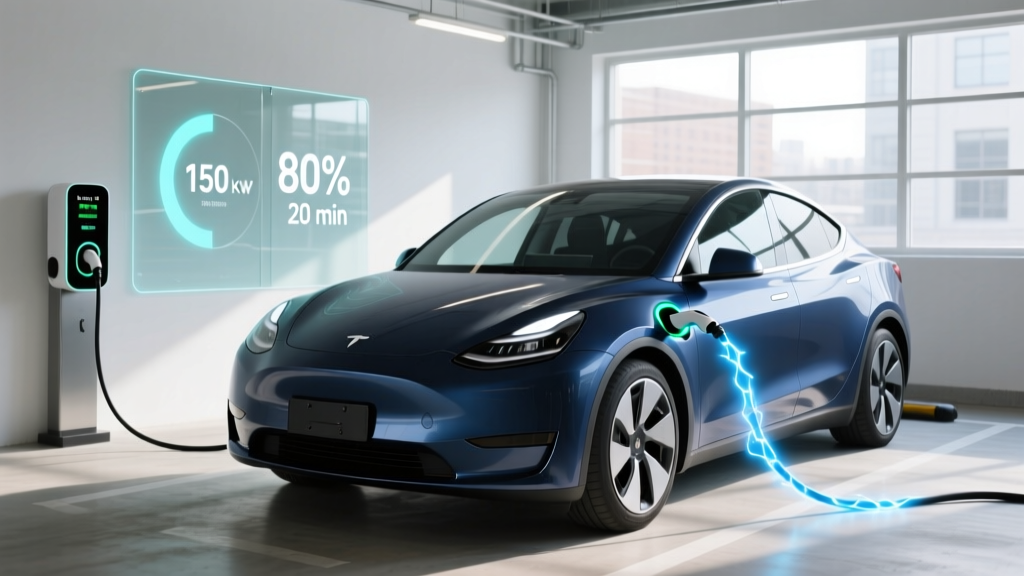
DC fast charging is where the NACS-to-CCS adapter earns its keep. At a Tesla V3 Supercharger (250 kW peak), a Hyundai Ioniq 5 with its 77.4 kWh battery and 800V architecture can charge from 10-80% in approximately 18 minutes — assuming the adapter supports the full power delivery and battery preconditioning is active.
Connector Compatibility: Which Adapter Do You Need?
North America currently has three active DC fast-charging connector standards. Here's how they map to vehicles and infrastructure:
| Connector | Also Known As | Vehicle Examples | Network Access |
|---|---|---|---|
| NACS | Tesla connector, J3400 | Tesla (all), Ford F-150 Lightning (2025+), Rivian R1T/R1S (2025+), GM Ultium vehicles (2025+) | Tesla Supercharger, Electrify America (select), EVgo (select) |
| CCS1 | Combo | Hyundai Ioniq 5/6, Kia EV6/EV9, VW ID.4, BMW i4/iX, pre-2025 Mach-E | Electrify America, EVgo, ChargePoint, Ionity (EU) |
| CHAdeMO | — | Nissan Leaf (legacy) | Limited; being phased out in North America |
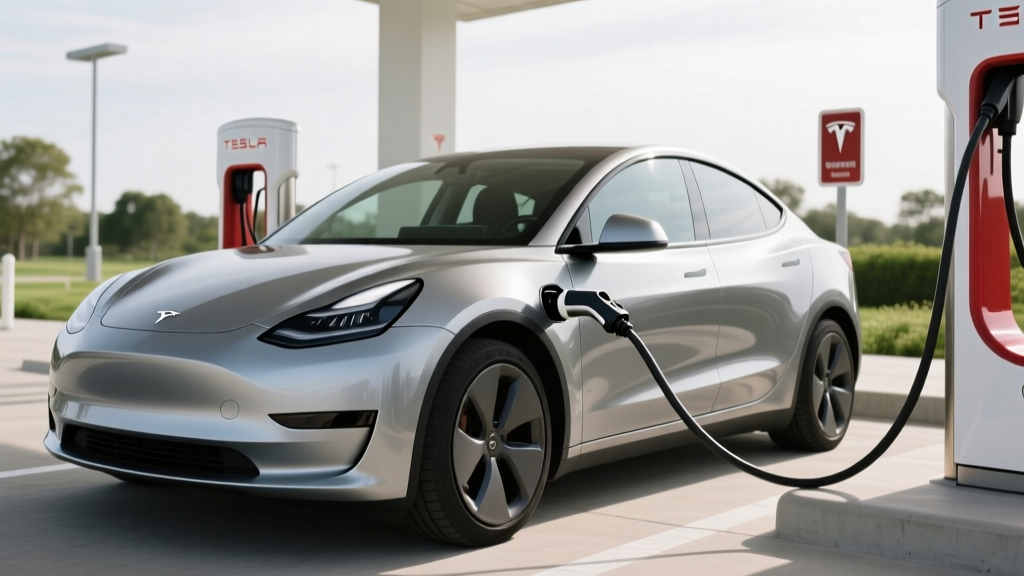
The NACS-to-CCS adapter specifically: This adapter has a NACS plug on one end (goes into the Supercharger cable) and a CCS1 vehicle inlet on the other (plugs into your car's charge port). It enables CCS1 vehicles to charge at NACS-equipped DC fast chargers — primarily Tesla Superchargers.
Several manufacturers and third parties now offer these adapters:
- Tesla NACS Adapter (official): Sold through Tesla's shop for approximately $199-$249. Rated for up to 250 kW DC. Compatible with vehicles approved through Tesla's "Charge Your Non-Tesla" app or OEM partnership agreements.
- Ford Fast Charging Adapter: Provided complimentary to many Mach-E and F-150 Lightning owners (model years 2021-2024). Manufactured by Tesla, rated to 250 kW.
- Rivian NACS Adapter: Shipped to R1T and R1S owners with CCS ports. Rated to 250 kW.
- Third-party options (Lectron, A2Z EV, etc.): Typically $130-$200, rated 150-250 kW. Verify UL/ETL certification before purchasing — uncertified adapters carry fire and equipment-damage risk.
Charging Time Examples: 10-80% With and Without an Adapter
DC fast charging doesn't deliver peak power for the entire session. The charge curve tapers significantly above 80% State of Charge (SoC) to protect battery health. Here are realistic 10-80% times for popular CCS vehicles using a NACS-to-CCS adapter at a 250 kW Supercharger:
| Vehicle | Battery (kWh usable) | Peak Charge Rate | Adapter-Limited Rate | 10-80% Time (approx.) |
|---|---|---|---|---|
| Hyundai Ioniq 5 (2024) | 77.4 kWh (NMC) | 240 kW | 250 kW (no bottleneck) | ~18 min |
| Kia EV6 GT-Line (2024) | 77.4 kWh (NMC) | 240 kW | 250 kW (no bottleneck) | ~18 min |
| VW ID.4 Pro S (2024) | 77 kWh (NMC) | 135 kW | 135 kW (vehicle-limited) | ~29 min |
| Ford Mach-E Ext. Range (2023) | 91 kWh (NMC) | 150 kW | 150 kW (adapter-limited if 150kW adapter) | ~38 min |
| BMW i4 eDrive40 (2024) | 81.5 kWh (NMC) | 200 kW | 200 kW (no bottleneck) | ~31 min |
Preconditioning matters: Vehicles like the Ioniq 5 and EV6 achieve their fastest charge rates only when the battery is preconditioned (warmed to optimal temperature). If you navigate to a charger using the car's built-in route planner, preconditioning typically activates automatically. Arriving at a Supercharger with a cold battery — especially in winter — can add 5-10 minutes to your session and reduce peak kW by 30-50%.
Cost to Charge: Home vs. Public vs. Supercharger
One of the strongest arguments for EV ownership is lower per-mile energy cost. But the savings vary enormously depending on where and when you charge.
| Scenario | Rate ($/kWh) | Cost per Mile* | vs. Gas at $3.50/gal (30 MPG) |
|---|---|---|---|
| Home Level 2 (off-peak utility rate) | $0.08–$0.13 | $0.024–$0.039 | Save 68–80% |
| Home Level 2 (standard residential) | $0.14–$0.18 | $0.042–$0.054 | Save 54–65% |
| Tesla Supercharger (non-Tesla pricing) | $0.30–$0.48 | $0.090–$0.144 | Save 0–23% |
| Electrify America / EVgo (DC fast) | $0.32–$0.56 | $0.096–$0.168 | Cost up to 44% MORE |
| Gasoline vehicle (30 MPG avg) | — | $0.117 | Baseline |
*Based on an EV efficiency of 3.0 miles/kWh (approximately 112 MPGe combined), which is typical for a midsize crossover EV like the Ioniq 5 or Mach-E. More efficient vehicles (e.g., Tesla Model 3 at 4.0 mi/kWh) will cost less per mile; heavier vehicles (e.g., F-150 Lightning at 2.0 mi/kWh) will cost more.
The takeaway: home charging is dramatically cheaper than gas. Public DC fast charging — including Superchargers accessed via a NACS-to-CCS adapter — can approach or even exceed gas costs per mile, especially at peak pricing. The adapter's value isn't cost savings on public charging; it's access and reliability when you need it on road trips.
Home Charger Installation: Costs, Electrical Requirements, and Upgrades
Most EV owners do 80-90% of their charging at home. Installing a dedicated Level 2 charger is the single highest-impact upgrade for daily EV ownership. Here's what's involved.
Electrical Requirements
A typical Level 2 home charger requires:
- Voltage: 240V AC (same as an electric dryer or oven)
- Amperage: 40A circuit for a 32A charger, or 60A circuit for a 48A charger (NEC code requires circuits rated at 125% of continuous load)
- Dedicated circuit: The charger must have its own breaker — no sharing with other appliances
- GFCI protection: Required by NEC 2020/2023 for outdoor outlets; many hardwired installations include this in the breaker
Panel Upgrade Considerations
Many older homes have 100A electrical service panels. Adding a 60A EV charger circuit may exceed available capacity, requiring a panel upgrade to 200A — a significant cost. Homes built after 2000 typically have 200A panels with adequate spare capacity. A licensed electrician will perform a load calculation during the site assessment to determine if an upgrade is needed.
| Component | Cost Range | Notes |
|---|---|---|
| Level 2 charger unit (32A–48A) | $300–$700 | Hardwired or NEMA 14-50 plug |
| Electrical permit | $50–$250 | Varies by municipality |
| Electrician labor (standard install) | $500–$1,500 | Panel to charger: up to 50ft run |
| Electrical panel upgrade (if needed) | $1,500–$3,500 | 100A to 200A service upgrade |
| Total (no panel upgrade) | $850–$2,450 | Most newer homes |
| Total (with panel upgrade) | $2,350–$5,950 | Older homes with 100A service |
Federal incentive: The residential clean energy credit (IRS Form 5695) may cover 30% of charger equipment and installation costs, up to $1,000. Check current-year eligibility on irs.gov, as rules and caps are subject to legislative changes.
Recommended Home Chargers for 2026
For CCS-vehicle owners who also plan to use a NACS-to-CCS adapter on the road, your home charger should use the CCS1 connector (J1772 for AC Level 2, with the CCS DC pins not needed at home). Here are top picks:
ChargePoint Home Flex
- Power: Up to 12 kW (50A circuit, 40A continuous) — configurable down to 16A
- Connector: J1772 (Level 2 AC, fits all CCS vehicles)
- Cable length: 23 feet
- Smart features: Wi-Fi, scheduling, energy tracking, Alexa integration
- Price: ~$550–$650
- Best for: Flexible amperage for homes with limited panel capacity
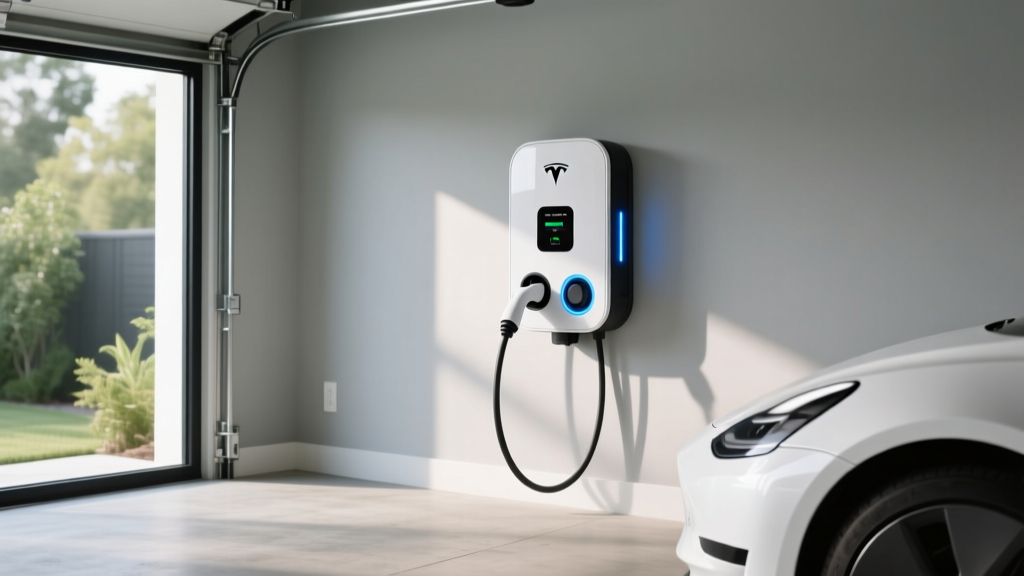
Tesla Wall Connector (Universal)
- Power: Up to 11.5 kW (60A circuit, 48A continuous)
- Connector: NACS with integrated J1772 adapter (charges both Tesla and CCS vehicles)
- Cable length: 24 feet
- Smart features: Wi-Fi, OTA updates, power sharing between multiple units
- Price: ~$600
- Best for: Two-EV households with one Tesla and one CCS vehicle
Grizzl-E Smart
- Power: Up to 10 kW (40A circuit) or 12 kW (50A)
- Connector: J1772
- Cable length: 24 feet
- Smart features: OCPP-compatible, works with multiple energy management platforms
- Price: ~$450–$550
- Best for: Budget-conscious buyers wanting robust build quality (IP67, -40°C rated)
Safety, Code, and Installation Best Practices
EV charging involves sustained high-current draw — often 8+ hours at a time. Cutting corners on installation risks fire, equipment damage, and insurance claim denial.
- Always hire a licensed electrician. DIY EV charger installation voids most equipment warranties and may violate local code. Verify your electrician has EV charger installation experience.
- Dedicated circuit is non-negotiable. Sharing a circuit with a dryer, HVAC, or other high-draw appliance creates overload risk.
- Hardwired vs. plug: Hardwired installations (no plug) are generally preferred for 48A+ chargers. NEMA 14-50 receptacles are acceptable for 40A circuits but must be installed with proper torque and an industrial-grade receptacle (not a residential-grade unit from a big-box store).
- Outdoor rating: If your charger is installed outside, ensure the unit is rated IP65 or higher, and the electrical box (if applicable) is weatherproof with an in-use cover.
- GFCI breaker: Required for outdoor receptacle installations per NEC 2020+. Hardwired units may or may not require GFCI depending on local code interpretation — your electrician will know.
- Permit and inspection: Most jurisdictions require an electrical permit and post-installation inspection. Skipping this can invalidate home insurance coverage for electrical fires.
Frequently Asked Questions
How much does it cost to install a home EV charger?
A standard Level 2 home charger installation costs $850–$2,450 if your electrical panel has sufficient capacity. If a panel upgrade from 100A to 200A is needed, total costs range from $2,350–$5,950. The charger unit itself runs $300–$700; the rest is labor, materials, and permits.
How fast will each charging level add range?
Level 1 (120V) adds 3–5 miles per hour. Level 2 (240V) adds 12–75 miles per hour depending on amperage. DC fast charging (50–350 kW) can add 150–1,000+ miles per hour at peak, though charge curves taper significantly above 80% SoC. For practical planning, a 48A Level 2 charger adds roughly 40–44 miles per hour for a midsize EV.
Which connector and charger is compatible with my EV?
If your EV was built before 2025 and isn't a Tesla, it almost certainly has a CCS1 port. Use a J1772 connector for home Level 2 charging and CCS1 for public DC fast charging. A NACS-to-CCS adapter lets you access Tesla Superchargers. If your EV is a 2025+ model from Ford, GM, Rivian, or Volvo, it likely has a native NACS port and needs no adapter.
How much does charging cost per mile vs. gas?
Home charging at off-peak rates ($0.08–$0.13/kWh) costs roughly $0.024–$0.039 per mile — a 68–80% savings vs. gas at $3.50/gallon and 30 MPG ($0.117/mile). Public DC fast charging ($0.30–$0.56/kWh) costs $0.09–$0.17 per mile, which can approach or exceed gas costs. The NACS-to-CCS adapter's value is access and reliability, not necessarily cost savings at public chargers.
What electrical upgrades might I need?
Homes with 100A electrical service panels often need a 200A upgrade ($1,500–$3,500) to safely support a 48A Level 2 charger. Homes with 200A panels typically have sufficient spare capacity. Your electrician will perform a load calculation per NEC Article 220 to determine your panel's available capacity. Some utilities offer load-management devices that let you avoid a panel upgrade by limiting charger draw when other appliances are running.
Can I use a third-party NACS-to-CCS adapter, or do I need the OEM version?
OEM adapters (from Tesla, Ford, or Rivian) are the safest choice — they're tested and certified for the specific vehicles they support. Third-party adapters from brands like Lectron can work but must carry UL or ETL certification. Avoid unbranded or uncertified adapters sold on marketplace sites; they lack thermal protection and can damage your vehicle's charge port or the Supercharger stall.
Will using a NACS-to-CCS adapter void my vehicle's battery warranty?
No, provided the adapter is properly certified and doesn't exceed your vehicle's rated charge parameters. Federal law (the Magnuson-Moss Warranty Act) prevents manufacturers from voiding warranties solely for using third-party accessories. However, if an uncertified adapter causes documented damage to the charge port or onboard charging system, the repair may not be covered.