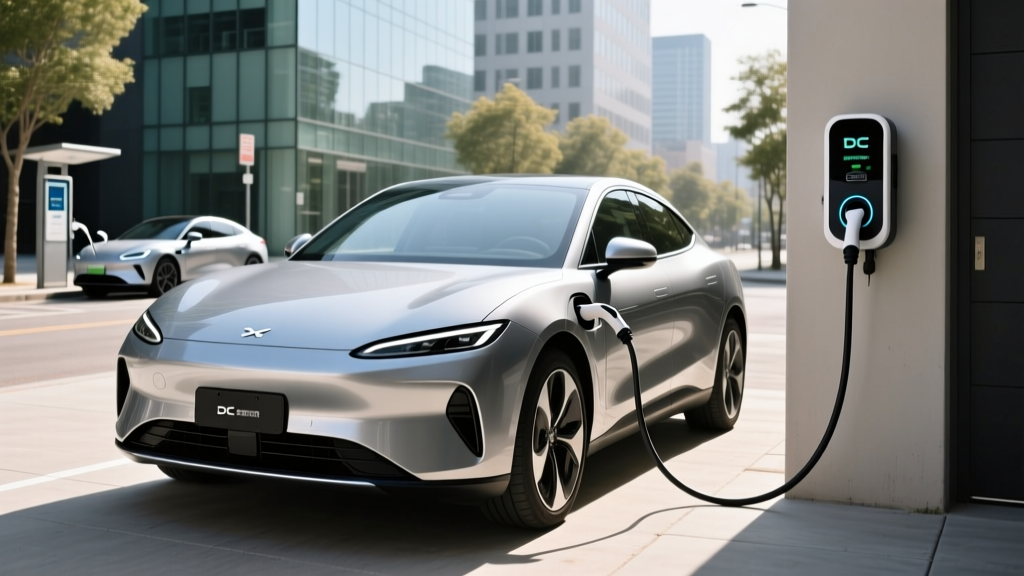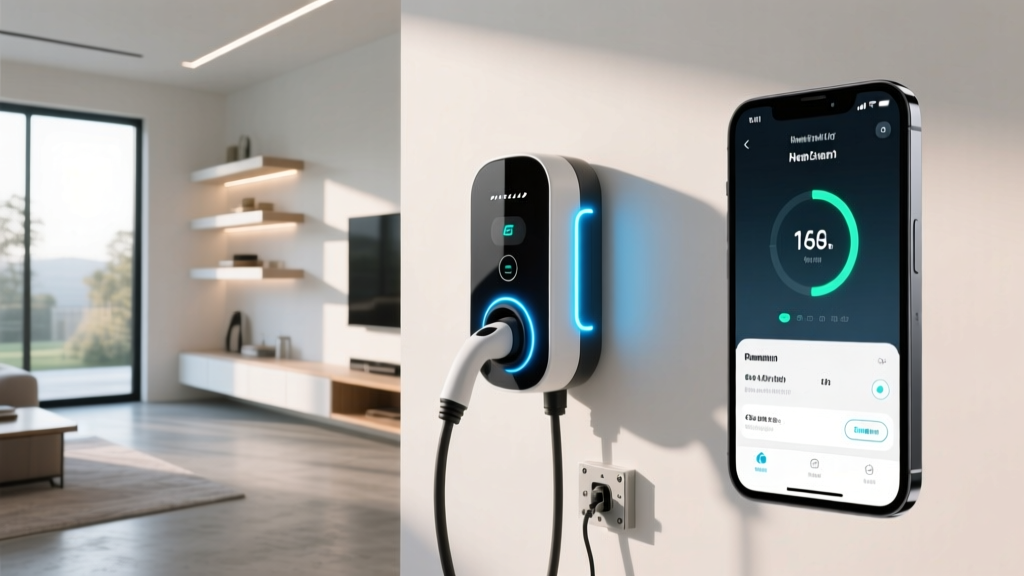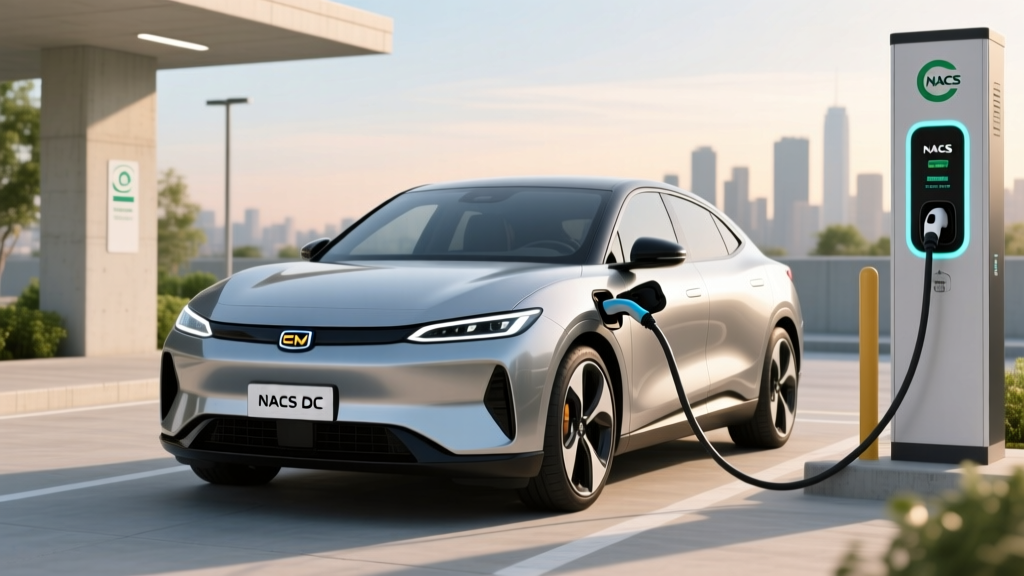
General Motors made one of the most consequential charging decisions in the EV industry when it committed to adopting the North American Charging Standard (NACS) for its electric vehicles. For owners of the Chevrolet Equinox EV, Blazer EV, Silverado EV, Cadillac Lyriq, and the refreshed 2025+ Bolt EV, that transition is now a daily reality — but it also introduces a critical piece of hardware: the NACS DC adapter that unlocks Tesla's Supercharger network for GM vehicles originally equipped with CCS1 ports.
This guide covers exactly how the NACS DC adapter works for GM EVs, what it means for your home charging setup, installation costs, connector compatibility across model years, and the real per-mile cost of charging versus gassing up. Whether you're plugging in at a Supercharger for the first time or wiring a Level 2 wall connector in your garage, the numbers below will set your expectations correctly.
Why GM EV Owners Need a NACS DC Adapter
Starting in the 2025 model year, GM began equipping new EVs with native NACS charge ports. Vehicles like the 2025 Equinox EV and 2026 Silverado EV roll off the line with the Tesla-style connector, meaning they plug directly into both Tesla Superchargers and the growing number of NACS-equipped public chargers from Electrify America, EVgo, and others.
But if you own a 2022–2024 GM EV with a CCS1 port — including the original Bolt EV/EUV, early Lyriq, and first-year Blazer EV — you need a NACS DC adapter to access Tesla Superchargers. GM began shipping these adapters to eligible owners in late 2024, and they remain available through Chevrolet and Cadillac dealerships for owners who didn't receive one.
The adapter is not a simple passive plug converter. It contains active communication circuitry that translates the CCS communication protocol your vehicle expects into the NACS protocol the Supercharger speaks. This is why only GM-approved adapters should be used — third-party adapters that lack proper handshake logic can cause charging faults or, worse, damage the vehicle's onboard charge controller.
Charging Levels Explained: Speeds, kW, and Miles Per Hour
Understanding the three charging levels is essential before you invest in home equipment or plan a road trip. Here's how each level performs with typical GM EVs:
| Level | Voltage / Power | Miles of Range Added Per Hour | Best For |
|---|---|---|---|
| Level 1 | 120V AC / 1.2–1.9 kW | 3–5 miles/hr | Overnight top-ups, emergency, PHEVs |
| Level 2 | 240V AC / 7.2–19.2 kW | 20–60 miles/hr | Daily home charging, workplace |
| DC Fast Charging | 400–800V DC / 50–350 kW | 150–1,000+ miles/hr (peak) | Road trips, rapid top-ups |
For a concrete example: the 2026 Chevrolet Equinox EV 3LT has an 85 kWh (usable) battery and an EPA range of 319 miles. On a Level 2 charger delivering 11.5 kW (48A at 240V), you'll add roughly 37 miles of range per hour, meaning a full 10–100% charge takes about 8.5 hours — perfect for overnight. On a 150 kW DC fast charger, that same vehicle peaks near 150 kW and can go from 10–80% in approximately 30 minutes, though the charge curve tapers significantly above 80% SoC.
NACS, CCS1, and CHAdeMO: Connector Compatibility for GM EVs
The connector landscape has shifted dramatically. Here's where GM vehicles stand in 2026:
| GM Model | Native Port | Tesla Supercharger Access | Adapter Required? |
|---|---|---|---|
| 2022–2024 Bolt EV/EUV | CCS1 | Yes (via adapter) | NACS DC adapter (GM-approved) |
| 2022–2024 Cadillac Lyriq | CCS1 | Yes (via adapter) | NACS DC adapter (GM-approved) |
| 2024–2025 Blazer EV (early build) | CCS1 | Yes (via adapter) | NACS DC adapter (GM-approved) |
| 2025+ Equinox EV, Blazer EV (late build) | NACS (native) | Yes (direct plug) | CCS1 adapter (for legacy stations) |
| 2025+ Silverado EV, 2026 Cadillac Optiq | NACS (native) | Yes (direct plug) | CCS1 adapter (for legacy stations) |
Key takeaway: If your GM EV has a CCS1 port, the NACS DC adapter is your bridge to over 25,000 Tesla Supercharger stalls across North America. If your GM EV has a native NACS port, you'll need a CCS1 adapter to use older Electrify America or EVgo stations that haven't retrofitted NACS cables yet. GM includes a CCS1-to-NACS adapter with new NACS-equipped vehicles.
CHAdeMO is effectively dead for new GM vehicles and most new public infrastructure. If you encounter a CHAdeMO-only station, there is no practical adapter path for a GM EV. Plan your routes around NACS and CCS1 networks.
Home Level 2 Charger Installation: Costs, Electrical Requirements, and Panel Upgrades
Home Level 2 charging is where the majority of EV charging happens — the U.S. Department of Energy estimates over 80% of EV charging occurs at home. Here's what a proper installation requires:
Electrical Requirements
A Level 2 home charger requires a dedicated 240V circuit, identical in concept to what powers your electric dryer or oven. The most common configurations:
- 40A circuit / 32A continuous charge: Delivers 7.7 kW — sufficient for most GM EVs with a 48A onboard charger limitation, and the most common residential setup.
- 50A circuit / 40A continuous charge: Delivers 9.6 kW — a sweet spot for faster charging without a panel upgrade in many homes.
- 60A circuit / 48A continuous charge: Delivers 11.5 kW — maximizes the onboard charger capacity of the Equinox EV, Blazer EV, and Lyriq. Requires a 200A electrical panel in most cases.
Panel upgrade reality: If your home has a 100A electrical panel (common in homes built before 1990), adding a 50A or 60A EV circuit may exceed your panel's capacity, especially if you already have electric heating, an electric oven, and a dryer. A panel upgrade to 200A typically costs $1,500–$3,000 before the charger circuit is even installed. A licensed electrician will perform a load calculation per NEC Article 220 to determine if your panel can handle the additional draw.
| Component | Cost Range | Notes |
|---|---|---|
| Level 2 charger equipment | $300–$750 | Varies by brand, power, smart features |
| Electrician labor (standard install) | $400–$1,200 | Depends on run length, conduit, wall type |
| Electrical permit | $50–$200 | Required in most jurisdictions; inspection included |
| Panel upgrade (if needed) | $1,500–$3,000 | 100A → 200A; not always required |
| Total (no panel upgrade) | $750–$2,150 | Most homeowners fall in $1,000–$1,500 |
| Total (with panel upgrade) | $2,250–$5,150 | Older homes, high-load households |
Safety and Code Considerations
The National Electrical Code (NEC) requires that EV charging circuits be dedicated — meaning no other outlets or appliances share the circuit. Additional requirements to discuss with your electrician:
- GFCI protection: NEC 2020 and later require GFCI breakers for outdoor EV outlets. Indoor hardwired installations may not require GFCI in all jurisdictions, but many electricians include it as best practice.
- Outdoor rating: If your charger is mounted outdoors (garage exterior, carport, driveway post), the unit must carry a NEMA 4 or NEMA 4X weather-resistance rating.
- Hardwired vs. plug: Hardwired chargers (directly connected to junction box) are generally safer and allow higher amperage (48A+). Plug-in units using a NEMA 14-50 outlet are limited to 40A continuous and require the outlet to be properly torqued and inspected — loose 14-50 receptacles have been linked to overheating and fires.
- Permit and inspection: Skipping the permit to save $100 is false economy. An unpermitted installation can void your homeowner's insurance in the event of an electrical fire and will flag during a home sale.
Level 2 Charger Equipment Recommendations for GM EVs
Not all Level 2 chargers are equal. For GM EVs — whether CCS1-native or NACS-native — you need a charger that matches your vehicle's port and delivers enough power to fully replenish your battery overnight. Here are three proven options:
ChargePoint Home Flex (NACS)
Power: Up to 12 kW (50A) with NACS connector
Cable length: 23 feet
Smart features: Wi-Fi, app scheduling, Alexa integration, energy tracking
Price: ~$599
Best for: NACS-equipped GM EVs (2025+); flexible amperage via DIP switches lets you match your circuit
Tesla Wall Connector (NACS)
Power: Up to 11.5 kW (48A) with integrated NACS cable
Cable length: 24 feet
Smart features: Wi-Fi, OTA updates, power sharing between multiple units, load management
Price: ~$450
Best for: GM owners with native NACS ports who want Tesla's proven hardware at the lowest price. Note: does not include a CCS1 adapter — you'll need your GM-supplied adapter for non-Tesla public chargers
Emporia Vue Level 2 (CCS1/J1772)
Power: Up to 11.5 kW (48A) with J1772 connector (CCS1-compatible)
Cable length: 24 feet
Smart features: Whole-home energy monitoring integration, solar-aware charging, app control
Price: ~$399
Best for: CCS1-equipped GM EVs (2022–2024 Bolt, Lyriq, Blazer); excellent value with energy monitoring
Important note for CCS1 GM owners: Your home Level 2 charger uses the J1772 connector (the AC portion of CCS1). You do not need the NACS DC adapter for home charging — that adapter is only for DC fast charging at Tesla Superchargers. Plug your CCS1 GM EV directly into any J1772 Level 2 charger at home.
Cost to Charge: Home vs. Public vs. Gas — The Per-Mile Math
The financial case for home EV charging is overwhelming when you run the actual numbers. Here's a comparison using the 2026 Chevrolet Equinox EV (319-mile EPA range, ~3.2 miles/kWh efficiency) versus a comparable 2026 Chevrolet Equinox gas model (28 MPG combined):
| Scenario | Rate | Cost Per Mile (Equinox EV) | Annual Cost (12,000 mi) |
|---|---|---|---|
| Home Level 2 (off-peak utility rate) | $0.09/kWh | $0.028/mi | $336 |
| Home Level 2 (national avg. residential) | $0.17/kWh | $0.053/mi | $636 |
| Public Level 2 (ChargePoint, EVgo) | $0.30/kWh | $0.094/mi | $1,128 |
| DC Fast Charging (Tesla Supercharger avg.) | $0.35/kWh | $0.109/mi | $1,308 |
| DC Fast Charging (Electrify America peak) | $0.48/kWh | $0.150/mi | $1,800 |
| Gas Equinox (28 MPG, $3.40/gal) | $3.40/gal | $0.121/mi | $1,452 |
The numbers are clear: home charging at off-peak rates saves roughly $1,100 per year compared to the gas equivalent. Even at the national average residential electricity rate, you save over $800 annually. However, exclusive reliance on public DC fast charging — particularly Electrify America at peak rates — can actually cost more than gasoline. This is why home Level 2 installation isn't a luxury; it's the economic foundation of EV ownership.
10–80% Charging Time Examples for GM EVs
Here's what real charging sessions look like for popular GM models on DC fast chargers:
- 2026 Equinox EV (85 kWh, 150 kW peak): 10–80% in ~30 minutes on a 150 kW NACS Supercharger. Expect taper to ~50 kW above 70% SoC.
- 2026 Blazer EV RS (102 kWh, 190 kW peak): 10–80% in ~28 minutes on a 200 kW+ charger. Larger battery absorbs higher power longer.
- 2026 Silverado EV RST (200+ kWh, 350 kW peak): 10–80% in ~22 minutes on a 350 kW charger. The Ultium platform's large pack enables sustained high-rate charging.
- 2024 Cadillac Lyriq (102 kWh, 190 kW peak): 10–80% in ~30 minutes with NACS DC adapter at a V3 Supercharger (250 kW max, vehicle-limited to 190 kW).
Federal Tax Credit for Home Charger Installation
The IRS Residential Clean Energy Credit (IRC §25C) covers 30% of the cost of home EV charger equipment and installation, up to a $1,000 maximum credit. This credit applies to both the charger hardware and the electrician's labor for the dedicated circuit.
Key eligibility rules for 2026:
- The charger must be installed at your primary or secondary residence in the United States.
- The credit is non-refundable — it reduces your tax liability to zero but won't generate a refund beyond that.
- There is no income cap for this credit (unlike the §30D vehicle credit).
- Equipment must be new and placed in service during the tax year.
- Claim using IRS Form 8911 (Alternative Fuel Vehicle Refueling Property Credit).
On a typical $1,200 installation (charger + electrician + permit), the 30% credit returns $360, bringing your net cost to $840. If your installation requires a panel upgrade, the credit still caps at $1,000 — so a $4,000 total project would yield the maximum $1,000 credit, netting you $3,000 out of pocket.
Frequently Asked Questions
How much does it cost to install a home EV charger?
A standard Level 2 home charger installation costs between $750 and $2,150 when no panel upgrade is needed. This includes the charger ($300–$750), electrician labor ($400–$1,200), and a permit ($50–$200). Homes with older 100A electrical panels may need a $1,500–$3,000 panel upgrade, pushing the total to $2,250–$5,150. Always get a load calculation from a licensed electrician before committing.
How fast will each charging level add range to my GM EV?
Level 1 (120V) adds 3–5 miles per hour — adequate only for PHEVs or emergency top-ups. Level 2 (240V) adds 20–60 miles per hour depending on amperage and your vehicle's onboard charger, easily replenishing a full battery overnight. DC fast charging adds 150–1,000+ miles per hour at peak rates, though real-world sessions average 10–80% in 22–35 minutes for GM Ultium-based EVs.
Which connector and charger is compatible with my GM EV?
If your GM EV has a CCS1 port (2022–2024 models), use any J1772/CCS1 Level 2 charger at home and carry the GM-approved NACS DC adapter for Tesla Supercharger access on road trips. If your GM EV has a native NACS port (2025+ models), use a NACS Level 2 charger at home (such as the Tesla Wall Connector or ChargePoint Home Flex NACS) and carry the GM-supplied CCS1 adapter for legacy public chargers.
How much does charging cost per mile compared to gas?
Home charging at off-peak rates costs approximately $0.03 per mile in an Equinox EV — roughly one-quarter the $0.12 per mile cost of a gas Equinox at $3.40/gallon. Even at the national average electricity rate of $0.17/kWh, home charging costs about $0.05 per mile. However, exclusive reliance on public DC fast charging at $0.35–$0.48/kWh can push EV costs to $0.11–$0.15 per mile, approaching or exceeding gas costs.
What electrical upgrades might I need for a home charger?
The most common upgrade is a panel capacity increase from 100A to 200A, required when your existing panel can't accommodate the additional 40–60A load of an EV charger alongside existing appliances. Your electrician will perform an NEC Article 220 load calculation. Other potential upgrades include running new conduit from the panel to the garage (if the panel is on the opposite side of the house), upgrading the meter socket, or adding a sub-panel. Homes built after 2000 with 200A panels rarely need upgrades for a 48A charger circuit.
Can I use a third-party NACS adapter instead of the GM-approved one?
We strongly advise against it. The GM-approved NACS DC adapter is specifically calibrated for the communication handshake between your vehicle's Battery Management System and Tesla's Supercharger protocol. Third-party adapters sold on Amazon or eBay may lack proper thermal monitoring, CCS-to-NACS protocol translation, or UL certification. A faulty adapter can cause charging interruptions, overcurrent events, or damage to your vehicle's charge port — and GM may deny warranty coverage for damage traced to an unauthorized adapter.
Sources: fueleconomy.gov (EPA range and efficiency data), IRS.gov (Residential Clean Energy Credit rules), Energy.gov (home charging best practices).