The NACS Standard Has Won — Here's What That Means for Your Charger
By 2026, the North American Charging Standard (NACS) is the dominant EV connector in the United States. What began as Tesla's proprietary plug is now the SAE J3400 standard, adopted by Ford, GM, Rivian, Hyundai, Kia, BMW, Volvo, and nearly every major automaker selling in North America. If you're buying a new EV today, it almost certainly has a NACS port — or will need an adapter to use one.
But having the right connector is only the start. Understanding NACS charging means understanding the three charging levels, what your home's electrical panel can support, which public networks use NACS natively, and how much you'll actually pay per mile. This guide covers all of it with exact numbers, real install costs, and equipment picks for the current market.
Charging Levels: How Fast Does NACS Charging Add Range?
Every EV owner needs to internalize one distinction immediately: kW (kilowatts) measures power — how fast energy flows into your battery. kWh (kilowatt-hours) measures energy — how much your battery holds. A 100-kWh battery charged at 10 kW takes roughly 10 hours; charged at 150 kW, it takes far less. Confusing these two is the single most common EV literacy gap.
NACS is unique among connectors because it supports all three charging levels through a single port — something CCS1 and CHAdeMO cannot claim.
| Level | Voltage | Power (kW) | Miles Added/Hour | Typical Use Case |
|---|---|---|---|---|
| Level 1 | 120V AC | 1.0–1.4 kW | 3–5 mi/hr | Overnight trickle; PHEVs; emergency backup |
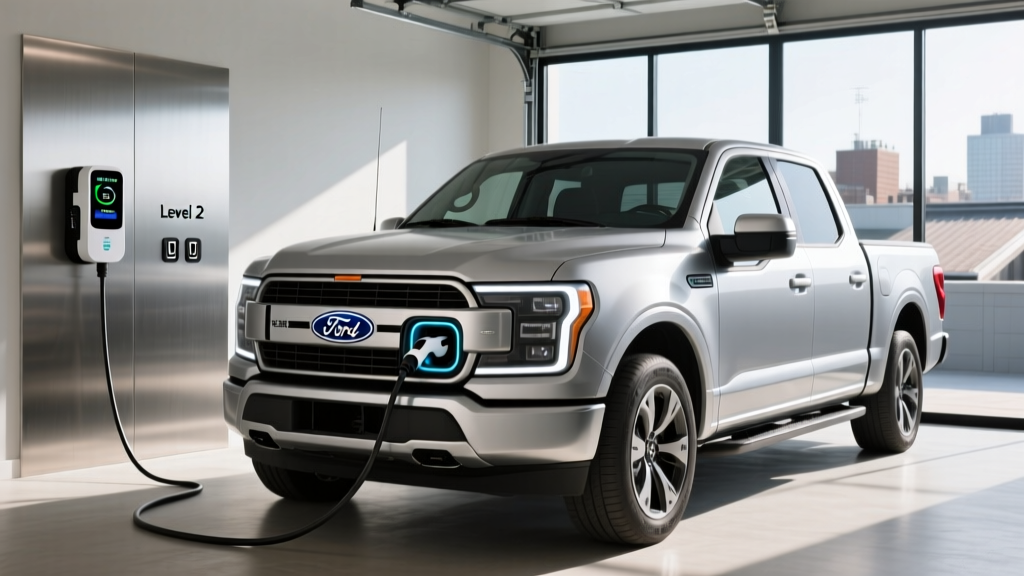
| Level 2 | 240V AC | 3.3–19.2 kW | 12–70 mi/hr | Home daily charging; workplace; destination |
| DC Fast Charging | 200–900V DC | 50–350+ kW | 150–1,200+ mi/hr (peak) | Road trips; highway corridors; rapid top-ups |
A few realities behind those numbers:
- Level 1 NACS charging at 1.4 kW adds about 4 miles per hour. That's 40 miles over a 10-hour night — adequate for a plug-in hybrid with a 30-mile electric range, but painfully slow for a 300-mile BEV.
- Level 2 at 11.5 kW (the most common home setup on a 60-amp circuit) adds roughly 37–44 miles per hour, fully replenishing a 75-kWh battery in about 7–8 hours.
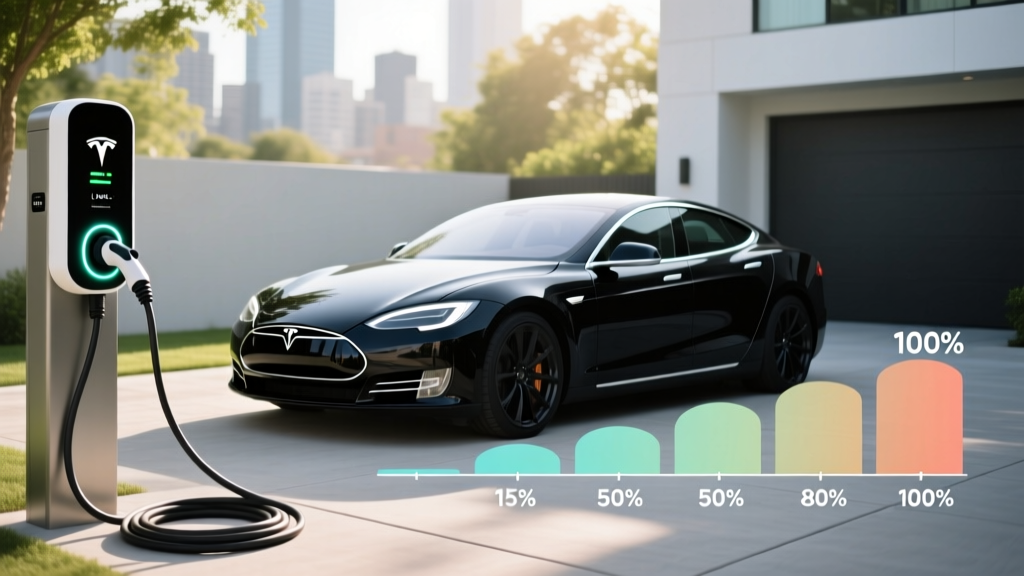
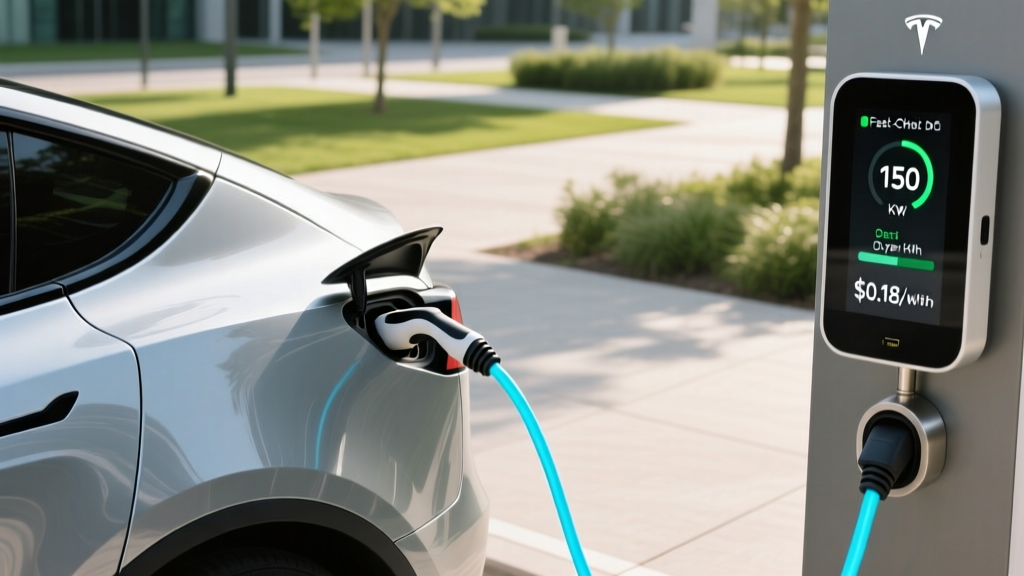
- DC fast charging at 250 kW (typical Tesla V4 Supercharger) can add 200+ miles in 15 minutes on vehicles with 800V architectures like the Hyundai Ioniq 5 or Kia EV6. But peak kW is never sustained — charge curves taper significantly above 80% State of Charge (SoC). A "250 kW" charger might deliver that rate only between 10–50% SoC before dropping to 100 kW or lower.
Home NACS Charging: Electrical Requirements and Installation Costs
Installing a dedicated Level 2 NACS charger at home is the single highest-impact upgrade an EV owner can make. You'll wake up every morning with a full battery, pay the lowest per-kWh rates, and avoid public charging entirely for daily driving. But the install isn't always plug-and-play.
Electrical Requirements
A Level 2 NACS charger requires a 240-volt circuit, identical to what powers your electric dryer or oven. The most common configurations:
- 40-amp circuit / 32-amp continuous draw: Delivers up to 7.7 kW. Suitable for most daily needs. Requires a NEMA 14-50 outlet or hardwired connection.
- 50-amp circuit / 40-amp continuous: Delivers up to 9.6 kW. Good for larger batteries (100 kWh+).
- 60-amp circuit / 48-amp continuous: Delivers up to 11.5 kW. The sweet spot for fast overnight charging of any current BEV.
- 80-amp circuit / 64-amp continuous: Delivers up to 15.3–19.2 kW. Requires a 200-amp (or larger) panel and hardwired installation. Overkill for most homes.
EV charging draws maximum current for hours continuously, which is why the National Electrical Code (NEC) requires circuits rated at 125% of the charger's continuous draw. A 48-amp charger needs a 60-amp breaker — not a 50-amp one.
Panel Upgrade Reality
If your home has a 100-amp electrical panel (common in homes built before 1990), you may not have enough spare capacity to add a 60-amp EV circuit. A licensed electrician will perform a load calculation to determine available headroom. If you're short, a panel upgrade to 200 amps typically costs $1,500–$3,500 before the charger circuit is even added. This is the single biggest surprise cost in EV home charging — budget for it.
Home NACS Charger Installation Cost Breakdown
| Component | Simple Install (near panel) | Complex Install (long run / panel upgrade) |
|---|---|---|
| Level 2 NACS charger (equipment) | $400–$700 | $500–$800 |
| Electrician labor (wiring, conduit, breaker) | $400–$800 | $800–$2,000 |
| Electrical permit | $50–$150 | $50–$200 |
| Panel upgrade (if needed) | $0 | $1,500–$3,500 |
| Total | $850–$1,650 | $2,850–$6,500 |
Source: Based on 2025–2026 electrician quotes and U.S. DOE home charging guidance.
Alternative: The Smart Panel Solution
If a panel upgrade is cost-prohibitive, devices like the Span smart panel or Emporia EV charger with load management can dynamically limit charger draw based on real-time household consumption. This lets you install a 48-amp charger on a panel that technically can't support it at full draw — the charger throttles back when your HVAC or oven kicks on. Expect to pay a $300–$500 premium for smart load-management hardware.
Connector Compatibility: NACS vs CCS1 vs CHAdeMO in 2026
NACS adoption has simplified the connector landscape considerably, but legacy vehicles and chargers still exist. Here's where each standard stands:
| Connector | Native Brands | Adapter Needed For |
|---|---|---|
| NACS (J3400) | Tesla (all), Ford, GM, Rivian, Hyundai, Kia, BMW, Volvo, Polestar, Mercedes-Benz, Lucid, Nissan (new models) | Legacy CCS public chargers (adapter included by most automakers) |
| CCS1 | VW ID.4 (2024 and earlier), older Chevy Bolt, legacy models pre-adoption | NACS Superchargers (CCS-to-NACS adapter, ~$200–$250) |
| CHAdeMO | Nissan Leaf (pre-2026), Mitsubishi Outlander PHEV (older) | Nearly everything — CHAdeMO is being phased out; adapters are rare and expensive |
Key adapter note: If you drive a NACS-equipped Ford, GM, or Rivian and encounter a public charger with only a CCS1 cable (still common at Electrify America and some ChargePoint stations), you'll need a CCS1-to-NACS adapter. Most automakers included these free with 2024–2025 vehicles; aftermarket adapters from Lectron or A2Z cost $150–$250. Always carry one on road trips until CCS infrastructure fully transitions.
According to the SAE J3400 specification, NACS connectors support up to 1,000V DC and 900A for fast charging, far exceeding the needs of any current production vehicle.
NACS Charging Cost: Home vs Public vs Gas
One of the strongest arguments for EV ownership is fuel cost savings — but only if you charge smart. Electricity rates vary enormously by location, time of day, and whether you're at home or on a public DC fast charger.
| Scenario | Rate | Cost Per Mile (3.5 mi/kWh EV) | Equivalent Gas Cost (30 MPG) |
|---|---|---|---|
| Home off-peak (utility time-of-use) | $0.09/kWh | $0.026/mi | $0.78/mi at $3.50/gal — EV saves 97% |
| Home average (national residential) | $0.17/kWh | $0.049/mi | $1.17/mi at $3.50/gal — EV saves 96% |
| Public Level 2 (ChargePoint, etc.) | $0.25–$0.49/kWh | $0.071–$0.14/mi | Comparable to gas at upper end |
| DC Fast Charging (Supercharger, EA) | $0.32–$0.55/kWh | $0.091–$0.157/mi | Roughly equal to gas at $3.50/gal |
| Gasoline vehicle (30 MPG combined) | $3.50/gal | $0.117/mi | Baseline |
The takeaway: Home charging at off-peak rates delivers 3–4× cost savings over gasoline. Public DC fast charging is roughly cost-parity with gas — convenient for road trips, but not where the savings live. Install that home charger.
Charging Time Examples for Common Battery Sizes
How long does a 10–80% charge actually take? It depends on battery size, charging architecture (400V vs 800V), and the charger's peak power. Here are real-world benchmarks:
- Tesla Model Y (75 kWh, NMC, 400V): At a 250 kW V4 Supercharger, 10–80% in approximately 25–28 minutes. Peak rate ~250 kW, tapering to ~100 kW above 60%.
- Hyundai Ioniq 5 (84 kWh, NMC, 800V): At a 350 kW NACS DC charger, 10–80% in approximately 18–20 minutes. The 800V architecture sustains higher power longer.
- Ford F-150 Lightning (131 kWh, NMC, 400V): At a 150 kW charger, 10–80% in approximately 40–45 minutes. Larger batteries take longer even at high power.
- Chevy Equinox EV (85 kWh, NMC, 400V): At a 150 kW NACS charger, 10–80% in approximately 30–35 minutes.
Remember: charge curves are not flat. That "250 kW peak" number applies only in a narrow SoC window. Average power over a 10–80% session is typically 60–75% of peak. Plan road-trip stops around average rate, not peak.
Best NACS Home Chargers: Equipment Picks for 2026
Not all Level 2 NACS chargers are created equal. Here are four proven units covering different budgets and feature needs:
Tesla Wall Connector (Gen 4)
- Power output: Up to 11.5 kW (48A on 60A circuit)
- Connector: Native NACS
- Cable length: 24 feet
- Smart features: Wi-Fi, OTA updates, load sharing (pair two units on one circuit), power-sharing across multiple Wall Connectors
- Price: ~$475
- Best for: Tesla owners and NACS-native vehicles wanting a clean, reliable, no-subscription unit
Emporia Vue EV Charger
- Power output: Up to 11.5 kW (48A) with configurable amperage
- Connector: Native NACS
- Cable length: 24 feet
- Smart features: Energy monitoring via Emporia app, solar integration, scheduled charging, load management with Span panel
- Price: ~$399
- Best for: Solar-equipped homes and budget-conscious buyers who want energy tracking
ChargePoint Home Flex (NACS model)
- Power output: Up to 12 kW (50A) with dip-switch configurable amperage
- Connector: Native NACS (2025+ model)
- Cable length: 23 feet
- Smart features: ChargePoint app scheduling, Alexa integration, detailed session history, flexible amperage from 16A to 50A
- Price: ~$599
- Best for: Homes with variable circuit capacity — the adjustable amperage avoids panel upgrades
Grizzl-E Smart (NACS)
- Power output: Up to 10 kW (40A)
- Connector: Native NACS
- Cable length: 24 feet
- Smart features: OCPP-compatible, works with multiple apps, extreme cold rated (-40°F), rugged aluminum case
- Price: ~$499
- Best for: Cold-climate owners and outdoor installations where durability matters
Safety, Code, and Installation Best Practices
EV charging is a high-draw, continuous-load electrical application. Cutting corners creates fire risk. Here's what proper installation requires:
- Dedicated circuit: Your EV charger must have its own breaker — never shared with other appliances. A 60-amp breaker for a 48-amp charger is standard.
- GFCI protection: The 2023 NEC (and 2026 adopted codes in most states) requires GFCI protection for all outdoor receptacles. Hardwired chargers may not require a GFCI breaker in all jurisdictions, but it's strongly recommended. GFCI breakers add $50–$100 to the install.
- NEMA 14-50 vs hardwired: A NEMA 14-50 outlet gives you portability (take the charger when you move) but requires GFCI under current code. Hardwired connections eliminate the outlet, reduce GFCI requirements in some jurisdictions, and are generally more reliable long-term. Discuss with your electrician.
- Outdoor rating: If your charger mounts outside, verify it carries a NEMA 4 or IP65 rating for weather resistance. All four picks above meet this standard.
- Wire gauge: A 60-amp circuit requires 6 AWG copper wire (or 4 AWG aluminum). Longer wire runs may need upsizing to prevent voltage drop — another reason to get a professional quote.
- Permit and inspection: Most jurisdictions require an electrical permit for a new 240V circuit ($50–$200) and a post-install inspection. Do not skip this — it's required for insurance coverage and home resale.
The National Fire Protection Association's NEC guidelines govern all residential EV charging installations. Your licensed electrician should be current on the 2023 NEC (or your state's adopted version).
Public NACS Charging Networks: Where to Plug In
The public NACS charging landscape in 2026 is dominated by one network and rapidly expanding competitors:
- Tesla Supercharger network: Over 30,000 NACS stalls across North America, now open to all NACS-equipped vehicles. Reliability remains the industry benchmark — typically 97%+ uptime. Pricing averages $0.28–$0.48/kWh depending on location and time of day. V4 Superchargers deliver up to 250 kW (with 350 kW+ capability rolling out).
- Electrify America: Transitioning stations to include NACS cables alongside CCS1. Expect mixed availability through 2026 — always check the EA app for NACS stall availability before routing to a station.
- ChargePoint / EVgo / Blink: Adding NACS connectors to new DC fast installations. Level 2 destination chargers are predominantly NACS for new installs.
- Ionna (GM/Pilot/Hyundai joint venture): New highway charging network deploying NACS-native stations along major interstate corridors, targeting 30,000 stalls by 2028.
For real-time NACS charger availability and routing, Tesla's in-app navigation (for Tesla vehicles) and the Alternative Fuels Data Center station locator (for all brands) remain the most reliable tools.
Frequently Asked Questions
How much does it cost to install a home NACS charger?
Between $850 and $1,650 for a straightforward install near your electrical panel. If you need a long wire run, conduit, or a panel upgrade from 100A to 200A, costs can reach $2,850–$6,500. Always get three quotes from licensed electricians.
How fast will each charging level add range?
Level 1 (120V): 3–5 miles per hour. Level 2 (240V, 11.5 kW typical): 37–44 miles per hour. DC Fast (250 kW peak): 200+ miles in 15 minutes during peak SoC window, tapering significantly above 80%.
Which connector is compatible with my EV?
If your 2025–2026 vehicle is from Tesla, Ford, GM, Hyundai, Kia, Rivian, BMW, or Volvo, it has a native NACS port. Older CCS1 vehicles need a CCS-to-NACS adapter (~$200) for Supercharger access. CHAdeMO vehicles (Nissan Leaf) are legacy — adapters are scarce.
How much does charging cost per mile vs gas?
Home charging at the national average ($0.17/kWh) costs roughly $0.049 per mile for a 3.5 mi/kWh EV — about 58% less than a 30 MPG gas car at $3.50/gallon. Public DC fast charging at $0.40/kWh is roughly cost-parity with gasoline.
What electrical upgrades might I need?
If your panel is 100 amps or your load calculation shows insufficient headroom, you'll need a panel upgrade to 200 amps ($1,500–$3,500). Smart load-management devices can sometimes avoid this by dynamically limiting charger draw. A licensed electrician's load calculation is the definitive answer.
Can I use a Tesla Supercharger with a non-Tesla NACS vehicle?
Yes. Tesla opened its Supercharger network to all NACS-equipped vehicles. Ford, GM, Rivian, and other brands have active access. Simply plug in — no adapter needed for NACS-native vehicles. Check the Tesla app or your vehicle's built-in navigation for compatible stalls, as a small number of older Supercharger sites have cable lengths that don't reach non-Tesla charge ports.