If you drive a Stellantis EV — whether it's a Jeep Wagoneer S, Dodge Charger Daytona, or the upcoming Chrysler crossover — you've likely encountered the Mopar-branded Level 2 home charger offered through dealerships. But is the OEM charger the best option for your garage, or are third-party units a smarter buy? This guide breaks down the Mopar charger lineup, exact installation costs, connector compatibility across the Stellantis EV fleet, and how charging economics compare to gas in 2026.
Mopar EV Chargers: What Stellantis Actually Offers
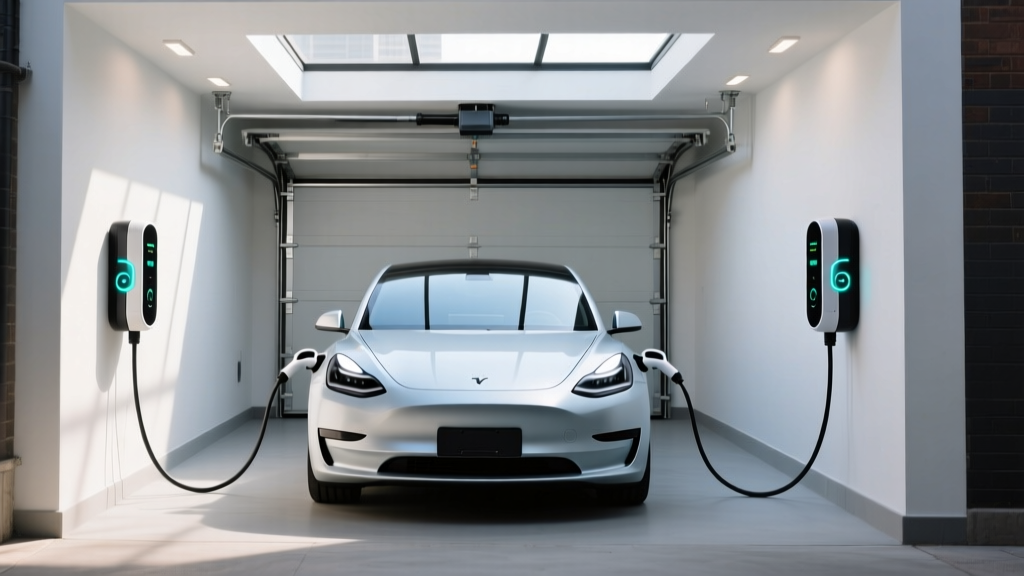
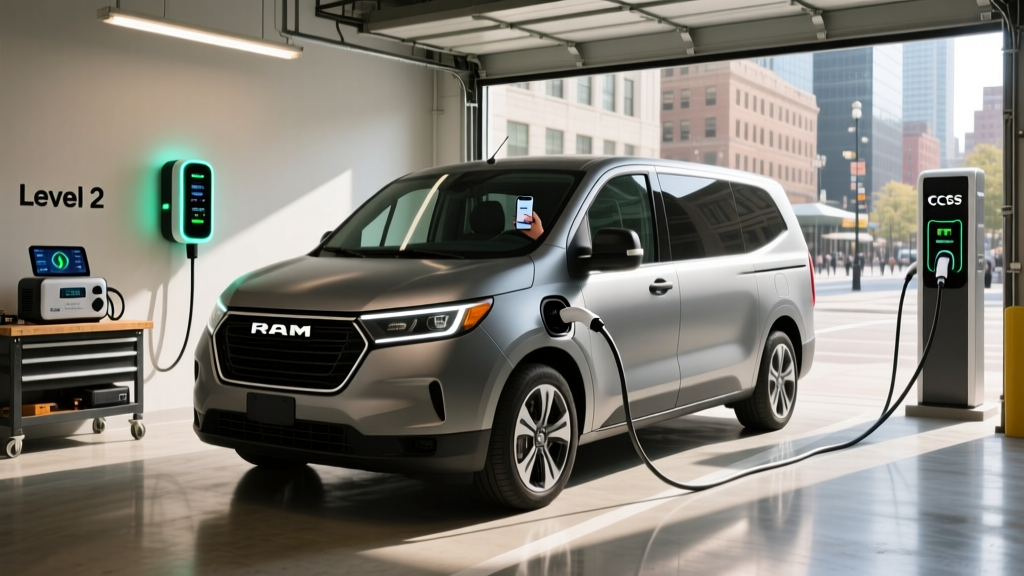
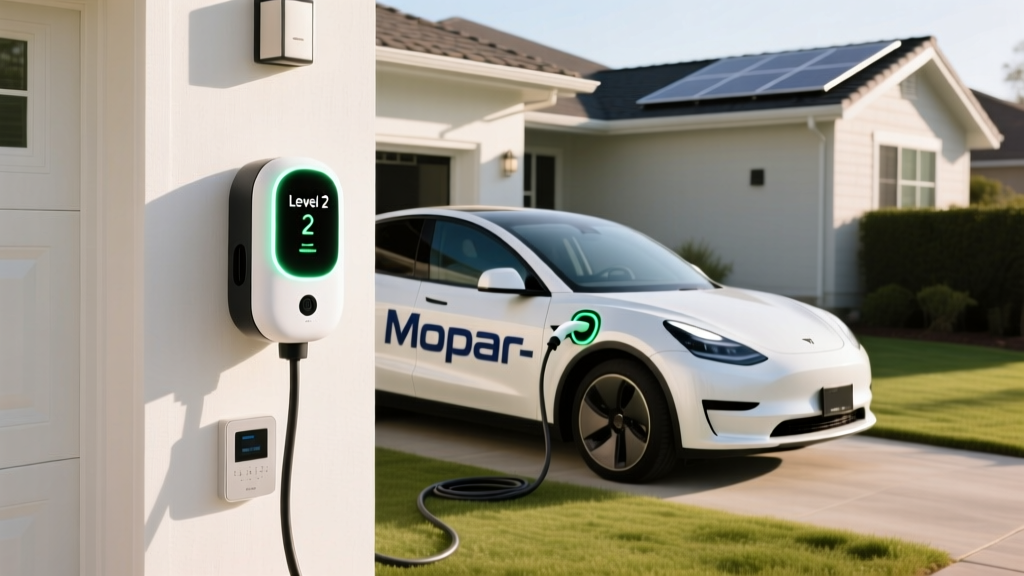
Mopar, Stellantis's parts and accessories division, offers two primary home charging solutions for its growing EV lineup. The standard unit is a Level 2, 240-volt, 32-amp (7.7 kW) wall-mounted charger that ships with many new Stellantis EVs or can be purchased separately through dealerships for approximately $599–$699. A higher-output 48-amp (11.5 kW) version is available as an upgrade for roughly $749–$849, aimed at owners with larger battery packs like the 100+ kWh Wagoneer S.
Both units feature a J1772 connector (with NACS adapter compatibility for 2025+ models), a 25-foot cable, Wi-Fi connectivity for scheduling and energy monitoring via the Mopar app, and NEMA 4 outdoor ratings. They're manufactured by a Tier 1 supplier (historically Webasto or a similar partner) and carry a 3-year limited warranty.
The critical question isn't whether these chargers work — they do — but whether their power output and feature set justify the price compared to established third-party alternatives. Let's look at what each charging level actually delivers before comparing equipment.
Charging Levels Explained: Speeds, kW, and Miles Per Hour
Understanding the difference between kW (kilowatts, a measure of power or charge rate) and kWh (kilowatt-hours, a measure of energy or battery capacity) is the single most important concept in EV ownership. Think of kW as how fast water flows from a hose, and kWh as the total volume in the bucket. A 7.7 kW charger fills a 75 kWh battery in roughly 10 hours (75 ÷ 7.7 ≈ 9.7 hours, minus taper losses).
| Level | Voltage | Max Power (kW) | Miles of Range Added Per Hour | Best For |
|---|---|---|---|---|
| Level 1 (Standard Outlet) | 120V | 1.2–1.4 kW | 3–5 miles | Overnight top-ups, PHEVs, emergency |
| Level 2 (Home/Public) | 240V | 3.3–19.2 kW | 12–75 miles | Daily home charging, destination charging |
| DC Fast Charging | 400–800V DC | 50–350+ kW | 150–1,000+ miles/hr equivalent | Road trips, quick top-ups |
For a Dodge Charger Daytona Scat Pack with its 100.6 kWh battery pack (approximately 317 miles EPA range), here's what real charging times look like:
- Level 1 (1.4 kW): 10–80% in approximately 50+ hours — impractical for full charges
- Mopar Level 2 (7.7 kW / 32A): 10–80% in approximately 9–10 hours — solid overnight charge
- Mopar Level 2 (11.5 kW / 48A): 10–80% in approximately 6–7 hours — faster overnight, better for large packs
- DC Fast Charge (150+ kW peak): 10–80% in approximately 28–35 minutes (charger dependent, with taper above 80%)
Note that Level 2 charging rates slow slightly as the battery approaches full capacity, though this taper is far less dramatic than DC fast charging, where speeds can drop by 50% or more after 80% State of Charge (SoC).
Home Installation: Electrical Requirements and Real Costs
The Mopar Level 2 charger requires a dedicated 240-volt circuit. For the 32-amp unit, you need a 40-amp breaker (EV chargers are continuous loads, so the breaker must be rated 125% above the charger's amperage per NEC Article 625). For the 48-amp unit, you need a 60-amp breaker.
Here's where many homeowners hit a wall: older homes with 100-amp or 150-amp electrical panels may not have sufficient spare capacity. A licensed electrician will perform a load calculation to determine if your panel can handle the additional draw. If not, a panel upgrade to 200 amps may be required — and that's a significant added cost.
| Cost Component | Basic Install (Panel Has Capacity) | Complex Install (Panel Upgrade Needed) |
|---|---|---|
| Mopar Charger Equipment | $599–$849 | $599–$849 |
| Electrician Labor (2–4 hrs) | $300–$800 | $500–$1,200 |
| Electrical Materials (wire, conduit, breaker) | $100–$300 | $150–$400 |
| Permit & Inspection | $50–$200 | $50–$200 |
| Panel Upgrade (if needed) | N/A | $1,500–$3,500 |
| Total Estimated Cost | $1,049–$2,149 | $2,799–$6,149 |
Always hire a licensed electrician and pull a permit. Unpermitted EV charger installations can void homeowner's insurance claims and create fire hazards. The National Electrical Contractors Association maintains a directory of certified EV charger installers.
Connector Compatibility: NACS, CCS1, and the Stellantis Transition
Stellantis is in the middle of a connector transition. Here's where each brand stands as of the 2026 model year:
| Stellantis EV Model | Native Connector | Adapter Needed? | DC Fast Charge Standard |
|---|---|---|---|
| Jeep Wagoneer S (2025+) | NACS (Tesla-style) | CCS adapter for non-Tesla networks | CCS2/NACS (dual-protocol capable) |
| Dodge Charger Daytona (2025+) | NACS | CCS adapter for Electrify America (legacy stalls) | NACS native + CCS via adapter |
| Chrysler Halcyon Concept (announced) | NACS (expected) | TBD | TBD |
| Alfa Romeo Junior (EU-only) | CCS2 | N/A in Europe | CCS2 |
| Older Stellantis PHEVs (Pacifica, Wrangler 4xe) | J1772 (Level 2) | None for Level 2 | No DC fast charge capability |
The Mopar Level 2 charger ships with a J1772 connector. Since NACS and J1772 share the same pin layout for Level 2 AC charging, a simple J1772-to-NACS adapter (typically $30–$60) allows the Mopar unit to plug directly into any NACS-equipped Stellantis EV. For vehicles with native CCS1 ports (some earlier models), the J1772 connector is natively compatible — CCS1 is essentially J1772 with two additional DC pins below.
If you plan to use Tesla Superchargers (now open to non-Tesla vehicles via the NACS standard), your Mopar home charger will work fine for overnight charging regardless of which DC network connector your car uses. Home Level 2 charging is connector-agnostic with a simple adapter.
Charging Cost Per Mile: Home vs. Public vs. Gas
The economics of EV charging vary dramatically depending on where and when you plug in. Here's a realistic cost breakdown using the Dodge Charger Daytona R/T (estimated 2.8–3.2 kWh/mile efficiency, or roughly 105 MPGe combined per fueleconomy.gov data):
| Charging Scenario | Cost Per kWh | Cost Per Mile (Charger Daytona) | Equivalent Gas Price (at 25 MPG) |
|---|---|---|---|
| Home, Off-Peak Utility Rate | $0.08–$0.12 | $0.025–$0.038 | $0.63–$0.95/gallon |
| Home, Standard Residential Rate | $0.14–$0.18 | $0.042–$0.058 | $1.05–$1.45/gallon |
| Public Level 2 (ChargePoint, etc.) | $0.25–$0.49 | $0.075–$0.157 | $1.88–$3.93/gallon |
| DC Fast Charging (Electrify America) | $0.38–$0.56 | $0.114–$0.179 | $2.85–$4.48/gallon |
| Gasoline (2026 national avg ~$3.40/gal) | N/A | $0.136 | $3.40/gallon |
The takeaway: home charging during off-peak hours is 70–80% cheaper per mile than gasoline. Even DC fast charging on the road is often cheaper than or comparable to gas. The key to maximizing savings is installing a home charger and enrolling in your utility's time-of-use (TOU) rate plan, which offers discounted electricity during overnight hours (typically 10 PM – 6 AM).
Some utilities also offer EV-specific rate plans with even deeper discounts. Check with your local provider — programs like PG&E's EV2-A or ConEdison's EV rate in New York can push off-peak rates below $0.08/kWh.
Equipment Comparison: Mopar vs. Top Third-Party Chargers
While the Mopar charger is a competent unit, it faces stiff competition from purpose-built EV charging companies. Here's how it stacks up against the top alternatives in 2026:
Mopar Level 2 Smart Charger (32A)
- Power Output: 7.7 kW (32A / 240V)
- Connector: J1772 (NACS adapter available)
- Cable Length: 25 feet
- Smart Features: Wi-Fi scheduling, Mopar app integration, energy monitoring
- Price: $599–$699
- Pros: OEM warranty alignment, dealership support, Stellantis app integration
- Cons: Lower amperage than competitors, limited smart-home ecosystem support
ChargePoint Home Flex (up to 50A)
- Power Output: Up to 12 kW (50A, adjustable down to 16A)
- Connector: J1772 or NACS (configurable at purchase)
- Cable Length: 23 feet
- Smart Features: Wi-Fi, Alexa/Google Home, ChargePoint network, load sharing
- Price: $599–$699
- Pros: Adjustable amperage, robust app, works with any EV, load-sharing for 2+ units
- Cons: No OEM integration with Stellantis apps
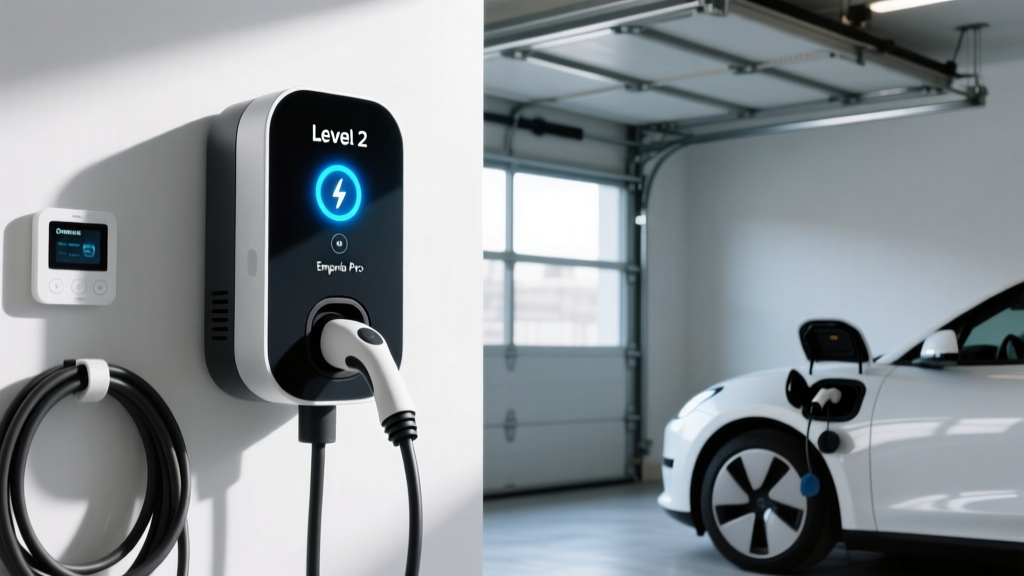
Emporia Level 2 Smart Charger (48A)
- Power Output: 11.5 kW (48A / 240V)
- Connector: J1772 or NACS
- Cable Length: 24 feet
- Smart Features: Wi-Fi, solar integration, real-time energy tracking, V2H-ready (with compatible systems)
- Price: $399–$499
- Pros: Best price-to-power ratio, solar-aware scheduling, detailed energy analytics
- Cons: Newer brand, smaller support network
Grizzl-E Smart (40A)
- Power Output: 9.6 kW (40A / 240V)
- Connector: J1772 or NACS
- Cable Length: 24 feet
- Smart Features: Wi-Fi, OCPP protocol, extreme cold rating (-40°F)
- Price: $449–$549
- Pros: Built in Canada for extreme cold, rugged outdoor build, open OCPP protocol
- Cons: App less polished than ChargePoint
For Stellantis EV owners with the 100.6 kWh Charger Daytona or Wagoneer S, the 48-amp options (Emporia, Mopar 48A, or ChargePoint at 50A) are strongly recommended. The larger the battery, the more the amperage matters — a 48A charger completes an overnight charge 2–3 hours faster than a 32A unit on a 100+ kWh pack.
Safety, Code, and the Panel-Upgrade Reality Check
EV charger installation is governed by National Electrical Code (NEC) Article 625, which mandates:
- Dedicated circuit: Your EV charger must have its own breaker — no sharing with other appliances
- GFCI protection: Required for all outdoor installations and recommended (sometimes required) indoors per 2023 NEC updates
- Continuous-load derating: The circuit breaker must be rated at 125% of the charger's maximum draw (e.g., 40A breaker for a 32A charger)
- NEMA 4 rating: Required for outdoor units to withstand rain, dust, and temperature extremes
- Wire gauge: Typically 6 AWG copper for 50A circuits, 8 AWG for 40A circuits (exact gauge depends on run length and local code)
The panel-upgrade question deserves special attention. According to the U.S. Department of Energy, approximately 20–30% of homes need some form of electrical upgrade to support a Level 2 charger. Homes built before 1990 with original 100-amp panels are the most common candidates. Signs you may need an upgrade:
- Your panel is at or near capacity (breakers totaling close to the panel's amp rating)
- You already run high-draw appliances (electric range, central AC, electric dryer) on a smaller panel
- Your electrician's load calculation shows insufficient headroom for a 40A or 60A dedicated circuit
A panel upgrade to 200 amps typically costs $1,500–$3,500 depending on your region and the complexity of the work. Some utilities offer rebates of $200–$500 for panel upgrades done in conjunction with EV charger installation — check with your provider.
Frequently Asked Questions
How much does it cost to install a Mopar home EV charger?
Expect $1,049–$2,149 total for a straightforward installation where your electrical panel has sufficient capacity. This includes the Mopar charger ($599–$849), electrician labor ($300–$800), materials ($100–$300), and permit fees ($50–$200). If your home needs a panel upgrade, total costs can reach $2,799–$6,149.
How fast will the Mopar Level 2 charger add range?
The 32A (7.7 kW) Mopar charger adds approximately 25–30 miles of range per hour for a typical Stellantis EV. The 48A (11.5 kW) version adds approximately 37–45 miles per hour. Actual rates depend on your vehicle's onboard charger acceptance rate and battery size.
Is the Mopar charger compatible with non-Stellantis EVs?
Yes. The Mopar charger uses a standard J1772 connector, which is compatible with virtually every EV sold in North America (with a J1772-to-NACS adapter for Tesla and newer NACS-equipped vehicles). You're not locked into Stellantis vehicles by using the Mopar charger.
Does the Mopar charger qualify for any tax credits or rebates?
The charger itself does not qualify for the federal §30D new EV tax credit (that credit applies to vehicle purchases). However, the Alternative Fuel Vehicle Refueling Property Credit (IRS Form 8911) may cover up to 30% of home charger equipment and installation costs, capped at $1,000 — subject to income limits and census-tract eligibility. Many state and utility programs also offer rebates of $250–$750 for Level 2 charger installations. Consult a tax professional for your specific eligibility.
Can I use the Mopar charger outdoors?
Yes. Both Mopar Level 2 units carry a NEMA 4 rating, meaning they're sealed against rain, snow, dust, and hose-directed water. They're rated for operating temperatures from -22°F to 122°F (-30°C to 50°C). Ensure your electrician installs a GFCI-protected breaker for outdoor installations as required by NEC.
Should I charge to 100% every night?
For daily driving, charging to 80% is recommended to prolong battery life — especially for NMC (nickel manganese cobalt) chemistry packs used in most Stellantis EVs. The Mopar app allows you to set a charge limit and schedule charging during off-peak hours. Reserve 100% charges for road trips or days when you need maximum range.
What if my EV supports faster onboard charging than 7.7 kW?
The Mopar 32A charger maxes out at 7.7 kW regardless of your vehicle's onboard charger capability. For example, if your EV has an 11.5 kW onboard charger, you'll leave performance on the table with the 32A Mopar unit. In that case, the 48A Mopar charger or a third-party 48A+ unit will let you take full advantage of your vehicle's AC charging capability.