If you are coming from a 2005 Chevrolet Monte Carlo Supercharged — that 3.8L L36 with the Eaton M90 blower pushing 240 hp and sipping 18/28 mpg EPA — switching to an electric vehicle means rethinking "refueling" from the ground up. Instead of a $40 fill-up at the corner station, your energy source is now electrons measured in kilowatt-hours (kWh), and your "pump" is a home wallbox or a public DC fast charger. This guide translates everything a former supercharged-V6 owner needs to know about EV charging: the levels, the costs, the electrical work, and the gear.
Charging Levels Explained: kW, Miles per Hour, and Real-World Times
The single most important distinction in EV literacy is kW (kilowatts) — the rate at which energy flows into the car — versus kWh (kilowatt-hours) — the total energy the battery stores. Think of kW as the diameter of the hose and kWh as the size of the tank. A bigger hose (higher kW) fills the tank (kWh) faster. Confusing the two is the most common mistake new EV owners make.
| Level | Voltage | Typical Power (kW) | Miles of Range per Hour | Best Use Case |
|---|---|---|---|---|
| Level 1 (120V) | 120V AC | 1.0–1.9 kW | 3–5 mi/hr | Overnight top-ups, PHEVs, emergencies |
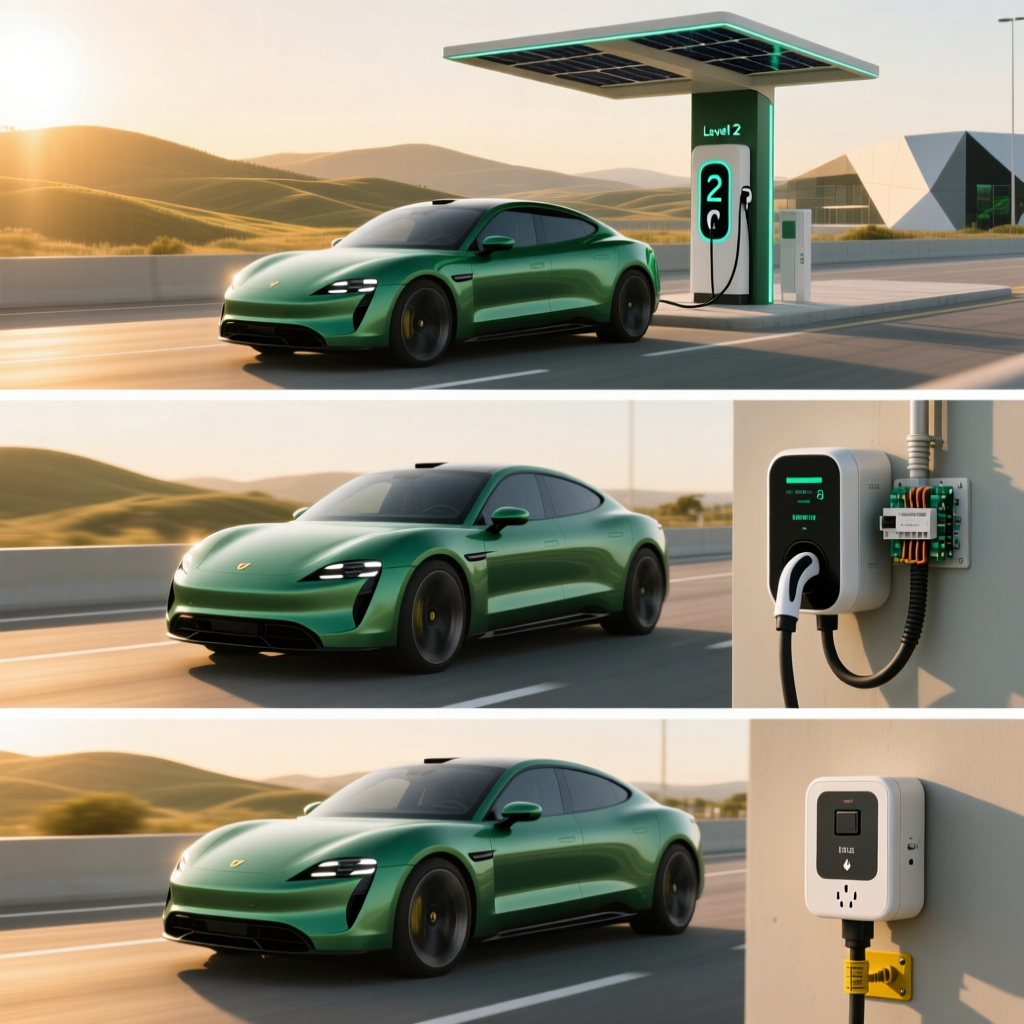
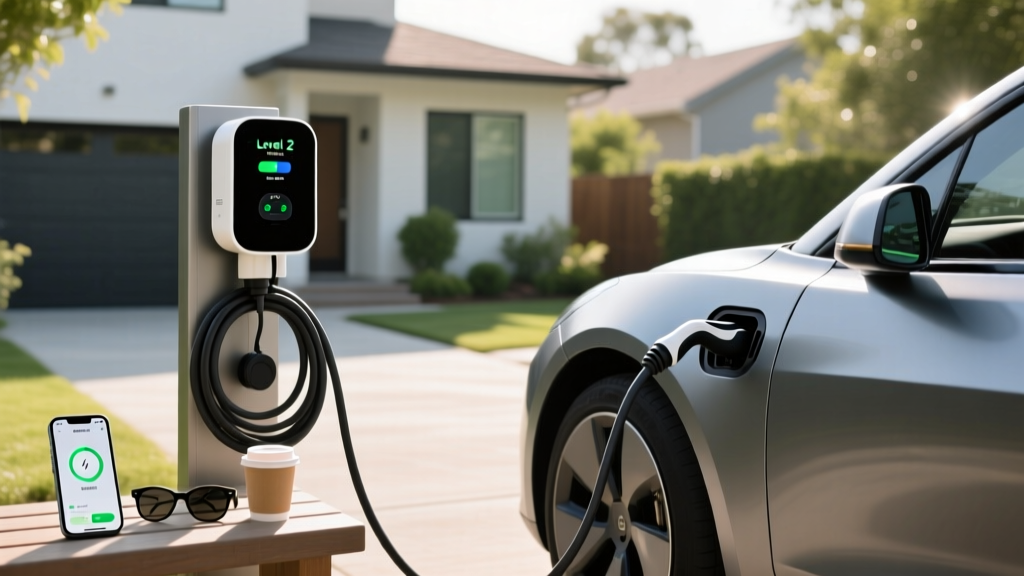
| Level 2 (240V) | 240V AC | 3.3–19.2 kW | 12–75 mi/hr | Daily home charging, workplace, hotels |
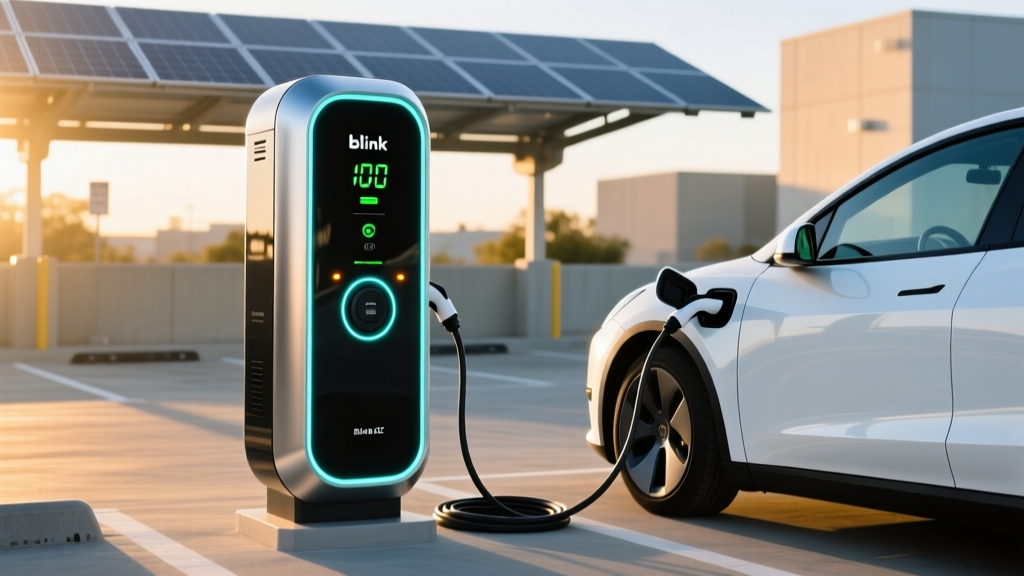
| DC Fast Charging | 400–800V DC | 50–350 kW | 150–1,200+ mi/hr (peak) | Road trips, quick top-ups on the go |
A typical 75 kWh battery (roughly the size you'll find in a 2026 Tesla Model Y Long Range or Hyundai Ioniq 5) takes about 40 hours on Level 1, 7–9 hours on a 9.6 kW Level 2 home charger, and roughly 18–25 minutes from 10–80% on a 150+ kW DC fast charger. Note that DC charging speed tapers significantly above 80% state of charge (SoC) to protect the battery — a "250 kW" charger rarely sustains that rate for the full session. The published peak kW is a ceiling, not an average.
How Much Does It Cost to Install a Home EV Charger?
This is where your 2005 Monte Carlo Supercharged never had to worry — you just needed a gas station. For an EV, home charging installation varies enormously based on your home's electrical panel, the distance from the panel to the garage or driveway, and local permitting. Here is a realistic 2026 breakdown:
| Component | Low End | Typical | High End |
|---|---|---|---|
| Level 2 EVSE (wallbox hardware) | $300 | $500–$700 | $1,000 |
| Electrician labor (240V/40–50A circuit) | $400 | $800–$1,200 | $2,000 |
| Electrical permit & inspection | $50 | $100–$250 | $400 |
| Panel upgrade (100A → 200A, if needed) | $1,500 | $2,500–$3,500 | $5,000+ |
| Total (no panel upgrade) | $750 | $1,400–$2,150 | $3,400 |
| Total (with panel upgrade) | $2,250 | $3,900–$5,650 | $8,400+ |
The panel-upgrade gotcha: Many homes built before 2010 — the kind of house you might have bought while driving that Monte Carlo — have 100-amp or even 60-amp main panels. Adding a 40-amp dedicated EV circuit on a panel that's already near capacity (electric stove, dryer, central AC) will require an upgrade to 200 amps. Budget for this possibility; a licensed electrician can assess your panel's available capacity with a load calculation. Never skip the permit — unpermitted electrical work can void homeowners insurance and cause issues at resale.
Electrical Requirements: What Your Home Needs for Level 2
A Level 2 home charger requires a 240-volt dedicated circuit, the same type of outlet your electric dryer or oven uses. The most common configurations are:
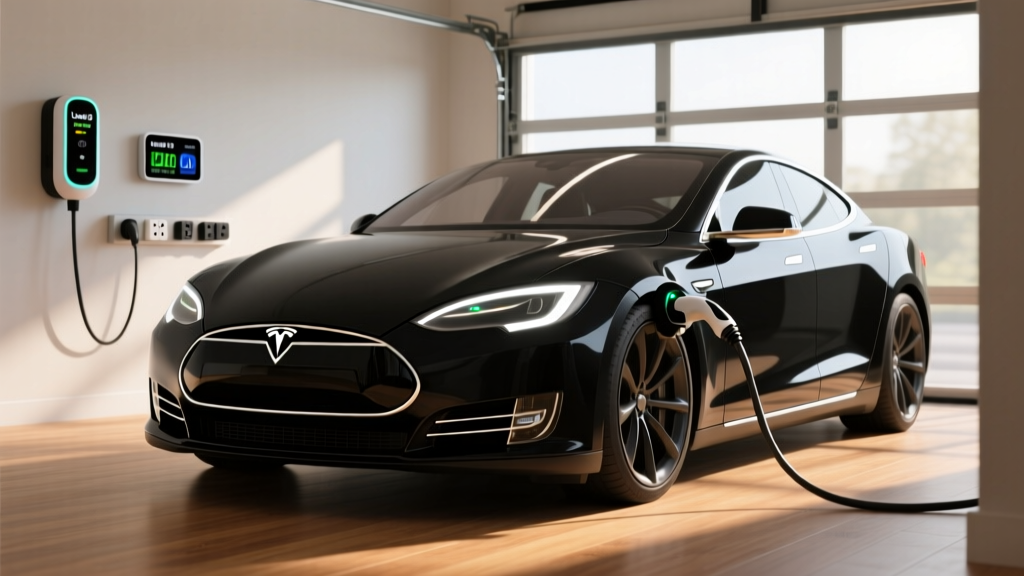
- NEMA 14-50 outlet: 50A circuit, delivers up to 40A continuous (9.6 kW). This is the most popular setup and allows you to unplug and take your charger when you move.
- NEMA 6-50 outlet: 50A circuit, 40A continuous. Common in garages that already have a welder or heavy tool outlet.
- Hardwired connection: No outlet; charger is wired directly to the breaker panel. Supports up to 48A continuous (11.5 kW) on a 60A breaker. Required for the highest-power home chargers and avoids the NEC requirement for GFCI breakers on receptacles (a 2026 code nuance that can cause nuisance trips with some EVSEs).
Safety and code considerations: The National Electrical Code (NEC) requires EV circuits to be rated at 125% of the continuous load — so a 40A charger needs a 50A breaker. Outdoor installations require a weather-rated (NEMA 4) EVSE enclosure. Your electrician should pull a permit and schedule an inspection; this protects you legally and ensures the work meets local code. If your garage is far from the panel, expect higher conduit and wire-run costs — 100+ foot runs can add $300–$600 to labor.
Connector Compatibility: NACS, CCS, and CHAdeMO in 2026
The connector landscape has consolidated significantly since the mid-2020s. Here is where things stand for the 2026 model year:
| Connector | Brands Using It (2026) | DC Fast Charge Support | Notes |
|---|---|---|---|
| NACS (Tesla / SAE J3400) | Tesla, Ford, GM, Rivian, Volvo, Polestar, Mercedes, BMW, Hyundai, Kia, Nissan (new models) | Yes — native Tesla Supercharger access | Industry standard by 2026; smaller, lighter plug |
| CCS1 | Legacy models (pre-2025 VW ID.4, some Stellantis EVs), older non-Tesla EVs still on the road | Yes — Electrify America, EVgo, ChargePoint | Being phased out for new models; adapters available |
| CHAdeMO | Nissan Leaf (older models), Mitsubishi Outlander PHEV (legacy) | Yes — declining network support | Effectively discontinued for new vehicles |
If you are buying a 2026 EV, it almost certainly has NACS. If you are buying a used CCS-equipped EV (say, a 2023–2024 Hyundai Ioniq 5 or VW ID.4), you will need a CCS-to-NACS adapter ($150–$250) to access Tesla Superchargers, which now number over 25,000 stalls in North America and represent the most reliable DC fast-charging network. Adapters from Tesla and third-party brands like Lectron are widely available. Always confirm your vehicle's onboard charger capacity — if your EV's Level 2 onboard charger maxes out at 7.7 kW, a 19.2 kW wallbox won't charge it any faster.
Charging Cost Per Mile vs. Your Old Monte Carlo Supercharged
The 2005 Monte Carlo SS Supercharged was rated at 18 city / 28 highway mpg by the EPA. Let's use a combined 21 mpg as a realistic real-world figure — supercharged engines tend to get driven hard. At a national average of $3.40/gallon for regular unleaded (the L36 takes regular, not premium), that's $0.162 per mile in fuel alone.
| Vehicle / Scenario | Energy Cost | Efficiency | Cost Per Mile |
|---|---|---|---|
| 2005 Monte Carlo Supercharged (21 mpg combined) | $3.40/gallon (regular) | 21 mpg | $0.162 |
| 2026 Tesla Model Y LR (home, off-peak) | $0.12/kWh | 3.5 mi/kWh (115 MPGe) | $0.034 |
| 2026 Hyundai Ioniq 5 (home, off-peak) | $0.12/kWh | 3.3 mi/kWh (111 MPGe) | $0.036 |
| 2026 EV (public Level 2, avg. $0.35/kWh) | $0.35/kWh | 3.4 mi/kWh | $0.103 |
| 2026 EV (DC fast charger, avg. $0.48/kWh) | $0.48/kWh | 3.4 mi/kWh | $0.141 |
| 2026 EV ( Electrify America peak, $0.64/kWh) | $0.64/kWh | 3.4 mi/kWh | $0.188 |
The takeaway is stark: home charging at off-peak rates costs roughly one-fifth what your Monte Carlo Supercharged cost per mile. Even public DC fast charging is competitive with or slightly cheaper than gasoline. But if you rely exclusively on premium-priced public chargers (airport locations, convenience-store networks charging $0.60+/kWh), you can actually exceed the per-mile cost of your old supercharged V6. This is why home charging access is the single biggest financial factor in EV ownership. According to fueleconomy.gov, the EPA's official efficiency data, most 2026 EVs achieve 100–130 MPGe combined, translating to 3.0–4.0 miles per kWh.
Equipment Picks: Best Home Level 2 Chargers in 2026
Not all wallboxes are equal. Here are four proven options across budgets, with exact specs:
Emporia Level 2 EV Charger
- Power Output: 48A (11.5 kW) hardwired / 40A (9.6 kW) NEMA 14-50
- Connector: NACS (J3400) native, CCS adapter included
- Cable Length: 24 feet
- Smart Features: Wi-Fi, energy monitoring, solar integration, scheduling via app
- Price: ~$399
- Best For: Budget-conscious buyers who want full smart features and solar-aware charging
ChargePoint Home Flex (2nd Gen)
- Power Output: Up to 50A (12 kW) hardwired, configurable down to 16A
- Connector: NACS native with CCS1 adapter option
- Cable Length: 23 feet
- Smart Features: Wi-Fi, Alexa/Google Home, amperage dial to match circuit, detailed session logs
- Price: ~$649
- Best For: Flexibility — adjustable amperage means it works on 20A to 60A circuits without rewiring
Tesla Wall Connector (Gen 4)
- Power Output: 48A (11.5 kW) hardwired
- Connector: NACS native
- Cable Length: 24 feet
- Smart Features: Wi-Fi, OTA updates, power-sharing (daisy-chain up to 6 units on one circuit for multi-EV garages)
- Price: ~$475
- Best For: Tesla and NACS-equipped EV owners who want the simplest, most reliable plug-and-go experience
Grizzl-E Smart
- Power Output: 40A (9.6 kW) NEMA 14-50 / 48A hardwired
- Connector: NACS and J1772 versions available
- Cable Length: 24 feet
- Smart Features: OCPP-compatible, works with utility demand-response programs, rugged NEMA 4 outdoor rating
- Price: ~$499
- Best For: Outdoor installs, cold climates (rated to -40°F), and utility-program participants
A note on the federal Alternative Fuel Vehicle Refueling Property Credit (IRS Form 8911): as of 2026, you may claim up to 30% of the cost of home EV charging equipment and installation (capped at $1,000) if you live in an eligible census tract. Check the IRS guidelines or consult a tax professional — eligibility depends on your specific location and income. This credit is separate from the §30D new-EV purchase credit.
Charging Time Examples: What to Expect with Common Battery Sizes
Charging time depends on your battery's usable capacity (kWh), the charger's power output (kW), and your vehicle's onboard charger limit. Here are realistic 10–80% times for popular 2026 EVs:
- 2026 Tesla Model Y Long Range (75 kWh usable): 10–80% in ~20 minutes on a 250 kW Supercharger (peak ~170 kW sustained); ~8 hours on a 9.6 kW home Level 2.
- 2026 Hyundai Ioniq 5 (77.4 kWh usable, 800V architecture): 10–80% in ~18 minutes on a 350 kW charger (peak ~240 kW sustained); ~8.5 hours on a 9.6 kW home Level 2.
- 2026 Ford F-150 Lightning Extended Range (131 kWh usable): 10–80% in ~38 minutes on a 150 kW charger; ~14 hours on a 9.6 kW home Level 2 (this is a big battery — plan accordingly).
- 2026 Chevrolet Equinox EV (85 kWh usable): 10–80% in ~28 minutes on a 150 kW charger; ~9 hours on a 9.6 kW home Level 2.
Charge-curve reality check: Manufacturers advertise peak kW, but batteries can only accept that rate at low states of charge (typically 10–30% SoC). As the battery fills, the battery management system (BMS) tapers the charge rate to prevent lithium plating and overheating. A charger rated for 150 kW might deliver 150 kW at 15% SoC but drop to 50 kW by 75% SoC. This is why 10–80% time is the industry-standard metric — charging from 80–100% can take as long as the 10–80% session. For daily driving, most owners set their charge limit to 80% (or 100% for LFP chemistry batteries, which tolerate full charges better) and only charge to 100% before road trips.
Frequently Asked Questions
How much does it cost to install a home EV charger?
For a typical Level 2 installation on an existing 200-amp panel with the outlet within 30 feet of the breaker box, expect $1,400–$2,150 all-in (equipment, electrician, and permit). If your home needs a panel upgrade from 100A to 200A, add $1,500–$5,000+. Always get a load calculation from a licensed electrician before assuming your panel has spare capacity.
How fast will each charging level add range?
Level 1 (120V) adds roughly 3–5 miles of range per hour — fine for plug-in hybrids with small batteries, but painfully slow for a full-size EV. Level 2 (240V, 40A) adds about 30–35 miles per hour, enough to fully replenish most EVs overnight. DC fast charging at 150 kW can add 150+ miles in 15 minutes at peak rates, though sustained speeds vary by battery temperature and state of charge.
Which connector/charger is compatible with my EV?
For 2026 models, nearly every major automaker has adopted NACS (SAE J3400). If you are buying a used 2022–2025 EV with a CCS1 port, a CCS-to-NACS adapter ($150–$250) unlocks the Tesla Supercharger network. CHAdeMO is effectively dead for new vehicles. Check your vehicle's owner manual or the fueleconomy.gov listing for your specific model to confirm connector type and onboard charger capacity.
How much does charging cost per mile vs. gas?
Home charging at $0.12/kWh costs roughly $0.03–$0.04 per mile for a typical EV — about one-quarter to one-fifth the cost of fueling a 21 mpg vehicle at $3.40/gallon ($0.16/mile). Public DC fast charging at $0.40–$0.50/kWh brings the cost closer to $0.12–$0.15 per mile, still competitive with gas but no longer a dramatic savings. The financial case for an EV depends heavily on reliable home charging access.
What electrical upgrades might I need?
The most common upgrade is a panel increase from 100A to 200A service, which costs $1,500–$5,000 depending on your utility and local labor rates. You may also need a new breaker slot (if your panel is full), a longer conduit run (if the garage is far from the panel), or a meter-main replacement on older homes. Some utilities offer rebates or time-of-use rate plans that offset these costs — contact your local provider before scheduling work.