The Tesla Model Y Long Range is one of the most efficient electric vehicles on the road, boasting an EPA-estimated range of up to 320 miles (for the 2025/2026 refresh). However, achieving those "long range miles" in the real world depends entirely on how you manage your battery's health and charging habits. Whether you are installing a Level 2 charger at home or navigating the Supercharger network, understanding the relationship between power (kW) and energy (kWh) is the key to maximizing your efficiency.
Understanding the Model Y Long Range Battery and Efficiency
The current Model Y Long Range All-Wheel Drive utilizes an 81 kWh (usable) battery pack, typically featuring a mix of NMC (Nickel Manganese Cobalt) or LFP (Lithium Iron Phosphate) chemistry depending on the production batch and region. While the EPA sticker says 320 miles, real-world efficiency is often closer to 3.5 to 4.0 miles per kWh.
Real-World Range Expectations
EPA Sticker: 320 Miles
Highway (70+ mph): ~270-290 Miles
Cold Weather (Below 32°F): ~220-250 Miles
Efficiency Target: 250-270 Wh/mi
To maintain these miles over the long term, Tesla recommends keeping the battery between 20% and 80% State of Charge (SoC) for daily use, only charging to 100% for long road trips. This practice reduces stress on the battery cells and slows degradation.
Charging Levels: Speeds and Miles Added Per Hour
The speed at which you replenish your Model Y's battery is measured in kilowatts (kW). The total energy stored is measured in kilowatt-hours (kWh). Here is how each level translates to range recovery for the Model Y Long Range.
| Charging Level | Voltage / Amperage | Power (kW) | Miles of Range Added/Hour |
|---|---|---|---|
| Level 1 (Standard Outlet) | 120V / 12A | 1.4 kW | 3-5 miles |
| Level 2 (Home/Public AC) | 240V / 32A-48A | 7.7 - 11.5 kW | 25-44 miles |
| DC Fast Charging | 400V+ Architecture | Up to 250 kW | Up to 1,000+ miles/hr (peak) |
Why DC Fast Charging Tapers
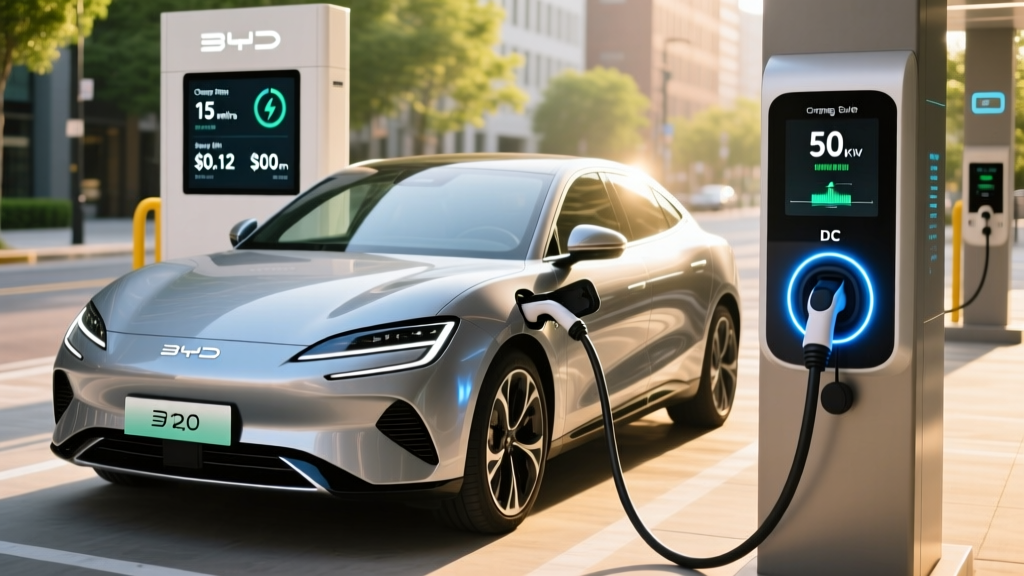
When you plug into a 250 kW Supercharger, the car only pulls that peak power between 10% and roughly 30% SoC. As the battery fills, the Battery Management System (BMS) restricts power to prevent overheating. A 10-80% charge typically takes 25-30 minutes, but the jump from 80-100% can take just as long.
Home Charger Installation: Costs and Electrical Requirements
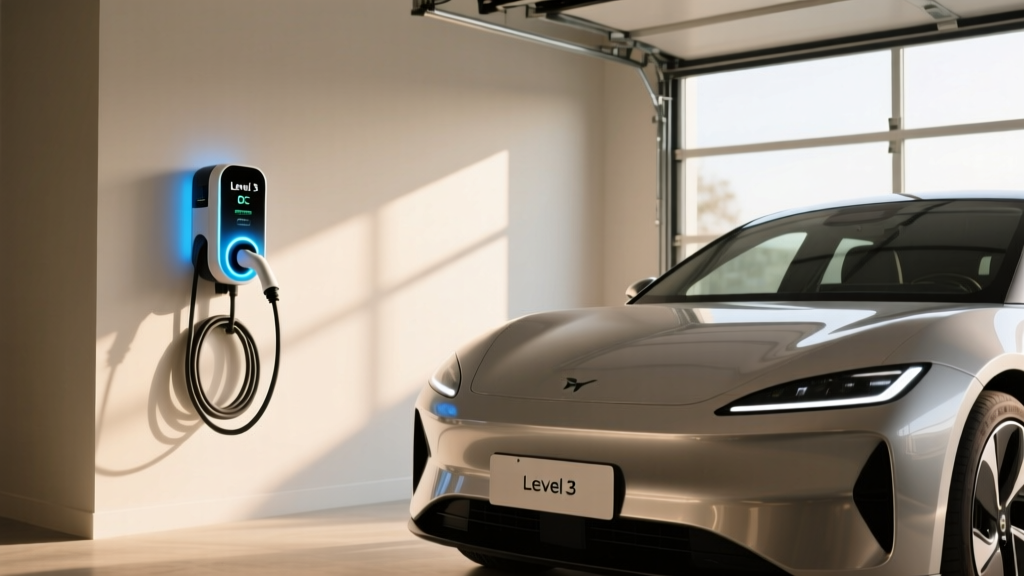
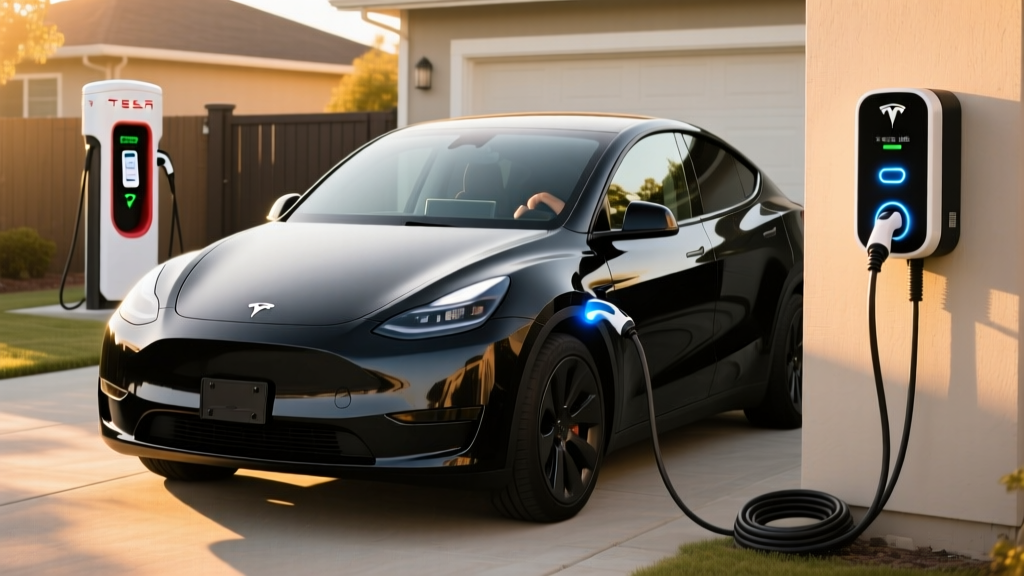
To get the most out of your Model Y, a Level 2 home setup is essential. The Tesla Wall Connector or a high-quality third-party J3400 (NACS) charger can deliver up to 11.5 kW (48 Amps) if your electrical panel supports it.
Electrical Requirements and Panel Upgrades
A 48A charger requires a dedicated 60A circuit (following the 80% continuous load rule). If your home has an older 100A or 150A panel, you may need a service upgrade to 200A, which is a significant additional cost.
| Component | Estimated Cost Range | Notes |
|---|---|---|
| Level 2 Equipment | $400 - $700 | Tesla Wall Connector, ChargePoint, etc. |
| Electrician (Labor & Materials) | $800 - $2,500 | Varies by distance from panel and conduit needs. |
| Permits | $100 - $300 | Required by most local codes for new circuits. |
| Panel Upgrade (If Needed) | $2,000 - $5,000 | Only if current panel lacks capacity. |
| Total Estimated Cost | $1,300 - $8,500 | Most simple installs fall in the $1,500 range. |
Connector Compatibility: NACS vs. CCS1
As of 2025/2026, the North American Charging Standard (NACS)—formerly the Tesla connector—has become the industry standard. Most new EVs from Ford, GM, and Rivian now ship with NACS ports, making the Tesla Supercharger network accessible to nearly everyone.
| Connector Type | Compatibility | Adapter Needs |
|---|---|---|
| NACS (J3400) | Tesla, Ford, GM, Rivian, etc. | None for Tesla; others may need adapters for legacy CCS stations. |
| CCS1 | Legacy EVs (Hyundai, VW, etc.) | Tesla provides a CCS adapter for non-Tesla chargers. |
| CHAdeMO | Nissan Leaf (older) | Largely obsolete; requires specific adapter. |
The Economics: Cost Per Mile vs. Gas
The cost to "fuel" your Model Y varies dramatically between home and public charging. Assuming an efficiency of 3.5 miles per kWh:
| Scenario | Price per kWh | Cost per Mile | Equivalent Gas Price (at 30 MPG) |
|---|---|---|---|
| Home (Off-Peak) | $0.13 | $0.037 | $1.11 per gallon |
| Home (Peak) | $0.30 | $0.085 | $2.55 per gallon |
| Public Level 2 | $0.45 | $0.128 | $3.84 per gallon |
| DC Fast Charging | $0.60 | $0.171 | $5.13 per gallon |
Data sourced from Fueleconomy.gov and national utility averages.
Recommended Equipment for the Model Y
Tesla Wall Connector (Gen 3/4)
Power: 11.5 kW (48A)
Connector: NACS (Native)
Features: Wi-Fi updates, Power Sharing, 24ft cable.
Price: ~$475
ChargePoint Home Flex (NACS version)
Power: Up to 12 kW (50A)
Connector: NACS
Features: Alexa integration, detailed app tracking, 23ft cable.
Price: ~$699
Emporia Vue EV Charger
Power: 11.5 kW (48A)
Connector: NACS or J1772
Features: Energy monitoring, solar integration, budget-friendly.
Price: ~$399
Frequently Asked Questions
How much does it cost to install a home EV charger?
Most standard installations range from $1,300 to $2,500 including the charger, permit, and electrician. Costs rise significantly if a panel upgrade or long trenching is required.
How fast will each charging level add range?
Level 1 adds ~4 miles per hour; Level 2 adds 25-44 miles per hour; DC Fast Charging can add up to 200 miles in 15 minutes at peak power.
Which connector is compatible with my Model Y?
Your Model Y uses the NACS connector natively. You will need a CCS adapter (available from Tesla) if you wish to use non-Tesla public DC fast chargers that only offer CCS cables.
What electrical upgrades might I need?
If you want a 48A charger, you need a 60A breaker. If your panel is already near capacity, you may need a "service upgrade" to 200A or a smart panel like the SPAN that manages load dynamically.
Is it safe to charge in the rain?
Yes. EV chargers and vehicle ports are designed to be weather-tight. Ensure your outdoor charger is NEMA 4 rated and installed with a GFCI breaker as per local electrical code.