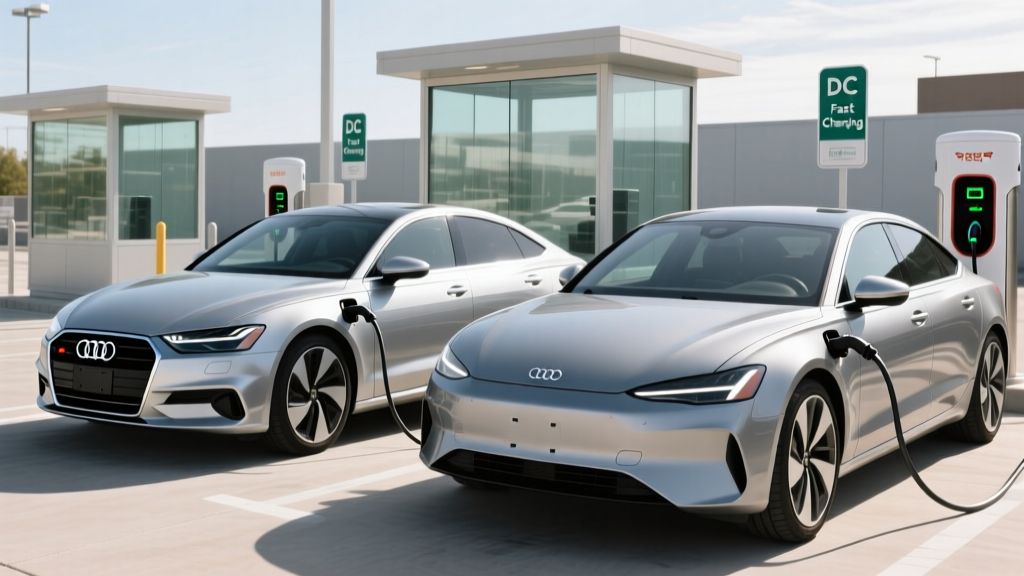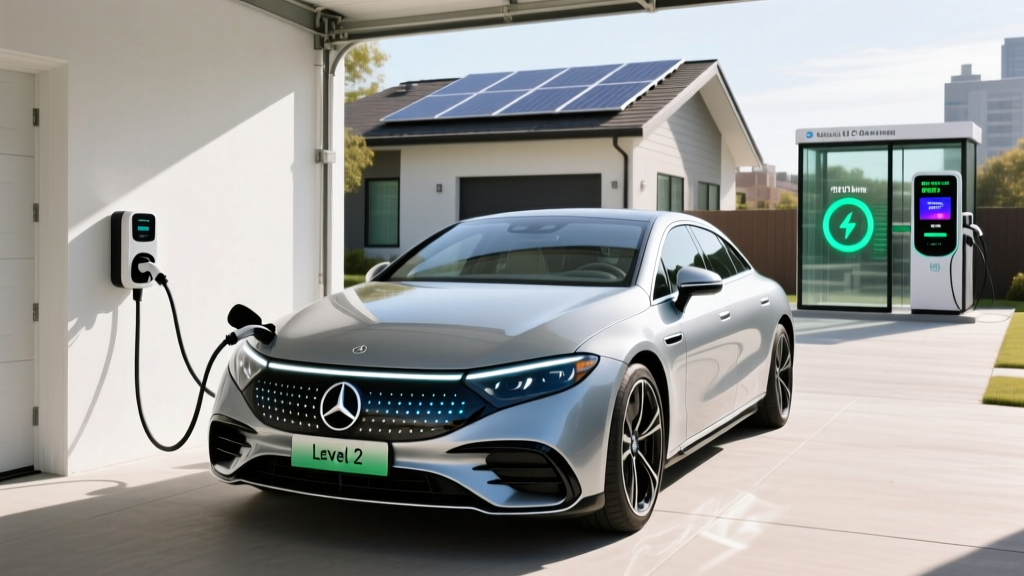
The Mercedes-Benz EQS 450+ has long been the benchmark for luxury electric sedans, and its headline figure — an EPA-estimated 390 miles of range for the 2025 model year (with certain configurations pushing toward the widely cited 453-mile WLTP figure abroad) — keeps it at the top of buyer shortlists. But if you've been searching for the Mercedes EQS 575 mile range, you've likely encountered a mix of concept-car projections, WLTP-to-EPA translation errors, and early rumor-mill figures for a future ultra-long-range variant. As of the 2026 model year, no production EQS carries a 575-mile EPA sticker. The closest real-world anchor is the EQS 450+ sedan at 390 miles EPA (with the SUV variant at 330–371 miles depending on trim).
Regardless of which EQS you're charging — or whether you're planning for a future higher-capacity pack — the charging fundamentals are identical. This guide covers exactly how to charge a large-battery Mercedes EQS at home and on the road, with precise kW speeds, installation costs, connector compatibility, and cost-per-mile math.
Mercedes EQS Battery and Charging Specs at a Glance
Before we break down charging levels, here's what you're working with under the floor. The current EQS platform uses a 118 kWh usable lithium-ion battery pack (NMC chemistry) across most trims, with a maximum DC fast-charge acceptance rate of 200 kW. That large battery is both the EQS's greatest strength (cross-country range) and its charging challenge (more kWh to replenish means longer session times at lower power).
| Spec | EQS 450+ Sedan | EQS 580 4MATIC | EQS SUV 450+ |
|---|---|---|---|
| EPA Range | 390 mi | 371 mi | 330–371 mi |
| Usable Battery | 118 kWh (NMC) | 118 kWh (NMC) | 118 kWh (NMC) |
| Max DC Fast Charge | 200 kW | 200 kW | 200 kW |
| 10–80% DCFC Time | ~31 min | ~31 min | ~31 min |
| Level 2 AC Acceptance | 9.6 kW | 9.6 kW | 9.6 kW |
| Native Connector | CCS1 (NACS adapter available) | CCS1 (NACS adapter available) | CCS1 (NACS adapter available) |
| MPGe (Combined) | 95 MPGe | 91 MPGe | 89–97 MPGe |
Charging Levels Explained: kW, Speeds, and Miles Per Hour
Understanding EV charging requires keeping two units straight: kW (kilowatts) measures power — how fast energy flows into the battery. kWh (kilowatt-hours) measures energy — the total capacity of the battery, like gallons in a fuel tank. A 200 kW charger delivers energy faster than a 9.6 kW charger, but the battery still holds 118 kWh regardless.
| Level | Voltage / Amps | Power (kW) | Miles of Range Per Hour | Best Use Case |
|---|---|---|---|---|
| Level 1 (Standard Outlet) | 120V / 12A | ~1.4 kW | ~4 mi/hr | Emergency / overnight trickle |
| Level 2 (Home / Workplace) | 240V / 40A | 9.6 kW | ~29 mi/hr | Daily home charging |
| DC Fast Charging | 400V+ DC | Up to 200 kW | ~580+ mi/hr (peak) | Road trips, rapid top-ups |
For the EQS's 118 kWh battery, a full Level 1 charge from empty would take roughly 84 hours — essentially useless as a primary strategy. Level 2 at 9.6 kW replenishes the full pack in about 12.5 hours, which is ideal for overnight charging. DC fast charging peaks at 200 kW but tapers significantly above 80% State of Charge (SoC), which is why manufacturers quote 10–80% times (~31 minutes) rather than 0–100%.
Home Charger Installation: Electrical Requirements and Costs
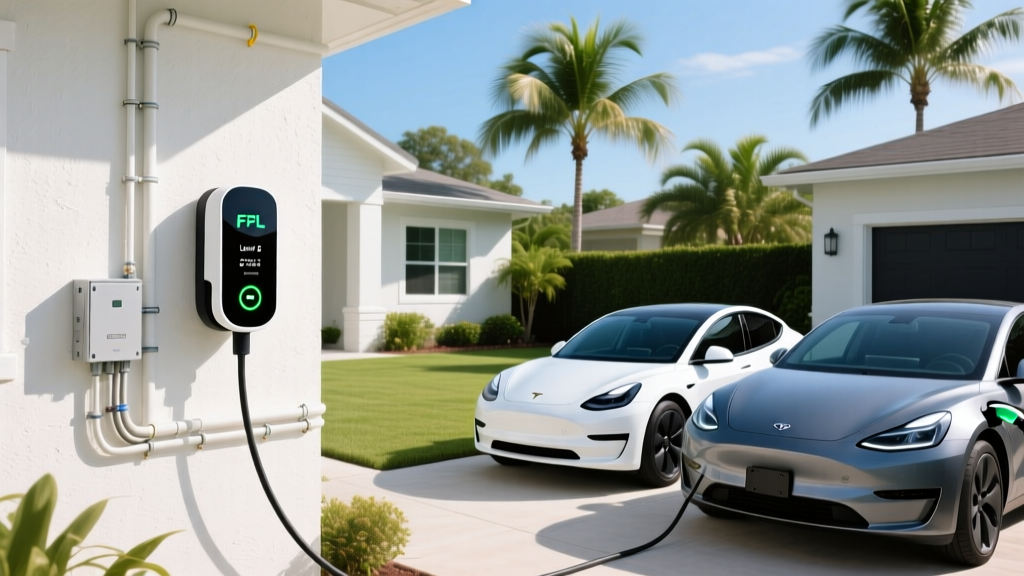
Installing a Level 2 home charger for the EQS is the single most impactful upgrade you can make for daily ownership. Here's what's involved electrically and financially.
Electrical Requirements
The EQS accepts up to 9.6 kW on Level 2 AC, which requires a 240-volt circuit rated at 40 amps minimum (a 50-amp breaker is standard practice, as the National Electrical Code requires circuits to be rated at 125% of continuous load — 40A × 1.25 = 50A breaker). You'll need:
- A dedicated 50-amp, 240V circuit (NEMA 14-50 outlet or hardwired connection)
- 6 AWG copper wire (or 4 AWG aluminum) from your panel to the charger location
- Sufficient panel capacity — ideally 200-amp service for modern homes with an EV
- GFCI protection if using a receptacle (hardwired chargers have built-in ground-fault protection)
Panel Upgrade Considerations
Homes built before 2000 often have 100-amp or 150-amp electrical panels. Adding a 50-amp EV circuit to an already-loaded 100A panel may require a panel upgrade to 200 amps, which is the most expensive variable in EV charger installation. A licensed electrician will perform a load calculation to determine if your existing panel can handle the EV circuit alongside HVAC, electric oven, dryer, and other major loads.
| Component | Cost Range | Notes |
|---|---|---|
| Level 2 Charger (Equipment) | $400 – $750 | Smart Wi-Fi-enabled, 40–48A rated |
| Electrician Labor | $500 – $1,500 | Varies by run length, wall type, conduit |
| Electrical Permit | $50 – $250 | Required in most jurisdictions |
| Panel Upgrade (if needed) | $1,500 – $4,000 | 100A → 200A service upgrade |
| Total (no panel upgrade) | $950 – $2,500 | Typical for modern homes |
| Total (with panel upgrade) | $2,450 – $6,500 | Older homes with 100A service |
Always hire a licensed electrician and pull a permit. Unpermitted electrical work can void homeowner's insurance claims and create fire risk — particularly important with a high-draw appliance like an EV charger running for 8+ hours continuously.
Connector Compatibility: NACS, CCS1, and Adapter Needs
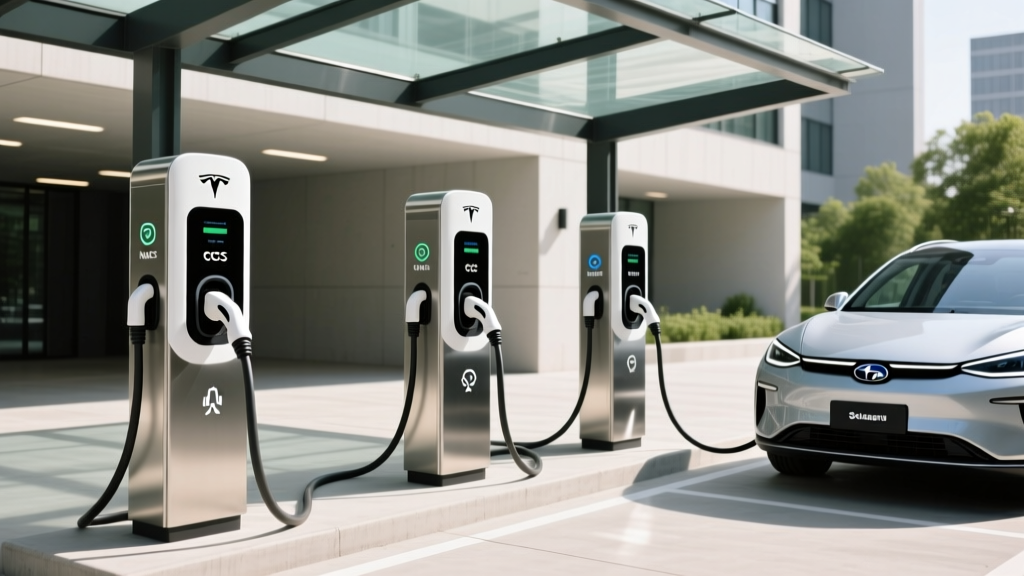
The Mercedes-Benz EQS ships with a CCS1 (Combined Charging System) port in North America. However, Mercedes-Benz has committed to adopting the North American Charging Standard (NACS) — the Tesla-designed connector — on new vehicles, and current EQS owners can access Tesla Superchargers using a manufacturer-approved CCS-to-NACS adapter.
| Connector | Native on EQS? | Adapter Needed? | Network Access |
|---|---|---|---|
| CCS1 | Yes (native) | No | Electrify America, EVgo, ChargePoint DCFC |
| NACS (Tesla) | No | Yes — Mercedes-approved CCS-to-NACS adapter (~$250) | Tesla Supercharger network (16,000+ stalls) |
| CHAdeMO | No | Not available (obsolete for new EVs) | Limited legacy stations |
| J1772 (Level 2 AC) | Yes (CCS1 includes J1772) | No | All public Level 2 stations |
Charging Cost: Per-Mile Economics vs. Gasoline
The EQS 450+ achieves roughly 3.0–3.3 miles per kWh in mixed driving (95 MPGe combined per fueleconomy.gov). That efficiency figure lets us calculate precise cost-per-mile across different charging scenarios.
| Scenario | Rate | Cost Per kWh | Cost Per Mile | Cost for 300 mi |
|---|---|---|---|---|
| Home (off-peak utility rate) | $0.12/kWh | $0.12 | $0.038 | $11.40 |
| Home (average US rate) | $0.17/kWh | $0.17 | $0.054 | $16.20 |
| Public Level 2 | $0.25–$0.35/kWh | $0.30 | $0.095 | $28.50 |
| DC Fast (Electrify America) | $0.38–$0.52/kWh | $0.48 | $0.153 | $45.90 |
| Gas equivalent (25 MPG, $3.50/gal) | — | — | $0.140 | $42.00 |
The takeaway: home charging on off-peak rates delivers fuel costs roughly 70–75% below gasoline. Even DC fast charging on road trips costs roughly the same as — or slightly more than — premium gasoline in a comparable S-Class. The EQS owner who charges at home 80% of the time and uses DCFC only for road trips will see significant annual savings.
Recommended Level 2 Chargers for the Mercedes EQS
With a 9.6 kW AC acceptance rate, the EQS benefits from a 40-amp or 48-amp Level 2 charger. Here are three proven options matched to the EQS's needs:
ChargePoint Home Flex
- Power: Up to 12 kW (50A) — adjustable via DIP switch
- Connector: J1772 (CCS-compatible)
- Cable Length: 23 ft
- Smart Features: Wi-Fi, app scheduling, Alexa, load sharing
- Price: ~$549
Best for: Flexible amperage settings if your panel has limited headroom.
Tesla Wall Connector (with J1772 adapter)
- Power: Up to 11.5 kW (48A)
- Connector: NACS native — use J1772 adapter for EQS
- Cable Length: 24 ft
- Smart Features: Wi-Fi, OTA updates, power sharing with multiple units
- Price: ~$450 + adapter
Best for: Households with both a Tesla and a Mercedes EQS.
Emporia Vue Smart EV Charger
- Power: Up to 11.5 kW (48A)
- Connector: J1772 (CCS-compatible)
- Cable Length: 24 ft
- Smart Features: Wi-Fi, energy monitoring, solar integration, scheduling
- Price: ~$399
Best for: Budget-conscious buyers who want energy tracking and solar pairing.
DC Fast Charging on the Road: What to Expect
The EQS's 200 kW peak DC fast-charge rate is competitive among luxury EVs, but real-world charging curves tell a more nuanced story than the peak number alone. Here's what actually happens during a typical road-trip charging session:
- 10–30% SoC: The EQS ramps quickly to its 200 kW peak, adding roughly 150 miles of range in about 10 minutes.
- 30–60% SoC: Sustained power hovers around 150–180 kW as the battery management system moderates thermal load.
- 60–80% SoC: Power tapers to 80–120 kW to protect cell longevity. The full 10–80% session takes approximately 31 minutes at a properly rated 350 kW station.
- Above 80% SoC: Sharp taper to under 50 kW. Charging from 80–100% can take nearly as long as 10–80%. Plan your stops to leave at 80% unless you absolutely need a full pack.
Always precondition the battery before DC fast charging. The EQS does this automatically when you navigate to a charging station in the MBUX system — it warms or cools the battery to the optimal temperature window for maximum charge acceptance. Skipping preconditioning (e.g., pulling into a charger without navigation guidance) can reduce peak charge rates by 30–50%, especially in cold weather.
Safety, Code, and Installation Best Practices
EV charging is a high-duration, high-current electrical load. Follow these non-negotiable safety principles:
- Dedicated circuit: Your EV charger must be on its own dedicated breaker — never shared with other appliances.
- Hardwired vs. plug-in: Hardwired installations eliminate the NEMA 14-50 receptacle as a failure point and are preferred for 48A+ chargers. If using a 14-50 outlet, ensure it's a commercial-grade receptacle (Hubbell or Bryant) — residential-grade 14-50 outlets have been linked to overheating under continuous EV loads.
- Outdoor rating: If your charger is mounted outdoors, ensure it carries a NEMA 4 (weatherproof) rating. All recommended chargers above are outdoor-rated.
- GFCI protection: Required for receptacle-based installations per NEC 2020+. Hardwired units handle ground-fault protection internally.
- Cable management: Use a wall-mounted cable organizer to prevent the charging cable from resting on the ground, where it can be damaged or become a trip hazard.
Frequently Asked Questions
Does a Mercedes EQS with 575 miles of range exist?
Not as of the 2026 model year. The highest-range production EQS is the 450+ sedan at 390 miles EPA. The 575-mile figure occasionally appears in early speculation about future solid-state battery variants or as a WLTP-to-miles mistranslation. Mercedes has announced solid-state battery testing, but no production timeline or range figure is confirmed. Any EQS you can buy today tops out near 390 EPA miles.
How much does it cost to install a home EV charger for the EQS?
Expect $950–$2,500 for a standard installation in a home with a 200-amp panel and a short wire run. If your home needs a panel upgrade from 100A to 200A, add $1,500–$4,000, bringing the total to $2,450–$6,500. Always get a quote from a licensed electrician who will perform a load calculation first.
How fast will each charging level add range to the EQS?
Level 1 (120V) adds about 4 miles per hour. Level 2 (240V, 40A) adds about 29 miles per hour — enough to fully replenish the 118 kWh battery overnight in roughly 12.5 hours. DC fast charging at 200 kW peak can add up to 150 miles in about 10 minutes during the initial ramp, with a full 10–80% session taking approximately 31 minutes.
Which connector do I need for my Mercedes EQS?
The EQS uses a CCS1 connector natively, compatible with Electrify America, EVgo, and most non-Tesla DCFC networks. To access Tesla Superchargers, you'll need a Mercedes-approved CCS-to-NACS adapter. For Level 2 AC charging, the CCS1 port accepts standard J1772 connectors without any adapter.
How much does charging the EQS cost per mile compared to gas?
At home on average US electricity rates ($0.17/kWh), the EQS costs about $0.054 per mile — roughly 60% less than a gasoline S-Class getting 25 MPG at $3.50/gallon ($0.14/mile). On DC fast chargers at $0.48/kWh, the cost rises to $0.153/mile, slightly above gasoline. Maximize home charging to capture the full economic advantage.
What electrical upgrades might I need for a home charger?
If your home has a 200-amp electrical panel with available capacity, you likely need only a new 50-amp breaker and a wire run to the charger location. Homes with 100-amp or 150-amp panels — common in pre-2000 construction — may require a full panel upgrade ($1,500–$4,000). An electrician's load calculation will determine this before any work begins.
Sources: EPA range and efficiency data via fueleconomy.gov. Mercedes-Benz EQS specifications via mbusa.com. NEC electrical code requirements per National Fire Protection Association. IRS §30D tax credit rules via irs.gov — consult a tax professional for eligibility, as income caps, MSRP limits, and battery sourcing requirements apply.