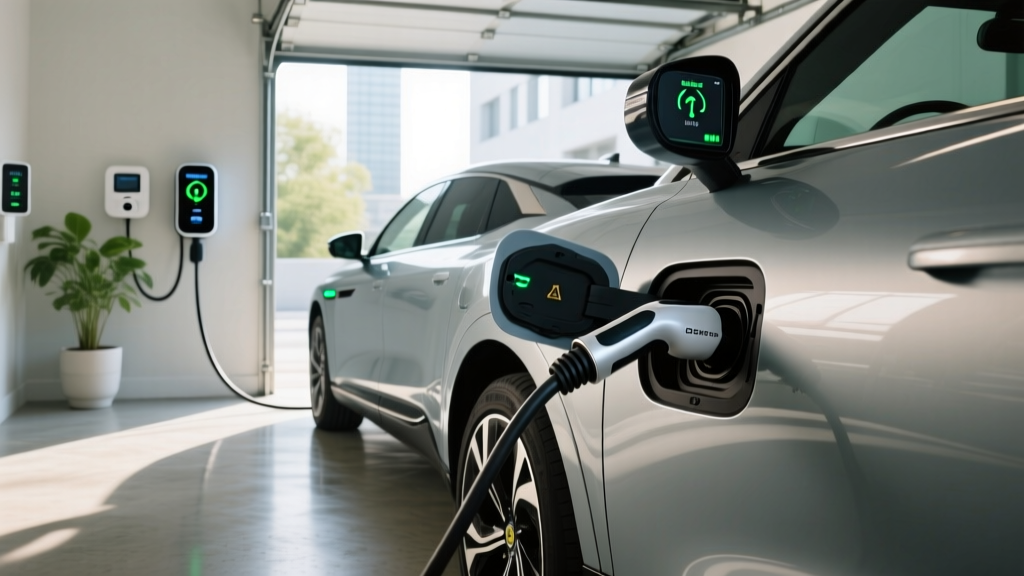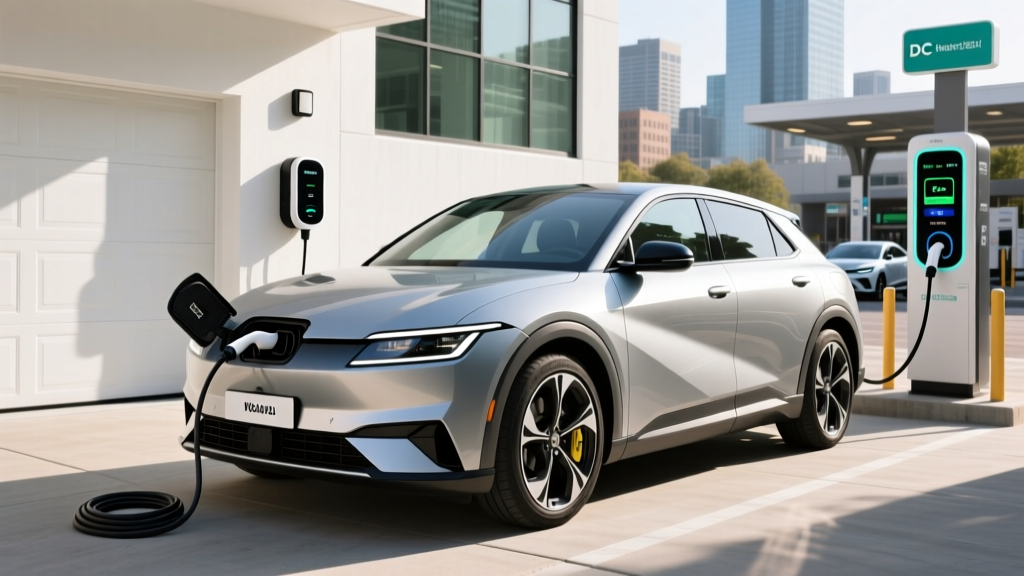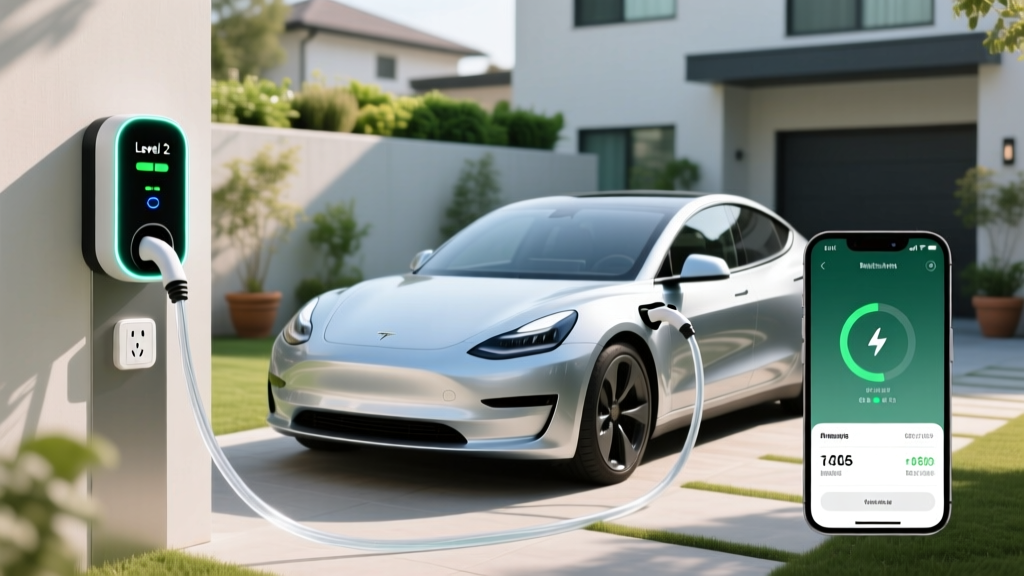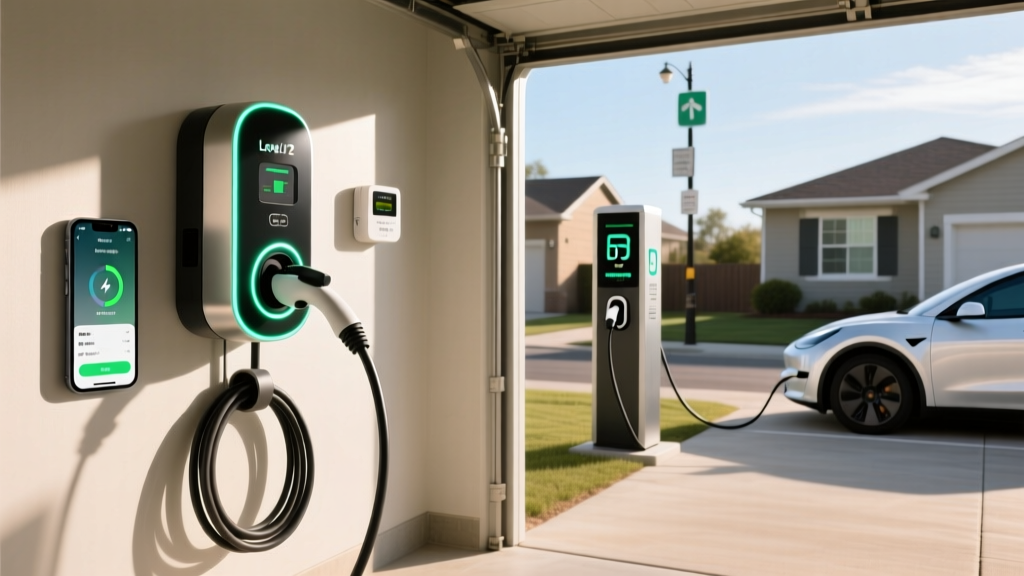
If you spent years enjoying the whine of a Miller-cycle supercharger in a late-90s Mazda Millenia, stepping into a modern electric vehicle feels like jumping forward three decades. There's no supercharger to spool up, no 2.3L V6 to warm up — just instant torque, silent acceleration, and a new vocabulary: kilowatts, charge curves, and connector standards. The single biggest adjustment for owners transitioning from legacy internal-combustion cars isn't driving the EV itself; it's understanding how to fuel it.
This guide breaks down every charging scenario you'll encounter — from the 120V outlet in your garage to 350 kW DC fast chargers on the interstate — with exact speeds, costs, and equipment recommendations for 2026's EV landscape.
Charging Levels Explained: How Fast Will Each Level Add Range?
EV charging is categorized into three levels, defined by voltage and power output. Power is measured in kW (kilowatts) — the rate at which energy flows into the battery. The battery's capacity is measured in kWh (kilowatt-hours) — the total energy it stores. Think of kW as the width of the hose and kWh as the size of the bucket. Confusing the two is the most common mistake new EV owners make.
| Level | Voltage | Power (kW) | Miles of Range Added per Hour | Best Use Case |
|---|---|---|---|---|
| Level 1 | 120V AC | 1.0–1.4 kW | 3–5 miles | Overnight top-ups, PHEVs, low-mileage drivers |
| Level 2 | 240V AC | 3.3–19.2 kW | 12–75 miles | Daily home charging, workplace, destinations |
| DC Fast Charging | 400–800V DC | 50–350 kW | 150–1,200+ miles (equivalent/hr) | Road trips, rapid top-ups, commercial fleets |
A practical example: a 2026 Hyundai Ioniq 5 with an 84 kWh (usable) battery and ~300 miles of EPA range. On Level 1, a full charge from empty takes roughly 70+ hours. On a 48-amp Level 2 home charger (11.5 kW), it takes about 7.5 hours. On a 240 kW DC fast charger, it reaches 10–80% in approximately 18 minutes. The difference is enormous — and it's why Level 2 home charging is the backbone of EV ownership.
Home Charger Installation: Electrical Requirements, Costs & Panel Upgrades
Installing a Level 2 charger at home is the single highest-impact upgrade an EV owner can make. It transforms your garage into a personal gas station — wake up every morning with a full battery. But the installation cost varies wildly depending on your home's electrical infrastructure.
Electrical Requirements
Most Level 2 home chargers require a 240V dedicated circuit, similar to what powers an electric dryer or oven. The amperage depends on the charger:
- 32-amp charger (7.7 kW): requires a 40-amp breaker
- 40-amp charger (9.6 kW): requires a 50-amp breaker
- 48-amp charger (11.5 kW): requires a 60-amp breaker
- 80-amp charger (19.2 kW): requires a 100-amp breaker — common in homes with 200A+ panels only
National Electrical Code (NEC) requires the circuit breaker to be rated at 125% of the charger's continuous draw. A licensed electrician must calculate your panel's available capacity before installation.
Do You Need a Panel Upgrade?
Homes built before 2000 often have 100-amp or 150-amp service panels. If your panel is near capacity — running electric heat, a dryer, an oven, and A/C — adding a 48-amp EV circuit may push it over the limit. Signs you may need a panel upgrade:
- Your panel is 100A or 150A and already has few open breaker slots
- Your electrician's load calculation shows less than 40 amps of spare capacity
- You have a Federal Pacific or Zinsco panel (known safety hazards that insurers may require replacing)
A panel upgrade from 100A to 200A typically costs $1,500–$3,500 before the charger circuit is even run. This is the single biggest variable in home charging cost, and it's why getting multiple electrician quotes is essential.
Installation Cost Breakdown
| Component | Simple Install (panel nearby, no upgrade) | Complex Install (long wire run, panel upgrade) |
|---|---|---|
| Level 2 Charger (Equipment) | $300–$700 | $300–$700 |
| Electrician Labor (2–4 hrs simple / 6–12 hrs complex) | $300–$800 | $1,000–$2,500 |
| Permit & Inspection | $50–$200 | $50–$300 |
| Panel Upgrade (if needed) | $0 | $1,500–$3,500 |
| Conduit, Wire, Misc. Materials | $50–$200 | $200–$800 |
| Total Estimated Cost | $700–$1,900 | $3,050–$7,800 |
Many utilities and state agencies offer rebates that offset $200–$1,000 of installation costs. Check your local utility's EV program page before scheduling work. The federal Alternative Fuel Vehicle Refueling Property Credit (IRC §30C) may also cover up to 30% of home charger equipment and installation costs (capped at $1,000), subject to census-tract eligibility — consult a tax professional for your specific situation.
Connector Compatibility: NACS, CCS1, CHAdeMO & Adapter Needs
The connector landscape has consolidated dramatically since 2023, when Ford and GM began adopting Tesla's North American Charging Standard (NACS). As of 2026, NACS is the dominant connector for new EVs sold in North America. Here's where each brand stands:
| Connector Standard | Brands Using It (2026 Models) | Public Network Access |
|---|---|---|
| NACS (J3400) | Tesla, Ford, GM, Rivian, Volvo, Polestar, Mercedes-Benz, Nissan (new models), Hyundai/Kia (select 2026 models) | Tesla Supercharger network (17,000+ stalls), Electrify America (new stalls), EVgo |
| CCS1 (Combo) | Hyundai/Kia (remaining models), BMW, Stellantis, VW (ID.4 through current gen), legacy models | Electrify America, EVgo, ChargePoint, most non-Tesla networks |
| CHAdeMO | Nissan Leaf (legacy), Mitsubishi Outlander PHEV (legacy) | Declining — some Electrify America and EVgo stalls still support it |
Adapter reality: If you drive a CCS-equipped EV (e.g., a 2024–2025 Hyundai Ioniq 5), you can purchase a CCS-to-NACS adapter ($150–$250 from brands like Lectron or A2Z) to access Tesla Superchargers. Ford and GM include these adapters with many models. Conversely, NACS-equipped vehicles can use a NACS-to-CCS adapter for older public stations. For home Level 2 charging, all non-Tesla chargers use the J1772 connector (or NACS for Tesla Wall Connectors), and adapters are widely available.
Cost to Charge: Home vs. Public vs. Gas — The Per-Mile Math
The economic case for EVs hinges on fuel cost. Electricity prices vary by state, time of day, and whether you're charging at home or on a public DC fast charger. Here's a realistic 2026 comparison using an EV averaging 3.0 miles per kWh (a reasonable mid-size crossover figure like the Tesla Model Y or Ford Mustang Mach-E) versus a gas vehicle at 27 MPG combined:
| Charging Scenario | Rate ($/kWh) | Cost per Mile | Equivalent Gas Price (at 27 MPG) |
|---|---|---|---|
| Home — Off-Peak / Time-of-Use Rate | $0.08–$0.12 | $0.027–$0.040 | $0.72–$1.08/gal |
| Home — Standard Residential Rate (national avg.) | $0.16 | $0.053 | $1.44/gal |
| Public Level 2 (ChargePoint, workplace) | $0.20–$0.35 | $0.067–$0.117 | $1.80–$3.15/gal |
| DC Fast Charging (Electrify America, EVgo) | $0.35–$0.55 | $0.117–$0.183 | $3.15–$4.95/gal |
| Gas Vehicle (national avg. $3.30/gal, 27 MPG) | — | $0.122 | $3.30/gal (baseline) |
The takeaway: home charging on an off-peak rate is roughly one-quarter to one-third the per-mile cost of gasoline. Even DC fast charging — the most expensive option — is competitive with gas in many states. The savings compound: a driver covering 12,000 miles per year saves $600–$1,200 annually by charging at home versus buying gas at $3.30/gallon.
Charging Time Examples: 10–80% for Common Battery Sizes
Most EV owners charge between 10% and 80% State of Charge on road trips — charging past 80% slows dramatically due to battery-protection algorithms. Here's what to expect with common 2026 battery sizes:
| Battery Size (Usable kWh) | Example Vehicles | DC Fast Charge Peak kW | 10–80% Time (at rated peak) | Level 2 Home (48A / 11.5 kW) 0–100% |
|---|---|---|---|---|
| 58–62 kWh | VW ID.4, base Tesla Model 3 (LFP) | 135–170 kW | 25–30 min | 5.5–6 hours |
| 75–84 kWh | Hyundai Ioniq 5, Tesla Model Y, Ford Mach-E ER | 210–250 kW | 18–24 min | 7–8 hours |
| 90–100 kWh | Rivian R1S, GMC Sierra EV, Lucid Air (base) | 200–300 kW | 20–30 min | 8.5–10 hours |
| 110–131 kWh | Lucid Air Grand Touring, Hummer EV | 250–350 kW | 25–40 min | 10–12 hours |
Charge curve reality: A charger rated at 250 kW does not deliver 250 kW for the entire session. Most EVs hit peak charge rate between 10–30% SoC, then taper progressively. A "250 kW capable" vehicle might sustain that peak for only 3–5 minutes before dropping to 150 kW, then 100 kW, then 50 kW as SoC climbs. This is why manufacturers quote 10–80% times rather than 0–100% — the final 20% can take as long as the first 70%.
Best Home EV Chargers for 2026: Equipment Recommendations
Not all Level 2 chargers are equal. Key differentiators include amperage (which determines charge speed), cable length, smart features (Wi-Fi scheduling, utility integration), connector type, and build quality. Here are top picks across categories:
Best Overall: ChargePoint Home Flex
- Power Output: Up to 50 amps (12 kW) — configurable via DIP switches to match your circuit
- Connector: J1772 (NACS adapter available separately)
- Cable Length: 23 feet
- Smart Features: Wi-Fi, app scheduling, Alexa/Google Home, utility demand-response integration
- Price: ~$550–$650
- Best For: Most homeowners wanting a reliable, future-proof smart charger
Best for Tesla/NACS Owners: Tesla Wall Connector
- Power Output: Up to 48 amps (11.5 kW) on a 60A circuit
- Connector: NACS native — no adapter needed for Tesla or NACS-equipped Ford/GM/Rivian vehicles
- Cable Length: 24 feet
- Smart Features: Wi-Fi, over-the-air updates, power sharing (daisy-chain up to 6 units on one circuit), Tesla app integration
- Price: ~$475
- Best For: Tesla owners or households with multiple NACS vehicles
Best Budget Smart Charger: Emporia Level 2 EV Charger
- Power Output: Up to 48 amps (11.5 kW)
- Connector: J1772
- Cable Length: 24 feet
- Smart Features: Wi-Fi, energy monitoring via Emporia Vue panel integration, solar-aware scheduling
- Price: ~$350–$400
- Best For: Budget-conscious buyers who want energy monitoring and solar integration
Best Heavy-Duty / High-Power: Grizzl-E Smart
- Power Output: Up to 40 amps (9.6 kW) — adjustable to 16/24/32/40A
- Connector: J1772
- Cable Length: 24 feet
- Smart Features: OCPP-compatible, works with multiple energy management platforms
- Price: ~$400–$450
- Best For: Extreme climates (rated -40°F to 122°F), outdoor installs, Canadian/Alaskan owners
Safety, Permits & Code Considerations
EV chargers draw significant continuous current — often for 6–10 hours straight. This places them in a special category under the National Electrical Code (NEC Article 625). Key safety requirements:
- Dedicated circuit: Your EV charger must be on its own breaker — it cannot share a circuit with other outlets or appliances.
- GFCI protection: NEC 2020 and later require Ground Fault Circuit Interrupter protection for all EV charging outlets. Many modern chargers have built-in GFCI; hardwired installations may need a GFCI breaker.
- Outdoor rating: If installing outside, the charger must carry a NEMA 4 (weather-resistant) or NEMA 4X rating. Most reputable chargers meet this standard.
- Permit and inspection: Nearly all jurisdictions require an electrical permit for a new 240V circuit. The inspection ensures the wire gauge, breaker size, and grounding meet code. Skipping the permit can void homeowner's insurance coverage in the event of a fire.
- Wire gauge: A 48-amp charger on a 60-amp circuit typically requires 6 AWG copper wire for runs up to 50 feet; longer runs may need 4 AWG to prevent voltage drop. Your electrician will calculate this.
Never plug an EV charger into an extension cord or a standard 120V outlet using an adapter. The continuous high-current draw generates heat that standard household wiring is not designed to sustain for hours at a time.
Frequently Asked Questions
How much does it cost to install a home EV charger?
A straightforward Level 2 installation — where your electrical panel has spare capacity and is within 20–30 feet of the charging location — typically costs $700–$1,900 total (equipment, electrician labor, permit). If your home needs a panel upgrade from 100A to 200A, or the wire run is long and requires conduit through walls or underground, costs can reach $3,000–$7,800. Always get at least two quotes from licensed electricians.
How fast will each charging level add range?
Level 1 (120V) adds approximately 3–5 miles of range per hour. Level 2 (240V) adds 12–75 miles per hour depending on amperage (16A to 80A). DC fast charging adds the equivalent of 150–1,200+ miles per hour at peak, though sessions are typically measured in 10–80% minutes (18–40 min for most 2026 EVs). See the charging levels table above for specifics.
Which connector/charger is compatible with my EV?
Check your vehicle's charge port. If it's a 2025+ Tesla, Ford, GM, Rivian, Volvo, or Polestar, it almost certainly uses NACS. If it's a 2024 or earlier Hyundai, Kia, BMW, or VW, it likely uses CCS1. The aging Nissan Leaf uses CHAdeMO. For home Level 2 charging, J1772 chargers work with all CCS and CHAdeMO vehicles; NACS chargers (Tesla Wall Connector) work with NACS vehicles and others via adapter. See the connector compatibility table above.
How much does charging cost per mile vs gas?
At the national average residential electricity rate of ~$0.16/kWh and an EV efficiency of 3.0 mi/kWh, home charging costs approximately $0.053 per mile. A gas car at 27 MPG and $3.30/gallon costs $0.122 per mile — more than double. Off-peak home rates can push EV fuel costs below $0.03/mile. DC fast charging at $0.45/kWh costs ~$0.15/mile, which is still competitive with gas in most states. See the cost-per-mile table above for detailed scenarios.
What electrical upgrades might I need?
The most common upgrade is a panel capacity increase from 100A to 200A ($1,500–$3,500), required when your existing panel lacks spare amperage for a 40–60A EV circuit. Older homes may also need knob-and-tube wiring remediation, a new grounding rod, or a service drop upgrade from the utility. An electrician's load calculation (NEC Article 220) will determine your exact needs. Some utilities offer "make-ready" programs that cover the cost of wiring from the transformer to your panel.
Is a supercharged Mazda Millenia more fun than an EV?
That Miller-cycle V6 with its twin-screw supercharger produced 210 horsepower and a distinctive whine that enthusiasts still miss. A 2026 EV like the Tesla Model 3 Performance (510 hp, 0–60 in 2.9 seconds) or Hyundai Ioniq 5 N (641 hp, simulated gear shifts) delivers vastly more acceleration — silently. Whether that's "more fun" is subjective. What's objective is that EVs deliver instant torque with zero lag, no supercharger spool-up time, and a center of gravity that makes them handle better than their weight suggests.
Transitioning from a forced-induction gasoline car to an EV is a shift in how you think about energy. You'll trade supercharger boost pressure for battery State of Charge, and gas station stops for overnight Level 2 sessions. The math overwhelmingly favors electrification for daily driving costs — just make sure your home's electrical system is ready before you take delivery.