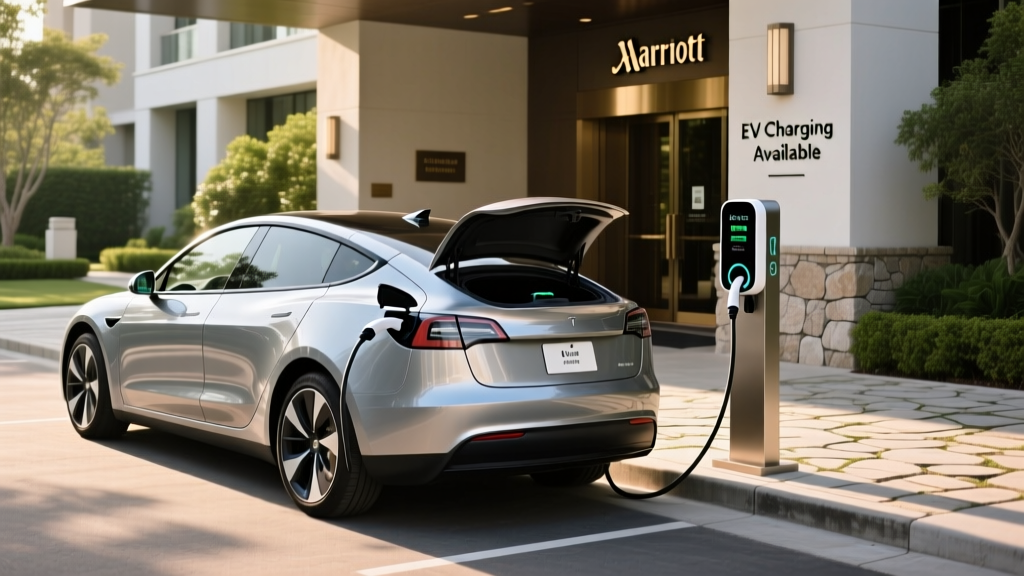
Searches for Marriott hotels with EV chargers have surged as electric vehicle ownership goes mainstream. For road-trippers and business travelers alike, pulling into a hotel that offers overnight charging is the closest thing to the convenience of refueling a gas car while you sleep. Marriott International has been expanding EV charging across its portfolio — from Courtyard and Fairfield properties to luxury Ritz-Carlton and W Hotels — but availability, speed, and pricing vary wildly by location.
This guide explains exactly what to expect when charging at a Marriott property, how to find hotels with chargers before you book, and how destination Level 2 charging fits into the broader EV charging ecosystem — including how it compares to home charging and public DC fast charging.
How to Find Marriott Hotels With EV Chargers
Marriott does not maintain a single public list of every property with an EV charger. Instead, chargers are installed at the discretion of individual property owners and management groups, often in partnership with networks like ChargePoint, EVgo, or Tesla Destination Charging. Here is how to locate them:
- Marriott.com search filters: When searching on Marriott's website or app, look under "Amenities" for "Electric Car Charging Station." Not every property with chargers has this tag updated, so cross-reference.
- PlugShare or ChargeHub: These apps let you search by location and filter for Level 2 or DC fast chargers at hotels. Search your destination city and check for Marriott-brand pins.
- Tesla Destination Charging map: If you drive a Tesla (or any NACS-equipped EV with an adapter), Tesla's website lists Destination Charging partners, including many Marriott properties.
- Call the front desk: The most reliable method. Ask: How many chargers? Are they available 24/7? Is there a fee? Are they Level 2 or DC fast?
As of early 2026, Marriott has committed to installing EV chargers at select new-build and renovated properties in North America and Europe, but coverage remains inconsistent. Urban and suburban locations in EV-dense states (California, Washington, Colorado, New York) tend to have better availability than rural properties.
What Charging Speeds to Expect at Hotels
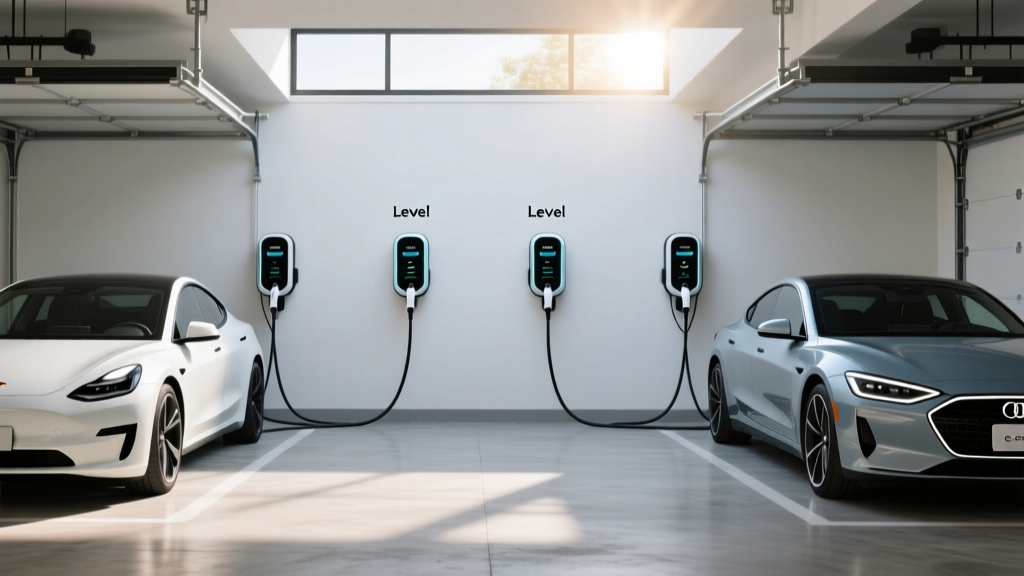
Hotels almost exclusively offer Level 2 AC charging — the same type of charging you would install at home. This makes sense: you are parked for 8–12 hours overnight, so ultra-fast DC charging is unnecessary. Understanding the three charging levels helps set expectations.
| Charging Level | Voltage | Power (kW) | Miles of Range Added per Hour | Typical Location |
|---|---|---|---|---|
| Level 1 (120V) | 120V AC | 1.0–1.4 kW | 3–5 miles | Standard household outlet |
| Level 2 (240V) | 208–240V AC | 3.3–19.2 kW | 12–75 miles | Home, hotels, workplaces, malls |
| DC Fast Charging | 400–800V DC | 50–350 kW | 150–1,000+ miles (equivalent) | Highway rest stops, dedicated stations |
Important distinction: kW (kilowatts) measures power — how fast energy flows into your battery. kWh (kilowatt-hours) measures energy — how much your battery holds. A 75 kWh battery charged at 7.2 kW takes roughly 10 hours from 0–100%. A hotel Level 2 charger at 7.2 kW will add approximately 25–30 miles of range per hour, which is typically enough to fully replenish a mid-size EV battery overnight.
Most Marriott properties with chargers install 7.2 kW or 11.5 kW Level 2 stations. A few newer locations have begun adding 50–150 kW DC fast chargers in parking garages, but these are the exception. Always confirm the charger's kW output before relying on it.
Charging Time Examples at Hotel Level 2 Chargers
| Vehicle (Example) | Battery Size (kWh) | Charger Output | 10–80% Charge Time | Overnight (10 hrs) Range Added |
|---|---|---|---|---|
| Tesla Model 3 Long Range | 75 kWh (usable) | 7.2 kW | ~7.5 hours | ~230 miles |
| Hyundai Ioniq 5 | 74 kWh (usable) | 11.5 kW | ~5 hours | ~300+ miles |
| Ford F-150 Lightning (Std Range) | 98 kWh (usable) | 7.2 kW | ~10+ hours | ~200 miles |
| Chevrolet Equinox EV | 85 kWh (usable) | 7.2 kW | ~8.5 hours | ~220 miles |
Real-world charging speed depends on your vehicle's onboard charger capacity. Even if a hotel has an 11.5 kW station, a vehicle limited to 7.2 kW onboard charging (like many older EVs) will only draw 7.2 kW. Check your owner's manual for your car's maximum AC charge rate.
Connector Compatibility: Will the Hotel Charger Fit Your EV?
The connector — the physical plug that connects the charger cable to your car — is the most common point of confusion for EV travelers. Here is the current connector landscape in North America as of 2026:
| Connector Type | Also Known As | Vehicles That Use It (Native) | Charging Levels |
|---|---|---|---|
| NACS | Tesla connector / J3400 | Tesla (all), Ford (2025+), GM (2025+), Rivian (2025+), Volvo/Polestar (2025+), Hyundai/Kia (2026+) | Level 2 + DC Fast |
| CCS1 | Combined Charging System | Legacy VW ID.4, older Hyundai/Kia, BMW i4/iX, Mercedes EQS/EQE, Stellantis EVs | Level 2 (J1772) + DC Fast |
| CHAdeMO | — | Nissan Leaf (discontinued new sales), Mitsubishi Outlander PHEV (legacy) | DC Fast only (Level 2 uses J1772) |
| J1772 | — | All non-Tesla EVs for Level 2 AC | Level 1 + Level 2 only |
What this means for Marriott hotel charging: Most hotel Level 2 chargers installed before 2025 have a J1772 connector. If you drive a Tesla or any 2025+ model that has switched to NACS, you will need a J1772-to-NACS adapter (Tesla sells one for ~$50, and third-party options from Lectron and A2Z are widely available). Conversely, if a hotel has installed newer NACS (J3400) destination chargers, CCS1 vehicles will need an adapter.
Always carry the appropriate adapter on road trips. Many Marriott properties that partner with Tesla Destination Charging provide Tesla-connector wall connectors — usable only by Tesla vehicles or NACS-equipped EVs.
How Much Does Charging at a Marriott Hotel Cost?
Hotel EV charging pricing falls into three categories:
- Complimentary: Some properties offer free Level 2 charging as a guest amenity, especially upscale brands (Ritz-Carlton, St. Regis) and eco-focused locations. This is becoming less common as EV adoption grows.
- Pay-per-use (Level 2): Typically $0.25–$0.49/kWh or a flat hourly rate ($1–$3/hour). Some hotels charge a flat session fee of $5–$15.
- Pay-per-use (DC Fast, rare): If a hotel has DC fast chargers, expect $0.35–$0.55/kWh, comparable to Electrify America or EVgo pricing.
Cost Per Mile: EV Charging vs. Gasoline
| Scenario | Rate | Cost per kWh | Cost per Mile (at 3 mi/kWh) | Annual Cost (12,000 mi) |
|---|---|---|---|---|
| Home charging (off-peak) | $0.12/kWh avg | $0.12 | $0.04 | $480 |
| Hotel Level 2 (complimentary) | Free | $0.00 | $0.00 | $0 |
| Hotel Level 2 (paid) | $0.35/kWh avg | $0.35 | $0.12 | — |
| Public DC Fast Charging | $0.45/kWh avg | $0.45 | $0.15 | — |
| Gasoline car (28 MPG avg) | $3.40/gal avg | — | $0.12 | $1,440 |
Even at paid hotel rates, EV charging per mile is competitive with or cheaper than gasoline. And if your Marriott offers complimentary charging, your "fuel" cost for that overnight stop is literally zero. For context, the EPA tracks efficiency ratings at fueleconomy.gov — most modern EVs achieve 3–4 miles per kWh, meaning a 10-hour overnight charge at 7.2 kW adds roughly 215–290 miles of range for $0–$25 depending on the property's pricing.
Planning Your Home Charging Setup (So You Rely Less on Hotels)
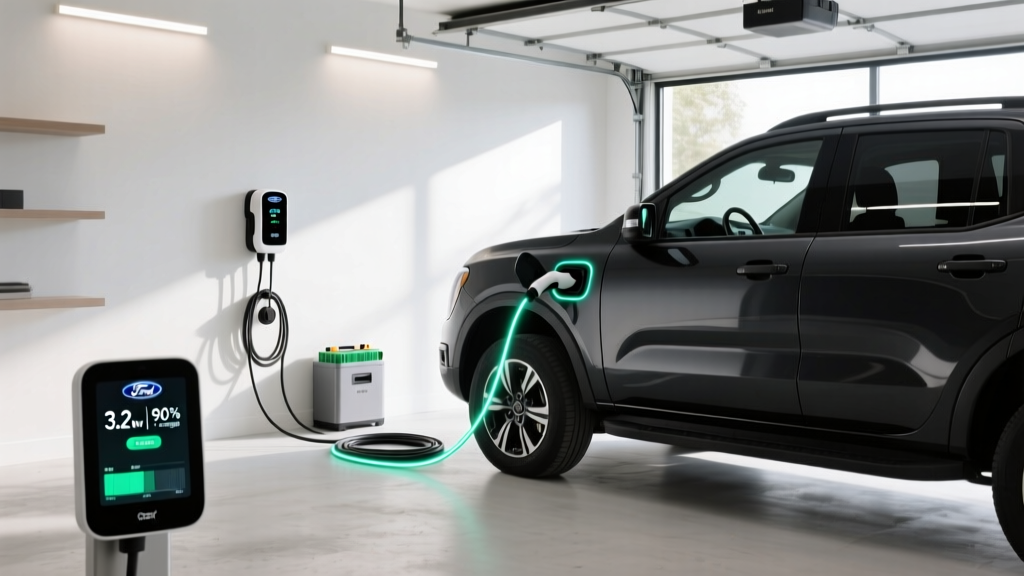
Hotel destination charging is a great supplement, but the foundation of convenient EV ownership is a home Level 2 charger. Here is what a proper home installation involves.
Electrical Requirements
A Level 2 home charger requires a 240-volt dedicated circuit, similar to what powers an electric dryer or oven. Key specifications:
- Voltage: 240V (split-phase, standard US residential)
- Amperage: 40A circuit for a 32A continuous charger, or 60A circuit for a 48A charger. NEC code requires circuits rated at 125% of the continuous load.
- Wire gauge: 6 AWG copper for 40A; 4 AWG for 60A (varies by run length)
- Outlet type: NEMA 14-50 (most common) or hardwired connection (required above 48A for most jurisdictions)
Panel Upgrade Considerations
If your home has a 100A electrical panel (common in homes built before 1990), adding a 40–60A EV circuit may exceed your panel's capacity. A licensed electrician will perform a load calculation per NEC Article 220. If your panel is maxed out, you may need:
- Panel upgrade to 200A: $1,500–$3,500 depending on your utility and region
- Smart load management device: Products like the Emporia Smart Load Center or Span.IO panel can dynamically share amperage between circuits, avoiding a full panel upgrade for $500–$1,500
Home Charger Installation Cost Breakdown
| Cost Component | Low Estimate | High Estimate | Notes |
|---|---|---|---|
| Level 2 charger unit (hardware) | $350 | $750 | Varies by brand, power, smart features |
| Electrician labor (standard install) | $500 | $1,500 | Depends on panel proximity, wall type |
| Electrical permit | $50 | $200 | Required in most jurisdictions |
| Panel upgrade (if needed) | $1,500 | $3,500 | Only if existing panel cannot handle load |
| Total (no panel upgrade) | $900 | $2,450 | Most common scenario |
| Total (with panel upgrade) | $2,400 | $5,950 | Older homes, larger installs |
Safety and Code Requirements
Any Level 2 home installation must comply with the National Electrical Code (NEC) and local amendments:
- Dedicated circuit: The EV charger must have its own breaker — no sharing with other appliances.
- GFCI protection: NEC 2020 and later require GFCI (Ground Fault Circuit Interrupter) protection for EV charging outlets. Hardwired chargers with built-in GFCI may exempt the breaker from this requirement in some jurisdictions.
- Outdoor rating: If your charger is installed outside (garage exterior, driveway), it must carry a NEMA 4 or NEMA 4X weather-resistance rating.
- Cable management: NEC requires the charging cable to not create a trip hazard. Wall-mounted cable organizers or retractable reels are recommended.
Always hire a licensed electrician and pull a permit. Unpermitted work can void home insurance and create fire risk. The IRS also requires professional installation documentation if you claim the Alternative Fuel Vehicle Refueling Property Credit (Form 8911), which covers up to 30% of home charger installation costs (max $1,000) for eligible taxpayers in qualifying census tracts.
Recommended Home EV Chargers
If you are installing a home charger to reduce dependence on hotel and public charging, here are top-performing options as of 2026:
ChargePoint Home Flex
- Power output: Up to 12 kW (50A circuit) or 9.6 kW (40A circuit) — configurable via DIP switch
- Connector: NACS (J3400) native on 2025+ units; J1772 on older stock
- Cable length: 18 ft or 23 ft options
- Smart features: Wi-Fi connected, app scheduling, energy tracking, Alexa integration
- Price: ~$550–$650 (hardware only)
- Best for: Flexibility across circuit sizes; NACS-native option
Grizzl-E Smart
- Power output: Up to 9.6 kW (40A circuit)
- Connector: J1772 (NACS adapter available separately)
- Cable length: 24 ft
- Smart features: Wi-Fi, app control, OCPP compatible, energy reports
- Price: ~$400–$500
- Best for: Budget-conscious buyers; rugged outdoor-rated build (NEMA 4X)
Tesla Wall Connector (Gen 4)
- Power output: Up to 11.5 kW (48A continuous, 60A circuit)
- Connector: NACS native; includes J1772 adapter in box (2025+ models)
- Cable length: 24 ft
- Smart features: Wi-Fi, power sharing with additional units, OTA updates, integrated cable management
- Price: ~$475
- Best for: Tesla and NACS-vehicle owners; best value at 11.5 kW
Emporia Vue Smart Charger
- Power output: Up to 11.5 kW (48A, 60A circuit)
- Connector: J1772 (NACS adapter sold separately)
- Cable length: 24 ft
- Smart features: Full energy monitoring via Emporia Vue panel integration, solar-aware scheduling, time-of-use optimization
- Price: ~$400–$450
- Best for: Solar homeowners wanting to charge exclusively on excess solar production
Tips for Charging at Marriott Hotels on the Road
Based on real-world experience charging at dozens of hotel properties, here are practical tips:
- Confirm before booking. Call the front desk and ask: "Do you have working EV chargers on-site right now?" Online listings are often outdated.
- Ask about availability. Some hotels have only 2 chargers for a 150-room property. Arrive early or ask if you can reserve a spot.
- Bring your adapter kit. Carry a J1772-to-NACS adapter (or vice versa) and a 120V emergency Level 1 cable as backup.
- Check the charger network app. If the hotel uses ChargePoint or EVgo, check the app before arrival to see if chargers are online and available.
- Don't rely on it as your only charge. Plan your route so you have enough range to reach a DC fast charger (Electrify America, Tesla Supercharger, EVgo) even if the hotel chargers are broken or occupied.
- Ask about valet charging. Some upscale Marriott properties (Ritz-Carlton, W Hotels) offer valet EV charging where staff move your car to a charger and back.
Frequently Asked Questions
How much does it cost to install a home EV charger?
A standard Level 2 home charger installation costs $900–$2,450 including equipment, electrician labor, and permits. If your home needs an electrical panel upgrade (common in pre-1990 homes with 100A panels), total costs can reach $2,400–$5,950. The federal Alternative Fuel Vehicle Refueling Property Credit (IRS Form 8911) may reimburse up to 30% of costs (max $1,000) if you live in an eligible census tract.
How fast will each charging level add range?
Level 1 (120V) adds 3–5 miles of range per hour. Level 2 (240V) adds 12–75 miles per hour depending on the charger's kW output and your car's onboard charger. DC fast charging adds the equivalent of 150–1,000+ miles per hour but is measured in 10–80% session times (typically 15–45 minutes). Hotel chargers are almost always Level 2.
Which connector/charger is compatible with my EV?
If your EV is a 2025+ Tesla, Ford, GM, Rivian, Volvo, Polestar, Hyundai, or Kia model, it likely has a NACS (J3400) port. Older non-Tesla EVs typically use CCS1 (with J1772 for Level 2). Nissan Leaf uses CHAdeMO for DC fast charging. Most hotel Level 2 chargers have J1772 connectors, so NACS vehicles need an adapter. Check your vehicle's charge port or owner's manual to confirm.
How much does charging cost per mile vs gas?
Home charging at $0.12/kWh costs roughly $0.04 per mile (at 3 mi/kWh efficiency). Paid hotel Level 2 charging at $0.35/kWh costs about $0.12 per mile. A comparable gasoline car at 28 MPG and $3.40/gallon costs $0.12 per mile. Free hotel charging is, of course, $0.00 per mile. EVs are cheapest to "fuel" when charging at home on off-peak electricity rates.
What electrical upgrades might I need for a home charger?
The most common upgrade is a panel replacement from 100A to 200A service ($1,500–$3,500) if your existing panel cannot accommodate a new 40–60A dedicated circuit. Other potential needs include: replacing a Federal Pacific or Zinsco panel (known fire hazards, often flagged during permit inspection), adding a sub-panel in the garage if the main panel is far away, or upgrading the utility service drop if your home's total load exceeds the transformer rating. A licensed electrician's load calculation will determine exactly what is needed.
Do all Marriott hotels have EV chargers?
No. EV charger availability varies by property, brand, and location. Marriott has been expanding charger installations, particularly at new-build and recently renovated hotels, but there is no chain-wide mandate. Always verify with the specific property before booking. Urban locations in EV-friendly states and upscale brands (Ritz-Carlton, Autograph Collection) are more likely to have chargers than budget-tier or rural properties.