Lucid Gravity Range: What the EPA Number Actually Means on the Road
The Lucid Gravity Grand Touring carries an EPA-estimated range of 440 miles on a full charge — the highest of any production three-row SUV as of the 2026 model year. That figure is anchored by a usable battery capacity of roughly 118 kWh (NMC chemistry) and a powertrain that sips electricity at a rate closer to a compact sedan than a 6,000-pound luxury haulier. But the sticker number only tells half the story.
EPA 440 mi (Grand Touring AWD). In mixed highway driving at 70-75 mph, expect roughly 360-390 miles. In freezing temperatures (below 30°F) with cabin heat, plan for 310-340 miles. The Gravity's heat pump and advanced thermal management help mitigate cold-weather losses better than most, but physics still applies — battery chemistry slows and cabin demand spikes. Source: fueleconomy.gov.
The Gravity Touring (dual-motor AWD) comes in at an EPA-estimated 380 miles with a slightly smaller battery pack, while the base Pure RWD variant targets approximately 400 miles. All trims share the same 900-volt electrical architecture — a detail that matters enormously when you plug into a DC fast charger.
| Trim | EPA Range | Battery (usable) | Chemistry | Peak DC Charge | 10-80% Time | Base MSRP |
|---|---|---|---|---|---|---|
| Pure (RWD) | ~400 mi | ~105 kWh | NMC | ~300 kW | ~20 min | $79,900 |
| Touring (AWD) | 380 mi | ~112 kWh | NMC | ~300 kW | ~20 min | $94,900 |
| Grand Touring (AWD) | 440 mi | ~118 kWh | NMC | ~300 kW | ~20 min | $109,900 |
Lucid's 900V architecture is the secret behind the Gravity's charging performance. Higher voltage means lower current for the same power, which reduces heat generation and allows the battery to sustain peak charge rates longer. Where a typical 400V SUV might taper sharply after 60% state of charge (SoC), the Gravity holds near-peak rates deeper into the curve — then tapers more gradually above 80%. This is why the 10-80% time of approximately 20 minutes at a 350 kW-capable station is genuinely usable on road trips, not just a marketing peak.
Charging Levels Explained: How Fast Each Adds Range to the Gravity
Before we get into home wiring and equipment, let's nail down the three charging levels and what they actually deliver to a large-battery vehicle like the Gravity. Power is measured in kilowatts (kW) — the rate of energy flow. Energy stored in the battery is measured in kilowatt-hours (kWh) — the total capacity. Think of kW as the width of the hose and kWh as the size of the bucket.
| Level | Voltage / Phase | Typical Power (kW) | Miles of Range Added per Hour | Best For |
|---|---|---|---|---|
| Level 1 (120V AC) | 120V / 1-phase | 1.0 - 1.4 kW | 3 - 5 mi/hr | Overnight trickle, PHEVs, emergencies |
| Level 2 (240V AC) | 240V / 1-phase | 7.2 - 19.2 kW | 22 - 60 mi/hr | Daily home/workplace charging |
| DC Fast Charging | 200-900V DC | 50 - 350+ kW | 180 - 800+ mi/hr (peak) | Road trips, rapid top-ups |
For the Lucid Gravity specifically, here's what that translates to in practice:
- Level 1 (120V, 12A): Adds roughly 3-4 miles per hour. A full 10-80% charge on the Grand Touring's 118 kWh battery would take approximately 80+ hours. Not practical as a primary strategy, but adequate for topping off if you drive less than 30 miles daily and have no Level 2 access.
- Level 2 (240V, 48A / 11.5 kW): Adds roughly 35-38 miles per hour. A 10-80% charge takes approximately 7-8 hours — ideal for overnight replenishment. This is the sweet spot for Gravity owners.
- Level 2 (240V, 80A / 19.2 kW): The Gravity's onboard charger supports up to 19.2 kW AC. At this rate, you gain roughly 55-60 miles per hour, and a 10-80% charge drops to approximately 4.5-5 hours. Requires a hardwired 100A circuit.
- DC Fast Charge (350 kW station): The Gravity peaks near 300 kW and sustains high rates thanks to 900V architecture. Expect 10-80% in roughly 20 minutes — adding approximately 300 miles of range in that window at a compatible Electrify America or Tesla Supercharger V4 station.
Home Charger Installation: Electrical Requirements, Costs & Panel Upgrades
Most Lucid Gravity owners will install a Level 2 home charger — and most will need a dedicated 240V circuit. Here's what that involves electrically and financially.
Electrical Requirements for Level 2 Home Charging
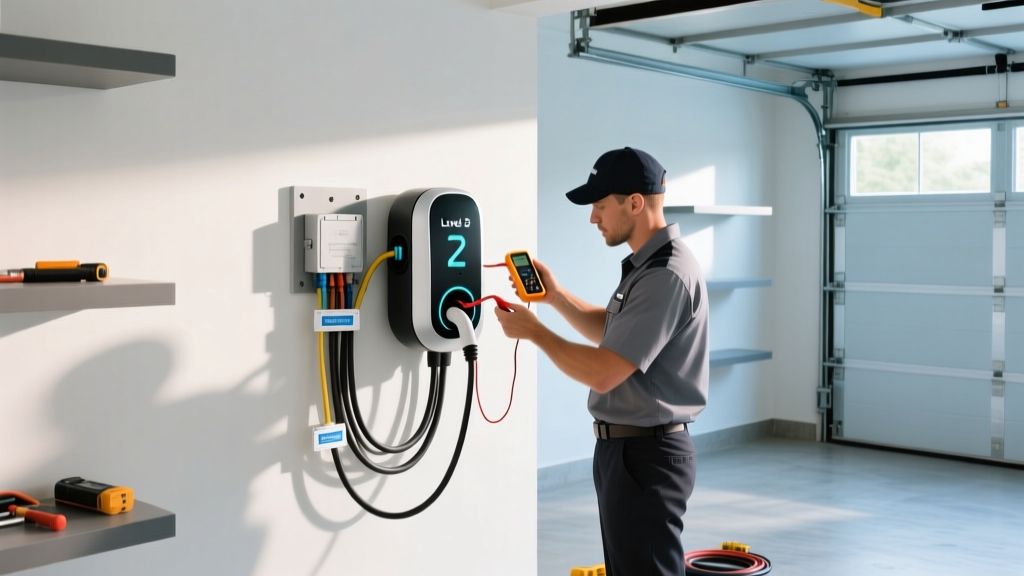
A typical high-quality Level 2 charger draws between 32A and 48A on a 240V circuit. The National Electrical Code (NEC) requires that continuous loads (anything running 3+ hours, which includes EV charging) use only 80% of a circuit breaker's rated capacity. So a 48A charger requires a 60A breaker and 6 AWG copper wire. If you want the full 80A / 19.2 kW the Gravity can accept, you'll need a 100A breaker with 3 AWG copper or 1 AWG aluminum wire — a more involved install.
| Component | Low Estimate | High Estimate | Notes |
|---|---|---|---|
| Level 2 Charger (48A, hardwired) | $400 | $750 | ChargePoint Home Flex, Wall Connector, etc. |
| Electrician Labor (new 60A circuit) | $600 | $1,800 | Depends on run length, wall type, conduit |
| Electrical Permit | $50 | $250 | Varies by municipality |
| Panel Upgrade (100A → 200A) | $1,500 | $4,000 | Needed if existing panel lacks capacity |
| Total (no panel upgrade) | $1,050 | $2,800 | Most homes with 200A service |
| Total (with panel upgrade) | $2,550 | $6,800 | Older homes with 100A or 150A service |
Will You Need a Panel Upgrade?
This is the single biggest cost variable. Most homes built after 2000 have 200A electrical service, which typically supports a 60A EV circuit without issue — provided your panel isn't already near capacity from HVAC, electric oven, dryer, and water heater. An electrician will perform a load calculation (NEC Article 220) to determine if your panel has headroom.
Homes built before 1990 often have 100A or 150A service. Adding a 48A continuous load to an already-burdened 100A panel will almost certainly require an upgrade to 200A — a $1,500-$4,000 job depending on your utility's requirements, local labor rates, and whether a new meter base is needed.
Alternative: Smart load management. Devices like the Emporia Load Management Controller or Span smart panel can dynamically throttle EV charging when other major appliances kick on, potentially avoiding a panel upgrade. Ask your electrician about this option — it can save $2,000+ on older homes.
Connector Compatibility: NACS, CCS & What the Gravity Uses
The 2026 Lucid Gravity ships with the North American Charging Standard (NACS) connector — the same plug used by Tesla vehicles. This is a significant advantage in 2026, as the NACS ecosystem now includes Tesla's Supercharger network (20,000+ stalls in North America) plus growing adoption by Electrify America, EVgo, and other networks.
| Connector | Also Known As | Max DC Power | Gravity Compatible? | Networks |
|---|---|---|---|---|
| NACS | Tesla / J3400 | 350+ kW | Yes — native port | Tesla Supercharger, EA (new stalls), EVgo |
| CCS1 | Combined Charging System | 350 kW | Via adapter (included) | Electrify America, EVgo, ChargePoint |
| CHAdeMO | — | 100 kW | No — legacy, phasing out | Nissan Leaf (legacy) |
| J1772 | — | AC only (19.2 kW) | Via adapter (included) | Public Level 2 stations |
Lucid includes a CCS1-to-NACS adapter with the Gravity, so you can use legacy CCS-equipped stations without issue. For Level 2 public charging (J1772 plug), a J1772-to-NACS adapter is also included. CHAdeMO is effectively dead for new vehicles and not relevant to Gravity owners.
Home charger connector note: When buying a Level 2 home charger, choose one with a NACS plug to match your Gravity natively. Most major charger brands now offer NACS-terminated models. If you already own a J1772 charger, the included adapter works fine — but a native NACS cable is cleaner.
Cost to Charge: Home vs. Public vs. Gasoline Comparison
The economic case for home-charging a Lucid Gravity is compelling, especially compared to fueling a comparable three-row gas SUV like the BMW X7 or Mercedes GLS.
| Scenario | Rate | Cost per Mile | Annual Cost (12,000 mi) |
|---|---|---|---|
| Home charging (off-peak utility rate) | $0.13/kWh | $0.036 | $432 |
| Home charging (standard rate) | $0.18/kWh | $0.050 | $600 |
| Public Level 2 (workplace/network) | $0.25/kWh | $0.069 | $828 |
| DC Fast Charging (road trips) | $0.45/kWh | $0.125 | $1,500 |
| Gas SUV (20 MPG combined) | $3.50/gal | $0.175 | $2,100 |
The Gravity's efficiency is roughly 2.8 miles per kWh (Grand Touring) or about 35.7 kWh per 100 miles. That's remarkably efficient for a vehicle of this size and weight — credit goes to Lucid's miniaturized drive units and low drag coefficient.
If 80% of your charging happens at home at off-peak rates and 20% on DC fast chargers during road trips, your blended annual fuel cost is approximately $645 — saving roughly $1,455 per year versus a gas SUV getting 20 MPG at $3.50/gallon. Over five years, that's $7,275 in fuel savings, partially offsetting the Gravity's premium purchase price.
Federal tax credit note: The IRS §30D credit may provide up to $7,500 for qualifying new EVs, but eligibility depends on battery component and critical mineral sourcing requirements, buyer income caps ($300K joint / $150K single), and MSRP limits ($80K for SUVs — which excludes Gravity Touring and Grand Touring trims). The Pure trim at $79,900 may qualify if sourcing requirements are met. Always verify current-year rules at irs.gov and consult a tax professional.
Best Home Chargers for the Lucid Gravity: Equipment Picks
These Level 2 chargers are well-suited to the Gravity's 19.2 kW AC onboard charging capability. All feature NACS connectors, smart scheduling, and load management.
Tesla Wall Connector (NACS)
- Power Output: Up to 11.5 kW (48A) on a 60A circuit; up to 19.2 kW (80A) on a 100A circuit
- Connector: NACS native
- Cable Length: 24 feet
- Smart Features: Wi-Fi, OTA updates, power sharing (link two units on one circuit), access control
- Price: ~$475
- Why it works: Natively matches the Gravity's port. At 80A, it delivers the full 19.2 kW the Gravity can accept — the fastest Level 2 charge available at home. Excellent build quality.
ChargePoint Home Flex (NACS)
- Power Output: Configurable 16A-50A (3.8-12.0 kW) on a 20A-60A circuit
- Connector: NACS (2025+ model); older J1772 models available with adapter
- Cable Length: 23 feet
- Smart Features: Wi-Fi, Alexa integration, scheduling, energy reporting, flexible amperage via dip switches
- Price: ~$550
- Why it works: Flexible amperage lets you match your circuit exactly. Strong app ecosystem. UL-listed and widely available.
Emporia Vue Level 2 Charger (NACS)
- Power Output: Up to 11.5 kW (48A) on a 60A circuit
- Connector: NACS native
- Cable Length: 24 feet
- Smart Features: Integrates with Emporia Vue energy monitor for whole-home load tracking, solar-aware charging, TOU rate scheduling
- Price: ~$400 (charger) + ~$200 (Vue monitor)
- Why it works: Best-in-class energy visibility. If you have solar panels or want granular cost tracking per charge session, this is the smartest ecosystem. Budget-friendly hardware.
Charging time examples at home (Gravity Grand Touring, 118 kWh usable):
- 11.5 kW (48A): 10-80% (~82.6 kWh) in approximately 7 hours 10 minutes
- 19.2 kW (80A): 10-80% in approximately 4 hours 20 minutes
- 7.2 kW (32A): 10-80% in approximately 11 hours 30 minutes
Safety, Electrical Code & Installation Best Practices
EV charging is a high-duration, high-current load — more akin to running a welder for 8 hours than plugging in a dryer. Safety and code compliance are non-negotiable.
- Dedicated circuit: Your Level 2 charger must be on its own dedicated breaker. Never share a circuit with other appliances.
- GFCI protection: NEC 2020+ requires GFCI protection for all EV charging outlets (receptacle-connected). Hardwired installations may be exempt depending on jurisdiction — ask your electrician.
- Outdoor rating: If your charger is installed outside (garage exterior, driveway), it must carry a NEMA 4 or IP55+ weather rating. All three picks above qualify.
- Hardwired vs. plug: Hardwired installations (no plug) are preferred for 48A+ chargers — they eliminate the failure point of a receptacle and are often required above 40A. NEMA 14-50 receptacles are fine for 40A chargers but must be installed with proper torque specs and a quality industrial-grade receptacle (Hubbell or Bryant, not residential-grade).
- Permit and inspection: Most municipalities require an electrical permit for new 240V circuits. Your electrician should pull this — it typically costs $50-$250 and ensures a city/county inspector verifies the work. Skipping permits risks insurance claim denial in the event of an electrical fire.
- Cable management: Use a wall-mounted holster or cable reel to keep the charging cable off the ground. This prevents abrasion damage and tripping hazards.
Frequently Asked Questions: Lucid Gravity Charging
How much does it cost to install a home EV charger for the Lucid Gravity?
Expect $1,050-$2,800 for a standard 60A / 48A Level 2 install in a home with adequate 200A service. If your home needs a panel upgrade from 100A to 200A, total costs rise to $2,550-$6,800. Get three quotes from licensed electricians and ensure permits are pulled.
How fast will each charging level add range to the Gravity?
Level 1 (120V) adds roughly 3-4 miles per hour — impractical for daily use. Level 2 (240V, 48A) adds about 35-38 miles per hour, sufficient for overnight replenishment. DC fast charging at a 350 kW station can add roughly 300 miles in 20 minutes (10-80% SoC).
Which connector does the Lucid Gravity use?
The 2026 Gravity uses NACS (the Tesla-standard connector) natively. Lucid includes a CCS1-to-NACS adapter for legacy fast-charging stations and a J1772-to-NACS adapter for public Level 2 chargers. For home, buy a NACS-terminated Level 2 charger.
How much does charging the Gravity cost per mile compared to gas?
At home off-peak rates ($0.13/kWh), the Gravity costs about $0.036 per mile — roughly 5x cheaper than a 20 MPG gas SUV at $3.50/gallon ($0.175/mi). Even on DC fast chargers at $0.45/kWh, the cost is $0.125/mi, still below gasoline.
What electrical upgrades might I need for home charging?
If your home has 200A service and available breaker slots, you likely only need a new 60A circuit. Homes with 100A or 150A service, or panels near capacity, may need a panel upgrade ($1,500-$4,000). Smart load management devices can sometimes avoid this cost. A licensed electrician's load calculation will determine your exact needs. Per the National Electrical Code, continuous EV loads must not exceed 80% of circuit rating.
Can I use a Tesla Supercharger with the Lucid Gravity?
Yes. The Gravity's native NACS port is compatible with Tesla Supercharger V3 and V4 stalls. Tesla opened its network to non-Tesla NACS vehicles, and the Gravity is fully supported. Expect peak rates around 250-300 kW at V4 stalls.
Does the Gravity's battery warranty cover degradation?
Lucid provides an 8-year / 100,000-mile battery and powertrain warranty. The warranty covers defects and capacity loss below a specified retention threshold (typically 70% of original capacity). For the latest terms, verify directly with Lucid Motors at time of purchase.