Why the Longest Range Tesla Model 3 Demands a Smart Charging Strategy
The 2026 Tesla Model 3 Long Range AWD carries an EPA-estimated 363 miles of range from its ~75 kWh (usable) NMC lithium-ion battery. That is the most range Tesla currently offers in the Model 3 lineup, and it sits among the highest of any mainstream EV on the market. But range on the sticker does not translate directly to range in the driveway or on the highway. In real-world mixed driving at 70 mph, expect roughly 300–320 miles; in cold weather (below 30°F), that figure can drop to 260–280 miles before you reach a charger.
Maximizing that range envelope — and keeping charging costs low — requires matching your home electrical infrastructure, charging equipment, and public-charging habits to the Model 3 Long Range's specific powertrain. This guide breaks down every charging scenario, from a standard 120V wall outlet to a 250 kW DC fast charger, with exact kW speeds, installation costs, and per-mile economics.
EPA Sticker: 363 miles
Highway (70–75 mph, 65°F): ~300–320 miles
Cold Weather (20°F, highway): ~260–280 miles
City / Stop-and-Go with Regen: ~340–360 miles
Source: EPA fueleconomy.gov
Charging Levels Explained: How Fast Will Each Add Range to Your Model 3?
Before evaluating equipment, you need to understand the three charging tiers and how they interact with the Model 3 Long Range's onboard charger (11.5 kW max AC) and DC fast-charge architecture (up to 250 kW peak). Note the critical distinction: kW (kilowatts) measures power — the rate of energy delivery. kWh (kilowatt-hours) measures energy — the battery's total capacity. Think of kW as the flow rate of a hose and kWh as the size of the bucket.
| Level | Voltage / Amps | Power (kW) | Miles of Range Added per Hour | Typical Use Case |
|---|---|---|---|---|
| Level 1 | 120V / 12A | ~1.4 kW | ~4–5 mi/hr | Overnight trickle, emergency top-off |
| Level 2 (Home) | 240V / 48A | ~11.5 kW | ~40–44 mi/hr | Daily home charging, full overnight refill |
| DC Fast Charge | 400V+ / up to 625A | Up to 250 kW (peak) | ~1,000+ mi/hr (first 10 min) | Road trips, rapid top-ups |
At Level 1, fully replenishing a depleted 75 kWh battery would take roughly 55+ hours — impractical for daily use. Level 2 at 48A/11.5 kW brings a 10–80% charge in approximately 5.5 hours, making it the backbone of home ownership. DC fast charging at a Tesla Supercharger V3/V4 station peaks at 250 kW and delivers a 10–80% charge in about 25–30 minutes, though the charge curve tapers significantly above 80% to protect battery health.
Home Charger Installation: Electrical Requirements, Costs, and Panel Upgrades
Installing a Level 2 home charger for the longest range Tesla Model 3 requires a dedicated 240V circuit, typically rated at 60 amps to support continuous 48A charging. Here is what that involves and what it costs.
Electrical Requirements
- Circuit: 60A dedicated breaker (supports 48A continuous draw per NEC 80% rule)
- Wire gauge: 6 AWG copper (or 4 AWG aluminum) for runs up to ~100 feet
- Outlet vs. hardwired: NEMA 14-50 outlet offers portability; hardwired is often preferred for outdoor installs and avoids GFCI nuisance tripping
- Panel capacity: Your main service panel must have sufficient spare capacity — typically 200A total service is recommended for homes adding a 60A EV circuit
Panel Upgrade Considerations
Homes with older 100A or 150A service panels may need an upgrade to 200A to safely accommodate a 60A EV circuit alongside existing loads (HVAC, electric oven, dryer). A panel upgrade from 100A to 200A typically costs $1,500–$3,500 including permits and utility coordination. This is the single largest variable in home charger installation and the one most online cost calculators omit.
| Cost Component | Typical Range | Notes |
|---|---|---|
| Level 2 Charger Equipment | $350–$700 | Tesla Wall Connector, ChargePoint, Emporia |
| Electrician Labor (standard install) | $600–$2,000 | Varies by run length, wall type, conduit needs |
| Permit & Inspection | $100–$400 | Required in most jurisdictions; varies by locality |
| Panel Upgrade (if needed) | $1,500–$3,500 | 100A → 200A service upgrade |
| Total (no panel upgrade) | $1,050–$3,100 | Most homes with 200A service |
| Total (with panel upgrade) | $2,550–$6,600 | Older homes with 100A/150A panels |
Always hire a licensed electrician and pull a permit. Unpermitted EV charger installations can void homeowner's insurance claims and create fire hazards. The National Electrical Code (NEC) Article 625 governs EV charging equipment specifically.
Connector Compatibility: NACS, CCS, and Adapters for the Model 3
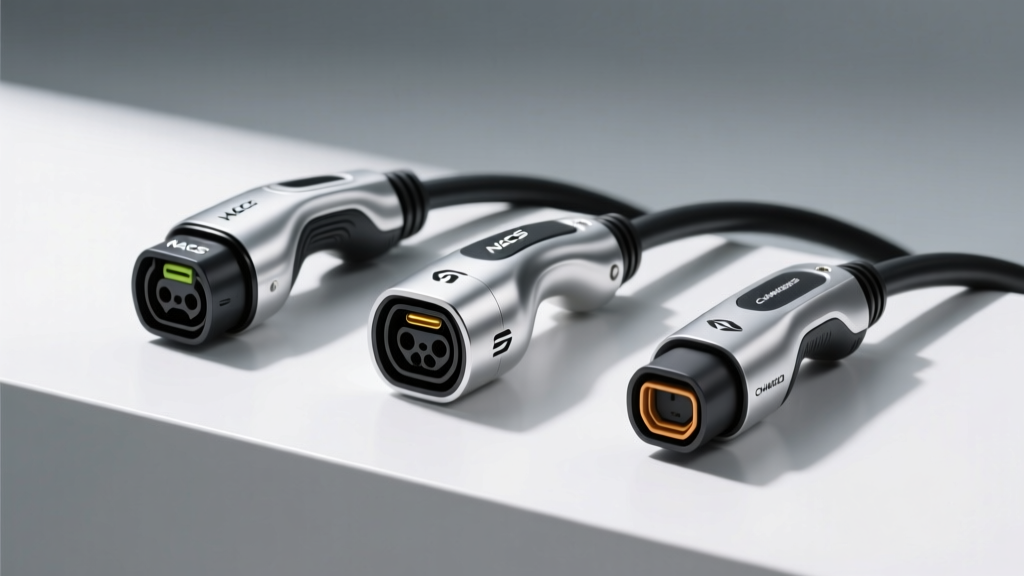
The 2026 Tesla Model 3 Long Range uses the North American Charging Standard (NACS) connector natively. Tesla opened this connector to the broader industry in late 2022, and by 2025–2026 most major automakers have adopted it. Here is how the connector landscape maps to your Model 3:
| Connector | Native on Model 3? | Adapter Needed? | Where You'll Find It |
|---|---|---|---|
| NACS (Tesla) | Yes — built in | No | Tesla Superchargers, Destination Chargers, newer public stations |
| CCS1 | No | Tesla CCS Adapter (~$175) | Electrify America, EVgo, older public DC stations |
| CHAdeMO | No | Third-party adapter (limited availability) | Legacy Nissan Leaf stations — being phased out |
| J1772 (Level 2 AC) | No | Tesla J1772 Adapter (included with car) | Public Level 2 stations, workplaces, hotels |
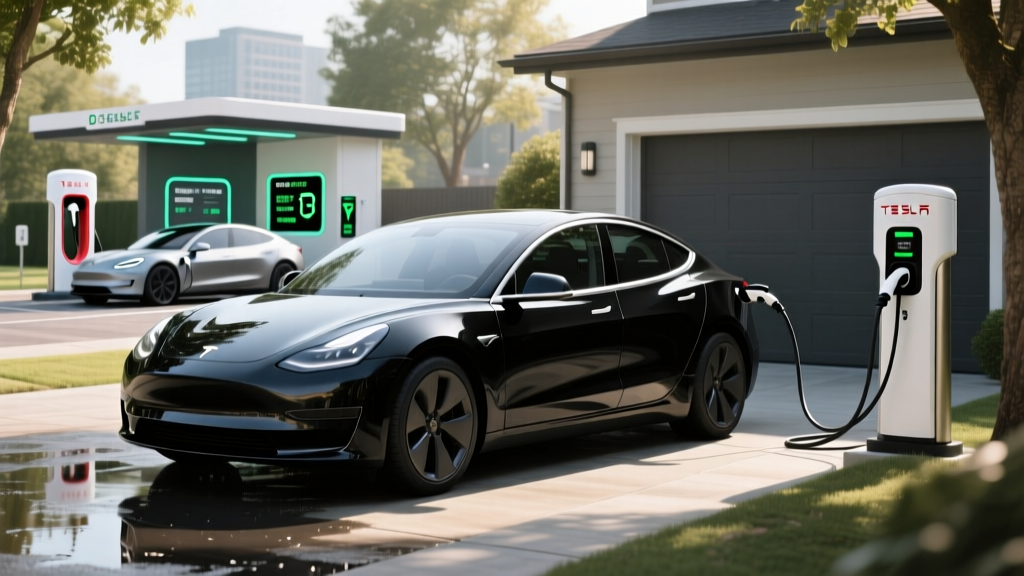
For the longest range Tesla Model 3, the Supercharger network remains the most reliable DC fast-charging option, with V3 stalls delivering up to 250 kW and V4 stalls rolling out at up to 350 kW (though the Model 3 Long Range currently caps at ~250 kW acceptance). Carry the Tesla CCS adapter for non-Tesla public chargers on road trips through areas with sparse Supercharger coverage.
Cost to Charge: Home Electricity vs. Public DC Fast Charging vs. Gas
One of the strongest ownership arguments for the Model 3 Long Range is fuel-cost savings. Here is a realistic breakdown using 2026 average electricity rates and gasoline prices.
| Scenario | Rate | Cost to Add 200 Miles | Cost per Mile |
|---|---|---|---|
| Home (off-peak utility rate) | $0.13/kWh | $5.20 | $0.026 |
| Home (average US residential) | $0.17/kWh | $6.80 | $0.034 |
| Public Level 2 (network pricing) | $0.25–$0.40/kWh | $10.00–$16.00 | $0.050–$0.080 |
| DC Fast (Tesla Supercharger avg) | $0.28–$0.36/kWh | $11.20–$14.40 | $0.056–$0.072 |
| DC Fast (Electrify America) | $0.35–$0.48/kWh | $14.00–$19.20 | $0.070–$0.096 |
| Gasoline (27 MPG combined, $3.50/gal) | $3.50/gal | $25.93 | $0.130 |
The Model 3 Long Range consumes approximately 25 kWh per 100 miles (4.0 mi/kWh) in mixed driving, per EPA data. At home off-peak rates, you are paying roughly one-fifth the per-mile cost of a 27 MPG gas vehicle. Even at the most expensive public DC fast chargers, the Model 3 still undercuts gasoline on a cost-per-mile basis — though frequent reliance on public fast charging erodes the savings advantage significantly.
Pro tip: Many utilities offer time-of-use (TOU) plans that drop off-peak overnight rates to $0.08–$0.11/kWh. Scheduling your Model 3 to charge between 12 AM and 6 AM can reduce your annual "fuel" cost to under $400 for 12,000 miles of driving.
Equipment Recommendations: Best Level 2 Chargers for the Model 3 Long Range
Not all Level 2 chargers are equal. Below are three proven options matched to the Model 3 Long Range's 11.5 kW onboard charger capability.
Tesla Wall Connector (Gen 3)
- Power Output: Up to 11.5 kW (48A at 240V)
- Connector: NACS (native Tesla)
- Cable Length: 24 feet
- Smart Features: Wi-Fi, OTA updates, power sharing between units, load management
- Price: ~$475
- Best For: Tesla-only households wanting seamless integration and max speed
Emporia Vue Level 2 Charger
- Power Output: Up to 11.5 kW (48A at 240V)
- Connector: J1772 (use included Tesla adapter) or NACS version available
- Cable Length: 24 feet
- Smart Features: Energy monitoring, solar integration, TOU scheduling, app control
- Price: ~$399
- Best For: Solar-equipped homes, budget-conscious buyers, multi-EV households
ChargePoint Home Flex
- Power Output: Up to 12 kW (50A at 240V) — adjustable to match circuit
- Connector: J1772 (use Tesla adapter) or NACS pigtail option
- Cable Length: 23 feet
- Smart Features: Alexa integration, scheduling, charging history, flexible amperage
- Price: ~$699
- Best For: Mixed-brand EV households, renters who may move (NEMA 14-50 plug version available)
Any of these units will fully utilize the Model 3 Long Range's 11.5 kW onboard AC charger. Note that installing a charger rated higher than 48A (like the ChargePoint at 50A) requires a correspondingly larger breaker — always size the circuit to 125% of the continuous load per NEC guidelines.
Safety, Code, and Installation Best Practices
EV charging draws sustained high current for hours — far longer than most household appliances. This makes code compliance and safety-critical.
- Dedicated circuit: Your Level 2 charger must have its own dedicated breaker — never share a circuit with other large loads
- GFCI considerations: NEC 2020+ requires GFCI protection for outdoor receptacles. However, GFCI breakers can nuisance-trip on EV loads. Hardwired installations often bypass this issue — discuss with your electrician
- Outdoor rating: If installing outside, ensure the charger carries a NEMA 4 (weatherproof) rating. The Tesla Wall Connector and ChargePoint Home Flex both qualify
- Cable management: Use a wall-mounted holster or retractable reel to prevent trip hazards and cable damage
- Permit and inspection: Most municipalities require an electrical permit for new 240V circuits. The inspection verifies wire gauge, breaker sizing, grounding, and bonding — protecting you from fire risk and insurance disputes
DC Fast Charging Times and the Charge Curve Reality
Tesla advertises the Model 3 Long Range adding up to 175 miles in 15 minutes at a V3 Supercharger. That peak figure is achievable when the battery is preconditioned (the car's navigation system warms the battery en route to a Supercharger) and starting from a low state of charge (SoC). Here is what the full charge curve looks like:
- 10–30% SoC: Peak ~250 kW, adding roughly 100 miles in ~8 minutes
- 30–60% SoC: Sustained ~150–200 kW, adding roughly 100 miles in ~12 minutes
- 60–80% SoC: Tapering to ~80–120 kW, adding roughly 75 miles in ~12 minutes
- 80–100% SoC: Drops sharply below 40 kW — the final 20% can take as long as the first 60%
Total 10–80% time: approximately 25–30 minutes at a V3 Supercharger. This taper is a battery-protection feature, not a defect — it prevents lithium plating and extends long-term battery health. Plan road-trip stops around the 10–80% window and skip charging past 80% unless you are at your final destination.
Frequently Asked Questions
How much does it cost to install a home EV charger for the Tesla Model 3?
A standard Level 2 installation with a 60A circuit, no panel upgrade, and a ~50-foot wire run typically costs $1,050–$3,100 all-in (equipment, electrician, permit). If your home needs a 200A panel upgrade, add $1,500–$3,500. Get at least three quotes from licensed electricians — prices vary significantly by region and job complexity.
How fast will each charging level add range to the Model 3 Long Range?
Level 1 (120V) adds roughly 4–5 miles per hour — about 50 miles overnight. Level 2 (240V/48A) adds approximately 40–44 miles per hour — enough to fully recharge the 75 kWh battery in about 7 hours. DC fast charging at 250 kW can add up to 175 miles in 15 minutes at peak, but sustained rates taper as the battery fills.
Which connector and charger is compatible with my Model 3 Long Range?
The 2026 Model 3 uses NACS natively for both AC and DC charging. For non-Tesla public Level 2 stations (J1772), use the included Tesla J1772 adapter. For non-Tesla DC fast chargers (CCS1), purchase the Tesla CCS adapter (~$175). CHAdeMO is effectively obsolete and not recommended.
How much does charging cost per mile compared to gas?
At home off-peak rates ($0.13/kWh), the Model 3 Long Range costs approximately $0.026 per mile — roughly one-fifth the cost of a 27 MPG gas car at $3.50/gallon ($0.13/mile). Even at average public DC fast charger rates ($0.32/kWh), you are paying ~$0.064/mile, still about half the cost of gasoline.
What electrical upgrades might I need for a Level 2 charger?
The most common upgrade is a panel capacity increase from 100A or 150A to 200A service, needed when your existing panel lacks spare capacity for a new 60A circuit. Other potential needs include replacing outdated wiring (aluminum to copper), adding a sub-panel in an attached garage, or upgrading the utility service drop. A licensed electrician's load calculation (NEC Article 220) will determine your specific requirements.
Does the Model 3 Long Range qualify for the federal EV tax credit?
Under current IRS §30D rules, the Tesla Model 3 Long Range AWD may qualify for up to $7,500 in federal tax credits, subject to buyer income caps ($150K single / $300K joint AGI), MSRP limits ($55,000 for sedans), and battery critical-mineral and component sourcing requirements that tighten annually. The credit can be transferred to the dealer at point of sale as a purchase-price reduction. Eligibility rules change frequently — verify current-year status on irs.gov or consult a tax professional before purchasing.