Which Electric Car Has the Longest Range? The 2026 Leaderboard
If you're asking which electric car has the longest range, the answer depends on what you value: raw EPA miles, real-world highway efficiency, or how quickly the vehicle recovers range at a DC fast charger. A 400-mile EPA sticker means little if the battery takes 45 minutes to go from 10-80% or if cold weather slashes that number by a third.
Below, we rank the longest-range EVs available for the 2026 model year, then pivot to the infrastructure that makes range meaningful: your home charger, public networks, connector compatibility, and what you'll actually pay per mile.
| Vehicle | EPA Range | Battery (kWh usable) | Chemistry | Peak DC Charge (kW) | 10-80% Time | Base MSRP |
|---|---|---|---|---|---|---|
| Lucid Air Grand Touring | 516 mi | 112 kWh | NMC | 300 kW | ~20 min | $125,650 |
| Tesla Model S Long Range | 402 mi | 100 kWh | NMC | 250 kW | ~27 min | $79,990 |
| Chevrolet Silverado EV 4WT | 460 mi | 200+ kWh (est.) | NMC | 350 kW | ~30 min | $74,800 |
| Rivian R1T Dual Max | 420 mi | 141 kWh | NMC | 220 kW | ~34 min | $87,600 |
| Hyundai Ioniq 6 SE LR | 361 mi | 77.4 kWh | NMC | 240 kW | ~18 min | $42,450 |
| Tesla Model 3 Long Range | 363 mi | 79 kWh | NMC | 250 kW | ~25 min | $47,740 |
| Mercedes EQS 450+ | 390 mi | 108.4 kWh | NMC | 200 kW | ~31 min | $105,550 |
Why Range Is Only Half the Equation: Charging Speed Matters
A 500-mile battery that charges at 50 kW is a liability on road trips. The metric that matters for long-distance travel is miles of range added per minute of charging, which depends on both the vehicle's peak charge rate (in kilowatts, or kW — the unit of power) and its battery capacity (in kilowatt-hours, or kWh — the unit of energy).
This distinction is non-negotiable: kW is how fast energy flows (like water pressure from a hose), while kWh is how much energy the battery holds (like the size of the bucket). Confusing them is the most common mistake in EV literacy.
Most modern EVs taper their charge rate significantly above 80% state of charge (SoC) to protect battery longevity. That's why we quote 10-80% times — the practical fast-charging window for road trips. Charging from 80-100% can take as long as the entire 10-80% session due to this charge curve taper.
Charging Levels Explained: Speeds, Costs, and What You'll Actually Use
Every EV owner uses a mix of three charging levels. Here's how they compare in real-world terms:
| Level | Voltage / Amps | Power (kW) | Miles of Range Added per Hour | Typical Use Case |
|---|---|---|---|---|
| Level 1 (120V) | 120V / 12A | 1.4 kW | 3-5 mi/hr | Overnight trickle for PHEVs or low-mileage drivers |
| Level 2 (240V) | 240V / 32-48A | 7.7-11.5 kW | 25-44 mi/hr | Daily home charging; full overnight replenishment |
| DC Fast Charging | 400-800V DC | 50-350 kW | 150-1,000+ mi/hr (peak) | Road trips and quick top-ups away from home |
For context, a Tesla Model 3 Long Range (79 kWh battery, ~4 mi/kWh efficiency) charging on a 48-amp Level 2 circuit at 11.5 kW will go from 10% to 80% in roughly 5 hours — perfect for overnight. On a 250 kW DC fast charger, that same 10-80% session takes about 25 minutes.
Home Charger Installation: Requirements, Costs, and Panel Gotchas
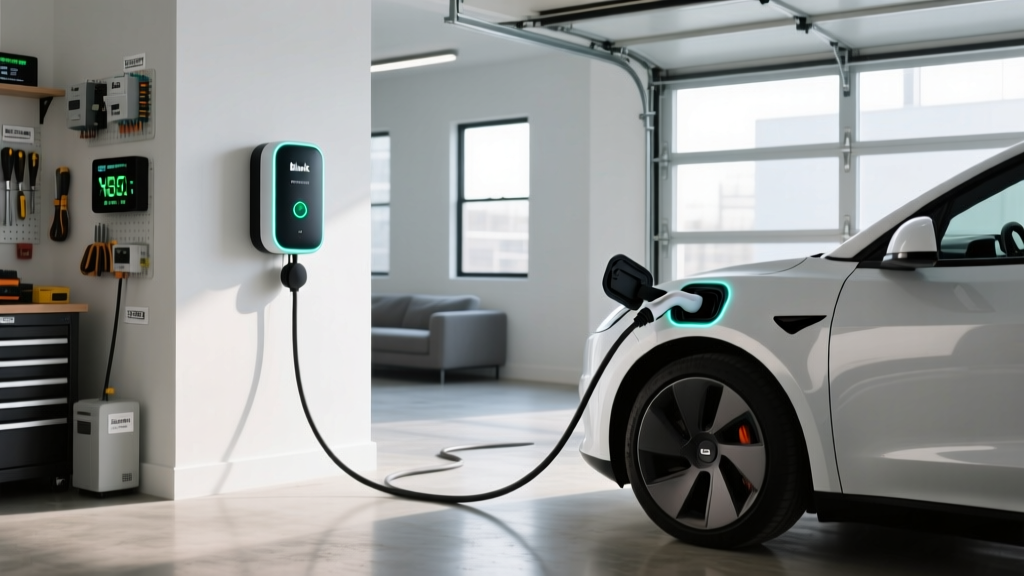
Installing a Level 2 home charger is the single highest-impact upgrade an EV owner can make. But costs vary dramatically based on your home's electrical panel, the distance from panel to charger location, and local permitting.
Electrical Requirements for a Level 2 Charger
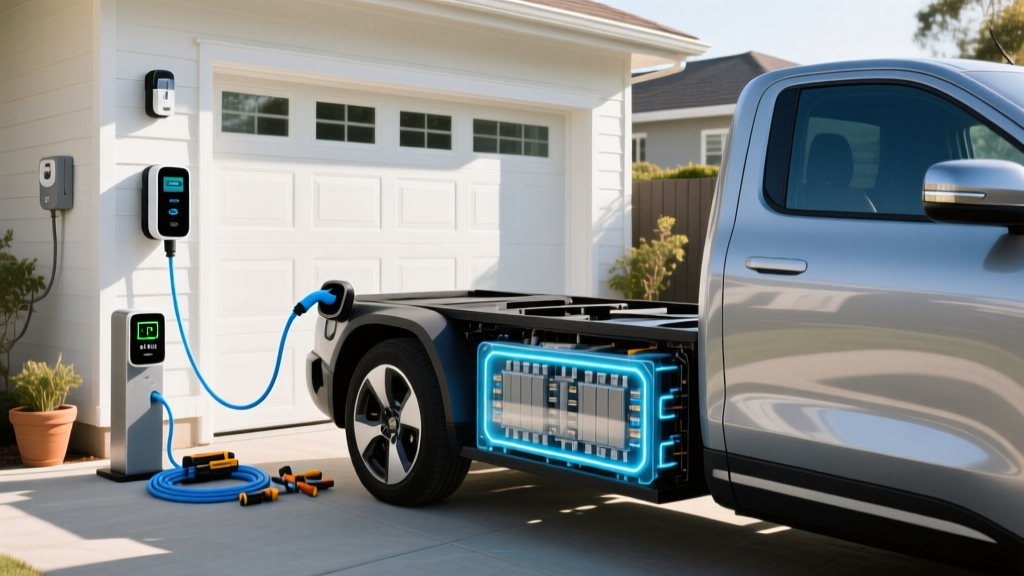
A typical Level 2 home charger requires a dedicated 240-volt circuit, usually at 40 or 50 amps, which supports continuous draw of 32A or 40A respectively (the National Electrical Code requires circuits to be rated at 125% of the continuous load). If your home has a 100-amp electrical panel — common in homes built before the 1990s — adding a 50-amp EV circuit may push you over capacity, requiring a panel upgrade to 200 amps.
How Much Does It Cost to Install a Home EV Charger?
Here's a realistic cost breakdown based on national averages for a hardwired Level 2 charger installation:
| Component | Low Estimate | High Estimate | Notes |
|---|---|---|---|
| Level 2 Charger Equipment | $350 | $750 | Smart Wi-Fi chargers (e.g., ChargePoint Home Flex, Emporia Level 2) |
| Electrician Labor (simple run) | $400 | $900 | Short wire run, panel has spare capacity |
| Electrician Labor (complex run) | $1,000 | $2,500 | Long wire run, conduit, wall penetration, attic crawl |
| Permit Fees | $50 | $300 | Varies by municipality; some jurisdictions waive for EV |
| Panel Upgrade (if needed) | $1,500 | $4,000 | 100A to 200A upgrade; not needed in most modern homes |
| Total (no panel upgrade) | $800 | $2,250 | Most common scenario for homes built after 2000 |
| Total (with panel upgrade) | $2,300 | $6,250 | Older homes or high-load panels |
Some utilities offer rebates of $250-$500 for Level 2 installations, and the federal Residential Clean Energy Credit may cover 30% of charger equipment and installation costs (up to $1,000) through 2032, subject to IRS eligibility rules. Always verify current-year requirements with a tax professional.
What Electrical Upgrades Might I Need?
Before hiring an electrician, check these:
- Panel amperage: 200A panels handle most EV circuits without issue. 100A panels may need a load calculation.
- Available breaker slots: A 240V circuit requires two adjacent slots. If your panel is full, a sub-panel or tandem breakers may be needed.
- Wire gauge: A 50A circuit requires 6 AWG copper wire; a 40A circuit uses 8 AWG. Longer runs may need thicker wire to prevent voltage drop.
- Outdoor rating: If your charger mounts outside, ensure the unit carries a NEMA 4 (weatherproof) rating and your electrician uses weatherproof conduit fittings.
Connector Compatibility: NACS, CCS, and CHAdeMO in 2026
The connector landscape has shifted dramatically. As of the 2025-2026 model years, the North American Charging Standard (NACS), developed by Tesla, has been adopted by Ford, GM, Rivian, Volvo, Polestar, Mercedes, BMW, Hyundai/Kia, and most other major automakers. CCS1 remains on some legacy models, and CHAdeMO is effectively discontinued except for older Nissan Leaf owners.
| Connector | Brands Using It | Public Network Access | Adapter Needed? |
|---|---|---|---|
| NACS (Tesla) | Tesla, Ford, GM, Rivian, Volvo, Polestar, BMW, Mercedes, Hyundai, Kia, Toyota | Tesla Superchargers + growing NACS stations on EA, ChargePoint | CCS-to-NACS adapters available (~$200) for legacy CCS vehicles |
| CCS1 | Legacy VW ID.4 (pre-2025), older Hyundai/Kia models, Stellantis | Electrify America, EVgo, ChargePoint CCS stalls | NACS-to-CCS adapter needed for Tesla Superchargers (where permitted) |
| CHAdeMO | Nissan Leaf (legacy only) | Declining availability; some EA and EVgo stations | No adapter available for NACS/CCS; plan charging around CHAdeMO stations |
Practical advice: If you're buying a new EV in 2026, prioritize NACS-equipped vehicles for the widest fast-charging network access. Tesla Superchargers remain the most reliable public network in the U.S., and NACS adoption means non-Tesla EVs now access many Supercharger stalls via the Tesla app.
Cost to Charge: Home vs. Public vs. Gas Comparison
How much does charging cost per mile vs. gas? The answer depends on where and when you charge. Here's a realistic comparison using national averages:
| Scenario | Rate | Cost for 300 Miles (at 3 mi/kWh) | Cost Per Mile |
|---|---|---|---|
| Home charging (off-peak utility rate) | $0.10/kWh | $10.00 | $0.033 |
| Home charging (standard residential rate) | $0.16/kWh | $16.00 | $0.053 |
| Public Level 2 (workplace/mall) | $0.25/kWh | $25.00 | $0.083 |
| DC Fast Charging (Electrify America, EVgo) | $0.40/kWh | $40.00 | $0.133 |
| Tesla Supercharger (average) | $0.30/kWh | $30.00 | $0.100 |
| Gasoline vehicle (28 MPG combined, $3.40/gal) | $3.40/gallon | $36.43 | $0.121 |
The takeaway: Home charging is dramatically cheaper than gas — roughly one-third to one-half the cost per mile. Public DC fast charging narrows the gap and can occasionally exceed gas costs on a per-mile basis, which is why home charging access is the single biggest economic factor in EV ownership. Time-of-use (TOU) utility plans that offer off-peak rates below $0.10/kWh make the economics even more favorable.
Best Home EV Chargers for 2026: Equipment Picks
Not all Level 2 chargers are equal. Here are three proven options that cover most EV owner needs, with exact specifications:
ChargePoint Home Flex
- Power Output: Up to 11.5 kW (48A) on a 60A circuit; configurable down to 16A
- Connector: NACS or J1772 (select at purchase)
- Cable Length: 23 feet
- Smart Features: Wi-Fi, app scheduling, Alexa integration, energy tracking, utility demand-response compatible
- Price: ~$549 (NACS) / ~$499 (J1772)
- Best For: Most EV owners wanting a reliable, app-connected charger with flexible amperage
Emporia Level 2 EV Charger
- Power Output: Up to 11.5 kW (48A) on a 60A circuit
- Connector: J1772 (NACS adapter included)
- Cable Length: 24 feet
- Smart Features: Wi-Fi, app control, solar integration (pairs with Emporia Vue energy monitor), load management
- Price: ~$399
- Best For: Budget-conscious buyers or homes with solar panels seeking energy-aware charging
Tesla Wall Connector
- Power Output: Up to 11.5 kW (48A) on a 60A circuit
- Connector: NACS native
- Cable Length: 24 feet
- Smart Features: Wi-Fi, power sharing (link multiple units on one circuit), OTA updates, Tesla app integration
- Price: ~$420
- Best For: Tesla owners or NACS-equipped EV drivers wanting a sleek, high-output unit
Safety, Code, and Installation Best Practices
EV charging involves sustained high-current draw — more like running an electric furnace than plugging in a phone. Follow these non-negotiable safety and code guidelines:
- Dedicated circuit: Your Level 2 charger must be on its own dedicated breaker. Never share a circuit with other appliances.
- GFCI protection: The 2023 NEC update requires GFCI protection for all EV charging outlets (NEMA 14-50 receptacles). Hardwired chargers are exempt from this GFCI requirement and are generally preferred for reliability — GFCI breakers can nuisance-trip on EV loads.
- Outdoor rating: For outdoor installations, use a charger rated NEMA 4 or higher, and ensure all conduit and junction boxes are weatherproof.
- Permit and inspection: Most jurisdictions require an electrical permit for a new 240V circuit. Skipping this can void homeowner's insurance coverage in the event of a fire. Permits typically cost $50-$300 and the inspection ensures code compliance.
- Use a licensed electrician: This is not a DIY project. Improper wiring, undersized conductors, or loose connections on a sustained 40A load create serious fire risk. Verify your electrician has EV charger installation experience.
Frequently Asked Questions
How much does it cost to install a home EV charger?
Most homeowners pay between $800 and $2,250 for a Level 2 charger installation, including equipment ($350-$750), electrician labor ($400-$1,500), and permits ($50-$300). If your home needs a panel upgrade from 100A to 200A, add $1,500-$4,000. The federal Residential Clean Energy Credit may cover 30% of costs up to $1,000 through 2032 — consult IRS guidelines for eligibility.
How fast will each charging level add range?
Level 1 (120V) adds roughly 3-5 miles of range per hour. Level 2 (240V, 48A) adds 25-44 miles per hour depending on vehicle efficiency. DC fast charging at 150-350 kW can add 150-1,000+ miles per hour at peak — though sustained rates are lower due to charge curve taper above 80% SoC. See the charging levels table above for exact figures.
Which connector/charger is compatible with my EV?
For 2026 models, NACS is now the dominant standard — used by Tesla, Ford, GM, Rivian, Hyundai, Kia, BMW, Mercedes, and Volvo. CCS1 remains on some older or carryover models. CHAdeMO is limited to legacy Nissan Leaf vehicles. Check your vehicle's charge port or manufacturer spec sheet. For home Level 2 charging, NACS chargers work with all NACS-equipped vehicles; J1772 chargers work with CCS vehicles and NACS vehicles using an adapter.
How much does charging cost per mile vs. gas?
Home charging at the national average residential rate of ~$0.16/kWh costs roughly $0.05 per mile for an efficient EV like the Hyundai Ioniq 6 (3.5 mi/kWh). Gasoline at $3.40/gallon in a 28 MPG vehicle costs ~$0.12 per mile. Public DC fast charging at $0.30-$0.40/kWh narrows the gap to $0.10-$0.13 per mile. The savings are largest when you charge at home on off-peak utility rates.
What electrical upgrades might I need?
The most common upgrade is a panel capacity increase from 100A to 200A, needed in roughly 15-20% of older homes. Other potential needs include adding breaker slots (via a sub-panel), upgrading service entrance wiring, or running a new conduit path if the charger location is far from the panel. A licensed electrician can perform a load calculation to determine whether your current panel has headroom for a 40-50A EV circuit. Data from fueleconomy.gov can help you estimate your vehicle's energy needs to right-size the circuit.
Does the longest-range EV always mean the best road-trip car?
Not necessarily. The Lucid Air Grand Touring leads with 516 EPA miles, but its $125,650 MSRP puts it out of reach for most buyers. The Hyundai Ioniq 6 SE Long Range offers 361 EPA miles at $42,450 — and its 800V architecture delivers a 10-80% charge in roughly 18 minutes at a 240 kW DC fast charger, making it one of the fastest-charging EVs available. For road trips, a combination of adequate range (300+ miles), fast charging (200+ kW peak), and access to a reliable network (NACS/Supercharger) matters more than raw range alone. Reference IIHS safety ratings and real-world owner reports alongside EPA estimates when making your decision.