Gravity Mobility has expanded its public DC fast-charging network across major U.S. metros, targeting urban EV drivers who lack home charging access. But public fast charging is only one piece of the puzzle — most EV owners still do 80% or more of their charging at home on Level 2 equipment. This guide breaks down how Gravity charging stations fit into a complete charging strategy, what each charging level actually delivers in miles per hour, what a home install really costs, and how charging economics compare to filling a gas tank.
Charging Levels Explained: How Fast Does Each Level Add Range?
The single most common confusion for new EV buyers is the difference between kW (kilowatts — the rate of power delivery, like water pressure from a hose) and kWh (kilowatt-hours — the total energy stored in your battery, like the size of the bucket). A 150 kW charger doesn't put 150 kWh into your car; it delivers energy at a rate of 150 kilowatts, and the actual energy transferred depends on time and your battery's acceptance curve.
Here's what each charging level delivers in practical terms:
| Level | Voltage | Power (kW) | Miles of Range per Hour | Typical Use Case |
|---|---|---|---|---|
| Level 1 | 120V AC | 1.0–1.4 kW | 3–5 mi/hr | Overnight trickle; PHEVs; emergency backup |
| Level 2 (Home/Public) | 240V AC | 3.3–19.2 kW | 12–75 mi/hr | Daily home charging; workplace; retail destinations |
| DC Fast Charging | 400–800V DC | 50–350 kW | 150–1,000+ mi/hr (peak) | Road trips; rapid top-ups; Gravity stations |
A few critical nuances: DC fast charging speeds are peak rates. Your vehicle's charge curve tapers significantly above 80% state of charge (SoC) to protect battery health. A vehicle that peaks at 250 kW at 10% SoC may only pull 40 kW by the time it reaches 90%. That's why manufacturers and reviewers quote 10–80% charging times rather than 0–100%.
Gravity Charging Stations: Network Overview and DC Fast Speeds
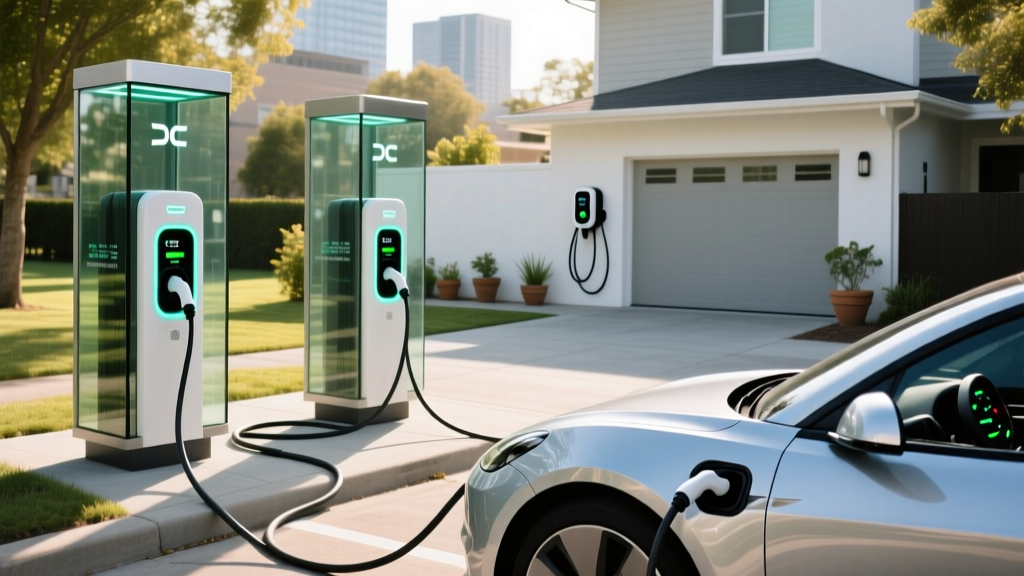
Gravity Mobility operates DC fast-charging stations primarily in dense urban environments — parking garages, retail centers, and fleet hubs — where they address the gap for apartment dwellers and ride-share drivers who can't install home chargers. As of early 2026, Gravity stations typically offer:
- Peak power output: 150–200 kW per dispenser (CHAdeMO and CCS1 connectors; some newer locations include NACS)
- Typical 10–80% charge times: 18–35 minutes depending on vehicle battery size and architecture
- Pricing model: Per-kWh billing, typically $0.35–$0.55/kWh depending on location and time of day
- Connector availability: Primarily CCS1 and CHAdeMO; Tesla NACS adapters may be required at locations without native NACS cables
For context, here's how long a 10–80% session takes at a Gravity-style 150–200 kW DC fast charger for common battery sizes:
| Vehicle Example | Usable Battery (kWh) | Peak Acceptance Rate | Est. 10–80% Time |
|---|---|---|---|
| Chevrolet Equinox EV | 85 kWh | ~150 kW | ~28–32 min |
| Hyundai Ioniq 5 | 77.4 kWh (800V) | ~235 kW | ~18–20 min |
| Tesla Model Y (Long Range) | 75 kWh | ~250 kW | ~18–22 min |
| Ford F-150 Lightning (Extended) | 131 kWh | ~150 kW | ~45–55 min |
| BMW iX xDrive50 | 105.2 kWh | ~200 kW | ~32–38 min |
Real-world charging caveat: These times assume a preconditioned battery at moderate ambient temperature (60–80°F). In cold weather (below 32°F), expect 10–80% times to increase by 30–50% unless your vehicle has active battery preconditioning. Always use your vehicle's built-in navigation to route to a charger — most modern EVs will automatically begin warming the battery en route.
Home Level 2 Charging: Electrical Requirements and Installation Costs
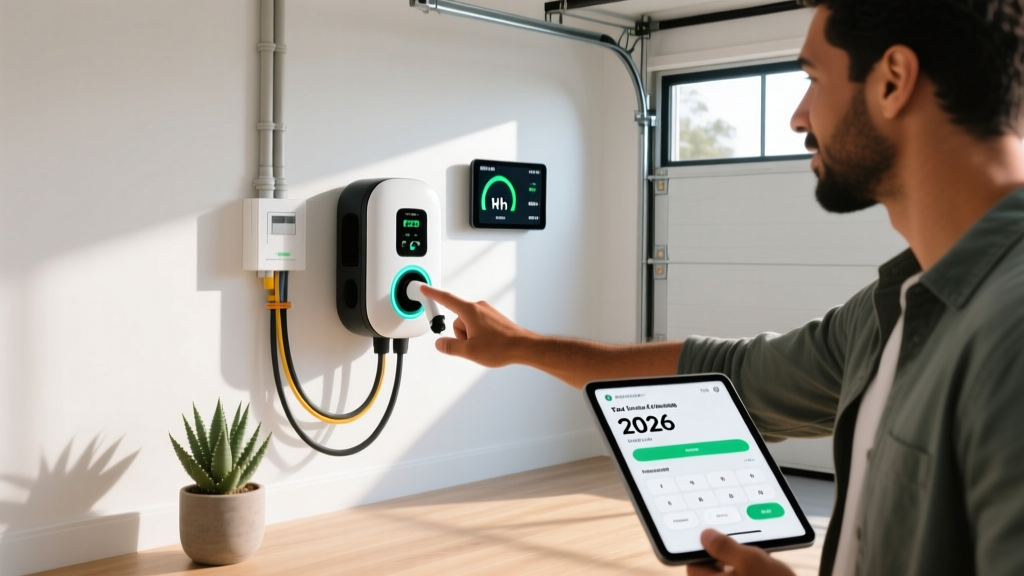
While Gravity stations serve public fast-charging needs, a home Level 2 charger remains the most convenient and cost-effective way to charge. A typical Level 2 home charger runs on a 240V dedicated circuit — the same voltage as your electric dryer or oven.
Electrical Specifications
- Circuit amperage: 40A, 50A, or 60A dedicated breaker (most common: 50A circuit for a 40A continuous charger)
- Charger output: 7.7 kW (32A), 9.6 kW (40A), 11.5 kW (48A), or up to 19.2 kW (80A) for high-power units
- Wire gauge: 6 AWG copper for 50A circuits; 4 AWG for 60A (varies by run length and local code)
- NEMA outlet vs. hardwired: Hardwired installations are preferred for outdoor chargers and anything above 40A; NEMA 14-50 outlets offer portability but require GFCI breakers per NEC 2020+ code
What Electrical Upgrades Might You Need?
Many homes built before 2000 have 100A or 150A main electrical panels. Adding a 50A EV circuit to an already-loaded panel may require a panel upgrade to 200A, which is one of the most significant hidden costs in EV adoption. Signs you may need an upgrade:
- Your panel is at or near capacity (electrician will perform a load calculation per NEC Article 220)
- You have a 100A main breaker
- You already run multiple high-draw appliances (electric range, dryer, HVAC, water heater)
- Your panel is a known problematic brand (Federal Pacific, Zinsco, certain Challenger models)
Some utilities and municipalities now permit automated load management devices (like the Emporia Smart Load Management or Span panel integration) that allow EV charging without a full panel upgrade by dynamically throttling charger draw when other circuits are active.
| Component | Simple Install (Near Panel) | Complex Install (Long Run / Upgrade) |
|---|---|---|
| Level 2 Charger Equipment | $400–$700 | $500–$1,200 |
| Electrician Labor | $400–$800 | $1,200–$3,000 |
| Permit & Inspection | $50–$200 | $100–$350 |
| Panel Upgrade (if needed) | N/A | $1,500–$4,000 |
| Conduit/Wire (long runs) | $50–$150 | $300–$1,000 |
| Total Estimated Cost | $900–$1,850 | $3,600–$9,550 |
Always get at least two quotes from licensed electricians familiar with EV charger installs. Ask specifically about the load calculation, whether a permit is required in your jurisdiction, and whether the quote includes inspection fees. According to the U.S. Department of Energy, average home install costs range from $1,000 to $2,500 for straightforward installations.
Connector Compatibility: Which Plug Fits Your EV?
The connector landscape shifted dramatically in 2024–2025 when most major automakers adopted the North American Charging Standard (NACS), originally developed by Tesla. Here's where things stand for 2026 model-year vehicles:
| Connector | Brands Using It (Native) | Notes |
|---|---|---|
| NACS (Tesla-style) | Tesla, Ford, GM, Rivian, Volvo, Polestar, Mercedes-Benz, Fisker, Lucid (2025+) | Now the dominant standard; access to Tesla Supercharger network |
| CCS1 (Combo) | Hyundai, Kia, BMW, VW, Stellantis, Subaru, Toyota (bZ series) | Still widely available; adapters to NACS available from Tesla and third parties |
| CHAdeMO | Nissan (Leaf — legacy only) | Effectively discontinued for new models; stations increasingly rare |
Adapter requirements: If you drive a CCS1-equipped vehicle (e.g., Hyundai Ioniq 5, Kia EV6, BMW iX) and want to use Tesla Superchargers or NACS-only public stations, you'll need a CCS-to-NACS adapter. Tesla sells an official adapter for ~$250, and aftermarket options from Lectron and A2Z are available for $150–$200. Conversely, NACS-native vehicles like the Ford Mustang Mach-E or Chevy Silverado EV can use CCS stations with a NACS-to-CCS adapter.
At Gravity charging stations, check the app or website for your specific location's connector availability before driving there. Most Gravity stations still offer CCS1 and CHAdeMO, but NACS-native dispensers are being rolled out at newer locations.
Cost to Charge: Per-Mile Economics vs. Gasoline
The economic case for EV charging hinges on where and when you charge. Here's a realistic breakdown of cost per mile across different scenarios, using a vehicle with an efficiency of 3.0 miles per kWh (typical for a midsize crossover EV like the Tesla Model Y or Hyundai Ioniq 5):
| Charging Scenario | Cost per kWh | Cost per Mile (at 3 mi/kWh) | Equivalent Gas MPG at $3.50/gal |
|---|---|---|---|
| Home — Off-Peak Utility Rate | $0.08–$0.12 | $0.03–$0.04 | 88–117 MPG |
| Home — Standard Residential Rate | $0.14–$0.18 | $0.05–$0.06 | 58–70 MPG |
| Public Level 2 (Workplace/Retail) | $0.20–$0.35 | $0.07–$0.12 | 29–50 MPG |
| DC Fast Charging (Gravity / EA / EVgo) | $0.35–$0.55 | $0.12–$0.18 | 19–29 MPG |
| Tesla Supercharger (varies) | $0.25–$0.40 | $0.08–$0.13 | 27–44 MPG |
| Gas baseline: 28 MPG combined at $3.50/gallon = $0.125/mile | |||
The takeaway: home charging is dramatically cheaper than gas, while exclusive reliance on DC fast charging can approach or even exceed gas costs per mile. The optimal strategy is to charge at home 80–90% of the time and use public DC fast chargers like Gravity stations only for road trips or when home charging isn't available.
For a driver covering 12,000 miles per year with 85% home charging (at $0.15/kWh) and 15% public DC fast charging (at $0.45/kWh), the annual fuel cost works out to roughly $660. A comparable 28 MPG gas vehicle at $3.50/gallon would cost $1,500/year — a savings of approximately $840 annually with the EV.
Recommended Home Level 2 Chargers: Equipment Picks for 2026
Based on power output, reliability, smart features, and connector options, here are top home Level 2 chargers for different needs:
Best Overall: ChargePoint Home Flex (2nd Gen)
- Power Output: Up to 12 kW (50A circuit) — configurable from 16A to 50A
- Connector: NACS or J1772 (CCS adapter included in some bundles)
- Cable Length: 23 feet
- Smart Features: Wi-Fi, app scheduling, utility demand-response integration, Alexa support
- Price: ~$550–$650
- Best For: Most homeowners; adjustable amperage fits any panel capacity
Best for Tesla/NACS Owners: Tesla Wall Connector
- Power Output: Up to 11.5 kW (48A / 60A circuit)
- Connector: NACS native; J1772 adapter available separately
- Cable Length: 24 feet
- Smart Features: Wi-Fi, OTA firmware updates, Power Sharing (daisy-chain up to 6 units), load management
- Price: ~$475
- Best For: Tesla and NACS-native vehicle owners wanting a clean, high-output unit
Best Budget Smart Charger: Emporia Level 2 EV Charger
- Power Output: Up to 11.5 kW (48A)
- Connector: J1772 (CCS vehicles); NACS adapter available
- Cable Length: 24 feet
- Smart Features: Wi-Fi, real-time energy monitoring via Emporia app, solar integration, load management with Emporia panel monitor
- Price: ~$400
- Best For: Budget-conscious buyers who want smart features and solar pairing
Best for High-Power Needs: FLO Home X8
- Power Output: Up to 19.2 kW (80A / 100A circuit)
- Connector: J1772 (CCS); NACS adapter available
- Cable Length: 25 feet
- Smart Features: Wi-Fi, FLO app, robust aluminum enclosure, NEMA 4 rated for harsh outdoor environments
- Price: ~$1,100–$1,300
- Best For: Large-battery EVs (F-150 Lightning, Hummer EV) needing maximum Level 2 speed
Safety, Code Compliance, and Installation Best Practices
EV charger installation is electrical work that must comply with the National Electrical Code (NEC) and your local jurisdiction's amendments. Key safety requirements:
- Dedicated circuit: Your EV charger must have its own dedicated breaker — never share a circuit with other appliances
- GFCI protection: NEC 2020 and later requires GFCI protection for all receptacles used for EV charging (this applies to NEMA 14-50 outlets; hardwired units typically have built-in ground-fault protection)
- Outdoor rating: Outdoor installations require NEMA 4-rated (weatherproof) enclosures on the charger unit; ensure your electrician uses outdoor-rated conduit and fittings
- Permit and inspection: Most jurisdictions require a permit for EV charger installation. Skipping the permit can void homeowner's insurance coverage for electrical fires and may cause issues at resale
- Wire sizing: Wire gauge must match the breaker amperage and account for voltage drop on long runs (over 50 feet). Undersized wire is a fire hazard
Never attempt a DIY EV charger installation unless you are a licensed electrician. The combination of high amperage, continuous load (EV charging is classified as a continuous load under NEC, meaning the circuit must be rated for 125% of the charger's maximum draw), and outdoor exposure makes professional installation essential.
Frequently Asked Questions
How much does it cost to install a home EV charger?
For a straightforward installation with the electrical panel near the garage, expect $900–$1,850 total (charger + electrician + permit). If your home needs a panel upgrade from 100A to 200A, or the charger location requires a long wire run through walls or underground conduit, costs can reach $3,600–$9,550. Always get multiple quotes and confirm the electrician performs an NEC Article 220 load calculation.
How fast will each charging level add range?
Level 1 (120V standard outlet) adds 3–5 miles per hour — adequate for plug-in hybrids with small batteries but impractical for full EVs. Level 2 (240V home charger) adds 12–75 miles per hour depending on amperage, easily refilling most EVs overnight. DC fast charging adds 150–1,000+ miles per hour at peak, but real-world 10–80% sessions take 18–55 minutes depending on battery size and vehicle architecture.
Which connector/charger is compatible with my EV?
Check your vehicle's charge port: 2025–2026 Tesla, Ford, GM, Rivian, Volvo, and several others use NACS. Hyundai, Kia, BMW, VW, and most Stellantis vehicles still use CCS1. The Nissan Leaf (discontinued after 2025) used CHAdeMO. For home charging, buy a Level 2 charger that matches your vehicle's native connector, or purchase the appropriate adapter. At public stations like Gravity, check the app for connector availability before arriving.
How much does charging cost per mile vs gas?
Home charging at typical residential rates ($0.14–$0.18/kWh) costs $0.05–$0.06 per mile for an average EV — roughly equivalent to a 60–70 MPG gas car. DC fast charging at $0.35–$0.55/kWh costs $0.12–$0.18 per mile, approaching the cost of gasoline. A 28 MPG gas car at $3.50/gallon costs about $0.125 per mile. The more you charge at home, the more you save.
What electrical upgrades might I need?
If your home has a 200A electrical panel with available capacity, you likely only need a dedicated 50A or 60A circuit added. Homes with 100A or 150A panels, or panels already near capacity with electric appliances, may require a panel upgrade to 200A ($1,500–$4,000). Alternatives include automated load management devices that throttle charger draw dynamically, or installing a lower-amperage charger (e.g., 32A / 7.7 kW) that draws less from the panel. A licensed electrician will determine your specific needs during a site assessment.
Can I use a Gravity charging station with any EV?
Most Gravity stations provide CCS1 and CHAdeMO connectors, compatible with the majority of non-Tesla EVs. If you drive a NACS-native vehicle (Tesla, Ford, GM, Rivian), check whether the specific Gravity location has NACS dispensers, or bring a NACS-to-CCS adapter. Always verify connector availability in the Gravity app before driving to a station.
Is it safe to charge an EV in the rain or snow?
Yes. All commercially sold EV chargers and vehicle charge ports are designed and tested for outdoor use in wet conditions. The connector and port are sealed, and the charging system will not energize until a secure, weatherproof connection is confirmed. Ensure your outdoor charger is NEMA 4 rated and properly installed with weatherproof conduit.
For the most current federal incentive information on home charger installation, consult the IRS Residential Clean Energy Credit page — the §30C alternative fuel infrastructure credit may cover up to 30% of home charger equipment and installation costs (up to $1,000) through 2032, subject to specific requirements. Always verify eligibility with a tax professional.