Why Charging Setup Matters More for Long-Range PHEVs Than You Think
A long-range PHEV — one packing 30 to 50+ miles of electric-only range on a battery in the 18–30 kWh ballpark — sits in a charging sweet spot that many buyers underestimate. The battery is large enough that Level 1 (120V) charging from a standard wall outlet takes all night and still doesn't fully replenish it, yet small enough that you don't need the 250–350 kW DC fast-charging infrastructure a full BEV demands for road trips.
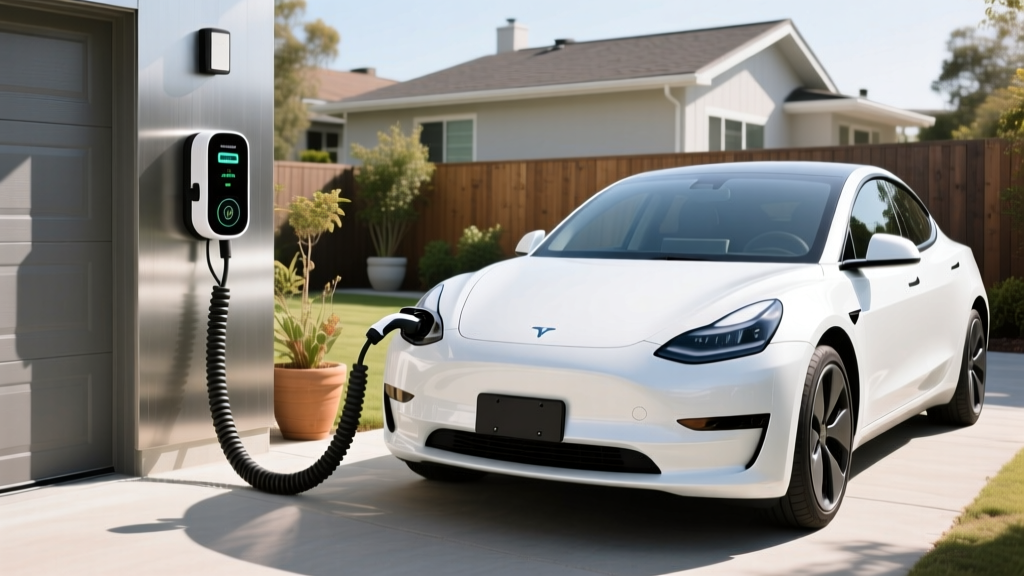
The practical upshot: a properly sized Level 2 home charger is the single highest-impact upgrade a long-range PHEV owner can make. Get it right and you'll wake up every morning with a full battery, commute on electricity alone, and rarely visit a gas station. Get it wrong — or rely on Level 1 — and you'll leave miles on the table every single day.
This guide walks through exactly what you need: charging levels and real speeds, home installation requirements and costs, connector compatibility across 2026 PHEV models, ongoing electricity costs versus gas, and specific charger hardware recommendations.
Charging Levels Explained: How Fast Will Each Add Range?
Before picking hardware, you need clarity on the three charging tiers and what they mean for a PHEV battery. The distinction between kW (power, or the rate energy flows) and kWh (energy, or the total capacity of your battery) is critical here. A 25 kWh battery charged at 7.2 kW will theoretically fill in about 3.5 hours; the same battery on a 1.4 kW Level 1 outlet needs roughly 18 hours.
| Level | Voltage | Power (kW) | Miles of Range Added per Hour | Full Charge Time (25 kWh Battery) |
|---|---|---|---|---|
| Level 1 | 120V AC | 1.2–1.9 kW | 3–5 mi/hr | 13–20 hours |
| Level 2 | 240V AC | 3.3–11.5 kW | 10–35 mi/hr | 2.2–7.5 hours |
| DC Fast Charging | 400–800V DC | 50–150+ kW | 100–200+ mi/hr | 15–35 min (10–80%) |
For a long-range PHEV with roughly 35–45 miles of EPA electric range, Level 2 is the clear daily workhorse. A 7.2 kW charger will refill a depleted 25 kWh pack in about 3.5 hours — easily covered by an overnight session or a workday if your employer offers charging.
DC fast charging on PHEVs is limited by the vehicle's onboard charge port and battery management system. Many 2026 long-range PHEVs — such as the Toyota RAV4 Prime (42 mi EV range, 18.1 kWh battery) and the Jeep Wrangler 4xe (22 mi EV range, 17.3 kWh battery) — cap DC charging between 50 kW and 65 kW. Some newer models with larger batteries, like the BMW X5 xDrive50e (38 mi range, ~25.7 kWh), accept up to 7.4 kW on Level 2 but lack DC fast charging altogether. Always check your specific model's charge port specs before assuming DC capability.
Home Installation: Electrical Requirements, Panel Upgrades, and Costs
Installing a Level 2 home charger involves more than mounting a box on the wall. The electrical requirements are specific, and older homes may need panel work before any charger can be safely energized.
Core Electrical Requirements
A typical Level 2 charger for PHEV use draws between 3.3 kW (16A at 240V) and 7.2 kW (32A at 240V). Higher-output units at 9.6 kW (40A) or 11.5 kW (48A) exist but are overkill for most PHEVs, which have onboard chargers capped at 6.6–7.4 kW. You'll need:
- A dedicated 240V circuit with appropriate amperage (40A breaker for a 32A charger, following the NEC 80% continuous-load rule)
- 6 AWG copper wire for 40A circuits; 8 AWG for 30A circuits (run length affects gauge in some cases)
- A NEMA 14-50 receptacle (if using a plug-in charger) or direct hardwiring (for higher-amperage units or where local code requires it)
- A GFCI breaker if the charger is installed outdoors or in a garage, per NEC 2020 and later code cycles
Panel Upgrade Considerations
Homes built before 2000 often have 100A or 150A main panels that may already be near capacity with HVAC, electric range, dryer, and water heater loads. Adding a 40A EV circuit could push total calculated load beyond the panel's rating. A licensed electrician will perform a NEC Article 220 load calculation to determine if your panel can handle the addition. If not, a panel upgrade to 200A (or occasionally 400A) is required.
Some utilities and municipalities now allow smart panel load-management devices (like the Span smart panel or a simple CT-clamp-based controller) that throttle the charger when household demand is high, potentially avoiding a full panel upgrade. Ask your electrician about this option.
| Component | Typical Cost Range | Notes |
|---|---|---|
| Level 2 Charger (Equipment) | $300–$700 | Smart Wi-Fi units at upper end |
| Electrician Labor | $500–$2,000 | Depends on run length, wall type, conduit |
| Permit & Inspection | $50–$250 | Varies by municipality |
| Electrical Materials (wire, breaker, conduit) | $100–$400 | Long wire runs increase cost significantly |
| Panel Upgrade (if needed) | $1,500–$4,000 | 100A→200A upgrade; not always required |
| Total (no panel upgrade) | $950–$3,350 | Most homes fall in $1,200–$2,200 range |
| Total (with panel upgrade) | $2,450–$7,350 | Older homes with 100A service |
The federal Alternative Fuel Vehicle Refueling Property Credit (IRS Form 8911) covers up to 30% of home charger equipment and installation costs, capped at $1,000, for installations placed in service through 2032 — subject to census-tract eligibility requirements. Check with a tax professional for your specific situation.
Connector Compatibility: Which Plug Fits Your Long-Range PHEV?
The connector landscape has shifted dramatically since 2024, when Ford and other automakers committed to adopting the North American Charging Standard (NACS) originally developed by Tesla. For 2026 PHEVs, the situation is a transitional mix:
| Connector | Common PHEV Models | Adapter Needed for Tesla Superchargers? |
|---|---|---|
| J1772 / CCS1 | Toyota RAV4 Prime, Jeep Wrangler 4xe, Hyundai Tucson PHEV, Kia Sportage PHEV | Yes — CCS-to-NACS adapter (~$200–$250) for Supercharger access |
| NACS (native) | Ford Escape PHEV (2026+), select upcoming models | No — direct Supercharger access |
| J1772 (Level 2 only, no DC) | BMW X5 xDrive50e, some European-market PHEVs | N/A for DC; use J1772-to-NACS adapter for Level 2 Tesla destination chargers |
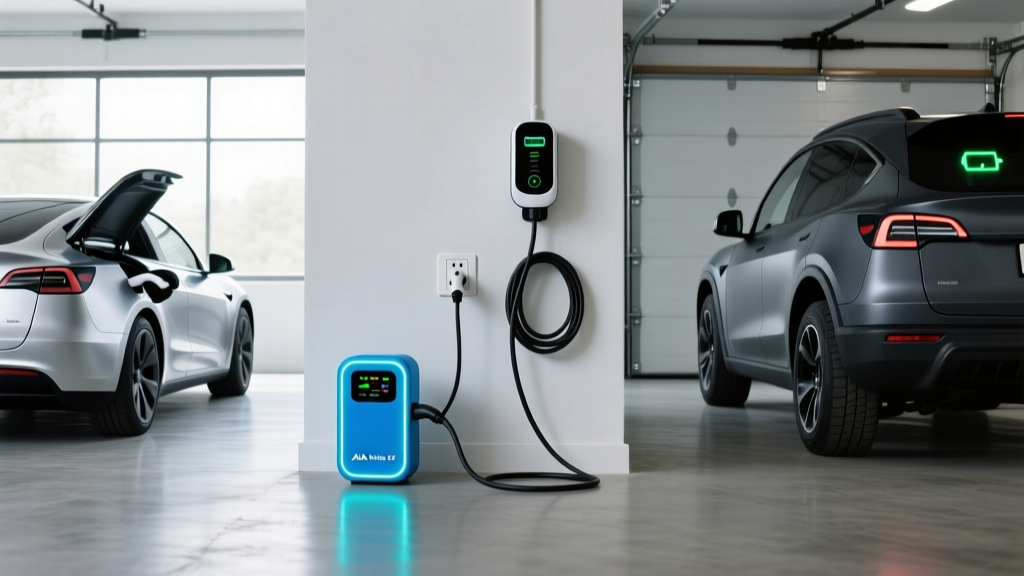
Most Level 2 home chargers sold in 2026 still ship with a J1772 connector. If your PHEV has a native NACS port, you'll need a NACS-equipped home charger (increasingly available from brands like ChargePoint, Emporia, and Wallbox) or a J1772-to-NACS adapter. For PHEVs with J1772/CCS1 ports, any standard J1772 Level 2 charger works without adapters.
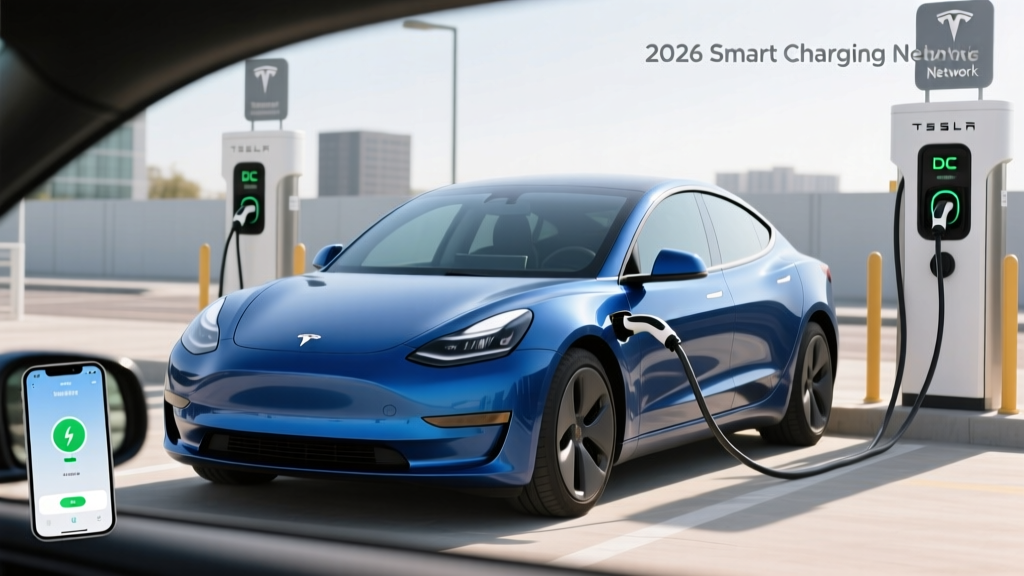
For DC fast charging on road trips, CCS1 PHEVs can access Electrify America and most non-Tesla networks natively. To use Tesla Superchargers, a CCS-to-NACS adapter is required, and not all Supercharger stalls support non-Tesla vehicles — check the Tesla app for compatible locations.
Charging Cost Per Mile: PHEV Electricity vs. Gasoline
One of the strongest arguments for a long-range PHEV is the cost advantage of running on electricity for daily driving. Here's how the numbers stack up across common charging scenarios:
| Scenario | Rate / Price | Cost Per Mile (EV Mode) | Annual Cost (12,000 mi, 70% EV) |
|---|---|---|---|
| Home Level 2 (off-peak utility rate) | $0.08–$0.14/kWh | $0.03–$0.05 | $252–$420 |
| Home Level 2 (standard residential rate) | $0.14–$0.20/kWh | $0.05–$0.07 | $420–$588 |
| Public Level 2 (network pricing) | $0.20–$0.35/kWh | $0.07–$0.12 | $588–$1,008 |
| DC Fast Charging (public) | $0.30–$0.55/kWh | $0.10–$0.18 | $840–$1,512 |
| Gasoline (PHEV in hybrid mode, 35 MPG) | $3.40/gallon | $0.10 | $840 (gas-only miles) |
Calculation basis: A long-range PHEV averaging 3.0–3.5 miles per kWh (roughly 100–115 MPGe combined, consistent with EPA data on fueleconomy.gov for vehicles like the RAV4 Prime at 94 MPGe and the Tucson PHEV at 80 MPGe).
The takeaway: home charging at off-peak rates costs roughly one-quarter to one-third what gasoline costs per mile. Even on a standard residential rate, electric-mode driving saves 30–50% per mile versus hybrid-mode gas. The savings compound quickly if your daily commute falls within the PHEV's electric range.
Equipment Recommendations: Best Level 2 Chargers for PHEVs
You don't need a 48A charger for a PHEV. Since most long-range PHEVs max out at 6.6–7.4 kW onboard charging, a 32A (7.7 kW output) or 40A (9.6 kW output) unit provides full-speed charging with headroom for a future BEV. Here are three strong picks for 2026:
Emporia Vue Smart Charger (Gen 2)
- Power Output: Up to 48A / 11.5 kW (configurable down to 16A)
- Connector: J1772 (NACS version available)
- Cable Length: 24 feet
- Smart Features: Wi-Fi, energy monitoring via Emporia Vue panel integration, scheduling, load management
- Price: ~$399 (J1772)
- Best For: Budget-conscious owners who want energy tracking and load management without a panel upgrade
ChargePoint Home Flex (2nd Gen)
- Power Output: Up to 50A / 12 kW (configurable via dip switches)
- Connector: J1772 or NACS
- Cable Length: 23 feet
- Smart Features: Wi-Fi, ChargePoint app scheduling, Alexa integration, detailed session history
- Price: ~$599 (J1772), ~$649 (NACS)
- Best For: Owners who want a proven brand with broad network integration and flexible amperage
Wallbox Pulsar Plus
- Power Output: Up to 40A / 9.6 kW
- Connector: J1772 (NACS adapter available)
- Cable Length: 25 feet
- Smart Features: Wi-Fi + Bluetooth, myWallbox app, Power Sharing for dual-charger setups, solar integration
- Price: ~$449
- Best For: Compact installation spaces, solar-equipped homes, and two-EV households
For PHEV-only use, any of these at 32A will fully charge a 25 kWh battery overnight. If you anticipate upgrading to a full BEV later (with larger 75–100+ kWh batteries), installing a 48A-capable unit on a 60A circuit now avoids rewiring later.
Safety, Code Compliance, and Common Installation Mistakes
EV charging involves sustained high-current draw — the longest continuous load your home electrical system will experience. NEC Article 625 governs EV charging installations, and cutting corners here creates fire risk.
Non-Negotiable Safety Requirements
- Dedicated circuit: Your EV charger must have its own breaker — no sharing with outlets, lights, or appliances. A 32A charger requires a 40A dedicated breaker.
- Continuous-load derating: NEC defines EV charging as a continuous load (3+ hours). The breaker must be rated at 125% of the charger's maximum draw. A 40A charger needs a 50A breaker; a 32A charger needs a 40A breaker.
- GFCI protection: Required for all 240V receptacles in garages and outdoor locations under NEC 2020+. Hardwired chargers may not require a GFCI breaker in all jurisdictions, but many inspectors now mandate it regardless.
- Outdoor-rated equipment: If your charger is mounted outside, both the unit and the receptacle must carry an outdoor/wet-location rating (NEMA 3R or 4). Look for chargers explicitly rated for outdoor use.
- Permit and inspection: Nearly every jurisdiction requires a permit for a new 240V circuit. Skipping the permit may void your homeowner's insurance in the event of an electrical fire. Budget $50–$250 for the permit and schedule the inspection before drywall patching or conduit concealment.
Common Mistakes to Avoid
The most frequent installation errors I see in the field: using an undersized breaker (a 30A breaker on a 32A charger trips immediately), running wire through attic spaces without proper conduit protection, installing a NEMA 14-50 outlet upside down (ground pin up, which is actually correct for this application but often done wrong), and failing to account for voltage drop on wire runs exceeding 100 feet. For runs over 100 feet, your electrician should upsize the wire gauge to compensate.
Long-Range PHEV Charging: Frequently Asked Questions
How much does it cost to install a home EV charger?
For a Level 2 charger installation without a panel upgrade, expect to spend between $950 and $3,350 total, with most homes landing in the $1,200–$2,200 range. This includes the charger unit ($300–$700), electrician labor ($500–$2,000), permit fees ($50–$250), and materials ($100–$400). If your home needs a panel upgrade from 100A to 200A, add $1,500–$4,000. The IRS Alternative Fuel Vehicle Refueling Property Credit can offset up to $1,000 (30% of costs) if you meet census-tract requirements.
How fast will each charging level add range to my PHEV?
Level 1 (120V standard outlet) adds roughly 3–5 miles of electric range per hour — enough for a short commute if you plug in for 10+ hours. Level 2 (240V) adds 10–35 miles per hour depending on amperage, fully recharging most long-range PHEVs in 2.5–5 hours. DC fast charging, where supported, can take a PHEV from 10–80% in 15–35 minutes at 50–65 kW, but many PHEVs don't support DC fast charging at all.
Which connector or charger is compatible with my long-range PHEV?
Most 2026 PHEVs (Toyota, Hyundai, Kia, Jeep) use the J1772 connector for Level 2 and CCS1 for DC fast charging. Ford's newer PHEVs are transitioning to native NACS. Any J1772-equipped Level 2 home charger works with J1772-ported vehicles. If your PHEV has NACS, buy a NACS home charger or use a J1772-to-NACS adapter. For Tesla Supercharger access with a CCS1 vehicle, you'll need a CCS-to-NACS adapter (~$200–$250).
How much does charging cost per mile compared to gasoline?
Home charging at off-peak utility rates ($0.08–$0.14/kWh) costs roughly $0.03–$0.05 per mile in a long-range PHEV — about one-quarter the cost of gasoline at $3.40/gallon and 35 MPG ($0.10/mile). Even at standard residential rates ($0.14–$0.20/kWh), electric-mode driving saves 30–50% per mile. Public DC fast charging at $0.30–$0.55/kWh can approach or exceed gas costs per mile, which is why home charging is the economic backbone of PHEV ownership.
What electrical upgrades might I need for a Level 2 charger?
If your home has a 200A electrical panel with sufficient spare capacity (determined by a NEC Article 220 load calculation), you likely need only a new 40A or 50A dedicated circuit — no panel work required. Homes with 100A or 150A panels, especially those with electric HVAC, range, dryer, and water heater, may need a panel upgrade to 200A ($1,500–$4,000) or a smart load-management device to avoid one. Your electrician will advise based on actual calculated load.
Can I just use Level 1 charging with my long-range PHEV?
You can, but it's suboptimal. A long-range PHEV with a 25 kWh battery needs 13–20 hours on a 120V Level 1 outlet for a full charge. If you drive 35 miles daily and deplete the battery, Level 1 won't fully replenish it overnight. You'll start each morning with a partial charge, gradually losing usable electric range over the work week. Level 2 solves this completely with a 3–5 hour refill window.