Buying an electric car with greatest range—like the 2026 Lucid Air Grand Touring (EPA 512 miles, 118 kWh usable) or the Chevrolet Silverado EV (EPA 460 miles, ~200 kWh)—solves road-trip anxiety but creates a new problem at home: refilling a massive battery pack on standard household power is painfully slow. If you're shopping for a long-range EV, your home charging setup is just as important as the car itself.
This guide breaks down exactly what it takes to charge high-capacity EV batteries at home and on the road: charging speeds by level, real installation costs, connector compatibility, equipment picks, and what you'll actually pay per mile versus gasoline. Whether you're plugging in a 75 kWh Tesla Model 3 Long Range or a 200 kWh Silverado EV 4WT, the physics and economics follow the same rules.
Charging Levels Explained: kW, Speed, and What Each Adds Per Hour
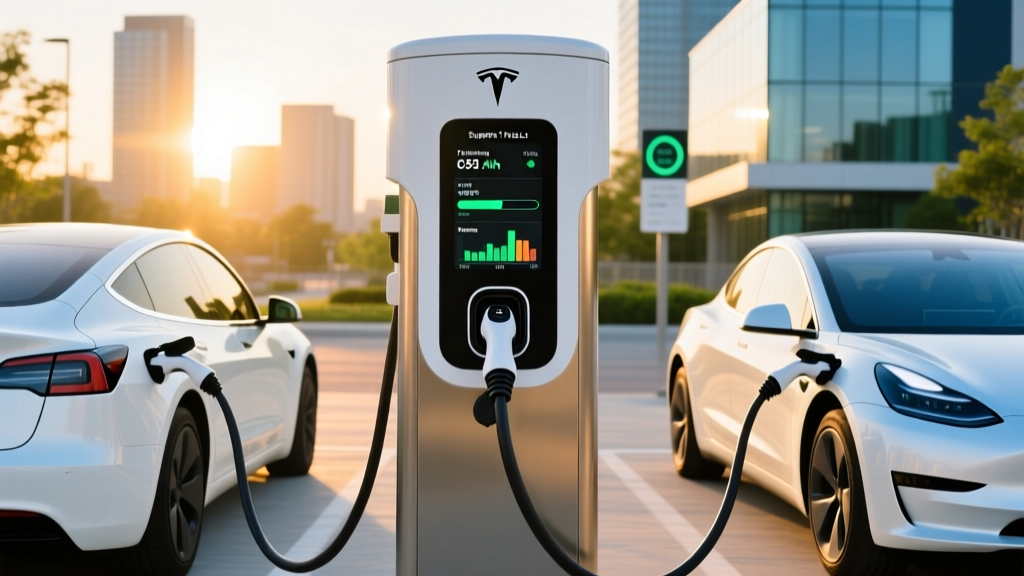
The single most important distinction in EV charging is between kW (kilowatts) and kWh (kilowatt-hours). Kilowatts measure the rate of power delivery—like the diameter of a water pipe. Kilowatt-hours measure the total energy stored in your battery—like the size of the tank. A 100 kWh battery charged at 10 kW takes roughly 10 hours. The same battery at 150 kW DC fast charging can reach 80% in about 30 minutes.
Here's what each charging level actually delivers to a typical long-range EV (efficiency assumed at ~3.0 miles per kWh, common for sedans; large trucks like the Silverado EV average closer to 2.0 mi/kWh):
| Level | Voltage / Amps | Power (kW) | Miles Added Per Hour | Typical Use |
|---|---|---|---|---|
| Level 1 | 120V / 12A | ~1.4 kW | ~3–5 mi/hr | Emergency / overnight trickle |
| Level 2 (Home) | 240V / 32–48A | 7.7–11.5 kW | ~23–35 mi/hr | Daily home charging |
| Level 2 (Commercial) | 208–240V / 48–80A | 11.5–19.2 kW | ~35–58 mi/hr | Workplace / destination |
| DC Fast (50–150 kW) | 400–800V DC | 50–150 kW | ~150–450 mi/hr | Road-trip stops |
| DC Fast (250–350 kW) | 800V DC | 250–350 kW | ~750–1,050 mi/hr (peak) | Ultra-fast highway hubs |
- 2026 Lucid Air Grand Touring (118 kWh battery): ~14 hrs Level 1 · ~9.5 hrs at 11.5 kW Level 2 · ~22 min at a 300 kW DC charger (peaks at ~300 kW, tapers above 60%)
- 2026 Tesla Model S Long Range (100 kWh usable): ~12 hrs Level 1 · ~8 hrs at 11.5 kW Level 2 · ~25 min at V4 Supercharger (250 kW peak)
- 2026 Chevy Silverado EV 4WT (~200 kWh): ~24 hrs Level 1 · ~16 hrs at 11.5 kW Level 2 · ~40 min at 350 kW DC (architecture supports 800V+)
Note: DC fast charging follows a curve—peak kW is sustained only between roughly 10–50% SoC, then tapers. Charging from 80–100% can take as long as 10–80%.
Home Charger Installation: Electrical Requirements and Real Costs
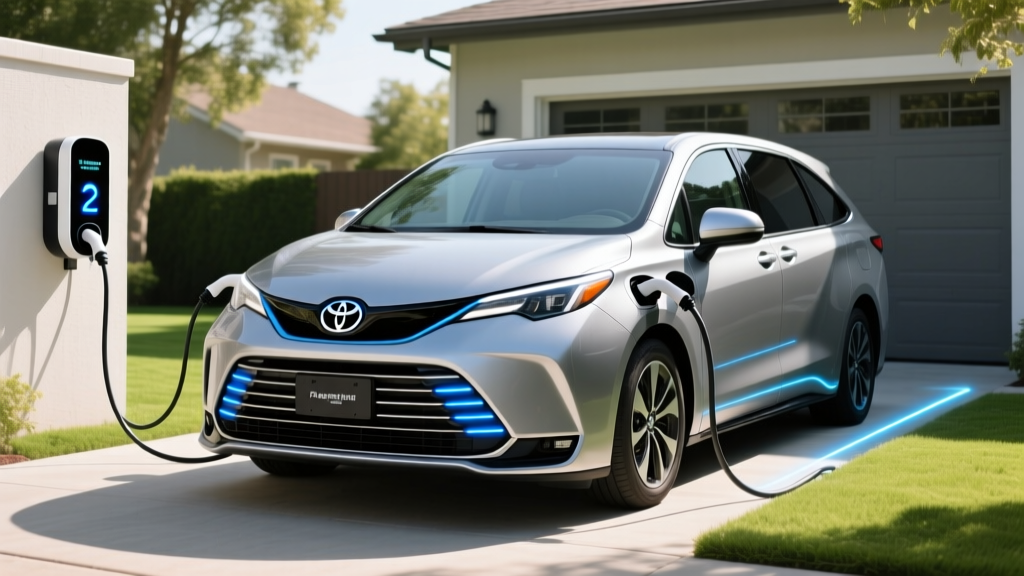
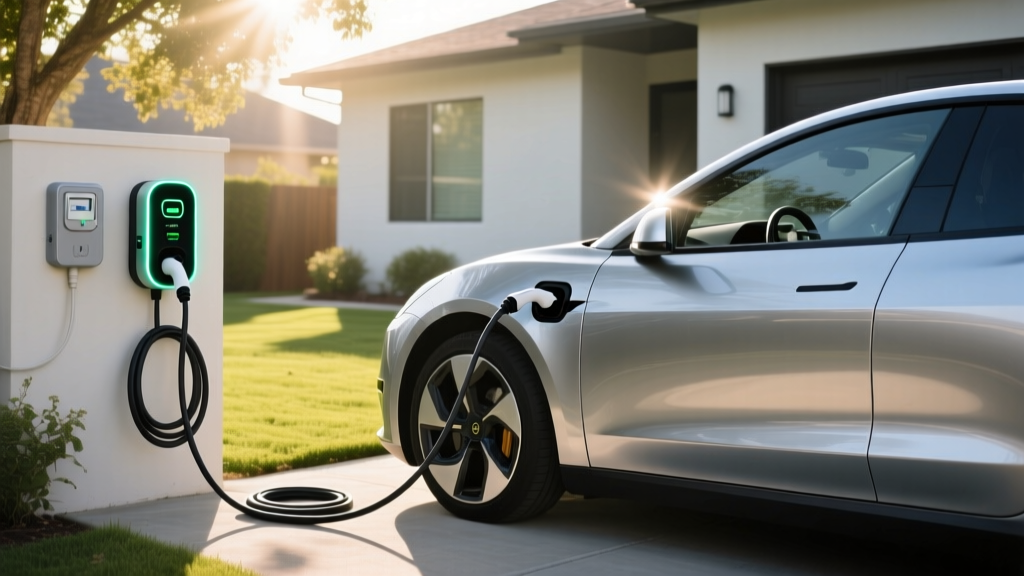
Installing a Level 2 home charger is the single best investment for any long-range EV owner. But costs vary enormously depending on your home's electrical panel, the distance from panel to garage, and local permitting. Here's what's involved:
Electrical Requirements
A typical Level 2 home charger requires a dedicated 240-volt circuit, similar to what powers an electric dryer or oven. Common configurations:
- 40-amp circuit → delivers up to 32A continuous (9.6 kW) — sufficient for most EVs overnight
- 50-amp circuit → delivers up to 40A continuous (9.6 kW at the car if onboard charger limited) — popular standard
- 60-amp circuit → delivers up to 48A continuous (11.5 kW) — ideal for large-battery EVs like the Lucid Air or Silverado EV
The National Electrical Code (NEC) requires that continuous loads (like EV charging) use only 80% of a circuit's rated capacity. So a 50A breaker supports 40A of continuous draw.
Panel Upgrade Considerations
Many older homes have 100-amp electrical service. Adding a 50–60A dedicated EV circuit to a fully loaded 100A panel may require a panel upgrade to 200A, which is one of the biggest hidden costs in EV ownership. A licensed electrician will perform a load calculation to determine if your panel can handle the additional circuit. Homes built after 2000 typically have 200A service and can accommodate a Level 2 charger without an upgrade.
| Component | Simple Install (panel nearby, 200A service) | Complex Install (long run, panel upgrade needed) |
|---|---|---|
| Level 2 Charger Equipment | $400–$700 | $400–$700 |
| Electrical Permit | $50–$200 | $50–$300 |
| Electrician Labor (240V circuit) | $300–$800 | $800–$2,500 |
| Panel Upgrade (if needed) | $0 | $1,500–$3,500 |
| Conduit / Wiring (long runs) | $100–$300 | $500–$1,500 |
| Total Estimated Cost | $850–$2,000 | $3,250–$8,500 |
Some utilities and states offer rebates of $250–$1,000 for home charger installation, and the federal Alternative Fuel Vehicle Refueling Property Credit (IRC §30C) covers up to 30% of equipment and installation costs (max $1,000 for residential), subject to census-tract eligibility. Check with a tax professional for your specific situation.
Connector Compatibility: NACS, CCS, and CHAdeMO in 2026
The North American EV charging connector landscape has consolidated dramatically. As of 2026, the Tesla North American Charging Standard (NACS) is the dominant connector, adopted by Ford, GM, Rivian, Hyundai, Kia, BMW, and most major automakers. CCS1 remains on some legacy models, and CHAdeMO is effectively discontinued on new vehicles (the Nissan Leaf ended production).
| Connector | Brands Using It (New Vehicles) | DC Fast Network Access | Adapter Needed? |
|---|---|---|---|
| NACS (Tesla standard) | Tesla, Ford, GM, Rivian, Hyundai, Kia, BMW, Volvo, Polestar, Mercedes (2026+), Toyota, Subaru | Tesla Supercharger, Electrify America (NACS stalls), EVgo, most new deployments | No (native on new models) |
| CCS1 | VW ID.4 (2025 and earlier), some legacy BMW/Mercedes, Stellantis | Electrify America, EVgo, ChargePoint DC | CCS-to-NACS adapter ($150–$250) for Supercharger access |
| CHAdeMO | Discontinued on new vehicles (Nissan Leaf ended) | Limited and shrinking | Not available for NACS vehicles |
If you own a CCS-equipped EV and want access to Tesla's Supercharger network (the largest and most reliable in North America, with over 30,000 stalls), you'll need a CCS-to-NACS adapter. Ford and GM provide these adapters to owners; aftermarket options from Tesla's shop and third-party makers like Lectron cost $150–$250. All new long-range EVs from 2025 onward ship with native NACS ports.
Cost to Charge: Home vs. Public vs. Gas — Price Per Mile
One of the biggest financial advantages of an electric car with greatest range is the low per-mile fuel cost—if you charge primarily at home on off-peak electricity. Public DC fast charging narrows the gap, and in some regions, it can approach gasoline costs.
| Scenario | Cost per kWh | Cost per Mile | Full 100 kWh Fill-Up |
|---|---|---|---|
| Home (off-peak utility rate) | $0.08–$0.14 | $0.03–$0.05 | $8–$14 |
| Home (average US residential) | $0.17 | $0.06 | $17 |
| Public Level 2 (workplace/mall) | $0.20–$0.35 | $0.07–$0.12 | $20–$35 |
| DC Fast (Electrify America / EVgo) | $0.35–$0.55 | $0.12–$0.18 | $35–$55 |
| Tesla Supercharger (avg 2026) | $0.28–$0.40 | $0.09–$0.13 | $28–$40 |
| Gasoline (25 MPG avg, $3.40/gal) | — | $0.14 | $51 (15-gal tank) |
For a long-range EV like the Lucid Air Grand Touring driven 12,000 miles per year, home charging at $0.14/kWh costs roughly $560 annually in electricity. A comparable gasoline sedan at 25 MPG and $3.40/gallon costs $1,632—nearly three times more. Even frequent DC fast charging at $0.45/kWh yields about $1,800/year, still competitive with gas when you factor in reduced maintenance (no oil changes, fewer brake replacements due to regenerative braking).
Best Home Level 2 Chargers for Long-Range EVs (2026 Picks)
Long-range EVs with 100+ kWh batteries demand higher-power Level 2 chargers to achieve practical overnight refill times. Here are top-rated units that deliver the amperage, reliability, and smart features serious EV owners need:
ChargePoint Home Flex (Gen 2)
- Power Output: Up to 11.5 kW (48A on 60A circuit)
- Connector: NACS (native) or J1772 (with adapter for CCS vehicles)
- Cable Length: 23 ft
- Smart Features: Wi-Fi, app scheduling, utility demand-response, Alexa
- Price: ~$550–$650
- Best For: Most long-range EVs; flexible amperage via DIP switch
Tesla Wall Connector
- Power Output: Up to 11.5 kW (48A on 60A circuit)
- Connector: NACS (native Tesla and all NACS-adopted brands)
- Cable Length: 24 ft
- Smart Features: Wi-Fi, OTA updates, power-sharing (link multiple units), Tesla app integration
- Price: ~$425–$475
- Best For: Tesla owners and NACS-native EVs; best value at 48A
Emporia Level 2 EV Charger
- Power Output: Up to 11.5 kW (48A on 60A circuit)
- Connector: J1772 (NACS adapter included)
- Cable Length: 24 ft
- Smart Features: Wi-Fi, energy monitoring, solar integration, time-of-use scheduling
- Price: ~$350–$400
- Best For: Budget-conscious buyers with solar panels; excellent app
Key buying tip: If your EV has a large battery (100+ kWh), prioritize a 48A-capable charger on a 60A circuit. A 32A charger (7.7 kW) will take 13+ hours to fill a Lucid Air—fine if you drive 50 miles daily and top up overnight, but inadequate if you arrive home at 10% SoC and need a full charge by morning.
Safety, Code Compliance, and Installation Best Practices
EV charging is a continuous high-amperage load that runs for hours—unlike a dryer that cycles on and off. This makes proper installation critical for fire safety and long-term reliability. Key requirements per the National Electrical Code (NEC Article 625):
- Dedicated circuit: Your EV charger must have its own breaker—not shared with other appliances.
- GFCI protection: NEC 2020+ requires ground-fault circuit interrupter protection for all EV charging outlets (built into most hardwired chargers; required for NEMA 14-50 receptacles).
- Outdoor rating: If your charger is installed outside or in an open carport, it must be rated for outdoor use (NEMA 4 or IP65). All three chargers recommended above carry outdoor ratings.
- Hardwired vs. plug-in: Hardwired installations (no plug) are generally preferred for 48A+ chargers—they eliminate the NEMA 14-50 receptacle as a failure point and avoid GFCI nuisance trips. Plug-in (14-50) offers portability but requires a high-quality receptacle (Hubbell or Bryant brand, not budget residential-grade).
- Permit and inspection: Most jurisdictions require an electrical permit and post-installation inspection. Skipping this can void home insurance coverage in the event of an electrical fire.
Frequently Asked Questions
How much does it cost to install a home EV charger?
A straightforward Level 2 installation (200A panel, short wire run, hardwired) costs $850–$2,000 total including equipment, permit, and electrician labor. If your home needs a panel upgrade from 100A to 200A, expect $3,250–$8,500. The federal §30C tax credit can offset up to $1,000 of this cost if you're in an eligible census tract.
How fast will each charging level add range?
Level 1 (120V) adds 3–5 miles per hour—essentially unusable for a 400+ mile battery unless you drive very little daily. Level 2 (240V, 48A) adds 23–35 miles per hour, fully replenishing a 100 kWh battery overnight in ~8–10 hours. DC fast charging at 250+ kW can add 200+ miles in 15–20 minutes, though charging speed tapers significantly above 80% State of Charge.
Which connector/charger is compatible with my EV?
For 2026 model-year EVs, the answer is almost certainly NACS—it's now the standard for Tesla, Ford, GM, Rivian, Hyundai, Kia, and most others. If you own a 2024 or earlier non-Tesla EV with CCS1, you'll need a CCS-to-NACS adapter ($150–$250) to access Tesla Superchargers. CHAdeMO is no longer supported on new vehicles. For home Level 2 charging, a NACS-equipped Wall Connector or ChargePoint Home Flex covers virtually all current EVs.
How much does charging cost per mile vs gas?
Home charging at the US average residential rate ($0.17/kWh) costs roughly $0.06 per mile for a 3.0 mi/kWh EV. Gasoline at $3.40/gallon in a 25 MPG car costs $0.14 per mile—more than double. Even public DC fast charging at $0.45/kWh ($0.15/mile) is comparable to gas. The savings are greatest when you charge at home on off-peak rates ($0.03–$0.05/mile).
What electrical upgrades might I need?
The most common upgrade is a 200A panel replacement if your home currently has 100A service. You may also need conduit runs if your panel is far from the garage (adding $500–$1,500 in materials and labor), a new breaker slot, or in rare cases, a utility service upgrade if your transformer can't support the additional load. A licensed electrician will perform a NEC Article 220 load calculation to determine exactly what's required. Always get a detailed quote before committing.