How Tesla Superchargers Fit Into the Broader Charging Landscape
Before we break down Tesla Supercharger time and cost, it helps to understand where DC fast charging sits relative to the electricity you can access at home. Every EV owner juggles three charging tiers, and knowing the exact speeds — measured in kilowatts (kW), which is the rate of power delivery, not kilowatt-hours (kWh), which is the amount of energy stored — is the single most important piece of EV literacy you can learn.
| Level | Voltage | Max Power (kW) | Miles of Range Added per Hour | Typical Use Case |
|---|---|---|---|---|
| Level 1 | 120V AC | 1.4–1.9 kW | 3–5 mi/hr | Overnight top-ups, PHEVs, emergency |
| Level 2 | 240V AC | 7.2–19.2 kW | 20–60 mi/hr | Daily home & workplace charging |
| DC Fast (incl. Supercharger) | 400–800V DC | 50–350+ kW | 150–1,000+ mi/hr (at peak) | Road trips, rapid top-ups |
Level 1 is what you get from a standard household outlet — useful for plug-in hybrids with small batteries (say, 15–20 kWh), but painfully slow for a full-size BEV with an 80+ kWh pack. Level 2 is the workhorse of EV ownership: a 240V circuit that refills most EVs overnight. DC fast charging, including the Tesla Supercharger network, is your road-trip solution, delivering massive power directly to the battery by bypassing the vehicle's onboard AC-to-DC converter.
Tesla Supercharger Time and Cost: What You Actually Pay and How Long You Wait
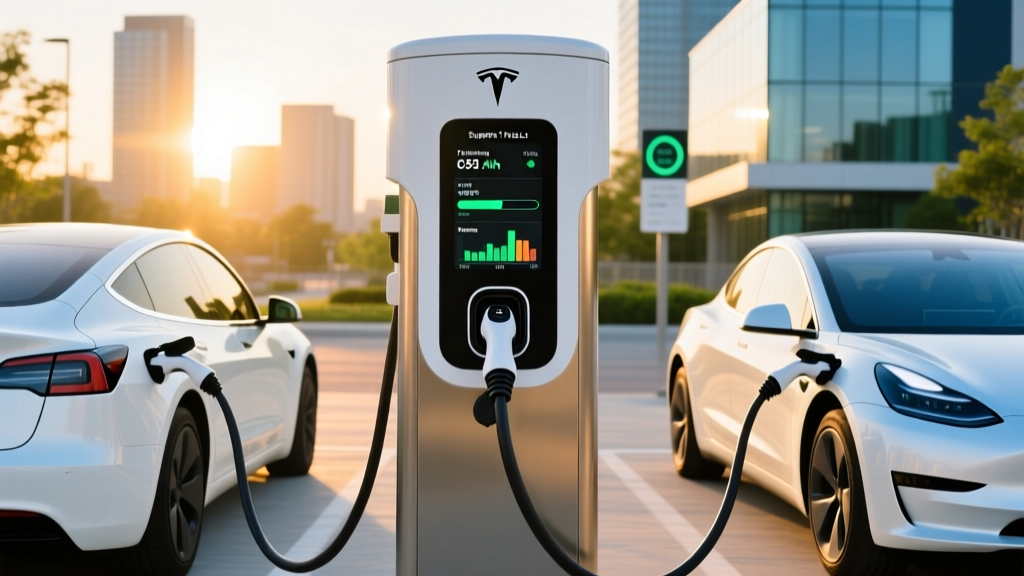
The Supercharger network has expanded dramatically since Tesla opened it to non-Tesla EVs via the NACS (North American Charging Standard) connector. As of 2026, the network includes V2 stalls (peak 150 kW), V3 stalls (peak 250 kW), and the newer V4 architecture (up to 350 kW for compatible vehicles). Here's what that means in real time and dollars.
Charging Time at Tesla Superchargers
Tesla advertises "up to 200 miles in 15 minutes" at V3 stalls. That figure assumes a near-ideal scenario: a Model 3 or Model Y with preconditioned battery, low state of charge (SoC), and moderate ambient temperature. In practice, your 10–80% session time depends on your vehicle's charge curve — the rate at which the battery accepts power, which tapers significantly above ~50% SoC and drops sharply past 80%.
| Vehicle / Battery | V2 (150 kW peak) | V3 (250 kW peak) | V4 (350 kW peak)* |
|---|---|---|---|
| Model 3 RWD (60 kWh LFP) | ~32 min | ~25 min | ~22 min |
| Model Y Long Range (75 kWh NMC) | ~35 min | ~22 min | ~18 min |
| Model S (100 kWh NMC) | ~42 min | ~28 min | ~22 min |
| Non-Tesla NACS EV (e.g., Ford F-150 Lightning, 131 kWh) | ~55 min | ~38 min | ~28 min |
*V4 350 kW availability is limited in 2026; most non-Tesla EVs peak well below 350 kW due to their own charge-rate limits. Always check your vehicle's max DC charge rate — the charger can only deliver what the car will accept.
Tesla Supercharger Cost per kWh
Supercharger pricing varies by location, time of day, and whether you're in a Tesla or a non-Tesla EV. Typical 2026 rates in the U.S.:
- Tesla vehicles: $0.25–$0.40/kWh (varies by market; off-peak rates in some regions drop to ~$0.22/kWh)
- Non-Tesla EVs (via Magic Dock or NACS): $0.35–$0.55/kWh (higher per-kWh rate; Tesla Membership plan at $12.99/month reduces this to Tesla-equivalent pricing)
- Idle fees: $0.50–$1.00/minute if your car remains plugged in after reaching its charge limit and the station is ≥50% occupied
Home Level 2 Charging: The Real Cost and Install Breakdown
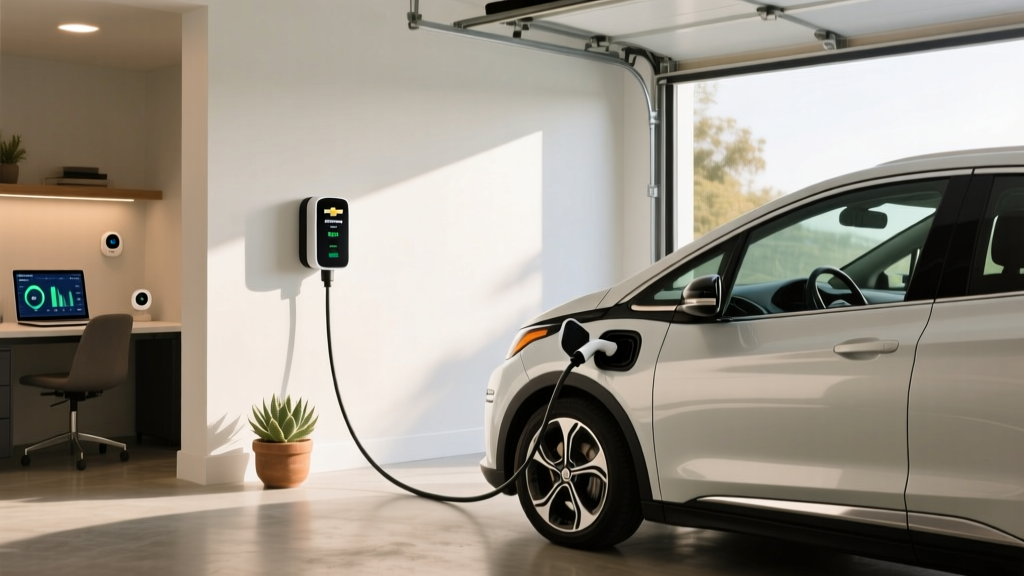
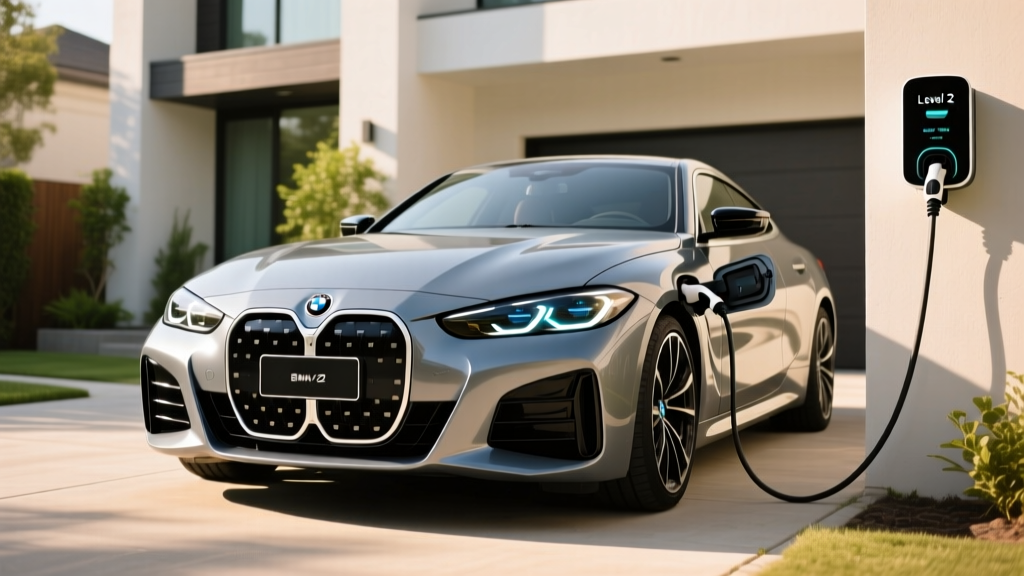
The financial case for EV ownership lives and dies on home charging. A Level 2 home charger running on off-peak utility rates delivers electricity at $0.08–$0.15/kWh in most U.S. markets, making your cost per mile a fraction of Supercharging or gasoline. But the upfront installation is where buyers get surprised.
How Much Does It Cost to Install a Home EV Charger?
The answer depends on your home's electrical panel, the distance from panel to charger location, and local permit fees. Here's a realistic breakdown:
| Component | Simple Install (panel nearby, no upgrade) | Complex Install (long run, panel upgrade) |
|---|---|---|
| Level 2 Charger Equipment (40A–48A) | $400–$700 | $400–$700 |
| Electrician Labor (licensed) | $500–$1,200 | $1,500–$3,500 |
| Electrical Panel Upgrade (100A → 200A) | $0 (not needed) | $1,500–$3,000 |
| Permit & Inspection | $50–$200 | $100–$300 |
| Total Estimated Cost | $950–$2,100 | $3,500–$7,500 |
According to data from the U.S. Department of Energy, the national average for a straightforward Level 2 install is roughly $1,200–$2,000, but older homes with 100-amp panels or long conduit runs can easily double that. Always get at least two quotes from licensed electricians and confirm they pull the required local permit — unpermitted work can void your homeowner's insurance and create a fire hazard.
What Electrical Upgrades Might I Need?
A Level 2 charger drawing 48 amps continuous requires a dedicated 60-amp breaker (the National Electrical Code mandates that continuous loads not exceed 80% of the breaker rating). If your panel is already near capacity — common in homes with electric ranges, dryers, and HVAC — you may need:
- Panel upgrade: Moving from a 100A to a 200A service panel ($1,500–$3,000)
- Load management device: A smart panel or charger-integrated load balancer that dynamically reduces charging amperage when other circuits are drawing heavily ($200–$500)
- Sub-panel installation: If your charger is in a detached garage far from the main panel ($500–$1,500)
Which Connector and Charger Is Compatible With My EV?
The connector landscape shifted decisively in 2024–2025 when nearly every major automaker adopted NACS (the Tesla connector) for new vehicles. Here's where things stand in 2026:
| Connector | Also Known As | Used By | Notes |
|---|---|---|---|
| NACS | Tesla connector, J3400 | Tesla (all years), Ford, GM, Rivian, Volvo, Polestar, Nissan (2025+), Honda (2025+), others | Now the dominant standard; works natively at all Superchargers |
| CCS1 | Combined Charging System | Hyundai, Kia, BMW, VW, older Ford/GM models (pre-2025) | Requires NACS adapter for Supercharger access; widely used at Electrify America, EVgo |
| CHAdeMO | — | Nissan Leaf (legacy), Mitsubishi Outlander PHEV | Being phased out; increasingly rare at public stations |
Adapter needs: If you drive a CCS1-equipped EV, Tesla sells a CCS-to-NACS adapter (~$250) that grants access to the Supercharger network. Third-party adapters from brands like Lectron and A2Z are also available at lower prices ($150–$200), but verify they're UL-listed. Non-Tesla EVs without a native NACS port can also use Tesla's Magic Dock (built into select Superchargers) without any adapter.
Cost to Charge Per Mile: EV vs Gas in 2026
The per-mile cost comparison is where EV ownership either shines or disappoints, depending entirely on where you charge. Let's run the numbers for a typical mid-size EV getting 3.5 miles per kWh (roughly 100 MPGe combined) versus a comparable gas car averaging 28 MPG combined at $3.40/gallon (a reasonable 2026 national average).
| Scenario | Rate | Cost per Mile |
|---|---|---|
| Home Level 2 (off-peak utility rate) | $0.10/kWh | $0.029/mi |
| Home Level 2 (standard residential rate) | $0.16/kWh | $0.046/mi |
| Tesla Supercharger (average U.S.) | $0.32/kWh | $0.091/mi |
| Non-Tesla DC Fast (Electrify America, EVgo) | $0.43/kWh | $0.123/mi |
| Gasoline car (28 MPG combined) | $3.40/gal | $0.121/mi |
Recommended Home Level 2 Chargers for 2026
Not all Level 2 chargers are equal. Here are top picks based on power output, build quality, smart features, and real-world reliability:
Tesla Wall Connector (Gen 4)
- Power Output: Up to 11.5 kW (48A on a 60A circuit)
- Connector: NACS native; includes J1772 adapter for non-Tesla EVs
- Cable Length: 24 ft
- Smart Features: Wi-Fi, OTA updates, load sharing with second unit, Powerwall integration
- Price: ~$475
- Best For: Tesla owners and mixed-EV households wanting Supercharger-grade home hardware
ChargePoint Home Flex (NACS version)
- Power Output: Up to 12 kW (50A on a 60A circuit; configurable down to 16A)
- Connector: NACS or J1772 (select at purchase)
- Cable Length: 23 ft
- Smart Features: Wi-Fi, app scheduling, Alexa/Google Home integration, utility demand-response programs
- Price: ~$550–$650
- Best For: Non-Tesla EV owners who want flexible amperage and utility-program compatibility
Emporia Vue Level 2 Charger
- Power Output: Up to 11.5 kW (48A)
- Connector: J1772 (NACS adapter included)
- Cable Length: 24 ft
- Smart Features: Integrates with Emporia energy monitor for whole-home energy tracking, solar-aware scheduling
- Price: ~$400
- Best For: Budget-conscious buyers and solar-panel owners wanting energy-usage visibility
All three chargers are hardwired (no plug — this is the safer, code-preferred method for 48A+ units) and carry UL certification. For any charger rated above 40A, hardwiring is strongly recommended over a NEMA 14-50 receptacle, which can overheat under sustained high-amperage loads if not installed to exacting standards.
Safety, Code, and Installation Best Practices
EV charging places a sustained, high-amperage load on your home's electrical system — unlike a dryer or oven that cycles on and off, a Level 2 charger can draw maximum current for 6–10 hours straight. This makes proper installation non-negotiable.
- Dedicated circuit: Your charger must have its own breaker — never share a circuit with other appliances
- GFCI protection: NEC 2023 and later require GFCI (Ground Fault Circuit Interrupter) protection for all EV charging outlets; hardwired units typically have GFCI built into the charger itself
- Outdoor rating: If your charger is installed outside (carport, driveway), ensure it carries a NEMA 4 or IP65 rating for weather resistance
- Wire gauge: A 60A circuit requires 6 AWG copper wire minimum; your electrician will size appropriately based on run length and local code
- Permit and inspection: Most jurisdictions require an electrical permit for EV charger installation. Skipping this risks insurance denial in the event of a fire and can complicate a future home sale
For detailed code requirements, reference the National Electrical Code (NEC) Article 625, which governs EV charging systems. Your licensed electrician should be fully versed in these requirements.
Frequently Asked Questions
How fast will each charging level add range to my EV?
Level 1 (120V) adds roughly 3–5 miles of range per hour — adequate for PHEVs with small batteries but impractical for full-size BEVs. Level 2 (240V, 48A) adds 25–45 miles per hour depending on your vehicle's efficiency, meaning a full overnight charge (8–10 hours) can replenish 200–400 miles. DC fast charging at a Tesla V3 Supercharger can add 150–200 miles in 15 minutes at peak rate, but the charge curve tapers significantly above 80% SoC, so the last 20% takes disproportionately longer.
Can I charge a non-Tesla EV at a Supercharger?
Yes. As of 2026, any EV with a native NACS port (Ford, GM, Rivian, Volvo, and others from 2025+) can plug directly into a Supercharger. CCS1-equipped EVs need either a CCS-to-NACS adapter or must use a Supercharger station equipped with Tesla's Magic Dock. Use the Tesla app or in-car navigation to check station compatibility before arriving.
Is it worth getting the Tesla Membership for non-Tesla Supercharging?
If you charge at Superchargers more than 2–3 times per month in a non-Tesla EV, the $12.99/month Membership typically pays for itself. It drops the per-kWh rate from the non-Tesla premium (~$0.43–$0.55/kWh) down to Tesla-owner pricing (~$0.25–$0.40/kWh), saving $5–$15 per session.
Does frequent Supercharging damage my battery?
DC fast charging generates more heat than Level 2, and heat accelerates lithium-ion degradation over time. However, modern EVs (including all current Teslas) have active thermal management that preconditions and cools the battery during fast charging. Tesla's own fleet data shows an average of ~12% capacity loss after 200,000 miles — and that includes vehicles that Supercharge regularly. For optimal long-term battery health, prioritize Level 2 home charging for daily use and reserve Supercharging for road trips. The battery warranty covers defects and excessive degradation (typically below 70% capacity retention) for 8 years or 100,000–150,000 miles, depending on the model. See Tesla's official battery warranty page for specifics.
How do I reduce my home charging costs?
Most utilities offer time-of-use (TOU) plans that provide significantly cheaper electricity during off-peak hours (typically 10 PM – 6 AM). Scheduling your charger to run only during these windows via the charger's app or your vehicle's built-in scheduler can cut your per-kWh cost in half compared to standard rates. Some utilities also offer dedicated EV rate plans with even lower off-peak pricing — check with your local provider.
What's the difference between kW and kWh?
This is the most common EV confusion. kW (kilowatts) is a measure of power — the rate at which energy flows, like the flow rate of a garden hose. kWh (kilowatt-hours) is a measure of energy — the total amount delivered over time, like gallons of water in a bucket. A 250 kW Supercharger delivers energy at a rate of 250 kilowatts; if it sustained that rate for one full hour, it would deliver 250 kWh. In practice, charge curves taper, so your actual energy delivered is lower. Your EV battery capacity is measured in kWh (e.g., 75 kWh), and your electricity bill charges you per kWh consumed.