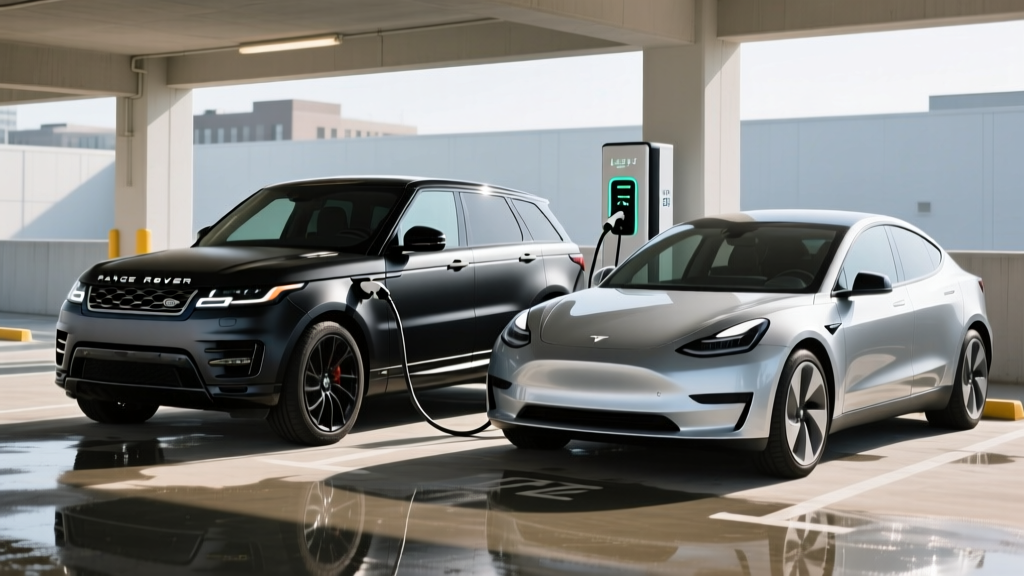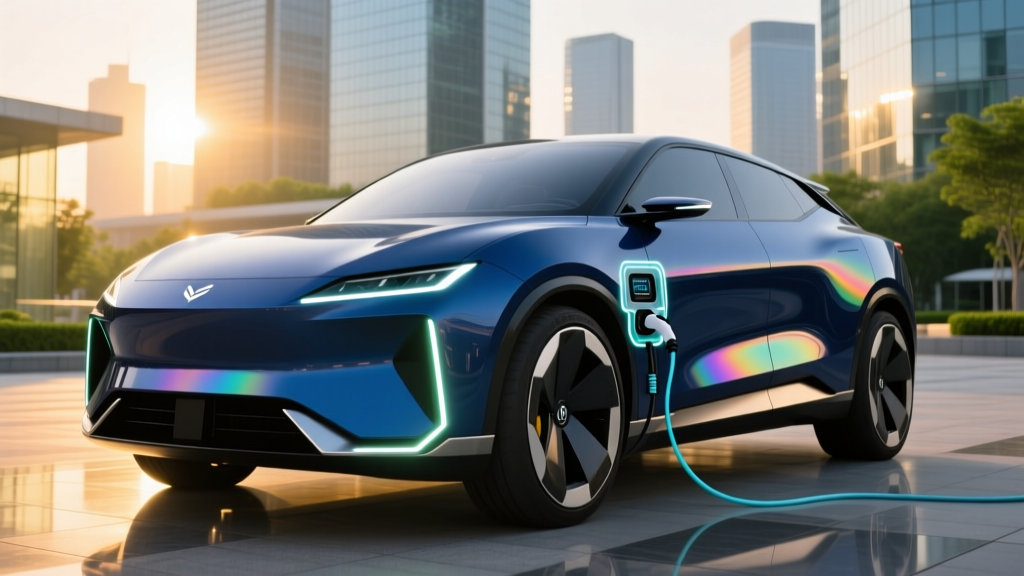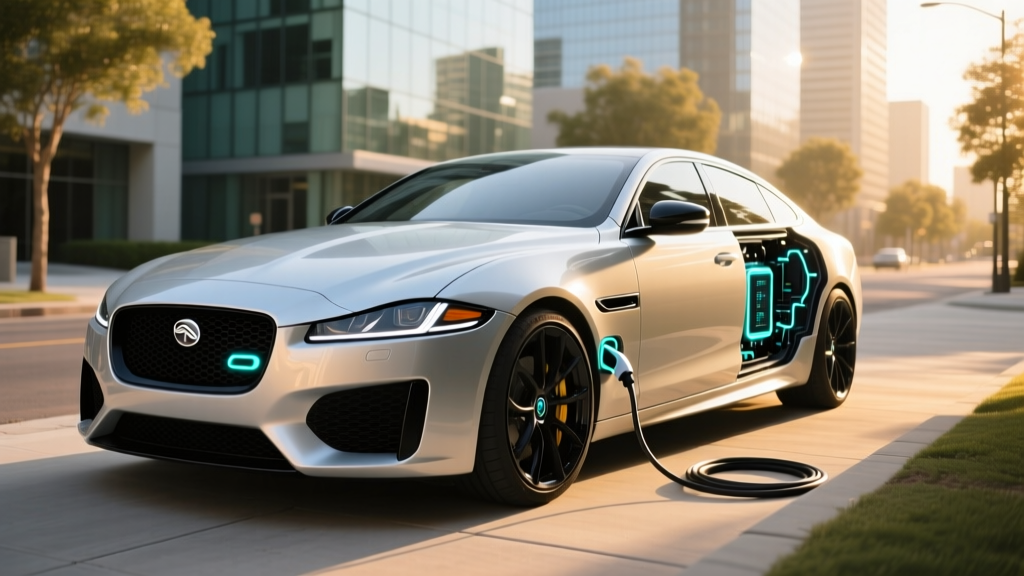
If you're taking delivery of a Lincoln electric vehicle — or planning to — the first ownership question is always charging. Lincoln's expanding EV lineup (including the all-new 2025 Aviator EV and upcoming electric Corsair variants) uses the latest charging standards, but setting up reliable home charging and understanding public networks requires more than plugging in. This guide covers exactly what Lincoln EV owners need: connector types, home electrical requirements, real charge times, and the best Level 2 equipment available today.
Charging Levels Explained: Speed, Power, and What Lincoln EVs Accept
Before choosing a Lincoln EV charger, you need to understand the three charging levels. The critical distinction: kW (kilowatts) measures power — how fast energy flows. kWh (kilowatt-hours) measures energy — how much your battery holds. A 100 kWh battery charged at 10 kW takes roughly 10 hours from empty; at 150 kW, the same battery charges dramatically faster (though real-world charge curves taper near full).
| Level | Voltage | Max Power (kW) | Miles of Range Per Hour | Best For |
|---|---|---|---|---|
| Level 1 | 120V (standard outlet) | 1.4–1.9 kW | 3–5 miles | Emergency/trickle, PHEVs |
| Level 2 | 240V (dryer-style outlet) | 7.2–19.2 kW | 20–55 miles | Daily home charging |
| DC Fast Charge | 400V+ DC direct | 50–350 kW | 150–800+ miles (peak) | Road trips, quick top-ups |
Lincoln's current and upcoming EVs accept Level 2 AC charging at up to 11.5 kW (48 amps) via the onboard charger, and DC fast charging at rates between 150 kW and 200 kW peak, depending on the battery pack and thermal conditions. Real-world DC fast charging rarely sustains peak rates for the full session — charge curves taper significantly above 80% State of Charge (SoC) to protect battery health. Expect the 10–80% window to be the fastest segment.
Home Lincoln EV Charger Installation: Electrical Requirements and Costs
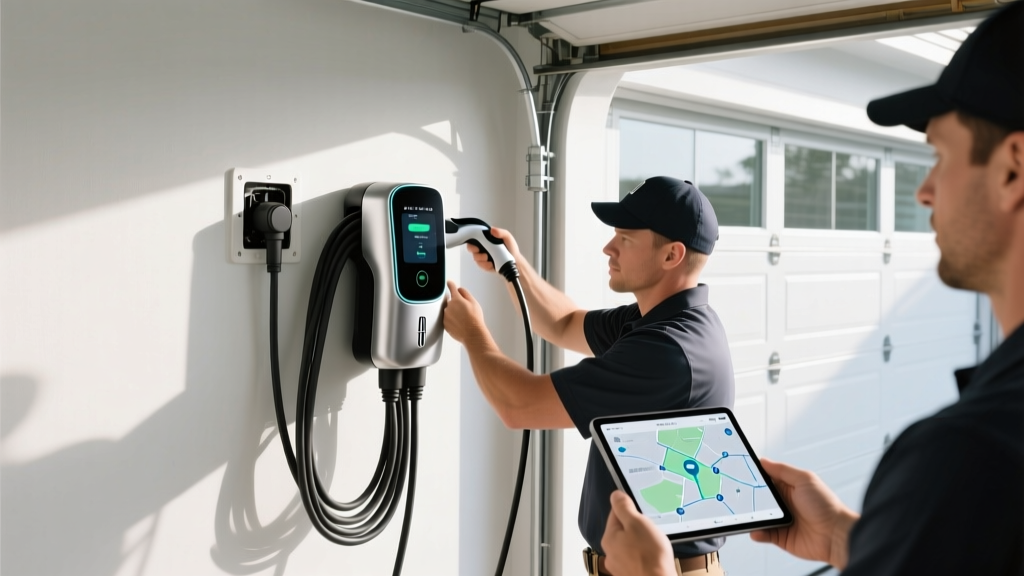
Most Lincoln EV owners will want a dedicated Level 2 home charger — it's the single biggest quality-of-life upgrade in EV ownership. Here's what the electrical work actually involves.
Electrical Panel and Circuit Requirements
A Level 2 Lincoln EV charger running at 11.5 kW requires a 240V, 60-amp dedicated circuit (which delivers a continuous 48 amps to the vehicle per NEC 80% rule). If you opt for a lower-power 9.6 kW unit, a 50-amp circuit suffices. Your home's electrical panel must have enough spare capacity — typically 200 amps total service — to accommodate this additional load alongside existing appliances.
Homes built before 1990 often have 100-amp panels. Adding a 60-amp EV circuit to a maxed-out 100-amp panel will require a panel upgrade to 200 amps, which is a significant cost. Even some 200-amp panels lack physical breaker slots or have load calculations that prevent adding a large circuit without upgrades.
Lincoln EV Home Charger Install Cost Breakdown (2025–2026 Estimates)
| Item | Low End | High End | Notes |
|---|---|---|---|
| Level 2 EVSE equipment (hardwired) | $400 | $750 | 40A–48A smart charger |
| Electrician labor (circuit run + install) | $500 | $1,500 | Depends on run length, wall type |
| Electrical permit | $50 | $250 | Varies by municipality |
| Panel upgrade (if needed) | $1,500 | $3,500 | 100A → 200A service upgrade |
| Total (no panel upgrade) | $950 | $2,500 | Most homes with 200A panels |
| Total (with panel upgrade) | $2,450 | $6,000 | Older homes, high-load panels |
Always hire a licensed electrician and pull a permit. Unpermitted EV charger installations can void homeowner's insurance claims and create fire-risk liability. The National Electrical Code (NEC Article 625) requires GFCI protection for receptacle-based EV chargers, though hardwired units are exempt from the GFCI breaker requirement in the 2023 NEC revision — another reason hardwired installs are preferred for reliability.
Which Electrical Upgrades Might I Need?
Beyond the circuit itself, watch for these potential upgrades:
- Panel upgrade (100A to 200A): Common in pre-1990 homes. Adds $1,500–$3,500.
- Load-management device: If your panel is near capacity but you want to avoid a full upgrade, an automated load-management system (like the Emporia V2H or Span panel) can dynamically share amps between the EV charger and other appliances. Costs $200–$500 plus install.
- Conduit and wire gauge: Long runs from the panel to the garage (50+ feet) require thicker wire (6 AWG for 60A, 4 AWG for longer runs), increasing material costs.
- Outdoor-rated installation: If charging outdoors, you need a NEMA 4-rated (weatherproof) enclosure or a hardwired outdoor-rated EVSE.
Connector Compatibility: NACS, CCS, and What Lincoln Uses
Lincoln's EV strategy has aligned with Ford's adoption of the North American Charging Standard (NACS), originally developed by Tesla. Starting with 2025 model-year vehicles, Lincoln EVs are equipped with the NACS charge port natively — meaning direct access to Tesla Supercharger stations without an adapter.
| Connector | Brands Using It | Lincoln Compatibility | Adapter Needed? |
|---|---|---|---|
| NACS (Tesla-style) | Tesla, Ford, Lincoln, Rivian, GM, Hyundai, Kia (2025+) | Native on 2025+ Lincoln EVs | No — direct plug |
| CCS1 | VW, BMW, older Ford/GM, Electrify America stations | Requires NACS-to-CCS adapter for 2025+ models | Yes — NACS-to-CCS1 adapter (~$200) |
| CHAdeMO | Nissan Leaf, Mitsubishi (legacy) | Not compatible | No adapter available — avoid these stations |
If you own a pre-2025 Lincoln plug-in vehicle with a CCS1 port, you'll need a CCS1-to-NACS adapter to access Tesla Superchargers. Ford and Lincoln provide or subsidize this adapter for eligible owners. Always verify adapter compatibility with your specific model year on Lincoln's owner portal.
For home Level 2 charging, nearly all residential EVSE units now ship with a NACS connector (or include a J1772-to-NACS adapter). The J1772 standard remains the baseline for AC charging, and adapters are inexpensive and widely available.
Lincoln EV Charge Times: Real-World Numbers
Here's what charging actually looks like for Lincoln's current and upcoming EV battery sizes. These estimates assume optimal conditions — cold batteries, high SoC, or degraded cells will extend times.
| Battery Size (usable kWh) | Level 2 at 11.5 kW (0–100%) | DC Fast 10–80% | Level 1 at 1.4 kW (0–100%) |
|---|---|---|---|
| 80 kWh (estimated smaller pack) | ~7.5 hours | ~25 minutes (at 150 kW peak) | ~57 hours |
| 100 kWh (estimated mid pack) | ~9 hours | ~30 minutes (at 175 kW peak) | ~71 hours |
| 110+ kWh (estimated large pack) | ~10 hours | ~35 minutes (at 200 kW peak) | ~79 hours |
Charge curve reality: The peak DC fast-charge rate (e.g., 200 kW) is only sustained between roughly 10–40% SoC. Above 60%, the rate drops significantly — often to 50 kW or below near 80%. This is why 10–80% is the standard benchmark: charging past 80% on DC fast chargers is so slow that it's almost always faster to unplug and continue your trip. For daily driving, charge to 80% at home on Level 2 and reserve 100% fills for road-trip mornings.
Cost to Charge a Lincoln EV: Home vs. Public vs. Gas
One of the strongest arguments for EV ownership is fuel cost savings — but only if you charge smart. Here's how Lincoln EV charging costs compare to gasoline.
| Scenario | Rate | Cost per kWh | Cost per Mile* |
|---|---|---|---|
| Home (off-peak utility rate) | $0.12/kWh average | $0.12 | $0.036 |
| Home (peak rate, no TOU plan) | $0.22/kWh | $0.22 | $0.066 |
| Public Level 2 (ChargePoint, etc.) | $0.25–$0.49/kWh | $0.35 avg | $0.105 |
| DC Fast Charge (Electrify America, Tesla) | $0.35–$0.55/kWh | $0.45 avg | $0.135 |
| Gasoline (25 MPG combined, $3.40/gal) | — | — | $0.136 |
*Cost per mile assumes a Lincoln EV efficiency of ~3.3 miles/kWh (approximately 100 MPGe combined), consistent with luxury crossover EVs in this class. Source: fueleconomy.gov
Home charging on an off-peak rate is roughly 75% cheaper per mile than gasoline. Even public DC fast charging at premium rates is comparable to or slightly cheaper than gas. The savings compound: a driver covering 15,000 miles annually saves $1,200–$1,800 per year charging at home versus fueling a comparable gas-powered luxury SUV.
Many utilities offer time-of-use (TOU) plans that make overnight charging significantly cheaper. If your utility offers EV-specific rates, enrolling is almost always worth it — just ensure your charger can be scheduled to charge during off-peak windows (most smart chargers handle this via app).
Best Level 2 Chargers for Lincoln EVs: Equipment Picks
Not all Level 2 chargers are equal. For a Lincoln EV with an 80–110 kWh battery, you want a unit that delivers at least 11.5 kW (48 amps), has a cable long enough to reach your charge port comfortably, and offers smart scheduling for off-peak rates.
ChargePoint Home Flex
- Power: Up to 12 kW (50A) — configurable down to 16A
- Connector: NACS (2025+ models) or J1772 with adapter
- Cable length: 23 feet
- Smart features: Wi-Fi, app scheduling, Alexa integration, energy tracking
- Price: ~$599
- Best for: Flexible amperage for homes with limited panel capacity
Emporia Vue Level 2 EV Charger
- Power: Up to 11.5 kW (48A)
- Connector: J1772 (NACS adapter included with newer models)
- Cable length: 24 feet
- Smart features: Real-time energy monitoring, solar integration, load management
- Price: ~$399
- Best for: Solar-home owners, budget-conscious buyers, load-management needs
Wall Connector (Tesla / NACS universal)
- Power: Up to 11.5 kW (48A)
- Connector: NACS native
- Cable length: 24 feet
- Smart features: Wi-Fi, firmware updates, power-sharing between multiple units
- Price: ~$450
- Best for: Lincoln EV owners with NACS ports who also have a Tesla in the household
Grizzl-E Smart
- Power: Up to 10 kW (40A)
- Connector: J1772 or NACS (select at purchase)
- Cable length: 24 feet
- Smart features: OCPP-compatible, app scheduling, extreme cold rating (-40°F)
- Price: ~$449
- Best for: Cold-climate owners, outdoor installs, Canadian/Northern US garages
For most Lincoln EV owners, the ChargePoint Home Flex or Tesla Wall Connector (with NACS) are the strongest picks — both deliver full 48A/11.5 kW output and have robust app ecosystems. If budget is a priority, the Emporia offers excellent value with load-management capability that could save you a panel upgrade.
Safety, Code, and Installation Best Practices
EV charger safety is governed by NEC Article 625 and local building codes. Key requirements and best practices:
- Dedicated circuit: Your Level 2 charger must be on its own dedicated breaker — never shared with other appliances.
- GFCI protection: Required for receptacle-based (plug-in) EV chargers per 2020+ NEC. Hardwired units do not require a GFCI breaker (2023 NEC revision), making hardwired installs simpler and more reliable.
- Outdoor rating: If installed outdoors, the EVSE must carry a NEMA 4 (or IP65+) weatherproof rating. All four units recommended above are outdoor-rated.
- Cable management: Use a holster or cable retractor to keep the cord off the ground — prevents trip hazards, cord damage, and water exposure.
- Permit and inspection: Always pull an electrical permit. The inspection ensures the installation meets code and protects your insurance coverage. Most jurisdictions charge $50–$250 for the permit.
- Utility notification: Some utilities require notification before installing a Level 2 charger, especially if you're enrolling in an EV rate plan or if the circuit exceeds 40A.
Frequently Asked Questions
How much does it cost to install a home Lincoln EV charger?
A typical Level 2 home charger installation costs $950–$2,500 including equipment, electrician labor, and permit — assuming your home already has a 200-amp electrical panel with spare capacity. If a panel upgrade from 100A to 200A is required, add $1,500–$3,500. Total costs with a panel upgrade range from $2,450 to $6,000. Get at least two quotes from licensed electricians and verify they have EV charger installation experience.
How fast will each charging level add range to my Lincoln EV?
Level 1 (120V) adds 3–5 miles per hour — impractical for daily use on a large-battery EV. Level 2 (240V, 48A/11.5 kW) adds roughly 30–35 miles per hour, fully recharging overnight. DC fast charging adds 150+ miles in 10–15 minutes at peak rates, though charging slows significantly above 80% SoC.
Which connector is compatible with my Lincoln EV?
2025 and newer Lincoln EVs use the NACS connector natively, giving direct access to Tesla Superchargers and all new NACS-equipped public stations. Pre-2025 models with CCS1 ports require a NACS-to-CCS1 adapter for Supercharger access. For home Level 2 charging, any J1772 or NACS-equipped EVSE will work with the appropriate adapter.
How much does charging a Lincoln EV cost per mile compared to gas?
Charging at home on an off-peak utility rate (~$0.12/kWh) costs approximately $0.036 per mile. A comparable gasoline luxury SUV at 25 MPG and $3.40/gallon costs about $0.136 per mile — nearly 4x more. Public DC fast charging at $0.45/kWh averages $0.135 per mile, roughly equal to gas. Home charging is where the real savings happen.
What electrical upgrades might I need for a Lincoln EV charger?
The most common upgrade is a panel service increase from 100A to 200A ($1,500–$3,500), needed in older homes. You may also need load-management hardware if your panel is near capacity, thicker wire for long conduit runs, or a weatherproof enclosure for outdoor installations. A licensed electrician's load calculation will determine exactly what's required.
Can I use a Lincoln-provided mobile charger for daily charging?
Lincoln includes a mobile charge cord with most EVs, typically rated at 3.3–6.6 kW on 240V and 1.4 kW on 120V. While adequate for occasional use, the mobile cord is slower, less durable, and lacks the smart scheduling features of a wall-mounted EVSE. For daily charging, a dedicated Level 2 wall unit is strongly recommended.
For current Lincoln EV specifications, pricing, and charging compatibility details, consult the Lincoln Electric vehicle portal and fueleconomy.gov for EPA-rated efficiency data. Electrical installation requirements should always be confirmed with a licensed electrician familiar with your local building codes and NEC Article 625 requirements.