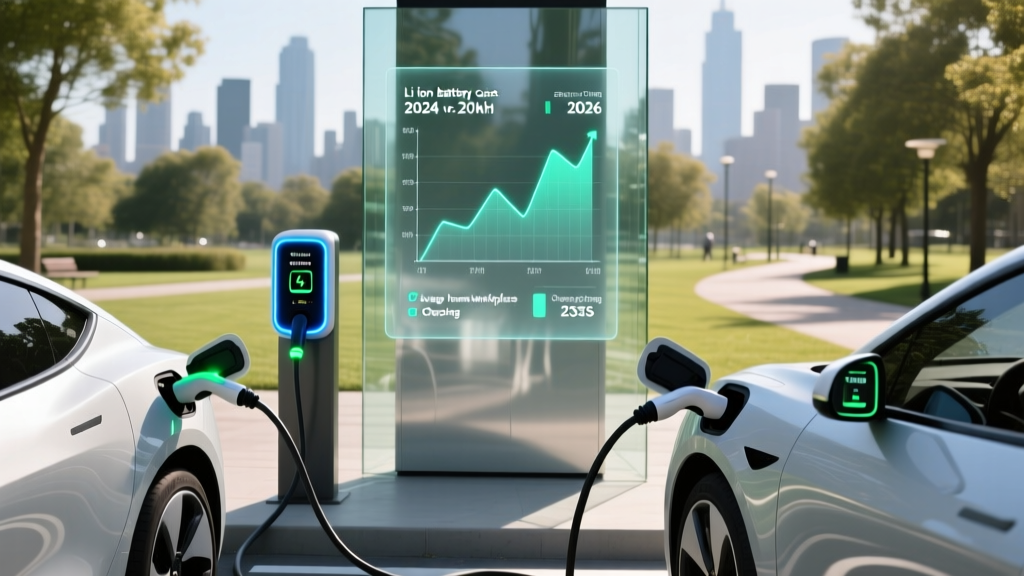
The price of lithium-ion battery cells has reshaped the entire electric-vehicle landscape. In 2026, the average li-ion cost per kWh at the pack level hovers around $115–$130, down from over $140 just two years prior, according to BloombergNEF's annual battery price surveys. That decline means larger battery packs are affordable in mainstream EVs — but it also means owners are charging more kilowatt-hours than ever. Understanding what those kWh actually cost to put into your vehicle, whether at home or on the road, is the single most important financial calculation in EV ownership.
This guide connects the dots between battery economics and your real-world charging bill. We'll cover every charging level with exact speeds, home installation costs with a full breakdown, connector compatibility across brands, cost-per-mile math versus gasoline, and specific charger equipment recommendations — all with the precise numbers you need to budget accurately.
Why Li-Ion Cost Per kWh Matters for Your Charging Budget
When automakers pay less per kWh for battery packs, they pass two things to consumers: lower vehicle MSRPs and larger batteries. A 2026 Hyundai Ioniq 5 carries an 84 kWh (usable) NMC pack — that's roughly $10,500 in raw cell cost alone at current pack-level pricing. Larger packs mean more energy to refill, which makes your cost per kWh at the charger the dominant variable in your operating expenses.
Here's the core equation every EV owner should internalize:
Cost to fill = Usable battery kWh × Price per kWh at your charger
If your utility charges $0.14/kWh off-peak and you have a 75 kWh usable pack, a full home charge costs $10.50. At a DC fast charger billing $0.48/kWh, that same fill-up is $36.00. The battery chemistry and its cost per kWh set the stage; the charging venue determines what you actually pay.
Charging Levels Explained: Speeds in kW and Miles Per Hour
Before we get to costs, let's lock down the three charging levels. The critical distinction: kW (kilowatts) measures power — how fast energy flows into your car. kWh (kilowatt-hours) measures energy — how much the battery holds. Think of kW as the hose diameter and kWh as the bucket size. They are never interchangeable.
| Level | Voltage / Amps | Power (kW) | Miles of Range Added Per Hour | Typical Use Case |
|---|---|---|---|---|
| Level 1 | 120V / 12A | ~1.4 kW | 3–5 mi/hr | Overnight trickle, emergency top-up |
| Level 2 (Home/Public AC) | 240V / 32–48A | 7.7–11.5 kW | 25–44 mi/hr | Daily home charging, workplace, shopping centers |
| DC Fast Charging | 400–800V DC | 50–350 kW | 150–1,200+ mi/hr (peak) | Road trips, highway corridors |
Real-world caveat: DC fast-charging speeds are peak rates, not sustained. A vehicle rated at 250 kW peak will typically sustain that rate only between roughly 10–40% state of charge (SoC), then taper progressively. Expect a 10–80% session on a 250 kW-capable vehicle (like the Ioniq 5 or Tesla Model 3 Highland) to take approximately 18–25 minutes depending on battery temperature and pack size. Always precondition your battery before arriving at a DC charger — cold batteries charge significantly slower.
Home Charger Installation: Electrical Requirements and Full Cost Breakdown
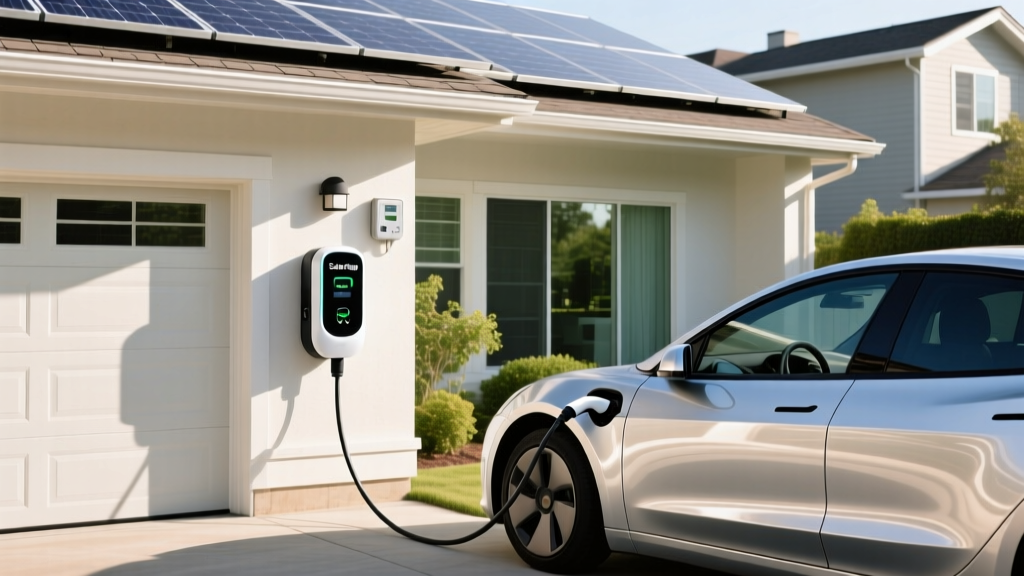
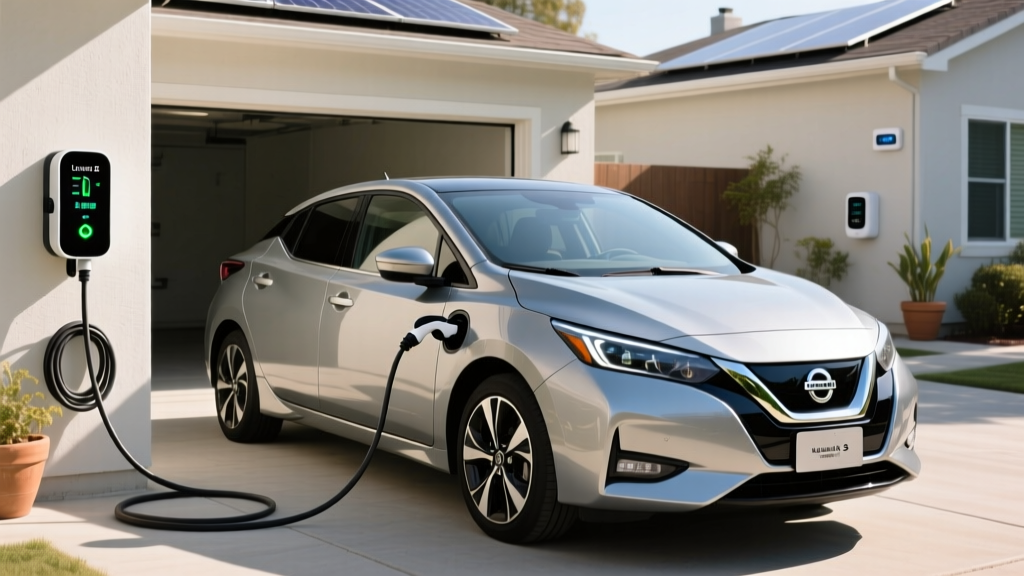
A Level 2 home charger is where most EV owners do 85–95% of their charging. Here's what installation actually requires and costs in 2026.
Electrical Requirements
Most Level 2 home chargers require a 240V dedicated circuit. The amperage depends on the charger:
- 32A charger (7.7 kW): Requires a 40A breaker (NEC rule: circuit must be rated 125% of continuous load)
- 40A charger (9.6 kW): Requires a 50A breaker
- 48A charger (11.5 kW): Requires a 60A breaker
Panel Upgrade Considerations
Homes built before 2000 often have 100A or 150A electrical panels. Adding a 50–60A dedicated circuit may push total load beyond 80% of panel capacity — the NEC safety threshold. If your electrician's load calculation shows you're near capacity, a panel upgrade to 200A will be necessary. This is the single biggest cost variable in home EV charger installation and the one most online guides understate.
Full Installation Cost Breakdown
| Item | Low-End Estimate | High-End Estimate | Notes |
|---|---|---|---|
| Level 2 Charger Equipment | $350 | $750 | Smart Wi-Fi chargers, 32–48A, 240V |
| Electrician Labor (standard install) | $400 | $1,200 | Varies by run length, conduit, wall material |
| Permit & Inspection | $50 | $250 | Required in most jurisdictions |
| Electrical Panel Upgrade (if needed) | $1,500 | $3,500 | 200A service upgrade; not always required |
| Total (no panel upgrade) | $800 | $2,200 | Most homes with adequate panel capacity |
| Total (with panel upgrade) | $2,300 | $5,700 | Older homes or high-load households |
The federal Residential Clean Energy Credit does not currently cover EV charger equipment under §25C in all cases — check with a tax professional. Some utilities offer rebates of $250–$500 for installing a smart Level 2 charger; check your local provider's EV program page.
Connector Compatibility: NACS, CCS1, CHAdeMO, and Adapters
The connector landscape in 2026 has largely consolidated around the North American Charging Standard (NACS), originally developed by Tesla and now adopted by Ford, GM, Hyundai, Kia, Rivian, Volvo, BMW, and most major automakers. CCS1 is still present on many 2023–2025 vehicles, and CHAdeMO is effectively legacy (Nissan Leaf being the main holdout).
| Connector | Brands Using It (2026) | Adapter Needed? |
|---|---|---|
| NACS (Tesla-style) | Tesla, Ford, GM, Hyundai, Kia, Rivian, Volvo, BMW, Mercedes-Benz | No — native NACS on most 2025+ models |
| CCS1 | VW ID.4 (2024 and earlier), older Ford/GM/Hyundai models, BMW i4 (pre-2025) | CCS-to-NACS adapter ($150–$250) for Tesla Supercharger access |
| CHAdeMO | Nissan Leaf (discontinued after 2025 model year) | Limited adapter options; network shrinking |
For home chargers: If you buy a new 2026 EV with NACS, purchase a NACS-connector wall charger. If your vehicle still has CCS1 (common on 2023–2024 purchases), buy a CCS1/J1772 charger — or a NACS charger with the appropriate adapter cable. Most smart chargers now ship with the connector you select at purchase.
Cost to Charge: $/kWh Scenarios and Cost Per Mile vs. Gasoline
This is where the li-ion cost per kWh conversation meets your wallet. The energy in your battery came from lithium-ion cells that cost the automaker roughly $115–$130/kWh at the pack level. But what you pay to fill those cells varies enormously by venue.
| Charging Scenario | Avg. $/kWh | Cost to Fill 75 kWh Pack | Cost Per Mile (at 3.5 mi/kWh) |
|---|---|---|---|
| Home — Off-Peak (Time-of-Use rate) | $0.09–$0.14 | $6.75–$10.50 | $0.026–$0.040 |
| Home — Standard Rate (no TOU) | $0.14–$0.18 | $10.50–$13.50 | $0.040–$0.051 |
| Public Level 2 (ChargePoint, EVgo L2) | $0.25–$0.40 | $18.75–$30.00 | $0.071–$0.114 |
| DC Fast Charging (Electrify America, Tesla Supercharger) | $0.35–$0.55 | $26.25–$41.25 | $0.100–$0.157 |
Gasoline comparison: A comparable gasoline vehicle averaging 28 MPG combined at $3.40/gallon (2026 national average per EIA data) costs approximately $0.121 per mile. This means:
- Home off-peak charging saves 70–80% per mile vs. gas
- Home standard-rate charging saves 55–65% per mile vs. gas
- DC fast charging is roughly comparable to gasoline on a per-mile basis — the convenience premium erases the EV cost advantage on road trips
For a driver covering 12,000 miles annually and charging 90% at home off-peak, annual fuel cost is approximately $360–$480 versus $1,452 for the gasoline equivalent. That's $970–$1,090 in annual savings — a meaningful offset to higher EV insurance premiums and purchase price.
Charging Time Examples: 10–80% for Common Battery Sizes
How long does a session actually take? Here are real-world 10–80% estimates accounting for charge-curve taper (the physics-driven slowdown above ~60% SoC that protects lithium-ion cells from degradation):
- 60 kWh pack (e.g., base Tesla Model 3): ~22 minutes at a 250 kW Supercharger; ~5.5 hours on a 48A Level 2 home charger
- 77 kWh pack (e.g., Ford Mustang Mach-E Extended Range): ~26 minutes at a 150 kW DC charger; ~7 hours on a 48A Level 2
- 84 kWh pack (e.g., Hyundai Ioniq 5 Long Range): ~18 minutes at a 350 kW charger (800V architecture); ~7.5 hours on a 48A Level 2
- 100 kWh pack (e.g., Tesla Model S, Rivian R1S Max): ~28 minutes at a 250 kW charger; ~9 hours on a 48A Level 2
The relationship back to li-ion cost per kWh: larger, cheaper packs mean more kWh to refill, making your Level 2 home charging speed more important than ever. A 48A/11.5 kW charger fills a 100 kWh pack roughly 45% faster than a 32A/7.7 kW unit — the difference between waking up to a full battery or needing to top off before your commute.
Equipment Recommendations: Specific Chargers for 2026
Below are proven Level 2 home chargers available in 2026 with exact specifications. All are hardwired or NEMA 14-50 plug-in compatible, UL-listed, and suitable for indoor or outdoor installation.
ChargePoint Home Flex (2nd Gen)
- Power Output: Up to 11.5 kW (48A) on a 60A circuit; adjustable down to 16A
- Connector: NACS or J1772 (select at purchase)
- Cable Length: 23 feet
- Smart Features: Wi-Fi, app scheduling, Alexa integration, energy tracking, TOU optimization
- Price: ~$599 (NACS) / ~$549 (J1772)
- Best For: Most EV owners wanting reliable smart scheduling and utility TOU integration
Emporia Vue EV Charger
- Power Output: Up to 11.5 kW (48A) on a 60A circuit
- Connector: J1772 (NACS adapter included)
- Cable Length: 24 feet
- Smart Features: Wi-Fi, real-time energy monitoring, solar integration, load management with Emporia panel monitor
- Price: ~$449
- Best For: Budget-conscious buyers and homes with solar panels wanting whole-home energy visibility
Tesla Wall Connector
- Power Output: Up to 11.5 kW (48A) on a 60A circuit
- Connector: Native NACS
- Cable Length: 24 feet
- Smart Features: Wi-Fi, power sharing (link multiple units on one circuit), OTA updates, access control
- Price: ~$475
- Best For: Tesla owners and households with multiple NACS vehicles wanting power-sharing on limited panel capacity
Grizzl-E Smart
- Power Output: Up to 9.6 kW (40A) on a 50A circuit
- Connector: J1772 (NACS version available)
- Cable Length: 24 feet
- Smart Features: Wi-Fi, OCPP compatibility, adjustable amperage, extreme cold rating (-40°F)
- Price: ~$499
- Best For: Cold-climate owners needing rugged build and OCPP fleet compatibility
Safety and Code Considerations
Electrical safety for EV charging is non-negotiable. The National Electrical Code (NEC) Article 625 governs EV charging installations. Key requirements:
- Dedicated circuit: Your Level 2 charger must be on its own dedicated breaker — no sharing with other appliances
- GFCI protection: NEC 2023 and later requires GFCI protection for outdoor receptacles used for EV charging; hardwired installations may have different rules by jurisdiction
- Outdoor rating: If mounted outside, the charger must carry a NEMA 4 or NEMA 4X rating for weather resistance. All chargers listed above meet this standard
- NEMA 14-50 receptacle: If using a plug-in charger rather than hardwired, the 14-50 outlet must be installed with proper torque specifications and, in many jurisdictions, a GFCI breaker. Some electricians recommend hardwiring to avoid GFCI nuisance trips — discuss with your licensed electrician
- Load calculation: Your electrician must perform a NEC Article 220 load calculation before installation to confirm your panel can handle the added draw
Never use extension cords, adapter splitters, or undersized wiring for EV charging. The continuous high-current draw (8+ hours at 32–48A) generates heat that undersized connections cannot safely dissipate.
Frequently Asked Questions
How much does it cost to install a home EV charger?
A standard Level 2 home charger installation costs $800–$2,200 when no panel upgrade is needed (equipment + electrician + permit). If your home requires a 200A panel upgrade, total costs range from $2,300–$5,700. The charger itself is $350–$750; the rest is labor, materials, and permitting. Always get a detailed quote from a licensed electrician who performs a load calculation first.
How fast will each charging level add range?
Level 1 (120V) adds approximately 3–5 miles of range per hour — adequate only for plug-in hybrids with small batteries or emergency trickle charging. Level 2 (240V, 32–48A) adds 25–44 miles per hour, easily refilling most EVs overnight in 6–10 hours. DC fast charging adds 150–1,200+ miles per hour at peak rate, with typical 10–80% sessions lasting 18–30 minutes depending on pack size and charger power.
Which connector/charger is compatible with my EV?
For 2026 model-year vehicles, most new EVs use the NACS connector (Tesla, Ford, GM, Hyundai, Kia, Rivian, Volvo, BMW). Vehicles purchased in 2023–2024 may still have CCS1 — check your charge port. The Nissan Leaf used CHAdeMO but was discontinued after 2025. For home chargers, match the connector to your vehicle's native port. If you have a CCS1 vehicle, a CCS-to-NACS adapter ($150–$250) enables Tesla Supercharger access.
How much does charging cost per mile vs. gas?
Home off-peak charging costs approximately $0.03–$0.04 per mile for a typical EV achieving 3.5 miles per kWh. Gasoline at $3.40/gallon and 28 MPG costs about $0.12 per mile. That's a 65–75% per-mile savings when charging at home. DC fast charging at $0.48/kWh raises the EV cost to roughly $0.14/mile — slightly above gasoline — which is why home charging is the economic foundation of EV ownership.
What electrical upgrades might I need?
The most common upgrade is a panel upgrade from 100A or 150A to 200A service, costing $1,500–$3,500. This is needed when your electrician's load calculation shows the new EV circuit would push total demand beyond 80% of your panel's rated capacity. Other possible upgrades include adding a sub-panel closer to the garage (to reduce wire run costs), replacing a Federal Pacific or Zinsco panel (known fire hazards that must be replaced regardless), or upgrading the service drop from the utility. Your electrician will identify these during the initial assessment.
Does li-ion battery cost per kWh affect my charging expenses?
Indirectly, yes. Lower li-ion cell costs (currently ~$115–$130/kWh at the pack level) enable automakers to fit larger batteries at lower vehicle prices. A larger battery means more kWh to refill per charge cycle. If you drive a 100 kWh pack vehicle versus a 60 kWh pack, your home charging cost per fill-up is roughly 67% higher — even though the cost per kWh from your utility stays the same. The trend toward cheaper, larger packs makes optimizing your home charging rate (via TOU plans and off-peak scheduling) increasingly important.