What Level 3 Charging Actually Means for EV Owners
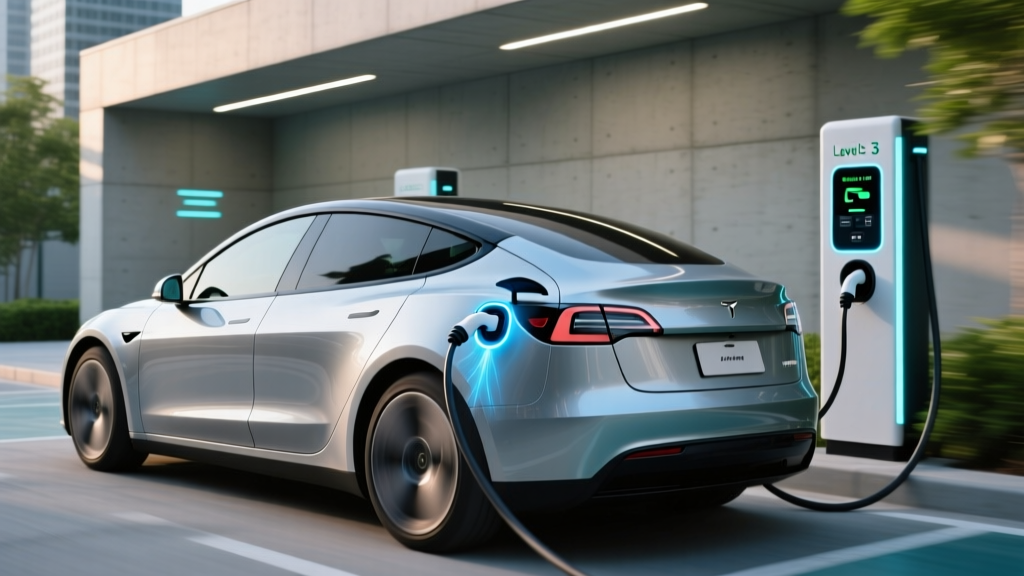
Level 3 charging—commonly called DC fast charging (DCFC)—is the only charging tier that bypasses your vehicle's onboard charger and feeds direct current straight into the traction battery. Where Level 1 and Level 2 deliver alternating current (AC) that the car must convert, a Level 3 station handles that conversion internally, enabling charge rates from 50 kW up to 350 kW at the connector. For context, a typical 75 kWh battery pack charging at a sustained 150 kW can add roughly 200 miles of range in 20 minutes under ideal conditions.
The tradeoff: Level 3 infrastructure is expensive, requires three-phase commercial power, and is almost exclusively a public or fleet resource. You will not install a true Level 3 charger in your garage. What you can install is a high-amperage Level 2 station that covers 95% of daily charging needs, then rely on Level 3 for road trips and rapid top-ups. This guide breaks down every tier, the real costs per mile, connector compatibility in 2026, and what a home installation actually requires.
kW (kilowatts) measures power—the rate at which energy flows into your battery, like water pressure from a hose. kWh (kilowatt-hours) measures energy—the total amount stored, like gallons in a tank. A 150 kW charger delivering power for 20 minutes adds roughly 50 kWh of energy. Confusing these two is the single most common EV literacy error. Every specification in this guide uses them correctly.
Charging Levels Compared: Speed, Power, and Range Added Per Hour
The Society of Automotive Engineers (SAE) defines three charging levels for light-duty electric vehicles. The table below reflects real-world throughput, not theoretical peaks—because peak kW is never sustained across the full charge curve. Most EVs taper significantly above 80% state of charge (SoC) to protect battery health.
| Level | Power Source | Typical kW Output | Miles of Range Added Per Hour | 10–80% Time (75 kWh Battery) | Typical Location |
|---|---|---|---|---|---|
| Level 1 | 120V AC (standard outlet) | 1.2–1.9 kW | 3–5 mi/hr | ~40+ hours | Home (any outlet) |
| Level 2 | 240V AC (dryer-style circuit) | 3.3–19.2 kW | 12–75 mi/hr | ~4–8 hours | Home, workplace, public |
| Level 3 (DCFC) | 480V+ DC (commercial) | 50–350 kW | 150–1,000+ mi/hr (peak) | ~18–45 minutes | Public stations, highway corridors |
A few real-world caveats: those "miles per hour" figures for Level 3 assume you're charging within the battery's peak acceptance window—usually between 10% and 50% SoC. Once you pass 80%, charge speed drops dramatically, often below Level 2 speeds. This is why most road-trip strategies target 10–80% charges rather than filling to 100%. Cold weather (below 40°F / 4°C) can reduce Level 3 charge rates by 20–40% unless the vehicle has active battery preconditioning.
Level 3 Charging in the Real World: Networks, Charge Curves, and 10–80% Times
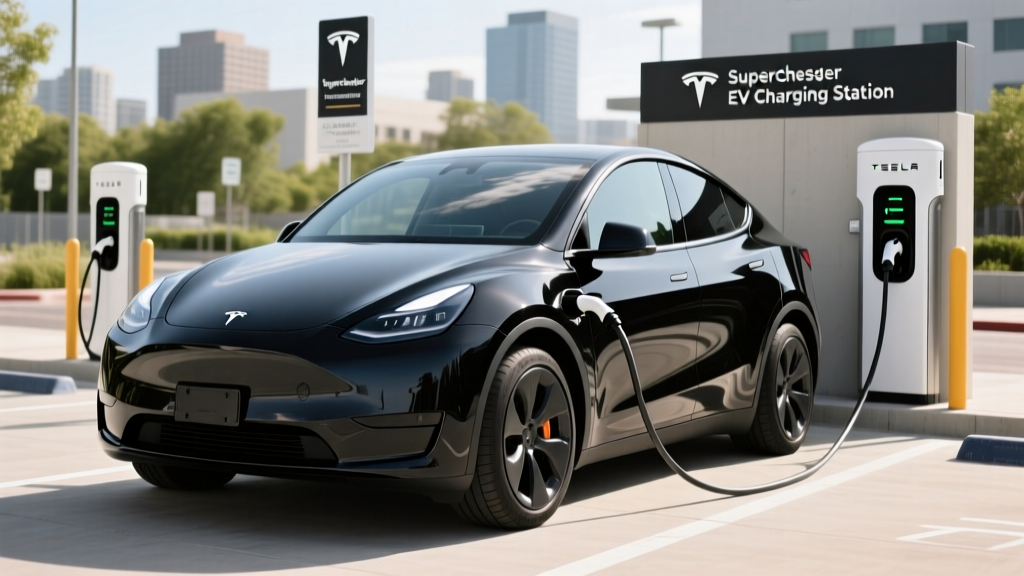
Public DC fast charging in 2026 is dominated by Tesla's Supercharger network (now open to most non-Tesla EVs via the NACS standard), Electrify America, EVgo, and ChargePoint. Peak station output ranges from 50 kW legacy units to 350 kW ultra-fast chargers, but your vehicle's maximum acceptance rate is the real bottleneck.
Here are representative 10–80% charge times for popular EVs at their rated peak DC charge rates, based on manufacturer data and EPA testing profiles:
| Vehicle (2025–2026) | Battery Capacity (kWh) | Peak DC Charge Rate (kW) | 10–80% Time (ideal) | Real-World Note |
|---|---|---|---|---|
| Hyundai Ioniq 5 (Long Range) | 77.4 (NMC) | 240 kW (800V architecture) | ~18 minutes | Sustains high rate to ~65% SoC, then tapers |
| Tesla Model Y (Long Range) | 75 (NMC/NCA) | 250 kW | ~25 minutes | Preconditioning critical; taper begins ~55% |
| Ford F-150 Lightning (Extended) | 131 (NMC) | 150 kW | ~41 minutes | Large pack means longer absolute time even at high kW |
| Chevrolet Equinox EV (RS) | 85 (NMC) | 190 kW | ~30 minutes | Good sustained rate through 70% |
| Nissan Ariya (e-4ORCE) | 91 (NMC) | 130 kW | ~40 minutes | CHAdeMO legacy; CCS via adapter on newer models |
The charge curve matters more than the peak number. A vehicle that peaks at 240 kW but sustains 180 kW average from 10–80% will charge faster than one that spikes to 250 kW and drops to 80 kW by the time it hits 50%. Hyundai/Kia's 800V E-GMP platform and Porsche/Audi's similar architecture are widely regarded as the charge-curve leaders in this regard.
Connector Compatibility: NACS, CCS1, and CHAdeMO in 2026
The connector landscape has consolidated significantly. Tesla's North American Charging Standard (NACS) has been adopted by Ford, GM, Rivian, Volvo, Polestar, Mercedes-Benz, and most major automakers starting with 2025 model-year vehicles. Combined Charging System (CCS1) remains on many 2024 and earlier models. CHAdeMO is effectively discontinued for new vehicles, with the Nissan Leaf being its last major holdout.
| Connector | Compatible Brands (2026 Models) | Max Rated Power | Adapter Needed? |
|---|---|---|---|
| NACS (Tesla) | Tesla, Ford, GM, Rivian, Volvo, Polestar, Mercedes, Hyundai (select) | Up to 350 kW | CCS→NACS adapter for older CCS vehicles (~$200–$400) |
| CCS1 | Hyundai/Kia (most), BMW, Stellantis, VW/ID.4, Honda Prologue | Up to 350 kW | NACS→CCS adapter if accessing Tesla Superchargers |
| CHAdeMO | Nissan Leaf (legacy only) | Up to 100 kW | No adapter available for CCS/NACS stations; limited network |
If you own a CCS-equipped EV from 2023–2024, a NACS adapter (sold by Ford, GM, and third-party makers like Lectron and A2Z) unlocks Tesla's Supercharger network—over 25,000 stalls in North America. Verify adapter compatibility with your specific model year before purchasing, as communication protocols vary.
How Much Does It Cost to Install a Home EV Charger?
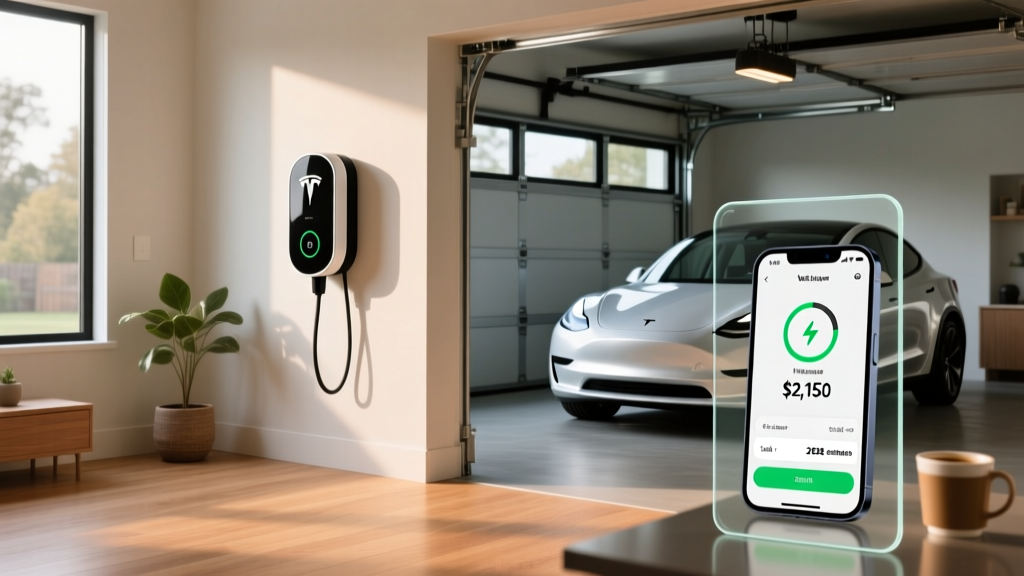
Home charging is where 90%+ of EV charging happens for owners with garage or driveway access. You will be installing a Level 2 (240V) charger—not Level 3. Total installation cost depends on your electrical panel's capacity, the distance from panel to charger location, and local permit fees.
| Cost Component | Typical Range | Notes |
|---|---|---|
| Level 2 Charger Equipment | $300–$750 | Smart Wi-Fi-enabled units (ChargePoint Home Flex, Emporia Vue, Tesla Wall Connector) |
| Electrician Labor (standard install) | $500–$1,500 | Assumes panel is nearby, 240V/40–60A circuit, conduit run under 50 ft |
| Permit & Inspection | $50–$300 | Varies by municipality; some jurisdictions waive for EV circuits |
| Electrical Panel Upgrade (if needed) | $1,500–$4,000 | Required if existing panel is 100A or maxed out; upgrade to 200A service |
| Total (no panel upgrade) | $850–$2,550 | Most homes with 200A service fall in this range |
| Total (with panel upgrade) | $2,350–$6,550 | Older homes (pre-2000) with 100A panels commonly need this |
The federal Residential Clean Energy Credit does not cover EV chargers directly as of 2026. However, the Alternative Fuel Vehicle Refueling Property Credit (§30C) provides up to 30% of equipment and installation costs (capped at $1,000 for residential) if you live in an eligible census tract. Consult a tax professional and verify eligibility on irs.gov before claiming.
What Electrical Upgrades Might I Need?
A licensed electrician will evaluate three things:
- Panel capacity: A 40A Level 2 charger draws 32A continuously (NEC requires circuits rated at 125% of continuous load). Your panel must have spare capacity—typically 2–4 open breaker slots and sufficient amperage headroom.
- Service size: Homes with 100A service often need an upgrade to 200A to accommodate an EV circuit alongside existing loads (HVAC, electric range, dryer). This is the single biggest cost variable.
- Wiring and conduit: The run from panel to charger requires appropriately gauged copper wire (6 AWG for 40A, 4 AWG for 60A) in conduit. Longer runs increase material and labor costs.
Charging Cost Per Mile: Home vs. Public DC Fast vs. Gas
Electricity pricing varies enormously by region, time of day, and whether you're charging at home or at a public DC fast station. The table below uses national average rates as of early 2026 and a vehicle efficiency of 3.0 miles per kWh (representative of a midsize crossover EV like the Tesla Model Y or Hyundai Ioniq 5).
| Charging Scenario | Cost per kWh | Cost per Mile (at 3 mi/kWh) | Equivalent Gas Price (at 25 MPG) |
|---|---|---|---|
| Home (off-peak utility rate) | $0.08–$0.14 | $0.027–$0.047 | $0.67–$1.17/gallon |
| Home (average blended rate) | $0.14–$0.18 | $0.047–$0.060 | $1.17–$1.50/gallon |
| Public Level 2 (workplace/retail) | $0.20–$0.35 | $0.067–$0.117 | $1.67–$2.92/gallon |
| Public DC Fast (Level 3) | $0.35–$0.60 | $0.117–$0.200 | $2.92–$5.00/gallon |
| Gasoline (national average, 2026) | — | $0.128 (at $3.20/gal, 25 MPG) | $3.20/gallon |
The takeaway: home charging at off-peak rates is dramatically cheaper than gasoline on a per-mile basis—roughly one-quarter to one-third the cost. Public Level 3 DC fast charging, however, can equal or exceed the cost of gasoline in some markets. EV ownership economics strongly favor home charging. If you cannot charge at home, a PHEV or HEV may be a more cost-effective electrified option.
Equipment Recommendations: Best Level 2 Home Chargers for 2026
Since true Level 3 charging is a public-only proposition, your home investment should be in the best Level 2 equipment available. These are the chargers we recommend based on reliability, smart features, and value:
ChargePoint Home Flex
- Power Output: Up to 12 kW (50A circuit / 40A continuous) — configurable down to 16A
- Connector: NACS or J1772 (CCS) available
- Cable Length: 23 feet
- Smart Features: Wi-Fi, app scheduling, Alexa integration, energy tracking
- Price: ~$550–$650
- Best For: Flexible amperage settings for homes with limited panel capacity
Tesla Wall Connector (Gen 4)
- Power Output: Up to 11.5 kW (48A continuous on 60A circuit)
- Connector: NACS native; J1772 adapter included
- Cable Length: 24 feet
- Smart Features: Wi-Fi, over-the-air updates, load sharing (pair two units on one circuit), Powerwall integration
- Price: ~$450–$500
- Best For: Tesla owners and NACS-equipped EVs; excellent value
Emporia Level 2 EV Charger
- Power Output: Up to 11.5 kW (48A on 60A circuit)
- Connector: J1772 (CCS)
- Cable Length: 24 feet
- Smart Features: Wi-Fi, real-time energy monitoring via Emporia Vue panel integration, solar-aware scheduling
- Price: ~$350–$400
- Best For: Budget-conscious buyers; ideal if you already use Emporia home energy monitoring
All three units are NEMA 4 rated for outdoor installation and UL-listed for safety. Hardwired installation (rather than a NEMA 14-50 plug) is recommended for circuits above 40A—it eliminates a common failure point and satisfies NEC requirements in many jurisdictions for continuous high-amperage loads.
Safety and Electrical Code Considerations
EV charging circuits carry sustained high current for hours at a time—far longer than a dryer or oven cycle. This places unique demands on your home's electrical system:
- Dedicated circuit required: Your EV charger must have its own breaker—never shared with other appliances. A 40A charger needs a 50A breaker (125% NEC continuous-load rule).
- GFCI protection: The 2023 NEC update requires GFCI protection for EV charging outlets in garages and outdoor locations. Hardwired installations may be exempt in some jurisdictions—confirm with your electrician and local AHJ (Authority Having Jurisdiction).
- Outdoor rating: If your charger is mounted outside, both the unit and any receptacle must carry a NEMA 4 or NEMA 4X weatherproof rating. All three chargers recommended above meet this standard.
- Cable management: Use a wall-mounted holster or retractable reel to keep the cable off the ground. Dragging a 240V cable across a wet driveway is a preventable hazard.
- Load management: If your panel is near capacity, consider a smart charger with built-in load management (like the Tesla Wall Connector's load-sharing feature) or a panel-level monitor that throttles charge rate when other large loads are active.
Frequently Asked Questions
How fast will each charging level add range?
Level 1 (120V) adds 3–5 miles per hour—suitable only for overnight top-ups on small batteries or PHEVs. Level 2 (240V) adds 12–75 miles per hour depending on amperage and your vehicle's onboard charger capacity. Level 3 DC fast charging adds 150–1,000+ miles per hour at peak, but is measured in minutes, not hours: expect 18–45 minutes for a 10–80% charge depending on vehicle and station output.
Can I install a Level 3 charger at home?
No. Level 3 DC fast chargers require 480V three-phase commercial power, cost $20,000–$150,000+ for the equipment alone, and need utility-grade infrastructure. They are not available for residential installation. A properly configured Level 2 home charger (9.6–19.2 kW) fully replenishes most EV batteries overnight and handles 95%+ of typical charging needs.
Which connector does my EV use?
2025–2026 model-year vehicles from Tesla, Ford, GM, Rivian, Volvo, and Polestar use NACS. Most Hyundai, Kia, BMW, Volkswagen, and Honda EVs still use CCS1 (J1772 Combo). CHAdeMO is limited to the legacy Nissan Leaf. Check your vehicle's charge port or owner's manual. If you have CCS and want Tesla Supercharger access, a NACS adapter ($200–$400) is available from your automaker or third-party suppliers.
How much does Level 3 DC fast charging cost compared to gas?
At $0.35–$0.60 per kWh (the typical public DCFC range in 2026), and assuming 3 miles per kWh efficiency, you'll pay $0.12–$0.20 per mile. A comparable gas vehicle at 25 MPG pays about $0.13 per mile at $3.20/gallon. DC fast charging is therefore roughly cost-competitive with gasoline—its value is speed and convenience on road trips, not savings. Your real cost advantage comes from home Level 2 charging at $0.03–$0.06 per mile.
What if my home only has a 100A electrical panel?
A 100A panel may not have enough spare capacity for a 40A+ EV circuit, especially if you already run electric HVAC, a dryer, and an electric range simultaneously. Options include: (1) upgrading to a 200A panel ($1,500–$4,000), (2) installing a lower-amperage charger (16A/3.8 kW) that still adds ~15 miles per hour overnight, or (3) using a smart load-management device that dynamically reduces EV charge rate when other circuits draw heavily. A licensed electrician can perform a load calculation to determine what's feasible.
Does frequent Level 3 DC fast charging damage the battery?
Exclusively relying on DC fast charging can accelerate battery degradation slightly compared to Level 2 charging—primarily due to the heat generated at high charge rates. Modern EVs with active liquid thermal management (which includes virtually all 2025+ models) mitigate this significantly. Data from fleet studies suggests that even heavy DCFC users see only 1–3% additional capacity loss over 100,000 miles compared to Level 2-only users. The practical recommendation: use Level 3 when you need it for road trips, but default to Level 2 for daily charging.