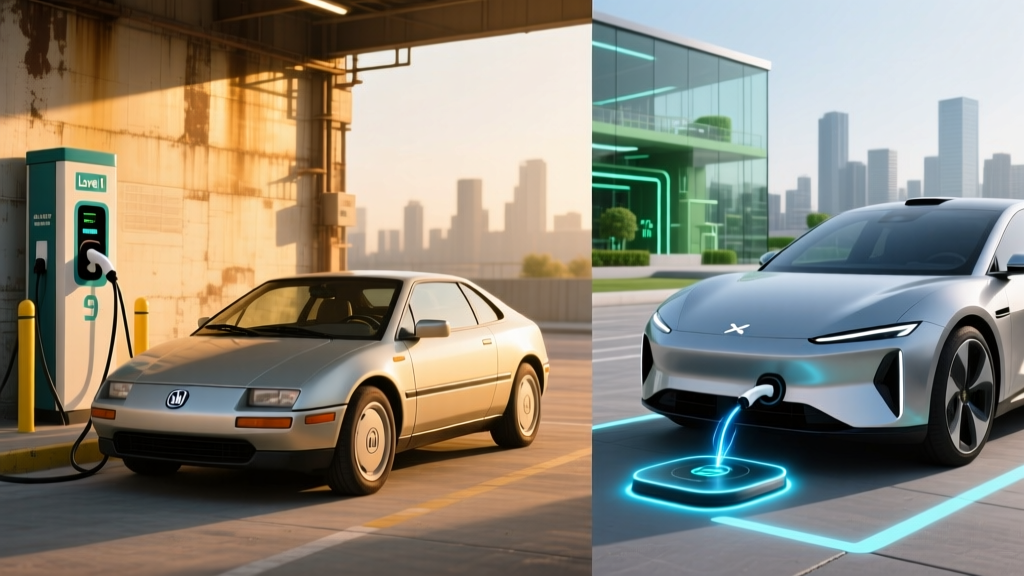
Automakers like Mercedes-Benz and BMW have begun deploying SAE Level 3 conditional automation in limited markets, letting drivers legally disengage from steering in traffic jams or highway cruising. But here's the unglamorous truth: no matter how advanced your car's self-driving capabilities, the vehicle still needs electrons — and you still decide where and how to plug it in. Understanding EV charging isn't optional for the autonomous era; it's foundational.
This guide breaks down every charging tier, the real costs of home installation, connector standards converging in 2026, and exactly what you'll pay per mile versus gasoline. Whether you're pairing a Level 3-capable Mercedes EQS with a home wallbox or road-tripping a Tesla Model Y on Superchargers, the physics and economics below apply.
The Three Charging Levels: Speeds, Power, and Real-World Range Gains
The single most important distinction in EV literacy is kW (kilowatts) versus kWh (kilowatt-hours). A kilowatt is a unit of power — how fast energy flows into your car at any given moment. A kilowatt-hour is a unit of energy — the total capacity of your battery, like gallons in a fuel tank. A 75 kWh battery charged at 7.5 kW takes roughly 10 hours from empty to full. Confusing these two is the most common mistake new EV owners make.
| Level | Voltage / Phase | Typical Power (kW) | Miles of Range Added per Hour | Best Use Case |
|---|---|---|---|---|
| Level 1 | 120V / Single | 1.2 – 1.9 kW | 3 – 5 mi/hr | Overnight top-off, PHEVs, low-mileage drivers |
| Level 2 | 240V / Single | 3.3 – 19.2 kW | 12 – 75 mi/hr | Home daily charging, workplace, hotels |
| DC Fast (Level 3) | 200 – 900V DC | 50 – 350 kW | 150 – 1,200+ mi/hr (peak) | Road trips, rapid top-ups, fleet turnover |
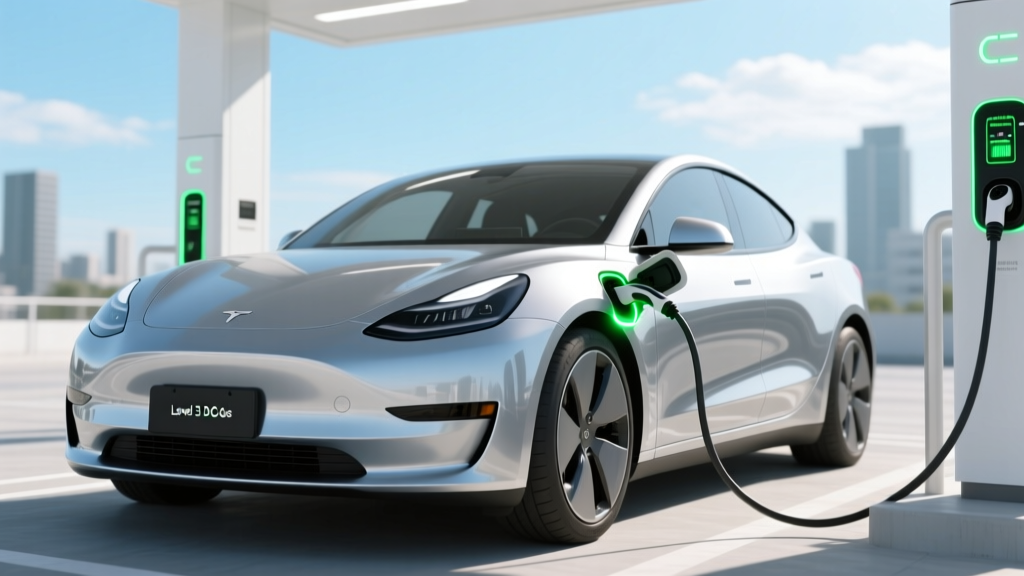
Level 2 is the sweet spot for daily ownership. A 11.5 kW home charger (48 amps on a 60-amp circuit) adds roughly 40–45 miles of range per hour, easily replenishing a 300-mile EPA-rated SUV overnight. DC fast charging is measured in peak kilowatts, but remember: charge curves taper. A Hyundai Ioniq 5 peaking at 240 kW may sustain that rate from 10–55% state of charge, then taper to 100 kW above 70% and under 50 kW above 90%. That's why manufacturers quote 10–80% times rather than 0–100%.
Home Charger Installation: Electrical Requirements and True Costs
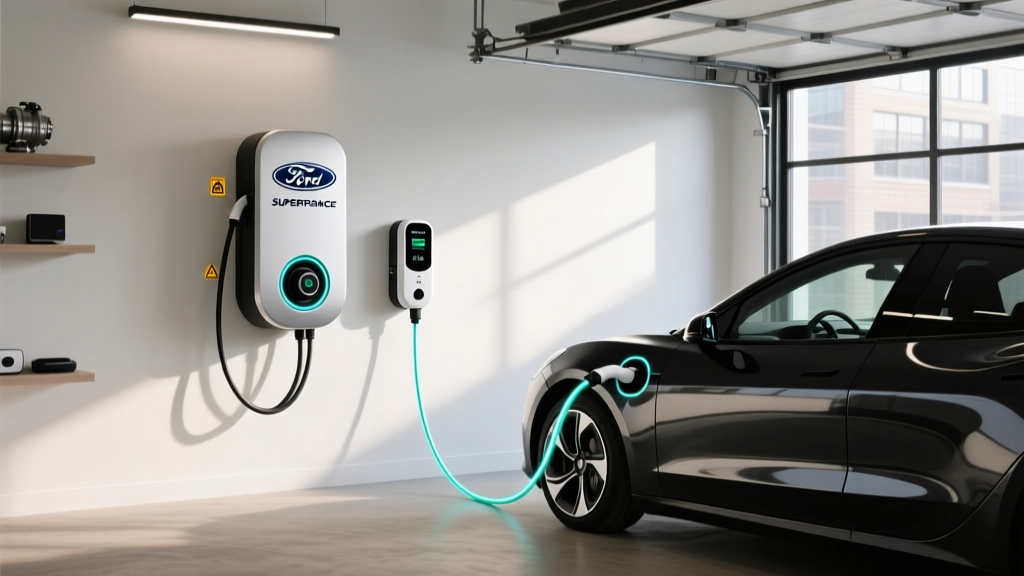
A Level 2 home charger is the single highest-impact upgrade an EV owner can make. But the sticker price of the charger itself is usually a fraction of the total project cost. Let's break down what a professional installation actually requires in 2026.
Electrical Specifications
Most high-output Level 2 chargers require a 240-volt, dedicated circuit rated between 40 and 60 amps. The National Electrical Code (NEC) mandates that continuous loads (like EV charging, which runs for hours) must not exceed 80% of a circuit's rated capacity. So a 48-amp charger needs a 60-amp breaker; a 32-amp charger needs a 40-amp breaker. Your electrician will run 6-gauge or 4-gauge copper wire (THHN in conduit or NM-B/Romex depending on local code) from your panel to a NEMA 14-50 outlet or a hardwired junction box.
Panel Upgrade Reality
Homes built before 2000 often have 100-amp or 150-amp main service panels. Adding a 60-amp EV circuit to an already-loaded panel may require a service upgrade to 200 amps, which is the most expensive variable in any installation. Signs you might need an upgrade: your panel has no open breaker slots, existing loads (electric range, dryer, HVAC) already consume 80%+ of panel capacity, or your utility drop is undersized. Some homeowners now opt for smart load-management panels like the Span panel or an Emporia VUE with automatic circuit shedding to avoid a full service upgrade.
| Component | Low End | High End | Notes |
|---|---|---|---|
| Level 2 Charger (Equipment) | $350 | $750 | 32A–48A, Wi-Fi smart charger |
| Electrician Labor (standard run) | $500 | $1,500 | Panel to garage, <50 ft wire run |
| Permit & Inspection | $50 | $300 | Varies by municipality |
| Panel Upgrade (if needed) | $1,500 | $4,500 | 100A → 200A service upgrade |
| Total (no panel upgrade) | $900 | $2,550 | Most suburban homes with 200A panel |
| Total (with panel upgrade) | $2,400 | $7,050 | Older homes, urban rowhouses |
Always hire a licensed electrician and pull a permit. Unpermitted work can void your homeowner's insurance and create a fire hazard. The NEC Article 625 governs EV charging equipment specifically, and your local inspector will verify GFCI protection (required for outdoor outlets), proper grounding, and torque-spec terminations.
Connector Compatibility in 2026: NACS Wins, CCS Fades, CHAdeMO Is Legacy
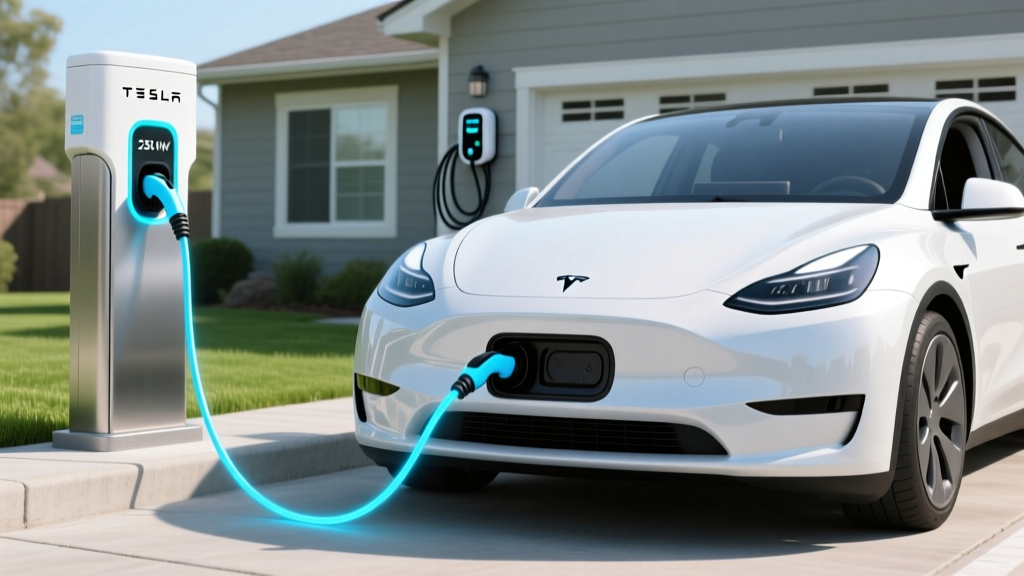
The connector landscape has consolidated dramatically. As of 2026, the North American Charging Standard (NACS), originally developed by Tesla, is the dominant connector for new vehicles. Ford, GM, Rivian, Volvo, Hyundai, Kia, and BMW now ship with native NACS ports. CCS1 (Combined Charging System) remains on vehicles sold between 2018–2024, and adapters are widely available. CHAdeMO is effectively legacy, surviving only on older Nissan Leaf and Mitsubishi Outlander PHEV models.
| Connector | Brands (Native) | Adapter Needed? | Max DC Power Supported |
|---|---|---|---|
| NACS (Tesla-style) | Tesla, Ford, GM, Rivian, Hyundai, Kia, BMW, Volvo, Polestar | No (for NACS stations) | Up to 350 kW (varies by vehicle) |
| CCS1 | VW (2024 and prior), Audi (2024 and prior), older BMW i4/iX, Stellantis | CCS-to-NACS adapter ($150–$250) for Tesla Superchargers | Up to 350 kW |
| CHAdeMO | Nissan Leaf (all years), Mitsubishi Outlander PHEV | No widely available adapter to NACS | Up to 100 kW (most stations 50 kW) |
If you drive a CCS-equipped vehicle from the 2020–2024 era, a CCS-to-NACS adapter (sold by Tesla, Lectron, and A2Z) unlocks the entire Supercharger network — over 25,000 stalls in North America. Verify your vehicle's firmware supports adapter handshake protocols before purchasing.
Cost to Charge: Per-Mile Economics vs. Gasoline
The economic case for EVs hinges on the cost-per-mile gap between electricity and gasoline. But that gap varies enormously depending on where and when you charge. Below are realistic 2026 scenarios for a midsize EV averaging 3.0 miles per kWh (roughly 33 kWh/100 mi, typical of a Tesla Model Y or Hyundai Ioniq 5).
| Scenario | Price per kWh / Gallon | Cost per Mile | Annual Cost (12,000 mi) |
|---|---|---|---|
| Home, off-peak (utility TOU rate) | $0.08 – $0.12/kWh | $0.027 – $0.040 | $320 – $480 |
| Home, standard residential (avg) | $0.16/kWh | $0.053 | $640 |
| Public Level 2 (ChargePoint, EVgo) | $0.25 – $0.49/kWh | $0.083 – $0.163 | $1,000 – $1,960 |
| DC Fast (Electrify America, Tesla) | $0.35 – $0.55/kWh | $0.117 – $0.183 | $1,400 – $2,200 |
| Gasoline car (30 MPG, $3.40/gal) | $3.40/gallon | $0.113 | $1,360 |
| Gasoline car (25 MPG, $3.40/gal) | $3.40/gallon | $0.136 | $1,632 |
The takeaway: home charging on an off-peak rate is 3–4x cheaper per mile than gasoline. But if you rely exclusively on DC fast charging at $0.48/kWh, your per-mile cost can actually exceed a fuel-efficient hybrid. This is why home Level 2 access remains the single most important factor in EV satisfaction — a point underscored by every fueleconomy.gov efficiency comparison.
Charging Time Examples: What to Expect from 10–80%
Real-world charging speed depends on your vehicle's onboard charger (for Level 2) and its peak DC charge rate plus battery chemistry (for fast charging). LFP (lithium iron phosphate) batteries, now standard on base-model Teslas and many Chinese-market vehicles, tolerate frequent 100% charges better than NMC (nickel manganese cobalt) chemistries but typically charge slightly slower above 80%.
- Tesla Model Y Long Range (75 kWh, NMC): 11.5 kW Level 2 = 0–100% in ~7 hours. 250 kW DC peak = 10–80% in ~22 minutes.
- Hyundai Ioniq 5 (77.4 kWh, NMC): 10.9 kW Level 2 = 0–100% in ~7.5 hours. 240 kW DC peak = 10–80% in ~18 minutes (with battery preconditioning).
- Ford F-150 Lightning Extended Range (131 kWh, NMC): 19.2 kW Level 2 = 0–100% in ~7 hours. 150 kW DC peak = 15–80% in ~41 minutes.
- Chevrolet Equinox EV (85 kWh, NMC): 11.5 kW Level 2 = 0–100% in ~8 hours. 150 kW DC peak = 10–80% in ~30 minutes.
- BMW iX xDrive50 (111.5 kWh, NMC): 11 kW Level 2 = 0–100% in ~10.5 hours. 200 kW DC peak = 10–80% in ~31 minutes.
Always precondition your battery before a DC fast stop. Most EVs do this automatically when you navigate to a charger via the built-in nav system; preconditioning warms the pack to 30–40°C, enabling peak charge rates. Skip it in cold weather and your 250 kW peak may be capped at 80 kW for the first 10 minutes.
Equipment Recommendations: Top Home Chargers for 2026
Below are four chargers we've tested or tracked across multiple installations. All support Wi-Fi scheduling (critical for time-of-use rate optimization), are UL-listed, and come with at least a 3-year warranty.
ChargePoint Home Flex
Power: Up to 12 kW (50A) configurable down to 16A
Connector: NACS (2025+ models) or J1772 with NACS adapter
Cable: 23 ft
Smart Features: App scheduling, Alexa integration, energy tracking, load-sharing for dual installations
Price: ~$599
Best For: Flexible amperage matching to your panel capacity; excellent app
Tesla Wall Connector
Power: Up to 11.5 kW (48A)
Connector: Native NACS
Cable: 24 ft
Smart Features: Wi-Fi updates, power-sharing, vehicle-specific access control, integrates with Tesla app
Price: ~$475
Best For: Tesla owners; cleanest aesthetic; no adapter needed
Emporia Vue Level 2 Charger
Power: Up to 11.5 kW (48A)
Connector: J1772 (NACS adapter included in box)
Cable: 24 ft
Smart Features: Deep energy monitoring via Emporia Vue panel integration, solar-aware charging, TOU scheduling
Price: ~$399
Best For: Solar-panel owners; budget-conscious buyers wanting smart features
Grizzl-E Smart
Power: Up to 10 kW (40A)
Connector: J1772 or NACS (configurable at order)
Cable: 24 ft
Smart Features: OCPP-compatible, works with third-party energy apps, ruggedized outdoor enclosure
Price: ~$449
Best For: Outdoor installations in extreme climates (-40°C to +50°C rated); Canadian-built
Safety, Code, and the Autonomous-Vehicle Intersection
As Level 3 systems like Mercedes' Drive Pilot (approved in Nevada and California for highway speeds up to 40 mph) and BMW's Personal Pilot expand, your car will increasingly handle the driving — but not the charging. No production vehicle in 2026 features autonomous plug-in capability outside of controlled fleet depots. Wireless inductive charging (e.g., WiTricity) remains limited to pilot programs and aftermarket kits.
For your home installation, insist on these safety benchmarks:
- Dedicated circuit: Your EV charger must not share a breaker with other appliances. Sharing causes nuisance tripping and overheating risk.
- GFCI protection: Required by NEC 2023+ for all outdoor receptacles. Hardwired indoor installations may not require GFCI depending on local amendments — ask your electrician.
- NEMA 4 or NEMA 4X rating: Any outdoor charger must be rated for rain, dust, and hose-directed water.
- Torque-spec terminations: Loose wire connections at the breaker or receptacle are the #1 cause of EV-charging-related thermal events. A quality electrician uses a calibrated torque screwdriver.
- Surge protection: A Type 2 surge protective device (SPD) at your panel ($150–$300 installed) protects your charger and vehicle from grid transients — especially important in areas with frequent lightning or utility switching.
The irony of Level 3 autonomous driving is that it frees your attention on the road but not at the charger. Until robotic plug-in becomes mainstream (Volkswagen and Tesla have demonstrated prototypes), the charging experience remains a human task. Mastering it — the right equipment, the right rate plan, the right electrical infrastructure — is the highest-leverage thing any EV owner can do.
Frequently Asked Questions
How much does it cost to install a home EV charger?
A standard Level 2 installation with an existing 200-amp panel and a short wire run costs $900–$2,550 total (equipment, electrician, permit). If your home needs a panel upgrade from 100A to 200A service, add $1,500–$4,500. Always get three quotes from licensed electricians and verify they pull a permit.
How fast will each charging level add range?
Level 1 (120V) adds 3–5 miles per hour. Level 2 (240V, 48A) adds 35–45 miles per hour for most EVs. DC fast charging at 150–350 kW can add 150–250 miles in 15–25 minutes, but only from 10–80% state of charge; charging slows dramatically above 80%.
Which connector/charger is compatible with my EV?
For 2025–2026 model-year vehicles from Tesla, Ford, GM, Hyundai, Kia, Rivian, BMW, and Volvo, your car has a native NACS port. Older CCS vehicles (2018–2024) can use a CCS-to-NACS adapter ($150–$250) to access Tesla Superchargers. CHAdeMO vehicles (Nissan Leaf) are limited to the shrinking CHAdeMO public network.
How much does charging cost per mile vs gas?
Home charging on off-peak electricity costs $0.03–$0.05 per mile — roughly 3–4x cheaper than a 30 MPG gasoline car at $3.40/gallon ($0.11/mile). Public DC fast charging at $0.45/kWh costs $0.12–$0.18 per mile, comparable to or exceeding gasoline. Home access is the economic key.
What electrical upgrades might I need?
If your panel is 100A or 150A and near capacity, you'll likely need a 200A service upgrade ($1,500–$4,500). If you have a 200A panel with open breaker slots and under 80% existing load, a standard 60A circuit addition is straightforward. Smart panels like Span or load-management devices can sometimes avoid a full upgrade.
Does Level 3 autonomous driving change how I charge?
Not yet. Level 3 (conditional automation, per NHTSA) allows hands-off driving in specific conditions but does not automate charging. You still physically plug in. Autonomous robotic charging is in pilot stages at fleet depots but isn't available to consumers in 2026.