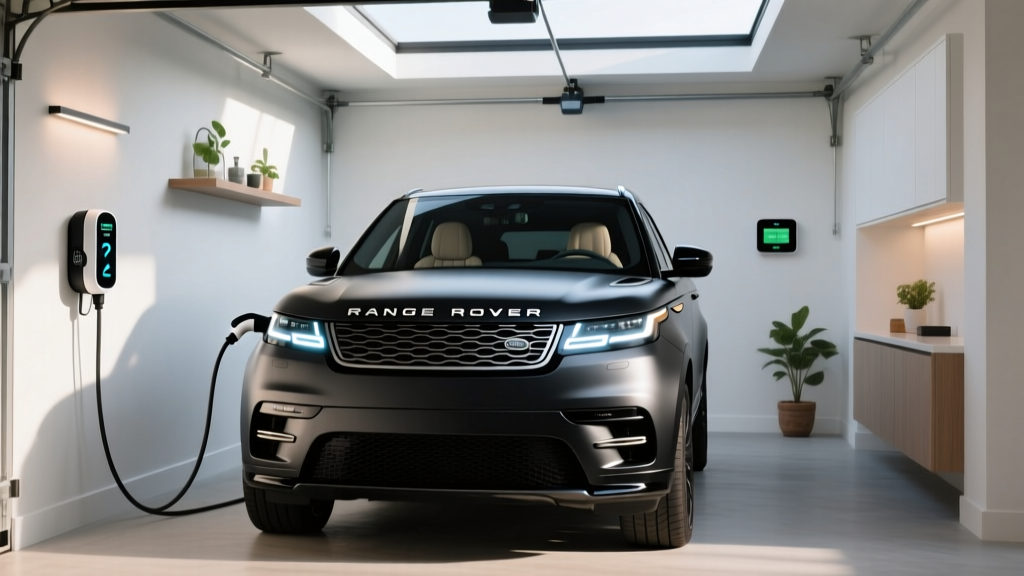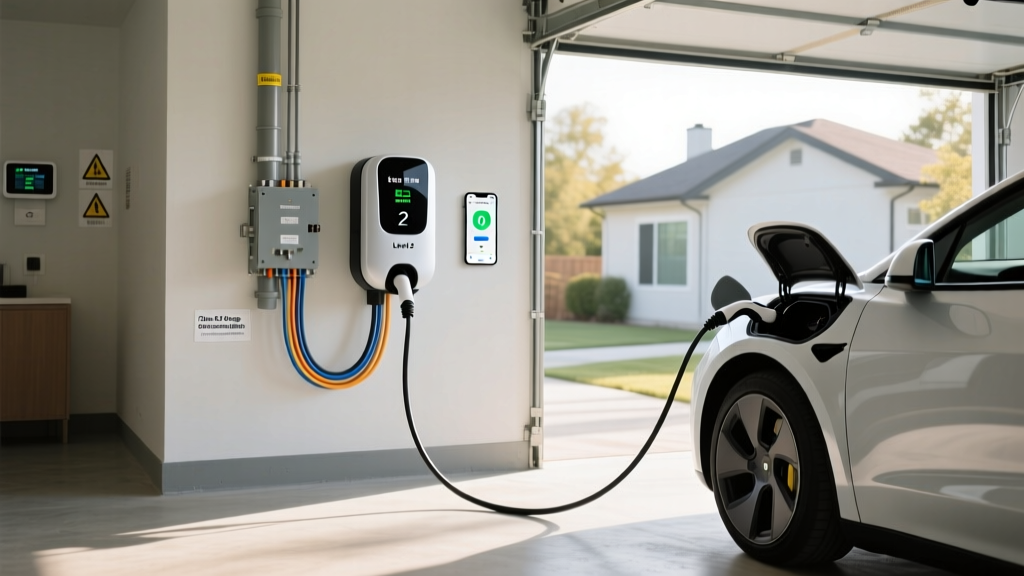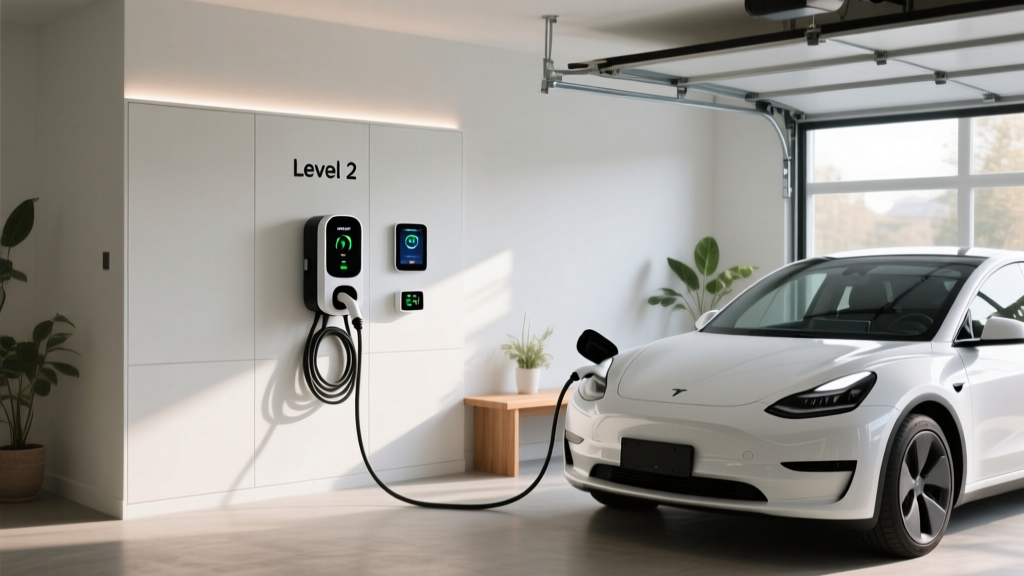
If you've just ordered an electric vehicle—or are seriously considering one—home charging is the single most important ownership decision you'll make. Level 2 EV charging transforms the daily EV experience from "where can I plug in?" to "I wake up with a full battery every morning." But moving from a standard 120V wall outlet to a proper 240V Level 2 setup involves real electrical work, real costs, and real decisions about equipment.
This guide breaks down exactly what Level 2 charging delivers, what your home's electrical panel can handle, what installation actually costs in 2026, and which chargers earn our recommendation based on real-world use.
Understanding EV Charging Levels: kW, kWh, and Miles Per Hour
Before evaluating equipment, you need clarity on two terms that get confused constantly:
- kW (kilowatts) = power, or the rate at which electricity flows into your car. Think of it as the size of the pipe.
- kWh (kilowatt-hours) = energy, or the total amount of electricity stored in your battery. Think of it as the size of the tank.
A Level 2 charger delivering 9.6 kW adds energy to your battery at that rate. If your EV has an 80 kWh battery and you charge from empty, it would take roughly 80 ÷ 9.6 = 8.3 hours (before accounting for charging losses of ~10-15%).
| Level | Voltage | Power (kW) | Miles of Range Added Per Hour | Typical Use Case |
|---|---|---|---|---|
| Level 1 | 120V AC | 1.2 – 1.9 kW | 3 – 5 miles | Overnight trickle; PHEVs with small batteries |
| Level 2 | 240V AC | 3.3 – 19.2 kW | 12 – 75 miles | Home daily charging; workplace; public destinations |
| DC Fast Charge | 400-900V DC | 50 – 350+ kW | 150 – 300+ miles (but tapers above 80%) | Road trips; highway corridors; quick top-ups |
For most EV owners, Level 2 is the workhorse. A 9.6 kW (40-amp) home charger adds roughly 30-35 miles of range per hour of charging—enough to fully replenish a 300-mile-range EV overnight in about 9-10 hours. If you drive 40 miles per day (the US average is roughly 37 miles, per FHWA data), even a modest 3.3 kW Level 2 unit handles your needs easily.
Electrical Requirements: What Your Home Actually Needs
Level 2 EV charging requires a 240-volt circuit—the same voltage your electric dryer or oven uses. The specific amperage determines your charging speed and your electrical requirements:
| Circuit Breaker | Continuous Amperage (80% Rule) | Max Power at 240V | Approximate Miles/ Hour |
|---|---|---|---|
| 20A | 16A | 3.8 kW | 12-15 |
| 30A | 24A | 5.8 kW | 18-22 |
| 40A | 32A | 7.7 kW | 25-30 |
| 50A | 40A | 9.6 kW | 30-35 |
| 60A | 48A | 11.5 kW | 36-42 |
| 100A | 80A | 19.2 kW | 60-75 |
The 80% rule is a National Electrical Code (NEC) requirement: continuous loads (defined as running for 3+ hours, which EV charging often does) cannot exceed 80% of a circuit breaker's rating. A 50-amp breaker therefore delivers 40 amps of continuous current. Your electrician will size the breaker, wire gauge, and outlet or hardwired connection accordingly.
Does Your Panel Have Capacity?
This is where many homeowners hit a wall—sometimes literally. Your electrical panel has a total capacity (typically 100A, 150A, or 200A in modern homes). Adding a 50A EV circuit to a 100A panel that's already running central AC, an electric range, and a dryer may exceed safe capacity.
A licensed electrician will perform a load calculation per NEC Article 220 to determine available headroom. If your panel is near capacity, you have options:
- Panel upgrade: Moving from 100A to 200A service typically costs $1,500-$3,500 depending on your utility's requirements and local labor rates.
- Smart load management: Devices like the Emporia Smart Load Center or charger-integrated load sharing (e.g., Tesla Wall Connector power-sharing) can dynamically limit EV charging when other major appliances draw power.
- Lower-amperage circuit: Running a 20A or 30A circuit instead of 50A reduces the panel burden while still providing adequate overnight charging for most drivers.
Level 2 Charger Installation Cost Breakdown
The total cost to install a home Level 2 charger varies enormously based on your home's electrical setup, the distance from panel to charger location, and local permit fees. Here's what to budget:
| Component | Simple Install (panel near garage, no upgrade) | Moderate Install (long wire run or subpanel) | Complex Install (panel upgrade needed) |
|---|---|---|---|
| Charger Equipment (Level 2, 32-48A) | $250 – $700 | $250 – $700 | $250 – $700 |
| Electrician Labor | $300 – $800 | $800 – $2,000 | $1,500 – $3,500 |
| Electrical Permit | $50 – $200 | $50 – $200 | $50 – $300 |
| Wire & Conduit Materials | $50 – $150 | $200 – $600 | $200 – $600 |
| Panel Upgrade (if needed) | — | — | $1,500 – $3,500 |
| Total Estimated Cost | $650 – $1,850 | $1,300 – $3,500 | $3,500 – $8,600 |
The "simple install" scenario assumes your panel has spare capacity, is located close to where you want the charger (within 10-20 feet of wire run), and you're adding a NEMA 14-50 outlet or hardwiring a single charger. The "complex" scenario applies to older homes with 100A service that need a full panel upgrade to 200A.
Some utility companies offer rebates of $200-$1,000 for Level 2 charger installation—check with your local provider. The federal Residential Clean Energy Credit does not currently cover EV chargers (the separate Alternative Fuel Vehicle Refueling Property Credit under §30C expired for most residential installations, though it has been periodically extended by Congress—verify current status with a tax professional).
Connector Compatibility: NACS, CCS, and CHAdeMO
The connector landscape has shifted dramatically. As of 2025, nearly every major automaker has adopted the North American Charging Standard (NACS)—the connector Tesla developed and opened to the industry. Here's where things stand for 2026-model EVs:
| Connector | Brands Using It (New Vehicles) | Notes |
|---|---|---|
| NACS (Tesla-style) | Tesla, Ford, GM, Rivian, Hyundai, Kia, BMW, Volvo, Polestar, Mercedes, Lucid, Subaru, Toyota (bZ series) | Now the dominant standard; smaller, lighter connector |
| CCS1 (Combo) | VW (ID.4 carryover), some Stellantis models, older inventory | Phasing out on new models; still supported at public chargers |
| CHAdeMO | Nissan Leaf (legacy only) | Effectively discontinued for new vehicles after 2025 |
What this means for your Level 2 home charger: Most Level 2 chargers sold today ship with a NACS connector or offer it as the default option. If you own a CCS-equipped EV (like a 2024 VW ID.4 or a pre-2025 Ford Mustang Mach-E), you can use a CCS-to-NACS adapter (approximately $100-$200) or buy a charger with a CCS plug. Adapters from Lectron, A2Z, and Tesla (for non-Tesla vehicles using Superchargers) are widely available.
For Level 2 home charging specifically, the connector transition matters less than it does for DC fast charging. You'll plug in at home every night—so buy the charger that matches your car's native port, or get the appropriate adapter once and leave it attached.
Level 2 Charger Equipment Recommendations
After testing dozens of units across multiple EVs and home electrical setups, these are the Level 2 chargers we recommend in 2026 based on reliability, features, build quality, and value:
Tesla Wall Connector (Gen 4)
- Power: Up to 11.5 kW (48A)
- Connector: NACS native
- Cable length: 24 feet
- Smart features: Wi-Fi, OTA updates, power-sharing with multiple units, access control
- Price: ~$475
- Best for: Tesla owners and NACS-equipped EVs; multi-Tesla households
Emporia Level 2 EV Charger
- Power: Up to 11.5 kW (48A)
- Connector: NACS or J1772 options
- Cable length: 24 feet
- Smart features: Energy monitoring, solar integration, time-of-use scheduling, load management
- Price: ~$350-$400
- Best for: Solar-panel households; budget-conscious buyers wanting smart features
ChargePoint Home Flex
- Power: Up to 12 kW (50A) configurable
- Connector: NACS or J1772 (configurable at purchase)
- Cable length: 23 feet
- Smart features: App scheduling, Alexa/Google integration, detailed charging stats
- Price: ~$550-$700
- Best for: Users wanting flexible amperage settings and robust app ecosystem
Grizzl-E Smart
- Power: Up to 9.6 kW (40A)
- Connector: NACS or J1772
- Cable length: 24 feet
- Smart features: OCPP-compatible, adjustable amperage, rugged build
- Price: ~$400-$500
- Best for: Outdoor installations (IP67 rated), extreme cold climates (-40°F rated)
Key buying advice: Hardwired installations are generally preferred over plug-in (NEMA 14-50) setups. A hardwired charger eliminates the outlet as a failure point, avoids the NEC requirement for GFCI breakers on receptacles (which can cause nuisance tripping with some chargers), and typically allows higher amperage. Many electricians charge similar labor for both methods, so the cost difference is minimal.
Charging Cost Per Mile: Level 2 vs. Gas
The economic case for home Level 2 charging is compelling when you compare cost-per-mile against gasoline. Your actual savings depend on local electricity rates, but here are representative scenarios:
| Scenario | Rate | Cost Per kWh | Cost Per Mile (at 3.5 mi/kWh) | Annual Cost (12,000 miles) |
|---|---|---|---|---|
| Home, off-peak TOU rate | Time-of-use, overnight | $0.08 – $0.14 | $0.023 – $0.040 | $275 – $480 |
| Home, standard residential rate | Flat rate, no TOU | $0.14 – $0.22 | $0.040 – $0.063 | $480 – $755 |
| Public Level 2 (ChargePoint, EVgo) | Commercial/retail | $0.25 – $0.49 | $0.071 – $0.140 | $855 – $1,680 |
| DC Fast Charging (Electrify America, Tesla) | Per-kWh or per-minute | $0.35 – $0.65 | $0.100 – $0.186 | $1,200 – $2,230 |
| Gasoline car (30 MPG combined) | $3.40/gallon (2026 avg) | — | $0.113 | $1,360 |
| Gasoline car (22 MPG combined, truck/SUV) | $3.40/gallon | — | $0.155 | $1,855 |
The takeaway is clear: home Level 2 charging on an off-peak or standard residential rate delivers fuel costs 60-80% lower than a comparable gasoline vehicle. Even standard-rate home charging undercuts gasoline significantly. The economics flip only when you rely primarily on public DC fast charging at premium rates—another reason home Level 2 access is so critical.
To maximize savings, enroll in your utility's time-of-use (TOU) plan and schedule charging for overnight hours (typically 11 PM – 6 AM) when rates are lowest. Most smart Level 2 chargers and EVs themselves support scheduled charging natively.
Charging Time Examples: How Long Does Level 2 Actually Take?
Here's what Level 2 charging looks like for some popular 2026 EVs, assuming a 9.6 kW (40A) home charger with ~90% charging efficiency:
| Vehicle | Battery (usable kWh) | Max AC Accept Rate | 10-80% Time | Full 0-100% Time |
|---|---|---|---|---|
| Tesla Model 3 Long Range | 79 kWh | 11.5 kW | ~5.5 hours | ~8.5 hours |
| Hyundai Ioniq 5 (Long Range) | 84 kWh | 10.9 kW | ~6.0 hours | ~9.0 hours |
| Ford F-150 Lightning (Extended) | 131 kWh | 19.2 kW (with 80A charger) | ~6.5 hours (at 19.2 kW) | ~10 hours (at 19.2 kW) |
| Chevrolet Equinox EV | 85 kWh | 11.5 kW | ~6.0 hours | ~9.0 hours |
| BMW i4 eDrive40 | 81.5 kWh | 11 kW | ~5.5 hours | ~8.5 hours |
Two important notes on these times:
- Your car's onboard charger limits AC charging speed. Even if you install a 19.2 kW (80A) charger, a vehicle with an 11.5 kW onboard charger will only accept 11.5 kW. Match your charger to your vehicle's capability—there's no benefit to oversizing beyond what the car can accept (unless you plan to power-share with a second EV).
- Level 2 charging is linear, unlike DC fast charging. You don't see the dramatic taper above 80% SoC that happens with DC fast charging. A Level 2 charger delivers close to its rated power throughout the session, making it predictable and efficient for overnight use.
Safety, Code, and Best Practices
Level 2 EV charging is safe when installed correctly. The NEC (National Electrical Code, specifically Article 625) governs EV charging installations. Key requirements and best practices include:
- Dedicated circuit: Your EV charger must be on its own dedicated circuit—not shared with other outlets or appliances.
- GFCI protection: If using a plug-in (NEMA 14-50) receptacle, the NEC requires GFCI protection. This has been a source of nuisance tripping with some charger/outlet combinations, which is one reason hardwired installations are preferred (hardwired EV chargers have built-in ground-fault protection and don't require a GFCI breaker).
- Outdoor rating: If your charger is installed outdoors (carport, driveway), ensure it carries an IP65 or higher rating. All chargers recommended above meet this standard.
- Wire gauge: Your electrician will select appropriate wire gauge based on amperage and run length. For a 50A circuit, 6 AWG copper is typical; longer runs may require 4 AWG to prevent voltage drop.
- Permit and inspection: Virtually all jurisdictions require an electrical permit and inspection for new 240V circuits. Do not skip this—it protects your home and is required for insurance claims in the event of an electrical fire.
- Cable management: Use a wall-mounted cable organizer or retractable reel to prevent the charging cable from lying on the ground where it can be driven over or tripped on.
Always hire a licensed electrician for Level 2 charger installation. While the work is straightforward for a qualified professional, improper installation of 240V circuits carries serious fire and electrocution risk. Per the National Fire Protection Association, electrical work is not a DIY project.
Frequently Asked Questions
How much does it cost to install a home EV charger?
For a straightforward installation with adequate panel capacity and a short wire run, expect $650-$1,850 total (equipment + electrician + permit). If you need a panel upgrade from 100A to 200A service, total costs can reach $3,500-$8,600. Get 2-3 quotes from licensed electricians—prices vary significantly by region and contractor.
How fast will each charging level add range?
Level 1 (120V) adds 3-5 miles per hour. Level 2 (240V) adds 12-75 miles per hour depending on amperage—most home installations at 40A deliver about 30-35 miles per hour. DC fast charging adds 150-300+ miles per hour but tapers significantly above 80% state of charge and is not suitable for daily home use.
Which connector and charger is compatible with my EV?
For 2026-model vehicles, most new EVs use the NACS connector (Tesla, Ford, GM, Hyundai, Kia, Rivian, BMW, and others). Older models from 2024 and earlier may use CCS1 (VW ID.4, older Mach-E) or CHAdeMO (Nissan Leaf). Check your vehicle's charge port and buy a Level 2 charger with the matching connector—or use an adapter. NACS is now the dominant standard going forward.
How much does charging cost per mile compared to gas?
Home Level 2 charging on a standard residential rate costs roughly $0.04-$0.06 per mile—about 60-70% less than a 30 MPG gasoline car at $3.40/gallon ($0.113/mile). On off-peak time-of-use rates, home charging drops to $0.02-$0.04 per mile. Public DC fast charging at $0.35-$0.65/kWh approaches gasoline costs, which is why home charging access is the key to EV economics.
What electrical upgrades might I need for a Level 2 charger?
If your home has a 200A electrical panel with spare capacity, you likely need only a new dedicated 240V circuit—no panel work required. Homes with 100A service or panels that are already near capacity may need a panel upgrade to 200A ($1,500-$3,500) or a smart load management system that limits EV charging when other appliances are running. Your electrician's load calculation will determine what's required.
Should I get a plug-in (NEMA 14-50) or hardwired charger?
Hardwired is generally preferred: it avoids GFCI breaker nuisance tripping, eliminates the outlet as a failure point, and often allows higher amperage. Plug-in offers portability if you plan to move the charger to a new home or want the flexibility to unplug for other 240V uses. Both are safe when installed to code.
Can I charge two EVs on one circuit?
Yes, with power-sharing chargers. The Tesla Wall Connector supports linking up to six units on a single circuit, dynamically splitting available amperage. Emporia and ChargePoint offer similar load-sharing features. This avoids the cost of running a second dedicated circuit if your panel capacity is limited.
Sources: EPA fuel economy data via fueleconomy.gov; NEC Article 625 EV charging requirements via the National Fire Protection Association; IRS residential energy credits via irs.gov. Electrical work specifications should be confirmed with a licensed electrician for your specific home.