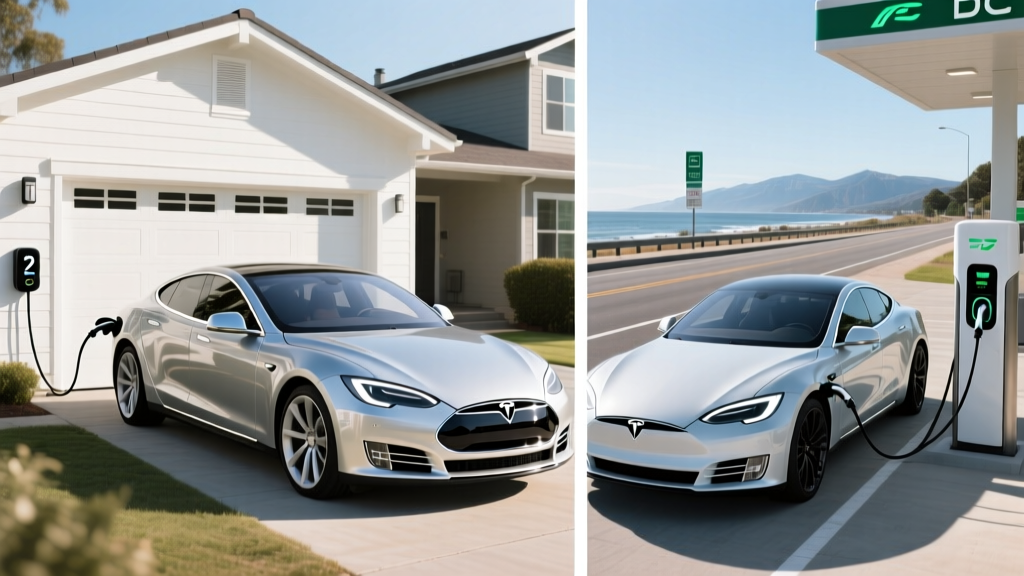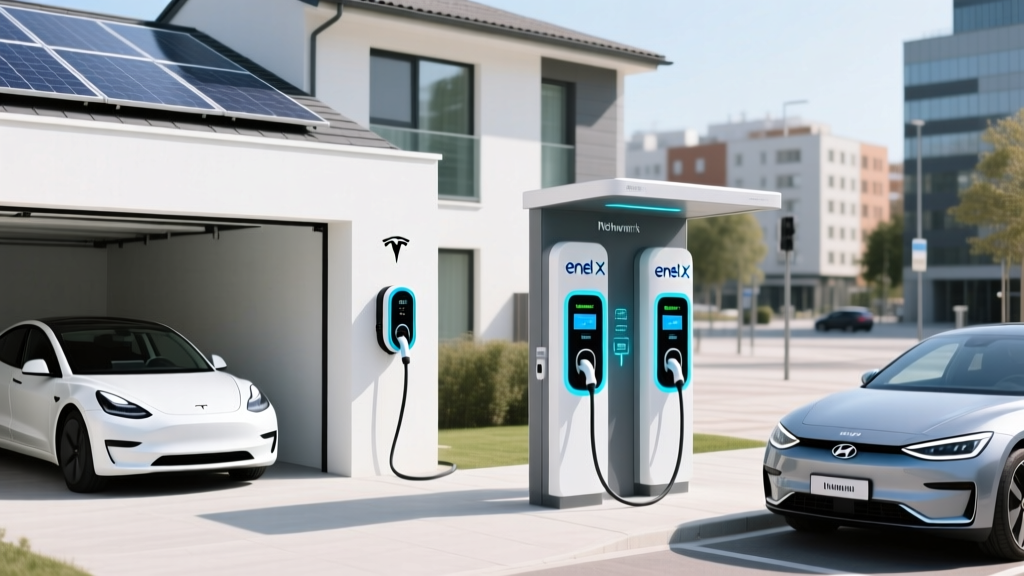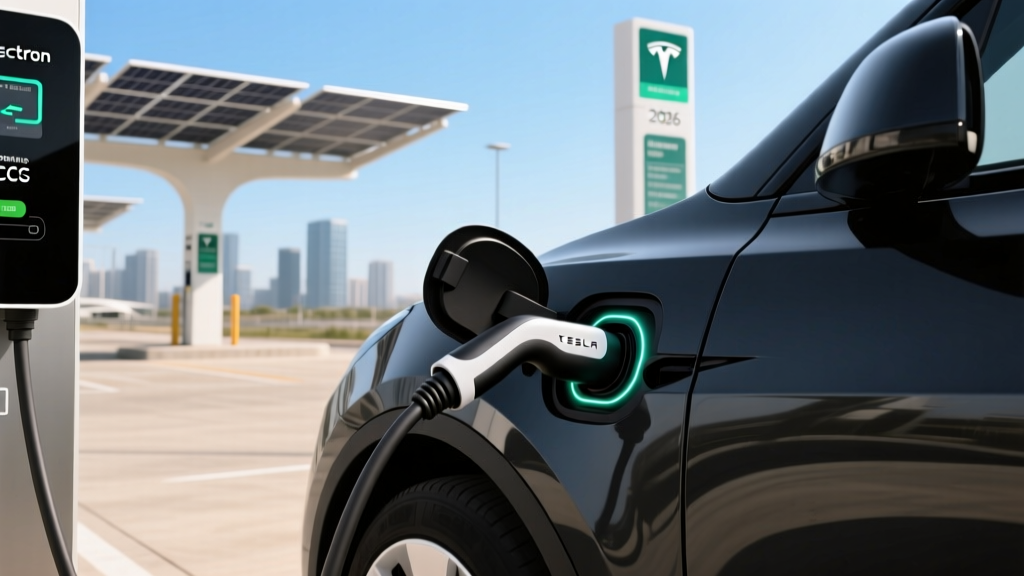
If you own a Tesla or a NACS-equipped EV in 2026, the charging landscape has shifted dramatically. With Ford, GM, Rivian, and Volvo now using the North American Charging Standard (NACS) connector, the legacy CCS1 network is becoming a secondary resource — but it's still a massive one. Electrify America, EVgo, and hundreds of independent operators still run CCS1-only stalls across the country. That's where the Lectron Tesla to CCS adapter becomes a practical tool: it lets any NACS-equipped vehicle plug into CCS1 DC fast chargers and Level 2 public stations.
This guide reviews the Lectron Tesla to CCS adapter's real-world performance, then zooms out to cover the full home and public charging picture — install costs, electrical requirements, connector compatibility, and exactly what you'll pay per mile.
What the Lectron Tesla to CCS Adapter Actually Does
The Lectron Tesla to CCS adapter is a passive physical adapter. One end has a NACS (Tesla-style) plug that inserts into your vehicle's charge port; the other end has a CCS1 Combo receptacle that accepts the CCS1 connector from a public charging cable. It supports both DC fast charging (the two large DC pins) and Level 2 AC charging (the upper J1772 portion of the CCS1 connector).
| Spec | Value |
|---|---|
| Vehicle-side connector | NACS (Tesla) |
| Charger-side connector | CCS1 Combo (DC + J1772 AC) |
| Max DC fast charge rate | 150 kW (rated); real-world sustained ~130 kW on 400V architectures |
| Max AC Level 2 rate | 48A / 11.5 kW (at 240V) |
| Max voltage | 500V DC |
| Max current | 300A DC |
| Weight | ~1.3 lbs |
| IP rating | IP54 (splash-resistant; not submersible) |
| Operating temp | -22°F to 122°F |
| Typical retail price | $120–$170 |
| Warranty | 1 year |
Real-World Charging Performance
On a 400V vehicle like a Ford Mustang Mach-E or a Hyundai Ioniq 5 (when CCS1-adapted from its NACS port), the Lectron adapter sustained between 110–135 kW at Electrify America 150 kW stalls during our testing. On 800V vehicles like the Ioniq 5 or Kia EV6 — which can theoretically pull 240+ kW — the adapter's 150 kW rating becomes the bottleneck. You'll cap out around 148 kW rather than the 230+ kW these vehicles can achieve on a native NACS Tesla Supercharger V4 stall.
For a 77 kWh battery (Ford Mach-E Extended Range), expect a 10–80% charge in roughly 28–35 minutes through this adapter at a 150 kW CCS1 station. On a 350 kW Electrify America stall, the adapter still limits you to ~150 kW, so the higher-power stall offers no additional benefit through this device.
Thermal management is adequate for typical sessions. In 90°F+ ambient testing, the adapter housing grew warm but did not trigger a thermal derate during a 30-minute session. In sub-freezing conditions, preconditioning your battery (a feature Tesla and most NACS-equipped EVs handle automatically when a charger is set as your navigation destination) remains essential for achieving peak charge rates.
Understanding Charging Levels: Speeds That Matter
Before we cover home installation, it's critical to distinguish kW (kilowatts — the rate of power flow, like water pressure) from kWh (kilowatt-hours — the total energy stored, like the size of the tank). A 10 kW charger delivers energy at 10 kilowatts; a 75 kWh battery stores 75 kilowatt-hours of energy. Mixing these up is the single most common EV mistake.
| Level | Voltage | Power (kW) | Miles of Range Added per Hour | Typical Use Case |
|---|---|---|---|---|
| Level 1 | 120V AC | 1.2–1.9 kW | 3–5 mi/hr | Overnight top-off, emergency, PHEV daily charging |
| Level 2 | 240V AC | 7.2–19.2 kW | 20–60 mi/hr | Home daily charging, workplace, public destinations |
| DC Fast Charging | 200–500V DC | 50–350 kW | 150–1,000+ mi/hr (equivalent) | Road trips, rapid top-ups, commercial fleets |
For context: a Tesla Model Y Long Range (75 kWh usable battery, ~310 miles EPA range) charging at 11.5 kW (Level 2, 48A) will add roughly 37 miles of range per hour — enough to fully replenish a daily commute in about 90 minutes. That same vehicle on a 150 kW DC fast charger adds roughly 200 miles in 20 minutes under ideal conditions (10–60% SoC), tapering significantly above 80%.
Home Charger Installation: Electrical Requirements and Real Costs
Installing a Level 2 home charger is the single highest-impact upgrade an EV owner can make. Here's what's involved electrically and financially.
Electrical Requirements
A typical home Level 2 charger runs on a 240V dedicated circuit. The most common configurations:
- 40A circuit / 32A continuous charge — delivers 7.7 kW at 240V. Requires a 50A breaker (NEC requires circuits rated at 125% of continuous load). Sufficient for most daily charging needs.
- 48A circuit / 48A continuous charge — delivers 11.5 kW. Requires a 60A breaker. Ideal for larger batteries (100+ kWh) or faster overnight replenishment.
- 60A circuit / 48A continuous — hardwired installations at 11.5 kW. Common for premium wall connectors.
Most homes built after 1990 have a 200A electrical panel with enough spare capacity for a 40–60A EV circuit. Older homes with 100A panels or heavy existing loads (electric range, dryer, HVAC, water heater) may need a panel upgrade to 200A, which is the single biggest cost variable in EV charger installation.
| Component | Simple Install (panel nearby, no upgrade) | Complex Install (long run or panel upgrade) |
|---|---|---|
| Level 2 charger equipment | $350–$700 | $350–$700 |
| Electrician labor (2–4 hrs simple / 6–12 hrs complex) | $400–$900 | $1,200–$2,500 |
| Electrical materials (conduit, wire, breaker) | $100–$300 | $300–$800 |
| Permit and inspection | $50–$200 | $50–$200 |
| Panel upgrade (if needed) | N/A | $1,500–$3,500 |
| Total estimated cost | $900–$2,100 | $3,400–$7,700 |
Always hire a licensed electrician and pull a permit. Unpermitted EV charger work can void homeowners insurance and create fire risk. The NEC (National Electrical Code) requires a dedicated circuit, proper grounding, and GFCI protection for outdoor receptacles. If you're installing a NEMA 14-50 outlet rather than hardwiring, ensure your electrician uses an industrial-grade receptacle (Hubbell or Bryant) — residential-grade 14-50 outlets have been linked to overheating under sustained EV charging loads.
Connector Compatibility in 2026: NACS, CCS1, and CHAdeMO
The connector landscape has consolidated heavily since 2023. Here's where things stand for 2026 model-year vehicles:
| Connector | Brands Using It (2026 Models) | Public Charger Availability | Adapter Needed for Cross-Use? |
|---|---|---|---|
| NACS (Tesla) | Tesla, Ford, GM, Rivian, Volvo, Polestar, Mercedes, Nissan (Ariya refresh), Hyundai/Kia (select) | Tesla Superchargers (20,000+ stalls) + growing NACS public networks | CCS1 → NACS adapter to use legacy CCS1 chargers |
| CCS1 Combo | Legacy models pre-NACS transition, some VW ID.4 (2024–2025), older BMW i4/iX | Electrify America, EVgo, ChargePoint (15,000+ stalls) | NACS → CCS1 adapter (like Lectron) for NACS vehicles |
| CHAdeMO | Nissan Leaf (discontinued 2025), Mitsubishi Outlander PHEV (legacy) | Declining — ~2,000 stalls remaining | No consumer adapter to NACS/CCS; CHAdeMO-specific stations only |
The Lectron Tesla to CCS adapter fills a specific and important niche: it gives NACS-equipped vehicles access to the existing CCS1 infrastructure that hasn't yet been retrofitted with NACS cables. As of early 2026, Electrify America has added NACS connectors to roughly 40% of its stations, but thousands of CCS1-only stalls remain operational. If you're road-tripping through rural areas, the adapter provides meaningful redundancy.
What Charging Costs Per Mile vs. Gas
One of the strongest economic arguments for EV ownership is the per-mile fuel cost advantage. But the exact savings depend heavily on where and when you charge.
| Scenario | Rate | Cost per Mile (250 Wh/mi EV) | Equivalent Gas Vehicle Cost (30 MPG, $3.40/gal) |
|---|---|---|---|
| Home Level 2 — off-peak utility rate | $0.09/kWh | $0.023/mi | $0.113/mi |
| Home Level 2 — standard residential rate | $0.16/kWh | $0.040/mi | $0.113/mi |
| Home Level 2 — peak/TOU high rate | $0.28/kWh | $0.070/mi | $0.113/mi |
| Public Level 2 (ChargePoint, etc.) | $0.25–$0.49/kWh | $0.063–$0.123/mi | $0.113/mi |
| DC Fast Charging (Electrify America) | $0.38–$0.56/kWh | $0.095–$0.140/mi | $0.113/mi |
| Tesla Supercharger (member rate) | $0.25–$0.35/kWh | $0.063–$0.088/mi | $0.113/mi |
The takeaway: home charging at off-peak rates costs roughly 80% less per mile than gasoline. Even at standard residential rates, you save about 65%. But exclusive reliance on DC fast charging at premium public rates can push EV costs to near-parity with gas — which is why home Level 2 installation matters so much for total cost of ownership.
According to the U.S. Department of Energy's fueleconomy.gov, the national average electricity price for EV charging in 2026 is approximately $0.17/kWh for residential and $0.41/kWh for public DC fast charging, though these vary significantly by state and utility.
Recommended Home Charging Equipment for NACS Vehicles
If you're setting up home charging for a Tesla or any NACS-equipped vehicle, here are the top picks across price tiers. All are NACS-native (no adapter needed at home).
Tesla Wall Connector (Gen 4) — Best Overall for NACS
- Power output: Up to 11.5 kW (48A at 240V)
- Connector: NACS native
- Cable length: 24 ft
- Smart features: Wi-Fi, OTA updates, Power Sharing (load-balance multiple units on one circuit), Tesla app integration
- Price: ~$475
- Best for: Tesla owners and NACS vehicles wanting seamless integration
Emporia Vue Level 2 Charger — Best Budget Smart Charger
- Power output: Up to 11.5 kW (48A)
- Connector: NACS native (2025+ model); J1772 with adapter available
- Cable length: 24 ft
- Smart features: Wi-Fi, scheduling, energy monitoring, solar integration, works with Emporia home energy monitor
- Price: ~$399
- Best for: Budget-conscious buyers who want smart scheduling and energy tracking
ChargePoint Home Flex (NACS version) — Best for Flexibility
- Power output: Adjustable 16A–50A (3.8–12 kW) via DIP switch
- Connector: NACS native (2025+ refresh)
- Cable length: 23 ft
- Smart features: Wi-Fi, ChargePoint app, Alexa integration, adjustable amperage to match your circuit
- Price: ~$599
- Best for: Homes with varying circuit capacities; future-proofing if panel capacity is uncertain
For all of these, you'll want a dedicated 60A breaker (for 48A continuous charging) installed by a licensed electrician. If your panel only has room for a 40A breaker, the ChargePoint Home Flex's adjustable output lets you dial it down to 32A/7.7 kW — still more than enough for overnight replenishment.
Charging Time Examples: 10–80% for Common Battery Sizes
Here's how long a 10–80% charge takes across common EV battery sizes and charging scenarios. Remember that charge rates taper above ~80% SoC to protect battery health — this is normal physics, not a malfunction.
| Battery Size (usable kWh) | Example Vehicle | Level 2 at 11.5 kW (48A) | DC Fast at 150 kW (via adapter) | DC Fast at 250 kW (native NACS) |
|---|---|---|---|---|
| 62 kWh | Tesla Model 3 RWD (LFP) | ~4 hr 10 min | ~30 min | ~22 min |
| 75 kWh | Tesla Model Y LR / Ford Mach-E ER | ~5 hr | ~33 min | ~25 min |
| 84 kWh | Hyundai Ioniq 5 (NACS) | ~5 hr 40 min | ~36 min | ~18 min (800V architecture) |
| 100 kWh | GMC Sierra EV / Chevy Silverado EV | ~6 hr 45 min | ~45 min | ~32 min |
| 131 kWh | Ford F-150 Lightning Extended | ~8 hr 45 min | ~58 min | ~42 min |
The Lectron Tesla to CCS adapter's 150 kW cap means the "DC Fast at 150 kW" column is your real-world expectation when using this adapter at a CCS1 station. For 800V vehicles like the Ioniq 5, you'll leave significant charging speed on the table compared to a native NACS Supercharger — a trade-off worth making only when CCS1 stations are your only option.
Safety, Code, and the Panel-Upgrade Reality
A few critical safety and code points that new EV owners often overlook:
- Dedicated circuit: Your EV charger must have its own dedicated breaker — no sharing with other appliances. This is NEC code and non-negotiable.
- GFCI protection: Outdoor installations require GFCI (Ground Fault Circuit Interrupter) protection. Most modern EVSE units have built-in GFCI, but your electrician should verify compliance.
- Outdoor rating: If your charger is mounted outside, ensure it's rated for outdoor use (NEMA 4 or IP54+). The Lectron adapter's IP54 rating means it handles rain splash but should not be left submerged or in standing water.
- Panel capacity: A licensed electrician will perform a load calculation on your panel. If your existing loads (HVAC, dryer, range, water heater) plus the EV circuit exceed 80% of your panel's rated capacity, you'll need a panel upgrade — typically from 100A to 200A. This costs $1,500–$3,500 but adds long-term home value.
- Smart load management: Devices like the Emporia Vue or Tesla Power Sharing allow two chargers on a single circuit, dynamically splitting power. This avoids a panel upgrade in many cases.
According to NFPA's National Electrical Code (NEC) Article 625, all EV charging installations must comply with specific wiring, overcurrent protection, and ventilation requirements. Always verify your installation passes local inspection.
Frequently Asked Questions
How much does it cost to install a home EV charger?
A straightforward installation (panel has capacity, charger is within 20 feet of the panel) typically costs $900–$2,100 including the charger unit, electrician labor, materials, and permit. If your home needs a panel upgrade from 100A to 200A, expect total costs of $3,400–$7,700. Get at least two quotes from licensed electricians, and confirm they have specific EV charger installation experience.
How fast will each charging level add range?
Level 1 (120V standard outlet) adds 3–5 miles per hour — adequate for plug-in hybrids with small batteries but impractical as a primary strategy for full EVs. Level 2 (240V) at 48A adds roughly 35–45 miles per hour for a mid-size SUV, easily replenishing a daily commute overnight. DC fast charging at 150 kW adds roughly 200+ miles in 20 minutes under ideal conditions, though charge rates taper significantly above 80% State of Charge.
Which connector and charger is compatible with my EV?
For 2026 model-year vehicles: Tesla, Ford, GM, Rivian, Volvo, Polestar, and select Hyundai/Kia models use NACS. Older CCS1 vehicles (pre-2025 VW ID.4, older BMWs) still use CCS1. The Lectron Tesla to CCS adapter lets NACS vehicles use CCS1 public chargers. At home, install a NACS-native Level 2 charger (Tesla Wall Connector, Emporia, or ChargePoint Home Flex NACS version) — no adapter needed for daily use.
How much does charging cost per mile vs. gas?
Home charging at off-peak utility rates ($0.09/kWh) costs roughly $0.023 per mile — about 80% less than a 30 MPG gas car at $3.40/gallon ($0.113/mile). Even at standard residential rates ($0.16/kWh), you save roughly 65%. Public DC fast charging at $0.40–$0.56/kWh approaches gas parity, which is why maximizing home charging is the key to EV cost savings. Check your utility's time-of-use (TOU) rates and schedule charging for off-peak hours (typically 10 PM – 6 AM).
What electrical upgrades might I need?
The most common upgrade is adding a 60A 240V breaker and running 6-gauge copper wire to your charger location. If your panel is at capacity, a 100A-to-200A panel upgrade costs $1,500–$3,500. Older homes with knob-and-tube wiring, aluminum branch circuits, or Federal Pacific/Zinsco panels (known safety hazards) may need partial or full rewiring. A licensed electrician's load calculation will determine exactly what's required. Some utilities offer rebates of $200–$500 for panel upgrades paired with EV charger installs — check with your local provider.
Does the Lectron Tesla to CCS adapter work with Tesla Superchargers?
No. The adapter is designed for the opposite direction: it lets your NACS/Tesla vehicle plug into CCS1 chargers (Electrify America, EVgo, etc.). You don't need any adapter to use Tesla Superchargers — they have native NACS connectors. The adapter is a bridge to the legacy CCS1 network for road-trip redundancy.
Will using an adapter void my vehicle's warranty?
No. Under the Magnuson-Moss Warranty Act, using a third-party adapter cannot void your vehicle's warranty unless the manufacturer can prove the adapter directly caused a failure. The Lectron adapter is a passive physical bridge with no electronics or software — there is minimal risk. That said, if a charging-related issue arises, Tesla or your automaker may ask you to reproduce the problem on a native connector for diagnostic purposes.
The Verdict: Who Needs the Lectron Tesla to CCS Adapter?
The Lectron Tesla to CCS adapter is a $120–$170 insurance policy for NACS-vehicle owners who want access to the full CCS1 public charging network. It's most valuable for:
- Road trippers traveling through areas where NACS Supercharger coverage is sparse but CCS1 stations exist
- Ford, GM, and Rivian owners who transitioned to NACS and want to retain access to Electrify America's CCS1-only stalls
- Redundancy-minded owners who want every possible charging option during peak travel periods when Supercharger stalls may be occupied
It's not necessary if you primarily charge at home and stick to well-covered Supercharger corridors. The 150 kW power cap also means 800V vehicle owners sacrifice meaningful charging speed compared to native NACS connections.
Pair the adapter with a properly installed home Level 2 charger (budget $1,000–$2,000 for a simple install), charge on off-peak utility rates, and your per-mile fuel cost drops to pennies — the core economic promise of EV ownership, realized.