What the Range Rover PHEV's Battery Actually Needs
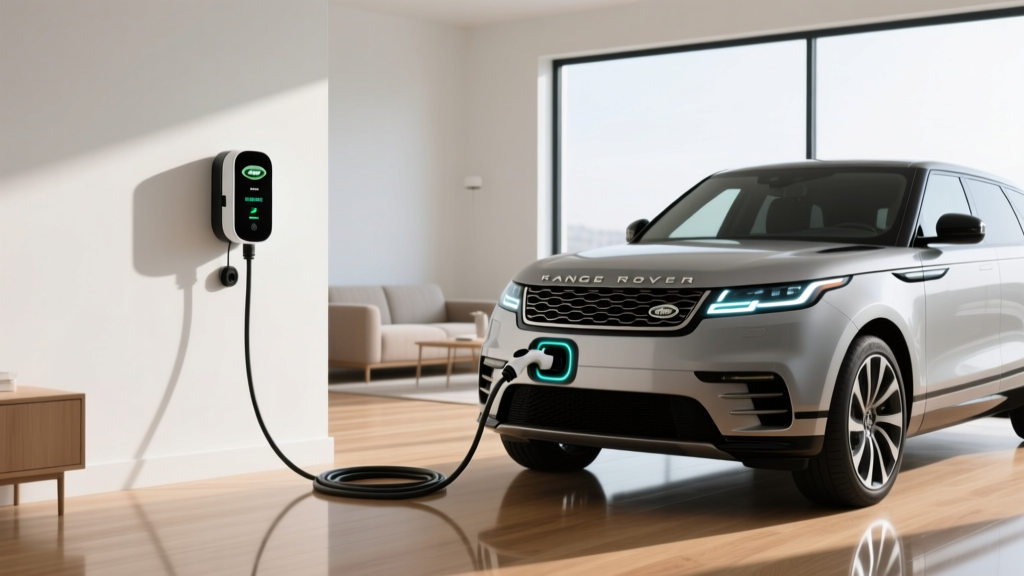
The current-generation Land Rover Range Rover PHEV (badged P440e / P460e depending on trim) carries a 31.8 kWh usable lithium-ion battery pack paired with a 3.0-liter inline-six turbocharged engine. That battery is roughly three to four times larger than the packs found in most plug-in hybrids, which fundamentally changes how you should think about charging it. With an EPA-estimated 48 miles of electric-only range (real-world expect 38–44 miles in mixed driving, and closer to 30–34 miles in cold weather or sustained highway speeds above 70 mph), daily electric commuting is realistic — but only if your home charging setup can replenish that 31.8 kWh overnight.
The Range Rover PHEV uses a CCS1 (Combined Charging System) connector and accepts up to 7.2 kW on Level 2 AC charging via its onboard charger. Unlike some PHEVs that also support DC fast charging, the Range Rover PHEV is AC-only — there is no DC fast-charge port. This is a critical distinction that shapes your entire charging strategy.
| Spec | Value |
|---|---|
| Battery (usable) | 31.8 kWh, lithium-ion (NMC) |
| EPA electric-only range | 48 miles (real-world ~38–44 mi) |
| EPA combined (gas + electric) | 540+ miles total |
| MPGe (electric mode) | 42 MPGe |
| Onboard charger (AC max) | 7.2 kW |
| DC fast charging | Not available |
| Connector | CCS1 (J1772 for AC, CCS pins unused) |
| Level 2 charge time (0–100%) | ~5 hours at 7.2 kW |
| Level 1 charge time (0–100%) | ~27 hours at 1.2 kW |
| Combined system output | 434 hp (P440e) / 454 hp (P460e) |
| 0–60 mph | 5.8 sec (P440e) |
| Base MSRP (2026 SE P440e) | ~$111,500 |
| Battery warranty | 8 years / 100,000 miles |
Sources: EPA fueleconomy.gov, Land Rover USA specifications.
Charging Levels Explained: What Each Adds Per Hour
Understanding the three charging levels — and what each means for a 31.8 kWh battery — is essential before you invest in equipment.
| Level | Voltage | Max Power (kW) | Miles of Range Added/Hour | 0–100% Time (31.8 kWh) |
|---|---|---|---|---|
| Level 1 (standard outlet) | 120V | 1.2 kW | ~4–5 mi/hr | ~27 hours |
| Level 2 (home / public AC) | 240V | 7.2 kW (vehicle-limited) | ~22–25 mi/hr | ~5 hours |
| DC Fast Charging | 400V+ | N/A | N/A | Not supported |
kW vs. kWh — the critical distinction: kW (kilowatts) measures power — how fast energy flows into the battery, like water pressure from a hose. kWh (kilowatt-hours) measures energy — the total amount stored, like the size of the bucket. The Range Rover PHEV has a 31.8 kWh bucket and can accept a maximum flow rate of 7.2 kW.
Even though many public Level 2 stations deliver 11 kW or 19.2 kW, the Range Rover's onboard charger caps intake at 7.2 kW. Plugging into a 19.2 kW station won't charge you faster — the vehicle is the bottleneck, not the station.
Real-World Range Reality: The EPA's 48-mile electric estimate assumes moderate temperatures and mixed driving. Expect 38–44 miles in typical conditions, 30–34 miles in sub-40°F weather or at sustained highway speeds, and up to 48 miles in gentle city driving above 50°F. Heating the cabin in winter draws directly from the battery, cutting range by 20–30%.
Home Charger Installation: Electrical Requirements & Costs
Level 1 charging at 1.2 kW would take over 26 hours to fill the Range Rover PHEV's battery from empty — clearly impractical for daily use. A Level 2 home charger is effectively mandatory for this vehicle.
Electrical Requirements
To support the vehicle's 7.2 kW maximum, you need a 240V circuit rated for at least 40 amps (which delivers up to 9.6 kW to the outlet, more than the vehicle can use, but allows headroom and future-proofing). A 32-amp circuit (7.7 kW) also works but provides less buffer.
- Circuit: 240V, 40A dedicated breaker (minimum 32A acceptable)
- Wire gauge: 6 AWG copper (for 40A) or 8 AWG (for 32A)
- Outlet: NEMA 14-50 (most common) or hardwired connection
- Panel capacity: Your electrical panel must have room for a double-pole 40A breaker and sufficient total amperage headroom
Panel Upgrade Considerations
Homes with 100-amp electrical service often lack capacity for a 40A EV circuit alongside existing loads (HVAC, electric oven, dryer). A panel upgrade to 200 amps may be required, especially in older homes. This is one of the largest variables in installation cost and should be assessed by a licensed electrician during a site visit.
Installation Cost Breakdown
| Component | Low Estimate | High Estimate | Notes |
|---|---|---|---|
| Level 2 charger (hardware) | $350 | $750 | 32A–48A smart charger |
| Electrician labor (standard install) | $500 | $1,500 | Short run from panel to garage |
| Electrical permit | $50 | $250 | Varies by municipality |
| Panel upgrade (if needed) | $1,500 | $4,000 | 100A → 200A service upgrade |
| Conduit/wire (long runs) | $200 | $1,200 | If panel is far from garage |
| Total (no panel upgrade) | $900 | $2,700 | |
| Total (with panel upgrade) | $2,400 | $7,150 |
Many utilities offer rebates of $250–$500 for Level 2 charger installation, and some states provide additional incentives. Check your local utility's EV program page before scheduling work. Always hire a licensed electrician and pull a permit — unpermitted electrical work can void homeowner's insurance coverage.
Connector Compatibility & Adapter Options
The Range Rover PHEV uses a CCS1 connector for AC charging. In practice, this means you plug in using the upper J1772 portion of the CCS connector — the two lower DC pins are present but unused since the vehicle does not support DC fast charging.
| Connector Type | Compatible? | Adapter Needed? | Notes |
|---|---|---|---|
| J1772 (standard AC) | Yes — native | None | All Level 2 public and home chargers |
| CCS1 (AC portion) | Yes — native | None | Vehicle port is CCS1; AC uses J1772 pins |
| NACS (Tesla) | Yes, with adapter | Tesla-to-J1772 adapter (~$250–$400) | Needed for Tesla Wall Connector or Destination Chargers |
| CHAdeMO | No | N/A | DC-only standard; not relevant for PHEV AC charging |
Do you need a NACS adapter? Only if you plan to use a Tesla Wall Connector at home (which uses a NACS plug) or Tesla Destination Chargers at hotels. For all standard public Level 2 stations (ChargePoint, EVgo, Blink, Electrify America AC), the native J1772 plug works directly. Since the Range Rover PHEV cannot DC fast charge, Tesla Superchargers are irrelevant even with an adapter.
Cost to Charge: Home vs. Public vs. Gas
One of the strongest arguments for a PHEV like the Range Rover is the ability to run daily commutes on electricity at a fraction of the cost of premium gasoline. Here's what the numbers look like.
| Scenario | Rate | Cost to Fill 31.8 kWh | Cost Per Mile (electric) |
|---|---|---|---|
| Home (off-peak utility rate) | $0.13/kWh | $4.13 | $0.10/mi |
| Home (average US rate) | $0.17/kWh | $5.41 | $0.13/mi |
| Public Level 2 (network pricing) | $0.30/kWh | $9.54 | $0.23/mi |
| Gas mode (20 MPG combined, $4.20/gal premium) | — | — | $0.21/mi |
The takeaway: Charging at home on an off-peak rate cuts your per-mile cost to roughly half what you'd spend on premium gasoline. Even at average utility rates, electric mode is cheaper. Public Level 2 charging, however, can actually cost more per mile than gas — so home charging is where the economics work best for PHEV owners.
The Range Rover PHEV requires premium 91-octane gasoline when the engine runs. With a combined fuel economy of approximately 20 MPG in gas-only mode, highway-heavy road trips will cost significantly more than electric-only commuting. The financial case for the PHEV rests on maximizing electric miles — which means charging every night.
Recommended Home Chargers for the Range Rover PHEV
Since the vehicle caps at 7.2 kW, you don't need the most powerful charger on the market — but investing in a 40A or 48A unit future-proofs your garage for a future full EV. Here are three proven options.
ChargePoint Home Flex (up to 50A)
- Power output: Up to 12 kW (48A); Range Rover will draw 7.2 kW max
- Connector: J1772 (native fit for Range Rover PHEV)
- Cable length: 23 feet
- Smart features: Wi-Fi, app scheduling, Alexa integration, energy tracking
- Price: ~$550–$650
- Why it works: Amperage adjustable via app (set to 32A on a 40A circuit). UL-listed, ENERGY STAR certified. Works with utility demand-response programs.
Emporia Level 2 EV Charger (48A)
- Power output: Up to 11.5 kW (48A)
- Connector: J1772
- Cable length: 24 feet
- Smart features: Real-time energy monitoring, solar integration, app control
- Price: ~$399–$450
- Why it works: Budget-friendly smart charger with detailed kWh tracking. Good for owners who want to monitor exactly how much they spend per charge session.
Tesla Wall Connector (48A)
- Power output: Up to 11.5 kW (48A)
- Connector: NACS (requires J1772 adapter for Range Rover)
- Cable length: 24 feet
- Smart features: Wi-Fi, power sharing between two units, OTA updates
- Price: ~$475 (charger) + ~$250–$400 (adapter)
- Why it works: Premium build quality and sleek design. Only choose this if you already own a Tesla or plan to add one — otherwise the adapter cost and hassle aren't justified.
For most Range Rover PHEV owners, the ChargePoint Home Flex is the best balance of features, native J1772 compatibility, and future-proofing. Set it to 32A if your circuit is rated for 40A (continuous loads should not exceed 80% of breaker capacity per the National Electrical Code).
Safety, Code & Outdoor Installation Considerations
EV charger installation is not a DIY project. The National Electrical Code (NEC) treats EV charging as a continuous load, meaning the circuit must be rated for 125% of the charger's maximum draw. A 32A charger requires a 40A breaker; a 40A charger requires a 50A breaker.
- Dedicated circuit: The EV charger must have its own breaker — no sharing with other appliances.
- GFCI protection: NEC 2020 and later require GFCI protection for all 240V EV outlets. Many modern chargers include built-in GFCI; if yours does not, the breaker must be GFCI-type.
- Outdoor rating: If installing outside or in an unenclosed carport, use a charger rated NEMA 4 (weatherproof). The ChargePoint Home Flex and Emporia both carry NEMA 4 ratings.
- Cable management: A 23–24 foot cable is heavy. Install a wall-mounted cable organizer to prevent tripping hazards and connector strain.
- Permit and inspection: Most jurisdictions require an electrical permit and post-installation inspection. Skipping this can cause issues during a home sale or insurance claim.
Public Charging Strategy for a PHEV
Because the Range Rover PHEV does not support DC fast charging, your public charging options are limited to Level 2 AC stations. This is perfectly adequate for topping up while parked at work, a shopping center, or a hotel — but it means you cannot rely on highway fast-charging corridors the way a full BEV owner can.
At a public 7.2 kW Level 2 station, expect to add approximately 22–25 miles of electric range per hour of parking. A two-hour shopping trip can fully replenish the battery. Use apps like PlugShare or ChargePoint to locate nearby Level 2 stations and check real-time availability.
On long road trips, the Range Rover PHEV seamlessly switches to hybrid mode using its gasoline engine. The total combined range exceeds 540 miles, eliminating range anxiety entirely. The PHEV's value proposition is electric for daily driving, gasoline for long trips — not electric for everything.
Frequently Asked Questions
How much does it cost to install a home EV charger for the Range Rover PHEV?
Expect $900–$2,700 for a standard installation (charger + electrician + permit) if your electrical panel has sufficient capacity. If a panel upgrade from 100A to 200A is needed, total costs can reach $2,400–$7,150. The charger hardware itself runs $350–$750.
How fast will each charging level add range to the Range Rover PHEV?
Level 1 (120V) adds roughly 4–5 miles of range per hour — far too slow for daily use with a 31.8 kWh battery. Level 2 (240V) adds 22–25 miles per hour, fully replenishing the battery in about 5 hours. DC fast charging is not supported.
Which connector and charger is compatible with my Range Rover PHEV?
The Range Rover PHEV uses a CCS1 port, but for AC charging it accepts the standard J1772 connector. Any Level 2 home charger with a J1772 plug will work natively. A Tesla-to-J1772 adapter is only needed if you install a Tesla Wall Connector.
How much does charging cost per mile compared to gas?
At a typical home electricity rate of $0.13–$0.17/kWh, electric mode costs $0.10–$0.13 per mile. Premium gasoline at $4.20/gallon with 20 MPG combined costs about $0.21 per mile. Home charging cuts your per-mile cost roughly in half.
What electrical upgrades might I need for a home charger?
At minimum, you need a dedicated 240V/40A circuit with a double-pole breaker. Homes with older 100-amp electrical service may need a panel upgrade to 200 amps, which adds $1,500–$4,000. A licensed electrician can assess your panel's remaining capacity during a site visit.
Can I use a DC fast charger with the Range Rover PHEV?
No. The Range Rover PHEV only supports AC charging up to 7.2 kW. DC fast charging stations (50–350 kW) cannot deliver power to this vehicle. This is common among PHEVs — the battery is sized for daily electric commuting, not highway fast-charging.
Does the Range Rover PHEV qualify for the federal EV tax credit?
Under current IRS §30D rules, PHEVs must meet battery capacity (≥7 kWh), critical mineral sourcing, battery component manufacturing, MSRP caps ($80,000 for SUVs), and buyer income limits to qualify. The Range Rover PHEV's MSRP exceeds $80,000 in most trims, which disqualifies it from the federal credit regardless of other criteria. Always verify current eligibility at IRS.gov or consult a tax professional.