If you've been researching electrified vehicles, you've likely encountered the term extended range electric vehicle (EREV) — a powertrain that pairs a battery-electric drive with a gasoline generator to extend total driving range. Models like the BMW i3 REx, the Chevrolet Volt (in EREV-like operation), and newer entries such as the Ram 1500 REV with its available range-extending generator have put EREVs back on the map. But charging an EREV comes with its own set of considerations: smaller battery packs, different usage patterns, and questions about whether a full Level 2 home install is even worth it.
This guide breaks down everything you need to charge an EREV — from Level 1 trickle charging to DC fast charging, home installation costs, connector compatibility, and what you'll actually pay per mile compared to a gas vehicle.
What Makes EREV Charging Different from a Full BEV?
An extended range electric vehicle (EREV) typically carries a smaller battery pack than a full battery-electric vehicle (BEV). Where a BEV might have 75–100 kWh of usable capacity, most EREVs operate with 15–40 kWh batteries. The onboard gasoline generator kicks in once the battery depletes, keeping the electric motor powered without the driver needing to plug in.
This creates a unique charging profile:
- Smaller batteries charge faster at any given kW rate — a 20 kWh pack at 7.2 kW reaches full in under 3 hours.
- DC fast charging may be limited — many EREVs cap at 50 kW or lack DC fast-charge capability entirely.
- Daily charging needs are modest — if your commute is under 30 miles, Level 1 (120V) may suffice.
- The gas generator eliminates range anxiety but introduces fuel costs when the battery depletes.
Understanding the distinction between kW (kilowatts) and kWh (kilowatt-hours) is critical here. kW measures the rate of power delivery — like water pressure from a hose. kWh measures the total energy stored — like the size of the bucket. A 7.2 kW charger filling a 20 kWh EREV battery will take roughly 2.8 hours (20 kWh ÷ 7.2 kW).
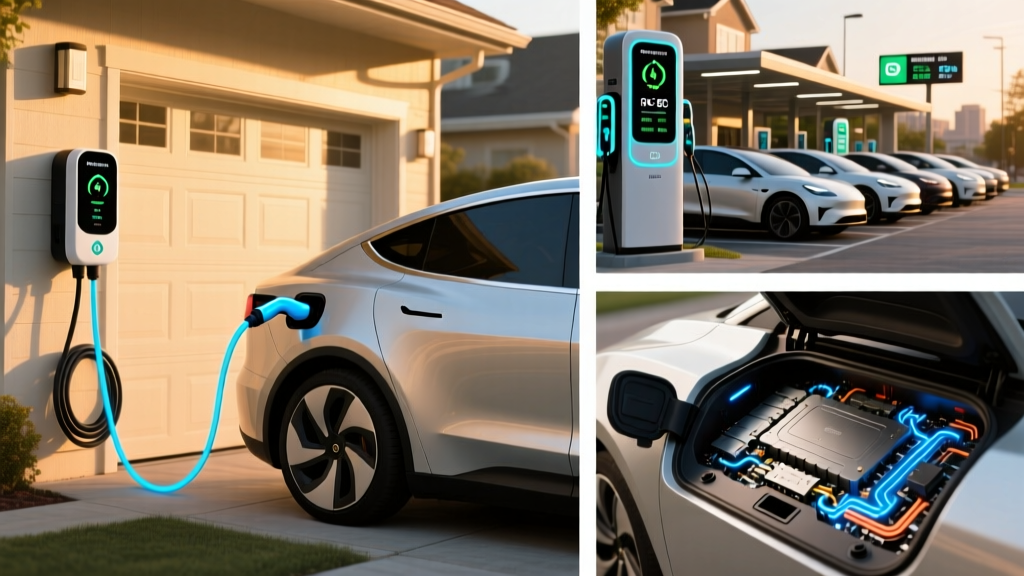
Charging Levels Explained: Speeds, Range Added, and EREV Fit
| Level | Voltage | Power (kW) | Miles of Range Added per Hour | Typical EREV Full Charge Time (20–40 kWh) |
|---|---|---|---|---|
| Level 1 | 120V AC | 1.2–1.9 kW | 3–5 mi/hr | 10–33 hours |
| Level 2 | 240V AC | 3.3–19.2 kW | 12–75 mi/hr | 1–6 hours |
| DC Fast Charge | 400–800V DC | 50–350 kW | 150–1,200+ mi/hr | 15–45 min (10–80%) |
Level 1: The Outlet You Already Have
Every EREV ships with a Level 1 charging cord that plugs into a standard 120V household outlet. At 1.4–1.9 kW, you'll add roughly 3–5 miles of electric range per hour. For a 30-mile electric-range EREV, an overnight session (10 hours) can restore the full battery. This is viable for low-mileage commuters but painfully slow if you drain the battery daily.
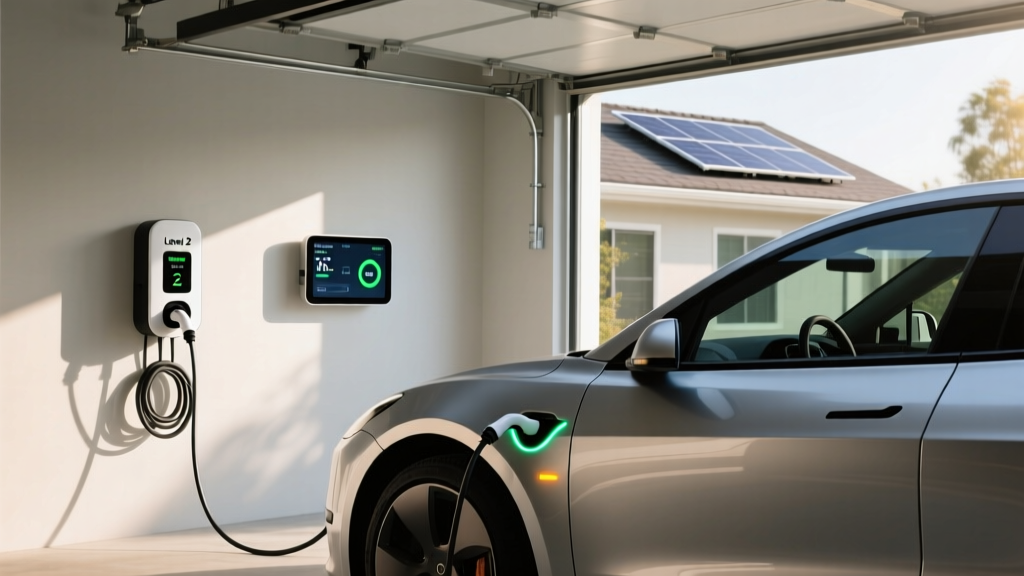
Level 2: The Home Charging Sweet Spot
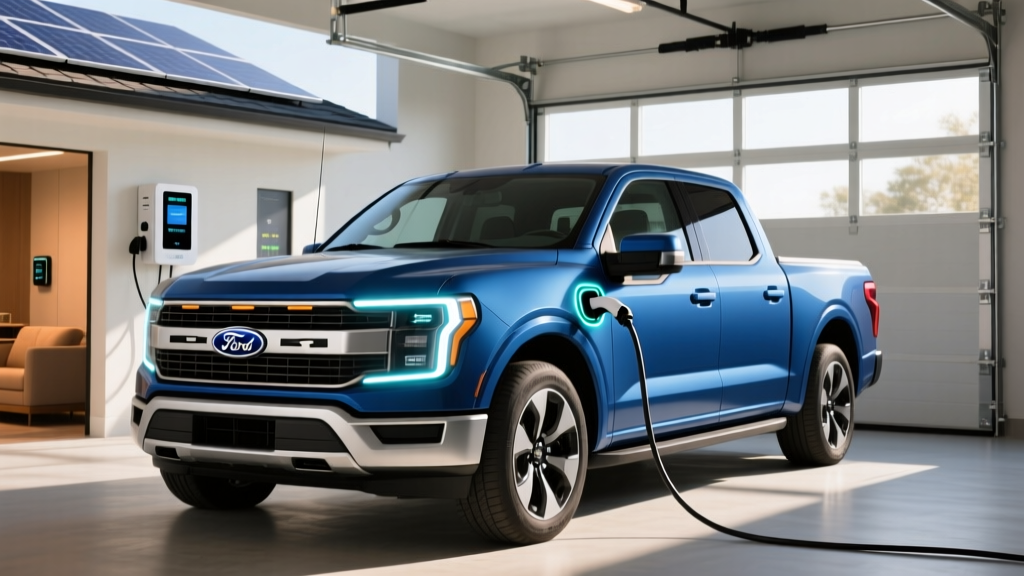
A 240V Level 2 charger — the same voltage as your electric dryer — delivers 3.3 to 19.2 kW. Most EREVs have onboard chargers rated for 6.6 or 7.2 kW, meaning even a 48-amp (11.5 kW) wall unit will only charge at the vehicle's maximum acceptance rate. A 7.2 kW charge rate adds roughly 25–30 miles of range per hour, easily refilling a 30 kWh EREV battery in about 4 hours.
DC Fast Charging: Limited but Growing for EREVs
Not all EREVs support DC fast charging. Those that do — typically at 50 kW — can go from 10–80% state of charge (SoC) in roughly 20–35 minutes depending on battery size. The charging curve matters: peak kW is only sustained in the 10–50% SoC window, then tapers significantly above 80% to protect battery health. Always precondition your EREV's battery (if the vehicle supports it) before arriving at a DC fast charger to achieve peak charge rates.
Home Charger Installation: Costs, Electrical Requirements, and Gotchas
Installing a Level 2 home charger is the single most impactful upgrade for EREV owners. Here's what it actually involves and what it costs.
Electrical Requirements
A typical Level 2 installation requires:
- 240V dedicated circuit — similar to an electric oven or dryer circuit
- 40-amp or 50-amp breaker — a 40A breaker supports up to 32A continuous charging (9.6 kW); a 50A breaker supports 40A continuous (9.6 kW). For a 60A circuit, you get 48A continuous (11.5 kW).
- NEMA 14-50 outlet (for plug-in chargers) or hardwired connection (required for circuits above 50A per NEC code)
- Sufficient panel capacity — your electrical panel must have spare amperage headroom. A 200A panel is standard for modern homes; older 100A panels often need upgrading.
Panel Upgrade: The Hidden Cost
If your home has a 100A panel or your existing loads are near capacity, adding a 40–50A EV circuit may require a panel upgrade to 200A. This is common in homes built before 1990. Panel upgrades cost $1,500–$3,500 and are the single biggest variable in installation pricing.
Installation Cost Breakdown
| Component | Cost Range | Notes |
|---|---|---|
| Level 2 Charger Equipment | $300–$750 | Smart Wi-Fi chargers at 32–48A |
| Electrician Labor | $500–$2,500 | Depends on panel-to-garage distance, conduit run, drywall work |
| Permit & Inspection | $50–$300 | Required in most jurisdictions; varies by city/county |
| Panel Upgrade (if needed) | $1,500–$3,500 | Only if existing panel lacks capacity |
| Total (no panel upgrade) | $850–$3,550 | Most homes with 200A panels |
| Total (with panel upgrade) | $2,350–$7,050 | Older homes with 100A panels |
Always get at least two quotes from licensed electricians. The final spec — breaker size, wire gauge, conduit type — must be determined by a licensed professional evaluating your specific panel and run. Some utilities offer rebates of $250–$500 for Level 2 installations; check your local provider.
Safety and Code Considerations
- Dedicated circuit: Your EV charger must have its own breaker — never share a circuit with other large appliances.
- GFCI protection: NEC 2020 and later requires GFCI protection for 14-50 receptacles used for EV charging in garages and outdoors. Hardwired chargers may exempt you from this requirement in some jurisdictions.
- Outdoor rating: If your charger is installed outside, ensure the unit carries a NEMA 4 or NEMA 4X rating for weather resistance.
- Cable management: Wall-mount a cable organizer to prevent tripping hazards and cord damage.
Connector Compatibility: Which Plug Does Your EREV Use?
The EV connector landscape has shifted dramatically. Here's where things stand for EREV owners in 2026:
| Connector | Type | Used By | Notes |
|---|---|---|---|
| NACS (J3400) | AC + DC | Tesla (all models), Ford, GM, Rivian, Volvo, Polestar, and most major OEMs by 2025–2026 | Now the dominant North American standard. Compact, reliable. |
| CCS1 (J1772 Combo) | AC + DC | VW ID.4, Hyundai Ioniq 5 (pre-2025), BMW iX, legacy non-Tesla EVs | Being phased out by most OEMs in favor of NACS by 2026–2027. |
| CHAdeMO | DC only | Nissan Leaf (discontinued), Mitsubishi Outlander PHEV | Effectively dead in North America; minimal new infrastructure. |
| J1772 | AC only | All non-Tesla EVs for Level 1/2 (pre-NACS adoption) | NACS vehicles include a J1772 adapter for legacy Level 2 stations. |
For EREV buyers: Check your specific model's charge port. Newer EREVs entering the market are increasingly adopting NACS. If your EREV has a CCS1 port, you'll need a CCS-to-NACS adapter (~$200–$250) to access Tesla Superchargers, which now welcome non-Tesla vehicles at many locations. Conversely, NACS-equipped vehicles typically ship with a J1772 adapter for older public Level 2 stations.
Charging Cost: EREV Per-Mile Economics vs. Gas
One of the strongest arguments for any electrified vehicle is lower per-mile energy cost. Here's how EREV charging stacks up against gasoline in realistic 2026 scenarios.
| Scenario | Rate | Cost per kWh | EREV Efficiency (kWh/mi) | Cost per Mile |
|---|---|---|---|---|
| Home (off-peak utility rate) | $0.10–$0.15/kWh | $0.12 avg | 0.30 kWh/mi | $0.036 |
| Home (standard rate) | $0.14–$0.22/kWh | $0.18 avg | 0.30 kWh/mi | $0.054 |
| Public Level 2 (network pricing) | $0.25–$0.49/kWh | $0.35 avg | 0.30 kWh/mi | $0.105 |
| DC Fast Charge (EA, EVgo, etc.) | $0.35–$0.65/kWh | $0.48 avg | 0.30 kWh/mi | $0.144 |
| Gasoline (25 MPG combined, $3.50/gal) | $3.50/gal | — | — | $0.140 |
The takeaway: Charging an EREV at home on off-peak rates costs roughly $0.03–$0.05 per mile — about one-quarter the cost of gasoline. Even public DC fast charging is roughly cost-competitive with gas. The economics strongly favor home charging. According to fueleconomy.gov, the average EV driver saves $600–$1,200 annually on fuel compared to a 25 MPG gas vehicle, and EREV owners who charge daily and rarely trigger the gas generator can match or exceed those savings.
When the EREV's gas generator activates, fuel economy typically drops to 30–40 MPG combined (depending on the model), which is still competitive with conventional vehicles but eliminates the electric cost advantage. The strategy is simple: charge daily, drive electric, and let the generator be your safety net — not your primary fuel source.
Recommended Home Chargers for EREV Owners
Because EREVs have smaller batteries and lower onboard charger limits (typically 6.6–7.2 kW), you don't necessarily need a 48-amp charger. A 32-amp unit (7.7 kW) will max out most EREV onboard chargers. However, investing in a higher-amperage unit future-proofs your garage for a BEV upgrade down the road.
Emporia Vue Level 2 Smart Charger
- Power: 48A / 11.5 kW (hardwired) or 40A / 9.6 kW (NEMA 14-50)
- Connector: J1772 (NACS adapter available)
- Cable length: 24 ft
- Smart features: Wi-Fi, energy monitoring, scheduling via app, solar integration
- Price: ~$399
- Best for: Budget-conscious EREV owners who want smart scheduling and energy tracking
ChargePoint Home Flex
- Power: Up to 50A / 12 kW (adjustable via DIP switches, NEMA 14-50 or hardwired)
- Connector: J1772 (NACS version available)
- Cable length: 23 ft
- Smart features: Wi-Fi, Alexa/Google integration, ChargePoint network access, scheduled charging
- Price: ~$549–$699
- Best for: Owners who want a proven brand with robust app and public network integration
Tesla Wall Connector
- Power: 48A / 11.5 kW (hardwired, 60A circuit required)
- Connector: NACS native (includes J1772 adapter for non-Tesla vehicles)
- Cable length: 24 ft
- Smart features: Wi-Fi, over-the-air updates, power sharing between two units, load management
- Price: ~$475
- Best for: NACS-equipped EREV owners or mixed Tesla/non-Tesla households
For most EREV owners, a 32–40A charger is sufficient. But if you plan to eventually own a full BEV with 80+ kWh of battery, spending slightly more on a 48A hardwired unit now avoids a costly re-installation later. Consult the National Electrical Code (NEC) or a licensed electrician to determine the right circuit size for your panel.
Charging Time Examples: Real EREV Battery Sizes
Here's what charging times look like for common EREV battery capacities across different charge levels:
| Battery Size | Level 1 (1.4 kW) | Level 2 (7.2 kW) | Level 2 (11.5 kW) | DC Fast (50 kW)* |
|---|---|---|---|---|
| 15 kWh | ~7.5 hrs | ~1.5 hrs | ~1 hr | ~18 min |
| 25 kWh | ~12.5 hrs | ~2.4 hrs | ~1.5 hrs | ~28 min |
| 40 kWh | ~20 hrs | ~3.9 hrs | ~2.4 hrs | ~42 min |
*DC fast charge times assume the EREV supports 50 kW DC charging and the battery accepts peak rate in the 10–50% SoC window. Actual times vary based on battery temperature, preconditioning, and charge curve taper above 80%.
The practical implication: a 25 kWh EREV battery charged overnight on Level 2 at 7.2 kW will be full well before you wake up. Level 1 is a viable backup but becomes tedious as a daily strategy if your electric-only range exceeds 25 miles and you want to avoid the gas generator entirely.
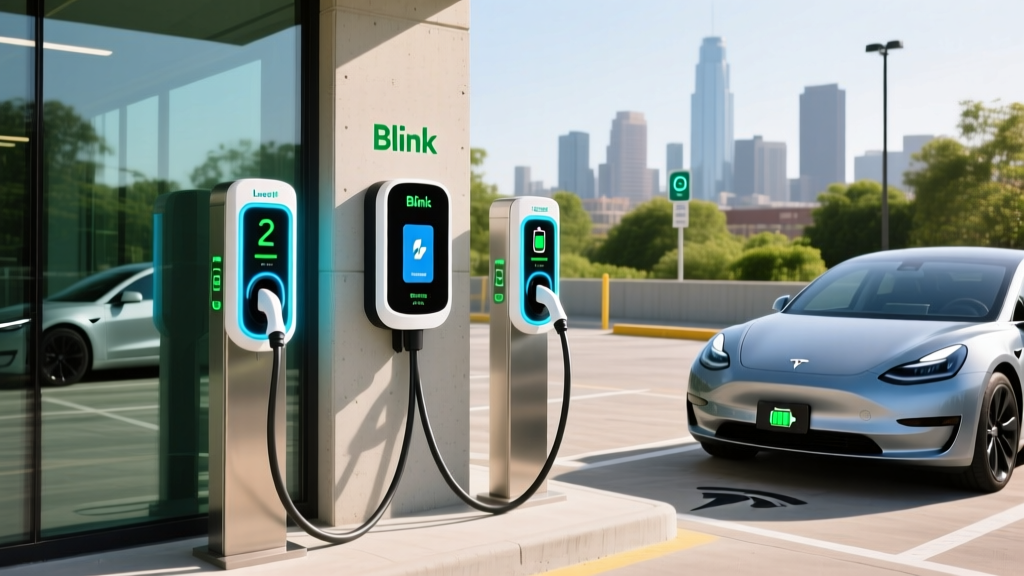
Public Charging Strategy for EREV Owners
EREV owners have a luxury that BEV owners don't: you don't strictly need public charging. The gas generator ensures you'll never be stranded. But strategic public charging still saves money and reduces emissions.
When to use public chargers:
- On road trips where you want to maximize electric-only miles and minimize fuel stops
- At destinations with free or discounted Level 2 charging (workplaces, shopping centers, hotels)
- When your home charging is unavailable (travel, apartment living, power outages)
Network recommendations:
- Tesla Supercharger (now open to NACS-equipped non-Teslas): Most reliable network, 150–350 kW stalls, competitive pricing at $0.25–$0.40/kWh in many markets.
- Electrify America: Largest non-Tesla DC fast network, 150–350 kW, pricing $0.35–$0.55/kWh. Reliability has improved but verify station status in-app before driving there.
- EVgo: Strong urban coverage, 50–350 kW, subscription plans available for frequent users.
- ChargePoint: Best for Level 2 destination charging; widespread at retail and workplace locations.
For a complete and current list of public charging networks and their reliability scores, consult resources like PlugShare or the Alternative Fuels Data Center.
Frequently Asked Questions
How much does it cost to install a home EV charger for my EREV?
Expect $850–$3,550 for a standard Level 2 installation in a home with a 200A panel. If your home needs a panel upgrade (common with 100A panels in older homes), add $1,500–$3,500, bringing the total to $2,350–$7,050. Equipment itself runs $300–$750; the bulk of cost is electrician labor and permitting.
How fast will each charging level add range to my EREV?
Level 1 (120V) adds 3–5 miles of range per hour. Level 2 (240V at 7.2 kW) adds roughly 25–30 miles per hour — enough to fully recharge most EREVs in 2–4 hours. DC fast charging (50 kW) can add 150+ miles per hour, but many EREVs have limited or no DC fast-charge capability.
Which connector or charger is compatible with my EREV?
Check your vehicle's charge port. Most new EREVs entering the market in 2025–2026 use either NACS or CCS1. NACS is becoming the dominant North American standard. If your EREV has CCS1, a CCS-to-NACS adapter (~$200) unlocks Tesla Supercharger access. All non-Tesla Level 2 chargers with J1772 connectors work with most EREVs, either natively or via adapter.
How much does charging an EREV cost per mile vs. gasoline?
Home charging at off-peak rates costs roughly $0.03–$0.05 per mile — about 75% less than gasoline at $3.50/gal and 25 MPG. Public DC fast charging at $0.48/kWh averages $0.14/mile, roughly equal to gas. The economics strongly favor daily home charging to maximize electric-only driving.
What electrical upgrades might I need for a Level 2 charger?
You'll need a dedicated 240V circuit (40–60A) with a NEMA 14-50 outlet or hardwired connection. If your electrical panel lacks spare capacity — common in homes with 100A service — a panel upgrade to 200A may be required. A licensed electrician can perform a load calculation to determine if your panel can handle the additional circuit. Per the IRS, the federal §30D tax credit does not cover home charging equipment for used vehicles, but the separate §30C alternative fuel vehicle refueling property credit may cover up to $1,000 of home charger installation costs if you live in an eligible census tract.