The Real Answer: It Depends on Your Battery Size and Charging Method
The short answer to "how many kWh to charge an electric car" is that a full charge typically requires between 40 and 100 kWh of energy, depending on the vehicle's usable battery capacity. A Tesla Model Y Long Range needs roughly 75 kWh for a full charge, while a Chevrolet Bolt EV requires about 65 kWh, and a Ford F-150 Lightning Extended Range pulls close to 131 kWh.
But raw kWh is only half the equation. What matters to your wallet is the cost per kWh you pay, the efficiency of your vehicle (measured in kWh per 100 miles), and whether you're charging at home, at a public Level 2 station, or at a DC fast charger. This guide breaks down the energy math, the real-world costs, and the home infrastructure you need to make it work.
kWh (kilowatt-hour) = a unit of energy. Think of it like gallons of gas. Your battery stores a fixed number of kWh (e.g., 75 kWh usable).
kW (kilowatt) = a unit of power, or the rate at which energy flows. Think of it like the diameter of a fuel hose. A 19.2 kW Level 2 charger delivers energy faster than a 7.2 kW charger.
Charging time = battery kWh ÷ charger kW (roughly, before accounting for taper and losses).
How Fast Will Each Charging Level Add Range?
There are three primary charging tiers available to EV owners. Each delivers energy at a different rate, which directly determines how many kWh flow into your battery per hour and how quickly you'll be back on the road.
| Level | Voltage / Amperage | Max Power (kW) | Miles of Range Added per Hour | Best Use Case |
|---|---|---|---|---|
| Level 1 | 120V / 12-16A | 1.4–1.9 kW | 3–5 miles | Overnight top-ups, low-mileage drivers, PHEVs |
| Level 2 | 240V / 16-80A | 3.3–19.2 kW | 12–75 miles | Daily home charging, workplace, destination |
| DC Fast Charge | 400–800V DC | 50–350 kW | 150–1,000+ miles (equivalent per hour) | Road trips, highway corridor stops |
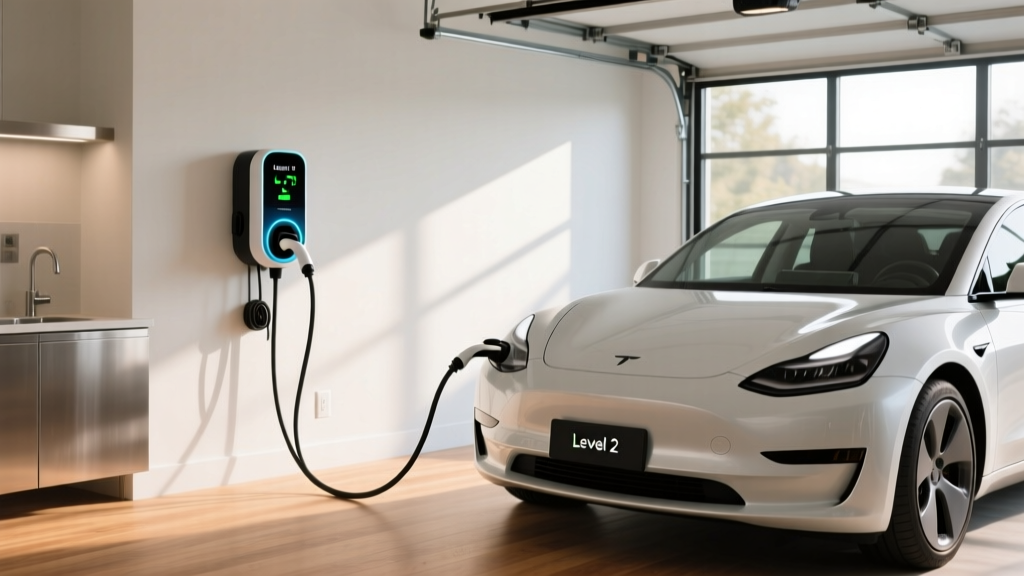
A practical example: if you drive a Hyundai Ioniq 5 (303-mile EPA range, 77.4 kWh usable battery) and arrive home at 40% state of charge, you need roughly 46 kWh to reach full. On a 48-amp (11.5 kW) Level 2 home charger, that takes about 4 to 4.5 hours. On a Level 1 outlet at 1.4 kW, that same session takes nearly 33 hours — which is why dedicated Level 2 is the practical standard for BEV owners.
DC fast charging is fastest in the 10-80% window. Most EVs throttle charge speed significantly above 80% to protect battery health. The Ioniq 5, for instance, peaks at around 233 kW on an 800V DC charger and can complete a 10-80% session in approximately 18 minutes. But that last 20% can add another 15-20 minutes due to the charge curve taper — so plan accordingly and don't DCFC to 100% unless you need every mile for the next leg.
How Much Does It Cost to Install a Home EV Charger?
Home charging is where the economics overwhelmingly favor EV ownership, but installation costs vary dramatically based on your home's electrical infrastructure. Here's a realistic breakdown for a typical 48-amp (11.5 kW) Level 2 hardwired charger installation in 2026.
| Component | Simple Install (Panel Nearby) | Complex Install (Long Run / Panel Upgrade) |
|---|---|---|
| Level 2 Charger Equipment (48A, hardwired) | $400–$700 | $400–$700 |
| Electrician Labor (2-4 hrs simple; 6-12 hrs complex) | $300–$600 | $900–$2,500 |
| Electrical Permit | $50–$150 | $50–$200 |
| Panel Upgrade (100A → 200A, if needed) | Not required | $1,500–$3,500 |
| Conduit, Wire, Breaker (60A circuit for 48A charger) | $100–$200 | $300–$800 |
| TOTAL ESTIMATED RANGE | $850–$1,650 | $3,150–$7,700 |
The biggest cost variable is your electrical panel. A 48-amp Level 2 charger requires a dedicated 60-amp circuit (the National Electrical Code requires circuits to be rated at 125% of the continuous load). If your home has a 200-amp panel with spare capacity, the install is straightforward. If you have an older 100-amp panel already near capacity, you'll likely need a panel upgrade — or you can opt for a lower-amperage charger (16A or 32A) that fits your existing panel.
Some newer solutions like the Span smart panel or load-management devices (e.g., the Emporia VUE with smart splitter) can avoid a full panel upgrade by dynamically managing power draw between your EV charger and other appliances. These add $500-$1,500 in equipment but can save thousands versus a panel replacement.
The IRS §30D tax credit does not cover home charging equipment directly. However, some utilities offer rebates of $200-$500 for Level 2 charger installations, and certain states maintain separate incentive programs. Check with your local utility and the Alternative Fuels Data Center for current programs in your area.
What Electrical Upgrades Might I Need?
Before buying a charger, assess these electrical factors:
- Panel amperage: Check your main breaker — it will say 100A, 150A, or 200A. A 200A panel with at least 50-60A of spare capacity is ideal for a full-speed Level 2 install.
- Available breaker spaces: You need two adjacent slots for a 240V double-pole breaker. If your panel is full, a subpanel or tandem breakers (where code-permitted) may be options.
- Wire run distance: If your garage or parking spot is far from the panel (100+ feet), you'll need thicker-gauge wire (e.g., 4 AWG copper instead of 6 AWG), which increases material cost.
- Grounding and GFCI: NEC 2023 and later editions require GFCI protection for EV charging outlets (NEMA 14-50). Hardwired installations may have different requirements depending on local code — your electrician will handle this.
- Outdoor rating: If your charger is outdoors, it must be rated for outdoor use (NEMA 4 or IP56 minimum). Most quality chargers meet this standard.
If your home was built before 1990, there's a strong chance you have a 100A or 150A panel. Adding a 60A EV circuit to a 100A panel that's already running central AC, an electric range, and an electric dryer will likely trip the main breaker under peak load. Budget for a panel assessment ($150-$300 from a licensed electrician) before committing to a charger purchase.
Which Connector and Charger Is Compatible with My EV?
The connector landscape has consolidated significantly as of 2026, with the North American Charging Standard (NACS) — originally developed by Tesla — now adopted by nearly every major automaker. Here's where things stand:
| Connector | Native Vehicles | Adapter Needed? |
|---|---|---|
| NACS (Tesla) | Tesla (all), Ford (2025+), GM (2025+), Rivian (2025+), Hyundai/Kia (2026+), Volvo/Polestar, BMW, Mercedes | CCS→NACS adapter for legacy CCS vehicles at Superchargers |
| CCS1 (Combo) | Legacy models pre-NACS transition; VW ID.4 (through 2025), some Stellantis models | NACS→CCS adapter to use Tesla Superchargers |
| CHAdeMO | Nissan Leaf (discontinued), Mitsubishi Outlander PHEV (legacy) | Limited adapter options; CHAdeMO infrastructure declining |
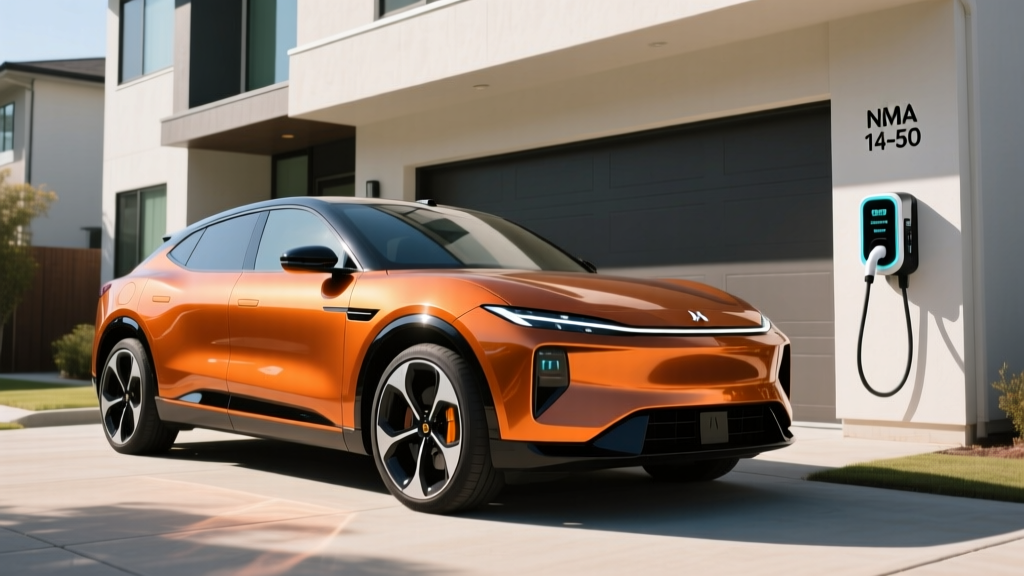
For home Level 2 charging, the connector matters less because all vehicles use the J1772 standard for AC charging — or a NACS connector with an integrated J1772 adapter (as included with Tesla vehicles). When buying a home charger, choose one with the native connector your vehicle uses, or buy a universal charger with a J1772 plug and use your vehicle's adapter.
How Much Does Charging Cost Per Mile vs. Gas?
This is where EV ownership delivers its most tangible financial benefit. The exact cost depends on your local electricity rate, your vehicle's efficiency, and whether you're charging at home or in public.
| Scenario | Rate / Price | Vehicle Efficiency | Cost Per Mile |
|---|---|---|---|
| Home charging (off-peak utility rate) | $0.09/kWh | 3.0 mi/kWh (avg EV) | $0.03/mile |
| Home charging (national avg residential) | $0.17/kWh | 3.0 mi/kWh | $0.057/mile |
| Public Level 2 (network pricing) | $0.30/kWh | 3.0 mi/kWh | $0.10/mile |
| DC Fast Charging (Electrify America, Tesla) | $0.48/kWh | 3.0 mi/kWh | $0.16/mile |
| Gasoline (25 MPG combined vehicle) | $3.30/gallon | 25 MPG | $0.132/mile |
| Gasoline (30 MPG efficient sedan) | $3.30/gallon | 30 MPG | $0.11/mile |
The takeaway: home-charged EVs cost roughly 3 to 6 cents per mile, compared to 11 to 13 cents for a gas car. Over 15,000 miles per year, that's a fuel savings of $1,050 to $1,500 annually. Even public DC fast charging at premium rates is often comparable to or slightly above gasoline costs — which is why home charging access is the single biggest factor in EV ownership satisfaction.
Efficiency varies by model. According to fueleconomy.gov, the Tesla Model 3 Highland achieves 132 MPGe combined (roughly 3.8 mi/kWh), while the Ford F-150 Lightning 4x4 achieves 70 MPGe (about 2.0 mi/kWh). More efficient vehicles convert each kWh into more miles, lowering your cost per mile further.
Charging Time Examples: How Long Does It Really Take?
Here are real-world charging time estimates for common 2026 battery sizes across different charging levels. All times assume a 10-80% charge window, which is the practical range most drivers use (charging to 100% takes disproportionately longer due to the taper above 80%).
| Vehicle (Usable Battery) | Level 1 (1.4 kW) | Level 2, 48A (11.5 kW) | Level 2, 80A (19.2 kW) | DCFC Peak (10-80%) |
|---|---|---|---|---|
| Chevy Equinox EV (85 kWh) | ~42 hrs | ~5.2 hrs | ~3.1 hrs | ~28 min (150 kW peak) |
| Tesla Model Y LR (75 kWh) | ~37 hrs | ~4.6 hrs | ~2.7 hrs | ~22 min (250 kW peak) |
| Hyundai Ioniq 5 (77.4 kWh) | ~38 hrs | ~4.7 hrs | ~2.8 hrs | ~18 min (233 kW peak) |
| Ford F-150 Lightning ER (131 kWh) | ~65 hrs | ~8.0 hrs | ~4.8 hrs | ~41 min (170 kW peak) |
Note that DCFC peak rates are not sustained across the entire session. A vehicle rated for 250 kW peak may only hold that rate between 10-30% SoC, then taper to 150 kW, then 100 kW, then 50 kW as the battery fills. The "10-80% time" is the most honest metric for comparing fast-charge capability, and it's the figure manufacturers and the EPA increasingly highlight.
Recommended Home Level 2 Chargers (2026)
Tesla Wall Connector (Gen 4)
Power: Up to 11.5 kW (48A) on a 60A circuit
Connector: NACS native (J1772 adapter included)
Cable Length: 24 feet
Smart Features: Wi-Fi, OTA updates, Power Sharing for multi-unit installs, access control
Price: ~$475
Best For: Tesla owners and NACS-equipped Ford/GM/Hyundai vehicles
ChargePoint Home Flex
Power: Up to 12 kW (50A) on a 60A circuit (configurable down to 16A)
Connector: J1772 (NACS adapter available)
Cable Length: 23 feet
Smart Features: Wi-Fi, Alexa integration, scheduling, energy tracking via app
Price: ~$649
Best For: Non-Tesla EVs; flexible amperage for older panels
Emporia Level 2 EV Charger
Power: Up to 11.5 kW (48A) on a 60A circuit
Connector: J1772 (NACS version available)
Cable Length: 24 feet
Smart Features: Real-time energy monitoring, solar integration, load management with Emporia VUE panel monitor
Price: ~$399
Best For: Budget-conscious buyers; solar-home integration; panel load management
All three chargers above are hardwired (no plug), which eliminates the NEC GFCI requirement for receptacles and provides a cleaner installation. If you prefer a plug-in unit for portability, the NEMA 14-50 outlet is the standard — but budget for a higher-quality industrial-grade receptacle ($50-$80 versus $10 builder-grade) to avoid overheating issues during sustained charging sessions.
Frequently Asked Questions
How many kWh does it take to fully charge a Tesla Model 3?
The 2026 Tesla Model 3 Long Range has a usable battery capacity of approximately 75 kWh. Accounting for roughly 10% charging losses (heat, battery management system overhead), you'll draw about 82-83 kWh from the grid for a full 0-100% session. At the national average residential rate of $0.17/kWh, that's roughly $14 for a complete charge yielding about 340 miles of EPA range.
Can I charge my EV on a regular 120V household outlet?
Yes, but slowly. Level 1 charging at 120V/12A delivers about 1.4 kW, adding 3-5 miles of range per hour. A full charge for a 75 kWh battery would take over 50 hours. Level 1 is practical for PHEVs with small batteries (10-18 kWh) or for BEV owners who drive fewer than 30 miles per day and can top up overnight. For any BEV with regular daily driving over 40 miles, Level 2 is strongly recommended.
Does fast charging damage my EV battery?
Occasional DC fast charging does not meaningfully degrade modern EV batteries, thanks to sophisticated thermal management systems. However, exclusive reliance on DCFC (never using Level 2) has been shown in studies to slightly accelerate degradation over hundreds of cycles. Best practice: charge at home on Level 2 for daily use and reserve DC fast charging for road trips. Most manufacturers warrant batteries for 8 years/100,000 miles with a minimum 70% capacity retention threshold.
Is it cheaper to charge at home or at a public station?
Home charging is almost always cheaper. Residential electricity averages $0.17/kWh nationally, while public Level 2 networks typically charge $0.25-$0.40/kWh and DC fast chargers run $0.40-$0.60/kWh. Some public stations offer free charging as a perk (workplaces, shopping centers, hotels), but these are becoming less common. If your home electricity rate is on a time-of-use plan, overnight off-peak rates can drop to $0.07-$0.10/kWh, making home charging extraordinarily economical.
What size circuit breaker do I need for a Level 2 charger?
The breaker must be rated at 125% of the charger's maximum continuous draw. A 48-amp charger requires a 60-amp breaker. A 32-amp charger requires a 40-amp breaker. A 16-amp charger requires a 20-amp breaker. Always have a licensed electrician verify your panel's capacity before selecting a charger amperage — oversizing the charger relative to your panel's spare capacity will cause nuisance tripping or, worse, overheating.
How do I know if my utility offers EV charging rebates?
Check your utility's website for an "EV programs" or "electric vehicle" section, or search the Alternative Fuels Data Center's state incentive database. Common programs include $200-$500 rebates for Level 2 charger purchase and installation, discounted time-of-use rates for EV owners, and in some cases free or subsidized smart chargers. These programs change frequently and vary by zip code.