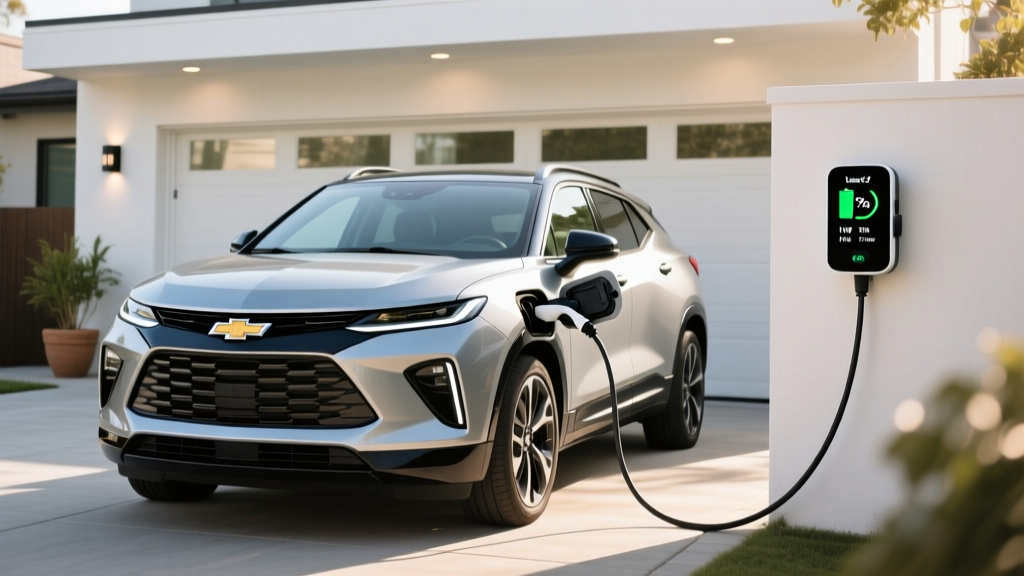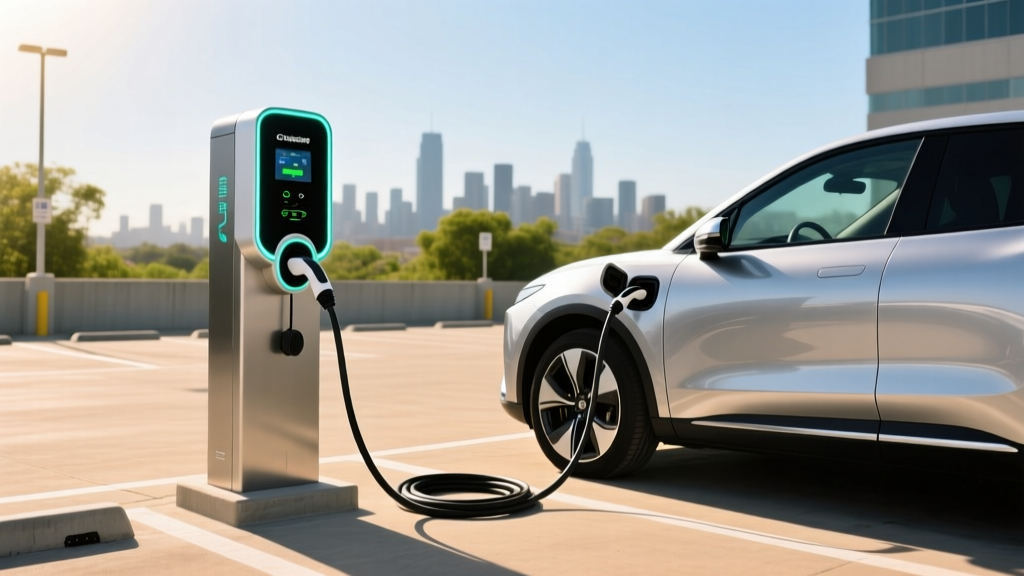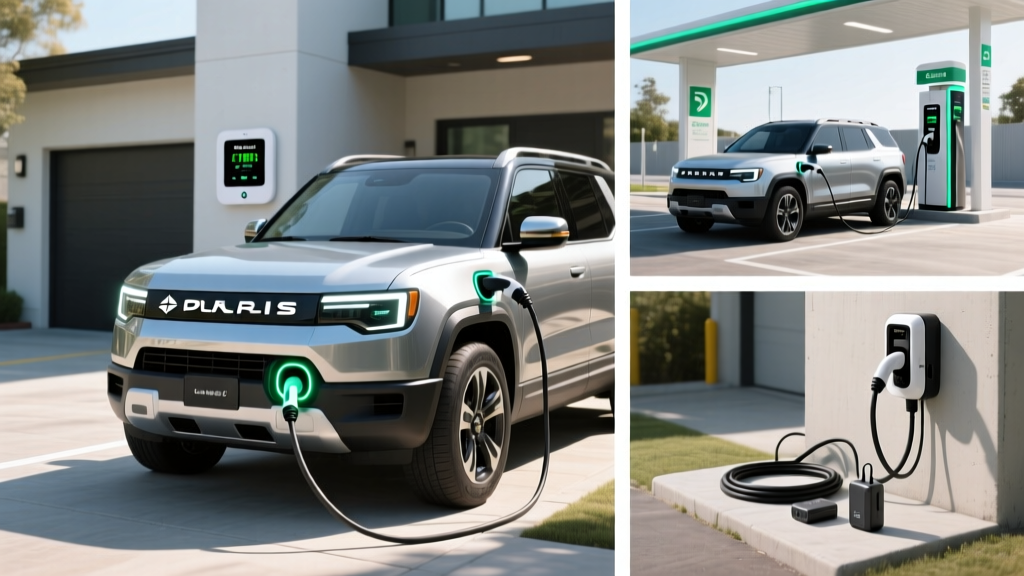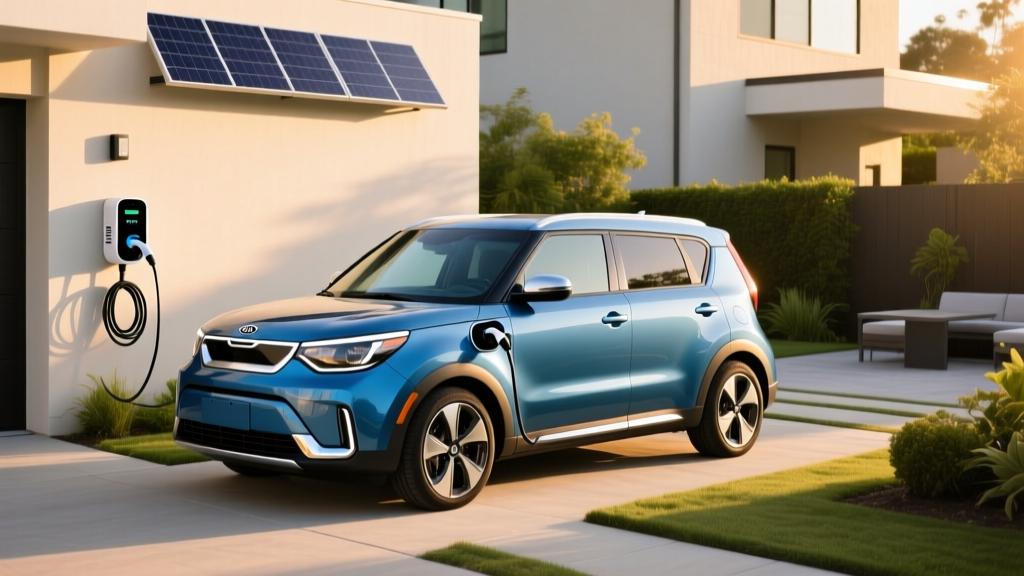
If you are researching the Kia Soul electric car range and wondering how charging actually works day-to-day, this guide covers the 2026 Kia Soul EV (the long-range variant sold in select markets and carried over from the 2023–2025 model years) alongside a complete home and public charging playbook. The Soul EV pairs a 64 kWh battery with a compact crossover footprint, making it one of the most practical entry points into full electric ownership — but only if you understand what its range sticker really means, how fast it charges, and what your home electrical panel can support.
Kia Soul EV Range: EPA vs. Real-World Expectations
The 2026 Kia Soul EV (Long Range, EV GT-Line / EV EX trims where offered) carries an EPA-estimated range of 243 miles on a full charge, powered by a 64 kWh usable lithium-ion (NMC) battery pack. That figure is competitive with the Chevrolet Bolt EUV and Kona Electric, but the real-world number depends heavily on how and where you drive.
Real-World Highway (65–75 mph): ~200–220 miles
Cold Weather (below 32°F): ~160–185 miles (30–35% loss typical for NMC packs without a heat pump in older Soul EV trims)
City / Mixed Commute (mild weather): ~230–250 miles — regenerative braking in stop-and-go traffic can actually exceed the EPA combined figure
The Soul EV's efficiency is rated at approximately 120 MPGe combined (roughly 28 kWh/100 mi), per fueleconomy.gov. That's solid for its boxy aerodynamic profile, but highway driving at sustained speeds pushes consumption closer to 32–35 kWh/100 mi, which is why highway range drops noticeably.
| Spec | 2026 Kia Soul EV (Long Range) |
|---|---|
| EPA Range | 243 miles |
| Battery (Usable) | 64 kWh, NMC chemistry |
| Efficiency | 120 MPGe combined / ~28 kWh/100 mi |
| Max DC Fast Charge | 100 kW (peak) |
| 10–80% DC Fast Charge | ~54 minutes |
| Level 2 Onboard Charger | 7.2 kW |
| Connector | CCS1 (J1772 + DC pins) |
| 0–60 mph | ~7.0 seconds |
| Horsepower | 201 hp / 291 lb-ft torque |
| Base MSRP (est.) | ~$35,000–$38,000 (trim dependent) |
| Battery Warranty | 10 years / 100,000 miles (capacity ≥70%) |
Charging Levels Explained: kW, Miles Per Hour, and the Soul EV
Before buying any equipment, you need to understand the three charging tiers. The most common EV literacy mistake is confusing kW (power — how fast energy flows) with kWh (energy — how much the battery holds). The Soul EV's battery holds 64 kWh of energy; a charger delivering 7.2 kW will, in theory, fill that from empty in about 9 hours.
| Level | Voltage / Power | Miles Added per Hour | Soul EV Full Charge Time | Best For |
|---|---|---|---|---|
| Level 1 (120V) | 1.2–1.4 kW | ~4–5 mi/hr | ~45–50 hours | Emergency / trickle top-off |
| Level 2 (240V) | 3.3–19.2 kW (Soul EV accepts 7.2 kW max) | ~25–30 mi/hr at 7.2 kW | ~9–10 hours (0–100%) | Daily home charging, overnight |
| DC Fast Charge | 50–350 kW (Soul EV peaks at 100 kW) | ~200–280 mi/hr at peak | 10–80% in ~54 min | Road trips, quick top-ups |
Important charge-curve note: The Soul EV's peak 100 kW rate only holds roughly between 10–40% State of Charge (SoC). Above 60%, the rate tapers to ~50 kW, and above 80% it drops below 20 kW to protect the NMC cells. This is why manufacturers quote 10–80% times rather than 0–100% — charging the final 20% on DC fast can take as long as the first 70%.
Connector Compatibility: CCS1, NACS, and What the Soul EV Uses
The 2026 Kia Soul EV sold in North America uses the CCS1 (Combo 1) connector — the J1772 AC plug with two additional DC fast-charge pins below it. Kia has committed to transitioning future models to the Tesla NACS standard starting with 2025–2026 model-year vehicles, but the Soul EV's platform has retained CCS1 through its current generation.
| Connector | Used By | Soul EV Compatible? | Adapter Needed? |
|---|---|---|---|
| CCS1 | Kia, Hyundai, VW, BMW, Ford (legacy), GM (legacy), Rivian (legacy) | Yes — native | None |
| NACS (Tesla) | Tesla, Ford (2025+), GM (2025+), Rivian (2025+), upcoming Kia/Hyundai models | No — not native | CCS1-to-NACS adapter (~$200–$300) required for Tesla Superchargers |
| CHAdeMO | Nissan Leaf (legacy), Mitsubishi Outlander PHEV | No | Not practical — adapters rare and expensive |
If you plan to use Tesla Superchargers (which now welcome non-Tesla vehicles at many locations via the "Magic Dock" CCS1 adapter or with your own NACS adapter), verify station compatibility on the Tesla app before relying on it for a road trip. Kia's official NACS adapter for CCS1-equipped vehicles is expected to be available through dealerships; check with your local Kia dealer for the latest availability and pricing.
Home Charger Installation: Costs, Electrical Requirements, and Panel Upgrades
Installing a Level 2 home charger is the single most impactful upgrade for EV ownership. For the Kia Soul EV with its 7.2 kW onboard charger, a 240V / 40-amp circuit feeding a 32-amp (continuous) Level 2 EVSE is the ideal match — it delivers the full 7.2 kW the car can accept.
Electrical Requirements
- Circuit: Dedicated 40A, 240V breaker (NEMA 14-50 outlet or hardwired)
- Wire gauge: 6 AWG copper (for runs up to ~50 ft); 4 AWG for longer runs
- Panel capacity: Your home's main panel must have at least 40A of spare capacity. A licensed electrician will perform a load calculation per NEC Article 220.
- GFCI protection: Required for outdoor receptacles per NEC 2023+; hardwired EVSEs often avoid this requirement and are preferred for reliability
- Permit: Most jurisdictions require an electrical permit ($50–$200) and a post-install inspection
Panel Upgrade: The Hidden Cost
Homes built before 2000 often have 100A or 125A main panels that may not support an additional 40A continuous load. Upgrading to a 200A panel typically costs $1,500–$3,500 depending on your utility, local labor rates, and whether a service mast replacement is needed. This is the single biggest variable in home charging costs and one that many online guides undercount.
| Component | Typical Cost Range | Notes |
|---|---|---|
| Level 2 EVSE (Equipment) | $350–$750 | Smart Wi-Fi chargers cost more; basic units are cheaper |
| Electrician Labor (standard install) | $500–$1,500 | Depends on run length, wall type, conduit needs |
| Electrical Permit | $50–$200 | Varies by municipality |
| Panel Upgrade (if needed) | $1,500–$3,500 | 100A → 200A service upgrade |
| Total (no panel upgrade) | $900–$2,450 | Most homes with 200A panels fall here |
| Total (with panel upgrade) | $2,400–$5,950 | Older homes, high-load panels |
Federal incentive note: The IRS §30D Alternative Fuel Vehicle Refueling Property Credit offers up to $1,000 (30% of equipment + installation costs) for home charger installs, but only if your home is in a qualifying census tract (typically rural or low-income areas). Verify eligibility at irs.gov before counting on this credit. Some utilities also offer rebates of $200–$500 for Level 2 installations — check with your local provider.
Level 2 Charger Recommendations for the Kia Soul EV
Since the Soul EV caps at 7.2 kW, you don't need a 48-amp charger — but buying one gives you headroom for a future EV with a larger onboard charger. Below are three proven options.
Emporia Vue Level 2 EVSE
- Power: 48A max (11.5 kW), adjustable down to 32A
- Connector: J1772 (CCS1 compatible)
- Cable: 24 ft
- Smart features: Wi-Fi, app scheduling, solar integration, energy monitoring
- Price: ~$399
- Best for: Budget-conscious buyers who want smart scheduling and energy tracking
ChargePoint Home Flex
- Power: Up to 50A (12 kW), adjustable via dip switch
- Connector: J1772 (CCS1 compatible); NACS version also available
- Cable: 23 ft
- Smart features: Wi-Fi, app scheduling, Alexa integration, detailed session history
- Price: ~$649
- Best for: Proven reliability, strong brand support, excellent app
Grizzl-E Smart
- Power: 40A max (9.6 kW)
- Connector: J1772 (CCS1 compatible)
- Cable: 24 ft
- Smart features: Wi-Fi, OCPP-compatible, rugged outdoor rating
- Price: ~$499
- Best for: Cold-climate durability (rated to -40°F), outdoor installs
Any of these will fully charge the Soul EV overnight in approximately 9 hours. For the Soul EV specifically, a 32A charger (7.7 kW) is sufficient to max out its 7.2 kW onboard charger; the extra amperage of a 48A unit is future-proofing.
Charging Cost: Home vs. Public vs. Gas
One of the strongest ownership arguments for the Soul EV is fuel cost savings. Here's what charging actually costs in 2026 across common scenarios, assuming the Soul EV's ~28 kWh/100 mi consumption.
| Scenario | Cost per kWh | Cost per 100 Miles | Cost per Mile | Annual (12,000 mi) |
|---|---|---|---|---|
| Home (off-peak utility rate) | $0.10–$0.14 | $2.80–$3.92 | $0.028–$0.039 | $336–$470 |
| Home (standard residential avg.) | $0.16–$0.18 | $4.48–$5.04 | $0.045–$0.050 | $538–$605 |
| Public Level 2 (ChargePoint, etc.) | $0.25–$0.40 | $7.00–$11.20 | $0.070–$0.112 | $840–$1,344 |
| DC Fast Charge (Electrify America, EVgo) | $0.35–$0.55 | $9.80–$15.40 | $0.098–$0.154 | $1,176–$1,848 |
| Gasoline equivalent (25 MPG avg., $3.30/gal) | — | $13.20 | $0.132 | $1,584 |
If you charge primarily at home on off-peak rates, the Soul EV costs roughly 70–80% less per mile to "fuel" than a comparable gas car getting 25 MPG. Even exclusive public DC fast charging is roughly cost-neutral with gasoline — the savings come from home charging. This is why a Level 2 home install is the most important financial decision in EV ownership.
Safety, Code, and Installation Best Practices
A proper Level 2 installation should follow these guidelines to ensure safety and code compliance:
- Dedicated circuit: Your EVSE must be on its own breaker — never share a circuit with appliances, HVAC, or other heavy loads
- Hardwired vs. plug-in: Hardwired EVSEs eliminate the GFCI nuisance-tripping issue common with NEMA 14-50 receptacles and are generally more reliable for daily use. Plug-in (14-50) offers portability if you move or want to take the charger with you
- Outdoor rating: If your charger is outdoors, ensure the EVSE is rated NEMA 4 (weather-resistant) and that any receptacle has an in-use bubble cover
- Cable management: A 24–25 ft cable covers most driveway and garage configurations; avoid extension cords entirely (they're a fire hazard and violate NEC for EVSE use)
- Professional installation only: DIY 240V work is dangerous and typically voids insurance coverage if an electrical fire occurs. Always use a licensed electrician and pull a permit
Frequently Asked Questions
How much does it cost to install a home EV charger for the Kia Soul EV?
Expect $900–$2,450 for a standard Level 2 install (equipment + electrician + permit) if your home already has a 200A panel with spare capacity. If a panel upgrade from 100A to 200A is needed, total costs range from $2,400–$5,950. The federal 30C credit may offset up to $1,000 if your address qualifies, and many utilities offer additional rebates.
How fast will each charging level add range to the Soul EV?
Level 1 (120V) adds roughly 4–5 miles per hour — adequate only for overnight trickle charging. Level 2 (240V at 32A / 7.2 kW) adds approximately 25–30 miles per hour, fully recharging the 64 kWh battery in about 9 hours. DC fast charging at peak 100 kW can add ~100 miles in 20–25 minutes between 10–40% SoC, but slows significantly above 60%.
Which connector and charger is compatible with my Kia Soul EV?
The 2026 Soul EV uses CCS1 (J1772 for AC, CCS Combo for DC fast). Any J1772 Level 2 home charger works natively. For Tesla Superchargers, you'll need a CCS1-to-NACS adapter or must locate a Supercharger with Tesla's built-in "Magic Dock" CCS1 adapter. CHAdeMO stations are not compatible.
How much does charging cost per mile vs. gas?
Home charging on off-peak rates costs approximately $0.03–$0.04 per mile for the Soul EV. Gasoline at $3.30/gallon in a 25 MPG vehicle costs about $0.13 per mile. That's a savings of roughly $1,100–$1,250 per year at 12,000 miles driven, assuming predominant home charging.
What electrical upgrades might I need before installing a charger?
The most common upgrade is a panel capacity increase from 100A or 125A to 200A, needed when your existing panel doesn't have enough spare amperage for a 40A dedicated circuit. Your electrician will perform a NEC Article 220 load calculation. Other potential upgrades include adding a sub-panel if your garage is far from the main panel, or upgrading the service mast and meter base if the utility requires it for a 200A service.
Does the Kia Soul EV support 800V ultra-fast charging?
No. The Soul EV uses a 400V architecture and peaks at 100 kW on DC fast charge. Kia's 800V architecture (supporting up to 350 kW) is reserved for the EV6, EV9, and upcoming models on the E-GMP platform. The Soul EV's 10–80% charge time of ~54 minutes is slower than E-GMP vehicles but adequate for its price point and typical commuting use case.
Will the Kia Soul EV qualify for the $7,500 federal tax credit?
Tax credit eligibility under IRS §30D depends on MSRP caps (under $55,000 for sedans/wagons, $80,000 for SUVs — the Soul EV's classification depends on how Kia lists it), buyer income limits ($150K single / $300K joint AGI), and critical-mineral/battery-component sourcing requirements that tighten annually. As of 2026, many Kia models face sourcing restrictions that reduce or eliminate the credit. Check the latest eligible vehicle list at fueleconomy.gov and consult a tax professional before relying on credit amounts.