If you're driving a 2011 Jaguar XF Supercharged and considering the leap to an electric vehicle, you're not alone. That 5.0L V8 supercharged sedan delivers 470 horsepower and a combined 15 MPG — thrilling, but painfully expensive at the pump. For many luxury sedan owners making the switch, the biggest question isn't which EV to buy — it's how charging actually works and what it takes to set up at home.
This guide covers every charging level, realistic installation costs, connector compatibility, and the real per-mile economics compared to fueling your XF Supercharged. We'll use exact numbers, not marketing fluff.
Charging Levels Explained: Speeds, Power, and Real-World Range Added
Before anything else, a critical distinction: kW (kilowatts) measures power — how fast energy flows into the battery. kWh (kilowatt-hours) measures energy — the battery's total capacity, like gallons in a gas tank. Confusing these is the single most common EV mistake.
A typical 2026 EV battery holds 75–100 kWh. How quickly you refill it depends entirely on the charging level:
| Level | Voltage / Amps | Power (kW) | Miles of Range / Hour | Best For |
|---|---|---|---|---|
| Level 1 (120V) | 120V / 12A | ~1.4 kW | 3–5 mi/hr | Overnight trickle, PHEVs, emergencies |
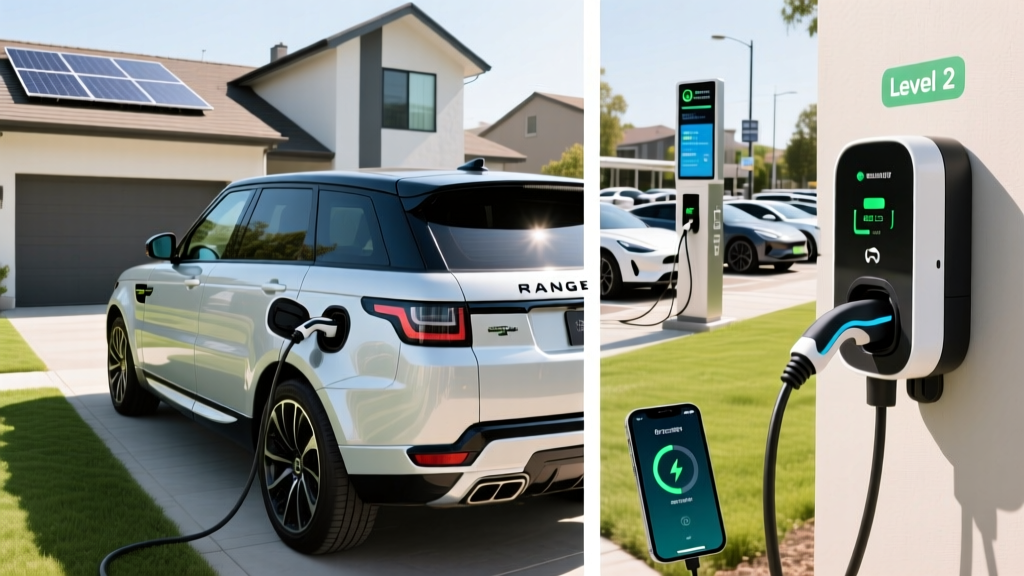
| Level 2 (240V) | 240V / 32–48A | 7.7–11.5 kW | 25–45 mi/hr | Daily home charging (primary method) |
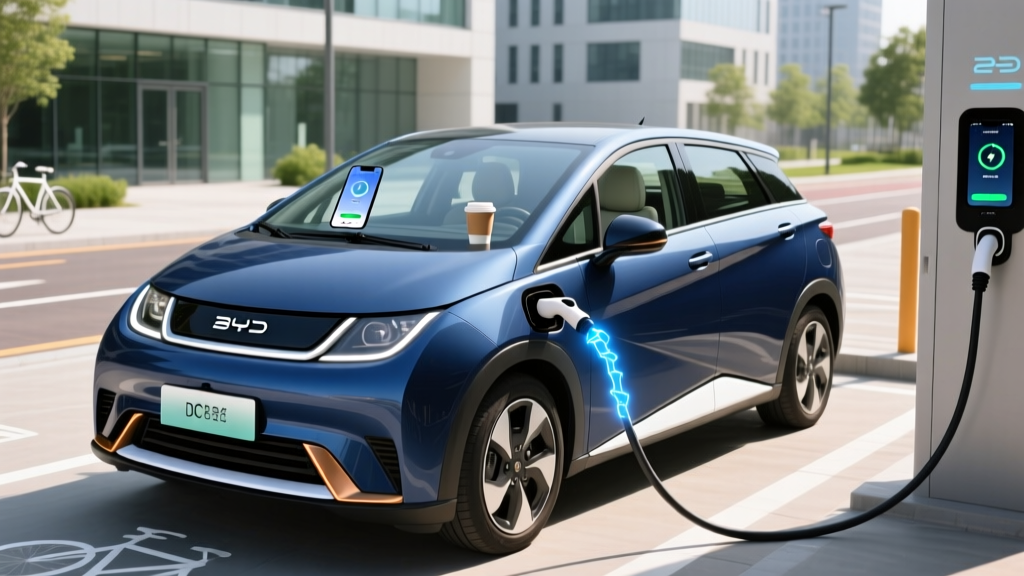
| DC Fast Charging | 400–800V DC | 50–350 kW | 150–1,200 mi/hr | Road trips, quick top-ups |
For context, plugging a 2026 EV with an 82 kWh battery (like a Tesla Model S or BMW i5) into a standard 120V outlet overnight adds roughly 30–40 miles of range in 10 hours. A Level 2 home charger adds 200–300+ miles in that same window. DC fast chargers can take a battery from 10% to 80% in 18–35 minutes depending on the vehicle's peak charge rate.
How Much Does It Cost to Install a Home EV Charger?
This is where most first-time EV buyers get sticker shock — or a pleasant surprise, depending on their electrical panel. Home Level 2 charger installation costs range from $500 to $2,500+ depending on your home's wiring, panel capacity, and the distance from the panel to your garage or driveway.
| Component | Simple Install (Panel Nearby) | Complex Install (Long Run / Panel Upgrade) |
|---|---|---|
| Level 2 Charger Unit (40A–48A) | $350–$700 | $350–$700 |
| Electrician Labor | $300–$600 | $800–$1,500 |
| Materials (conduit, wire, outlet/hardwire) | $100–$200 | $200–$500 |
| Permit Fee | $50–$150 | $50–$200 |
| Electrical Panel Upgrade (if needed) | $0 (not needed) | $1,500–$3,500 |
| Total Estimated Cost | $800–$1,650 | $2,900–$6,400 |
Will You Need a Panel Upgrade?
If your home was built before 2000 — which is likely if you've been driving that 2011 XF Supercharged for years — you may have a 100-amp or 150-amp electrical panel. A 48-amp Level 2 charger draws roughly 11.5 kW continuously, which requires a dedicated 60-amp circuit (NEC code requires circuits to be rated at 125% of continuous load, so a 48A charger needs a 60A breaker).
Homes with a 200-amp panel and moderate existing loads usually handle this fine. Homes with a 100-amp panel, electric heat, an electric dryer, an electric oven, and an EV charger may exceed capacity — triggering a panel upgrade to 200A or even 400A. Budget $1,500–$3,500 for this upgrade, and factor in additional weeks for utility coordination.
Which Connector Is Compatible With Your EV?
The connector landscape shifted dramatically between 2023 and 2026. Here's where things stand:
| Connector | Brands Using It (2026 Models) | DC Fast Charge Support | Adapter Needed? |
|---|---|---|---|
| NACS (North American Charging Standard / Tesla) | Tesla, Ford, GM, Rivian, Volvo, Polestar, Hyundai, Kia, BMW, Mercedes, Nissan (new models) | Yes — via Tesla Supercharger + open networks | CCS→NACS adapter for older CCS vehicles (~$150–$250) |
| CCS1 (Combined Charging System) | Legacy models (2022 and earlier), some Stellantis vehicles | Yes — Electrify America, EVgo, ChargePoint | NACS→CCS adapter if switching to Tesla ecosystem |
| CHAdeMO | Nissan Leaf (legacy), Mitsubishi Outlander PHEV | Yes — declining network | No widely available adapter to NACS/CCS |
If you're buying a new EV in 2026, it almost certainly uses the NACS connector. The major automakers — Ford, GM, Hyundai, Kia, BMW, Mercedes-Benz, and others — have transitioned to NACS. This means direct access to Tesla's Supercharger network (20,000+ stalls in North America) without an adapter.
For home Level 2 charging, NACS-equipped vehicles use the same connector for both Level 2 and DC fast charging. If you're buying a used EV with a CCS port (common on 2020–2024 models), you'll need a CCS-to-NACS adapter (roughly $150–$250) to access Tesla Superchargers, and you should choose a home charger with a CCS plug or buy a universal unit.
Cost to Charge: Per-Mile Economics vs. Your XF Supercharged
The 2011 Jaguar XF Supercharged gets roughly 15 MPG combined (per EPA fueleconomy.gov). At $3.50/gallon, that's $0.233 per mile just in fuel. Let's compare that to EV charging costs across common scenarios:
| Scenario | Cost per kWh | EV Efficiency (kWh/mi) | Cost per Mile | Annual Savings (12,000 mi) |
|---|---|---|---|---|
| 2011 XF Supercharged (gas) | — | 15 MPG | $0.233 | $2,796/yr fuel cost |
| Home Level 2 (national avg) | $0.16/kWh | 0.28 kWh/mi | $0.045 | Saves ~$2,256/yr |
| Home off-peak (time-of-use) | $0.09/kWh | 0.28 kWh/mi | $0.025 | Saves ~$2,496/yr |
| Public Level 2 (ChargePoint, etc.) | $0.25–$0.39/kWh | 0.28 kWh/mi | $0.070–$0.109 | Saves ~$1,476–$1,956/yr |
| DC Fast Charging (road trips) | $0.35–$0.55/kWh | 0.28 kWh/mi | $0.098–$0.154 | Saves ~$912–$1,584/yr |
The math is stark: even using only public DC fast chargers at premium rates, an EV costs significantly less per mile than the XF Supercharged's V8. But the real savings come from home charging, especially on a time-of-use (TOU) plan where overnight electricity can dip below $0.10/kWh. Most EV owners do 85–95% of their charging at home.
For a 12,000-mile year, switching from the XF Supercharged to an efficient EV (like a Hyundai Ioniq 6 at 3.6 mi/kWh) and charging primarily at home could save $2,000–$2,500 annually in fuel alone — before factoring in reduced maintenance (no oil changes, no supercharger belt service, fewer brake replacements thanks to regenerative braking).
Charging Time Examples: 10% to 80% for Common Battery Sizes
Here's how long a 10–80% charge actually takes across popular 2026 EVs at a DC fast charger. Remember: the charge curve tapers above ~50–60% SoC, so these times reflect real-world taper, not a simple math division of kWh ÷ kW.
| Vehicle (2026) | Battery (kWh usable) | Peak DC Rate (kW) | 10–80% Time | Architecture |
|---|---|---|---|---|
| Tesla Model 3 Long Range | 75 kWh | 250 kW | ~25 min | 400V |
| Hyundai Ioniq 5 N | 84 kWh | 350 kW | ~18 min | 800V |
| BMW i5 eDrive40 | 81 kWh | 205 kW | ~30 min | 400V |
| Ford F-150 Lightning Ext. Range | 131 kWh | 150 kW | ~42 min | 400V |
| Porsche Taycan (Performance Plus) | 83.7 kWh | 270 kW | ~22 min | 800V |
Notice the 800V architecture advantage: vehicles like the Ioniq 5 and Taycan sustain higher charge rates longer because higher voltage reduces current and heat. If road-trip charging speed matters to you, 800V platforms are worth prioritizing.
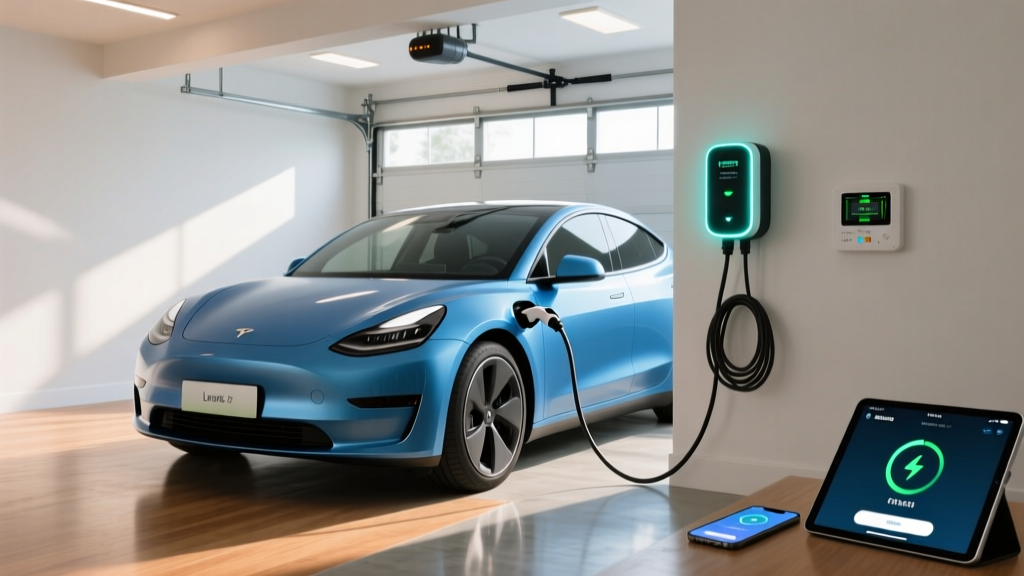
At home on a Level 2 charger (11.5 kW / 48A), a full 0–100% charge on an 82 kWh battery takes roughly 7–8 hours — perfect for overnight. Most owners plug in when they get home and wake up to a full battery every morning, which is a fundamentally different experience than visiting gas stations.
Recommended Home Level 2 Chargers (2026)
Based on reliability, smart features, and connector support, here are top picks for 2026:
Tesla Wall Connector (Gen 4)
- Power: 11.5 kW (48A) on a 60A circuit
- Connector: NACS native
- Cable Length: 24 ft
- Smart Features: Wi-Fi, OTA updates, Power Share (load balancing with two units), access control
- Price: ~$475
- Best For: NACS-equipped EVs (most 2026 models); cleanest integration
ChargePoint Home Flex (2nd Gen)
- Power: Up to 12 kW (50A) on a 60A circuit, adjustable down to 16A
- Connector: NACS or J1772 (configurable)
- Cable Length: 23 ft
- Smart Features: Wi-Fi, app scheduling, Alexa integration, energy tracking, flexible amperage
- Price: ~$599–$699
- Best For: Multi-EV households, renters who may move (adjustable amperage fits any panel)
Emporia Vue Level 2 Charger
- Power: 11.5 kW (48A)
- Connector: NACS or J1772
- Cable Length: 24 ft
- Smart Features: Wi-Fi, solar integration, TOU scheduling, energy monitoring via Emporia Vue panel
- Price: ~$399–$449
- Best For: Budget-conscious buyers, homes with solar panels
All three units are UL-listed, NEMA 4 rated for outdoor installation, and support hardwired or NEMA 14-50 outlet connections. Hardwired is generally recommended for 48A+ chargers — a NEMA 14-50 outlet is rated for 50A, and continuous draw should not exceed 80% of breaker rating (40A on a 50A outlet). For full 48A output, hardwire on a 60A breaker is the correct path.
Safety, Electrical Code, and Installation Best Practices
EV charging is a high-draw, continuous electrical load — it runs at full power for hours. This demands proper installation:
- Dedicated Circuit: Your Level 2 charger must be on its own dedicated circuit. Sharing a circuit with other appliances is a code violation and a fire hazard.
- GFCI Protection: The 2023 NEC (National Electrical Code) requires GFCI protection for outdoor receptacles used for EV charging. Hardwired installations may not require a GFCI breaker depending on jurisdiction — your electrician will know local code.
- Outdoor Rating: If your charger is installed outdoors (driveway, exterior wall), the unit must be NEMA 4 rated (weatherproof). All three chargers above meet this standard.
- Wire Gauge: A 60A circuit requires 6 AWG copper wire (THHN in conduit) or 4 AWG for longer runs to minimize voltage drop. Your electrician will calculate this based on distance.
- Load Calculation: Per NEC Article 220, your electrician must perform a load calculation on your panel to confirm it can handle the additional continuous draw. If the calculation fails, a panel upgrade is required — not optional.
Never use an extension cord with a Level 2 charger. Never plug into a standard 120V outlet using an adapter for daily charging — the continuous draw can overlight undersized wiring in older homes.
Frequently Asked Questions
How much does it cost to install a home EV charger?
A straightforward Level 2 installation (240V, 48A, panel nearby, no upgrade needed) typically costs $800–$1,650 including the charger unit, electrician labor, materials, and permit. If your electrical panel needs upgrading from 100A to 200A, add $1,500–$3,500. Complex installs with long conduit runs or trenching can reach $3,000–$6,000+.
How fast will each charging level add range?
Level 1 (120V) adds roughly 3–5 miles per hour — adequate only for PHEVs with small batteries or emergency trickle charging. Level 2 (240V, 48A) adds 25–45 miles per hour, fully recharging most EVs overnight. DC fast charging adds 150–1,200+ miles per hour at peak, but practical sessions are measured in 10–80% time (18–42 minutes depending on the vehicle).
Which connector/charger is compatible with my EV?
Nearly all new 2026 EVs use the NACS connector. If you're buying a used EV from 2020–2024, it likely has CCS1. CHAdeMO is limited to older Nissan Leafs and Mitsubishi PHEVs. Match your home charger's connector to your vehicle, or buy a unit with an interchangeable cable. For DC fast charging, a CCS-to-NACS adapter (~$150–$250) opens access to Tesla Superchargers for CCS-equipped vehicles.
How much does charging cost per mile vs. gas?
A 2011 Jaguar XF Supercharged at 15 MPG and $3.50/gal costs ~$0.233/mile in fuel. An EV charging at home on a national average rate ($0.16/kWh) costs ~$0.045/mile — roughly one-fifth the cost. Even DC fast charging at $0.48/kWh yields ~$0.134/mile, still a 42% savings over the XF's V8.
What electrical upgrades might I need?
The most common upgrade is a panel replacement from 100A to 200A ($1,500–$3,500). Some homes may need a new conduit run from the panel to the garage or exterior wall. In rare cases, the utility may need to upgrade your service drop. A licensed electrician will perform an NEC Article 220 load calculation to determine exactly what's needed — get this assessment before purchasing your charger.
Can I use the federal tax credit for a home charger?
The IRS §30C Alternative Fuel Vehicle Refueling Property Credit covers 30% of home charger equipment and installation costs, up to $1,000. Eligibility depends on your census tract meeting specific low-income or rural criteria. Consult a tax professional and verify current-year rules on irs.gov, as eligibility maps are updated periodically.
Switching from a supercharged V8 to an EV is a shift in ownership philosophy — from reactive fuel stops to proactive, scheduled charging at home. With a properly installed Level 2 charger, you'll start every day with a full "tank" at a fraction of the cost per mile. The upfront investment in home charging infrastructure typically pays for itself within 12–24 months through fuel savings alone.