Every Tesla owner eventually asks the same question after their third road trip: is Supercharging bad for Tesla battery longevity? The short answer is that occasional DC fast charging is perfectly fine, but relying on it as your sole charging method can accelerate degradation compared to slower Level 2 home charging. The physics behind lithium-ion battery stress — heat generation, high C-rates, and sustained high-voltage states — all favor the slower, cooler electrons that Level 2 delivers overnight in your garage.
This guide breaks down exactly how each charging level affects your Tesla's battery, what it costs to install a home Level 2 charger in 2026, and how charging economics compare to filling up a gas car. Whether you drive a Model 3, Model Y, Model S, or Model X, the principles here apply across the lineup.
The Real Impact of Supercharging on Tesla Battery Health
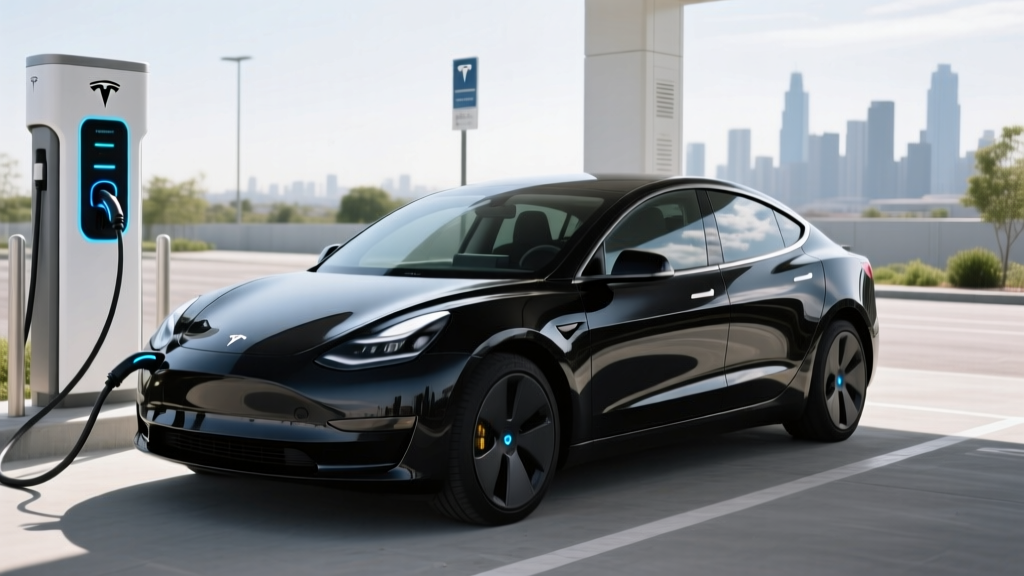
Tesla's battery management system (BMS) is among the most sophisticated in the industry. It actively monitors cell temperature, balances voltage across modules, and adjusts charging power in real time. During a Supercharger session, the vehicle may pull up to 250 kW on V3 stations — that's roughly 3 miles of range per minute at peak. But peak power is not sustained power. The charge curve tapers significantly above 50–60% state of charge (SoC), and the BMS will throttle power if cells approach thermal limits.
Data from large-scale fleet analyses (including studies referenced by Tesla's own Impact Report) show that Tesla batteries charged primarily via Supercharging exhibit approximately 2–4% more capacity loss over 150,000 miles compared to vehicles charged predominantly at home on Level 2. To put that in perspective: a Model Y Long Range with an EPA-estimated 320 miles of range might retain roughly 295 miles of usable range at 150k miles with mostly Supercharging, versus about 305 miles with mostly home charging.
The degradation isn't caused by fast charging in isolation — it's the heat that high-power DC charging generates. Tesla's liquid-cooled thermal management system mitigates this substantially, but sustained sessions in hot climates (Arizona, Texas summers) compound the thermal stress. Preconditioning the battery before a Supercharger session — which the car does automatically when you navigate to a Supercharger — reduces peak heat by warming or cooling cells to the optimal temperature window before high-power charging begins.
Charging Levels Explained: Speed, Power, and Range Added
Understanding the three charging levels is essential for making informed decisions about battery care and daily convenience. Remember: kW (kilowatts) measures power — how fast energy flows into your battery. kWh (kilowatt-hours) measures energy — the total capacity your battery holds. Think of kW as the width of a hose and kWh as the size of the bucket.
| Level | Power (kW) | Voltage / Amperage | Miles of Range Added Per Hour | Typical Use Case |
|---|---|---|---|---|
| Level 1 | 1.2–1.9 kW | 120V / 12–16A | 3–5 mi/hr | Emergency / overnight trickle |
| Level 2 (Home) | 7.2–11.5 kW | 240V / 30–48A | 22–44 mi/hr | Daily home charging |
| DC Fast (Supercharger V3) | Up to 250 kW | 400V DC | ~1,000 mi/hr at peak | Road trips, quick top-ups |
| DC Fast (Supercharger V4) | Up to 350 kW (announced) | 800V DC capable | Higher peak (model-dependent) | Next-gen fast charging |
For a Tesla Model 3 Long Range (approximately 75 kWh usable battery), a full Level 2 session from 10–80% takes roughly 5.5–6 hours at 11.5 kW (48A). That same 10–80% session on a V3 Supercharger takes approximately 25–30 minutes, though the charging curve tapers substantially after 50% SoC. The practical takeaway: Supercharging is ideal for road trips, but daily use at home on Level 2 is both cheaper and gentler on your battery.
How Much Does It Cost to Install a Home EV Charger?
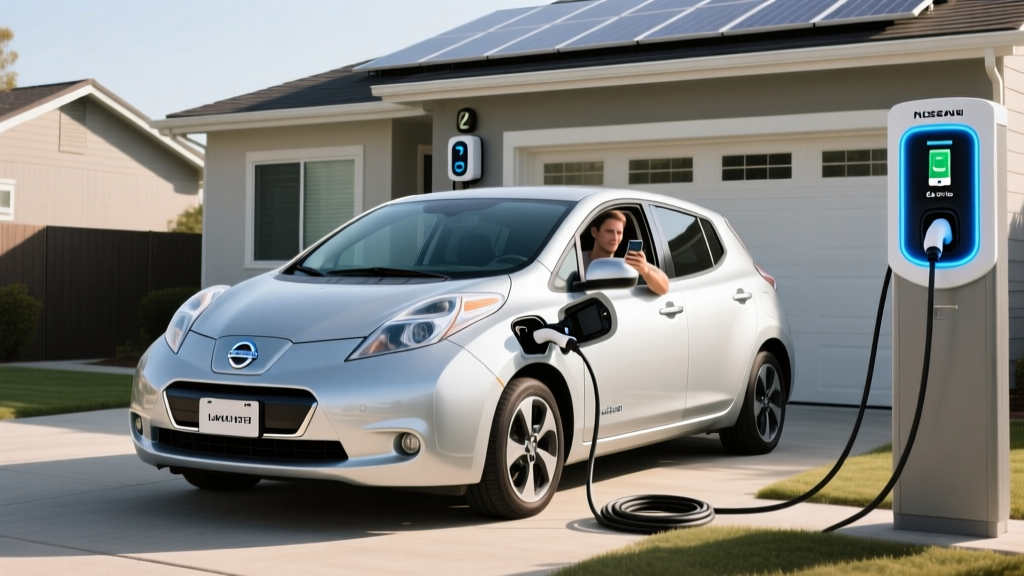
Home Level 2 charging is the single best investment you can make for your Tesla's battery health and your wallet. But installation costs vary dramatically based on your home's electrical infrastructure. Here's a realistic breakdown for 2026:
| Component | Low Estimate | High Estimate | Notes |
|---|---|---|---|
| Level 2 Charger (Equipment) | $350 | $700 | Wall Connector, ChargePoint, Emporia |
| Electrician Labor | $500 | $2,000 | Depends on run length, conduit, wall type |
| Electrical Permit | $50 | $300 | Varies by municipality |
| Panel Upgrade (if needed) | $1,500 | $4,000 | Required if existing panel is 100A or maxed out |
| Total (No Panel Upgrade) | $900 | $3,000 | Most homes with 200A service |
| Total (With Panel Upgrade) | $2,400 | $7,000 | Older homes, 100A panels |
The most common scenario for a Tesla owner: installing a Tesla Wall Connector on a dedicated 60A circuit (48A continuous draw) with a short conduit run from a 200A panel in an attached garage. Expect to pay roughly $1,200–$1,800 all-in for this setup. If your electrical panel is in the basement and the charger location is on the far side of the house, conduit and wire runs can push costs toward $2,500+.
Homes built before 1990 often have 100A or 125A electrical panels. Adding a 48A continuous-load EV circuit (which the National Electrical Code calculates as a 60A draw for sizing purposes) may exceed your panel's capacity. An electrician will perform a load calculation per NEC Article 220. If you're over the limit, a panel upgrade to 200A is mandatory — and it's the single biggest variable in installation cost. Budget accordingly and get at least two quotes.
Connector Compatibility: NACS, CCS, and Adapter Requirements
Tesla pioneered the North American Charging Standard (NACS), which has now been adopted industry-wide. As of 2026, NACS is the dominant connector for new EVs sold in North America, but the transition from CCS1 is still playing out across public charging networks.
| Connector | Native Brands | Tesla Compatibility | Adapter Needed? |
|---|---|---|---|
| NACS (Tesla) | Tesla, Ford, GM, Rivian, Volvo, Polestar, others | Native on all Teslas | None for Teslas at Superchargers |
| CCS1 | Legacy: older Hyundai, Kia, VW, BMW models | Not native | Tesla CCS Adapter (~$175) for non-Tesla CCS stations |
| CHAdeMO | Nissan Leaf (legacy) | Not compatible | No practical Tesla adapter available |
For Tesla owners, the NACS connector is native and universal across the Supercharger network. If you need to use a third-party CCS1 station (Electrify America, EVgo, some ChargePoint locations), Tesla sells a CCS Adapter for approximately $175 that enables charging at non-Tesla DC fast chargers. This is worth keeping in your trunk for road trips through areas where Supercharger coverage is sparse.
Cost to Charge: Home vs. Supercharger vs. Gas
This is where the economics of home charging become undeniable. Let's compare real-world charging costs for a Tesla Model Y Long Range (approximately 3.5 miles per kWh efficiency, or roughly 29 kWh/100 miles) against a comparable gas-powered compact SUV averaging 28 MPG combined.
| Charging/Fueling Method | Cost per kWh or Gallon | Cost per Mile | Annual Cost (12,000 mi) |
|---|---|---|---|
| Home Level 2 (off-peak utility rate) | $0.11/kWh | $0.031 | $372 |
| Home Level 2 (avg. US residential) | $0.17/kWh | $0.049 | $588 |
| Tesla Supercharger V3 (avg.) | $0.32/kWh | $0.091 | $1,092 |
| Third-Party DC Fast (EA, EVgo) | $0.40/kWh | $0.114 | $1,368 |
| Gas SUV (28 MPG, $3.40/gal) | $3.40/gallon | $0.121 | $1,452 |
The numbers are stark. Charging at home on off-peak rates costs roughly one-quarter what you'd spend on gas per mile. Even Supercharging exclusively is cheaper than gas — but it's roughly 3x more expensive than home charging and carries the battery health trade-offs discussed above. For a driver covering 12,000 miles annually, the difference between home charging and Supercharging exclusively is approximately $720 per year — enough to pay for a home charger installation in the first year.
According to fueleconomy.gov, the 2026 Tesla Model Y Long Range achieves an EPA-estimated 122 MPGe combined, translating to roughly 29 kWh per 100 miles of driving. Real-world highway efficiency at 75 mph tends to be closer to 32–34 kWh/100mi, so adjust your cost calculations accordingly if most of your driving is highway commuting.
Best Level 2 Home Chargers for Tesla Owners (2026)
Not all Level 2 chargers are created equal. Here are the top picks based on power output, build quality, smart features, and value — all with NACS connectors or native Tesla compatibility:
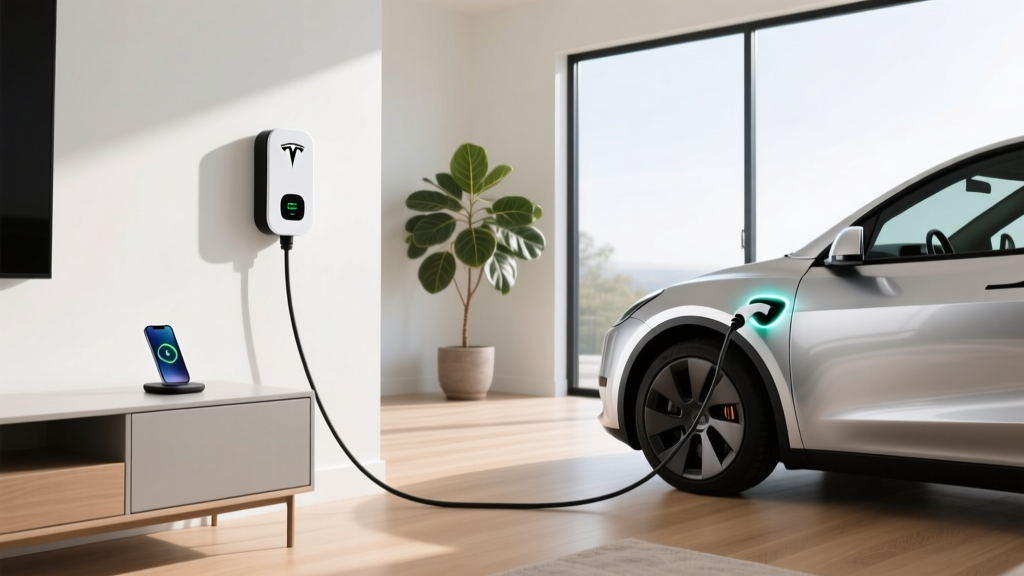
Tesla Wall Connector
Power: 11.5 kW (48A)
Connector: NACS (native)
Cable Length: 24 ft
Smart Features: Wi-Fi, OTA updates, power sharing, load management
Price: ~$420
Best For: Tesla-only households wanting seamless integration
Emporia Level 2 EV Charger
Power: 11.5 kW (48A)
Connector: NACS (2026 model)
Cable Length: 24 ft
Smart Features: App scheduling, solar integration, energy monitoring
Price: ~$399
Best For: Solar panel owners wanting integrated energy management
ChargePoint Home Flex
Power: Up to 12 kW (50A, configurable)
Connector: NACS (2026 update)
Cable Length: 23 ft
Smart Features: App, Alexa, flexible amperage settings
Price: ~$549
Best For: Multi-EV households or future-proofing for non-Tesla EVs
Grizzl-E Smart
Power: 10 kW (40A)
Connector: NACS (available)
Cable Length: 24 ft
Smart Features: OCPP-compatible, rugged outdoor build
Price: ~$449
Best For: Outdoor installations in harsh climates (IP67 rated)
For most Tesla owners, the Tesla Wall Connector remains the default choice. It's competitively priced, delivers full 11.5 kW on a 60A circuit, and the power-sharing feature lets you daisy-chain two units on a single circuit — useful for two-car garages. If you plan to add a non-Tesla EV in the future, the ChargePoint Home Flex offers broader compatibility and adjustable amperage to match your electrical panel's capacity.
Safety, Electrical Code, and Installation Best Practices
EV charging places a sustained high-amperage load on your home's electrical system — far more continuous than an oven or dryer cycle. Proper installation isn't optional; it's a safety requirement. Here's what to verify with your licensed electrician:
- Dedicated Circuit: Your Level 2 charger must be on its own dedicated circuit — no sharing with other appliances. A 48A continuous charger requires a 60A breaker per NEC 210.20(A) (continuous loads must be derated to 80% of breaker capacity).
- GFCI Protection: The 2023 NEC (and 2026 adopted codes in most states) requires GFCI protection for all EV charging outlets. Hardwired installations (like the Tesla Wall Connector) may have GFCI built into the unit. Plug-in units using a NEMA 14-50 receptacle need a GFCI breaker, which adds $50–$120 to the panel cost.
- Outdoor Rating: If your charger is installed outside (driveway, exterior wall), it must carry at minimum a NEMA 4 or IP65 rating. All chargers listed above meet this threshold.
- Wire Gauge: A 60A circuit requires 6 AWG copper wire (or 4 AWG aluminum). Your electrician will size this based on the run length — longer runs may need thicker wire to prevent voltage drop.
- Permit and Inspection: Virtually every jurisdiction requires a permit for EV charger installation. The inspection ensures the work meets NEC and local code. Skipping this step risks insurance claim denials and code violations that surface during a home sale.
Always hire a licensed electrician — preferably one with EV charger installation experience. According to the National Fire Protection Association, improper EV charging installations have been linked to electrical fires, particularly in homes with aging wiring or undersized panels.
Practical Charging Strategy: Maximizing Battery Life
Based on degradation data and real-world ownership patterns, here's the optimal charging approach for Tesla owners:
- Daily Driving: Charge at home on Level 2, set to 80% SoC limit (or 100% for LFP-equipped Model 3 RWD, which benefits from periodic full charges for cell balancing).
- Road Trips: Use Superchargers freely — the BMS handles thermal management, and occasional fast charging has minimal long-term impact.
- Avoid: Repeatedly Supercharging to 100% and letting the car sit at full charge for extended periods. High SoC + heat accelerates degradation.
- Cold Weather: Always precondition before Supercharging (navigate to the station in the car's nav system). Cold batteries charge far more slowly and experience more stress without preconditioning.
- Storage: If leaving your Tesla for more than two weeks, set the charge limit to 50% and keep it plugged in so the BMS can maintain the 12V and manage thermal conditions.
Supercharging is not "bad" for your Tesla in any catastrophic sense. Tesla's warranty covers battery capacity retention to 70% for 8 years or 120,000 miles (Model 3/Y Long Range) — and real-world data shows most packs retain 85–90% capacity at that mileage regardless of charging mix. However, exclusive Supercharging does measurably increase degradation by a few percentage points over the vehicle's lifetime. For owners who can install a home Level 2 charger, the combination of lower charging costs, faster overnight convenience, and marginally better battery retention makes it the clear primary charging method.
Frequently Asked Questions
Is it OK to Supercharge my Tesla every day?
It won't destroy your battery, but it's not optimal. Daily Supercharging exposes cells to sustained high heat and high C-rates, which accelerates degradation by roughly 2–4% over 150,000 miles compared to Level 2 charging. If you lack home charging access, Tesla's BMS still protects the pack well, and you're covered under the 8-year/120,000-mile battery warranty.
How fast will each charging level add range to my Tesla?
Level 1 (120V) adds roughly 3–5 miles per hour. Level 2 (240V, 48A) adds approximately 30–44 miles per hour depending on your Tesla model. DC fast charging (Supercharger V3 at 250 kW) can add up to 200 miles in about 15 minutes at peak, though the charge curve tapers significantly after 50–60% SoC.
Which connector and charger is compatible with my Tesla?
All Tesla vehicles use the NACS connector natively. This works directly with Tesla Superchargers, Tesla Wall Connectors, and an expanding network of NACS-equipped third-party chargers. For CCS1 stations, you'll need Tesla's CCS Adapter (~$175). CHAdeMO is not compatible with Tesla vehicles.
How much does charging a Tesla cost per mile vs. gas?
Home charging on average US electricity rates ($0.17/kWh) costs approximately $0.049/mile for a Model Y. Supercharging averages $0.091/mile. A comparable gas SUV at 28 MPG with $3.40/gallon fuel costs $0.121/mile. Home charging is roughly 60% cheaper than gas per mile.
What electrical upgrades might I need for a home charger?
If your home has a 200A electrical panel with available capacity, you likely need only a dedicated 60A circuit with appropriate wiring and a permit. Homes with 100A or 125A panels — common in pre-1990 construction — often require a panel upgrade ($1,500–$4,000) to safely support a Level 2 charger alongside existing loads. An electrician's load calculation will determine this.
Does the federal tax credit apply to home charger installation?
The Alternative Fuel Vehicle Refueling Property Credit (IRC §30C) was revived under the Inflation Reduction Act and provides up to $1,000 (30% of cost) for home EV charger equipment and installation through 2032. However, it's subject to census-tract eligibility requirements (the home must be in a qualifying low-income or non-urban area). Check the IRS page on §30C for current eligibility maps and rules. Consult a tax professional before claiming.