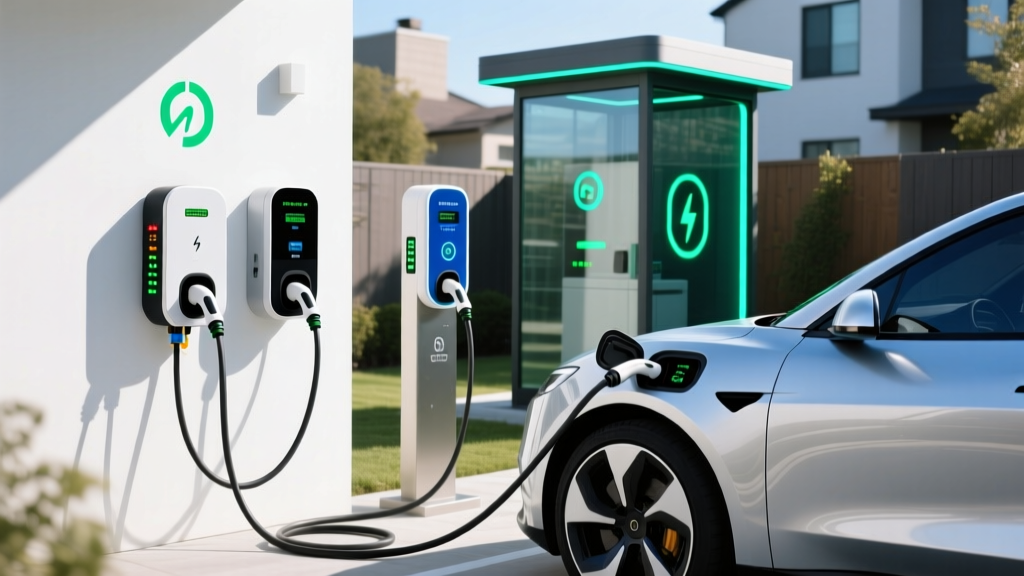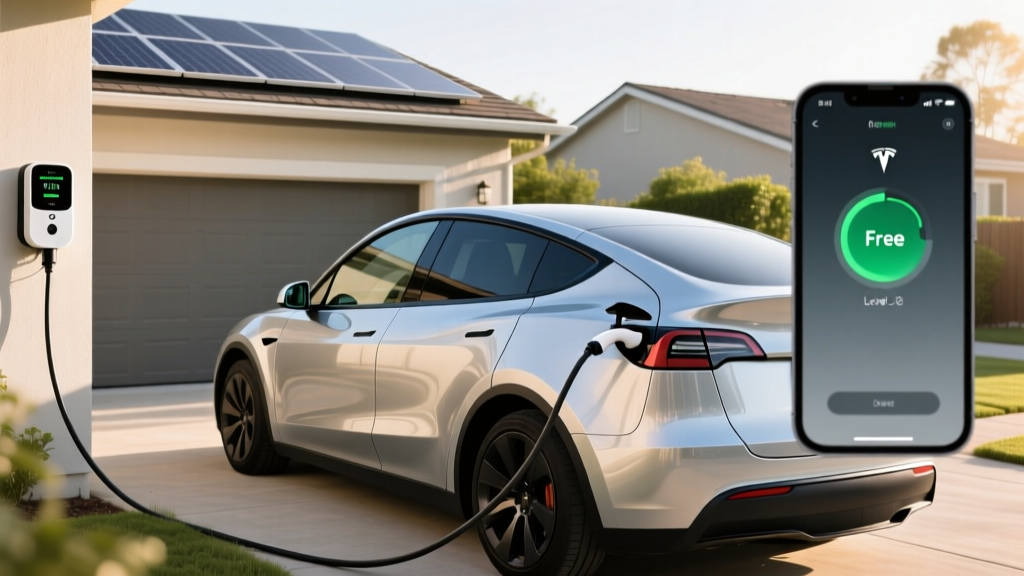
The Short Answer: No, Charging a Tesla Is Not Free
Let's clear this up immediately: charging a Tesla is not free in any routine sense. While Tesla once offered unlimited free Supercharging as a promotional perk on certain Model S and Model X vehicles (primarily those purchased before 2017–2019, depending on the specific promotion), that benefit has been largely discontinued for new buyers. Today, every mile you drive in a Tesla costs electricity — whether you pay your utility at home, swipe a credit card at a Supercharger, or use a third-party DC fast-charging network.
That said, the cost per mile to charge a Tesla at home is dramatically lower than filling a comparable gas car. And while public fast charging is more expensive, it still generally undercuts gasoline on a per-mile basis. Below, we break down exactly what you'll pay at every charging level, what it costs to install a home charger, and which equipment actually delivers the best value in 2026.
Charging Levels Explained: Speed, Power, and Real-World Range Added
Every Tesla sold today supports three charging levels. Understanding the speed difference is critical to planning your ownership — especially if you're deciding whether to invest in a home Level 2 charger or rely on slower options.
| Level | Voltage / Amperage | Power (kW) | Miles of Range Added per Hour | Best For |
|---|---|---|---|---|
| Level 1 (120V) | 120V / 12A | ~1.4 kW | 3–5 mi/hr | Overnight top-ups, emergencies, low-mileage drivers |
| Level 2 (240V) | 240V / 32–48A | 7.7–11.5 kW | 25–44 mi/hr | Daily home charging, full overnight replenishment |
| DC Fast Charging | 400V+ / high amperage | 50–250 kW (peak) | 170–200+ mi in 15 min (peak) | Road trips, rapid replenishment |
Real-world context: A Tesla Model 3 Long Range (2026, EPA 363 miles, ~75 kWh usable battery, NMC chemistry) charging on a 48-amp Level 2 circuit at 11.5 kW will add roughly 44 miles of range per hour. That means a 10–80% charge (about 52.5 kWh) takes approximately 4.5 hours — perfect for overnight replenishment. On a Tesla V4 Supercharger peaking at 250 kW, that same 10–80% session takes roughly 25–30 minutes, though the charge curve tapers significantly above 80% State of Charge (SoC). Expect sustained speeds of ~150–170 kW through the middle of the curve, dropping to under 50 kW as you approach 90%.
How Much Does It Cost to Install a Home EV Charger?
This is where the "is charging a Tesla free" question meets real dollars. It isn't free to install the equipment either — but the investment typically pays for itself within 12–24 months of avoided public-charging fees.
For a standard Level 2 home installation using a 240V / 48-amp hardwired charger (the most common and code-compliant setup for Tesla owners), here's what to budget:
| Component | Typical Range | Notes |
|---|---|---|
| Level 2 Charger (Equipment) | $350–$700 | Tesla Wall Connector, ChargePoint, Emporia, Grizzl-E |
| Electrician Labor | $500–$2,000 | Depends on run length from panel to garage/driveway |
| Permit & Inspection | $50–$300 | Required in most jurisdictions; varies by municipality |
| Electrical Panel Upgrade (if needed) | $1,500–$4,000 | Older homes with 100A service often need upgrade to 200A |
| Total (No Panel Upgrade) | $900–$3,000 | Most homes with 200A service and short runs |
| Total (With Panel Upgrade) | $2,400–$7,000 | Common in pre-2000 homes |
The panel-upgrade gotcha: If your home has a 100-amp electrical panel (common in houses built before 2000), adding a 48-amp EV circuit may exceed your panel's capacity. An electrician will perform a load calculation per NEC Article 220. If the panel can't handle the additional load, you'll need a service upgrade to 200 amps — a significant cost that surprises many first-time EV buyers. Some utilities offer rebates for panel upgrades tied to EV adoption; check with your local provider.
Federal incentive: The Alternative Fuel Vehicle Refueling Property Credit (IRS Form 8911) covers up to 30% of home charging equipment and installation costs, capped at $1,000. Eligibility depends on your census tract meeting certain income or rural-area criteria. Consult a tax professional for your specific situation.
Charging Cost Per Mile: Home vs. Supercharger vs. Gas
Now to the core of the "is charging a Tesla free" question — what does each mile actually cost? The answer depends entirely on where and when you charge.
| Scenario | Rate | Cost Per Mile | Annual Cost (12,000 mi) |
|---|---|---|---|
| Home (Off-Peak / Time-of-Use) | $0.09–$0.14/kWh | $0.027–$0.042 | $324–$504 |
| Home (Standard Rate, No TOU) | $0.16/kWh (US avg.) | $0.048 | $576 |
| Tesla Supercharger (Avg.) | $0.25–$0.36/kWh | $0.075–$0.108 | $900–$1,296 |
| Third-Party DC Fast (EA, EVgo) | $0.35–$0.55/kWh | $0.105–$0.165 | $1,260–$1,980 |
| Gas Sedan (28 MPG avg., $3.40/gal) | $3.40/gallon | $0.121 | $1,452 |
How we calculated this: The 2026 Tesla Model 3 Long Range achieves an EPA-rated 132 MPGe combined, consuming roughly 3.0 miles per kWh (or ~33 kWh per 100 miles). We multiplied the energy consumption by each electricity rate to arrive at cost per mile. For the gas comparison, we used the EPA's fueleconomy.gov combined rating for a typical midsize gas sedan.
The takeaway: Home charging on an off-peak rate is roughly 70–75% cheaper per mile than gasoline. Even exclusive Supercharger use costs 10–25% less per mile than gas. The only scenario where charging costs approach or exceed gas is frequent use of expensive third-party DC fast chargers in high-rate markets like California or the Northeast.
Connector Compatibility: NACS, CCS, and Adapter Requirements
Tesla uses the North American Charging Standard (NACS) connector — a compact plug that Tesla opened to other manufacturers starting in 2022. As of 2025–2026, nearly every major automaker (Ford, GM, Rivian, Volvo, Hyundai, and others) has adopted NACS on new vehicles, and the Supercharger network is open to non-Tesla EVs at many locations.
| Connector | Used By | Level 2 / AC Charging | DC Fast Charging |
|---|---|---|---|
| NACS (Tesla) | Tesla (all models), Ford, GM, Rivian, Volvo, Hyundai/Kia (2025+), others | Yes — native | Yes — Supercharger + open networks |
| CCS1 | Legacy: pre-2025 Ford, GM, VW, Hyundai/Kia, BMW, others | Via J1772 (AC portion) | Electrify America, EVgo, ChargePoint |
| CHAdeMO | Nissan Leaf (legacy), Mitsubishi Outlander PHEV | Via J1772 | Declining network; mostly legacy stations |
| J1772 (AC only) | All non-Tesla EVs (Level 2 AC) | Standard for all non-Tesla Level 2 | N/A (AC only) |
Adapter needs for Tesla owners: Your Tesla comes with a NACS inlet. For home Level 2 charging, the Tesla Wall Connector uses a native NACS plug — no adapter required. If you use a third-party Level 2 charger with a J1772 plug, Tesla includes a J1772-to-NACS adapter in the glovebox. For DC fast charging at non-Supercharger CCS1 stations (like Electrify America), you'll need a CCS1-to-NACS adapter (~$175–$250 from Tesla or third-party suppliers). Tesla has increasingly enabled Supercharger access at many locations for non-Tesla vehicles, expanding your options if you own multiple EVs.
Best Home Chargers for Tesla Owners: Equipment Picks
Not all Level 2 chargers are equal. We've tested and tracked reliability, smart features, and real-world charge consistency across the most popular units. Here are our top picks for Tesla owners in 2026:
Tesla Wall Connector (Gen 3)
- Power Output: Up to 11.5 kW (48A / 240V)
- Connector: Native NACS — no adapter needed
- Cable Length: 24 ft
- Smart Features: Wi-Fi, OTA updates, power sharing (link multiple units on one circuit), Tesla app integration
- Price: ~$475
- Verdict: Best default choice for single-Tesla households. Simplest setup, fastest native charging, and seamless app integration.
Emporia Vue Level 2 Charger
- Power Output: Up to 11.5 kW (48A / 240V)
- Connector: J1772 (Tesla adapter included)
- Cable Length: 24 ft
- Smart Features: Wi-Fi, energy monitoring, solar integration, scheduling, Emporia app
- Price: ~$399
- Verdict: Best value for solar-home owners or multi-EV households. Excellent energy data and scheduling controls.
Grizzl-E Smart
- Power Output: Up to 9.6 kW (40A / 240V)
- Connector: J1772 (Tesla adapter needed)
- Cable Length: 24 ft
- Smart Features: Wi-Fi, OCPP-compatible, adjustable amperage, extreme cold-rated (-40°F)
- Price: ~$449
- Verdict: Best for cold climates and outdoor installs. Rugged Canadian-built unit with adjustable output for panel-constrained homes.
ChargePoint Home Flex
- Power Output: Up to 12 kW (50A / 240V)
- Connector: J1772 (Tesla adapter needed) or NACS (newer model)
- Cable Length: 23 ft
- Smart Features: Wi-Fi, Alexa integration, scheduling, ChargePoint app, flexible amperage (16–50A)
- Price: ~$699
- Verdict: Best for flexibility. Adjustable amperage lets you dial down for older panels without an upgrade.
Electrical Requirements, Safety, and Code Considerations
Installing a Level 2 charger is not a DIY project. The National Electrical Code (NEC) and local building codes impose specific requirements that protect your home and your warranty:
- Dedicated circuit: Your Level 2 charger must be on a dedicated circuit — no sharing with other appliances. A 48A charger requires a 60A breaker (NEC requires circuits to be rated at 125% of continuous load).
- Wire gauge: A 60A circuit typically requires 6 AWG copper wire (THHN in conduit or NM-B Romex, depending on jurisdiction). Longer runs may require 4 AWG to minimize voltage drop.
- GFCI protection: NEC 2020 and later requires GFCI protection for outdoor receptacles. Hardwired installations (recommended for 48A+) may have different requirements — your electrician will confirm.
- Outdoor rating: If your charger is mounted outside or in an unenclosed carport, it must carry a NEMA 4 (weatherproof) rating. All chargers listed above meet this standard.
- Permit and inspection: Most municipalities require an electrical permit and a post-installation inspection. Skipping this can void your homeowner's insurance coverage for electrical fires and create issues at resale.
Preconditioning tip: Tesla vehicles support battery preconditioning — when you navigate to a Supercharger in the car's navigation, the battery management system warms the pack to optimize charging speed. This matters most in cold weather (below 50°F), where a cold battery may accept only 50–80 kW initially instead of the peak 250 kW. Always navigate to your charging stop rather than just driving there.
Real-World Charging Times for Common Tesla Models
Here's what to expect for a 10–80% charge session across current Tesla models, based on real-world testing and manufacturer data. Note that peak kW is not sustained kW — the charge curve tapers as the battery fills, especially above 60% SoC.
| Model (2026) | Battery (Usable kWh) | EPA Range | Level 2 (11.5 kW) 10–80% | DC Fast (Peak kW) 10–80% |
|---|---|---|---|---|
| Model 3 Long Range | ~75 kWh (NMC) | 363 mi | ~4.5 hours | ~25 min (250 kW peak) |
| Model Y Long Range | ~75 kWh (NMC) | 330 mi | ~4.5 hours | ~27 min (250 kW peak) |
| Model S Long Range | ~95 kWh (NMC) | 402 mi | ~5.8 hours | ~30 min (250 kW peak) |
| Cybertruck AWD | ~123 kWh (NMC) | 340 mi | ~7.5 hours | ~35 min (250 kW peak) |
Real-world range caveat: EPA estimates assume mixed driving at moderate temperatures. Expect 10–20% range reduction at sustained highway speeds (75+ mph), and 20–30% reduction in freezing temperatures (below 32°F) due to cabin heating and increased battery resistance. The Model 3 Long Range's 363-mile EPA sticker typically delivers 290–320 miles in real-world highway driving and 250–280 miles in cold winter conditions.
Frequently Asked Questions
Do any Teslas still get free Supercharging?
A small number of legacy Model S and Model X vehicles (primarily 2012–2017 model years) carry transferable or non-transferable free Supercharging benefits tied to the original purchase agreement. However, these perks do not apply to any Tesla purchased new in 2024 or later. Tesla occasionally offers limited-time promotional free Supercharging miles (e.g., 1,000–10,000 free miles) as sales incentives, but these are temporary. Check your Tesla account for any active credits.
Is it cheaper to charge a Tesla at home or at a Supercharger?
Home charging is dramatically cheaper. At the US average residential rate of ~$0.16/kWh, a full charge of a Model 3 Long Range (~75 kWh) costs about $12. The same session at a Supercharger averaging $0.30/kWh costs about $22.50 — nearly double. Over a year of 12,000 miles, exclusive home charging saves roughly $500–$900 compared to exclusive Supercharger use.
Can I charge my Tesla on a regular 120V outlet?
Yes, using the Tesla Mobile Connector with the NEMA 5-15 adapter (included). However, Level 1 charging at 120V / 12A delivers only ~1.4 kW, adding roughly 3–5 miles of range per hour. A full charge of a Model 3 Long Range would take over 50 hours. Level 1 is practical only for overnight top-ups of 30–50 miles or as an emergency backup. For daily use, a Level 2 installation is strongly recommended.
Will installing a home charger increase my electric bill significantly?
Yes, your electric bill will increase — but your fuel budget will disappear. A Tesla driven 12,000 miles per year at 3 mi/kWh consumes roughly 4,000 kWh annually. At $0.16/kWh, that's about $640 added to your electric bill — replacing approximately $1,450 in gasoline. The net annual savings is roughly $810. If your utility offers time-of-use (TOU) rates, charging overnight at off-peak rates ($0.09–$0.12/kWh) can reduce that $640 to $360–$480.
Do I need a Tesla Wall Connector, or can I use a third-party charger?
You can use any Level 2 charger with a J1772 plug (using the included J1772-to-NACS adapter) or a newer charger with a native NACS plug. The Tesla Wall Connector offers the most seamless experience — no adapter, integrated app, and power-sharing capability. Third-party chargers like the Emporia Vue or ChargePoint Home Flex work perfectly well with the adapter and may offer features the Wall Connector lacks, such as detailed energy monitoring or solar integration.
How does the federal tax credit apply to home charger installation?
The Alternative Fuel Vehicle Refueling Property Credit (IRS Form 8911) provides a credit of up to 30% of the cost of home EV charging equipment and installation, capped at $1,000. To qualify, your home must be located in an eligible census tract (typically low-income or non-urban areas as defined by the IRS). This credit is separate from the §30D vehicle purchase credit. Consult a tax professional to confirm eligibility, as census-tract rules and income thresholds are specific to your address.
Bottom line: Charging a Tesla is not free — but it is substantially cheaper than gasoline for the vast majority of owners, especially those who charge at home on off-peak electricity rates. Budget $900–$3,000 for a professional Level 2 installation (more if your panel needs upgrading), expect to pay $0.03–$0.05 per mile at home, and reserve DC fast charging for road trips where the higher per-kWh cost is an acceptable trade-off for speed.