Ionna's DC Fast Charging Network: What EV Owners Need to Know
Ionna is the joint-venture charging network backed by seven major automakers — BMW, GM, Honda, Hyundai, Kia, Mercedes-Benz, and Stellantis — built to deploy high-power DC fast chargers across the United States. As the network rolls out stations through 2025 and 2026, one of the most common questions from EV owners and shoppers is straightforward: how much does Ionna charging cost?
The answer depends on your vehicle's battery size, the charger's power output, your connector type, and whether you're charging during peak or off-peak hours. This guide breaks down Ionna's pricing structure, charge speeds, connector compatibility, and how the per-mile cost stacks up against gasoline — plus what you need to know about home charging as the more economical daily alternative.
kW (kilowatts) measures power — how fast energy flows into your battery. kWh (kilowatt-hours) measures energy — how much total capacity your battery holds. A 350 kW charger delivers energy quickly; an 84 kWh battery stores 84 kWh of energy total. Ionna charges by the kWh consumed, not by the kW rate.
Understanding Charging Levels and Speeds
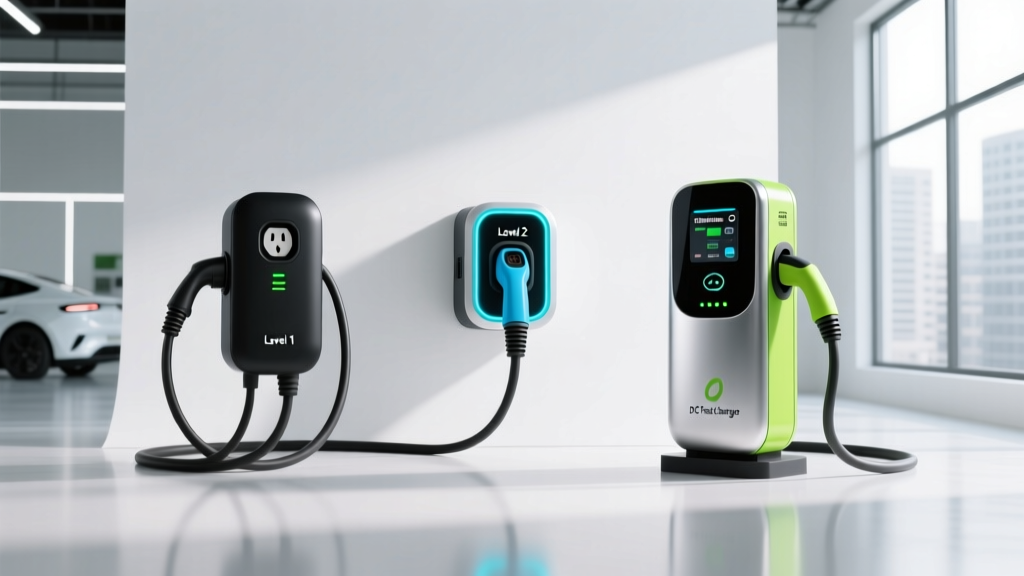
Before calculating Ionna's cost, you need to understand the three charging levels available to EV owners. Ionna stations operate at the DC Fast Charging level, but most of your weekly charging should happen at home on Level 2.
| Level | Voltage | Power (kW) | Miles of Range Added per Hour | Best Use Case |
|---|---|---|---|---|
| Level 1 | 120V AC | 1.0–1.4 kW | 3–5 mi/hr | Overnight top-ups, PHEVs, low-mileage drivers |
| Level 2 | 240V AC | 7.2–19.2 kW | 25–75 mi/hr | Daily home charging, workplace charging |
| DC Fast | 400–900V DC | 50–350 kW | 150–1,200+ mi/hr | Road trips, rapid top-ups, Ionna stations |
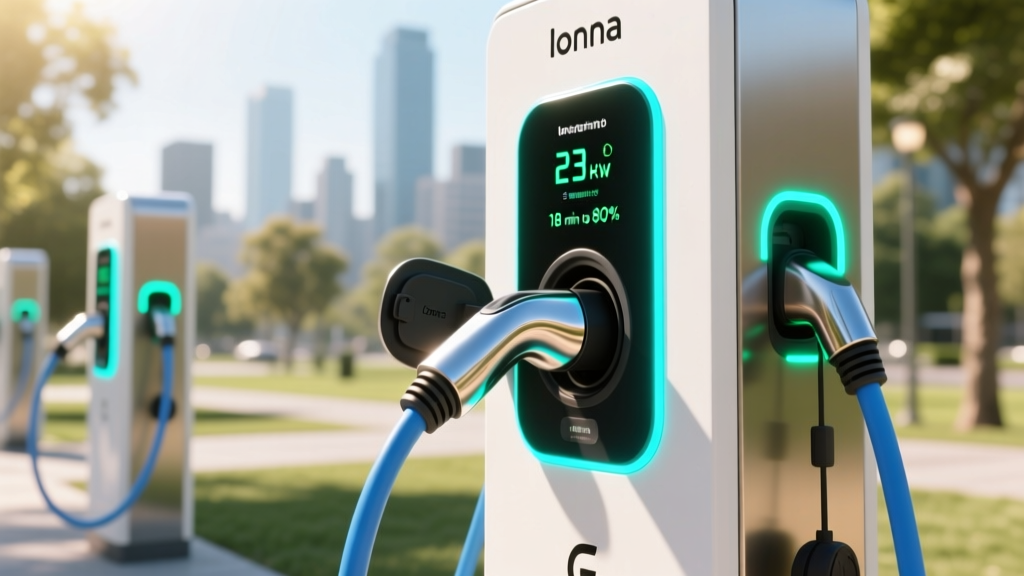
Ionna stations are designed with chargers capable of delivering up to 350 kW via CCS1 connectors and up to 350 kW via NACS (Tesla-standard) connectors. However, your vehicle's onboard charge acceptance rate determines actual speed. A Hyundai Ioniq 5 with its 800V architecture can accept up to 240 kW, while a Chevrolet Equinox EV peaks around 150 kW.
No EV sustains its peak kW rate for an entire session. DC fast charging follows a curve: power ramps up quickly from 10% to roughly 50% State of Charge (SoC), then tapers significantly above 80%. That's why manufacturers quote 10–80% charge times rather than 0–100%. Charging from 80% to 100% on DC fast can take as long as the 10–80% portion — plan your road-trip stops accordingly.
Charging Time Examples: 10–80% at Ionna Stations
| Vehicle (2026 Model Year) | Battery (kWh usable) | Peak DC Charge Rate | Est. 10–80% Time (350 kW station) |
|---|---|---|---|
| Hyundai Ioniq 5 (Long Range) | 84 kWh (NMC) | 240 kW | ~18 minutes |
| Kia EV6 GT-Line AWD | 84 kWh (NMC) | 240 kW | ~18 minutes |
| Chevrolet Equinox EV RS | 85 kWh (NMC) | 150 kW | ~30 minutes |
| BMW iX xDrive50 | 105.2 kWh (NMC) | 200 kW | ~31 minutes |
| Honda Prologue Touring | 85 kWh (NMC) | 150 kW | ~32 minutes |
Note: Actual charge times depend on battery temperature, ambient conditions, and station load. Preconditioning your battery via the vehicle's navigation-routed charging feature is essential for achieving peak charge rates, especially in cold weather.
Ionna Charging Cost: Per-kWh Pricing and Scenarios
Ionna's pricing model is based on per-kWh consumed, consistent with most major DC fast charging networks. As of early 2026, Ionna's introductory pricing at most stations falls in the range of $0.40 to $0.55 per kWh, varying by location, time of day, and state electricity rates. Some stations may offer lower off-peak rates or introductory promotional pricing for vehicles from Ionna's parent automakers.
Here's what a typical session costs for popular EVs:
| Scenario | Energy Consumed | Cost at $0.45/kWh | Cost at $0.55/kWh |
|---|---|---|---|
| Ioniq 5 (10–80%, 84 kWh battery) | ~59 kWh | $26.55 | $32.45 |
| Equinox EV (10–80%, 85 kWh battery) | ~60 kWh | $27.00 | $33.00 |
| BMW iX (10–80%, 105 kWh battery) | ~74 kWh | $33.30 | $40.70 |
| Quick top-up (10% SoC added, ~8 kWh) | ~8 kWh | $3.60 | $4.40 |
Cost per Mile: Ionna vs. Home Charging vs. Gasoline
The raw session cost only tells part of the story. What EV owners really need is the cost per mile comparison across charging methods and versus a gasoline vehicle.
| Charging Method | Rate | Cost per Mile* | Notes |
|---|---|---|---|
| Home Level 2 (off-peak utility rate) | $0.12/kWh | $0.04 | Cheapest option; time-of-use plans recommended |
| Home Level 2 (standard rate) | $0.18/kWh | $0.06 | National average residential rate |
| Ionna DC Fast (mid-range) | $0.48/kWh | $0.16 | Road-trip charging; varies by station |
| Ionna DC Fast (peak pricing) | $0.55/kWh | $0.18 | Urban/high-demand locations |
| Gas vehicle (28 MPG combined, $3.50/gal) | $3.50/gallon | $0.125 | Comparable crossover (e.g., Toyota RAV4 gas) |
*Cost per mile calculated assuming a vehicle efficiency of 3.0 miles per kWh (typical for midsize electric crossovers like the Ioniq 5 or EV6). Per fueleconomy.gov, EV efficiency varies from 2.5 to 4.0 mi/kWh depending on the model.
The data makes the economics clear: home charging is dramatically cheaper than DC fast charging or gasoline, while Ionna's DC fast charging costs more per mile than gas at current pricing. The value proposition of Ionna is speed and convenience on road trips — not daily cost savings. An EV owner who charges 90% at home and 10% on DC fast chargers will still pay far less per mile overall than a gas-car driver.
Connector Compatibility: Will Ionna Work With Your EV?
Ionna stations are built to serve the broadest possible range of EVs. Each station offers both NACS (North American Charging Standard) and CCS1 (Combined Charging System) connectors. As the industry transitions toward NACS as the dominant standard through 2026, Ionna's dual-connector approach ensures compatibility with both legacy CCS vehicles and newer NACS-native models.
| Connector Type | Native Vehicles (2025–2026) | Adapter Needed? |
|---|---|---|
| NACS | Tesla Model 3/Y/S/X, 2025+ Ford F-150 Lightning, 2025+ Rivian R1T/R1S, 2026+ Hyundai/Kia new models | No (native); CCS vehicles need CCS-to-NACS adapter |
| CCS1 | Hyundai Ioniq 5/6, Kia EV6/EV9, BMW iX/i4, VW ID.4, Chevrolet Equinox EV, Honda Prologue | No (native at Ionna); NACS vehicles need NACS-to-CCS adapter |
| CHAdeMO | Nissan Leaf (legacy), Mitsubishi Outlander PHEV (legacy) | CHAdeMO adapters are rare/expensive; not supported at most Ionna stations |
Key takeaway for 2026 buyers: If you're purchasing a new EV, check whether it ships with NACS or CCS1. Most automakers are transitioning to NACS for 2026 and 2027 model years, but many 2025–2026 models still use CCS1 natively. Ionna's dual-standard stations mean you're covered either way — no adapter required at their chargers.
Home Charging Installation: Requirements, Costs, and Electrical Upgrades
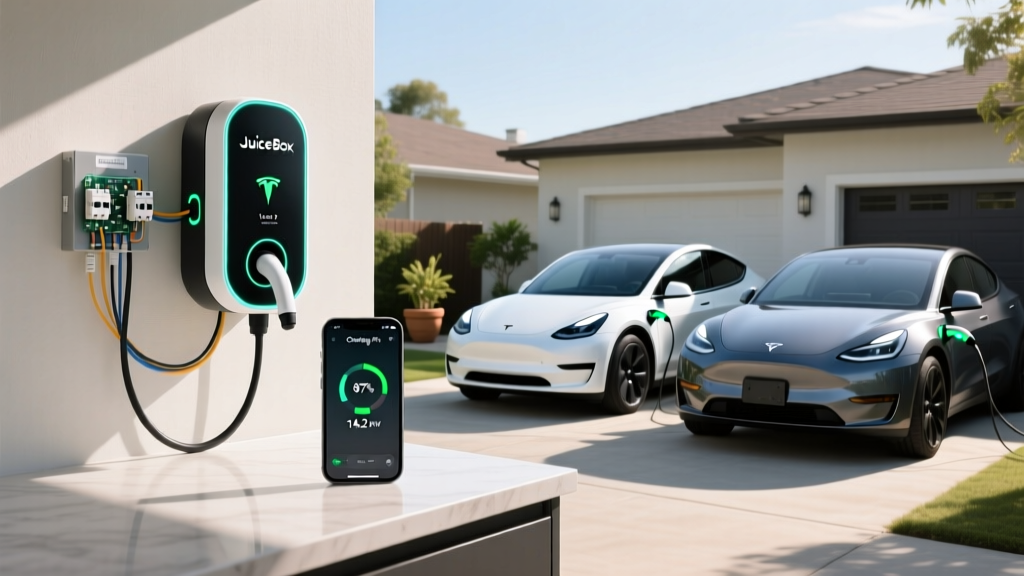
While Ionna handles road-trip charging, your home Level 2 setup is where the real cost savings happen. Installing a 240V Level 2 charger at home requires specific electrical infrastructure.
Electrical Requirements
A standard Level 2 home charger requires a 240V dedicated circuit, typically at 40A to 60A (supporting 9.6 kW to 14.4 kW continuous output, respectively). The National Electrical Code (NEC) requires that continuous loads not exceed 80% of a circuit's rated capacity — so a 48A charger needs a 60A breaker, and a 40A charger needs a 50A breaker.
Your home's electrical panel must have sufficient spare capacity. Many older homes with 100A service panels may need a panel upgrade to 200A before adding a Level 2 circuit — this is one of the most overlooked costs in EV ownership planning.
Installation Cost Breakdown
| Component | Low Range | High Range | Notes |
|---|---|---|---|
| Level 2 Charger (Equipment) | $350 | $700 | Varies by brand, power output, and smart features |
| Electrician Labor | $500 | $2,000 | Depends on run length from panel, wall type, conduit |
| Permit & Inspection | $50 | $300 | Required by most jurisdictions; varies by municipality |
| Panel Upgrade (if needed) | $1,500 | $4,000 | 100A to 200A service upgrade; not required for all homes |
| Total (no panel upgrade) | $900 | $3,000 | Most common scenario for newer homes |
| Total (with panel upgrade) | $2,400 | $7,000 | Older homes with 100A service |
Federal incentive note: The IRS §30D-related Residential Clean Energy Credit (25C) may cover up to 30% of home charger equipment and installation costs (up to $1,000) for eligible taxpayers. Always consult a tax professional and verify current-year eligibility with the IRS, as rules and caps are subject to change.
Recommended Home Level 2 Chargers
Here are three proven Level 2 chargers that pair well with the vehicles most likely to use Ionna stations on the road:
ChargePoint Home Flex
- Power Output: Up to 12 kW (50A circuit) / configurable down to 16A
- Connector: NACS or CCS1 (J1772 with adapter)
- Cable Length: 23 feet
- Smart Features: Wi-Fi, app scheduling, Alexa integration, energy tracking
- Price: ~$550
- Best For: Flexible amperage for homes with limited panel capacity
Tesla Wall Connector
- Power Output: Up to 11.5 kW (48A / 60A circuit)
- Connector: NACS native
- Cable Length: 24 feet
- Smart Features: Wi-Fi, OTA updates, power sharing with multiple units, load management
- Price: ~$475
- Best For: Tesla owners and NACS-native vehicles; excellent value
Emporia Level 2 EV Charger
- Power Output: Up to 11.5 kW (48A / 60A circuit)
- Connector: J1772 (CCS-compatible); NACS adapter included
- Cable Length: 24 feet
- Smart Features: Wi-Fi, energy monitoring, solar integration, scheduled charging
- Price: ~$400
- Best For: Budget-conscious buyers who want smart features and energy tracking
Safety and Code Considerations for Home Charging
Level 2 charger installation is electrical work that must comply with the National Electrical Code (NEC) and your local building codes. Key requirements include:
- Dedicated circuit: Your Level 2 charger must be on its own dedicated breaker — it cannot share a circuit with other appliances.
- GFCI protection: NEC 2020 and later requires GFCI (Ground Fault Circuit Interrupter) protection for EV charging outlets in garages and all outdoor locations. Many modern chargers have built-in GFCI; hardwired installations may not require an additional GFCI breaker.
- Outdoor rating: If installing outside, the charger must carry a NEMA 4 or IP65 weather-resistance rating. All three chargers recommended above are rated for outdoor use.
- Licensed electrician: Always use a licensed electrician for the installation. DIY electrical work on 240V circuits carries serious fire and shock risk, and unpermitted work may void your homeowner's insurance.
- Permit and inspection: Most jurisdictions require a permit and post-installation inspection. Your electrician typically handles the permit application.
Frequently Asked Questions
How much does it cost to install a home EV charger?
A typical Level 2 home charger installation costs between $900 and $3,000 when no panel upgrade is needed (charger equipment + electrician labor + permit). If your home has an older 100A electrical panel that needs upgrading to 200A, total costs can range from $2,400 to $7,000. Always get a quote from a licensed electrician who can assess your panel capacity and wiring run distance.
How fast will each charging level add range?
Level 1 (120V) adds roughly 3–5 miles of range per hour. Level 2 (240V) adds 25–75 miles per hour depending on the charger's kW output and the vehicle's acceptance rate. DC fast charging at Ionna stations can add 150–1,200+ miles per hour at peak power, though charge-curve tapering means real sessions from 10–80% take 18–35 minutes depending on the vehicle.
Which connector and charger is compatible with my EV?
Ionna stations offer both NACS and CCS1 connectors natively, so most modern EVs can plug in without an adapter. Check your vehicle's charge port: Tesla and newer Ford/Rivian vehicles use NACS; most Hyundai, Kia, BMW, GM, and VW vehicles from 2024–2025 use CCS1. CHAdeMO (older Nissan Leaf) is generally not supported. For home charging, match your charger's connector to your vehicle or use the manufacturer-supplied adapter.
How much does charging cost per mile vs. gas?
Home Level 2 charging at $0.12–$0.18/kWh costs approximately $0.04–$0.06 per mile for a typical electric crossover (3 mi/kWh). Ionna DC fast charging at $0.45–$0.55/kWh costs approximately $0.15–$0.18 per mile. A comparable gas vehicle at 28 MPG with $3.50/gallon fuel costs about $0.125 per mile. Home charging is the clear cost winner; DC fast charging is a road-trip convenience, not a daily cost-saver.
What electrical upgrades might I need?
The most common upgrade is a panel capacity increase from 100A to 200A service, needed in older homes that lack spare breaker capacity. You may also need a new conduit run if the charger location is far from the panel. Some utilities offer load-management programs that allow charger installation on smaller panels by limiting charger draw during peak hours. Ask your electrician to perform a load calculation per NEC Article 220 before proceeding.
Is Ionna cheaper than Electrify America or Tesla Superchargers?
Pricing varies by location and time, but Ionna's introductory pricing of $0.40–$0.55/kWh is broadly competitive with Electrify America's guest rates ($0.43–$0.56/kWh in most markets). Tesla Supercharger pricing averages $0.25–$0.40/kWh for Tesla vehicles, though Tesla has opened many stations to non-Tesla EVs at slightly higher rates. Ionna's advantage is its automaker-backed reliability commitment and dual NACS/CCS1 availability at every station.
Does Ionna offer any subscription or membership discounts?
As of 2026, Ionna has announced plans for loyalty pricing tied to vehicles from its parent automakers (BMW, GM, Honda, Hyundai, Kia, Mercedes-Benz, Stellantis), though specific membership tiers and discount amounts vary. Check the Ionna app or your automaker's EV ownership portal for current promotional rates.
Ionna fills a critical gap in the DC fast charging landscape with automaker-backed reliability and dual-connector stations. At $0.40–$0.55/kWh, expect to pay $25–$40 for a 10–80% session depending on your battery size. For daily driving, home Level 2 charging at $0.04–$0.06 per mile remains the most economical path — invest in a quality home charger installation and save Ionna for road trips.