Hyundai Ioniq 5 Charging Architecture: Why 800V Matters
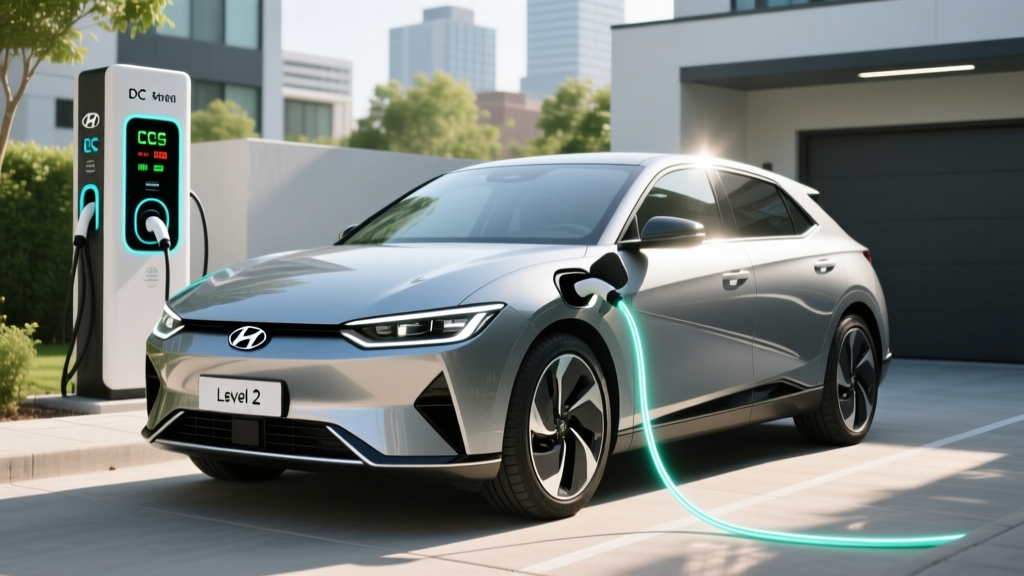
The Hyundai Ioniq 5 remains one of the fastest-charging mainstream EVs on the market thanks to its 800-volt E-GMP platform. While most competitors still run 400V architectures that peak around 150 kW, the Ioniq 5 can accept up to 240 kW at a compatible DC fast charger. That's not just a spec-sheet win — it translates to roughly 18 minutes from 10% to 80% state of charge under ideal conditions, making road-trip stops genuinely brief.
But peak kW numbers only tell part of the story. Real-world charging speed depends on the charger you plug into, your battery's state of charge, ambient temperature, and whether you preconditioned the pack. This guide breaks down every charging scenario Ioniq 5 owners will encounter — from a standard 120V outlet to a 350 kW Electrify America stall — with exact numbers, costs, and equipment recommendations.
kW (kilowatt) = power, or how fast energy flows into your battery (like water pressure from a hose).
kWh (kilowatt-hour) = energy, or how much total charge your battery stores (like the size of the tank).
The Ioniq 5 Standard Range has a 58 kWh battery; the Long Range has a 77.4 kWh usable battery. Charging speed is measured in kW; battery capacity is measured in kWh.
Ioniq 5 Charging Speeds by Level: What to Expect
Here's how each charging level performs with the Ioniq 5 Long Range (77.4 kWh battery, EPA-estimated 305 miles on the SEL/Limited RWD trims). The Standard Range (58 kWh, EPA 245 miles) will charge proportionally faster at each level due to its smaller battery.
| Level | Power (kW) | Miles of Range / Hour | 10–80% Time (Long Range) | Best For |
|---|---|---|---|---|
| Level 1 (120V) | ~1.4 kW | ~4–5 mi/hr | ~40+ hours | Emergency / trickle top-up |
| Level 2 (240V, 32A) | 7.7 kW | ~25 mi/hr | ~7.5 hours | Daily home / workplace |
| Level 2 (240V, 48A) | 10.9 kW | ~35 mi/hr | ~5.5 hours | Faster home charging |
| DC Fast (50 kW) | 50 kW | ~150 mi/hr | ~65 min | Older public stations |
| DC Fast (150 kW) | ~150 kW (sustained) | ~450 mi/hr | ~25 min | Common highway chargers |
| DC Fast (240 kW+) | Up to 240 kW peak | ~700+ mi/hr (peak) | ~18 min | 350 kW EA / Ionity stalls |
The Ioniq 5 peaks at ~240 kW only between roughly 10–40% state of charge on a 350 kW-capable charger. Above 55%, the charge rate tapers significantly — often dropping below 100 kW past 70%. This is normal lithium-ion battery management to protect cell health. A 10–80% session on a 350 kW Electrify America station typically averages around 150–170 kW sustained, which is still among the fastest in its class. Cold weather (below 40°F) can add 5–10 minutes to this time unless you precondition the battery via the infotainment system before arrival.
Home Charging Setup: Electrical Requirements & Installation Costs
The Ioniq 5's onboard charger accepts up to 10.9 kW on Level 2 (240V, 48A). To take full advantage, you need a hardwired Level 2 station on a dedicated 60-amp circuit (NEC code requires circuits to be rated at 125% of continuous load, so a 48A charger requires a 60A breaker). A 40A circuit with a 32A charger is the more common and less expensive setup, delivering 7.7 kW — plenty for overnight replenishment of daily driving.
What Your Electrical Panel Needs
Before installing any Level 2 charger, have a licensed electrician evaluate your panel. Most modern homes with 200-amp service can accommodate a 60A EV circuit without an upgrade. Older homes with 100A service, or those already running multiple high-draw appliances (electric range, dryer, HVAC), may need a panel upgrade to 200A — a significant added cost.
Some jurisdictions now allow automated load management devices (like the Emporia Smart Load Management system) that let you add an EV circuit without a panel upgrade by dynamically throttling charger draw when other appliances are running. Ask your electrician if this is code-approved in your area.
| Component | Basic Install (40A/32A) | Full Install (60A/48A) | Panel Upgrade Scenario |
|---|---|---|---|
| Level 2 Charger (equipment) | $350–$600 | $500–$750 | $500–$750 |
| Electrician labor (run + mount) | $400–$900 | $600–$1,400 | $600–$1,400 |
| Permit & inspection | $50–$200 | $50–$200 | $150–$400 |
| Panel upgrade (if needed) | — | — | $1,500–$3,500 |
| Total Estimated Cost | $800–$1,700 | $1,150–$2,350 | $2,750–$6,050 |
The IRS §30C Alternative Fuel Vehicle Refueling Property Credit covers up to 30% of home charger equipment and installation costs (capped at $1,000), though eligibility depends on census-tract requirements. Check with a tax professional before claiming.
Connector Compatibility: NACS vs. CCS for the Ioniq 5
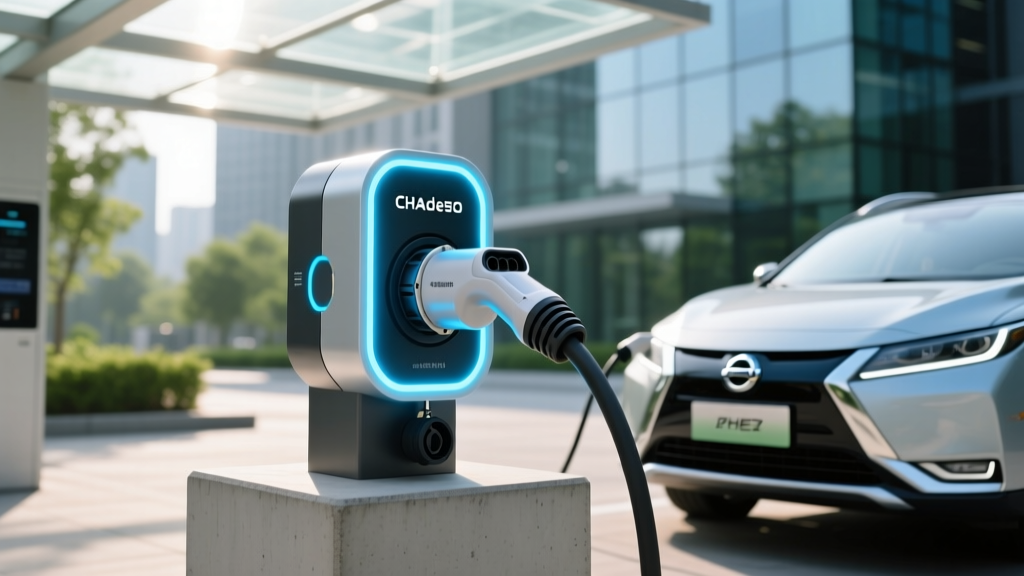
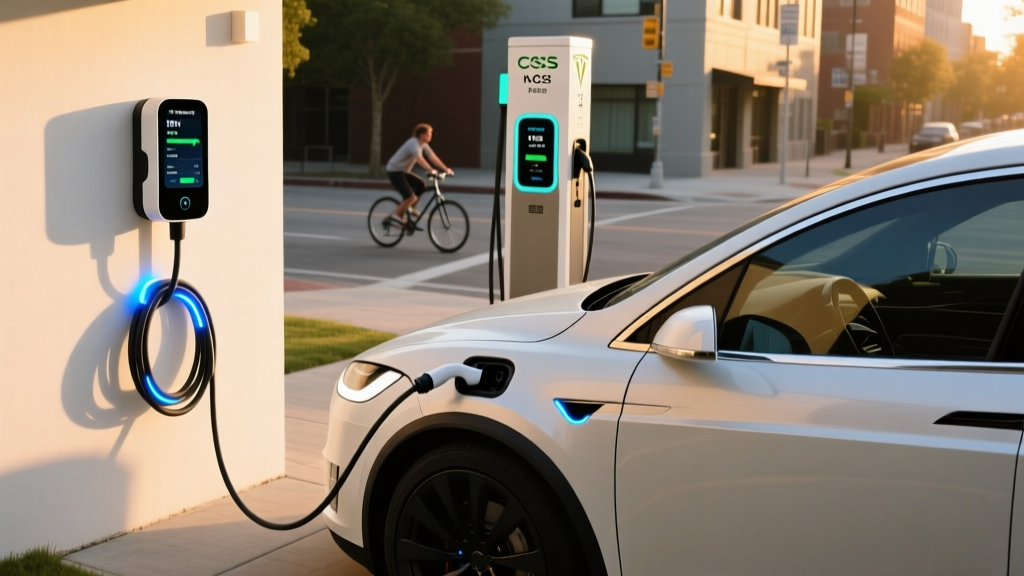
For the 2025 and 2026 model years, Hyundai has transitioned the Ioniq 5 to the NACS (North American Charging Standard) connector — the Tesla-designed plug now adopted industry-wide. This is a significant shift from earlier model years (2022–2024), which shipped with CCS1.
| Model Year | Native Port | Tesla Supercharger | CCS Networks (EA, EVgo) | Adapter Needed? |
|---|---|---|---|---|
| 2022–2024 | CCS1 | Yes (with NACS adapter) | Native — no adapter | NACS-to-CCS adapter for Superchargers |
| 2025–2026 | NACS | Native — no adapter | Yes (with CCS adapter) | NACS-to-CCS adapter for legacy stations |
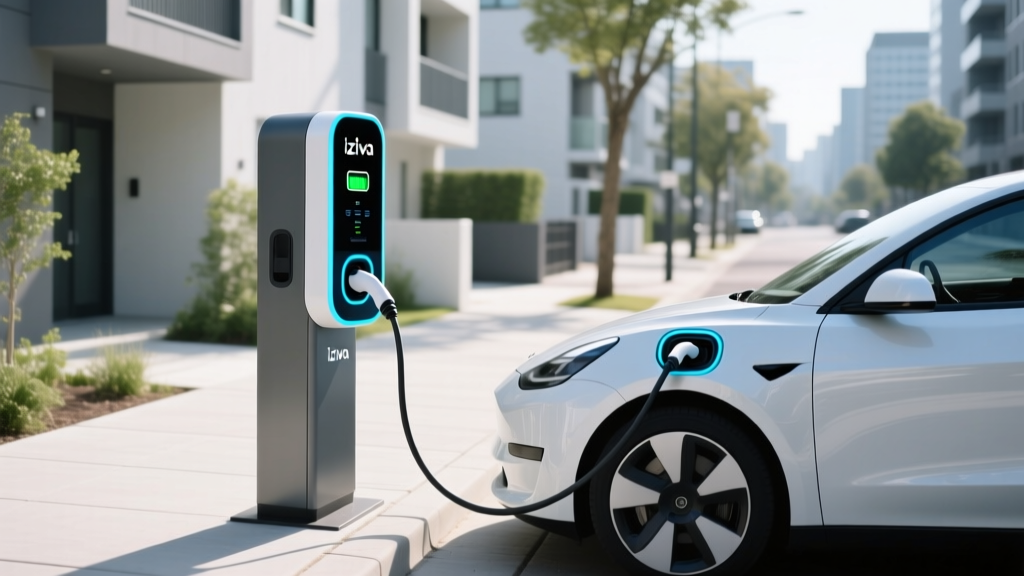
Hyundai provides a CCS-to-NACS adapter with new 2025–2026 Ioniq 5 models, and third-party adapters (from brands like Lectron and A2Z) are available for $150–$250. Level 2 home charging uses a J1772 connector on older models or NACS on newer ones — most home chargers now ship with NACS or include a J1772-to-NACS adapter in the box.
Level 2 Home Charger Recommendations for the Ioniq 5
These are chargers I've evaluated based on real-world use with E-GMP platform vehicles. All support the Ioniq 5's maximum 10.9 kW Level 2 acceptance rate (or close to it) and are UL-listed for safety.
ChargePoint Home Flex (NACS)
Power: Up to 12 kW (50A, 240V)
Cable: 23 ft
Smart features: Wi-Fi, app scheduling, Alexa, energy tracking
Price: ~$599
Verdict: Best overall for smart scheduling and utility rate optimization. Hardwire required for 50A.
Tesla Wall Connector (NACS)
Power: Up to 11.5 kW (48A, 240V)
Cable: 24 ft
Smart features: Wi-Fi, OTA updates, power sharing, load management
Price: ~$425
Verdict: Best value NACS charger. Works natively with 2025+ Ioniq 5. No J1772 option built in.
Emporia Level 2 Smart Charger
Power: Up to 11.5 kW (48A, 240V)
Cable: 24 ft
Smart features: Wi-Fi, solar integration, load management, energy dashboard
Price: ~$399
Verdict: Budget pick with excellent app and solar-awareness features. Great for homes with solar panels.
Cost to Charge the Ioniq 5: Home vs. Public vs. Gas
The Ioniq 5 Long Range AWD achieves an EPA-estimated 101 MPGe combined, which translates to roughly 33 kWh per 100 miles driven (per fueleconomy.gov). Using that efficiency figure, here's what charging actually costs in different scenarios compared to a gas vehicle averaging 28 MPG.
| Scenario | Rate | Cost per 100 Miles | Cost per Mile |
|---|---|---|---|
| Home (off-peak utility rate) | $0.11/kWh | $3.63 | $0.036 |
| Home (national avg electricity) | $0.17/kWh | $5.61 | $0.056 |
| Public Level 2 (ChargePoint, etc.) | $0.25/kWh | $8.25 | $0.083 |
| DC Fast (Electrify America) | $0.48/kWh | $15.84 | $0.158 |
| Gas vehicle (28 MPG, $3.40/gal) | $3.40/gallon | $12.14 | $0.121 |
Home charging on an off-peak rate is dramatically cheaper than gas — roughly one-third the per-mile cost. Even public DC fast charging at premium rates is only modestly more expensive than gasoline. The economics strongly favor home charging as your primary routine.
Safety, Electrical Code & Installation Best Practices
EV charging is a continuous high-draw electrical load — your charger will run at near-maximum output for hours. This makes proper installation non-negotiable.
- Dedicated circuit: Your Level 2 charger must be on its own dedicated breaker — never shared with other outlets or appliances.
- GFCI protection: NEC 2020 and later requires GFCI protection for EV charging outlets in garages and all outdoor locations. Hardwired installations may be exempt in some jurisdictions, but GFCI breakers add a layer of safety.
- Outdoor rating: If your charger is installed outdoors or in an exposed carport, ensure the unit carries a NEMA 4 (or IP65+) weather rating. All three chargers recommended above meet this standard.
- Cable management: Use a wall-mounted holster or cable organizer to prevent tripping hazards and cord damage. Never run a charging cable across a driveway where vehicles will drive over it.
- Permit and inspection: Most municipalities require a permit for new 240V circuits. Skipping this can void your homeowner's insurance in the event of an electrical fire and will cause issues when you sell your home.
Always hire a licensed electrician familiar with EV charger installations. Ask for references and confirm they pull permits — this is the single most important decision in your home charging setup.
Ioniq 5 Charging FAQ
Can I charge my 2025 Ioniq 5 at a Tesla Supercharger?
Yes. The 2025–2026 Ioniq 5 ships with a native NACS port, meaning you can plug directly into any Tesla Supercharger (V3 and V4) without an adapter. For 2022–2024 models with CCS1, Hyundai and Tesla both offer NACS adapters that enable Supercharger access, though you should confirm your adapter supports DC fast charging (not just Level 2).
Why doesn't my Ioniq 5 always charge at 240 kW?
The 240 kW peak only occurs under specific conditions: a charger capable of 350 kW output, battery preconditioned to optimal temperature (use the Ioniq 5's navigation-based preconditioning by setting a DC charger as your destination), and a state of charge between roughly 10–40%. Above 55% SoC, the battery management system tapers the charge rate to protect cell longevity. Cold batteries (below ~50°F) that haven't been preconditioned may peak at 100–130 kW even at a 350 kW station.
How much does it cost to install a home EV charger for the Ioniq 5?
A basic 40A Level 2 installation with existing panel capacity typically costs $800–$1,700 including equipment, electrician labor, and permit. A 48A hardwired setup runs $1,150–$2,350. If your home needs a panel upgrade from 100A to 200A service, add $1,500–$3,500. The federal §30C credit may offset up to $1,000 of these costs depending on your census tract.
Is overnight Level 2 charging enough for daily driving?
Absolutely. The average American drives 37 miles per day (per FHWA data). A 40A Level 2 charger adds roughly 25 miles of range per hour — meaning a 2-hour session replenishes a full day's driving. Even with a 100-mile daily commute, an overnight 8-hour charge on a 32A circuit adds ~200 miles, more than enough for the Ioniq 5's 305-mile EPA range.
Does frequent DC fast charging degrade the Ioniq 5 battery?
Modern battery management systems, including Hyundai's, actively limit charge rates and manage cell temperatures to minimize degradation from DC fast charging. Data from high-mileage E-GMP platform vehicles shows battery degradation of roughly 5–8% over 100,000 miles even with regular DC fast charging. Hyundai backs the Ioniq 5 battery with a 10-year/100,000-mile warranty covering capacity loss below 70%. For maximum longevity, keep daily charging to Level 2 and set your charge limit to 80% for routine use — save DC fast charging for road trips.
What's the Ioniq 5's maximum Level 2 acceptance rate?
The Ioniq 5's onboard charger handles up to 10.9 kW (48A at 240V). Installing a charger that exceeds 48A won't speed up charging — the car's onboard charger is the bottleneck on AC power. A 48A charger on a 60A circuit is the optimal home setup.
Invest in a 48A hardwired Level 2 home charger ($1,150–$2,350 installed) for daily use, take advantage of the 800V architecture at 350 kW DC fast chargers for road trips, and always precondition the battery before fast charging. With home electricity at $0.11–$0.17/kWh, your Ioniq 5 will cost $3.63–$5.61 per 100 miles — roughly half what a comparable gas vehicle costs to fuel.