Why Home Charging Is the Real ROI of EV Ownership
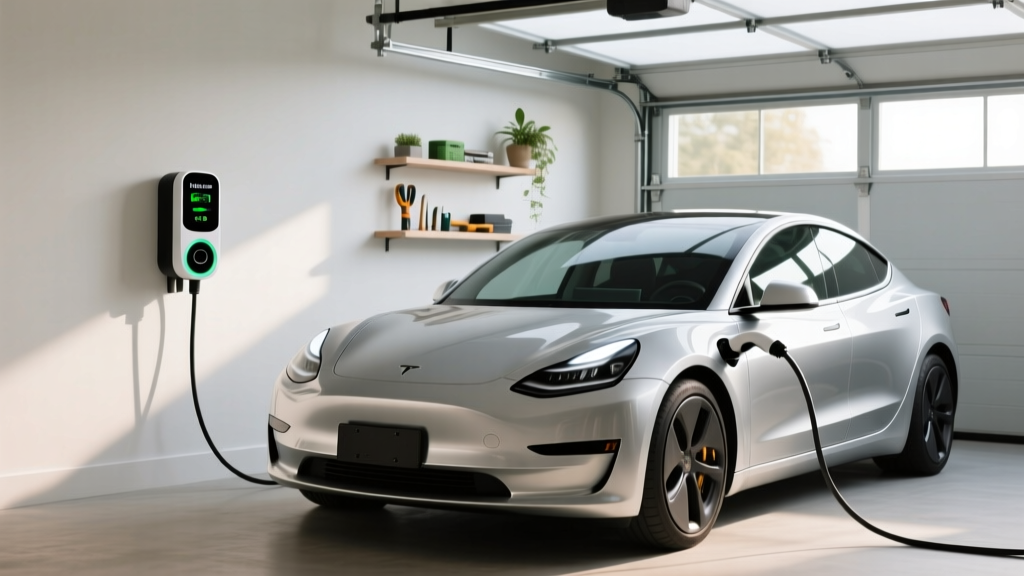
If you've bought or are considering a battery-electric vehicle, the single most impactful upgrade you can make isn't a wheel package or a performance trim — it's a dedicated home charging setup. Public DC fast-charging networks have expanded significantly through 2026, but the economics and convenience still overwhelmingly favor charging where you sleep. According to fueleconomy.gov, home-charged EVs cost roughly $0.04–$0.06 per mile on average, compared to $0.12–$0.16 per mile for a 25 MPG gasoline car at $3.50/gallon.
But deciding to invest in charging stations at home involves more than plugging into a wall outlet. Electrical panel capacity, circuit sizing, permitting, connector compatibility, and equipment selection all shape the final cost and daily experience. This guide walks through every variable with real numbers so you can budget accurately.
Charging Levels Explained: Speed, Power, and Daily Practicality
Before choosing equipment, you need to understand the three charging tiers available to EV owners. The critical distinction: kW (kilowatts) measures power — how fast energy flows into your battery. kWh (kilowatt-hours) measures energy — the total capacity of your battery pack. A 75 kWh battery charged at 11.5 kW takes roughly 6.5 hours from empty to full; the same battery at 150 kW DC fast charging can reach 80% in about 25 minutes.
| Level | Voltage | Typical Power (kW) | Miles of Range Added Per Hour | Best Use Case |
|---|---|---|---|---|
| Level 1 | 120V AC | 1.0–1.4 kW | 3–5 mi/hr | Overnight top-up for PHEVs or low-mileage commutes |
| Level 2 | 240V AC | 7.2–19.2 kW | 25–65 mi/hr | Primary home charging for all BEVs |
| DC Fast | 400–800V DC | 50–350 kW | 150–1,200+ mi/hr (equivalent) | Road trips, quick top-ups away from home |
For most BEV owners with daily driving under 60 miles, a Level 2 home charger rated at 11.5 kW (48 amps on a 60-amp circuit) replenishes a full day's driving in under two hours. A 300-mile EPA-rated SUV like the Hyundai IONIQ 5 (84 kWh usable battery) goes from 10% to 80% in about 6.5 hours on an 11.5 kW Level 2 unit — easily covered overnight.
- Tesla Model Y (75 kWh usable): 10–80% in ~4.5 hours
- Ford F-150 Lightning Extended Range (131 kWh usable): 10–80% in ~8.5 hours
- Chevrolet Equinox EV (85 kWh usable): 10–80% in ~5.2 hours
- Toyota bZ4X (71.4 kWh usable): 10–80% in ~4.3 hours
How Much Does It Cost to Install a Home EV Charger?
The total investment breaks into three components: the charger hardware, the electrical labor, and the permit. Costs vary significantly based on your home's existing electrical infrastructure. Homes built after 2000 with a 200-amp panel often need only a new circuit breaker and a short conduit run. Older homes with 100-amp service may require a full panel upgrade — a $2,000–$4,000 expense on its own.
| Component | Simple Install (panel has capacity) | Complex Install (new circuit, long run) | Panel Upgrade Required |
|---|---|---|---|
| Level 2 Charger (hardwired, 48A) | $400–$700 | $400–$700 | $400–$700 |
| Electrician labor | $300–$600 | $600–$1,500 | $800–$1,500 |
| Electrical permit | $50–$150 | $50–$200 | $100–$300 |
| Panel upgrade (if needed) | — | — | $2,000–$4,000 |
| Conduit, wiring, misc. | $50–$150 | $200–$600 | $200–$600 |
| Total estimated cost | $800–$1,600 | $1,250–$3,000 | $3,500–$7,100 |
Electrical Requirements: What Your Panel Needs
A 48-amp continuous-duty Level 2 charger requires a dedicated 60-amp circuit (the National Electrical Code requires circuits to be rated at 125% of the continuous load). This means 6-gauge copper wire (or 4-gauge aluminum), a 60A double-pole breaker, and a panel with sufficient spare capacity.
To check whether your panel can handle the addition: total up your existing loads (HVAC, electric range, dryer, water heater) and compare against your main breaker rating. A licensed electrician will perform a formal NEC Article 220 load calculation. If your panel shows 200A service with several open slots and no heavy existing loads, you're likely clear. If you're already near capacity on a 100A or 150A panel, budget for an upgrade or consider a lower-amperage charger (32A / 40A circuit) that draws less but still adds 20–30 miles per hour.
Permits and Inspections
Most jurisdictions require an electrical permit for a new 240V circuit. The permit fee typically runs $50–$200 depending on locality. After installation, an inspector verifies that wiring gauge, breaker sizing, grounding, and GFCI protection meet NEC 2023/2026 code. Skipping the permit risks insurance claim denial if an electrical fire occurs and may complicate a future home sale.
Which Connector and Charger Is Compatible with My EV?
The connector landscape has consolidated significantly since 2024. Tesla's North American Charging Standard (NACS) has been adopted by Ford, GM, Rivian, Volvo, Polestar, Mercedes-Benz, and most major automakers for 2025–2026 models. CCS1 remains on many vehicles sold through 2024–2025, and CHAdeMO is effectively limited to the aging Nissan Leaf.
| Connector | Brands Using It (2026) | Adapter Needed for Tesla Superchargers? |
|---|---|---|
| NACS (native) | Tesla, Ford, GM, Rivian, Volvo, Polestar, Mercedes, Hyundai/Kia (select 2026+) | No — plug directly |
| CCS1 | Hyundai/Kia (2024–2025 models), BMW, VW, Stellantis, Honda | Yes — CCS-to-NACS adapter ($150–$250) for Supercharger access |
| CHAdeMO | Nissan Leaf (legacy only) | Not compatible; limited network |
If you own a CCS1-equipped vehicle and want access to Tesla's Supercharger network (now 30,000+ stalls in North America), a certified CCS-to-NACS adapter from Tesla or a third-party supplier like Lectron or A2Z is essential. Verify that your adapter supports the full amperage of your vehicle's onboard charger — some budget adapters cap at 32A.
Equipment Recommendations: Top Level 2 Home Chargers for 2026
The best home chargers balance amperage, cable length, smart scheduling features, build quality, and price. Here are four proven units across a range of budgets:
ChargePoint Home Flex
- Power: Up to 12 kW (50A), adjustable 16–50A
- Connector: NACS or J1772 (CCS adapter available)
- Cable: 23 ft
- Smart features: Wi-Fi, app scheduling, Alexa, energy dashboard
- Price: ~$550–$650
- Best for: Flexible amperage for homes with limited panel capacity
Wall Connector (Tesla, 3rd Gen)
- Power: Up to 11.5 kW (48A)
- Connector: NACS native
- Cable: 24 ft
- Smart features: Wi-Fi, OTA updates, power sharing (multiple units), load management
- Price: ~$475
- Best for: Tesla owners or NACS-native 2026 vehicles
Emporia Level 2 Charger
- Power: Up to 11.5 kW (48A)
- Connector: J1772 (CCS1 vehicles); NACS adapter available
- Cable: 24 ft
- Smart features: Wi-Fi, solar integration, energy monitoring, scheduling
- Price: ~$400
- Best for: Budget-conscious buyers with solar panels
EnelX JuiceBox 2 (48A)
- Power: Up to 11.5 kW (48A)
- Connector: J1772 / NACS options
- Cable: 25 ft
- Smart features: Wi-Fi, app control, utility demand-response programs
- Price: ~$500–$600
- Best for: Utility rebate compatibility and demand-response savings
All four units support hardwired installation (recommended for 48A+ units; a NEMA 14-50 outlet limits you to 40A continuous per NEC). Hardwiring also eliminates the GFCI breaker requirement that applies to receptacle-based installations — a $50–$100 savings on the breaker itself.
Charging Cost Per Mile: Home vs. Public vs. Gasoline
The financial case for home charging is decisive. Electricity rates vary by region and time-of-use, but most homeowners can access off-peak rates between $0.08 and $0.16 per kWh. Public DC fast chargers typically charge $0.30–$0.55 per kWh, with some urban locations exceeding $0.60.
| Scenario | Rate | Vehicle Efficiency | Cost Per Mile |
|---|---|---|---|
| Home Level 2 (off-peak) | $0.12/kWh | 3.0 mi/kWh (100 MPGe) | $0.040 |
| Home Level 2 (peak rate) | $0.22/kWh | 3.0 mi/kWh | $0.073 |
| Public DC Fast (Electrify America) | $0.43/kWh | 3.0 mi/kWh | $0.143 |
| Tesla Supercharger (average) | $0.32/kWh | 3.5 mi/kWh (Model Y) | $0.091 |
| Gasoline car (25 MPG combined) | $3.40/gallon | 25 mi/gal | $0.136 |
| Gasoline car (30 MPG combined) | $3.40/gallon | 30 mi/gal | $0.113 |
At 12,000 miles per year, home off-peak charging costs roughly $480 annually. The equivalent gasoline cost at 25 MPG is $1,632. Even relying entirely on public DC fast charging ($0.43/kWh) yields $1,716 — still competitive with gasoline but eliminating the home-charging advantage. The takeaway: the decision to invest in charging stations at home is what unlocks the full economic benefit of EV ownership.
Safety, Code Compliance, and Installation Best Practices
A Level 2 charger draws continuous current for hours — this is fundamentally different from intermittent loads like a dryer or oven. The NEC treats EV charging as a continuous load, requiring 125% circuit oversizing and specific protections:
- Dedicated circuit: Your EV charger must have its own breaker — no sharing with other outlets or appliances.
- Wire gauge: 6 AWG copper for 60A circuits; 8 AWG for 40A circuits. Aluminum is acceptable at larger gauges but requires proper termination.
- GFCI protection: NEC 2023 (and 2026 adoption) requires GFCI protection for all receptacle-based EV charging installations. Hardwired units are exempt in most jurisdictions.
- Outdoor rating: If your charger is installed outside (carport, driveway), it must carry a NEMA 4 or IP65 weather rating. All units listed above meet this standard.
- Strain relief and cable management: Wall-mounted cord organizers prevent tripping hazards and connector damage.
Hire a licensed electrician who has specific EV charger installation experience. Ask whether they will pull a permit, perform a load calculation, and provide a warranty on their work. The National Fire Protection Association maintains the NEC code cycle — your installer should reference the 2023 or 2026 edition depending on local adoption.
Federal and Utility Incentives for Home Charging
The federal Alternative Fuel Vehicle Refueling Property Credit (IRS Form 8911) was extended and modified under current legislation, covering up to 30% of home charging equipment and installation costs, capped at $1,000 per year. Eligibility depends on census-tract income and rural/urban designations — check the IRS guidance for your specific address.
Beyond federal credits, many utilities offer direct rebates for Level 2 charger purchases ($200–$500 is common) and discounted installation through partner electricians. Some municipalities bundle permit-fee waivers with utility rebate programs. Contact your local utility's EV programs department before purchasing equipment — some rebates require pre-approval or specific charger models.
Frequently Asked Questions
Can I just use a standard 120V outlet to charge my EV?
Yes, but Level 1 charging at 1.2–1.4 kW adds only 3–5 miles of range per hour. For a 75 kWh battery, a full charge takes over 50 hours. Level 1 works for plug-in hybrids with 25–40 miles of electric range or for BEV owners who drive under 30 miles daily and can leave the car plugged in for 10+ hours. For most BEV owners, it's insufficient as a primary charging method.
What if my electrical panel is maxed out — are there alternatives to a full upgrade?
Yes. Options include installing a lower-amperage charger (24A or 32A) that requires only a 30A or 40A circuit, using a smart load-management device (like the Emporia VUE with automatic charger throttling) that dynamically reduces charger draw when other appliances activate, or switching to a dedicated time-of-use sub-panel. These alternatives can defer or eliminate a $2,000–$4,000 panel upgrade.
Is a NEMA 14-50 outlet better than hardwiring?
A NEMA 14-50 outlet offers portability — you can unplug and take the charger when you move. However, it limits you to 40A continuous (50A circuit × 80% NEC derating), caps charging at roughly 9.6 kW, and requires a GFCI breaker ($80–$120 extra). Hardwiring supports the full 48A (11.5 kW) on a 60A circuit, eliminates the GFCI requirement, and provides a more reliable connection. If you plan to stay in your home for 3+ years, hardwire is the better choice.
How long do home EV chargers last?
Quality Level 2 chargers from ChargePoint, Tesla, and EnelX carry 3-year warranties and typically last 8–12 years with minimal maintenance. The main failure points are cable insulation degradation (in extreme UV exposure) and Wi-Fi module obsolescence. The electrical circuit itself — breaker, wiring, conduit — should last 30+ years with no maintenance.
Will a home charger increase my property value?
A dedicated 240V EV charging circuit is increasingly viewed as a desirable home feature, similar to a finished garage or solar panels. While appraisals vary by market, a permitted, professionally installed Level 2 circuit signals to EV-shopping buyers that the home is move-in ready for electrified transportation. The circuit itself adds more resale value than the charger hardware, which buyers may want to choose themselves.