What Is an Instant Power Charger for EVs?
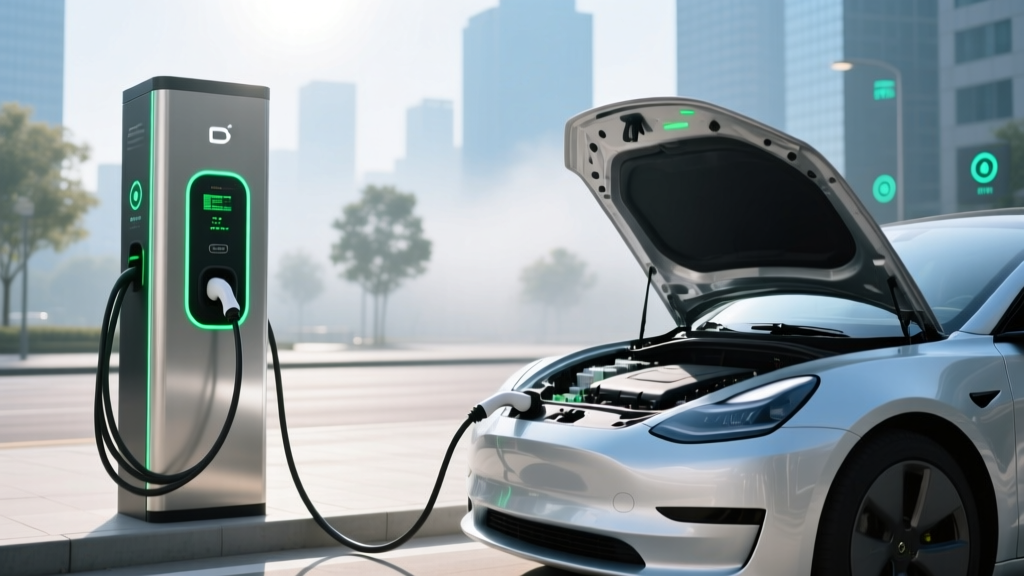
When EV shoppers search for an "instant power charger," they are usually looking for one of two things: a home wallbox that delivers maximum practical speed (Level 2, 240V), or a DC fast charger that can restore hundreds of miles of range in minutes on a road trip. The term doesn't map to a single product category, but it captures the core buyer desire — minimizing the time an EV sits plugged in.
This guide breaks down the three charging levels by power output (kW), energy delivered (kWh), real-world charging times, home installation costs, connector compatibility, and the actual cost per mile compared to gasoline. All figures reflect 2026 equipment pricing and the current IRS §30D residential energy credit, which covers 30% of home charger equipment and installation costs up to $1,000 (source: IRS).
Charging Levels: Speed, Power, and Miles Added Per Hour
The single most important distinction in EV charging is between kW (kilowatts — the rate of power delivery, like water pressure) and kWh (kilowatt-hours — the total energy stored, like gallons in a tank). A charger rated at 11.5 kW delivers energy at that rate; a 75 kWh battery stores that much total energy. Never confuse the two.
| Level | Voltage | Power (kW) | Miles of Range Added Per Hour | Typical Use Case |
|---|---|---|---|---|
| Level 1 | 120V AC | 1.0–1.4 kW | 3–5 mi/hr | Overnight top-up, PHEVs, low-mileage drivers |
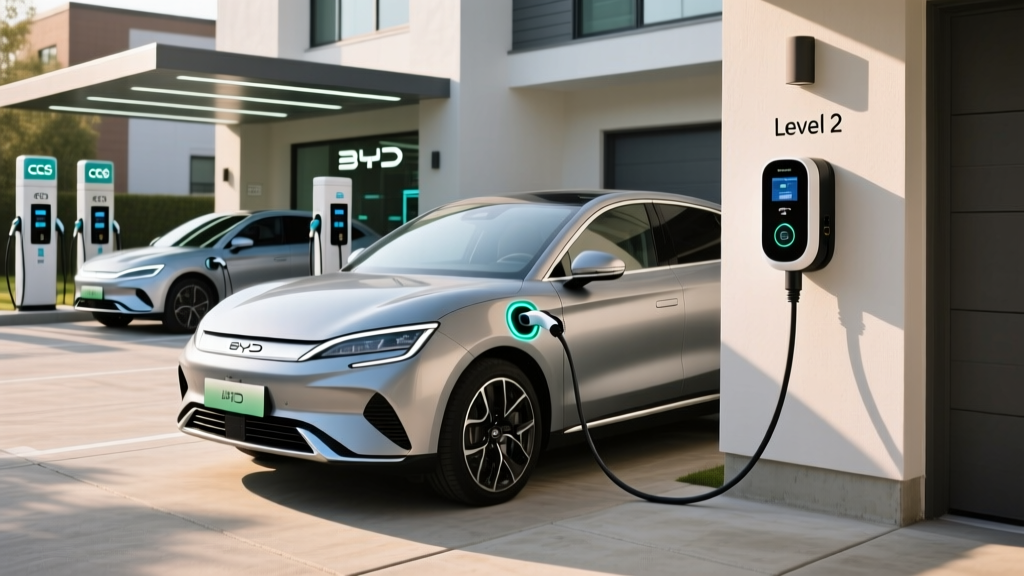
| Level 2 | 240V AC | 3.3–19.2 kW | 12–70 mi/hr | Home daily charging, workplace, public destinations |
| DC Fast (Level 3) | 400–900V DC | 50–350+ kW | 150–1,000+ mi/hr (burst) | Road trips, highway corridors, fleet depots |
A few real-world caveats: DC fast charging speeds peak only between roughly 10% and 40% State of Charge (SoC). Above 80%, the charge curve tapers sharply to protect the battery — a 350 kW peak charger may deliver an average of only 100–130 kW across a full 10–80% session. Cold weather (below 40°F) can reduce charging speed by 20–40% unless the vehicle has preconditioned its battery en route to the charger.
Home Level 2 Installation: Electrical Requirements and Cost Breakdown
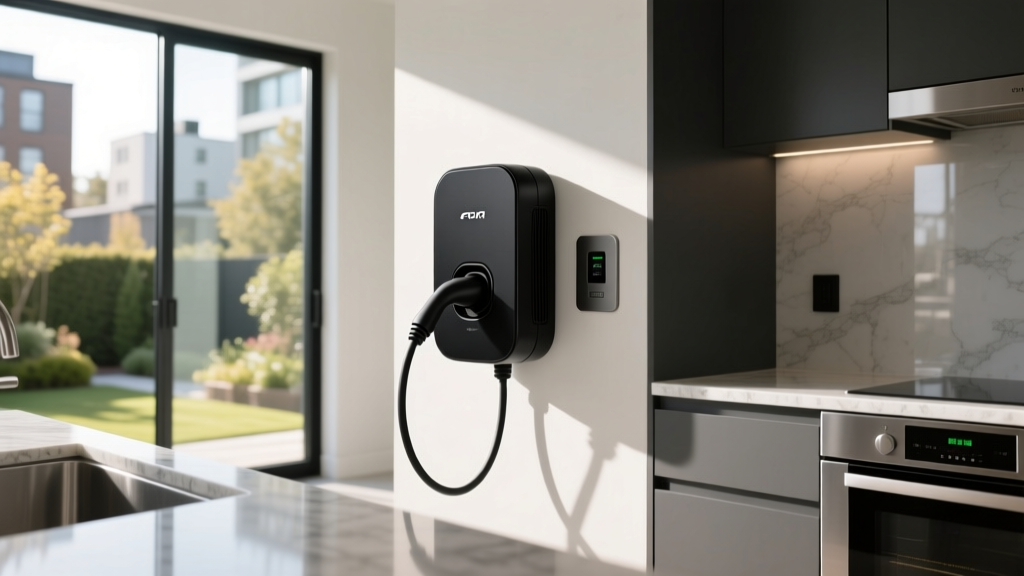
A Level 2 home charger is the closest thing to an "instant power charger" for daily use — it can fully replenish most EVs overnight. But the installation cost varies enormously depending on your home's electrical panel.
Electrical Requirements
Most Level 2 chargers require a dedicated 240V circuit. The amperage depends on the charger's power output:
- 32A circuit (7.7 kW): Requires a 40A breaker (NEC rule: continuous loads must use only 80% of breaker capacity)
- 40A circuit (9.6 kW): Requires a 50A breaker — the most common home setup
- 48A circuit (11.5 kW): Requires a 60A breaker — needs a panel with adequate spare capacity
- 80A circuit (19.2 kW): Requires a 100A breaker — rare in homes, typically requires a 200A+ panel with significant spare slots
Panel Upgrade Considerations
Homes built before 1990 often have 100A or 150A main panels with few spare breaker slots. Adding a 50A EV circuit to an already loaded 100A panel may require a panel upgrade to 200A, which costs $1,500–$3,500 on top of the charger installation. A licensed electrician will perform a load calculation per NEC Article 220 to determine if your existing panel can handle the additional draw. Some homeowners can avoid a panel upgrade by installing a smart panel-level load manager (e.g., Emporia VUE or Span smart panel) that dynamically throttles charger draw when other appliances cycle on.
| Component | Cost Range | Notes |
|---|---|---|
| Level 2 charger unit (32A–48A) | $300–$700 | Hardwired units cheaper than NEMA 14-50 plug-in models |
| Electrician labor (standard install) | $500–$1,500 | Varies by run length from panel to garage; longer runs cost more |
| Electrical permit | $50–$250 | Required in most jurisdictions; varies by city/county |
| Panel upgrade (if needed) | $1,500–$3,500 | 100A to 200A upgrade; not always required |
| Conduit/wiring materials | $100–$400 | THHN copper wire, PVC or metal conduit |
| Total (no panel upgrade) | $850–$2,850 | Most homes with 200A panel and short wire run |
| Total (with panel upgrade) | $2,350–$6,350 | Older homes with 100A panels |
After the federal residential clean energy credit (30% of total cost, up to $1,000 per IRS guidelines), a typical $1,800 install drops to roughly $1,260 net. Check your utility for additional rebates — many offer $200–$500 off equipment or installation.
Connector Compatibility: NACS, CCS, and CHAdeMO
Your EV's charge port determines which connectors and public networks you can use. As of 2026, the industry has largely converged on the North American Charging Standard (NACS), originally developed by Tesla, but many vehicles on the road still use CCS1 or CHAdeMO.
| Connector | Brands Using It (Native) | Adapter Needed For | Notes |
|---|---|---|---|
| NACS (Tesla) | Tesla (all), Ford, GM, Rivian, Volvo, Polestar, Hyundai/Kia (2025+) | CCS → NACS adapter (~$200) for older CCS stations | Access to Tesla Supercharger network (17,000+ stalls in US) |
| CCS1 | VW, BMW, older Ford/GM, Mercedes, Stellantis (some), Hyundai/Kia (pre-2025) | NACS → CCS adapter (~$200–$250) for Tesla Superchargers | Electrify America, EVgo, ChargePoint use CCS |
| CHAdeMO | Nissan Leaf (discontinued 2025), Mitsubishi Outlander PHEV (older) | No widely available adapter to NACS/CCS | Declining network support; avoid for new purchases |
Home charger connector: Most Level 2 home chargers ship with a J1772 connector (the AC charging standard). Tesla vehicles require a J1772-to-NACS adapter (included with every Tesla). As NACS-native home chargers roll out in 2026, some units now ship with NACS plugs directly, eliminating the adapter.
Recommended Home Chargers: Power Output, Features, and Pricing
Below are four widely available Level 2 chargers that deliver fast, reliable home charging. Each is UL-listed (or ETL-listed) for safety compliance.
ChargePoint Home Flex (up to 50A / 12 kW)
- Power: Adjustable 16A–50A (3.8–12 kW); requires hardwiring above 40A
- Cable: 23 feet, J1772 connector (NACS adapter available)
- Smart features: Wi-Fi, app scheduling, utility demand-response integration, Alexa
- Price: ~$550–$650
- Best for: Homes with a 60A breaker available; flexible amperage setting avoids panel upgrade in some cases
Wallbox Pulsar Plus (up to 48A / 11.5 kW)
- Power: 48A max (11.5 kW); requires 60A breaker
- Cable: 25 feet, J1772 connector
- Smart features: Wi-Fi + Bluetooth, app control, Power Sharing (two units on one circuit), solar integration
- Price: ~$500–$600
- Best for: Two-EV households (Power Sharing splits a single 60A circuit between two chargers)
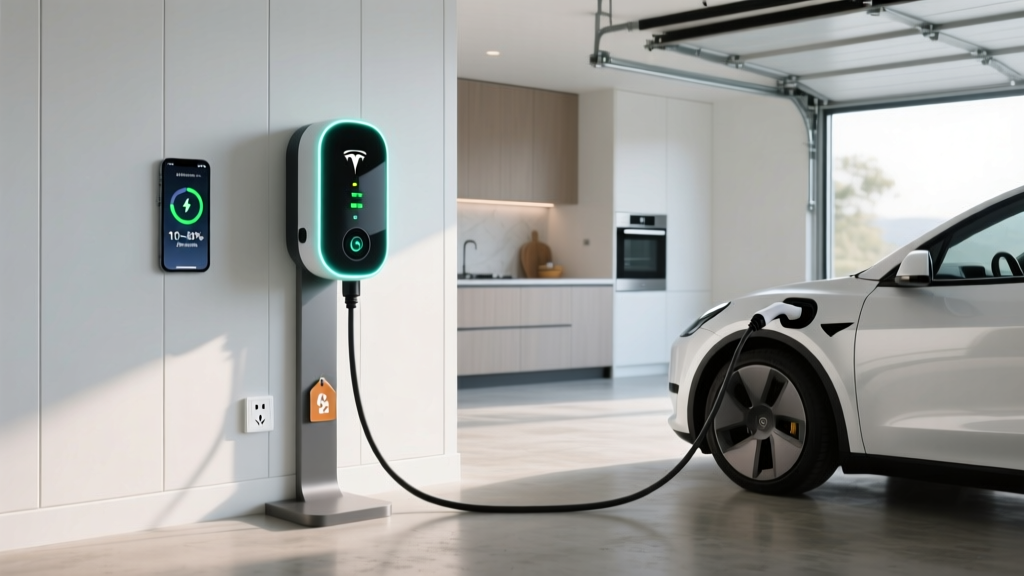
Tesla Wall Connector (up to 48A / 11.5 kW)
- Power: 48A max (11.5 kW); requires 60A breaker
- Cable: 24 feet, NACS connector (J1772 adapter sold separately)
- Smart features: Wi-Fi, OTA updates, load sharing between units, access control
- Price: ~$425–$475
- Best for: Tesla owners who want a native NACS plug without an adapter
Emporia Level 2 EV Charger (up to 48A / 11.5 kW)
- Power: Adjustable up to 48A (11.5 kW)
- Cable: 24 feet, J1772 connector
- Smart features: Deep energy monitoring via Emporia VUE panel integration, solar-aware scheduling, circuit-level data
- Price: ~$400–$500
- Best for: Energy-conscious owners who want granular kWh tracking and solar self-consumption optimization
Cost Per Mile: EV Charging vs. Gasoline
The economics of EV charging depend heavily on where you charge. Home charging on an off-peak electricity rate is dramatically cheaper than gasoline; DC fast charging on a road trip narrows the gap.
| Scenario | Rate | Cost Per Mile (250 Wh/mi EV) | Equivalent Gas Vehicle (30 MPG at $3.50/gal) |
|---|---|---|---|
| Home, off-peak (utility TOU rate) | $0.10/kWh | $0.025/mi | $0.117/mi |
| Home, standard residential | $0.16/kWh | $0.040/mi | $0.117/mi |
| Public Level 2 (ChargePoint, EVgo) | $0.30–$0.45/kWh | $0.075–$0.113/mi | $0.117/mi |
| DC fast charging (Electrify America, Tesla) | $0.35–$0.55/kWh | $0.088–$0.138/mi | $0.117/mi |
Key takeaway: If you charge at home 80% of the time (as most EV owners do), your blended cost per mile is roughly $0.03–$0.05 — about one-third to one-quarter the cost of gasoline. Even exclusive DC fast charging at $0.50/kWh roughly matches gas on a cost-per-mile basis, though this is the least economical way to own an EV. Per fueleconomy.gov, the average 2026 EV achieves 100–130 MPGe combined, translating to 250–330 Wh/mile.
Charging Time Examples: 10–80% for Common Battery Sizes
Charging time depends on battery capacity (kWh), the charger's power output (kW), and the vehicle's onboard charge acceptance rate. Here are realistic 10–80% times for representative battery sizes:
| Battery Size | Example Vehicles | Level 2 (11.5 kW / 48A) | DC Fast (150 kW avg) | DC Fast (250 kW avg) | DC Fast (350 kW peak) |
|---|---|---|---|---|---|
| 40 kWh | PHEVs, Nissan Leaf (older) | ~2.5 hours | ~14 min | ~10 min | ~8 min |
| 75 kWh | Tesla Model Y, Hyundai Ioniq 5 | ~5 hours | ~28 min | ~18 min | ~15 min |
| 100 kWh | Tesla Model S, Ford F-150 Lightning Ext. | ~6.5 hours | ~38 min | ~25 min | ~20 min |
| 130 kWh | GMC Hummer EV, Silverado EV | ~8.5 hours | ~50 min | ~33 min | ~28 min |
Note that "350 kW peak" chargers rarely sustain 350 kW for the full session. Vehicles with 800V architectures (Hyundai Ioniq 5/6, Kia EV6/EV9, Porsche Taycan, Lucid Air) can sustain higher average rates and reach closer to their peak. Most 400V vehicles (Tesla, Ford, GM, VW) peak at 150–250 kW and taper earlier.
Safety, Code, and Installation Best Practices
EV charging draws significant current for hours at a time — this is a continuous heavy load, not a brief appliance cycle. Safety and code compliance are non-negotiable.
- Dedicated circuit: Your EV charger must be on its own dedicated breaker. Never share a circuit with other high-draw appliances (dryer, oven, HVAC).
- GFCI protection: NEC 2023 and 2026 editions require GFCI (Ground Fault Circuit Interrupter) protection for all outdoor receptacles used for EV charging. Hardwired chargers typically have built-in ground-fault protection and may not require an external GFCI breaker (check local code amendments).
- Outdoor rating: If your charger is installed outdoors or in an exposed carport, it must be rated NEMA 4 (weatherproof). Most quality chargers carry this rating, but verify before purchase.
- Wire gauge: A 50A circuit requires 6 AWG copper wire; a 60A circuit requires 4 AWG. Your electrician will size wire per NEC Table 310.16, accounting for conduit fill and ambient temperature derating.
- Permit and inspection: Nearly all jurisdictions require a permit and final inspection for EV charger installations. Unpermitted work can void homeowner's insurance claims and create resale issues.
- NEMA 14-50 receptacle caution: If using a plug-in charger on a NEMA 14-50 outlet, ensure the receptacle is an industrial-grade unit (e.g., Hubbell or Bryant) rated for daily plug/unplug cycles. Residential-grade 14-50 outlets have been linked to overheating in EV charging applications.
Frequently Asked Questions
How much does it cost to install a home EV charger?
A typical Level 2 home charger installation costs $850–$2,850 when no panel upgrade is needed. This includes the charger unit ($300–$700), electrician labor ($500–$1,500), permit ($50–$250), and wiring materials ($100–$400). If your home needs a 100A-to-200A panel upgrade, add $1,500–$3,500. The federal residential clean energy credit covers 30% of total costs up to $1,000, and many utilities offer additional rebates.
How fast will each charging level add range?
Level 1 (120V) adds 3–5 miles per hour — adequate only for PHEVs or very low daily mileage. Level 2 (240V, 48A/11.5 kW) adds roughly 35–45 miles per hour, fully recharging most EVs overnight in 5–7 hours. DC fast charging adds 150–1,000+ miles per hour in burst, with a typical 10–80% session taking 15–35 minutes depending on battery size and charger power.
Which connector/charger is compatible with my EV?
Check your EV's charge port. Tesla, Ford, GM, Rivian, and 2025+ Hyundai/Kia vehicles use NACS. Most other brands (VW, BMW, Mercedes, pre-2025 Hyundai/Kia) use CCS1. For home charging, most Level 2 chargers use a J1772 plug — Tesla owners use the included J1772-to-NACS adapter. NACS-native home chargers are now available from Tesla and select third-party brands.
How much does charging cost per mile vs gas?
Home charging at the US average residential rate of $0.16/kWh costs roughly $0.04 per mile for a typical EV (250 Wh/mi). Gasoline at $3.50/gallon in a 30 MPG vehicle costs $0.117 per mile. Home EV charging is approximately 65–75% cheaper per mile. DC fast charging at $0.45–$0.55/kWh narrows the gap to near parity with gas.
What electrical upgrades might I need?
The most common upgrade is a panel capacity increase from 100A to 200A, required when your existing panel lacks capacity for a new 50A or 60A circuit. Your electrician will perform an NEC Article 220 load calculation. Alternatives to a full panel upgrade include a smart load manager that dynamically limits charger draw, or a lower-amperage charger (e.g., 32A/7.7 kW instead of 48A/11.5 kW) that fits within your panel's remaining capacity. Per the National Highway Traffic Safety Administration, proper electrical installation is critical to vehicle and home safety.