Understanding Innogy Charging Stations in the 2026 EV Landscape
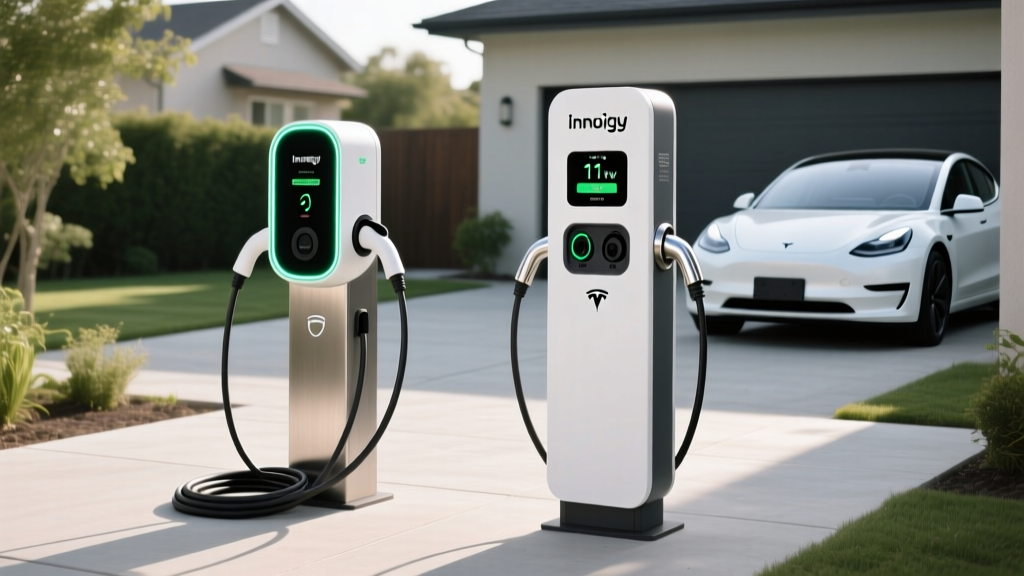
If you've been researching home or commercial EV charging equipment, you've likely encountered the innogy charging station brand. Originally a subsidiary of Germany's RWE utility group, innogy's eMobility division built a strong reputation across Europe for reliable, smart-connected AC and DC charging hardware. Following corporate restructuring — innogy was absorbed into E.ON in 2020, with its eMobility solutions line subsequently integrated into broader European charging infrastructure — the innogy name persists on many installed units and remains a reference point for buyers evaluating quality benchmarks in Level 2 and DC fast charging equipment.
For US-based EV owners in 2026, the practical question is straightforward: whether you're looking at legacy innogy hardware, its successor platforms, or comparable alternatives from ChargePoint, Emporia, Wallbox, or Tesla, the fundamentals of home charging installation, electrical requirements, connector standards, and operating costs remain the same. This guide covers everything you need to spec, install, and budget for a home EV charging setup — with innogy's engineering philosophy as a quality reference point throughout.
Charging Levels Explained: kW Speeds and Miles Per Hour
The single most common point of confusion for new EV owners is the difference between kW (kilowatts) and kWh (kilowatt-hours). Think of it this way: kW measures the rate of energy delivery — like water pressure from a hose — while kWh measures the total energy capacity stored in your battery — like the size of the tank. Your battery holds a fixed number of kWh (e.g., 75 kWh usable); the charger delivers energy at a rate measured in kW. Never use these interchangeably.
Here's how each charging level translates to real-world range recovery:
| Level | Voltage | Power (kW) | Miles of Range Added Per Hour | Typical Use Case |
|---|---|---|---|---|
| Level 1 | 120V AC | 1.0–1.9 kW | 3–5 miles/hr | Overnight top-up, PHEVs, low-mileage drivers |
| Level 2 | 240V AC | 3.3–19.2 kW | 12–75 miles/hr | Home daily charging, workplace, public AC stations |
| DC Fast Charge (Level 3) | 400–900V DC | 50–350+ kW | 150–1,200+ miles/hr | Road trips, highway corridors, commercial fleets |
A few practical notes: Level 1 from a standard 120V household outlet works fine for plug-in hybrids with 25–45 miles of electric range, or for BEV owners who drive under 30 miles daily and can charge over 10–12 hours. For any BEV with a 60+ kWh battery, Level 2 at 240V is the realistic minimum for daily convenience. DC fast charging is reserved for public stations — you won't install this at home due to the electrical service requirements (often 480V three-phase) and $40,000–$150,000+ equipment costs.
Home Installation: Electrical Requirements, Panel Upgrades, and Real Costs
Installing a Level 2 home charger is an electrical project, not a plug-and-play consumer electronics purchase. Here's what you're actually signing up for:
Electrical Circuit Requirements
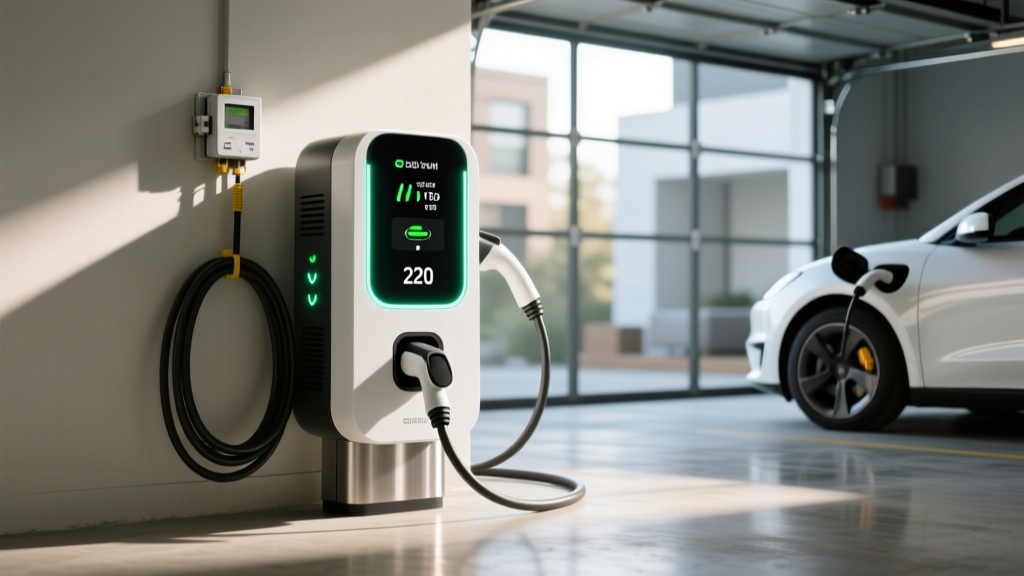
A typical Level 2 home charger operates on a 240V dedicated circuit — the same voltage as your electric dryer or oven. The most common configurations in 2026:
- 40A circuit / 32A continuous draw: Delivers up to 7.7 kW. Compatible with most EVs' onboard chargers. Requires a NEMA 14-50 outlet or hardwired connection.
- 50A circuit / 40A continuous: Delivers up to 9.6 kW. Ideal for EVs with 11.5 kW onboard chargers (Tesla Model 3/Y, Ford F-150 Lightning extended range).
- 60A circuit / 48A continuous: Delivers up to 11.5 kW. Maximizes charging speed for vehicles with larger onboard chargers. Requires thicker gauge wiring (6 AWG copper or larger).
- 80A circuit / 64A continuous: Delivers up to 15.3–19.2 kW. Premium installations for high-capacity EVs like the Lucid Air or Hummer EV. Requires 100A sub-panel or significant service upgrade.
The National Electrical Code (NEC) requires that continuous loads (including EV chargers running for 3+ hours) not exceed 80% of the circuit breaker rating. A 40A breaker supports 32A continuous — not 40A continuous. Your electrician will size accordingly.
Panel Upgrade Reality
Many homes built before 2000 have 100A or 150A main electrical panels. Adding a 40–60A EV circuit may push total load beyond safe capacity, especially if you already run electric HVAC, an electric water heater, and an electric dryer. A licensed electrician will perform a load calculation (NEC Article 220) to determine if your panel has headroom.
If an upgrade is needed, expect to pay $1,500–$3,500 for a 200A panel upgrade, or $3,000–$5,000+ for a full service upgrade from 100A to 200A. Some homeowners opt for a smart load management device (like the Emporia Smart Load Manager or Tesla Gateway) that dynamically throttles charger amperage when other high-draw appliances activate — this can avoid a panel upgrade entirely.
Installation Cost Breakdown
Here's a realistic cost range for a 2026 home Level 2 charger installation, based on national averages and industry data from sources like HomeAdvisor and contractor surveys:
| Component | Low End | Typical | High End |
|---|---|---|---|
| Level 2 charger unit (hardware) | $300 | $500–$700 | $1,200 |
| Electrician labor (2–6 hours) | $300 | $600–$1,000 | $2,000 |
| Wiring, conduit, materials | $100 | $200–$500 | $1,000 |
| Electrical permit | $50 | $100–$250 | $400 |
| Panel upgrade (if needed) | $0 | $0–$1,500 | $4,000 |
| Total (no panel upgrade) | $750 | $1,200–$2,000 | $3,500 |
| Total (with panel upgrade) | $2,250 | $3,000–$4,500 | $7,000+ |
Costs trend higher if the run from your panel to the charger location exceeds 50 feet (more wire, larger gauge needed), if conduit must go through masonry or finished walls, or if your local jurisdiction requires a GFCI breaker for EV circuits (which adds $50–$120 for the breaker itself and can cause nuisance tripping with some chargers that already have internal ground-fault protection).
Connector Compatibility: NACS, CCS1, CHAdeMO, and Adapter Needs
The connector landscape in North America has undergone a seismic shift since 2023. Here's where things stand in 2026:
| Connector | AC Level 2 | DC Fast Charge | Vehicle Adoption (2026) |
|---|---|---|---|
| NACS (J3400) | Yes (native) | Yes | Tesla (all years); Ford, GM, Rivian, Hyundai, Kia, BMW, Volvo, Mercedes, and most others from 2025+ model years |
| CCS1 (J1772 Combo) | J1772 for AC | Yes | Legacy vehicles (2012–2024 models from VW, BMW, Hyundai, Kia, GM pre-switch); still supported at most DC stations |
| CHAdeMO | J1772 for AC | Yes | Nissan Leaf (all years), Mitsubishi Outlander PHEV (older); effectively sunset for new vehicles |
What this means for charger buyers: If you're purchasing a new EV in 2026, it almost certainly uses the NACS connector for both AC and DC charging. Most new home Level 2 chargers sold in 2026 ship with a NACS plug natively. If you own a 2018–2024 EV with a CCS1/J1772 port, you can either buy a charger with a J1772 connector or use a NACS-to-J1772 adapter (approximately $150–$250 from Tesla or third-party makers). For DC fast charging, CCS-to-NACS adapters are available but add weight and a potential failure point at the connector.
Innogy's European charging stations historically used the Type 2 (Mennekes) connector standard, which is the European equivalent of J1772/NACS. If you're importing an innogy unit or evaluating one for a US installation, connector compatibility and UL/ETL certification for North American electrical codes must be verified before purchase.
Equipment Recommendations: Top Level 2 Chargers for 2026
Whether you're benchmarking against innogy's build quality or shopping fresh, here are the home Level 2 chargers that deliver the best combination of power output, smart features, cable management, and value in 2026:
ChargePoint Home Flex (NACS)
- Power Output: Up to 12 kW (50A circuit) — adjustable down to 16A for smaller panels
- Connector: NACS native (2025+ refresh); J1772 available
- Cable Length: 23 feet
- Smart Features: Wi-Fi, app scheduling, energy tracking, Alexa/Google integration, load sharing between two units
- Price: ~$599
- Best For: Most EV owners wanting flexible amperage and reliable app control
Emporia Vue EV Charger
- Power Output: Up to 11.5 kW (48A continuous on 60A circuit)
- Connector: NACS (2025+ models); J1772 available
- Cable Length: 24 feet
- Smart Features: Integrated whole-home energy monitoring, solar-aware charging, time-of-use scheduling, load management
- Price: ~$499 (charger) + optional $100 energy monitor add-on
- Best For: Solar owners and energy-data enthusiasts who want granular kWh tracking
Tesla Wall Connector (Gen 4)
- Power Output: Up to 11.5 kW (48A on 60A circuit)
- Connector: NACS native; J1772 adapter included
- Cable Length: 24 feet
- Smart Features: Wi-Fi, OTA updates, Power-Share between two units, integrated with Tesla app
- Price: ~$450
- Best For: Tesla owners and multi-Tesla households wanting clean aesthetic and power-sharing
Wallbox Pulsar Max
- Power Output: Up to 11.5 kW (48A)
- Connector: NACS (2025+); J1772 available
- Cable Length: 25 feet
- Smart Features: Wi-Fi + Bluetooth, Eco-Smart solar integration, Power Boost load management, myWallbox app
- Price: ~$649
- Best For: International build quality (Spanish engineering, similar to innogy's European DNA) with solar integration
Cost to Charge: Home vs. Public vs. Gas Per-Mile Economics
The economic case for home charging is overwhelming — but the math changes dramatically when you rely on public DC fast charging. Here's a real-world cost comparison using 2026 electricity and fuel prices:
| Scenario | Rate | Cost per kWh | Cost per Mile (3.5 mi/kWh EV) | Annual Cost (12,000 mi) |
|---|---|---|---|---|
| Home, off-peak utility rate | $0.11–$0.15/kWh | $0.13 avg | $0.037 | $444 |
| Home, standard rate (no TOU) | $0.16–$0.22/kWh | $0.19 avg | $0.054 | $648 |
| Public Level 2 (ChargePoint, EVgo) | $0.25–$0.49/kWh | $0.35 avg | $0.100 | $1,200 |
| DC Fast Charge (Electrify America, Tesla Supercharger) | $0.35–$0.65/kWh | $0.48 avg | $0.137 | $1,644 |
| Gasoline vehicle (28 MPG combined, $3.35/gal) | $3.35/gallon | — | $0.120 | $1,440 |
Key takeaway: Charging at home on off-peak rates costs roughly 70% less per mile than gasoline. Even public DC fast charging is roughly comparable to or slightly more expensive than gas on a per-mile basis — which is why home charging access remains the single biggest factor in EV ownership satisfaction. According to fueleconomy.gov, most modern EVs achieve 3.0–4.0 miles per kWh, making the per-mile math straightforward once you know your local electricity rate.
Many utilities in 2026 offer dedicated EV time-of-use (TOU) plans with rates as low as $0.06–$0.09/kWh during overnight hours (typically 11 PM – 6 AM). If your utility offers this, scheduling your charger to run only during off-peak windows can drop your annual fuel cost below $350.
Charging Time Examples: 10–80% for Common Battery Sizes
Battery size and charger power interact to determine your actual charging time. Most EVs limit charging to 80% during DC fast sessions to protect battery longevity (the charge curve tapers significantly above 80%, sometimes doubling the time from 80–100% compared to 10–80%). Here are realistic Level 2 home charging times for popular 2026 battery configurations:
- Tesla Model Y (75 kWh usable, NMC): 10–80% on 11.5 kW Level 2 = ~4.5 hours. On 7.7 kW = ~6.7 hours.
- Ford F-150 Lightning Extended Range (131 kWh usable, NMC): 10–80% on 11.5 kW = ~10.3 hours. On 19.2 kW (80A circuit) = ~6.1 hours.
- Hyundai Ioniq 5 (77.4 kWh usable, NMC): 10–80% on 11.5 kW = ~4.7 hours. On 7.7 kW = ~7 hours.
- Chevrolet Equinox EV (85 kWh usable, NMC): 10–80% on 11.5 kW = ~5.2 hours. On 7.7 kW = ~7.7 hours.
- Toyota RAV4 Prime PHEV (18.1 kWh usable, NMC): 0–100% on 3.3 kW (Level 2, 16A) = ~5.5 hours. On 6.6 kW (32A) = ~2.7 hours.
For DC fast charging on the road, expect 10–80% in roughly 18–25 minutes on a 150–250 kW charger for most 2026 EVs with 800V architecture (Hyundai/Kia E-GMP, Porsche Taycan, Lucid Air). Older 400V vehicles typically take 25–40 minutes for the same session. The EPA's fueleconomy.gov database lists charge times and efficiency data for every EPA-certified EV sold in the US.
Safety, Code Compliance, and Installation Best Practices
EV chargers draw sustained high current for hours — this is fundamentally different from intermittent loads like a microwave. Safety considerations are non-negotiable:
- Dedicated circuit: Your Level 2 charger must be on its own dedicated breaker — never shared with other outlets or appliances. NEC 511.8 (for EV charging) and 210.23 (for branch circuits) govern this requirement.
- GFCI protection: The 2020 and 2023 NEC require GFCI protection for 240V receptacles used for EV charging in garages. However, many quality chargers (including innogy's European units and US equivalents from ChargePoint and Wallbox) include internal ground-fault detection, making an external GFCI breaker redundant and prone to nuisance tripping. Hardwired installations (no plug) often avoid this issue entirely since GFCI requirements differ for hardwired vs. receptacle-connected equipment.
- Outdoor rating: If your charger is mounted outside, verify a NEMA 4 (or IP55+) rating for weather resistance. Most 2026 chargers from major brands meet this standard, but cable management matters — ensure the connector holster keeps the plug face protected from rain and debris.
- UL/ETL certification: Only install chargers that carry UL (Underwriters Laboratories) or ETL (Intertek) listing marks. Uncertified chargers from overseas marketplaces may lack critical safety protections and can void your homeowner's insurance in the event of a fire. This is especially relevant if sourcing legacy innogy hardware designed for European CE-marking standards rather than North American UL certification.
- Permit and inspection: Most US jurisdictions require an electrical permit for a new 240V circuit. Your electrician pulls the permit, and a local inspector verifies the installation meets NEC code. This typically costs $50–$400 depending on your municipality and protects you legally and for insurance purposes.
Frequently Asked Questions
How much does it cost to install a home EV charger?
A typical Level 2 home charger installation runs $1,200–$2,000 all-in (hardware, electrician, wiring, permit) if your electrical panel has capacity. If a panel upgrade from 100A to 200A is needed, add $1,500–$4,000. The charger unit itself costs $400–$700 for most quality smart chargers in 2026.
How fast will each charging level add range?
Level 1 (120V) adds 3–5 miles per hour. Level 2 (240V, 32A/7.7 kW) adds roughly 25–30 miles per hour for most EVs. Level 2 at 48A/11.5 kW adds 35–45 miles per hour. DC fast charging at 150 kW+ can add 150–400+ miles in a 20–30 minute session, depending on the vehicle's charge acceptance rate.
Which connector and charger is compatible with my EV?
If your EV is a 2025+ model year from Tesla, Ford, GM, Rivian, Hyundai, Kia, BMW, Volvo, or Mercedes, it uses the NACS connector. Older models (pre-2025, non-Tesla) typically use CCS1/J1772. Nissan Leaf uses CHAdeMO for DC and J1772 for AC. Check your vehicle's charge port or the manufacturer's spec page, then match your home charger's connector accordingly — or use an adapter.
How much does charging cost per mile vs. gas?
Home charging on off-peak rates costs approximately $0.03–$0.05 per mile — about 70% less than a 28 MPG gasoline car at $3.35/gallon ($0.12/mile). Public DC fast charging averages $0.12–$0.15 per mile, roughly comparable to gasoline. The savings case for EVs depends heavily on consistent home charging access.
What electrical upgrades might I need?
The most common upgrade is a panel capacity increase from 100A or 150A to 200A, needed when your existing panel can't accommodate a new 40–60A circuit alongside your other loads. Alternatives include a smart load management device that throttles charger amperage dynamically, or installing a lower-amperage charger (16A or 24A) that draws less from the panel. Your electrician's load calculation (NEC Article 220) will determine the right path. For more on electrical safety standards, refer to the National Fire Protection Association's NEC resources.
Is the innogy charging station still available in the US?
Innogy's eMobility hardware line was primarily deployed across Europe and was absorbed into E.ON's infrastructure following the 2020 corporate merger. New innogy-branded units are not widely distributed in the US market in 2026. US buyers seeking similar European-engineered quality should evaluate Wallbox (Spain), Alfen (Netherlands), or ABB's Terra AC line as comparable alternatives with full UL certification and NACS connector support.