Hyundai's extended-range electric vehicles — led by the Ioniq 5 (up to 303 miles EPA), Ioniq 6 (up to 361 miles EPA), and the three-row Ioniq 9 — pair large battery packs with 800V architecture that enables some of the fastest DC charging in the segment. But a big battery only matters if you can replenish it efficiently. This guide breaks down exactly how to charge Hyundai extended-range electric vehicles at home, on public networks, and what equipment, electrical work, and budget you'll need to make it seamless.
Hyundai's Extended-Range EV Lineup: Battery and Charging Specs at a Glance
Before selecting a charger, you need to know what you're filling. Hyundai's current extended-range BEVs use large lithium-ion (NMC) packs and support both Level 2 AC and high-speed DC charging via their E-GMP platform. Here are the key figures for the 2025–2026 lineup:
| Model | Usable Battery (kWh) | EPA Range (mi) | Max DC Charge Rate (kW) | 10–80% DC Time | Max AC Level 2 (kW) | Connector (2026) |
|---|---|---|---|---|---|---|
| Ioniq 5 Long Range AWD | 77.4 | 290 | 238 | ~18 min | 10.9 | NACS (native) |
| Ioniq 6 SEL AWD | 77.4 | 316 | 238 | ~18 min | 10.9 | NACS (native) |
| Ioniq 9 Long Range AWD | 110.3 | 311 | 240 (est.) | ~24 min | 10.9 | NACS (native) |
Sources: fueleconomy.gov, Hyundai USA specifications. Real-world highway range typically runs 10–15% below EPA; cold-weather (below 32°F) can reduce range 20–30% due to cabin heating and battery resistance.
Charging Levels Explained: How Fast Will Each Level Add Range?
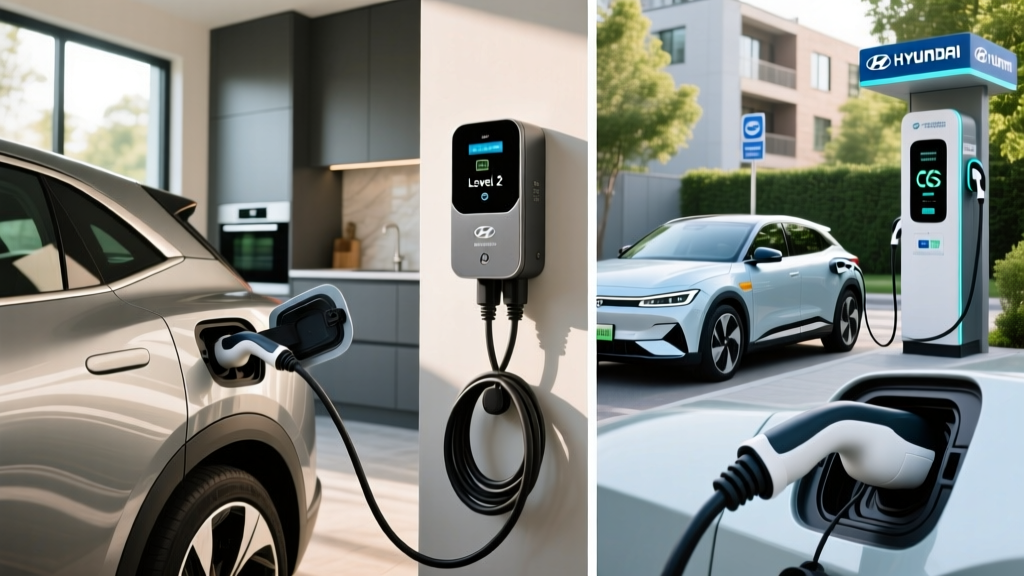
There are three tiers of EV charging, each serving a different use case. Here's how they apply to Hyundai extended-range electric vehicles with the 77.4 kWh pack (Ioniq 5/6):
| Charging Level | Power (kW) | Voltage / Amps | Miles of Range Added per Hour | Best For |
|---|---|---|---|---|
| Level 1 (Standard Outlet) | 1.2–1.9 kW | 120V / 12–16A | 3–5 mi/hr | Emergency top-ups, PHEVs, overnight trickle |
| Level 2 (Home / Workplace) | 7.2–11.5 kW | 240V / 30–48A | 20–35 mi/hr | Daily home charging, full overnight refill |
| DC Fast Charging | 50–350 kW | 400–800V DC | 150–650 mi/hr (peak) | Road trips, rapid replenishment |
Real-world context: Plugging a 77.4 kWh Ioniq 5 into a Level 1 outlet overnight (10 hours) adds roughly 30–50 miles — adequate for short commutes but not a full daily solution. A 48-amp Level 2 home charger delivers about 10.9 kW (the car's AC maximum), adding roughly 32 miles per hour and fully replenishing the pack in about 7.5 hours. On a 350 kW DC fast charger, the Ioniq 5's 800V architecture lets it sustain peak rates longer than 400V competitors, reaching 10–80% in approximately 18 minutes — adding roughly 200 miles of range in that window.
Home Charger Installation: Electrical Requirements, Costs, and Panel Upgrades
Home Level 2 charging is where Hyundai extended-range EV owners will do 85–95% of their charging. But installation costs vary dramatically based on your home's electrical infrastructure.
Electrical Requirements for a Level 2 Charger
A 48-amp Level 2 charger (the sweet spot for Hyundai's 10.9 kW AC limit) requires a 240V, 60-amp dedicated circuit (NEC code requires circuits rated at 125% of continuous load: 48A × 1.25 = 60A). If you opt for a 40-amp charger, you need a 50-amp circuit.
- Panel capacity: Most modern homes have 200-amp service panels. Adding a 60-amp breaker is usually straightforward if you have open slots and sufficient capacity. Older homes with 100-amp panels may need a service upgrade ($1,500–$3,500).
- Wiring: 6 AWG copper wire (for 60A circuits) run through conduit from panel to charger location. Longer runs (garage far from panel) increase wire cost.
- Permit: Most jurisdictions require an electrical permit ($50–$200) and a post-installation inspection.
- GFCI protection: NEC 2020+ requires GFCI protection for EV receptacles; most hardwired chargers have built-in ground-fault protection.
- Outdoor rating: If your charger is mounted outside (driveway, carport), ensure it carries a NEMA 4 or NEMA 4X weatherproof rating.
Installation Cost Breakdown
| Cost Component | Simple Install (Panel Nearby) | Complex Install (Long Run / Panel Upgrade) |
|---|---|---|
| Level 2 Charger (Equipment) | $400–$700 | $400–$700 |
| Electrician Labor (2–4 hrs standard) | $400–$800 | $1,200–$2,500 |
| Electrical Permit | $50–$150 | $50–$200 |
| Panel Upgrade (if needed) | $0 | $1,500–$3,500 |
| Wiring / Conduit (long runs) | $100–$300 | $500–$1,500 |
| Total Estimated Cost | $950–$1,950 | $3,650–$8,400 |
Tip: The federal Alternative Fuel Vehicle Refueling Property Credit (§30C) covers 30% of home charging equipment and installation costs up to $1,000, subject to income and census-tract eligibility. Check IRS.gov §30C for current rules.
Connector Compatibility: NACS, CCS, and What Hyundai Uses in 2026
Beginning with the 2025 model year, Hyundai transitioned its North American EV lineup to the NACS (North American Charging Standard) connector — the Tesla-designed plug now adopted industry-wide. Here's what that means for your charging options:
| Connector Type | Description | Hyundai Compatibility (2025–2026 Models) |
|---|---|---|
| NACS (Tesla) | Compact, lightweight; used by Tesla Superchargers and growing networks | Native port on Ioniq 5, Ioniq 6, Ioniq 9 |
| CCS1 (Combo) | Larger plug; legacy standard on Electrify America, EVgo, ChargePoint DC stations | NACS-to-CCS adapter required (Hyundai provides or sells one) |
| CHAdeMO | Legacy Japanese standard (Nissan Leaf); being phased out | Not compatible; not recommended |
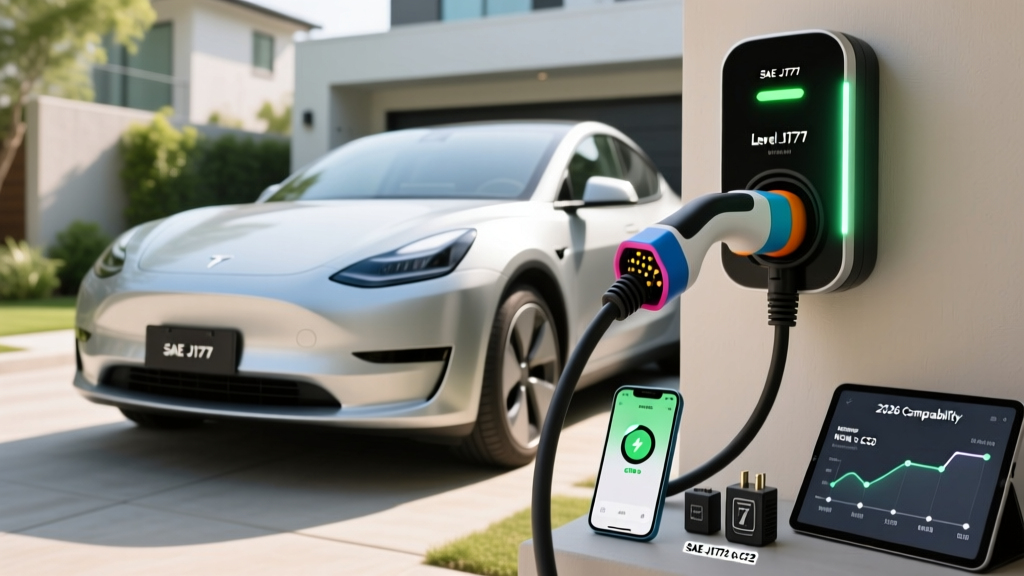
| J1772 (Level 2 AC) | Standard AC plug on most public Level 2 stations | NACS port accepts J1772 via included adapter |
Practical advice: With native NACS, Hyundai extended-range EVs gain access to Tesla's Supercharger network (over 25,000 stalls in North America) without an adapter. For Electrify America or other CCS-only DC stations, you'll need Hyundai's NACS-to-CCS adapter — typically included with the vehicle or available for ~$200. Keep it in the frunk. For home Level 2 charging, most NACS wall connectors work directly, or you can use a J1772 charger with the included J1772-to-NACS adapter.
Level 2 Home Charger Recommendations for Hyundai Extended-Range EVs
Since Hyundai's onboard charger maxes at 10.9 kW, there's no benefit to a charger that outputs more than ~11.5 kW (48 amps at 240V). Here are three proven units that match well:
Tesla Wall Connector (NACS)
- Power Output: Up to 11.5 kW (48A at 240V)
- Connector: Native NACS — no adapter needed for 2025+ Hyundais
- Cable Length: 24 ft
- Smart Features: Wi-Fi, OTA firmware updates, load sharing (pair two units on one circuit), access control
- Price: ~$475
- Best For: Hyundai owners wanting a clean NACS-native setup with Tesla's reliability track record
ChargePoint Home Flex (NACS or J1772)
- Power Output: Up to 12 kW (50A at 240V); adjustable down to 16A for lower-capacity panels
- Connector: Available in NACS or J1772 (use adapter for NACS vehicles)
- Cable Length: 23 ft
- Smart Features: Wi-Fi, app-based scheduling, Alexa integration, detailed energy tracking, flexible amperage settings
- Price: ~$550–$650
- Best For: Homes with limited panel capacity (adjustable amperage avoids panel upgrades)
Emporia Level 2 EV Charger
- Power Output: Up to 11.5 kW (48A at 240V)
- Connector: J1772 (use included NACS adapter) or NACS version available
- Cable Length: 24 ft
- Smart Features: Wi-Fi, energy monitoring, integration with Emporia home energy panel, solar-aware charging, scheduling
- Price: ~$400
- Best For: Budget-conscious buyers who want detailed energy monitoring and solar integration
Cost to Charge: Home vs. Public vs. Gas — The Per-Mile Math
One of the strongest arguments for Hyundai extended-range electric vehicles is fuel-cost savings. Here's how charging costs compare across scenarios, using the Ioniq 5 AWD (3.5 mi/kWh efficiency, per fueleconomy.gov):
| Charging Scenario | Cost per kWh | Cost for Full 77.4 kWh Pack | Cost per Mile |
|---|---|---|---|
| Home (Off-Peak Utility Rate) | $0.08–$0.12 | $6.20–$9.30 | $0.023–$0.034 |
| Home (Average US Residential) | $0.16 | $12.40 | $0.046 |
| Public Level 2 (ChargePoint, etc.) | $0.25–$0.40 | $19.35–$31.00 | $0.071–$0.114 |
| DC Fast Charging (EA, Tesla Supercharger) | $0.32–$0.55 | $24.75–$42.55 | $0.091–$0.157 |
| Gas Equivalent (28 MPG avg, $3.40/gal) | — | — | $0.121 |
The takeaway: Charging at home on off-peak rates costs roughly one-quarter to one-third per mile compared to a 28 MPG gas vehicle at $3.40/gallon. Even DC fast charging at $0.48/kWh is comparable to or slightly above gas costs. A Hyundai Ioniq 5 owner driving 12,000 miles/year and charging primarily at home ($0.12/kWh) spends roughly $410/year on electricity versus $1,455 on gas — a savings of over $1,000 annually.
For the larger 110.3 kWh Ioniq 9, multiply these costs by roughly 1.4×. Home off-peak full charges run $8.80–$13.20; DC fast charges can hit $35–$60 per session.
Public DC Fast Charging: Networks, Speeds, and Road-Trip Strategy
Hyundai's 800V E-GMP platform is a road-trip advantage. While many 400V EVs peak at 150 kW and taper quickly, the Ioniq 5 and Ioniq 6 sustain 200+ kW on 350 kW chargers for a meaningful portion of the session. Here's how the major networks serve Hyundai extended-range EVs:
- Tesla Superchargers (NACS): Now open to Hyundai vehicles natively. V3 stalls deliver up to 250 kW; V4 stalls support higher rates. Expect 10–80% in ~18–20 minutes. Reliability is the network's strongest asset — typically 97%+ uptime.
- Electrify America: 350 kW stalls are ideal for the Ioniq 5/6's 800V system. You'll need the NACS-to-CCS adapter. Expect 10–80% in ~18 minutes on a functioning 350 kW stall. Station reliability has improved but remains inconsistent — check the EA app for real-time stall status before routing.
- EVgo / ChargePoint DC: Typically 50–125 kW stalls. Slower sessions — expect 10–80% in 35–50 minutes. Better as backup options than primary road-trip stops.
Road-trip strategy: Plan stops at 350 kW-capable stations (Tesla V3/V4 or EA 350 kW) to exploit Hyundai's 800V advantage. Charge to 80% and move on — the time spent waiting for 80–100% is better spent driving to the next stop. Use A Better Routeplanner (ABRP) or your Hyundai navigation's built-in route planner, which preconditions the battery for optimal charge speed upon arrival.
Safety, Electrical Code, and Smart Charging Practices
EV charging involves sustained high-current draw — more like running an electric furnace than plugging in a phone. Safety and code compliance aren't optional:
- Dedicated circuit: Your Level 2 charger must be on its own dedicated breaker — never share a circuit with other heavy appliances (dryer, oven, HVAC).
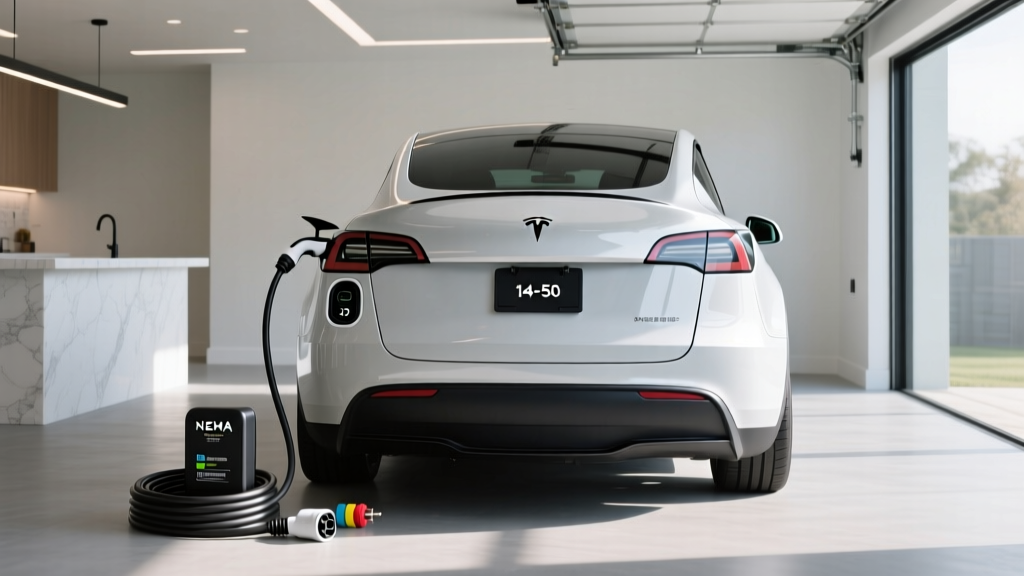
- Hardwired vs. plug-in: Hardwired chargers (no plug, direct wire connection) are more reliable and avoid NEMA 14-50 receptacle issues (some receptacles aren't rated for continuous EV loads). If using a receptacle, specify an industrial-grade NEMA 14-50R rated for continuous duty.
- Load management: If your panel is near capacity, consider a charger with load-sharing capability (e.g., Tesla Wall Connector pair) or a smart panel-integrated system (Emporia, Span) that dynamically adjusts charger amperage based on total home load.
- Scheduled charging: Use your charger's app or Hyundai's infotainment system to schedule charging during off-peak utility hours (typically 10 PM – 6 AM). This can cut your electricity cost by 30–50% on time-of-use plans.
- Cable management: Use a wall-mounted cable organizer to prevent tripping hazards and protect the cable from weather and physical damage.
Frequently Asked Questions
How much does it cost to install a home EV charger for my Hyundai?
A straightforward Level 2 installation (panel nearby, no upgrade needed) typically costs $950–$1,950 including equipment, electrician labor, and permit. Complex installs requiring long wire runs or a 200-amp panel upgrade can reach $3,650–$8,400. The federal §30C tax credit may cover 30% of installation costs up to $1,000 — verify eligibility at IRS.gov.
How fast will each charging level add range to a Hyundai Ioniq 5?
Level 1 (120V): approximately 3–5 miles per hour. Level 2 (240V, 48A): approximately 32 miles per hour, fully charging the 77.4 kWh pack overnight in ~7.5 hours. DC fast charging (350 kW station): approximately 200 miles in 18 minutes (10–80%).
Which connector does my 2025/2026 Hyundai EV use?
All 2025 and 2026 Hyundai EVs (Ioniq 5, Ioniq 6, Ioniq 9) use the NACS connector natively. This gives direct access to Tesla Superchargers and all NACS-equipped stations. For CCS-only stations (some Electrify America locations), use Hyundai's NACS-to-CCS adapter. For J1772 public Level 2 chargers, use the included J1772-to-NACS adapter.
Is home charging cheaper than gas for a Hyundai Ioniq 5?
Yes — significantly. At the US average residential rate of $0.16/kWh, an Ioniq 5 costs about $0.046/mile to charge at home. A comparable 28 MPG gas vehicle at $3.40/gallon costs about $0.121/mile. Over 12,000 miles/year, home charging saves roughly $900–$1,050 annually.
What electrical upgrades might my home need for a Level 2 charger?
Most 200-amp service panels can accommodate a 60-amp breaker for a 48A Level 2 charger without upgrades. Homes with 100-amp panels, older wiring, or panels already near capacity may need a panel upgrade to 200 amps ($1,500–$3,500) or a reduced-amperage charger (32A/40A on a 40A/50A circuit). A licensed electrician should perform a load calculation before installation.
Can I use a Tesla Supercharger with my Hyundai Ioniq 5 or Ioniq 6?
Yes. Starting with 2025 model-year vehicles, Hyundai EVs have a native NACS port, making them compatible with Tesla Supercharger stalls without any adapter. Use the Tesla app or your Hyundai's built-in navigation to locate and route to Superchargers. Non-Supercharger Tesla Destination Chargers (Level 2) also work with the NACS port.