The Promise and Reality of Hyper Fast Charging
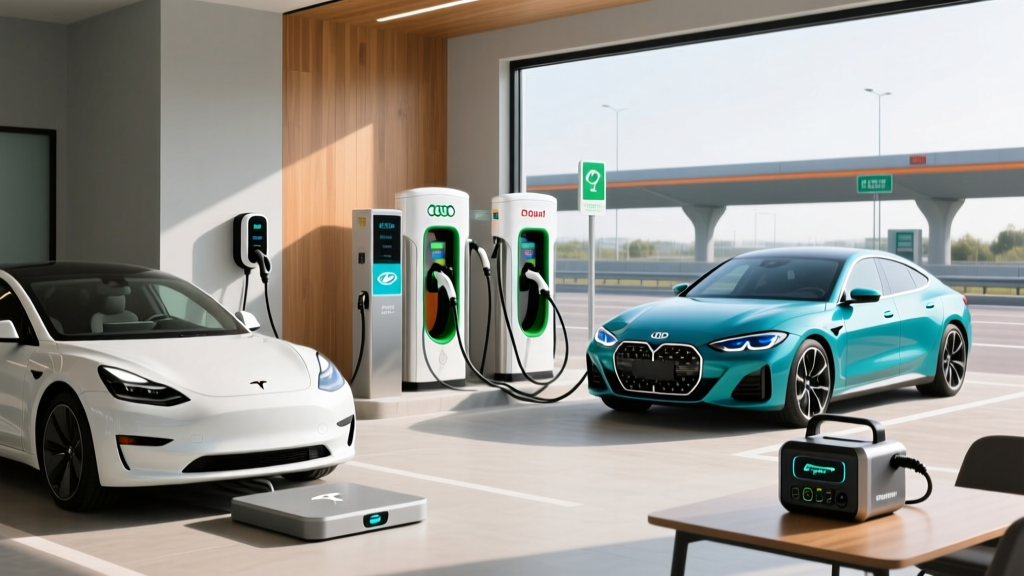
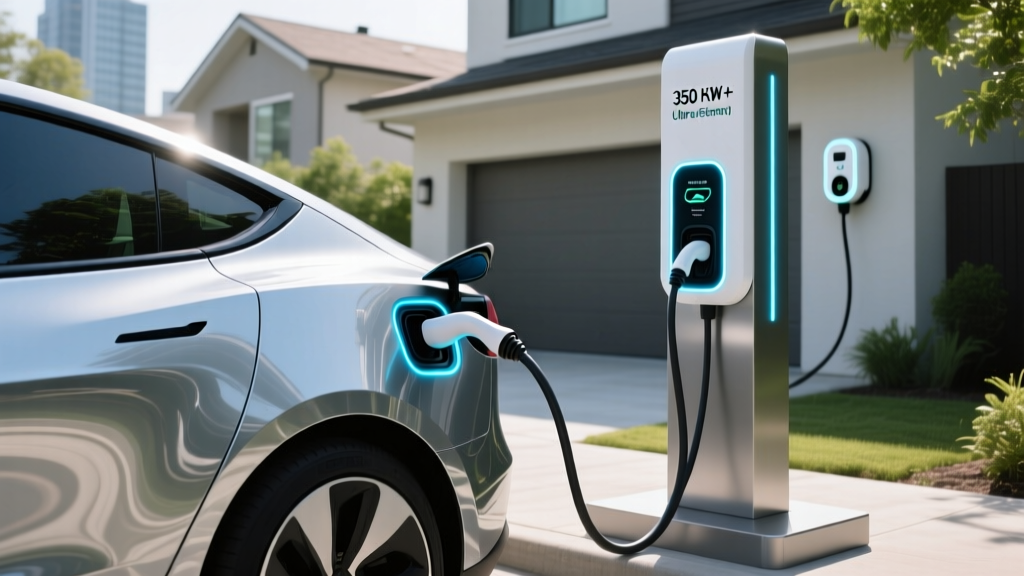
Hyper fast charging — public DC stations delivering 350 kW or more — represents the upper end of public EV charging infrastructure in 2026. Networks like Electrify America, EVgo, and Tesla Supercharger have deployed stations capable of these peak power levels. But whether your EV can actually accept 350 kW depends entirely on its onboard charging architecture, battery chemistry, and thermal management system.
This guide breaks down exactly what hyper fast charging can and cannot do, how it compares to home Level 2 charging, what it costs to install a home charger, and how charging costs stack up against gasoline per mile. If you're weighing an EV purchase or optimizing your current ownership, these numbers matter.
Charging Levels: Speed, Power, and Miles Added Per Hour
EV charging falls into three tiers. The critical distinction is between kW (kilowatts), which measures the rate of power delivery, and kWh (kilowatt-hours), which measures the total energy stored in your battery. A 100 kWh battery charged at 10 kW takes 10 hours; charged at 100 kW, it takes roughly 1 hour (in simplified terms — real charge curves taper, as explained below).
| Level | Voltage | Typical kW | Miles of Range Added Per Hour | Best Use Case |
|---|---|---|---|---|
| Level 1 | 120V AC | 1.2–1.9 kW | 3–5 miles | Overnight top-ups, PHEVs, low-mileage drivers |
| Level 2 (Home/Public) | 240V AC | 7.2–19.2 kW | 20–60 miles | Daily home charging, workplace, destinations |
| DC Fast Charging | 400–800V DC | 50–350 kW | 150–900+ miles (equivalent rate) | Road trips, rapid replenishment |
A hyper fast charger rated at 350 kW can theoretically add roughly 200 miles of range in 10 minutes to a vehicle with an efficient powertrain consuming around 3 miles/kWh (like a Tesla Model 3 or Hyundai Ioniq 6). However, no EV sustains 350 kW for the entire session — charge curves taper significantly above 80% state of charge (SoC) to protect battery health.
Hyper Fast Charging: Which EVs Can Actually Use 350 kW?
Not every EV benefits from a 350 kW hyper fast charger. The vehicle's maximum DC charge acceptance rate is the bottleneck. Here's where popular 2026 models stand:
| Vehicle | Battery (kWh Usable) | Architecture | Peak DC Rate | 10–80% Time (est.) |
|---|---|---|---|---|
| Hyundai Ioniq 5 | 77.4 kWh (NMC) | 800V | ~235 kW | ~18 min |
| Kia EV6 | 77.4 kWh (NMC) | 800V | ~235 kW | ~18 min |
| Tesla Model 3 (Long Range) | 79 kWh (NMC) | 400V | ~250 kW | ~25 min |
| Ford F-150 Lightning | 131 kWh (NMC, Extended) | 400V | ~150 kW | ~41 min |
| Chevrolet Equinox EV | 85 kWh (NMC) | 400V | ~150 kW | ~30 min |
| Genesis GV60 | 77.4 kWh (NMC) | 800V | ~235 kW | ~18 min |
| Porsche Taycan | 83.7 kWh (NMC, Perf.) | 800V | ~320 kW | ~18 min |
The takeaway: 800V architectures (Hyundai/Kia E-GMP, Porsche J1) extract the most from hyper fast chargers. Most 400V vehicles plateau well below the station's maximum, meaning a 150 kW charger delivers nearly identical real-world speed for those models.
Home Level 2 Charging: Electrical Requirements and Installation Costs
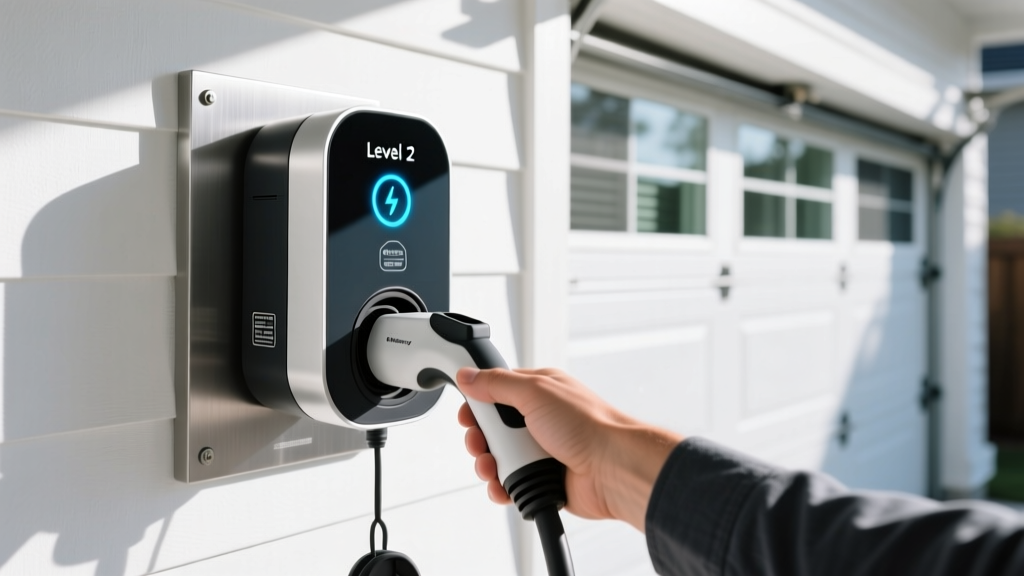
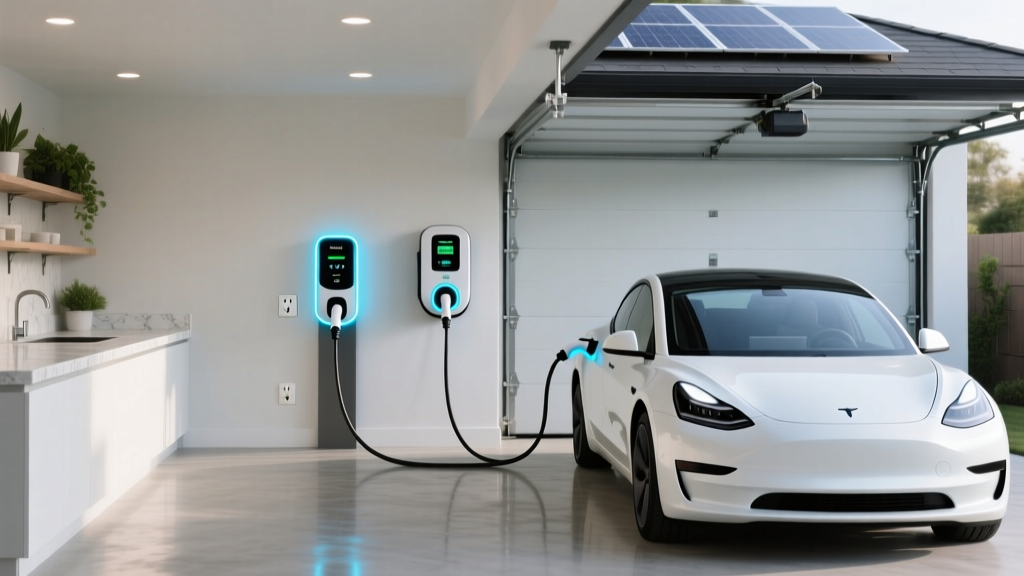
For daily driving, home Level 2 charging is the backbone of EV ownership. A properly installed 240V Level 2 charger adds 25–50 miles of range per hour depending on amperage — enough to fully replenish any commuter's daily driving overnight.
Electrical Requirements
A typical home Level 2 installation requires:
- 240V dedicated circuit (like a dryer or oven outlet)
- 40A or 50A breaker — a 40A circuit delivers up to 9.6 kW (32A continuous draw per NEC 80% rule); a 50A circuit delivers up to 12 kW (40A continuous)
- NEMA 14-50 outlet (for portable/mobile chargers) or a hardwired connection (for wall-mounted units above 40A)
- GFCI protection required by NEC 2020+ for receptacle-based installations in garages
Panel Upgrade Considerations
Many homes built before 2000 have 100A electrical service panels. Adding a 40–50A dedicated EV circuit to a panel already near capacity may require a panel upgrade to 200A — a significant cost. A licensed electrician will perform a load calculation to determine if your existing panel can support the additional draw.
Installation Cost Breakdown
| Component | Cost Range | Notes |
|---|---|---|
| Level 2 Charger (Equipment) | $300–$700 | Smart Wi-Fi-enabled units from ChargePoint, Emporia, Wallbox, Tesla |
| Electrician Labor | $500–$1,500 | Depends on run length from panel to garage/carport |
| Electrical Materials | $100–$400 | Wire (6 AWG or 4 AWG copper), conduit, breaker, outlet |
| Permit & Inspection | $50–$200 | Required by most jurisdictions; varies by municipality |
| Panel Upgrade (if needed) | $1,500–$3,500 | 100A to 200A upgrade; not required in most modern homes |
| Total (no panel upgrade) | $950–$2,800 | Typical for homes with adequate panel capacity |
| Total (with panel upgrade) | $2,450–$6,300 | Older homes needing service upgrade |
According to the U.S. Department of Energy, many homeowners spend between $1,000 and $2,500 for a straightforward Level 2 installation without a panel upgrade. Federal and utility rebates may offset a portion of this cost — check your local utility and the Alternative Fuels Data Center for state-specific incentives.
Connector Compatibility: NACS, CCS1, and CHAdeMO in 2026
The North American charging connector landscape has consolidated significantly since Tesla opened its Supercharger network and the industry adopted the North American Charging Standard (NACS). Here's where things stand for 2026 model-year vehicles:
| Connector | Brands Using It (New Vehicles) | Public Network Access | Adapter Needed? |
|---|---|---|---|
| NACS (Tesla) | Tesla, Ford, GM, Rivian, Volvo, Polestar, Mercedes-Benz, Fisker, Hyundai/Kia (select 2025+ models) | Tesla Supercharger + growing NACS stations on EA, EVgo | NACS-to-CCS adapter for older CCS stations |
| CCS1 (Combo) | VW, BMW, Hyundai/Kia (older models), Stellantis, some legacy models | Electrify America, EVgo, ChargePoint | CCS-to-NACS adapter to access Superchargers |
| CHAdeMO | Nissan Leaf (discontinued after 2025), Mitsubishi Outlander PHEV | Limited and declining availability | No practical adapter for DC fast charging |
If you're buying a new EV in 2026, NACS is the dominant trajectory. Most major automakers have committed to NACS for new models. For existing CCS-equipped EVs, Ford and GM provide NACS adapters enabling Supercharger access — verify adapter compatibility with your specific model year before purchasing.
Cost to Charge: Home vs. Public vs. Gasoline Per Mile
Charging economics vary dramatically depending on where and when you plug in. Here's a realistic cost comparison using 2026 average rates:
| Charging Scenario | Typical $/kWh | Cost Per Mile* | Full Charge (80 kWh Battery) |
|---|---|---|---|
| Home Off-Peak (Time-of-Use) | $0.08–$0.12 | $0.027–$0.040 | $6.40–$9.60 |
| Home Standard Rate | $0.13–$0.18 | $0.043–$0.060 | $10.40–$14.40 |
| Public Level 2 (Workplace/Destination) | $0.15–$0.30 | $0.050–$0.100 | $12.00–$24.00 |
| DC Fast Charging (Public) | $0.30–$0.55 | $0.100–$0.183 | $24.00–$44.00 |
| Hyper Fast Charging (350 kW, premium) | $0.40–$0.60 | $0.133–$0.200 | $32.00–$48.00 |
| Gasoline (25 MPG avg, $3.40/gal) | — | $0.136 | ~$43.50 (12-gal tank) |
*Based on an EV efficiency of 3.0 miles/kWh (typical for a midsize sedan like the Tesla Model 3 or Hyundai Ioniq 6). Less efficient EVs (trucks, large SUVs at 2.0–2.5 mi/kWh) will see higher per-mile costs.
The numbers make the case clear: home off-peak charging delivers fuel costs roughly one-quarter to one-third the cost of gasoline per mile. Public DC fast charging — particularly hyper fast 350 kW stations with premium pricing — can approach or exceed gasoline costs on a per-mile basis. The economic advantage of EV ownership is strongest when you charge at home, which is why Level 2 installation is the single most impactful investment an EV owner can make.
Recommended Home Level 2 Chargers: Equipment Picks for 2026
Below are proven Level 2 home chargers selected for reliability, smart features, and value. All support NACS or CCS connectors (select your connector at purchase based on your vehicle).
Tesla Wall Connector
- Power: Up to 11.5 kW (48A) hardwired
- Connector: NACS native
- Cable: 24 ft
- Smart Features: Wi-Fi, OTA updates, load sharing between units, power sharing
- Price: ~$475
- Best For: Tesla and NACS-equipped Ford/GM/Rivian owners
ChargePoint Home Flex
- Power: Up to 12 kW (50A) configurable via DIP switches
- Connector: NACS or J1772 (with adapter options)
- Cable: 23 ft
- Smart Features: Wi-Fi, app scheduling, energy tracking, Alexa integration
- Price: ~$550–$650
- Best For: Multi-EV households, flexible amperage adjustment
Emporia Vue Level 2 Charger
- Power: Up to 11.5 kW (48A)
- Connector: NACS or J1772
- Cable: 24 ft
- Smart Features: Wi-Fi, detailed energy monitoring, solar integration, scheduling
- Price: ~$399–$499
- Best For: Budget-conscious buyers wanting smart features
Wallbox Pulsar Plus
- Power: Up to 11.5 kW (48A)
- Connector: NACS or J1772
- Cable: 25 ft
- Smart Features: Wi-Fi/Bluetooth, Power Sharing, Eco-Smart solar mode
- Price: ~$449–$549
- Best For: Compact form factor, solar-equipped homes
For homes limited to a 40A circuit, most of these units can be configured to 32A continuous (9.6 kW), which still adds approximately 30–35 miles of range per hour — sufficient for overnight replenishment of 200+ miles of driving.
Safety, Code, and Installation Best Practices
EV charging installation must comply with the National Electrical Code (NEC) and local amendments. Key requirements to discuss with your licensed electrician:
- Dedicated circuit: Your EV charger must be on its own circuit — not shared with other appliances. This prevents overloads and tripped breakers.
- GFCI protection: NEC 2020+ requires ground-fault circuit interrupter protection for receptacle-based (NEMA 14-50) installations in garages. Hardwired units may not require a separate GFCI breaker if the unit includes internal protection.
- Outdoor rating: If your charger is installed outdoors (carport, driveway), the unit must carry a NEMA 4 or IP65 rating for weather resistance. The Tesla Wall Connector, ChargePoint Home Flex, and Wallbox Pulsar Plus all carry outdoor ratings.
- Wire gauge: A 50A circuit requires 6 AWG copper wire for runs under 50 feet; longer runs may need 4 AWG to prevent voltage drop. Your electrician will size this correctly.
- Permit and inspection: Most municipalities require an electrical permit for new 240V circuits. The inspection ensures code compliance and is typically a quick process. Skipping the permit risks insurance claim denials if an electrical fire occurs.
- Load management: For homes with limited panel capacity, smart chargers like the Wallbox Pulsar Plus offer Eco-Smart modes that dynamically reduce charge rate when other household loads spike, potentially avoiding a panel upgrade.
Frequently Asked Questions
How much does it cost to install a home EV charger?
A typical Level 2 home charger installation costs $950–$2,800 when no panel upgrade is needed. This includes the charger unit ($300–$700), electrician labor ($500–$1,500), materials ($100–$400), and permit fees ($50–$200). If your home requires a 100A-to-200A panel upgrade, add $1,500–$3,500, bringing the total to $2,450–$6,300. Always get at least two quotes from licensed electricians.
How fast will each charging level add range?
Level 1 (120V) adds 3–5 miles per hour — adequate for PHEVs with small batteries. Level 2 (240V, 40A) adds 25–35 miles per hour, fully replenishing most EVs overnight. DC fast charging at 150 kW adds roughly 150+ miles in 15 minutes to efficient sedans. Hyper fast charging at 350 kW can add 200+ miles in 10 minutes — but only to vehicles with 800V architectures capable of accepting that rate.
Which connector/charger is compatible with my EV?
Check your vehicle's charge port. New 2026 Teslas, Fords, GM vehicles, Rivians, and an expanding list of others use NACS. Older CCS-equipped vehicles (VW ID.4, earlier Hyundai/Kia models) use CCS1 and require an adapter for Tesla Supercharger access. CHAdeMO is essentially legacy — only the discontinued Nissan Leaf used it. For home chargers, purchase the connector matching your vehicle's port.
How much does charging cost per mile vs. gas?
Home off-peak charging costs roughly $0.03–$0.04 per mile — about one-quarter the cost of gasoline at $0.13–$0.14 per mile (assuming 25 MPG and $3.40/gallon). Public DC fast charging ranges from $0.10–$0.20 per mile depending on network pricing, approaching gasoline costs. The economic advantage of an EV is maximized with consistent home charging.
What electrical upgrades might I need?
The most common upgrade is a panel capacity increase from 100A to 200A service, needed when your existing panel lacks headroom for a dedicated 40–50A EV circuit. Homes with modern 200A panels and gas appliances typically have sufficient capacity. Your electrician will perform a NEC Article 220 load calculation to determine if an upgrade is required. Some utilities offer panel upgrade rebates — check before proceeding.
Is hyper fast charging bad for my battery?
Occasional use of hyper fast chargers (350 kW) has minimal impact on battery longevity. However, exclusive reliance on DC fast charging — particularly in hot climates without adequate battery preconditioning — can accelerate degradation by 1–3% over several years compared to predominantly Level 2 charging. Most manufacturers warranty their batteries for 8 years/100,000 miles with a capacity retention threshold of 70% (see EPA EV battery information). For daily use, Level 2 home charging remains the optimal balance of convenience and battery health.