Why Charging a Plug-In Hybrid Pickup Is Different
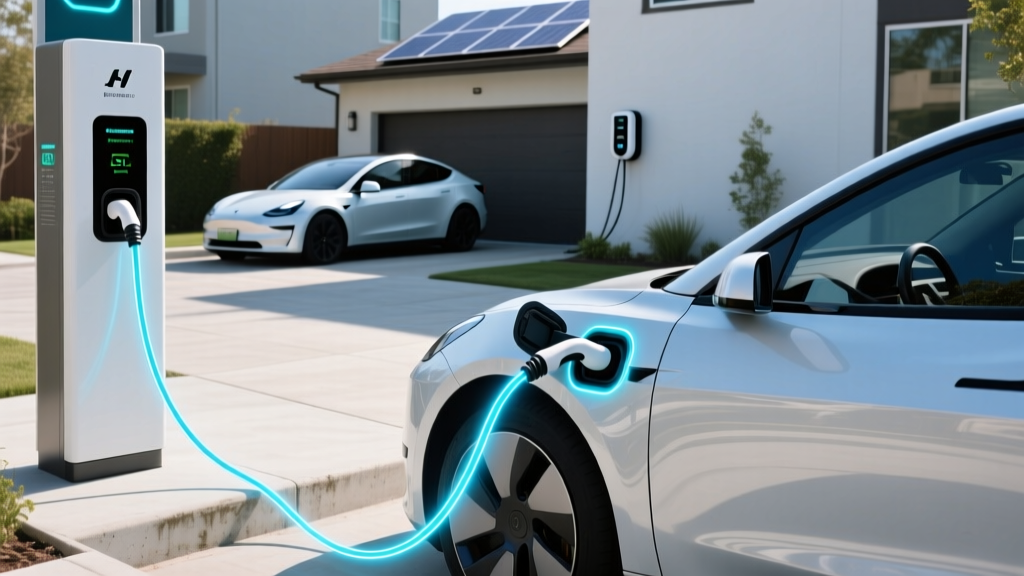
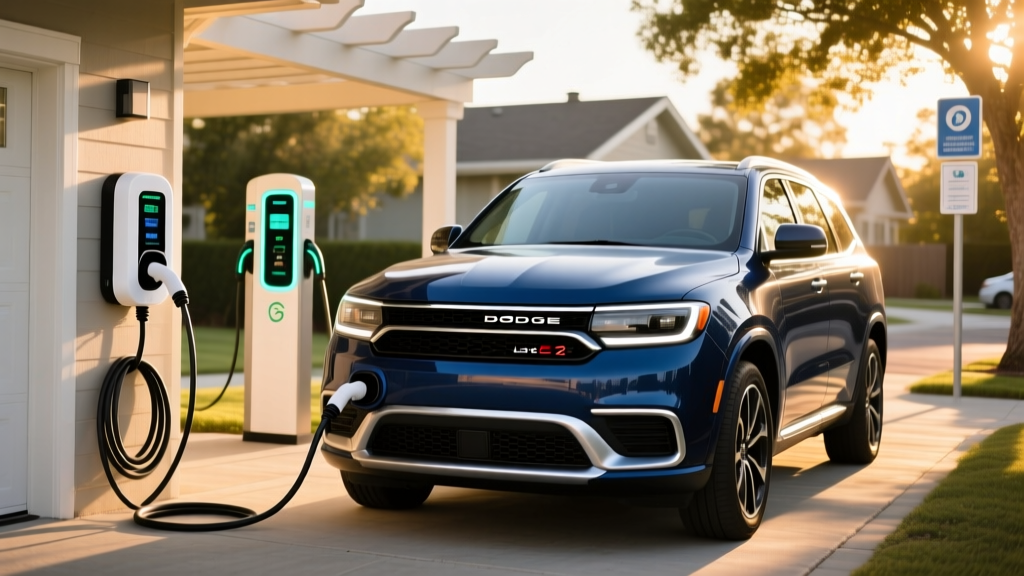
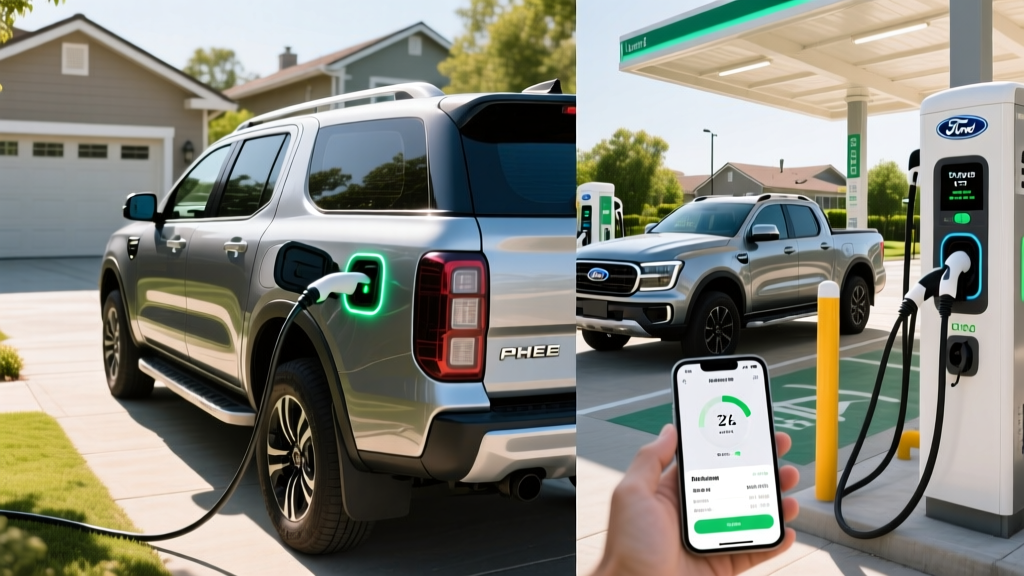
The hybrid Ford Ranger — Ford's plug-in hybrid (PHEV) midsize pickup built on the global T6.2 platform — pairs a turbocharged gasoline engine with a modest traction battery designed for short electric-only commutes before the engine kicks in. Unlike a full battery-electric vehicle (BEV) with 75–100+ kWh of usable capacity, the Ranger PHEV's battery is small (roughly in the 10–20 kWh range, depending on market and model year). That smaller pack changes the charging calculus entirely: DC fast charging is often unnecessary, Level 2 is the daily workhorse, and Level 1 from a standard wall outlet can actually keep you topped up for commuting.
This guide walks through exactly how to charge the hybrid Ford Ranger at home and in public, what electrical upgrades you might need, which connectors are compatible, and what you'll actually pay per mile compared to filling the gas tank.
Charging Levels Explained: What Adds Range and How Fast
There are three charging tiers available to PHEV owners. The critical distinction: kW (kilowatts) measures charging power — how fast energy flows into the battery. kWh (kilowatt-hours) measures energy capacity — how much the battery holds. A higher kW charge rate fills a given kWh battery faster.
| Level | Voltage / Amps | Power (kW) | Miles of Range Added per Hour | Best Use Case |
|---|---|---|---|---|
| Level 1 | 120V / 12A | ~1.4 kW | ~4–6 mi/hr | Overnight top-up for small PHEV batteries |
| Level 2 | 240V / 16–48A | 3.3–11.5 kW | ~12–45 mi/hr | Daily home/work charging; ideal for PHEVs |
| DC Fast | 400–800V DC | 50–350 kW | ~150–800+ mi/hr | BEV road trips; most PHEVs lack DC capability |
For the hybrid Ford Ranger PHEV, Level 2 is the sweet spot. A typical PHEV onboard charger accepts 3.3 kW to 7.2 kW of AC power. At 7.2 kW, a 15 kWh battery charges from empty to full in roughly 2 hours — fast enough to recharge during a workday or overnight. Level 1 at 1.4 kW would take approximately 10–11 hours for the same battery, which still works for overnight replenishment if your daily electric-only commute falls within the pack's range.
Most PHEVs, including most global Ranger PHEV variants, do not support DC fast charging. The battery is simply too small to absorb high-power DC safely, and the cost/weight of DC hardware isn't justified. Plan your electric miles around Level 1 and Level 2 availability.
How Much Does It Cost to Install a Home EV Charger?
Installing a dedicated Level 2 home charger is the single biggest infrastructure investment for PHEV ownership. Costs vary widely depending on your home's electrical panel, the distance from panel to charger location, and local permit fees.
| Cost Component | Low Estimate | High Estimate | Notes |
|---|---|---|---|
| Level 2 Charger Equipment | $200 | $700 | 16A–48A smart chargers; corded or hardwired |
| Electrician Labor | $500 | $1,500 | Depends on run length, conduit, wall type |
| Electrical Permit | $50 | $300 | Varies by municipality |
| Panel Upgrade (if needed) | $1,500 | $3,500 | 100A → 200A service for older homes |
| Total (no panel upgrade) | $750 | $2,500 | Most homes with 200A service |
| Total (with panel upgrade) | $2,250 | $6,000 | Homes with older 100A panels |
What Electrical Upgrades Might I Need?
A 32A–48A Level 2 charger requires a dedicated 240V circuit — typically a 40A or 50A breaker with appropriately gauged wire (8 AWG or 6 AWG copper). Your electrician will check:
- Panel capacity: A 200-amp panel with available breaker slots can usually accommodate a 40A–50A circuit. A 100-amp panel in an older home may need an upgrade to 200A — this is the single largest cost variable.
- Load calculation: Per NEC Article 220, your electrician must calculate total household load to ensure adding a charger circuit doesn't exceed 80% of panel capacity.
- Run distance: Longer runs from panel to garage/driveway require larger-gauge wire, increasing material cost.
- GFCI protection: NEC 2020+ requires GFCI protection for 240V receptacles in garages. Hardwired chargers may bypass this requirement depending on local code interpretation — ask your licensed electrician.
- Outdoor rating: If your charger is mounted outside, ensure a NEMA 4 or NEMA 4X rated enclosure and an outdoor-rated unit.
Always hire a licensed electrician and pull a permit. Unpermitted electrical work can void homeowner's insurance and create fire risk.
Which Connector Is Compatible With the Hybrid Ford Ranger?
Connector standards depend on where your Ranger PHEV was sold and what market it was built for. The global Ranger PHEV (sold in markets like Australia and Europe) typically uses a Type 2 (Mennekes) AC connector. North American-market Ford PHEVs use the J1772 connector for AC Level 1 and Level 2 charging.
| Connector | Region / Use | Compatible Vehicles | Adapter Needed? |
|---|---|---|---|
| J1772 | North America — AC Level 1 & 2 | All non-Tesla NA-market EVs/PHEVs, Ford PHEVs | None for NA PHEVs |
| NACS (Tesla) | North America — AC & DC | Tesla vehicles; Ford BEVs (2025+); future NA standard | Tesla-to-J1772 adapter for PHEV AC use |
| Type 2 (Mennekes) | Europe / global — AC Level 1 & 2 | Global-market Ranger PHEV, European EVs | Type 2-to-J1772 for NA use |
| CCS1 | North America — DC fast charge | Most NA-market BEVs (not PHEVs typically) | N/A for PHEV AC charging |
| CHAdeMO | Legacy DC fast charge | Nissan Leaf, older Mitsubishi | Discontinued for new vehicles |
Bottom line: If you're buying a hybrid Ford Ranger in North America, you'll use J1772 for all AC charging. Any J1772-compatible Level 2 home charger will work. If you have a Tesla Wall Connector (NACS), you'll need a NACS-to-J1772 adapter (~$100–$200). Since most PHEVs lack DC fast charge ports, CCS1 and CHAdeMO compatibility is irrelevant for daily Ranger PHEV use.
Level 2 Charger Recommendations for PHEV Owners
PHEV owners don't need the highest-power chargers on the market — a 15–20 kWh battery can't absorb 11.5 kW efficiently. A 32A (7.7 kW) charger hits the sweet spot for cost, capability, and electrical load. Here are three proven options:
Emporia Level 2 EV Charger
- Power output: 48A max (11.5 kW at 240V); configurable down to 16A
- Connector: J1772 (NACS version available)
- Cable length: 24 ft
- Smart features: Wi-Fi, app scheduling, energy monitoring, solar integration
- Price: ~$350–$400
- Why for PHEVs: Budget-friendly with full app control; schedule charging during off-peak hours to minimize cost
ChargePoint Home Flex
- Power output: Up to 50A (12 kW); adjustable via dip switches
- Connector: J1772 (NACS adapter available)
- Cable length: 23 ft
- Smart features: Wi-Fi, Alexa integration, detailed session history, utility demand-response programs
- Price: ~$550–$650
- Why for PHEVs: Reliable hardware, strong app, and compatibility with utility off-peak rebate programs
Ford Connected Charge Station
- Power output: 48A (11.5 kW at 240V)
- Connector: J1772
- Cable length: 25 ft
- Smart features: FordPass app integration, scheduled charging, vehicle-specific status
- Price: ~$600–$800 (sometimes included or discounted with new Ford PHEV purchase)
- Why for PHEVs: Deep integration with Ford's app ecosystem; check with your dealer for bundle pricing
For a Ranger PHEV with a ~7 kW onboard charger, any of these units will max out the vehicle's acceptance rate. You won't charge faster by buying a 48A unit over a 32A unit — the vehicle limits intake — but higher-amp chargers future-proof you for a later BEV purchase.
What Does Charging Cost Per Mile vs. Gas?
This is where PHEV ownership economics shine — if you charge regularly. The cost per mile on electricity depends on your local electricity rate and the vehicle's efficiency in EV mode. Let's compare realistic scenarios against gasoline.
| Scenario | Rate / Price | Vehicle Efficiency | Cost Per Mile |
|---|---|---|---|
| Home charging (off-peak utility rate) | $0.10/kWh | 3.0 mi/kWh (PHEV EV mode) | $0.033/mi |
| Home charging (national avg residential) | $0.17/kWh | 3.0 mi/kWh | $0.057/mi |
| Public Level 2 (network pricing) | $0.35/kWh | 3.0 mi/kWh | $0.117/mi |
| DC Fast Charging (public) | $0.50/kWh | 3.0 mi/kWh | $0.167/mi (PHEVs rarely use DC) |
| Gasoline (Ranger gas mode, 22 MPG combined) | $3.40/gallon | 22 mi/gallon | $0.155/mi |
The takeaway: At home off-peak rates, electric-only driving in a Ranger PHEV costs roughly one-fifth to one-third per mile compared to gasoline. Even at the national average residential rate, you're paying about $0.06/mile on electricity vs. $0.15/mile on gas. However, if you rely exclusively on public Level 2 chargers at $0.35/kWh, the cost advantage narrows significantly — and public DC fast charging (if available) can actually exceed the cost of gasoline per mile.
This is why home charging is practically mandatory for PHEV economics. Without it, you're carrying battery weight you rarely use and paying a purchase premium you never recoup.
Charging Time Examples: What to Expect With a PHEV Battery
PHEV batteries are small enough that full charges are quick by BEV standards. Here are representative charge times for a ~15 kWh usable battery (common for midsize PHEV trucks and SUVs) across different charge rates:
- Level 1 (120V, 1.4 kW): 0–100% in approximately 10–11 hours — adequate for overnight replenishment if your commute fits the electric-only range.
- Level 2 (240V, 32A, 7.7 kW): 0–100% in approximately 2 hours — the practical daily standard.
- Level 2 (240V, 16A, 3.8 kW): 0–100% in approximately 4 hours — slower but still overnight-sufficient.
Unlike BEVs, PHEV owners rarely worry about the 10–80% DC fast-charge window because DC charging isn't typically available. The relevant metric is time to full charge from empty, since you want to start every morning with a fully topped battery to maximize electric-only miles.
Pro tip — preconditioning: If your Ranger PHEV supports battery preconditioning (warming the pack before a charge session), use it in cold weather. A cold lithium-ion battery accepts charge more slowly due to increased internal resistance, and preconditioning can cut Level 2 charge times by 20–30% in sub-freezing temperatures. Check your FordPass app or vehicle settings for a scheduled departure/preconditioning feature.
Safety, Code, and Smart Charging Practices
Whether you're plugging into a 120V outlet or installing a hardwired Level 2 unit, follow these safety and code essentials:
- Dedicated circuit: Your Level 2 charger must be on its own dedicated breaker — never share a circuit with other high-draw appliances (dryers, HVAC).
- Receptacle rating: If using a NEMA 14-50 outlet, ensure it's rated for continuous 40A draw. Some budget 14-50 receptacles overheat under sustained EV charging loads. Specify an industrial-grade receptacle (e.g., Hubbell or Bryant) to your electrician.
- Hardwired vs. plug-in: Hardwired chargers eliminate the receptacle failure point and may not require GFCI breakers (which can nuisance-trip during EV charging). Plug-in units offer portability if you move.
- Outdoor installation: Use NEMA 4-rated equipment and enclosures. Ensure conduit and junction boxes are rated for wet locations.
- Utility time-of-use (TOU) plans: Enroll in an EV-specific TOU rate if your utility offers one. Off-peak rates can drop to $0.06–$0.10/kWh, dramatically reducing your per-mile cost. Schedule charging via your charger's app to start during off-peak windows (typically 11 PM – 6 AM).
- Federal tax credit for charging equipment: The IRS §30C Alternative Fuel Vehicle Refueling Property Credit may cover up to 30% of home charger equipment and installation costs (capped at $1,000), subject to income and census-tract eligibility. Consult a tax professional for your specific situation.
Frequently Asked Questions
How much does it cost to install a home EV charger for my Ranger PHEV?
Expect $750–$2,500 for a standard Level 2 installation in a home with a 200-amp panel. If your home has an older 100-amp panel that needs upgrading to 200A, total costs can reach $2,250–$6,000. Get 2–3 quotes from licensed electricians and always pull a permit.
Can I charge the hybrid Ford Ranger on a regular 120V outlet?
Yes. Level 1 charging at 120V delivers about 1.4 kW and adds roughly 4–6 miles of electric range per hour. For a PHEV with a 15 kWh battery, a full overnight charge (10–12 hours) can replenish the entire pack. This works if your daily commute fits within the electric-only range.
Does the Ranger PHEV support DC fast charging?
Most PHEVs, including most Ranger PHEV configurations, do not include DC fast-charge hardware. The battery is too small to justify the cost and weight of DC charging components. Plan your electric driving around Level 1 and Level 2 availability.
How much does charging cost per mile vs. gas in the Ranger PHEV?
At the national average residential electricity rate (~$0.17/kWh), electric-only driving costs roughly $0.05–$0.06 per mile. Gasoline at $3.40/gallon and 22 MPG combined costs about $0.155 per mile. Home charging delivers 60–80% per-mile savings, but public charging at $0.35+/kWh narrows the gap significantly.
What size circuit do I need for a Level 2 home charger?
A 32A charger requires a dedicated 40A breaker (NEC requires circuits rated at 125% of continuous load). A 48A charger requires a 60A breaker. Your electrician will size wire gauge accordingly — typically 8 AWG for 40A and 6 AWG for 60A copper runs.
Will I need a panel upgrade?
Possibly. Homes with 100-amp electrical service often need an upgrade to 200A to safely add a 40A–50A EV charging circuit alongside existing loads. Homes already on 200A service with available breaker slots usually do not. Your electrician's load calculation will determine this — it's the single biggest cost variable in home charger installation.
Which charger should I buy for a PHEV?
A 32A (7.7 kW) J1772-compatible smart charger is the practical sweet spot for PHEV owners. The Emporia Level 2 (~$350) offers strong value with app scheduling. The ChargePoint Home Flex (~$600) adds utility demand-response compatibility. Check if your Ford dealer offers the Ford Connected Charge Station as part of a purchase bundle.
Sources: EPA Fuel Economy for PHEV efficiency data; IRS §30C Refueling Property Credit for home charger tax incentive rules. Verify your specific vehicle's charging specifications with your local Ford dealer, as Ranger PHEV availability and specifications vary by market and model year.