If you've ever stood at a Supercharger or in your garage wondering how to unplug a Tesla charger — or if you're planning your first home charging setup — this guide covers the exact steps, hardware requirements, and costs you need to know. Whether you drive a Model 3, Model Y, Model S, or Model X, unplugging safely and setting up reliable home charging are foundational EV ownership skills.
We'll walk through the physical unplug process, then zoom out to the bigger picture: charging levels, home installation costs, connector standards (including the 2026 NACS transition), and real cost-per-mile figures versus gasoline.
How to Unplug a Tesla Charger: Step-by-Step
Tesla vehicles lock the charging cable in place during active charging and when the car is locked. This prevents unauthorized disconnection but can confuse new owners. Here's how to release it:
Method 1: Tesla App or Touchscreen
- Touchscreen: Tap the charging icon on your Tesla's touchscreen and select "Unlock Charge Port." The cable will release immediately.
- Tesla App: Open the app, navigate to your vehicle, and tap "Unlock Charge Port." This works even if you're standing outside the car.
Method 2: Key Fob or Phone Key
- Key Fob: Press and hold the rear trunk button on the key fob for 1–2 seconds. This unlocks the charge port and releases the cable.
- Phone Key: Simply unlock the vehicle using your phone (approach or tap). The charge port lock disengages when the car unlocks.
Method 3: Manual Release Cable (Emergency)
If the electronic release fails — a rare but documented issue — every Tesla has a manual release pull cable located inside the trunk, behind the side trim panel near the charge port side. Pull this cable firmly to mechanically disengage the lock. Refer to your owner's manual for the exact location for your model year.
At a Supercharger or Destination Charger
The same methods apply. On V3/V4 Superchargers, the cable is permanently attached; you must unlock via the car before removing it. For CCS-adapted charging at non-Tesla networks (Electrify America, EVgo), ensure the charging session has ended on the station's screen before attempting to unplug.
Charging Levels Explained: Speeds in kW and Miles Per Hour
Understanding charging levels is essential before you invest in equipment. The critical distinction: kW (kilowatts) measures power — how fast energy flows into your battery. kWh (kilowatt-hours) measures energy capacity — how much your battery holds. A 75 kWh battery charged at 11.5 kW takes roughly 6.5 hours from empty to full (minus losses).
| Level | Voltage / Amperage | Power (kW) | Miles of Range Per Hour | Typical Use Case |
|---|---|---|---|---|
| Level 1 | 120V / 12A | ~1.4 kW | 3–5 mi/hr | Emergency / overnight trickle |
| Level 2 (Home) | 240V / 32–48A | 7.7–11.5 kW | 25–44 mi/hr | Daily home charging |
| DC Fast (V3 Supercharger) | 400–800V DC | Up to 250 kW | ~1,000+ mi/hr (peak) | Road trips; 10–80% in ~18–25 min |
| DC Fast (V4 Supercharger) | Up to 1,000V DC | Up to 350+ kW (announced) | ~1,500+ mi/hr (est. peak) | Next-gen Cybertruck/road trips |
Real-world charging time examples (10–80% SoC):
- Model 3 Long Range (75 kWh usable, NMC): ~18 minutes at a V3 Supercharger (peak 250 kW, tapering above 50% SoC)
- Model Y Long Range (~75 kWh usable): ~20 minutes at V3 Supercharger
- Model S (100 kWh usable): ~25–30 minutes at V3 Supercharger
- Level 2 at home (11.5 kW): Model 3 from 10–80% in approximately 4.5 hours — ideal for overnight
Home Charger Installation: Costs, Electrical Requirements, and Permits
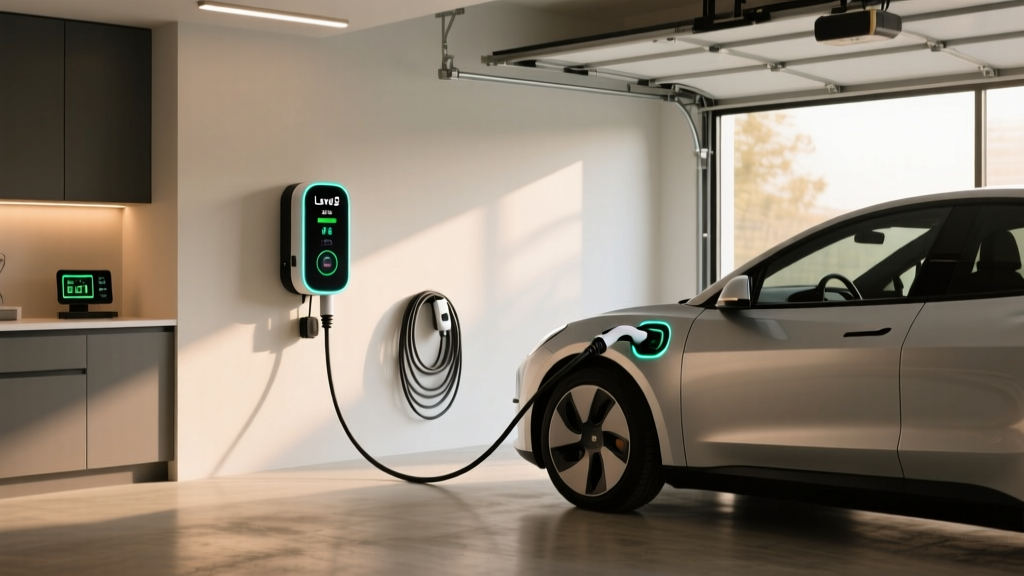
A proper Level 2 home setup is the single most impactful upgrade for EV ownership. Here's what's involved and what it costs in 2026.
Electrical Requirements
- Circuit: A dedicated 240V circuit is required. For a 48A charger (like the Tesla Wall Connector), you need a 60A breaker (NEC requires circuits rated at 125% of continuous load: 48A × 1.25 = 60A).
- Wire gauge: Typically 6 AWG copper for a 60A circuit; 4 AWG for longer runs over 100 feet to minimize voltage drop.
- Panel capacity: Most modern homes with 200A service can accommodate a 60A EV circuit. Older homes with 100A panels may need a panel upgrade to 200A, which is a major additional cost.
Installation Cost Breakdown
| Component | Simple Install (Panel Nearby) | Complex Install (Long Run / Panel Upgrade) |
|---|---|---|
| Charger Equipment (Level 2 EVSE) | $400–$650 | $400–$650 |
| Electrician Labor | $300–$800 | $1,000–$2,500 |
| Electrical Permit | $50–$150 | $50–$200 |
| Panel Upgrade (if needed) | Not required | $1,500–$3,500 |
| Conduit / Wiring Materials | $50–$150 | $200–$600 |
| Total Estimated Cost | $800–$1,750 | $3,150–$7,450 |
According to data from the U.S. Department of Energy, most homeowners without panel upgrades spend between $1,000 and $2,500 total for a professionally installed Level 2 charger.
Permits and Code Requirements
- Permit: Most jurisdictions require an electrical permit for a new 240V circuit. Your electrician typically pulls this.
- GFCI protection: NEC 2020/2023 requires GFCI protection for outdoor receptacles. Hardwired EVSE installations (no plug) often avoid this requirement and are generally preferred for reliability.
- Outdoor rating: If mounting outdoors, ensure your charger is NEMA 4 rated (weatherproof). The Tesla Wall Connector and ChargePoint Home Flex both carry outdoor ratings.
Connector Compatibility: NACS, CCS1, and Adapters in 2026
The connector landscape has shifted dramatically. Tesla's North American Charging Standard (NACS) is now the dominant connector in North America, with Ford, GM, Rivian, Volvo, Hyundai, and most major automakers adopting it for 2025–2026 model-year vehicles.
| Connector | Brands Using Natively | DC Fast Charging Network Access |
|---|---|---|
| NACS (Tesla) | Tesla (all models), Ford (2025+), GM (2025+), Rivian (2025+), Hyundai/Kia (2026+), Volvo/Polestar | Tesla Supercharger network (20,000+ stalls), growing third-party NACS stations |
| CCS1 | Legacy VW ID.4, BMW iX/i4 (pre-2026), some Stellantis models | Electrify America, EVgo, ChargePoint, Ionity (EU) |
| CHAdeMO | Nissan Leaf (discontinued 2025 in US), Mitsubishi Outlander PHEV | Limited; network shrinking |
Adapter needs:
- CCS-to-NACS adapter: Tesla sells a CCS adapter (~$175) allowing Teslas to use Electrify America and other CCS stations. Essential for road trips outside Supercharger coverage.
- NACS-to-CCS adapter: Ford, GM, and Rivian owners with NACS ports can use adapters (from manufacturers or third parties like Lectron) at legacy CCS stations. Priced $150–$300.
- J1772 adapter: Tesla includes a J1772-to-Tesla adapter in the glovebox for Level 2 public charging (hotels, workplaces). Non-Tesla NACS vehicles may need a similar adapter.
Charging Cost Per Mile: EV vs. Gas in 2026
One of the strongest economic arguments for EVs is fuel cost. Here's how charging costs compare to gasoline across common scenarios.
| Scenario | Cost per kWh | Efficiency | Cost per Mile |
|---|---|---|---|
| Home (off-peak utility rate) | $0.08–$0.14 | 3.5 mi/kWh (Model 3) | $0.023–$0.040 |
| Home (national avg residential) | $0.17 | 3.5 mi/kWh | $0.049 |
| Public Level 2 (ChargePoint, etc.) | $0.25–$0.40 | 3.5 mi/kWh | $0.071–$0.114 |
| DC Fast Charging (Tesla Supercharger) | $0.28–$0.40 | 3.5 mi/kWh | $0.080–$0.114 |
| DC Fast (Electrify America) | $0.35–$0.55 | 3.5 mi/kWh | $0.100–$0.157 |
| Gas vehicle (30 MPG, $3.50/gal) | — | 30 mi/gal | $0.117 |
| Gas vehicle (25 MPG, $3.50/gal) | — | 25 mi/gal | $0.140 |
Key takeaway: Home charging is consistently 60–75% cheaper per mile than gasoline. Even public DC fast charging is often cost-competitive with a 25 MPG gas car. The savings compound: a driver covering 12,000 miles/year saves roughly $800–$1,200 annually by charging at home versus fueling a 28 MPG sedan.
Source: Average residential electricity rates from the U.S. Energy Information Administration and EPA efficiency data from fueleconomy.gov.
Recommended Home Level 2 Chargers for 2026
Not all EVSEs (Electric Vehicle Supply Equipment) are equal. Here are top picks based on power output, cable length, smart features, and connector type.
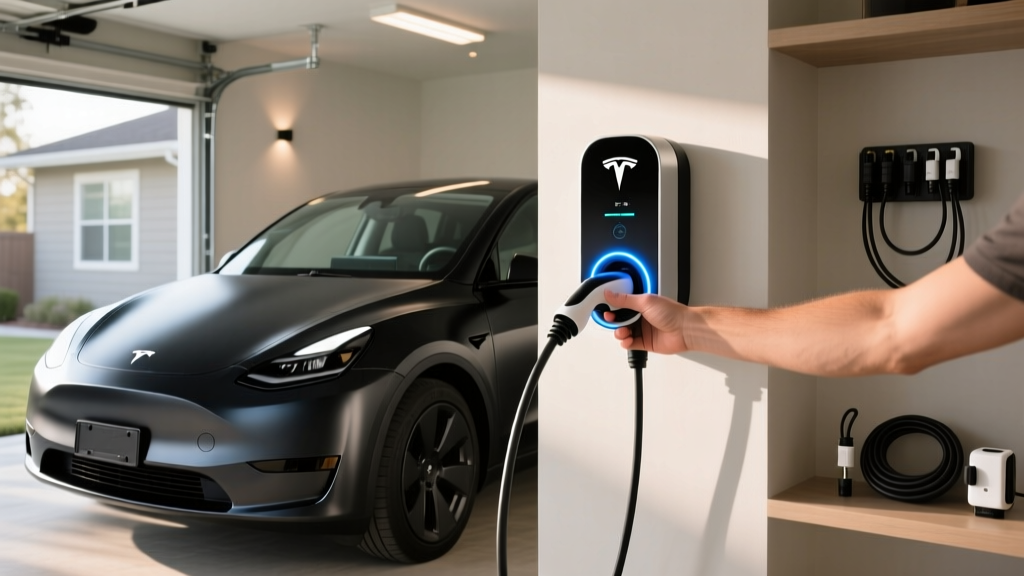
Tesla Wall Connector (Gen 4)
- Power: Up to 11.5 kW (48A @ 240V)
- Connector: NACS native
- Cable length: 24 feet
- Smart features: Wi-Fi, OTA updates, power sharing (link multiple units on one circuit), Tesla app integration
- Outdoor rated: Yes (NEMA 4)
- Price: ~$475
- Best for: Tesla owners; NACS-native vehicles
ChargePoint Home Flex
- Power: Up to 12 kW (50A @ 240V)
- Connector: J1772 (NACS adapter available) or NACS (2025+ model)
- Cable length: 23 feet
- Smart features: Wi-Fi, ChargePoint app, Alexa integration, scheduled charging, amperage configurable (16–50A)
- Outdoor rated: Yes (NEMA 4)
- Price: ~$550–$650
- Best for: Multi-EV households, non-Tesla NACS or CCS vehicles
Emporia Level 2 EV Charger
- Power: Up to 11.5 kW (48A @ 240V)
- Connector: J1772 (NACS version available 2025+)
- Cable length: 24 feet
- Smart features: Wi-Fi, Emporia app, solar integration (pair with Emporia VUE energy monitor), scheduled/TOU charging
- Outdoor rated: Yes
- Price: ~$399
- Best for: Budget-conscious buyers, solar homes
Grizzl-E Smart
- Power: Up to 10 kW (40A @ 240V)
- Connector: J1772 or NACS
- Cable length: 24 feet
- Smart features: Wi-Fi, OCPP-compatible, adjustable amperage (16–40A), built-in EVSE energy metering
- Outdoor rated: Yes (NEMA 4, rated to -40°C)
- Price: ~$450–$550
- Best for: Cold-climate owners, rugged/durable needs
Frequently Asked Questions
How much does it cost to install a home EV charger?
For a straightforward installation with a 200A panel and short wire run, expect $800–$1,750 all-in (equipment, electrician, permit). If your home needs a panel upgrade from 100A to 200A, total costs can reach $3,500–$7,500. Always get at least two quotes from licensed electricians, and confirm they include permit costs.
How fast will each charging level add range?
Level 1 (120V) adds 3–5 miles per hour — adequate only for PHEVs or very low daily mileage. Level 2 (240V, 48A) adds 30–44 miles per hour, replenishing most EVs overnight. DC fast charging at 250 kW can add 200+ miles in 15–20 minutes, but only between roughly 10–80% SoC due to charge-curve taper.
Which connector/charger is compatible with my EV?
If you drive a Tesla, you have a native NACS connector and full Supercharger access. For 2025–2026 models from Ford, GM, Rivian, Hyundai/Kia, and Volvo, NACS is the standard. Older CCS1 vehicles (pre-2025 VW, BMW) still use CCS and can access Electrify America. CHAdeMO is effectively discontinued for new US-market vehicles. Always check your specific model year — connector transitions happened mid-cycle for some brands.
How much does charging cost per mile vs. gas?
Home charging averages $0.03–$0.05 per mile (depending on your utility rate and vehicle efficiency). A comparable gas car at 28 MPG with $3.50/gallon fuel costs about $0.125 per mile. That's a 60–75% fuel cost reduction. Public DC fast charging at $0.30–$0.45/kWh costs $0.09–$0.13 per mile — still competitive with or cheaper than gasoline.
What electrical upgrades might I need?
The most common and expensive upgrade is a panel upgrade from 100A to 200A service, required if your existing panel lacks capacity for a new 60A circuit. Signs you may need one: your panel is near capacity (few unused breaker slots), you already run high-draw appliances (electric range, dryer, HVAC) on a 100A service, or your home was built before 1990. A licensed electrician can perform a load calculation to determine if your panel supports the additional circuit. Some utilities offer rebates for panel upgrades tied to EV adoption — check with your local provider.
Is it safe to unplug a Tesla while it's charging?
Yes, but always stop the charging session first via the app, touchscreen, or station interface. Forcibly removing a cable under load can arc and damage the connector. Tesla's electronic lock prevents this under normal operation — the car will not release the cable while actively drawing current unless you initiate the unlock sequence, which first halts the session.
Can I use a Tesla Supercharger with a non-Tesla EV?
As of 2026, Tesla has opened select Supercharger stations to non-Tesla NACS-equipped vehicles (Ford F-150 Lightning, GM Ultium vehicles, Rivian). Access requires the Tesla app and a NACS port — CCS vehicles need an adapter and can only use Superchargers with Magic Dock adapters. Check the Tesla app for station-by-station availability, as not all locations support non-Tesla vehicles yet.