Why Payment at Tesla Superchargers Confuses New EV Owners
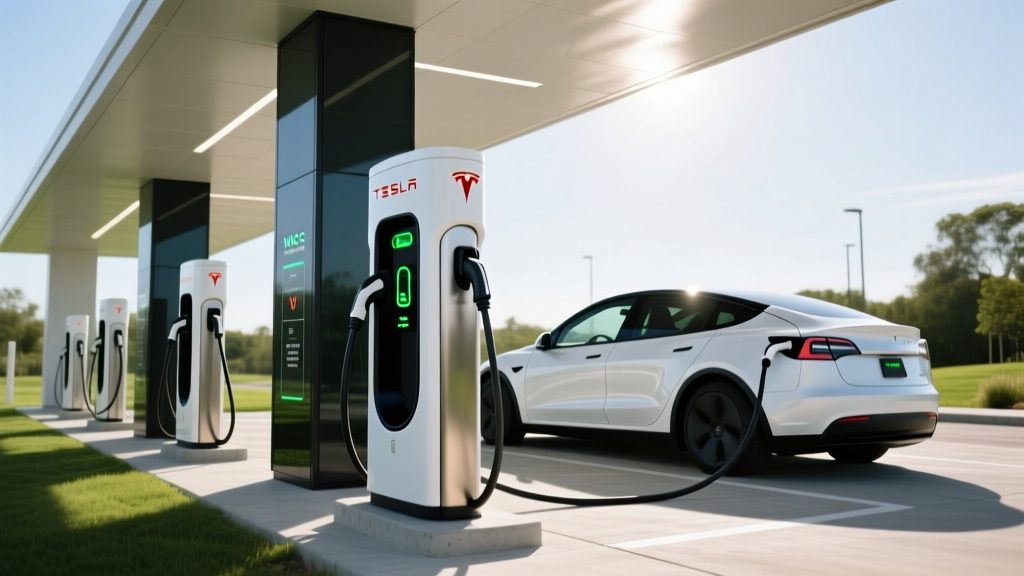
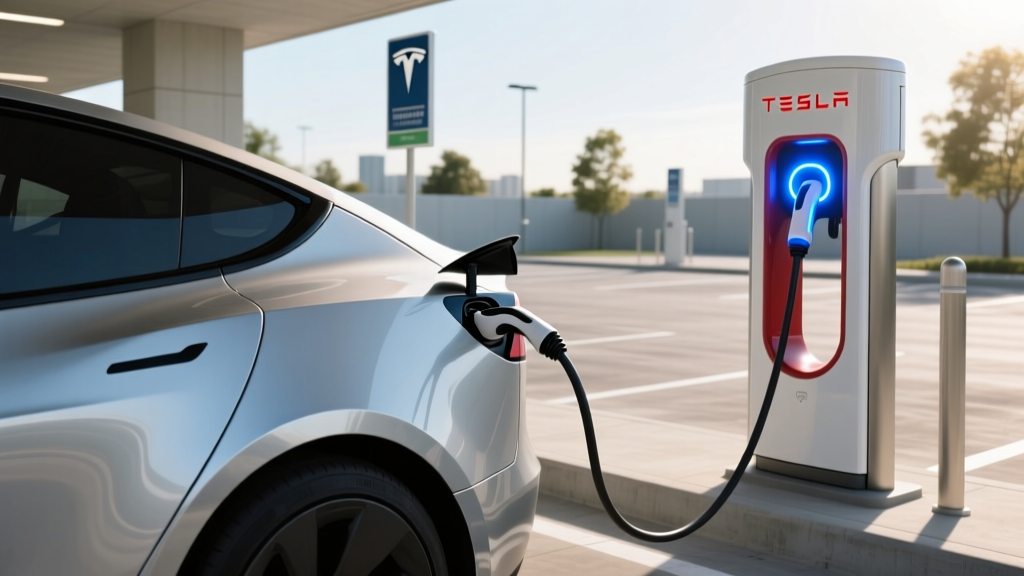
If you've just picked up a Tesla — or a non-Tesla EV with NACS access — your first visit to a Supercharger can feel opaque. There's no card reader on the pedestal, no screen to tap, and no attendant. Payment is entirely digital, routed through your Tesla account or the Tesla app. For non-Tesla drivers using the expanding open Supercharger network, the process adds one more step: linking a compatible vehicle through the app.
This guide walks through exactly how to pay at Tesla charging stations, what you'll actually spend per kWh and per mile, how the open network changes the equation for CCS-equipped EVs, and what home charging alternatives cost to install. We'll also cover the hardware, electrical requirements, and connector compatibility you need to know before your first session.
Setting Up Payment in the Tesla App (Step by Step)
Tesla Superchargers use automatic billing tied to your Tesla account. Here's how the payment flow works:
- Create or log into your Tesla account via the Tesla app (iOS/Android) or tesla.com.
- Add a payment method — Visa, Mastercard, Amex, or debit card. Tesla does not accept cash or on-site card swipes.
- Link your vehicle by VIN (automatic if purchased through Tesla; manual entry for used/private-sale vehicles).
- Plug in — the stall identifies your vehicle via the charge port handshake and billing begins automatically.
- Session receipt arrives in-app and via email within minutes of unplugging.
For non-Tesla EVs accessing open Supercharger stalls (equipped with the Magic Dock NACS connector or in designated open-network locations):
- Download the Tesla app and create an account (no Tesla vehicle required).
- Select "Charge Your Non-Tesla" in the app and choose a participating station.
- Follow in-app prompts to start the session — billing runs through your stored payment method.
Idle fees apply if you remain plugged in after reaching your charge limit (typically $0.50–$1.00/minute when the station is busy). Set a charge-limit notification in the app to avoid surprise fees.
Tesla Supercharger Pricing: What You'll Actually Pay
Supercharger rates vary by location, time of day, and whether you're driving a Tesla or a non-Tesla EV. Here's a realistic breakdown based on 2026 network averages:
| Scenario | Rate ($/kWh) | Typical Location |
|---|---|---|
| Tesla vehicle, off-peak | $0.28–$0.36 | Suburban/rural corridors |
| Tesla vehicle, peak (4–9 PM) | $0.42–$0.58 | Urban/metro stations |
| Non-Tesla EV (open network) | $0.48–$0.68 | All open-network stalls |
| Home Level 2 (off-peak utility rate) | $0.09–$0.16 | Residential (varies by utility) |
Cost Per Mile: Supercharger vs. Home vs. Gas
Based on a vehicle averaging 3.5 miles/kWh (e.g., Tesla Model Y, Hyundai Ioniq 5) and a gas car at 30 MPG:
| Energy Source | Cost per kWh / Gallon | Cost per Mile |
|---|---|---|
| Home Level 2 (off-peak) | $0.12/kWh | $0.034 |
| Supercharger (Tesla, off-peak) | $0.32/kWh | $0.091 |
| Supercharger (non-Tesla) | $0.58/kWh | $0.166 |
| Gasoline (national avg.) | $3.40/gallon | $0.113 |
Home charging remains the cheapest option by a wide margin. Supercharging a Tesla on the road is competitive with gas; non-Tesla Supercharger access often exceeds gas cost per mile.
Understanding Charging Levels: Speed, Power, and Range Added
Tesla Superchargers are DC fast chargers, but most of your charging will happen at home on Level 1 or Level 2. Here's how each level compares:
| Level | Voltage | Power (kW) | Miles of Range per Hour | Typical Use Case |
|---|---|---|---|---|
| Level 1 | 120V AC | 1.2–1.9 kW | 3–5 mi/hr | Overnight trickle, PHEVs, low-mileage drivers |
| Level 2 (home) | 240V AC | 7.2–19.2 kW | 20–60 mi/hr | Daily home charging, most EV owners |
| DC Fast (Tesla V3 Supercharger) | 400–800V DC | Up to 250 kW | ~75 mi in 5 min (peak) | Road trips, highway corridors |
| DC Fast (Tesla V4 Supercharger) | Up to 900V DC | Up to 350 kW (capable) | Varies by vehicle architecture | Newer corridors, Cybertruck-capable |
kW vs. kWh — the critical distinction: kW (kilowatts) measures power — how fast energy flows into your battery, like water pressure from a hose. kWh (kilowatt-hours) measures energy — the total amount stored, like the size of the tank. A 250 kW Supercharger delivers energy fast; a 75 kWh battery holds the total capacity.
Real-World Charging Time Examples
Charge times depend on battery size, state of charge (SoC), battery temperature, and the charging curve. Peak kW rates are not sustained — charging slows significantly above 80% SoC to protect battery health.
| Vehicle (Battery Size) | Charger | 10–80% Time | Notes |
|---|---|---|---|
| Tesla Model 3 RWD (57.5 kWh, LFP) | V3 Supercharger (250 kW) | ~25 min | LFP tolerates higher SoC; precondition via nav |
| Tesla Model Y Long Range (75 kWh, NMC) | V3 Supercharger (250 kW) | ~22 min | Peak ~170 kW sustained, tapers above 60% |
| Ford F-150 Lightning (131 kWh ext.) | CCS DCFC (150 kW) | ~41 min | Large battery = longer session even at high kW |
| Hyundai Ioniq 5 (77.4 kWh, NMC) | 350 kW DCFC | ~18 min | 800V architecture sustains high rate longer |
Connector Compatibility: NACS, CCS1, CHAdeMO, and Adapters
The connector landscape has consolidated significantly since 2024, when Ford, GM, Rivian, Volvo, and others adopted the North American Charging Standard (NACS) — originally Tesla's proprietary connector. Here's where things stand in 2026:
| Connector | Brands Using It (2026 Models) | Tesla Supercharger Access |
|---|---|---|
| NACS (native) | Tesla (all), Ford (2025+), GM (2025+), Rivian (2025+), Volvo/Polestar (2025+), Hyundai/Kia (2026 select) | Direct — no adapter needed |
| CCS1 | Hyundai/Kia (pre-2026), VW/ID.4 (pre-2026), BMW iX (current gen), legacy models | Via Magic Dock (built-in adapter at select stalls) or Tesla CCS adapter (~$175) |
| CHAdeMO | Nissan Leaf (legacy), Mitsubishi Outlander PHEV (legacy) | Not compatible — no adapter available |
If you drive a CCS1-equipped EV and want Supercharger access, check the Tesla app for stations with the integrated Magic Dock. Alternatively, Tesla sells a CCS-to-NACS adapter — confirm your vehicle's firmware supports NACS communication before purchasing.
Home EV Charger Installation: Costs, Electrical Requirements, and Upgrades
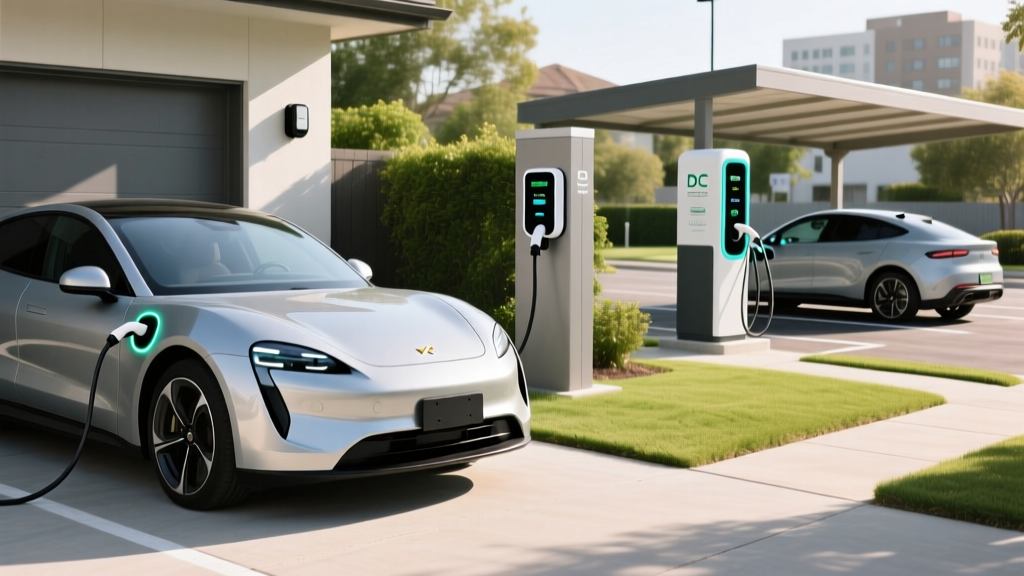
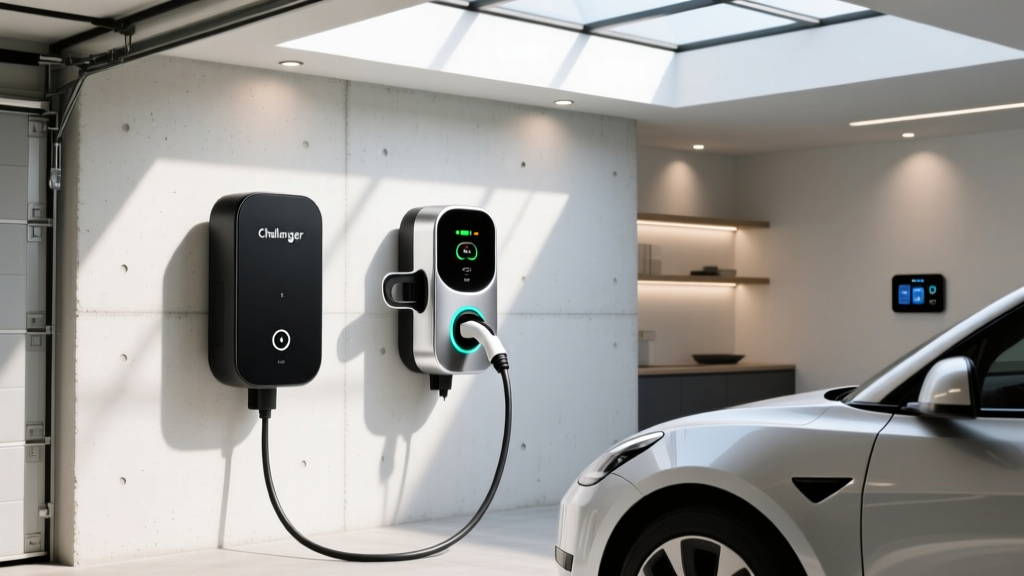
Most EV owners do 80%+ of their charging at home. A Level 2 home charger is the single highest-impact EV accessory you can install. Here's what's involved:
Electrical Requirements
- Circuit: Dedicated 240V circuit, typically 40A or 50A (breaker rated 125% of continuous load = 50A breaker for 40A charging).
- Wire gauge: 6 AWG copper for 50A circuits; 4 AWG for 60A.
- Outlet vs. hardwired: NEMA 14-50 outlet offers portability; hardwired is cleaner and supports higher amperage without GFCI nuisance trips.
- Panel capacity: A 200A service panel can typically support a 40A–50A EV circuit. Homes with 100A service or heavy existing loads (electric heat, range, dryer) may need a panel upgrade to 200A ($1,500–$3,500) or a load-management device.
- Permit: Required in most jurisdictions — typically $50–$250 depending on municipality.
| Component | Low End | High End | Notes |
|---|---|---|---|
| Level 2 charger (equipment) | $350 | $750 | Smart chargers with Wi-Fi/app at higher end |
| Electrician labor (standard install) | $400 | $1,200 | Depends on run length, conduit, wall material |
| Electrical permit | $50 | $250 | Varies by city/county |
| Panel upgrade (if needed) | $1,500 | $3,500 | 100A → 200A service; not always required |
| Total (no panel upgrade) | $800 | $2,200 | Typical range for most homes |
| Total (with panel upgrade) | $2,300 | $5,700 | Older homes with 100A service |
Federal incentive note: The §30D tax credit applies to vehicles, not chargers. However, the Alternative Fuel Vehicle Refueling Property Credit (IRC §30C) may cover up to 30% of home charger equipment and installation costs (up to $1,000) if you live in an eligible census tract. Consult a tax professional and verify current-year eligibility on irs.gov.
Recommended Home EV Chargers (2026)
These chargers are selected for reliability, power output, connector options, and smart features:
Tesla Wall Connector (Gen 4)
- Power: Up to 11.5 kW (48A on 60A circuit)
- Connector: NACS native; J1772 adapter included
- Cable length: 24 ft
- Smart features: Wi-Fi updates, power-sharing (dual units on one circuit), access control
- Price: ~$475
- Best for: Tesla owners, mixed NACS/J1772 households
ChargePoint Home Flex (NACS version)
- Power: Up to 12 kW (50A adjustable, 80A circuit max)
- Connector: NACS or J1772 (select at purchase)
- Cable length: 23 ft
- Smart features: Wi-Fi, Alexa integration, scheduled charging, utility demand-response
- Price: ~$599
- Best for: Non-Tesla EVs switching to NACS, utility rate optimization
Emporia Level 2 Smart Charger
- Power: Up to 11.5 kW (48A)
- Connector: J1772 (NACS adapter available separately)
- Cable length: 24 ft
- Smart features: Solar integration, energy monitoring, EV + home panel tracking
- Price: ~$399
- Best for: Budget-conscious buyers, solar-home integration
Safety, Code, and Best Practices
EV charging involves sustained high-current draw — unlike a dryer or oven that cycles on and off, a Level 2 charger can pull maximum current for 6–10 hours straight. This makes proper installation non-negotiable:
- Dedicated circuit: Never share the EV charger circuit with other appliances.
- GFCI protection: NEC 2023+ requires GFCI for outdoor receptacles. Hardwired installations may avoid nuisance GFCI trips that plague NEMA 14-50 outlets in some regions.
- Outdoor rating: If installing outside, confirm the charger carries a NEMA 4 or IP55+ rating for weather resistance.
- Load management: If your panel is near capacity, devices like the Emporia Smart Load Center or Tesla Wall Connector power-sharing can dynamically limit charge rate to avoid tripping the main breaker.
- Use a licensed electrician: DIY 240V installations carry fire and code-violation risk. Always pull a permit — it protects your home insurance coverage.
Frequently Asked Questions
How much does it cost to install a home EV charger?
Expect $800–$2,200 for a standard Level 2 installation (equipment + electrician + permit) in a home with adequate 200A panel capacity. If your home needs a panel upgrade from 100A to 200A, add $1,500–$3,500. Always get 2–3 quotes from licensed electricians.
How fast will each charging level add range?
Level 1 (120V) adds 3–5 miles per hour — fine for PHEVs or low-mileage days. Level 2 (240V, 40A–50A) adds 20–45 miles per hour, fully replenishing most EVs overnight. DC fast charging (150–250 kW) can add 150–200 miles in 15–25 minutes, but the charging curve tapers significantly above 80% SoC.
Which connector/charger is compatible with my EV?
2026-model Teslas, Fords, GMs, Rivians, and Volvos use NACS natively. Older CCS1 vehicles (pre-2025 Hyundai/Kia, VW ID.4) need a CCS-to-NACS adapter or a Magic Dock-equipped Supercharger station. CHAdeMO vehicles (Nissan Leaf) cannot use Tesla Superchargers. Check your vehicle's charge port or owner's manual for the definitive answer.
How much does charging cost per mile vs. gas?
Home Level 2 charging averages $0.03–$0.05 per mile — roughly one-third the cost of gas at $3.40/gallon and 30 MPG ($0.113/mile). Public Supercharging at $0.32/kWh runs about $0.09/mile for a Tesla, competitive with gas. Non-Tesla Supercharger rates ($0.48–$0.68/kWh) often exceed gas cost per mile.
What electrical upgrades might I need?
If your home has a 100A electrical panel, uses electric resistance heat, or already runs multiple high-draw appliances (electric range, dryer, HVAC), you may need a panel upgrade to 200A. Homes built after 2000 typically have 200A service and can accommodate a 40A–50A EV circuit without upgrades. A licensed electrician can perform a load calculation to confirm.
Can I pay at a Tesla Supercharger without a Tesla account?
No. All Tesla Supercharger sessions require an active Tesla account with a linked payment method. Non-Tesla drivers must download the Tesla app, create an account, and use the "Charge Your Non-Tesla" feature at participating stations. There are no on-site card readers or cash payment options.
Do Tesla Superchargers charge idle fees?
Yes. If your vehicle remains plugged in after reaching its charge limit (or the station's enforced cap), idle fees of $0.50–$1.00 per minute apply — doubling when the station is at or near full capacity. Set a charge-limit alert in the app and move your vehicle promptly after charging completes.