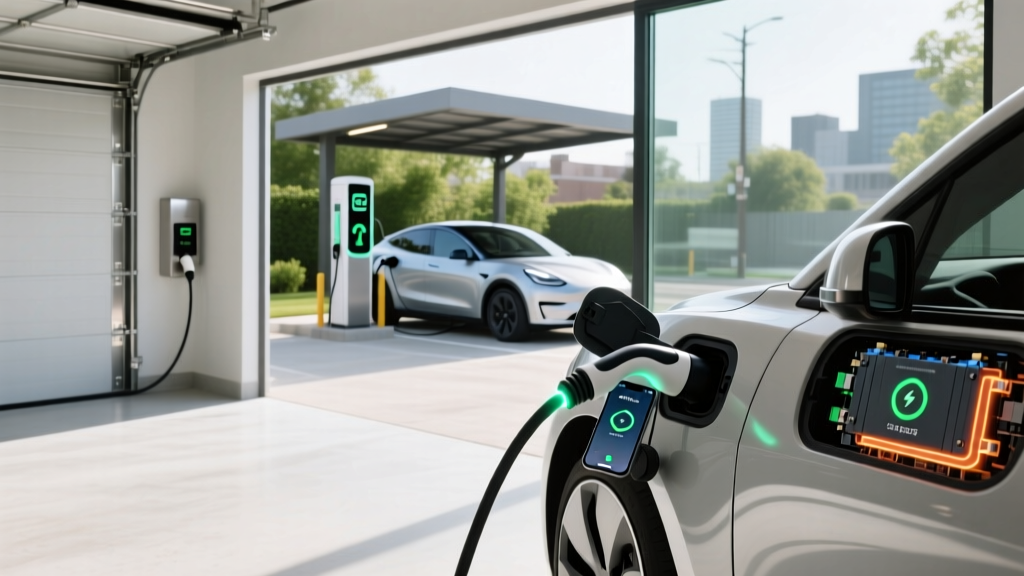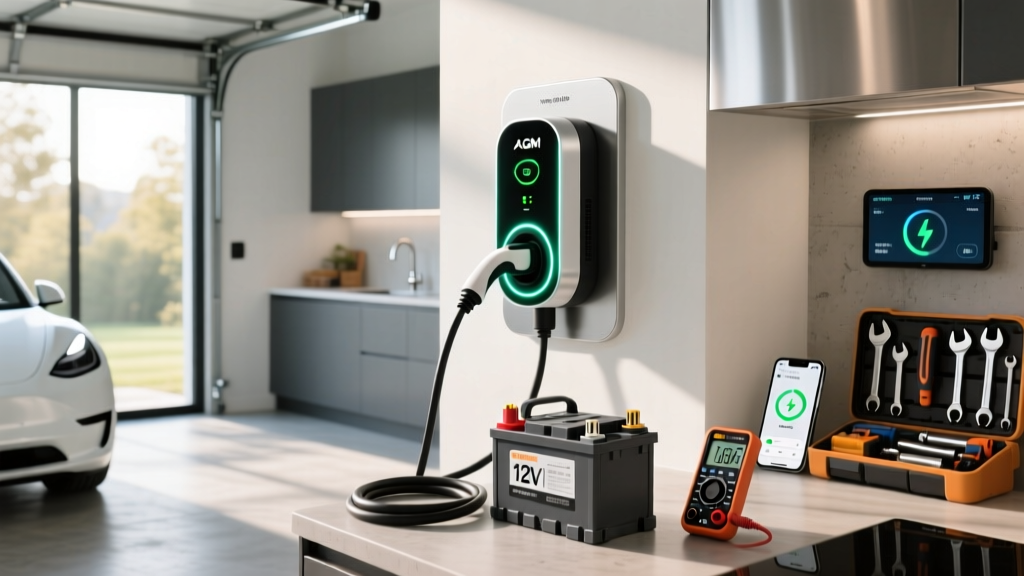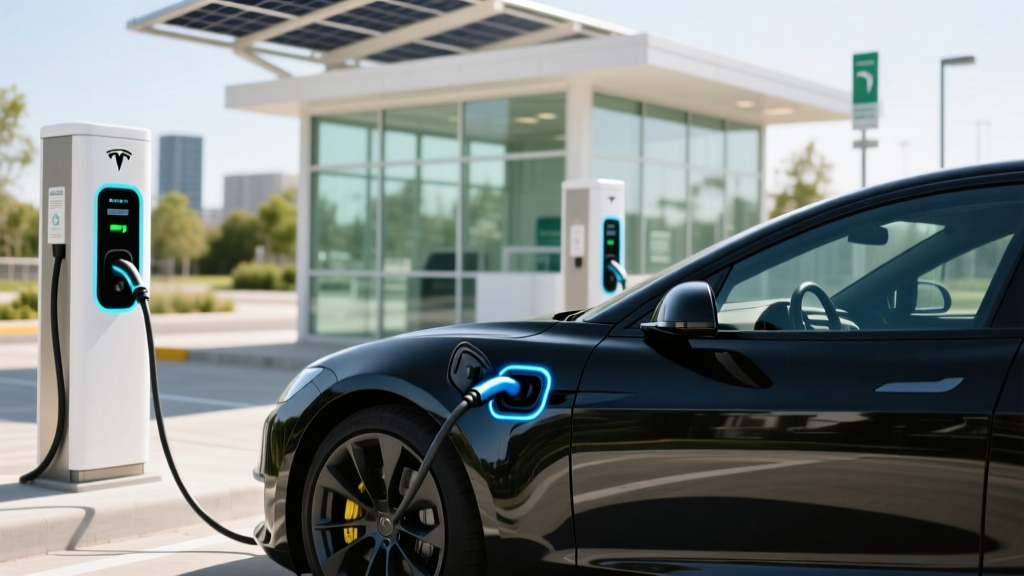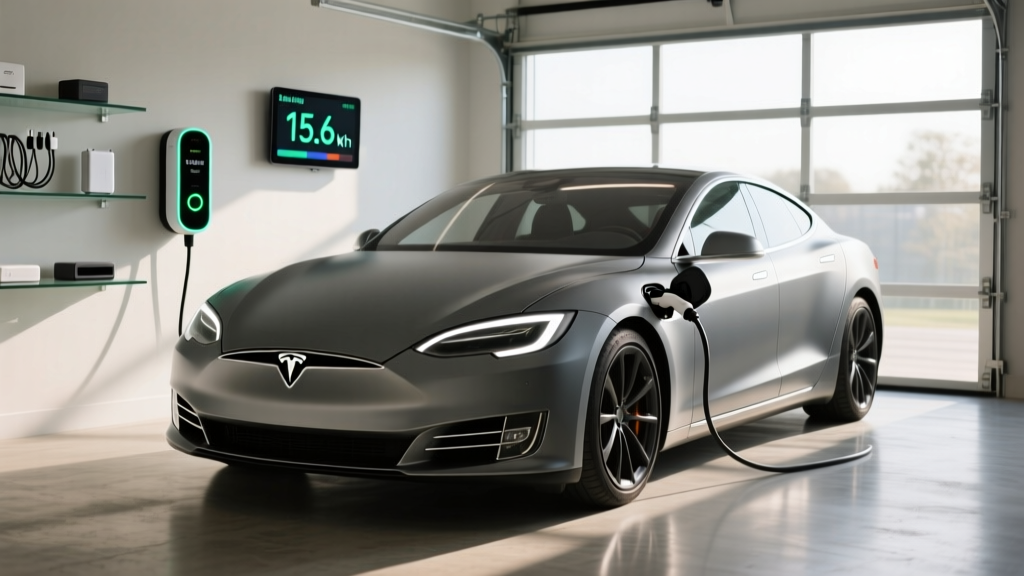
Every new Tesla owner or prospective buyer eventually asks the same question: how much kWh to charge a Tesla from empty to full, and what does that actually cost in dollars? The answer depends on which model you drive, which charging method you use, and whether you're charging at home or on the road. This guide gives you the exact numbers — battery capacities, energy costs, installation requirements, and equipment picks — so you can budget accurately for Tesla ownership in 2026.
Tesla Battery Sizes and Usable kWh by Model
Before calculating cost, you need to know how much energy your Tesla's battery actually holds. Tesla doesn't publish exact usable kWh figures in its marketing materials, but teardown data, EPA test filings, and third-party testing give us reliable numbers for current models.
| Model (2026) | Approx. Usable Battery (kWh) | EPA Range | Real-World Highway Range* |
|---|---|---|---|
| Model 3 RWD | 60 kWh (LFP) | 272 mi | ~230–250 mi |
| Model 3 Long Range AWD | 75 kWh (NMC) | 341 mi | ~285–310 mi |
| Model Y Long Range AWD | 75 kWh (NMC) | 320 mi | ~270–295 mi |
| Model S Dual Motor | 95 kWh (NMC) | 402 mi | ~340–370 mi |
| Model X Dual Motor | 95 kWh (NMC) | 335 mi | ~280–310 mi |
*Real-world highway range assumes 70–80 mph speeds in moderate temperatures. Cold weather (below 32°F) can reduce range an additional 15–30%. Source: fueleconomy.gov
The critical distinction here: kWh (kilowatt-hours) measures energy — think of it as the "gallons" in your tank. kW (kilowatts) measures power — the rate at which energy flows, like the diameter of the hose filling that tank. You'll see both throughout this guide, and they are never interchangeable.
Charging Levels Explained: How Fast Will Each Add Range?
Teslas can charge at three different levels, each with dramatically different speeds and use cases.
| Level | Voltage / Power | Typical kW Output | Miles of Range Added per Hour | Best For |
|---|---|---|---|---|
| Level 1 (120V) | 120V / 12A | ~1.4 kW | 3–5 mi/hr | Emergency / overnight trickle |
| Level 2 (240V) | 240V / 32–48A | 7.7–11.5 kW | 25–44 mi/hr | Daily home charging |
| DC Fast (Supercharger) | 400V+ architecture | 150–250 kW peak | ~1,000+ mi/hr (at peak) | Road trips, rapid top-ups |
Charging Time Examples: 10% to 80%
Most EV owners charge between 10% and 80% state of charge (SoC) for daily use, which preserves battery health. Here's how long that takes for common Tesla models:
| Scenario | Model 3 RWD (60 kWh) | Model Y LR (75 kWh) | Model S (95 kWh) |
|---|---|---|---|
| Level 1 (1.4 kW) | ~30 hours | ~37 hours | ~48 hours |
| Level 2 — Tesla Wall Connector (11.5 kW) | ~3.6 hours | ~4.6 hours | ~5.8 hours |
| DC Fast — V3 Supercharger (250 kW peak) | ~25 min | ~27 min | ~32 min |
Charging curve reality check: DC fast charging does not sustain peak kW for the entire session. A Model 3 on a V3 Supercharger may peak at 250 kW below 30% SoC, but tapers to roughly 100 kW by 60% and drops below 50 kW above 80%. That's why manufacturers quote 10–80% times rather than 0–100%. Charging past 80% at a DC fast charger is slow and expensive — save that for home Level 2.
How Much Does It Cost to Charge a Tesla? kWh Pricing and Cost per Mile
The cost to charge a Tesla depends entirely on the price per kWh you're paying, which varies enormously between home electricity, public Level 2 stations, and DC fast chargers.
| Charging Scenario | Typical $/kWh | Cost to Add 50 kWh* | Effective Cost per Mile** |
|---|---|---|---|
| Home — Off-Peak Utility Rate | $0.08–$0.12 | $4.00–$6.00 | $0.017–$0.026 |
| Home — Standard Residential Rate | $0.14–$0.18 | $7.00–$9.00 | $0.030–$0.039 |
| Public Level 2 (ChargePoint, etc.) | $0.25–$0.40 | $12.50–$20.00 | $0.054–$0.087 |
| Tesla Supercharger (V3/V4) | $0.28–$0.45 | $14.00–$22.50 | $0.061–$0.098 |
| Gas Car Baseline (28 MPG, $3.40/gal) | — | — | $0.121 |
*50 kWh adds roughly 230 miles in a Model 3 Long Range. **Cost per mile based on 4.5 mi/kWh efficiency. Gas baseline assumes a comparable midsize sedan.
For the specific question of how much kWh to charge a Tesla from 10% to 80%: a Model 3 RWD needs roughly 42 kWh, costing $3.36–$5.04 at home (off-peak) or $11.76–$18.90 at a Supercharger. A Model Y Long Range needs roughly 52.5 kWh for the same 10–80% session, costing $4.20–$6.30 at home or $14.70–$23.63 at a Supercharger.
Even at the highest public charging rates, Tesla charging costs roughly 40–60% less per mile than fueling a comparable gas vehicle. Home charging on an off-peak utility plan delivers savings of 75–85% per mile.
Home Charger Installation: Electrical Requirements and Total Cost
Installing a Level 2 home charger is the single highest-impact upgrade a Tesla owner can make. But costs vary wildly depending on your home's electrical panel, the distance from panel to charger location, and local permitting requirements.
Electrical Requirements for a Tesla Level 2 Charger
The Tesla Wall Connector (Gen 3) is hardwired and supports up to 48 amps on a 60-amp dedicated circuit at 240V, delivering up to 11.5 kW. Here's what that requires:
- Circuit: Dedicated 60-amp breaker (for 48A continuous draw — NEC code requires circuits rated 125% of continuous load)
- Wire: 6 AWG copper (or 4 AWG aluminum) for runs up to ~50 feet; larger gauge for longer runs
- Panel capacity: Your home's electrical panel must have spare capacity. A 200-amp panel can usually accommodate a 60-amp EV circuit. A 100-amp panel likely cannot.
- Permit: Most jurisdictions require an electrical permit for new 240V circuits
Panel Upgrade: The Hidden Cost
If your home has a 100-amp electrical panel (common in homes built before the 1990s), you'll likely need a panel upgrade to 200 amps before adding a 60-amp EV circuit. This is the single biggest variable in installation cost and one that many online guides gloss over.
| Cost Component | Simple Install (Panel Adjacent) | Moderate Install (50+ ft Run) | Complex Install (Panel Upgrade Needed) |
|---|---|---|---|
| Tesla Wall Connector (hardware) | $420 | $420 | $420 |
| Electrical permit | $50–$150 | $50–$150 | $50–$200 |
| Electrician labor + materials | $300–$600 | $800–$1,500 | $1,500–$2,500 |
| Panel upgrade (if needed) | — | — | $1,500–$3,500 |
| Total Estimated Cost | $770–$1,170 | $1,270–$2,070 | $3,470–$6,620 |
Always get a detailed quote from a licensed electrician before committing. Some utilities offer rebates of $250–$1,000 for home charger installation — check with your local provider. The federal §30C Alternative Fuel Vehicle Refueling Property Credit covers up to 30% of home charging equipment and installation costs (capped at $1,000), but eligibility depends on census tract requirements. Consult a tax professional for your specific situation.
Which Connector and Charger Is Compatible with Tesla?
Tesla uses the North American Charging Standard (NACS) connector — a compact, proprietary design that Tesla opened to other automakers beginning in 2024. As of 2026, NACS is the dominant connector standard in North America, adopted by Ford, GM, Rivian, Hyundai, and most major brands.
| Connector Type | Used By | Tesla Compatibility |
|---|---|---|
| NACS (Tesla) | All Tesla models; Ford, GM, Rivian, Hyundai, Volvo, and others (2024+) | Native — no adapter needed |
| CCS1 | Older non-Tesla EVs (legacy models pre-NACS adoption) | Tesla sells a CCS adapter (~$175) for use at non-Tesla DC chargers |
| CHAdeMO | Nissan Leaf (legacy); largely discontinued | Not compatible — no adapter available from Tesla |
| J1772 | Standard for public Level 2 (non-Tesla stations) | Tesla includes a J1772-to-NACS adapter with every new vehicle |
Practical tip: Every new Tesla ships with a Mobile Connector (which includes a NACS plug and a J1772 adapter) and a NACS-to-J1772 adapter. This means you can plug into virtually any Level 2 public station. For DC fast charging at non-Tesla networks, you'll need the separate CCS adapter if the station doesn't yet have a NACS cable.
Best Home Chargers for Tesla in 2026
While the Tesla Wall Connector is the default choice, several third-party options offer competitive features. Here's how the top picks compare:
Tesla Wall Connector (Gen 3)
- Power Output: Up to 11.5 kW (48A, 240V)
- Connector: NACS native
- Cable Length: 24 ft
- Smart Features: Wi-Fi for OTA updates, power sharing between two units on one circuit, Tesla app integration
- Price: ~$420
- Best For: Tesla-only households wanting maximum speed and seamless integration
ChargePoint Home Flex
- Power Output: Up to 12 kW (50A, 240V) — configurable from 16A to 50A
- Connector: NACS (new version) or J1772 (with adapter)
- Cable Length: 23 ft
- Smart Features: Wi-Fi, scheduling, energy tracking, Alexa integration, amperage adjustable via app
- Price: ~$550–$650
- Best For: Multi-EV households or those wanting adjustable amperage to match panel capacity
Emporia Vue Level 2 Charger
- Power Output: Up to 11.5 kW (48A, 240V)
- Connector: NACS or J1772 versions available
- Cable Length: 24 ft
- Smart Features: Wi-Fi, solar integration with Emporia energy monitor, scheduling, load management
- Price: ~$400–$500
- Best For: Solar-equipped homes wanting to charge exclusively on excess solar production
Grizzl-E Smart
- Power Output: Up to 10 kW (40A, 240V)
- Connector: NACS or J1772
- Cable Length: 24 ft
- Smart Features: Wi-Fi, OCPP-compatible, adjustable amperage, extreme cold rated (-40°F)
- Price: ~$450–$550
- Best For: Cold-climate owners and those wanting an open-protocol charger not locked to one ecosystem
Safety, Code, and Installation Considerations
Home EV charging involves significant electrical loads running for hours at a time. Cutting corners here is a fire risk. Here's what the National Electrical Code (NEC) and best practices require:
- Dedicated circuit: Your Level 2 charger must be on its own dedicated breaker — not shared with other appliances.
- Continuous load rule: EV charging is classified as a continuous load (3+ hours). NEC requires the circuit be rated at 125% of the charger's maximum draw. A 48A charger needs a 60A breaker.
- GFCI protection: The 2020 NEC and later require GFCI protection for outdoor receptacles. Hardwired chargers (like the Tesla Wall Connector) may not require a GFCI breaker in all jurisdictions, but some local codes mandate it. Your electrician will know local requirements.
- Outdoor rating: If mounting outdoors, ensure the charger is rated for outdoor use (the Tesla Wall Connector is NEMA 4 rated for indoor/outdoor). The connector holster should protect the plug from rain and debris.
- Wire gauge: Undersized wire on a long run causes voltage drop and heat. For a 60A circuit with a run longer than 50 feet, your electrician may specify 4 AWG copper instead of 6 AWG.
- Load management: If your panel is near capacity, consider a smart charger with load management (like the Tesla Wall Connector's power-sharing feature) or an energy management system that throttles charging when household demand is high.
Always pull a permit and have the installation inspected. Unpermitted electrical work can void your homeowner's insurance and create serious safety hazards.
Frequently Asked Questions
How much kWh to charge a Tesla Model 3 from empty to full?
A Tesla Model 3 RWD has roughly 60 kWh of usable battery capacity, while the Long Range holds about 75 kWh. In practice, you'll rarely charge from 0% to 100%. A typical 10–80% session adds about 42 kWh (RWD) or 52.5 kWh (Long Range). At a home rate of $0.12/kWh, that's $5.04 to $6.30 per session.
How much does it cost to install a home EV charger?
A straightforward Tesla Wall Connector installation on an existing 200-amp panel with a short wire run typically costs $770–$1,170 total (hardware + electrician + permit). Complex installs requiring long wire runs or a panel upgrade to 200 amps can reach $3,500–$6,600. Always get a site-specific quote from a licensed electrician.
How fast will a Level 2 charger add range to my Tesla?
At 11.5 kW (48A, the Tesla Wall Connector's maximum), you'll add roughly 35–44 miles of range per hour depending on your model's efficiency. A Model 3 Long Range charging overnight for 8 hours gains about 300 miles — more than a full battery. Level 1 (120V) adds only 3–5 miles per hour and is suitable only for emergencies or very low daily mileage.
Can I charge my Tesla at non-Tesla public chargers?
Yes. Every new Tesla includes a J1772-to-NACS adapter for public Level 2 stations. For non-Tesla DC fast chargers with CCS1 connectors, Tesla sells a CCS adapter for approximately $175. The expanding Supercharger network (now 60,000+ connectors globally) remains the most reliable DC fast-charging option for Tesla owners.
What electrical upgrades might I need for a home charger?
The most common upgrade is a panel upgrade from 100 amps to 200 amps, which costs $1,500–$3,500. You may also need a new dedicated 60-amp breaker slot, upgraded wire from the utility meter, or a sub-panel if your main panel is full. Homes built after 2000 with 200-amp panels usually need no upgrade. Your electrician will perform a load calculation to determine if your panel can handle the additional 48-amp continuous draw.
Is it cheaper to charge a Tesla at home or at Superchargers?
Home charging is significantly cheaper. At the national average residential electricity rate of ~$0.16/kWh, home charging costs about $0.035 per mile. Tesla Superchargers average $0.28–$0.45/kWh, translating to $0.06–$0.10 per mile. Over 12,000 miles of annual driving, home charging saves roughly $500–$800 per year compared to exclusive Supercharger use, and $800–$1,200 compared to a gas car at $3.40/gallon.
Does charging to 100% damage the Tesla battery?
For daily driving, Tesla recommends setting the charge limit to 80% for NMC battery models (Long Range, Performance) to minimize long-term degradation. LFP battery models (Model 3 RWD) can and should be charged to 100% regularly — Tesla recommends this at least weekly for LFP chemistry to maintain accurate SoC calibration. Occasional 100% charges before road trips are fine for any Tesla.
Understanding how much kWh to charge a Tesla — and what that costs in real dollars — is the foundation of confident EV ownership. With a home Level 2 charger, most Tesla owners spend $4–$9 per charge session and less than $0.04 per mile, making it one of the most economical ways to drive. The upfront investment in a quality home charger and proper electrical installation typically pays for itself within 12–24 months of fuel savings alone.