If you're finally retiring a beloved but aging tuner car — say, a 2007 Chevrolet Cobalt SS Supercharged with its 2.0L LSJ Ecotec pushing 205 hp and 22 mpg combined — and stepping into your first electric vehicle, the charging ecosystem can feel like learning a new language. You went from a $40 fill-up at any corner gas station to navigating kilowatts, connectors, charge curves, and 240-volt circuit installations.
This guide translates everything you need to know into plain, spec-driven English. We'll cover exactly how fast each charging level adds range, what a home Level 2 install actually costs (including the panel-upgrade scenario nobody warns you about), which connector your new EV uses, and how your per-mile fuel cost compares to that supercharged Ecotec you're leaving behind.
The Three Charging Levels Explained: kW, Miles Per Hour, and When to Use Each
Before we get into hardware, let's lock down the single most important distinction in EV ownership: kW (kilowatts) is power — how fast energy flows. kWh (kilowatt-hours) is energy — how much your battery holds. Think of kW as the width of the hose and kWh as the size of the bucket. Confusing them is the most common mistake new EV owners make, and it leads to wildly wrong expectations at the charger.
Here's what each level delivers in practice:
| Level | Voltage / Phase | Power (kW) | Miles of Range Added Per Hour | Typical Use Case |
|---|---|---|---|---|
| Level 1 | 120V AC (standard outlet) | 1.2–1.9 kW | 3–5 mi/hr | Overnight top-ups, PHEVs, emergency backup |
| Level 2 | 240V AC (dryer-style circuit) | 3.3–19.2 kW | 12–75 mi/hr | Daily home/work charging — the primary method for most owners |
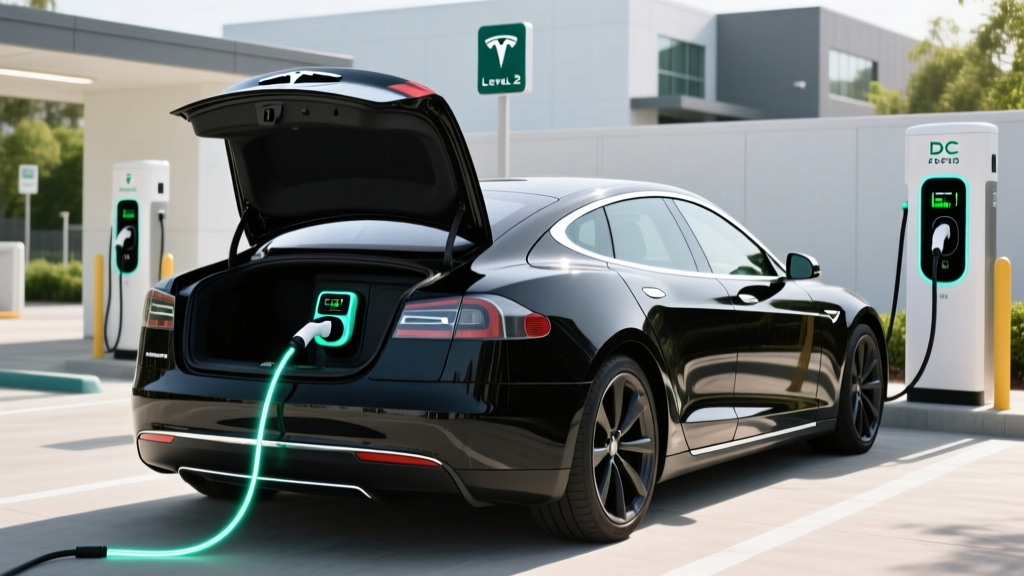
| DC Fast Charging (DCFC) | 400–800V DC (commercial station) | 50–350 kW | 150–1,200+ mi/hr (peak) | Road trips and quick top-ups away from home |
Real-world context: A typical 75 kWh battery (like the one in a Tesla Model Y Long Range or a Hyundai Ioniq 5 with the larger pack) charged on a 48-amp / 11.5 kW Level 2 home charger will go from 10% to 80% in roughly 5–6 hours. That same session on a 150 kW DC fast charger takes about 20–25 minutes (10–80%), though peak rate only sustains through roughly 40–50% state of charge before tapering. This charge-curve taper is why manufacturers quote 10–80% times rather than 0–100% — the last 20% can take as long as the first 80%.
Home Level 2 Installation: Electrical Requirements, Permits, and Real Costs
This is where most first-time EV owners get sticker shock — or a pleasant surprise, depending on their home's electrical panel. Let's break down the actual requirements.
What a Level 2 Circuit Demands
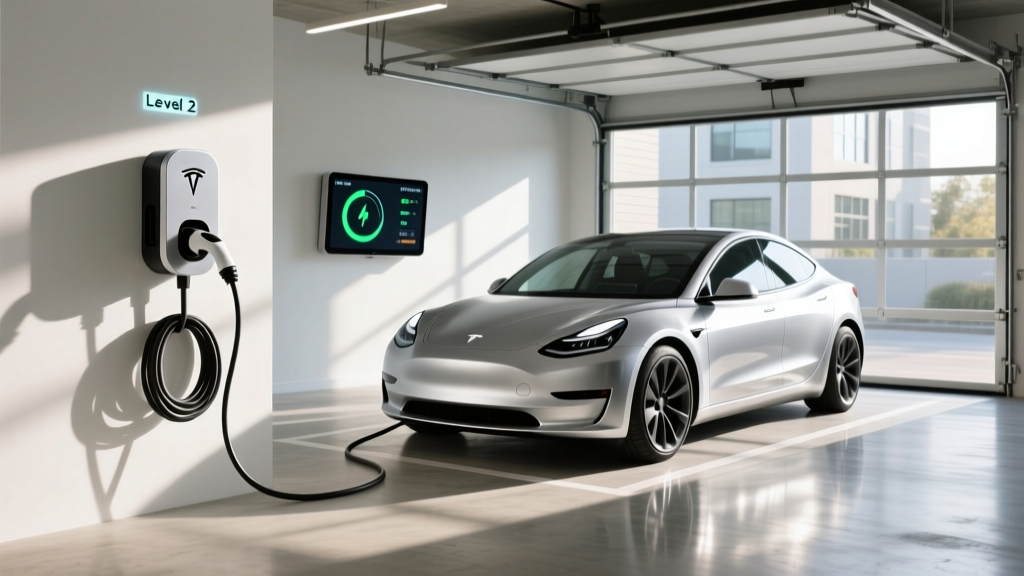
A typical home Level 2 charger runs on a 240-volt, dedicated circuit — the same type of circuit your electric dryer or oven uses. Most EV owners install a 40-amp or 48-amp circuit, which supports chargers rated at 32A or 40A continuous draw respectively (the National Electrical Code requires circuits rated at 125% of continuous load).
- 40A circuit → 9.6 kW output: Adequate for most EVs; adds ~30–35 miles of range per hour.
- 48A circuit → 11.5 kW output: Faster; adds ~40–45 mi/hr. Requires 60A breaker.
- 60A circuit → 14.4 kW output: Needed for larger batteries (e.g., Ford F-150 Lightning extended range) or high-acceptance vehicles like the Lucid Air. Requires heavier-gauge wire.
The Panel-Upgrade Gotcha
If your home has a 100-amp electrical panel (common in homes built before the 1990s), adding a 40A or 48A EV circuit may push your total calculated load beyond the panel's capacity. In that case, you'll need a panel upgrade to 200 amps — a significant added cost. Homes with existing 200A panels usually have enough headroom for a Level 2 charger without upgrades, but a licensed electrician must perform a load calculation per NEC Article 220 to confirm.
| Component | Simple Install (panel nearby, no upgrade) | Complex Install (long wire run, panel upgrade) |
|---|---|---|
| Level 2 Charger (hardware) | $350–$700 | $350–$700 |
| Electrician labor | $300–$800 | $1,000–$2,500 |
| Electrical permit | $50–$200 | $50–$200 |
| Panel upgrade (100A → 200A), if needed | $0 | $1,500–$3,500 |
| Conduit, wire, mounting hardware | $100–$300 | $300–$800 |
| Total estimated cost | $800–$2,000 | $3,200–$7,700 |
Pro tip: The federal Residential Clean Energy Credit does not cover EV chargers as of 2026 (the alternative fuel vehicle refueling property credit under §30C expired for most residential installations). However, many utilities and state programs offer rebates of $250–$1,000 for Level 2 equipment or installation. Check your local utility's EV program page and your state energy office for current offers.
Connector Compatibility: NACS, CCS1, CHAdeMO, and What You Need to Know
The connector landscape has consolidated significantly since 2024, when Ford, GM, Rivian, Volvo, and others announced adoption of Tesla's North American Charging Standard (NACS). Here's where things stand for 2026 model-year vehicles:
| Connector | Brands Using It (Built-In) | Notes |
|---|---|---|
| NACS (Tesla-style) | Tesla, Ford, GM, Rivian, Volvo, Polestar, Mercedes-Benz, Fisker, Lucid (newer models) | Access to Tesla Supercharger network natively or via adapter |
| CCS1 (Combo) | Hyundai, Kia, Volkswagen, BMW, Stellantis, some Honda/Toyota | Widely supported on Electrify America, EVgo, ChargePoint DCFC |
| CHAdeMO | Nissan Leaf (legacy) | Phasing out; fewer new stations being installed |
Adapter reality: If you buy a CCS1-equipped EV, you can purchase a CCS-to-NACS adapter (~$150–$250) to access Tesla Superchargers. Ford and GM owners who received complimentary Tesla adapters with their vehicles can use them on CCS networks. For home Level 2 charging, all vehicles use the J1772 connector (or NACS, which handles Level 2 natively on Teslas), and adapters are available in both directions.
Charging Cost Per Mile: EV vs. Your Old Gas Car
Let's put real numbers on this. If you're coming from a 2007 Cobalt SS Supercharged averaging 22 mpg combined on premium fuel (required by the LSJ engine), here's how EV charging costs compare in 2026:
| Scenario | Cost per kWh or Gallon | Vehicle Efficiency | Cost Per Mile |
|---|---|---|---|
| Home charging (off-peak utility rate) | $0.10–$0.15/kWh | 3.0 mi/kWh (typical EV) | $0.033–$0.050 |
| Home charging (standard residential rate) | $0.16–$0.22/kWh | 3.0 mi/kWh | $0.053–$0.073 |
| Public Level 2 (workplace, mall, network) | $0.25–$0.49/kWh | 3.0 mi/kWh | $0.083–$0.163 |
| DC fast charging (Electrify America, EVgo, Tesla) | $0.35–$0.60/kWh | 3.0 mi/kWh | $0.117–$0.200 |
| 2007 Cobalt SS Supercharged (premium gas) | $4.10/gallon | 22 mpg | $0.186 |
| Average new gas car (regular, 28 mpg) | $3.40/gallon | 28 mpg | $0.121 |
The takeaway: Charging at home on off-peak rates is 3–5× cheaper per mile than fueling a performance gas car like the Cobalt SS. Even DC fast charging on the road is roughly comparable to or slightly cheaper than premium gas. The savings compound: at 12,000 miles per year, home charging at $0.13/kWh costs about $520 annually vs. roughly $2,236 for the Cobalt SS on premium at $4.10/gal. That's $1,700+ in annual fuel savings.
According to the U.S. Department of Energy's fueleconomy.gov, the national average electricity rate for EV charging is approximately $0.17/kWh, though this varies significantly by state and utility.
Charging Time Examples: 10–80% for Common Battery Sizes
Battery capacity (measured in kWh) and charge acceptance rate (measured in kW) determine how long you're parked at a charger. Here are real-world 10–80% times for common 2026 EVs:
| Vehicle (Battery Size) | Peak DCFC Rate | 10–80% on DCFC | 10–80% on 48A Level 2 (11.5 kW) |
|---|---|---|---|
| Chevrolet Equinox EV (85 kWh) | 150 kW | ~30 min | ~5.5 hr |
| Hyundai Ioniq 5 (84 kWh) | 240 kW (800V) | ~18 min | ~5.5 hr |
| Tesla Model Y Long Range (75 kWh) | 250 kW | ~20 min | ~5 hr |
| Ford F-150 Lightning Ext. Range (131 kWh) | 155 kW | ~45 min | ~8.5 hr |
| BMW iX xDrive50 (111 kWh) | 200 kW | ~34 min | ~7.5 hr |
Charge-curve reality check: Those peak DCFC numbers (e.g., 240 kW) apply only during the early portion of the session, typically from 10% to about 40–50% state of charge. Above 80%, charging speed drops dramatically to protect battery health — sometimes to under 30 kW. This is why planning road-trip stops around 10–80% sessions is optimal. Charging past 80% at a DC fast station wastes time and money.
Equipment Picks: Level 2 Chargers Worth Buying in 2026
Not all Level 2 chargers are equal. Here are four well-regarded options across price points, with the specs that matter:
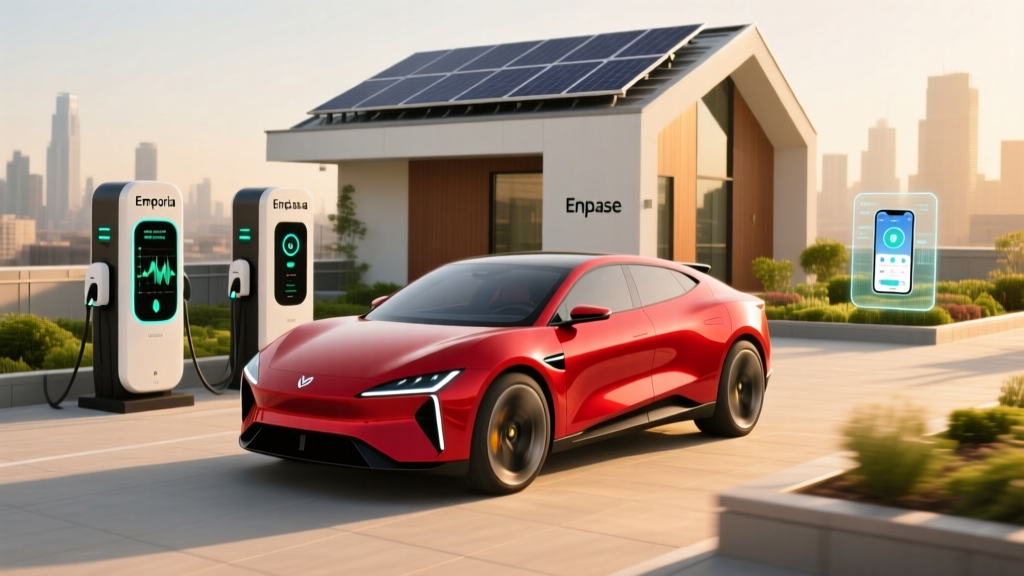
Emporia Level 2 EV Charger
- Power: 48A / 11.5 kW (on a 60A circuit)
- Connector: J1772 (NACS adapter available)
- Cable length: 24 ft
- Smart features: Wi-Fi, app scheduling, energy monitoring, solar integration
- Price: ~$399
- Best for: Budget-conscious buyers who want smart features and energy tracking
ChargePoint Home Flex
- Power: Up to 50A / 12 kW (adjustable via DIP switches for 16A–50A)
- Connector: J1772 (NACS version available)
- Cable length: 23 ft
- Smart features: Wi-Fi, app scheduling, Alexa/Google integration, flexible amperage
- Price: ~$699
- Best for: Homes with varying circuit capacities; adjustable amperage avoids panel upgrades
Tesla Wall Connector
- Power: 48A / 11.5 kW
- Connector: NACS native (J1772 adapter included for non-Tesla EVs)
- Cable length: 24 ft
- Smart features: Wi-Fi, over-the-air updates, power sharing between multiple units, access control
- Price: ~$450
- Best for: Tesla owners or multi-EV households wanting NACS native with J1772 flexibility
Grizzl-E Smart
- Power: 40A / 9.6 kW
- Connector: J1772
- Cable length: 24 ft
- Smart features: Wi-Fi, OCPP-compatible, works with utility demand-response programs
- Price: ~$549
- Best for: Cold-climate durability (rated to -40°F) and utility-program compatibility
Safety, Code, and Installation Best Practices
EV charging involves sustained high-current draw for hours — this is fundamentally different from the short bursts your dryer or oven pulls. The NEC and your local electrical code address this with specific requirements:
- Dedicated circuit: Your Level 2 charger must be on its own dedicated breaker — no sharing with other appliances. This prevents overloads during long charging sessions.
- GFCI protection: NEC 2020 and later require ground-fault circuit interrupter protection for EV charging outlets. Hardwired installations typically handle this at the breaker; plug-in units may require a GFCI breaker (adding $50–$100 to the install).
- Outdoor rating: If your charger is mounted outside or in an unconditioned garage, ensure it carries a NEMA 4 (weatherproof) rating. All units listed above meet this standard.
- Hardwired vs. plug-in: Hardwired installations (no outlet, direct wire connection) are generally safer, support higher amperage, and avoid the requirement for GFCI breakers in some jurisdictions. Plug-in (NEMA 14-50 outlet) offers portability but is limited to 40A continuous on a 50A circuit. We recommend hardwired for permanent installations.
- Permit and inspection: Virtually all jurisdictions require a permit for EV charger installation. The inspection ensures wire gauge, breaker sizing, and grounding meet code. Skipping this risks insurance claim denials and fire hazard. Budget $50–$200 and 1–2 weeks for the permit cycle.
Always hire a licensed electrician familiar with NEC Article 625 (Electric Vehicle Charging System Equipment). The National Fire Protection Association maintains the NEC, and your local jurisdiction enforces the version adopted in your area (typically 2020 or 2023).
Frequently Asked Questions
How much does it cost to install a home EV charger?
A straightforward Level 2 installation with a 200A panel and short wire run costs $800–$2,000 all-in (charger, electrician, permit). If your home needs a panel upgrade from 100A to 200A, expect $3,200–$7,700 total. The wide range reflects local labor rates, wire run distance, and whether you choose hardwired or plug-in.
How fast will each charging level add range?
Level 1 (120V outlet): 3–5 miles per hour. Level 2 (240V, 48A): 35–45 miles per hour. DC fast charging: 150–1,200+ miles per hour at peak, though the rate tapers significantly above 50–60% state of charge. For daily driving, a Level 2 home charger replenishes a full day's driving (30–50 miles) in under two hours.
Which connector and charger is compatible with my EV?
Check the vehicle's charge port. Most 2026 models use either NACS (Tesla, Ford, GM, Rivian, and several others) or CCS1 (Hyundai, Kia, VW, BMW, Stellantis). CHAdeMO is limited to the legacy Nissan Leaf. For home Level 2, all EVs accept J1772 or NACS — adapters are available in both directions for roughly $100–$250.
How much does charging cost per mile compared to gas?
Home charging at average residential rates ($0.13–$0.17/kWh) costs $0.04–$0.06 per mile for a typical EV. A gas car at 25 mpg on $3.40/gallon costs about $0.14 per mile. The Cobalt SS Supercharged at 22 mpg on premium ($4.10/gal) costs roughly $0.19 per mile. Home EV charging is 3–4× cheaper per mile than a performance gas car.
What electrical upgrades might I need for a Level 2 charger?
The most common upgrade is a panel replacement from 100A to 200A if your existing panel lacks capacity for a 40A–60A dedicated circuit. Other potential needs: upgrading service entrance wiring, adding a subpanel in the garage, or replacing aluminum branch wiring with copper. Your electrician will perform a NEC Article 220 load calculation to determine whether your current panel can handle the added load. Homes built after 2000 with 200A panels rarely need upgrades.
Whether you're trading in a tuned Cobalt SS or a daily commuter, the shift to electric fundamentally changes how you "refuel." The good news: with a properly installed Level 2 charger at home, you'll start every morning with a full "tank" — something no supercharger under the hood of an LSJ Ecotec could ever offer.