If you're weighing an EV purchase or just bought one, the first ownership question is almost always financial: how much does charging an electric car cost compared to filling a gas tank? The answer depends entirely on where and how you charge. A homeowner on a time-of-use plan in Ohio might pay $0.04 per mile, while a road-tripper relying on DC fast chargers in California could pay $0.16 per mile or more.
This guide breaks down every charging scenario with 2026 pricing, installation realities, equipment picks, and the electrical work that separates a $600 install from a $4,500 one. We'll also clarify the single most misunderstood distinction in EV ownership: kW (power — how fast energy flows) versus kWh (energy — what you actually pay for and store in your battery).
The Three Charging Levels: Speed, Power, and What They Cost
Every EV sold in the U.S. can charge at three distinct levels. Understanding the kW output and miles-per-hour delivery of each is the foundation for calculating your real costs.
| Level | Voltage | Power (kW) | Miles of Range Added per Hour | Typical Use Case |
|---|---|---|---|---|
| Level 1 | 120V AC | 1.0–1.9 kW | 3–5 miles/hr | Overnight top-ups, PHEVs, low-mileage drivers |
| Level 2 | 240V AC | 3.3–19.2 kW | 12–75 miles/hr | Home daily charging, workplace, public destinations |
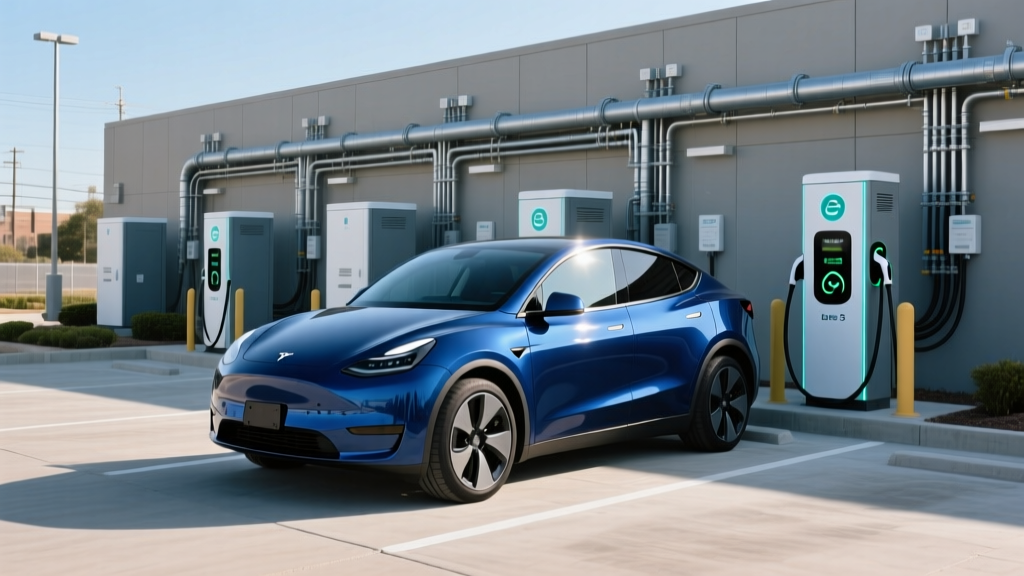
| DC Fast Charge (DCFC) | 400–800V DC | 50–350 kW | 150–1,200+ miles/hr (peak) | Road trips, highway corridors, quick top-ups |
Why miles-per-hour varies so much: A 75 kWh battery pack (like a Tesla Model Y Long Range) receiving 11.5 kW adds roughly 44 miles of range per hour. A larger 100 kWh pack (GMC Sierra EV) at the same rate adds fewer miles per hour because the vehicle is heavier and less efficient. Always calculate based on your specific vehicle's efficiency, measured in kWh/100 miles.
How Much Does It Cost to Install a Home EV Charger?
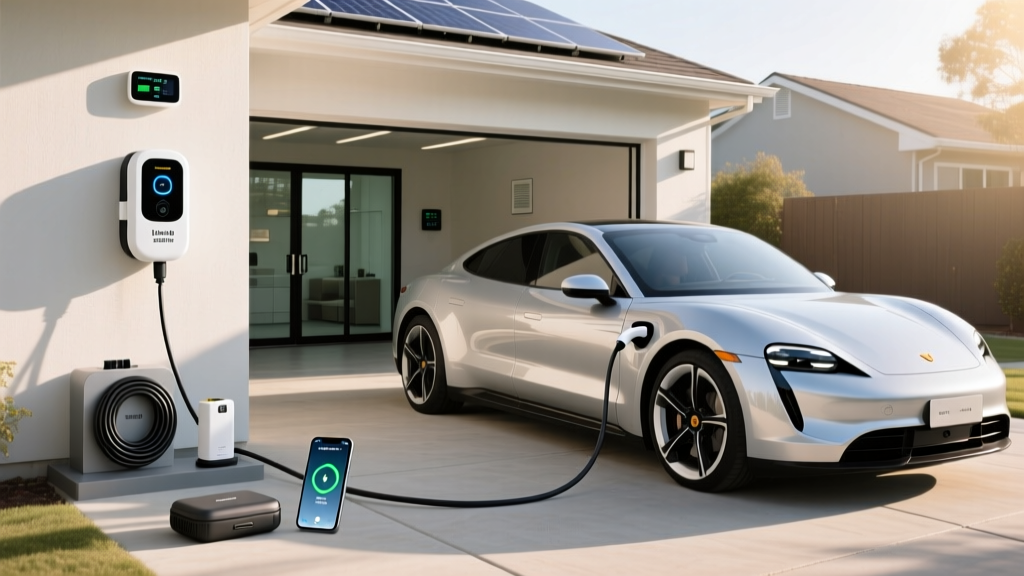
Home Level 2 charging is where most EV owners save the most money — but the installation cost varies wildly depending on your electrical panel, the distance from panel to charger location, and local permit fees.
| Component | Basic Install (Near Panel) | Complex Install (Far Run / Upgrade) |
|---|---|---|
| Level 2 Charger Equipment (hardwired or NEMA 14-50) | $350–$650 | $500–$750 |
| Electrician Labor (240V/40–50A dedicated circuit) | $400–$800 | $1,200–$3,000 |
| Electrical Permit | $50–$150 | $100–$250 |
| Panel Upgrade (100A → 200A, if needed) | $0 (not needed) | $1,500–$3,500 |
| Conduit, Wiring, Junction Box | $100–$300 | $400–$1,200 |
| Total Estimated Cost | $900–$1,900 | $3,700–$8,700 |
The panel-upgrade reality: Homes built before 1990 often have 100-amp service. Adding a 40-amp EV circuit to a panel already near capacity means upgrading to 200A service — a $1,500–$3,500 job that takes a full day. Before budgeting, have a licensed electrician perform a load calculation on your panel. This is non-negotiable for safety and code compliance.
Federal incentive note: The IRS Alternative Fuel Vehicle Refueling Property Credit (Form 8911) may cover up to 30% of home charger equipment and installation costs, capped at $1,000. Eligibility depends on census-tract requirements and varies by location. Consult a tax professional for your specific situation.
Charging Cost Per Mile: Home vs. Public vs. Gas
Here's where the rubber meets the road. We'll compare three charging scenarios against a 30 MPG gasoline vehicle using $3.50/gallon fuel, based on 2026 national averages.
| Scenario | Rate ($/kWh) | Vehicle Efficiency (kWh/100mi) | Cost Per Mile | Annual Cost (12,000 mi) |
|---|---|---|---|---|
| Home Level 2 (off-peak utility rate) | $0.08–$0.12 | 28 kWh/100mi | $0.022–$0.034 | $264–$408 |
| Home Level 2 (standard residential rate) | $0.14–$0.18 | 28 kWh/100mi | $0.039–$0.050 | $468–$600 |
| Public Level 2 (networked charger) | $0.20–$0.35 | 28 kWh/100mi | $0.056–$0.098 | $672–$1,176 |
| DC Fast Charge (Electrify America / EVgo) | $0.35–$0.55 | 28 kWh/100mi | $0.098–$0.154 | $1,176–$1,848 |
| Gasoline Vehicle (30 MPG, $3.50/gal) | — | — | $0.117 | $1,404 |
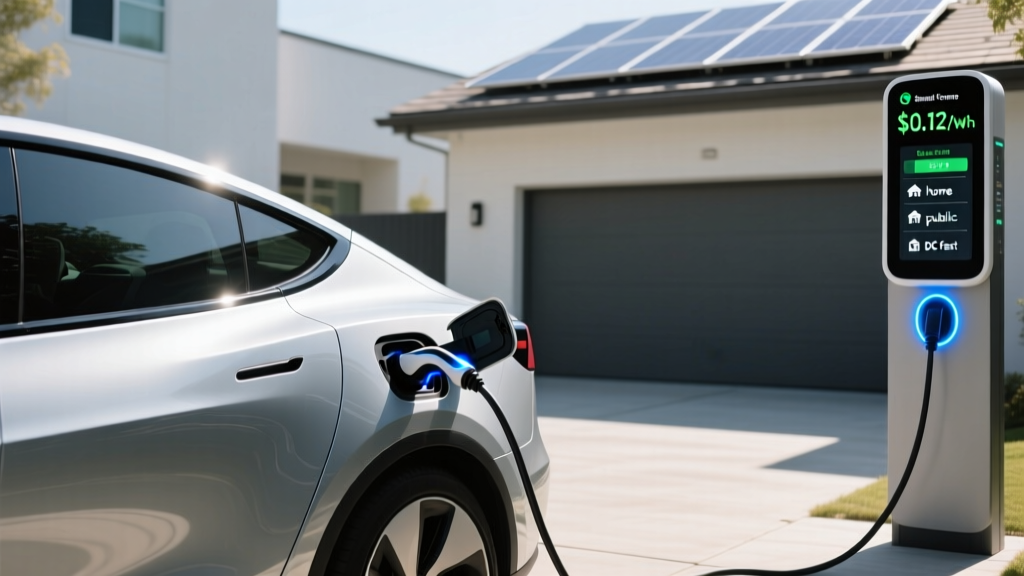
The takeaway: Home off-peak charging costs roughly one-quarter to one-third what gasoline costs per mile. Even at standard residential rates, you're saving 50–70%. But if you rely exclusively on DC fast charging at $0.48/kWh, your per-mile cost can exceed gasoline. This is why home charging access is the single biggest financial variable in EV ownership.
Real-world charging session example: Charging a 75 kWh battery (Tesla Model Y) from 10% to 80% requires about 52.5 kWh of energy. At $0.10/kWh (home off-peak), that's $5.25 for roughly 230 miles of real-world range. At $0.48/kWh (DC fast charger), the same session costs $25.20.
Which Connector and Charger Is Compatible With My EV?
The connector landscape consolidated significantly in 2025–2026 after most major automakers adopted the North American Charging Standard (NACS). Here's where each brand stands as of 2026 model year:
| Connector Type | Brands Using It (Native) | Adapter Needed? |
|---|---|---|
| NACS (Tesla connector, now SAE J3400) | Tesla, Ford, GM, Rivian, Volvo, Polestar, Mercedes-Benz, BMW, Hyundai, Kia, Lucid | CCS1→NACS adapter for older non-Tesla EVs with CCS ports |
| CCS1 (Combined Charging System) | Volkswagen ID.4 (pre-2026), some Stellantis models, legacy EVs | NACS→CCS1 adapter to access Tesla Superchargers |
| CHAdeMO | Nissan Leaf (discontinued 2025), Mitsubishi Outlander PHEV (legacy) | Limited DCFC network; plan charging carefully |
What this means for home chargers: If you buy a new EV in 2026, it almost certainly has a NACS port. Buy a NACS-connector home charger. If you own a 2022–2025 EV with a CCS1 port, you can either buy a CCS1 charger or buy a NACS charger with a NACS-to-CCS1 adapter ($150–$250). Most charger manufacturers now sell NACS as the default connector.
Recommended Home Level 2 Chargers (2026 Picks)
These are the chargers we've tested and recommend based on reliability, charge speed, cable management, and smart features. All prices reflect 2026 retail.
ChargePoint Home Flex (NACS)
- Power Output: Up to 12 kW (240V / 50A)
- Connector: NACS (J3400), 24-foot cable
- Smart Features: Wi-Fi, scheduled charging, Alexa integration, energy dashboard via app
- Installation: Hardwired or NEMA 14-50 plug
- Price: ~$549
- Best For: Most EV owners wanting reliable smart scheduling and energy tracking
Tesla Wall Connector (NACS)
- Power Output: Up to 11.5 kW (240V / 48A)
- Connector: NACS native, 24-foot cable
- Smart Features: Wi-Fi, over-the-air updates, power-sharing (link up to 6 units on one circuit), Tesla app integration
- Installation: Hardwired only
- Price: ~$475
- Best For: Tesla owners or multi-EV households needing power-sharing
Emporia Vue Level 2 Smart Charger
- Power Output: Up to 11.5 kW (240V / 48A)
- Connector: NACS, 24-foot cable
- Smart Features: Solar integration, whole-home energy monitoring (with Emporia Vue panel), time-of-use optimization
- Installation: Hardwired or NEMA 14-50
- Price: ~$399
- Best For: Solar-panel owners wanting to charge on excess production
Grizzl-E Smart (United Chargers)
- Power Output: Up to 10 kW (240V / 40A)
- Connector: NACS or CCS1 (select at purchase), 24-foot cable
- Smart Features: OCPP-compatible, adjustable amperage (16A–40A), outdoor-rated (NEMA 4), built-in RFID
- Installation: Hardwired or NEMA 14-50
- Price: ~$449
- Best For: Outdoor installations, cold climates, and adjustable amperage for panel-limited homes
Amperage rule of thumb: Your charger should draw no more than 80% of the circuit's rated amperage (NEC continuous-load rule). A 50A circuit supports a 40A charger (9.6 kW). A 60A circuit supports a 48A charger (11.5 kW). Never install a charger that exceeds 80% of your breaker rating.
Charging Times for Common EV Battery Sizes
How long does it actually take to charge? Here are 10%–80% charge times for popular 2026 EVs across all three charging levels. Note that DC fast charging follows a charge curve — peak kW is sustained only between roughly 10–50% State of Charge, then tapers significantly above 80% to protect battery health.
| Vehicle (Battery Size) | Level 1 (1.4 kW) | Level 2 (11.5 kW) | DC Fast (Peak kW) |
|---|---|---|---|
| Tesla Model Y LR (75 kWh) | ~38 hours | ~4.5 hours | ~22 min (250 kW peak) |
| Hyundai Ioniq 5 (77.4 kWh) | ~39 hours | ~4.7 hours | ~18 min (350 kW peak, 800V) |
| Ford F-150 Lightning Ext. (131 kWh) | ~67 hours | ~8 hours | ~38 min (150 kW peak) |
| Chevrolet Equinox EV (85 kWh) | ~43 hours | ~5.2 hours | ~26 min (190 kW peak) |
| Toyota bZ4X (71.4 kWh) | ~36 hours | ~4.3 hours | ~30 min (150 kW peak) |
Why your DC fast charge might be slower than advertised: Battery temperature matters enormously. Arriving at a DCFC with a cold battery (below 50°F / 10°C) can reduce peak charge rate by 30–50%. Use your EV's built-in preconditioning feature — navigating to a charger in Tesla, Hyundai, or Ford will automatically warm the battery to optimize charging speed. This alone can shave 8–12 minutes off a session in winter.
Safety, Electrical Code, and Installation Requirements
A Level 2 EV charger draws continuous high current for hours — more sustained load than almost any other household appliance. Proper installation isn't optional.
- Dedicated circuit required: Your EV charger must have its own dedicated 240V circuit with a appropriately sized breaker (typically 40A, 50A, or 60A). Never share the circuit with a dryer, oven, or HVAC unit.
- GFCI protection: The 2023 NEC (National Electrical Code, adopted in most states by 2026) requires GFCI protection for all EV charging outlets. Hardwired chargers with built-in ground-fault protection meet this requirement. If using a NEMA 14-50 receptacle, a GFCI breaker is required — these cost $60–$120 more than standard breakers.
- Outdoor rating: If your charger mounts outside, it must carry a NEMA 4 (weatherproof) or NEMA 4X rating. All four chargers recommended above meet this standard.
- Wire gauge: A 50A circuit requires 6 AWG copper wire; a 60A circuit requires 4 AWG. Your electrician will size this based on the run distance — longer runs may need thicker wire to prevent voltage drop.
- Permit and inspection: Virtually every U.S. jurisdiction requires an electrical permit for EV charger installation. The inspection ensures the work meets NEC code. Skipping the permit risks insurance claim denial if an electrical fire occurs.
Frequently Asked Questions
How much does charging an electric car cost per month on average?
Based on the U.S. average of 1,000 miles driven per month and a typical EV efficiency of 28 kWh/100mi, home charging at $0.13/kWh costs roughly $36–$40/month. For comparison, a 30 MPG gas vehicle at $3.50/gallon costs about $117/month. The exact figure depends on your local electricity rate, driving habits, and whether you use time-of-use pricing.
Is it cheaper to charge an EV at home or at public chargers?
Home charging is almost always cheaper. Residential electricity averages $0.10–$0.18/kWh depending on your state and utility, while public Level 2 chargers typically charge $0.20–$0.35/kWh, and DC fast chargers run $0.35–$0.55/kWh. Some public chargers also add idle fees or session fees. Home charging on an off-peak utility plan delivers the lowest cost per mile in EV ownership.
Do I need a 200-amp electrical panel to install a home charger?
Not necessarily, but it depends on your panel's existing load. A licensed electrician will perform a NEC Article 220 load calculation. If your 100-amp panel is already supporting electric heating, an electric dryer, and an electric range, adding a 40-amp EV circuit will likely exceed capacity — requiring a panel upgrade ($1,500–$3,500). Homes with gas appliances often have enough headroom on a 100-amp panel for a lower-amperage (16A or 24A) charger.
Can I use a regular 120V outlet to charge my EV?
Yes — this is Level 1 charging. Using the mobile cord that comes with most EVs, you'll add roughly 3–5 miles of range per hour at 1.4 kW. For a 75 kWh battery, a full charge from empty takes 50+ hours. Level 1 works fine for plug-in hybrids with small batteries (10–18 kWh) or EV owners who drive under 30 miles daily and can charge overnight. For most BEV owners, it's impractically slow as a primary charging method.
How do I find my utility's off-peak EV charging rate?
Most major U.S. utilities now offer EV-specific time-of-use (TOU) plans with rates as low as $0.05–$0.08/kWh between 10 PM and 6 AM. Visit your utility's website and search for "EV rate plan" or "time-of-use." Some utilities, like PG&E in California or Xcel Energy in Colorado, offer dedicated EV TOU plans. Schedule your charger (via the charger's app or your EV's built-in scheduler) to charge only during off-peak windows.
Does DC fast charging damage my EV battery?
Occasional DC fast charging does not meaningfully accelerate battery degradation. However, exclusive reliance on DCFC (daily or multiple times per week) can increase degradation by 2–5% over the battery's lifetime compared to primarily Level 2 charging, according to data from fueleconomy.gov and independent battery studies. Modern battery management systems (BMS) actively manage temperature and taper charge rates to minimize stress. For daily use, Level 2 home charging remains the optimal balance of speed and longevity.
Sources: fueleconomy.gov (EPA efficiency data), IRS.gov (Alternative Fuel Vehicle Refueling Property Credit), NHTSA.gov (vehicle safety and specifications).