When you plug a phone into a wall outlet, electricity flows from the grid into the battery. EV charging works on the same principle — but at vastly different power levels, speeds, and costs depending on the equipment you use. If you've been searching for how EV charging stations work, the answer comes down to three variables: power delivery (measured in kilowatts, or kW), connector type, and whether the charger converts AC grid power to DC inside the vehicle or outside it.
This guide breaks down every charging level with exact speeds, walks through home installation requirements and costs, maps connector compatibility across every major brand, and compares the real cost per mile against gasoline. All figures reflect 2026 equipment pricing and utility rates.
The Three Charging Levels Explained: Speeds in kW and Miles Per Hour
Every EV sold in the US accepts one of three charging levels. The critical distinction: kW (kilowatts) measures power — how fast energy flows into your car, while kWh (kilowatt-hours) measures energy — how much your battery holds. Think of kW as the width of a hose and kWh as the size of the bucket. A wider hose fills the bucket faster, but the bucket size doesn't change.
| Level | Voltage | Power (kW) | Miles of Range Added Per Hour | Typical Use Case |
|---|---|---|---|---|
| Level 1 (120V AC) | 120V | 1.0–1.4 kW | 3–5 mi/hr | Overnight top-up, PHEVs, low-mileage drivers |
| Level 2 (240V AC) | 240V | 3.3–19.2 kW | 12–75 mi/hr | Home daily charging, workplace, shopping centers |
| DC Fast Charge | 400–900V DC | 50–350 kW | 150–1,200+ mi/hr | Road trips, highway corridors, quick top-ups |
Level 1 uses a standard 120V household outlet. Every EV ships with a Level 1 cord, and it adds roughly 3–5 miles of range per hour of charging. For a plug-in hybrid with 30 miles of electric range, that's sufficient for a full overnight charge. For a BEV with an 80 kWh battery, a full charge from empty takes 60–80 hours — impractical for daily use but useful as a backup or for PHEV owners.
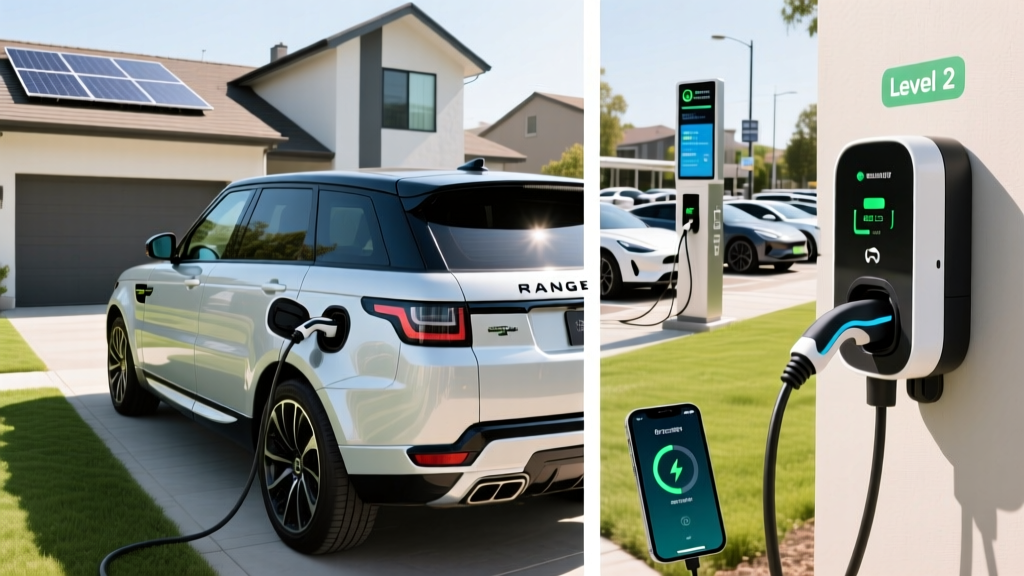
Level 2 requires a 240V circuit — the same voltage your electric dryer uses. Most home chargers deliver between 7.2 kW (32A) and 11.5 kW (48A), adding 25–45 miles of range per hour. An overnight charge of 8–10 hours easily replenishes 200–300+ miles, making Level 2 the primary charging method for the majority of EV owners.
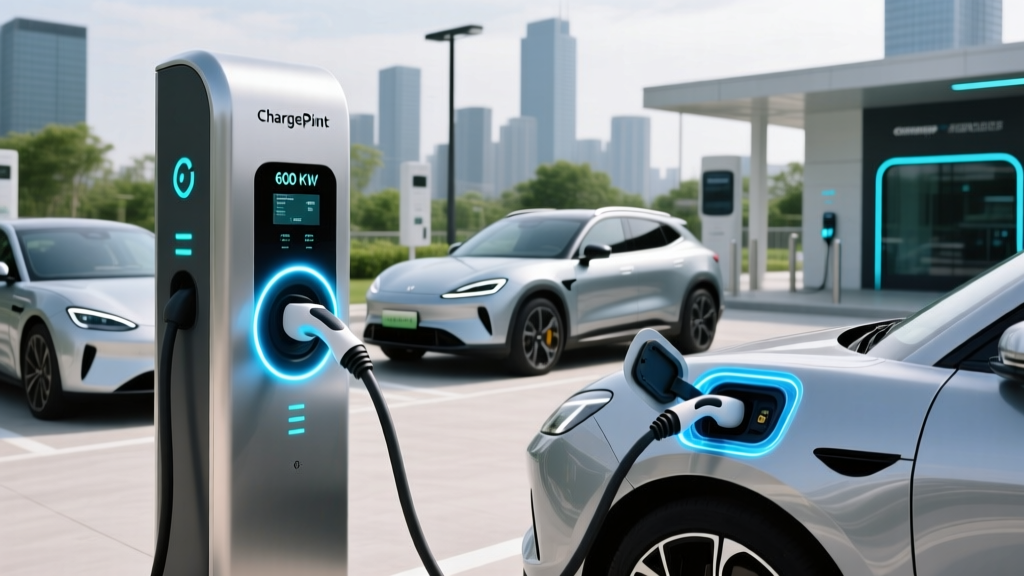
DC Fast Charging bypasses the vehicle's onboard AC-to-DC converter and feeds direct current straight into the battery. Peak speeds range from 50 kW at older stations to 350 kW at the newest Electrify America and Tesla Supercharger V4 stalls. A vehicle like the Hyundai Ioniq 5 (peak 240 kW acceptance) can charge from 10–80% in approximately 18 minutes at a compatible station.
How Home EV Charger Installation Works: Electrical Requirements and Costs
Installing a Level 2 home charger is an electrical project, not a plug-and-play setup. Here's what's involved and what it costs.
Electrical Requirements
A Level 2 charger requires a dedicated 240V circuit on your home's electrical panel. The most common configurations:
- NEMA 14-50 outlet (50A circuit): Supports chargers up to 40A / 9.6 kW. This is the most popular home setup and offers flexibility — you can unplug the charger and use the outlet for an RV or welder.
- Hardwired connection (60A circuit): Supports chargers up to 48A / 11.5 kW. Required for higher-power units. No outlet — the charger wires directly into a junction box.
- NEMA 6-20 outlet (20A circuit): Supports chargers up to 16A / 3.8 kW. A lower-cost option for garages with limited panel capacity.
Do You Need a Panel Upgrade?
If your home has a 100-amp electrical panel — common in homes built before the 1990s — adding a 40–50A dedicated circuit may exceed your panel's capacity, especially if you already run electric heating, a dryer, and an oven. Upgrading to a 200-amp panel typically costs $1,500–$3,000. Homes with 200A panels usually have sufficient headroom for a Level 2 charger without upgrades.
A licensed electrician will perform a load calculation (per NEC Article 220) to determine if your panel can handle the additional circuit. This is mandatory for permit approval in most jurisdictions.
| Cost Component | Typical Range | Notes |
|---|---|---|
| Level 2 Charger (Equipment) | $350–$700 | Smart Wi-Fi chargers with 25-ft cable |
| Electrician Labor | $500–$2,000 | Depends on distance from panel to garage |
| Electrical Permit | $50–$200 | Required in most municipalities |
| Panel Upgrade (if needed) | $1,500–$3,000 | 100A to 200A upgrade |
| Total (no panel upgrade) | $900–$2,900 | Most common scenario |
| Total (with panel upgrade) | $2,400–$5,900 | Older homes with 100A service |
The 30% federal tax credit for home charging equipment (up to $1,000, per IRS §30C) may offset a portion of equipment and installation costs. Eligibility depends on whether your census tract qualifies — check the latest IRS guidance for current-year maps.
Connector Compatibility: NACS, CCS1, and CHAdeMO
The connector is the physical plug that connects the charger to your vehicle. As of 2026, the North American market has largely standardized around NACS (North American Charging Standard, originally developed by Tesla), though CCS1 and CHAdeMO vehicles remain on the road.
| Connector | Brands Using It (2026 Models) | AC Level 2? | DC Fast? | Adapter Needed? |
|---|---|---|---|---|
| NACS | Tesla, Ford, GM, Rivian, Volvo, Polestar, Mercedes-Benz, BMW, Hyundai, Kia, Nissan (2025+) | Yes | Yes | CCS-to-NACS adapters available (~$200) for legacy CCS chargers |
| CCS1 | Legacy models: older VW ID.4, Hyundai Ioniq 5 (pre-2025), Kia EV6 (pre-2025), BMW i4 (pre-2025) | Yes (via J1772) | Yes | NACS-to-CCS adapter needed for Tesla Superchargers (~$200–$250) |
| CHAdeMO | Nissan Leaf (discontinued), Mitsubishi Outlander PHEV (older) | No (uses J1772 for AC) | Yes | Limited adapter options; CHAdeMO stations declining |
| J1772 | All EVs (for AC Level 1/2 only) | Yes | No | NACS vehicles use a J1772-to-NACS adapter (included with most EVs) |
For home Level 2 charging: If your EV has a NACS port, buy a NACS-connector wall charger. If it has a CCS1 port, buy a J1772-connector charger (CCS1 vehicles use the J1772 portion for AC charging). Tesla Wall Connectors and most aftermarket chargers now ship with NACS connectors, and J1772 adapters are widely available.
Charging Time Examples: How Long Does It Take?
Charging time depends on your battery size (kWh), the charger's power output (kW), and the vehicle's maximum charge acceptance rate. Here are real-world scenarios:
| Vehicle | Battery (kWh usable) | Max DC Charge Rate | 10–80% DC Fast Time | 0–100% Level 2 (11.5 kW) |
|---|---|---|---|---|
| Tesla Model Y Long Range | 75 kWh | 250 kW | ~25 min (V3 Supercharger) | ~7 hours |
| Hyundai Ioniq 5 (2026) | 84 kWh | 240 kW | ~18 min (350 kW station) | ~7.5 hours |
| Ford F-150 Lightning Extended | 131 kWh | 150 kW | ~41 min | ~11.5 hours |
| Chevrolet Equinox EV | 85 kWh | 150 kW | ~30 min | ~7.5 hours |
| Toyota RAV4 Prime (PHEV) | 18.1 kWh | DC not available | N/A | ~2.5 hours (Level 2, 6.6 kW onboard) |
Important: the charge curve. EVs don't charge at peak speed for the entire session. A vehicle rated at 240 kW peak may only sustain that rate between 10–40% State of Charge (SoC), then taper progressively. Charging from 80–100% can take nearly as long as 10–80%. For road trips, the fastest strategy is to charge to 80% and go — don't wait for a full battery.
How Much Does EV Charging Cost Per Mile vs. Gasoline?
Electricity prices vary enormously by region and time of day. Here's a comparison using a midsize EV averaging 3.0 miles per kWh (roughly 112 MPGe, typical of a 2026 Tesla Model Y or Hyundai Ioniq 6) versus a comparable gasoline car averaging 28 MPG combined.
| Charging Scenario | Cost per kWh | Cost per Mile (EV) | Gas Equivalent (28 MPG @ $3.40/gal) |
|---|---|---|---|
| Home, off-peak utility rate | $0.09–$0.13 | $0.03–$0.04 | $0.12 |
| Home, standard residential rate | $0.15–$0.18 | $0.05–$0.06 | $0.12 |
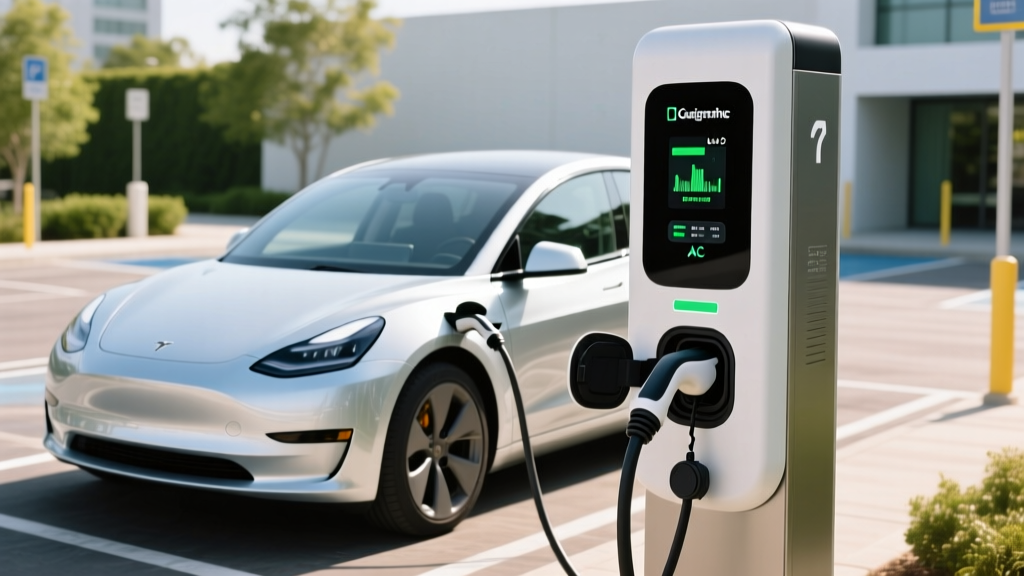
| Public Level 2 (ChargePoint, EVgo) | $0.25–$0.40 | $0.08–$0.13 | $0.12 |
| DC Fast Charge (Electrify America, Tesla) | $0.35–$0.55 | $0.12–$0.18 | $0.12 |
The takeaway: Home charging at off-peak rates costs roughly one-quarter to one-third of gasoline per mile. Public DC fast charging, at premium rates in expensive markets, can equal or slightly exceed gasoline costs. The economics strongly favor home charging — this is why Level 2 installation is the single highest-value investment an EV owner can make.
For exact utility rates in your area, the U.S. Energy Information Administration publishes state-by-state residential electricity pricing.
Recommended Home EV Chargers for 2026
These chargers meet current NEC safety requirements, carry UL or ETL certification, and offer smart features for scheduling off-peak charging.
Tesla Wall Connector (Gen 4)
- Power: Up to 11.5 kW (48A hardwired) or 9.6 kW (40A, NEMA 14-50)
- Connector: NACS (native); J1772 adapter available
- Cable Length: 24 feet
- Smart Features: Wi-Fi, OTA updates, load sharing between multiple units, access control
- Price: ~$475
- Best For: NACS-equipped vehicles; Tesla and non-Tesla EVs with NACS ports
Emporia Vue Level 2 Charger
- Power: Up to 11.5 kW (48A hardwired) or 9.6 kW (40A, NEMA 14-50)
- Connector: J1772 (NACS adapter included)
- Cable Length: 24 feet
- Smart Features: Wi-Fi, energy monitoring, solar integration, scheduled charging, utility demand-response compatible
- Price: ~$399
- Best For: CCS1/J1772 vehicles, solar-panel homes, budget-conscious buyers
ChargePoint Home Flex
- Power: Up to 12 kW (50A hardwired) or configurable down to 16A
- Connector: J1772 or NACS (select at purchase)
- Cable Length: 23 feet
- Smart Features: Wi-Fi, app-based scheduling, Alexa/Google Home integration, amperage adjustable via app
- Price: ~$599–$699
- Best For: Flexible amperage configuration for older panels
Safety and Electrical Code Requirements
EV charging equipment must comply with the National Electrical Code (NEC) Article 625 and local building codes. Key requirements:
- Dedicated circuit: Your Level 2 charger must be on its own dedicated breaker — it cannot share a circuit with other appliances.
- GFCI protection: NEC 2020 and later require Ground Fault Circuit Interrupter protection for all EV receptacles. Hardwired chargers have built-in GFCI; outlet-based installations need a GFCI breaker.
- Outdoor rating: If mounting outdoors, the charger must carry a NEMA 4 (weatherproof) rating. All three chargers listed above are outdoor-rated.
- Cable management: The NEC requires that charging cables not create a trip hazard. Wall-mounted cord organizers are recommended and often required by inspectors.
- Permit and inspection: Most jurisdictions require a permit for new 240V circuits. Your electrician will pull the permit, and a city/county inspector will verify the installation before energizing.
Never use an extension cord with a Level 1 or Level 2 charger. EV chargers draw sustained high current that can overheat undersized cords — this is a fire risk that voids equipment warranties.
Frequently Asked Questions
How much does it cost to install a home EV charger?
A typical Level 2 home charger installation — including a smart Wi-Fi charger ($350–$700), electrician labor ($500–$2,000), and a permit ($50–$200) — costs between $900 and $2,900 if your electrical panel has sufficient capacity. If you need a panel upgrade from 100A to 200A, add $1,500–$3,000. The federal §30C tax credit covers 30% of equipment and installation up to $1,000 in eligible census tracts.
How fast will each charging level add range?
Level 1 (120V) adds 3–5 miles per hour. Level 2 (240V, 48A) adds 30–45 miles per hour depending on vehicle efficiency. DC fast charging at 150+ kW adds 150–300+ miles in 20–30 minutes, though actual speed depends on the vehicle's charge acceptance rate and battery State of Charge.
Which connector is compatible with my EV?
Check your vehicle's charge port. Most 2025–2026 EVs from Tesla, Ford, GM, Rivian, Hyundai, Kia, and others now use NACS. Older CCS1 vehicles can use NACS chargers (and Tesla Superchargers) with a CCS-to-NACS adapter (~$200–$250). CHAdeMO vehicles (Nissan Leaf) are increasingly limited as stations transition to NACS/CCS. For home Level 2, match the charger connector to your vehicle's port or use the included adapter.
How much does charging cost per mile compared to gas?
At home off-peak rates ($0.09–$0.13/kWh), an average EV costs $0.03–$0.04 per mile — roughly one-quarter the cost of gasoline at $3.40/gallon in a 28 MPG car ($0.12/mile). Public DC fast charging at $0.40–$0.55/kWh costs $0.13–$0.18 per mile, which can equal or exceed gasoline. Home charging is where the savings are.
What electrical upgrades might I need?
The most common upgrade is a panel capacity increase from 100A to 200A ($1,500–$3,000) if your existing panel lacks headroom for a new 40–50A circuit. Other potential costs: running new conduit over a long distance from the panel to the garage ($5–$15 per foot), replacing a Federal Pacific or Zinsco panel (known safety hazards, $2,000–$4,000 replacement), or adding a smart panel monitor like a Span drive or Emporia Vue to manage circuit loads. Your electrician's load calculation will determine exactly what's needed.
Can I charge my EV with solar panels?
Yes. If you have rooftop solar, you can direct excess solar production to your EV charger during the day using smart charger features (Emporia and ChargePoint both support solar-aware scheduling). This effectively reduces your per-mile fuel cost to near zero. However, solar production peaks midday, so you may need to shift charging habits or add battery storage to maximize solar utilization.