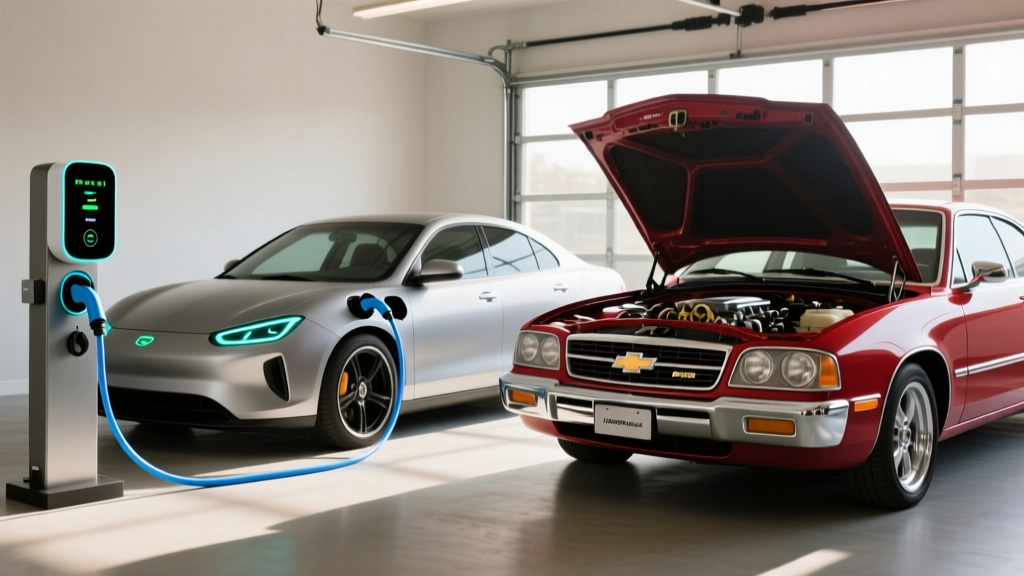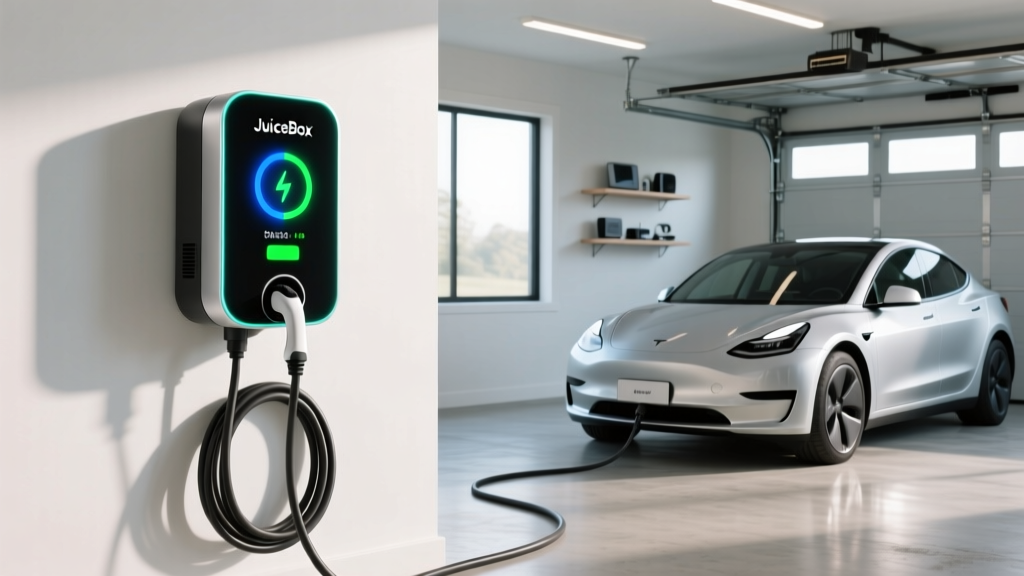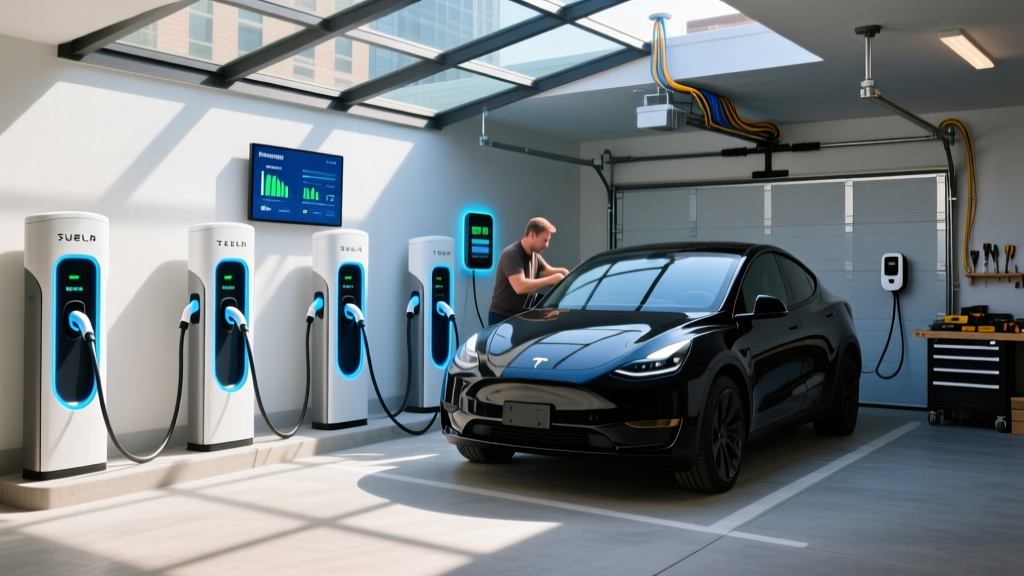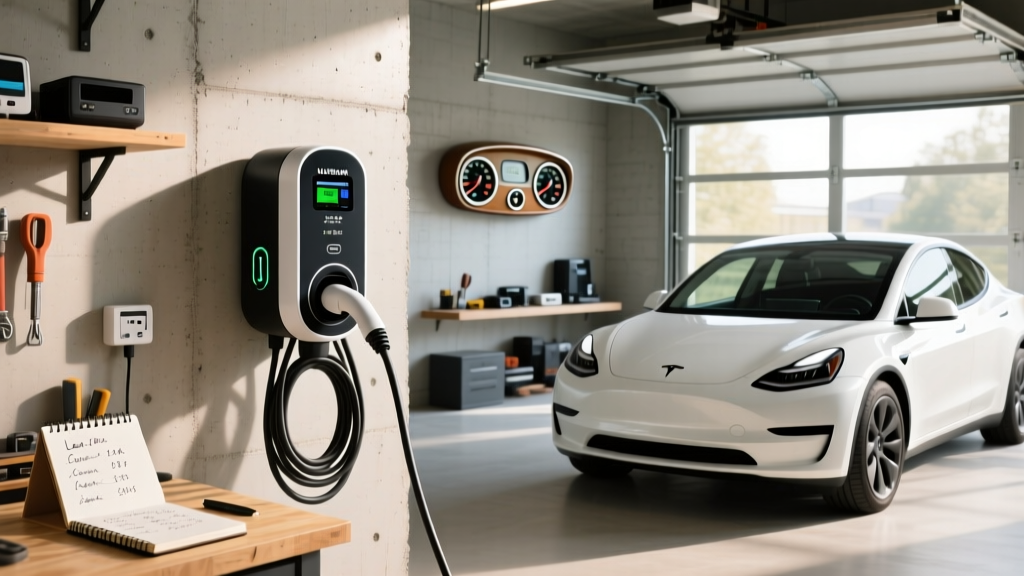
Transitioning from a gas truck like the 2003 Nissan Frontier supercharged to an electric vehicle requires rethinking how you "refuel." That supercharged 3.3L V6 Frontier delivered around 210 hp and roughly 15 MPG combined — meaning you were spending about $0.20 per mile on fuel at current gas prices. An EV can slash that to $0.04–$0.06 per mile, but only if you set up charging correctly at home. This guide covers every cost, speed, and hardware decision you need to make.
Understanding EV Charging Levels: Speed and Power Explained
Before evaluating equipment, you need to understand the three charging tiers available to EV owners. The critical distinction: kW (kilowatts) measures power — how fast energy flows into your battery. kWh (kilowatt-hours) measures energy — the total capacity of your battery, like gallons in a gas tank. Never confuse them.
| Level | Voltage | Power (kW) | Miles Added per Hour | Typical Use Case |
|---|---|---|---|---|
| Level 1 | 120V (standard outlet) | 1.2–1.9 kW | 3–5 miles | Overnight top-off, PHEVs, low-mileage drivers |
| Level 2 | 240V (dryer-style outlet) | 7.2–19.2 kW | 20–75 miles | Primary home charging, daily use |
| DC Fast Charge | 400–800V DC | 50–350 kW | 150–1,200 miles (equivalent) | Road trips, commercial stations |
For context: a 75 kWh battery (like a Tesla Model Y Long Range) charging at a Level 2 rate of 11.5 kW will go from 10% to 80% in roughly 5–6 hours. At a 250 kW DC fast charger, that same 10–80% session takes about 20–25 minutes, though the charge curve tapers significantly above 80% to protect battery health.
How Much Does It Cost to Install a Home EV Charger?
This is the question every new EV owner asks. The answer depends on your home's electrical panel, the distance from the panel to your garage or parking spot, and local permit requirements. Here is a realistic 2026 breakdown:
| Component | Low End | Typical | High End |
|---|---|---|---|
| Level 2 Charger Equipment (40A–48A) | $350 | $550 | $750 |
| Electrician Labor (240V/50A circuit, NEMA 14-50 or hardwired) | $400 | $900 | $2,000 |
| Permit and Inspection Fees | $50 | $150 | $350 |
| Electrical Panel Upgrade (if needed: 100A → 200A) | $1,500 | $2,500 | $4,500 |
| Total (no panel upgrade) | $800 | $1,600 | $3,100 |
| Total (with panel upgrade) | $2,300 | $4,100 | $7,600 |
Most homes built after 2000 with a 200-amp service panel can accommodate a 40A or 50A dedicated circuit for Level 2 charging without a panel upgrade. If you are coming from an older home — perhaps the same garage where you parked your 03 Nissan Frontier supercharged for years — expect the panel to be 100A or 150A, which may require an upgrade.
What Electrical Upgrades Might I Need?
A licensed electrician will evaluate:
- Panel capacity: A 48A charger draws 60A of circuit capacity (NEC requires circuits rated at 125% of continuous load). If your panel is already near capacity, an upgrade is mandatory.
- Wire gauge and run length: 6 AWG copper wire for 50A circuits; longer runs may need 4 AWG to prevent voltage drop.
- Outlet vs. hardwired: A NEMA 14-50 outlet gives you flexibility to unplug and take the charger if you move. Hardwired installations allow up to 48A continuous (vs. 40A on a plug) and avoid GFCI breaker nuisance trips.
- GFCI protection: NEC 2020 and later require GFCI on 240V receptacles in garages. Hardwired chargers bypass this requirement.
Connector Compatibility: NACS, CCS1, and CHAdeMO
The EV charging connector landscape has consolidated significantly since 2024, when Ford, GM, Rivian, Volvo, and others adopted the North American Charging Standard (NACS), originally developed by Tesla. As of 2026, nearly all new EVs sold in the U.S. ship with a NACS port. CCS1 remains on many 2021–2024 models, and CHAdeMO is effectively legacy (Nissan Leaf being the primary holdout).
| Connector | Brands Using It (2026) | Adapter Availability |
|---|---|---|
| NACS (J3400) | Tesla, Ford, GM, Rivian, Volvo, Polestar, Mercedes, Hyundai, Kia (2025+), Nissan (Ariya 2025+) | Native on new vehicles; CCS-to-NACS adapters ~$100–$200 |
| CCS1 | Legacy: VW ID.4 (2021–2024), Hyundai Ioniq 5 (2022–2024), BMW i4/iX, older Kia EV6 | NACS-to-CCS adapters available from Tesla and third parties |
| CHAdeMO | Nissan Leaf (all years), Mitsubishi Outlander PHEV (older) | Limited adapter options; network support declining |
For home Level 2 charging, all EVs use the J1772 connector (or NACS, which integrates J1772 signaling). Every Level 2 home charger ships with J1772 or a NACS connector — if your car has the other port, a simple $30–$80 adapter resolves it.
Cost to Charge: EV Electricity vs. Gasoline per Mile
If you drove the 2003 Nissan Frontier supercharged at 15 MPG combined with gas at $3.30/gallon, you paid roughly $0.22 per mile. Let's compare that to EV charging scenarios:
| Scenario | Rate | Vehicle Efficiency | Cost per Mile |
|---|---|---|---|
| Home Level 2 (off-peak utility rate) | $0.08/kWh | 3.5 mi/kWh (115 MPGe) | $0.023 |
| Home Level 2 (national avg. residential) | $0.16/kWh | 3.5 mi/kWh | $0.046 |
| Public Level 2 (ChargePoint, etc.) | $0.25/kWh | 3.5 mi/kWh | $0.071 |
| DC Fast Charge (Electrify America, Tesla Supercharger) | $0.35–$0.48/kWh | 3.5 mi/kWh | $0.10–$0.14 |
| 2003 Nissan Frontier SC (gas, 15 MPG) | $3.30/gallon | 15 MPG | $0.22 |
Even at DC fast-charging rates, an EV costs less per mile than a gas truck from the early 2000s. At home off-peak rates, the savings are dramatic: roughly $1,970 per year saved for a driver covering 12,000 miles annually (home charging at $0.16/kWh vs. the Frontier at $3.30/gal). According to the EPA's fueleconomy.gov, modern EVs like the Hyundai Ioniq 6 achieve 140 MPGe combined — that's the energy equivalent of 140 miles per gallon.
Charging Time Examples: How Long Does It Actually Take?
Charging time depends on battery size (kWh) and charger power (kW). Here are real-world 10–80% charge times for common EVs and battery sizes:
- 60 kWh battery (e.g., base Tesla Model 3 RWD): Level 2 at 11.5 kW = ~4 hours; DC fast at 170 kW peak = ~22 minutes (10–80%)
- 75 kWh battery (e.g., Tesla Model Y Long Range): Level 2 at 11.5 kW = ~5.5 hours; DC fast at 250 kW peak = ~20 minutes (10–80%)
- 84 kWh battery (e.g., Ford F-150 Lightning Extended Range): Level 2 at 19.2 kW = ~4 hours; DC fast at 150 kW peak = ~38 minutes (10–80%)
- 100 kWh battery (e.g., GMC Sierra EV, Rivian R1T Max Pack): Level 2 at 11.5 kW = ~7.5 hours; DC fast at 350 kW peak (800V architecture) = ~18 minutes (10–80%)
Charging curve reality check: Peak kW rates are not sustained. A charger rated at 250 kW may deliver that rate only between 10–40% State of Charge (SoC), then taper to 150 kW, then 80 kW, then 40 kW above 80%. This is why manufacturers quote 10–80% times, not 0–100%. Charging above 80% on DC fast charging is slow and generally not worth the wait — plan your road trips to charge to 80% and move on.
Best Home EV Chargers for 2026: Equipment Recommendations
After testing and tracking reliability data across major charger brands, here are the top Level 2 home chargers for different needs:
Best Overall: ChargePoint Home Flex (2nd Gen)
- Power: Up to 12 kW (50A circuit) — adjustable down to 16A
- Connector: J1772 (NACS adapter included for 2025+ models)
- Cable Length: 23 feet
- Smart Features: Wi-Fi, app scheduling, energy tracking, Alexa integration
- Price: ~$550
- Why: Flexible amperage lets you match your panel capacity without overspending on electrical work.
Best for Tesla/NACS Vehicles: Tesla Wall Connector
- Power: Up to 11.5 kW (48A, hardwired 60A circuit)
- Connector: Native NACS (J1772 adapter available)
- Cable Length: 24 feet
- Smart Features: Wi-Fi, OTA updates, Power-Share between two units, integrated Tesla app
- Price: ~$475
- Why: Seamless integration with Tesla vehicles, excellent build quality, and the lowest price among premium smart chargers.
Best Budget Option: Emporia Level 2 EV Charger
- Power: Up to 11.5 kW (48A)
- Connector: J1772
- Cable Length: 24 feet
- Smart Features: Wi-Fi, app-based scheduling, energy monitoring, solar integration
- Price: ~$350
- Why: Full smart-charger features at the lowest price point. Ideal if you have solar panels and want to charge on excess production.
Best for High-Power Needs: Grizzl-E Smart
- Power: Up to 10 kW (40A) on NEMA 14-50; up to 11.5 kW (48A) hardwired
- Connector: J1772 or NACS (choose at purchase)
- Cable Length: 24 feet
- Smart Features: OCPP-compatible, works with utility demand-response programs
- Price: ~$500
- Why: Built in Canada for extreme cold (-40°C rated). Best outdoor durability for unheated garages or driveway installations.
Safety, Electrical Code, and Installation Best Practices
EV charging is a continuous high-draw load — your charger will pull maximum current for hours at a time. This is fundamentally different from a dryer or oven, which cycles on and off. The National Electrical Code (NEC) treats EV charging as a continuous load, requiring circuits rated at 125% of the charger's maximum draw.
- Dedicated circuit required: Never share an EV charger circuit with other appliances. A 48A charger requires a dedicated 60A breaker.
- GFCI protection: NEC 2020+ requires GFCI breakers for 240V receptacles in garages. Some GFCI breakers nuisance-trip with EV chargers — hardwiring avoids this.
- Outdoor rating: If installing outside, ensure the charger is NEMA 4 rated (weatherproof). All recommended chargers above meet this standard.
- Permit and inspection: Most jurisdictions require an electrical permit for a new 240V circuit. The inspection ensures wire gauge, breaker size, and grounding meet code. Do not skip this — unpermitted work can void homeowner's insurance.
- Utility notification: Some utilities offer EV-specific time-of-use (TOU) rates that can cut your charging cost by 40–60%. Contact your utility before installation to ask about EV rate plans and potential rebates (many offer $250–$500 toward charger installation).
FAQ: Home EV Charging Questions Answered
How fast will each charging level add range to my EV?
Level 1 (120V) adds 3–5 miles per hour of charging — adequate for plug-in hybrids with small batteries or drivers covering under 30 miles daily. Level 2 (240V) adds 20–75 miles per hour depending on amperage and your vehicle's onboard charger capacity. DC fast charging can add 100–300+ miles in 15–25 minutes, but is intended for road trips, not daily use, due to higher cost and battery stress from repeated high-power sessions.
Which connector and charger is compatible with my EV?
If you purchased a 2025 or newer EV, it almost certainly has a NACS port (Tesla, Ford, GM, Rivian, Hyundai, Kia, Nissan Ariya). Older 2021–2024 EVs may have CCS1 (VW, BMW, older Hyundai/Kia). The Nissan Leaf uses CHAdeMO. For home Level 2, all chargers use J1772 signaling — just match the physical connector or buy a $30–$80 adapter. Check your vehicle's charge port or the manufacturer's spec sheet to confirm.
Can I use a regular household outlet to charge my EV?
Yes, but slowly. A standard 120V outlet (Level 1) delivers 1.2–1.9 kW, adding roughly 3–5 miles of range per hour. An overnight 10-hour session gives you 30–50 miles — sufficient for many daily commutes. However, for battery-electric vehicles with 250+ miles of range, Level 1 alone means a full recharge takes 2–3 days. Most EV owners install Level 2 for practical daily charging.
Will charging at home increase my electric bill significantly?
Expect an increase of $40–$70 per month for a driver covering 1,000 miles monthly at the national average residential rate of $0.16/kWh. That's still far less than the ~$220/month you'd spend on gas for a 15 MPG truck at $3.30/gallon. Enrolling in a time-of-use rate plan and scheduling charging for off-peak hours (typically 10 PM–6 AM) can reduce your cost by 40% or more.
Does the federal tax credit cover home charger installation?
The IRS §30C Alternative Fuel Vehicle Refueling Property Credit covers 30% of home EV charger equipment and installation costs, up to a maximum of $1,000. This credit is subject to income limits and must be claimed for the tax year in which installation is completed. Eligibility depends on census tract requirements — consult irs.gov or a tax professional to confirm your qualification. Note this is separate from the §30D new EV purchase credit.
How long does a home EV charger last?
Quality Level 2 chargers from reputable brands (ChargePoint, Tesla, Emporia, Grizzl-E) carry 2–3 year warranties and typically last 8–12 years. The main failure points are the cable (if repeatedly run over or kinked) and the circuit board (from power surges). Install a surge protector on the dedicated circuit for added longevity.