If you've spotted a Revel Supercharger canopy in Brooklyn or Queens and wondered whether the company's charging ecosystem extends beyond its ride-hail Tesla fleet, you're not alone. Revel has quietly built one of the densest urban DC fast-charging networks in the Northeast, and in 2026 its infrastructure is increasingly relevant to everyday EV owners — not just rideshare drivers. This guide breaks down what Revel EV charging actually offers, how it compares to home Level 2 setups, and the real math behind what you'll pay per mile.
What Revel EV Charging Actually Is
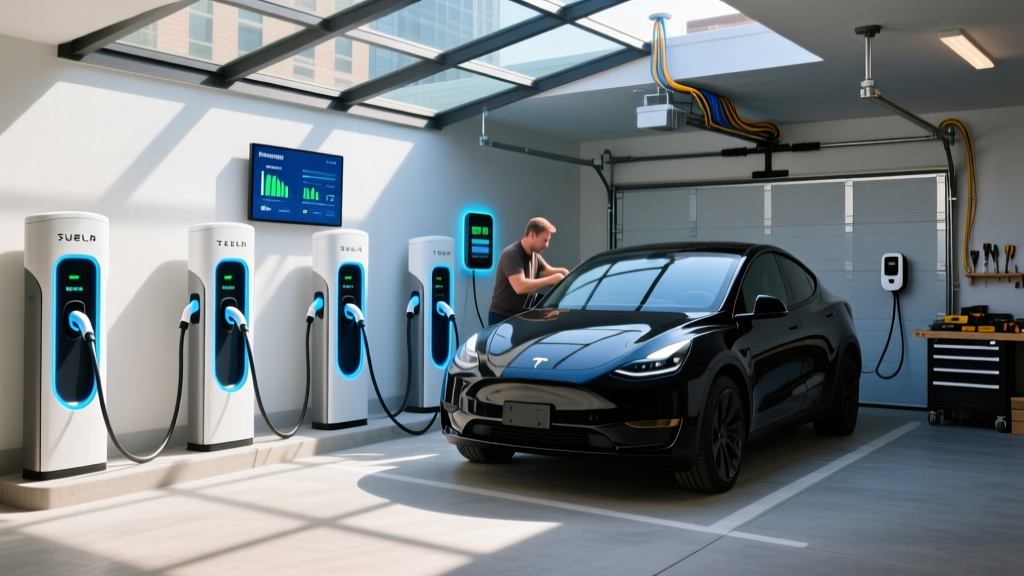
Revel started as an electric moped-share company in New York City, then pivoted hard into EV infrastructure. Today, Revel operates open-access DC fast-charging Superhubs — primarily in New York City (Brooklyn, Queens, Manhattan) and expanding into other metro areas. These aren't the scattered 50 kW chargers you find at strip malls; Revel Superhubs feature high-power stalls capable of delivering up to 320 kW to compatible vehicles, making them competitive with Electrify America and Tesla Supercharger V4 stations.
Revel also operates a fleet of Tesla Model Ys for rideshare, meaning its Superhubs are heavily utilized and maintained with commercial-grade uptime expectations. For private EV owners, the key question is whether plugging into a Revel Superhub makes financial and logistical sense compared to home charging or other public networks.
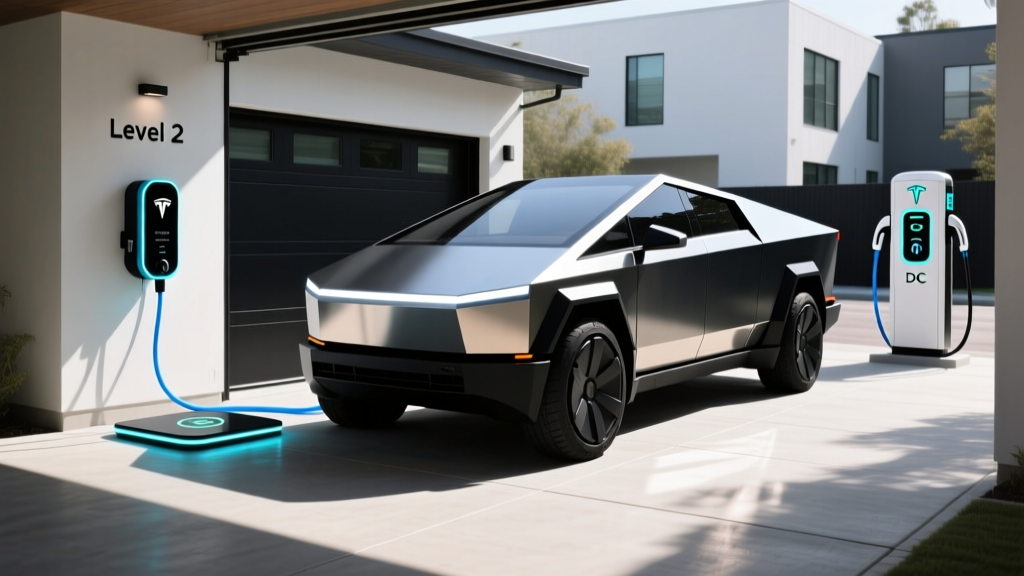
Charging Levels Explained: Speeds, kW, and Real-World Range Added
Before comparing Revel to your garage outlet, let's establish the three charging tiers every EV owner needs to understand. Remember: kW (kilowatts) measures power — how fast energy flows into your battery. kWh (kilowatt-hours) measures energy — the total capacity of your battery. Confusing these is the single most common EV literacy mistake.
| Level | Voltage | Power (kW) | Miles of Range Per Hour | Typical Use |
|---|---|---|---|---|
| Level 1 | 120V AC | 1.0–1.4 kW | 3–5 mi/hr | Overnight trickle; PHEVs; emergencies |
| Level 2 | 240V AC | 7.2–19.2 kW | 25–70 mi/hr | Home daily charging; workplace; destination |
| DC Fast | 400–800V DC | 50–350 kW | 150–1,000+ mi/hr (peak) | Road trips; commercial fleets; Revel Superhubs |
Revel Superhub Charging: Speeds, Pricing, and Connector Access
Revel's flagship Superhubs feature CCS1 and NACS (Tesla-style) connectors at stalls rated between 150 kW and 320 kW. For a vehicle like the Hyundai Ioniq 5 (84 kWh battery, 240 kW peak DC rate), you can expect a 10–80% charge in roughly 18–22 minutes at a 320 kW Revel stall, assuming the battery is preconditioned.
For vehicles with lower peak charge rates — say the Chevrolet Equinox EV at around 150 kW — expect 10–80% in approximately 28–32 minutes at the same stall. The stall's maximum kW doesn't matter if your vehicle's onboard charging architecture can't accept it.
Revel Pricing Structure (2026)
Revel's public DC fast-charging rates in the NYC metro area typically range from $0.39 to $0.49 per kWh, depending on the specific hub location and time of day. Some hubs offer off-peak discounts. Unlike some networks, Revel does not currently charge idle fees for occupied stalls post-charge, though this can change.
Home Level 2 Charging: Installation Requirements and Real Costs
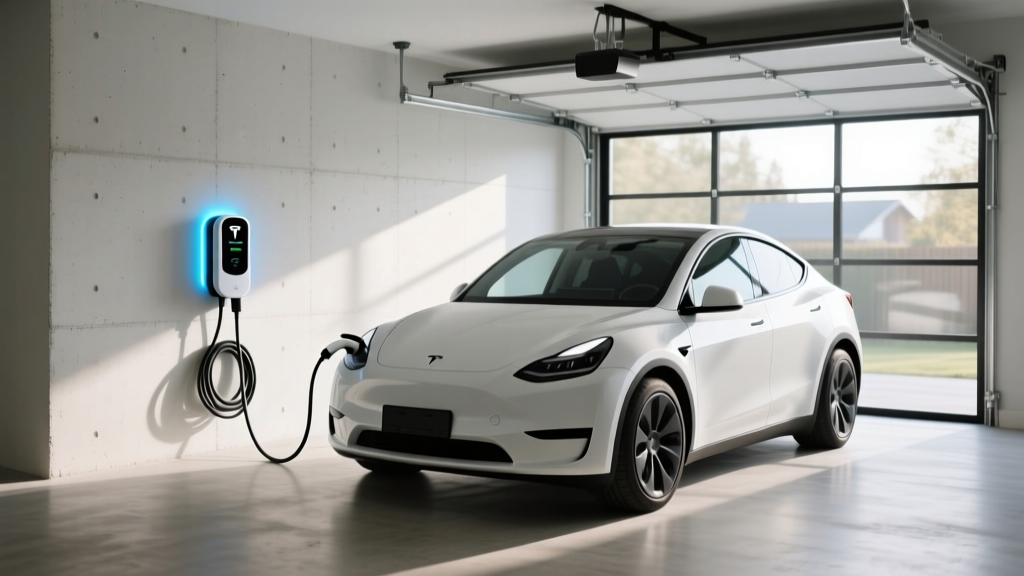
For most EV owners, home Level 2 charging is the daily workhorse. A 240V Level 2 charger delivering 11.5 kW (48A circuit) can add roughly 40–45 miles of range per hour — enough to fully replenish a 75 kWh battery overnight in about 7 hours.
Electrical Requirements
A standard high-power home Level 2 charger requires:
- Circuit: Dedicated 60A breaker (for a 48A continuous charger) or 50A breaker (for 40A continuous)
- Voltage: 240V single-phase (standard US residential split-phase)
- Wire gauge: 6 AWG copper for 60A circuits; 8 AWG for 50A
- Outlet vs. hardwired: NEMA 14-50 receptacle or hardwired junction box — hardwired is increasingly preferred for 48A+ chargers to meet NEC continuous-load requirements
Panel Upgrade Reality
Many homes built before 2000 have 100A or 150A main service panels. Adding a 60A EV circuit to an already-loaded 100A panel may require a panel upgrade to 200A, which is the single largest variable in installation cost. A licensed electrician will perform a load calculation per NEC Article 220 to determine if your existing panel can handle the added draw. Don't skip this step — undersized panels are a fire risk.
| Component | Low Estimate | High Estimate | Notes |
|---|---|---|---|
| Level 2 Charger Equipment | $400 | $750 | 40A–48A smart charger (e.g., ChargePoint, Emporia, Wallbox) |
| Electrician Labor | $500 | $2,000 | Varies by run length, conduit, wall material |
| Permit & Inspection | $100 | $400 | Municipality-dependent; some utilities bundle this |
| Panel Upgrade (if needed) | $1,500 | $4,000 | 100A→200A upgrade; not always required |
| Electrical Materials | $150 | $500 | Wire, conduit, breaker, junction box |
| Total (no panel upgrade) | $1,150 | $3,650 | Typical suburban installation |
| Total (with panel upgrade) | $2,650 | $7,650 | Older homes with undersized service |
Some utilities offer rebates of $250–$1,000 for Level 2 installations, and certain states provide additional incentives. Check your local utility's EV program page before scheduling work.
Connector Compatibility: NACS, CCS1, and CHAdeMO in 2026
The connector landscape has consolidated significantly. As of 2026, nearly all new EVs sold in North America use either the NACS (Tesla-style) connector or ship with a CCS1 port and an included or available NACS adapter. CHAdeMO is effectively legacy, found only on older Nissan Leaf and Mitsubishi Outlander PHEV models.
| Connector | Brands Using Natively | Adapter Needed for Other Networks? |
|---|---|---|
| NACS (Tesla) | Tesla (all), Ford (2025+), GM (2025+), Rivian (2025+), Volvo, Polestar, Fisker, Lucid (2025+) | CCS1 adapter for Electrify America, some non-Tesla DC stations |
| CCS1 | Hyundai, Kia, BMW, VW, Mercedes, Porsche, some Stellantis | NACS adapter for Tesla Superchargers and Revel NACS stalls |
| CHAdeMO | Legacy Nissan Leaf, Mitsubishi | Limited public availability; consider adapter or network planning |
Revel Superhubs offer both CCS1 and NACS connectors at most locations, making them broadly accessible. Always verify connector availability on the Revel app before driving to a specific hub — not every stall at every hub supports both.
Cost Per Mile: Revel DC Fast Charging vs. Home Level 2 vs. Gas
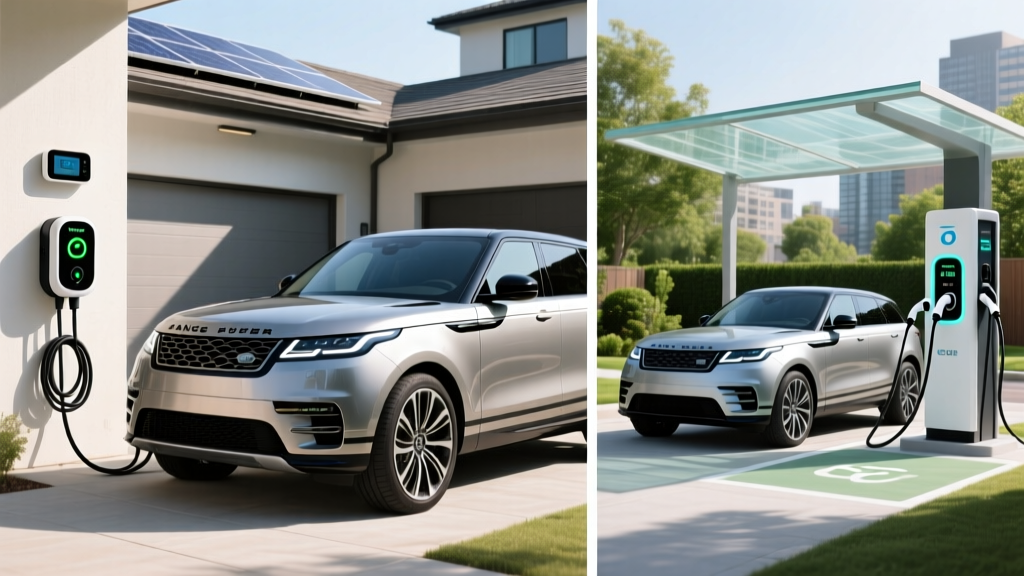
This is where ownership economics become concrete. Let's compare three scenarios for a mid-size EV averaging 3.0 miles per kWh (roughly 112 MPGe combined, typical of a Tesla Model Y or Hyundai Ioniq 5).
| Scenario | Rate | Cost Per kWh | Cost Per Mile |
|---|---|---|---|
| Home Level 2 (off-peak utility rate) | $0.12/kWh | $0.12 | $0.04 |
| Home Level 2 (blended avg rate) | $0.18/kWh | $0.18 | $0.06 |
| Revel Superhub DC Fast | $0.44/kWh avg | $0.44 | $0.15 |
| Electrify America DC Fast | $0.48/kWh avg | $0.48 | $0.16 |
| Gasoline (25 MPG combined, $3.40/gal) | — | — | $0.14 |
Recommended Home Level 2 Chargers for 2026
Based on reliability, power output, smart features, and value, here are three chargers we recommend for home installation:
Emporia Vue Level 2 Charger
- Power: 48A / 11.5 kW (hardwired) or 40A / 9.6 kW (NEMA 14-50)
- Connector: J1772 (NACS adapter included or available)
- Cable Length: 24 ft
- Smart Features: Wi-Fi, energy monitoring via Emporia app, solar integration, scheduling
- Price: ~$400–$450
- Best For: Solar-equipped homes, budget-conscious buyers wanting full smart features
ChargePoint Home Flex
- Power: Configurable 16A–50A (up to 12 kW at 50A)
- Connector: J1772 or NACS (select at purchase)
- Cable Length: 23 ft
- Smart Features: Wi-Fi, Alexa integration, flexible amperage to match circuit, ChargePoint app
- Price: ~$550–$700
- Best For: Homes with limited panel capacity (dial down amperage to match circuit)
Wallbox Pulsar Plus
- Power: 40A / 9.6 kW (NEMA 14-50) or 48A / 11.5 kW (hardwired)
- Connector: J1772 or NACS
- Cable Length: 25 ft
- Smart Features: Wi-Fi + Bluetooth, load balancing, Power Sharing (daisy-chain two units on one circuit)
- Price: ~$500–$650
- Best For: Two-EV households, tight garage spaces needing longer cable
Safety, Code, and Installation Best Practices
EV charging draws sustained high current for hours — this is fundamentally different from intermittent loads like a dryer or oven. The National Electrical Code (NEC) treats EV chargers as continuous loads, meaning the circuit must be rated for 125% of the charger's maximum draw. A 48A charger requires a 60A circuit; a 40A charger requires a 50A circuit.
- Dedicated circuit: Your EV charger must have its own breaker — never share a circuit with other appliances.
- GFCI protection: NEC 2020 and later require GFCI protection for outdoor receptacles used for EV charging. Hardwired installations may have different requirements depending on your jurisdiction.
- Outdoor rating: If installing outdoors, the charger must carry a NEMA 4 (weatherproof) rating. All three chargers recommended above meet this standard.
- Permit and inspection: Most municipalities require an electrical permit for EV charger installation. Skipping this can void homeowner's insurance coverage for electrical fires and create problems at resale.
- Utility notification: Some utilities require or incentivize notifying them before installing a Level 2 charger, as it may qualify you for time-of-use (TOU) rate plans that dramatically reduce charging cost.
Frequently Asked Questions
Can any EV charge at a Revel Superhub?
Most modern EVs can. Revel Superhubs provide CCS1 and NACS connectors, covering virtually all EVs sold in North America from 2020 onward. If your vehicle uses CHAdeMO (older Nissan Leaf), you'll need a different network. Always confirm connector availability at your specific hub via the Revel app.
Is Revel cheaper than Tesla Superchargers?
Pricing is comparable. Tesla Supercharger rates in the NYC metro area typically range from $0.35–$0.50/kWh depending on time of day, similar to Revel's $0.39–$0.49/kWh range. The difference comes down to convenience, proximity, and whether your vehicle natively supports NACS or requires an adapter.
Do I need a panel upgrade for a home Level 2 charger?
Not always. If your home has a 200A service panel with available breaker slots and passes a load calculation, you can typically add a 60A EV circuit without upgrading. Homes with 100A service or panels already near capacity (electric range, dryer, HVAC, water heater) will likely need an upgrade. Budget $1,500–$4,000 for this possibility. A licensed electrician can perform the load calculation during a site visit.
How long does it take to charge from 10–80% at home vs. a Revel Superhub?
For a 75 kWh battery (e.g., Tesla Model Y, Ford Mustang Mach-E): at home on a 48A/11.5 kW Level 2 charger, expect roughly 5.5–6 hours for a 10–80% charge. At a Revel Superhub delivering 250 kW to a compatible vehicle, the same 10–80% charge takes approximately 18–25 minutes depending on your vehicle's peak charge rate and battery temperature.
Is it worth getting a smart charger or is a basic unit fine?
Smart chargers offer scheduling (charge during off-peak hours for lower rates), energy monitoring, and remote control — features that pay for themselves within months if your utility offers time-of-use pricing. The price premium for smart vs. basic chargers is typically only $50–$150. We recommend smart chargers for nearly all installations.
Sources: fueleconomy.gov for vehicle efficiency data; National Electrical Code via NFPA 70 for installation requirements; IRS.gov for current EV incentive rules. Verify all local utility rates, permit requirements, and charger compatibility with your specific vehicle and jurisdiction before purchasing.