The federal home EV charger tax credit—officially the Alternative Fuel Vehicle Refueling Property Credit under IRS §30C—can knock 30% off the combined cost of your Level 2 charging equipment and professional installation, up to a $1,000 cap. For a typical home setup running $1,200–$2,500 all-in, that's a meaningful reduction that makes the jump to Level 2 home charging significantly more affordable. But the credit has specific eligibility rules around where you live, what equipment you buy, and how you claim it. This guide walks through the credit mechanics, real installation costs, electrical requirements, and the best chargers to pair with your EV in 2026.
How the Home EV Charger Tax Credit Works in 2026
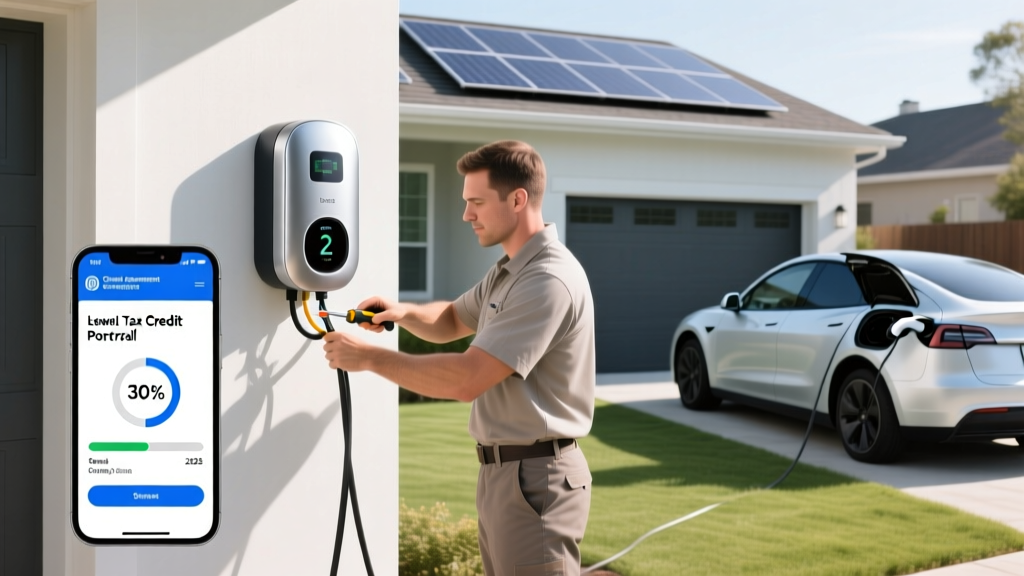
The §30C credit covers 30% of the total cost of qualified home EV charging equipment and its installation, with a maximum credit of $1,000 per tax year. This credit was extended and modified under the Inflation Reduction Act and remains available for property placed in service through at least the end of 2026. Here's what qualifies:
- Equipment: Any Level 2 (240V) EV supply equipment (EVSE) that meets applicable safety and interoperability standards
- Installation costs: Licensed electrician labor, permit fees, conduit runs, and wiring materials
- Electrical upgrades directly related to the charger: Panel upgrades, new dedicated circuits, and sub-panels installed specifically to support the EVSE
- Location requirement: The charger must be installed at your principal residence located in a qualifying census tract (rural or low-income community as defined by the IRS)
The credit is non-refundable, meaning it can reduce your federal tax liability to zero but won't generate a refund beyond that. Unlike the §30D vehicle credit, there is currently no point-of-sale transfer option for §30C—you claim it when you file your federal return using IRS Form 8911. Consult a tax professional to confirm your eligibility, as rules around census tract qualification and carry-forward provisions can be nuanced.
Charging Levels Explained: Speeds, Times, and What You Actually Need
Before evaluating equipment and costs, you need a clear picture of what each charging level delivers. The critical distinction: kW (kilowatts) measures power—the rate at which energy flows into your battery. kWh (kilowatt-hours) measures energy—the total capacity stored. Think of kW as the flow rate of a hose and kWh as the size of the bucket.
| Level | Voltage | Power (kW) | Miles of Range Added/Hour | Best For |
|---|---|---|---|---|
| Level 1 | 120V AC | 1.0–1.4 kW | 3–5 miles | Overnight top-ups, PHEVs, low-mileage drivers |
| Level 2 | 240V AC | 3.3–19.2 kW | 12–75 miles | Daily home charging, most EV owners |
| DC Fast | 400–800V DC | 50–350 kW | 150–1,000+ miles (equivalent) | Road trips, rapid top-ups (public only) |
For a typical 75 kWh battery EV (like a Tesla Model Y Long Range or Hyundai Ioniq 5), here's what real charging times look like:
- Level 1 (1.4 kW): 0–100% in ~54 hours — impractical for full recharges, fine for maintaining charge on a plugged-in PHEV
- Level 2 at 7.7 kW (32A): 10–80% in ~7 hours — the sweet spot for overnight charging
- Level 2 at 11.5 kW (48A): 10–80% in ~4.5 hours — ideal for larger batteries (100+ kWh trucks/SUVs)
- DC Fast at 150 kW peak: 10–80% in ~25–30 minutes (real-world, accounting for charge-curve taper above 80%)
- DC Fast at 250+ kW peak: 10–80% in ~18–22 minutes on compatible vehicles (Hyundai/Kia E-GMP, Porsche Taycan, Tesla V4 Supercharger)
Home Installation Costs: The Full Breakdown
The total cost to install a Level 2 home charger varies enormously based on your electrical panel's capacity, the distance from the panel to the charger location, and local labor rates. Here's a realistic breakdown based on 2025–2026 installer data:
| Component | Low Estimate | High Estimate | Notes |
|---|---|---|---|
| Level 2 Charger (EVSE) | $300 | $750 | Hardwired units cheaper; smart/Wi-Fi units cost more |
| Electrician labor | $400 | $1,500 | Depends on run length, wall type, conduit needs |
| Electrical materials | $100 | $500 | Wire gauge, conduit, breaker, junction boxes |
| Permit fees | $50 | $250 | Varies by municipality; some jurisdictions waive for EVSE |
| Panel upgrade (if needed) | $1,500 | $4,000 | Required if your panel is 100A or fully loaded; 200A upgrade |
| TOTAL (no panel upgrade) | $850 | $3,000 | Typical scenario for modern homes with 200A service |
| TOTAL (with panel upgrade) | $2,350 | $7,000 | Older homes or those adding multiple high-draw circuits |
Do You Need a Panel Upgrade?
Most homes built after 2000 have 200-amp electrical service, which typically supports a 40A or 50A dedicated EV circuit without issue. A licensed electrician will perform a load calculation (per NEC Article 220) to determine whether your panel has headroom. You'll likely need an upgrade if:
- Your home has 100A service (common in homes built before 1980)
- Your panel is already near capacity with electric HVAC, electric range, electric dryer, and electric water heater
- You plan to add a second EV charger or future high-draw equipment (hot tub, workshop)
An emerging alternative to panel upgrades is a smart load-management device (like the Span Drive panel or Sense Energy Monitor paired with compatible EVSEs). These systems dynamically throttle charger amperage when household demand spikes, avoiding the need for a costly service upgrade. Ask your electrician whether this is viable in your situation.
Electrical Requirements and Safety Considerations
A Level 2 home charger requires a dedicated 240V circuit—the same voltage as your electric dryer or oven. The specific amperage depends on your charger's power rating:
- 32A charger (7.7 kW): Requires a 40A breaker (NEC requires circuits be rated 125% of continuous load)
- 40A charger (9.6 kW): Requires a 50A breaker
- 48A charger (11.5 kW): Requires a 60A breaker
- 64A–80A charger (15.4–19.2 kW): Requires 80A–100A breaker; typically hardwired, not plug-in
Hardwired vs. plug-in (NEMA 14-50): Chargers up to 40A can use a NEMA 14-50 receptacle, giving you portability if you move. Chargers above 40A generally must be hardwired per NEC code. Hardwired installations also eliminate the risk of receptacle overheating—a known issue with some 14-50 outlets under sustained EV-charging loads. Many electricians now recommend hardwired installations regardless of amperage for safety and reliability.
Safety and code requirements to verify with your electrician:
- Dedicated circuit (no shared loads on the breaker)
- GFCI protection where required by local code (NEC 2020+ requires it for receptacle-based EVSE in garages; hardwired units often exempt)
- Outdoor-rated (NEMA 4 or 4X) enclosure if mounted outside
- Proper wire gauge: 6 AWG copper for 40A–50A circuits, 4 AWG for 60A, per NEC Table 310.16
- UL-listed or ETL-listed equipment (avoid uncertified imports—fire and insurance risk)
Connector Compatibility: NACS, CCS1, and CHAdeMO in 2026
The connector landscape has consolidated significantly. As of the 2025–2026 model years, nearly every major automaker has adopted the North American Charging Standard (NACS), originally developed by Tesla. Here's where things stand:
| Connector | Vehicles Using It (2025–2026) | Home Charger Availability | Adapter Needed? |
|---|---|---|---|
| NACS (J3400) | Tesla (all), Ford, GM, Rivian, Hyundai, Kia, BMW, Mercedes, Volvo, Polestar, Nissan (2025+), and most others | Wide: Tesla Wall Connector, Emporia, EnelX, ChargePoint, and others now offer NACS | None for native NACS vehicles |
| CCS1 | Legacy models: pre-2025 VW ID.4, some Stellantis, Honda Prologue (early builds), older BMW i4/iX | Still widely available; most J1772 chargers support CCS1 via combo plug | CCS1-to-NACS adapter (~$150–$250) for Tesla Supercharger access |
| CHAdeMO | Nissan Leaf (discontinued after 2025), Mitsubishi Outlander PHEV (older model years) | Limited; Level 2 home charging uses J1772, which all CHAdeMO vehicles accept | CHAdeMO-to-NACS adapters rare; DC fast charging access declining |
For home Level 2 charging, the connector situation is simpler than it appears. All EVs accept Level 2 AC power through either a native NACS inlet or a J1772 inlet (the previous standard). If you buy a NACS-equipped home charger, it will plug directly into any 2025+ Tesla, Ford, GM, Hyundai, or Kia EV. For older CCS1/J1772 vehicles, a simple J1772-to-NACS adapter (~$100–$150) bridges the gap. Most major charger manufacturers now sell dual-connector or swappable-tip models.
Cost to Charge: Home vs. Public vs. Gas per Mile
One of the strongest economic arguments for home charging is the per-mile fuel cost. Here's how common scenarios compare, based on a midsize EV averaging 3.0 miles per kWh (roughly 112 MPGe, typical for a Model Y or Ioniq 5):
| Charging Scenario | Cost per kWh | Cost per Mile | Annual Fuel Cost (12,000 mi) |
|---|---|---|---|
| Home (national avg. residential) | $0.16 | $0.053 | $640 |
| Home (off-peak/utility EV rate) | $0.08–$0.11 | $0.027–$0.037 | $320–$440 |
| Public Level 2 (network) | $0.25–$0.49 | $0.08–$0.16 | $1,000–$1,960 |
| DC Fast Charging (public) | $0.35–$0.65 | $0.12–$0.22 | $1,400–$2,600 |
| Gas car (27 MPG, $3.40/gal) | $3.40/gallon | $0.126 | $1,511 |
The numbers make the case clearly: home charging at off-peak rates costs roughly 70–80% less per mile than gasoline, and even at standard residential rates, you're saving about 60%. Public DC fast charging, meanwhile, can approach or exceed the per-mile cost of gas—which is why relying exclusively on public charging erodes the EV cost advantage. A home Level 2 charger is the single most impactful investment for long-term EV ownership economics.
Best Home EV Chargers in 2026: Equipment Picks
Here are five Level 2 chargers that represent the best value, reliability, and feature sets for most EV owners in 2026. All are UL-listed, support the 240V/40A–48A range, and are eligible for the §30C home EV charger tax credit when professionally installed.
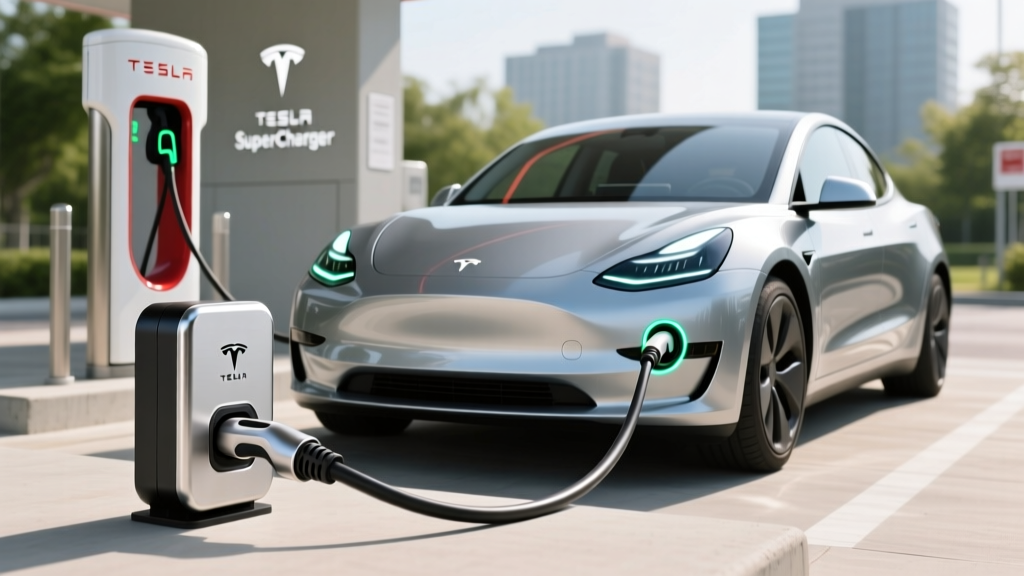
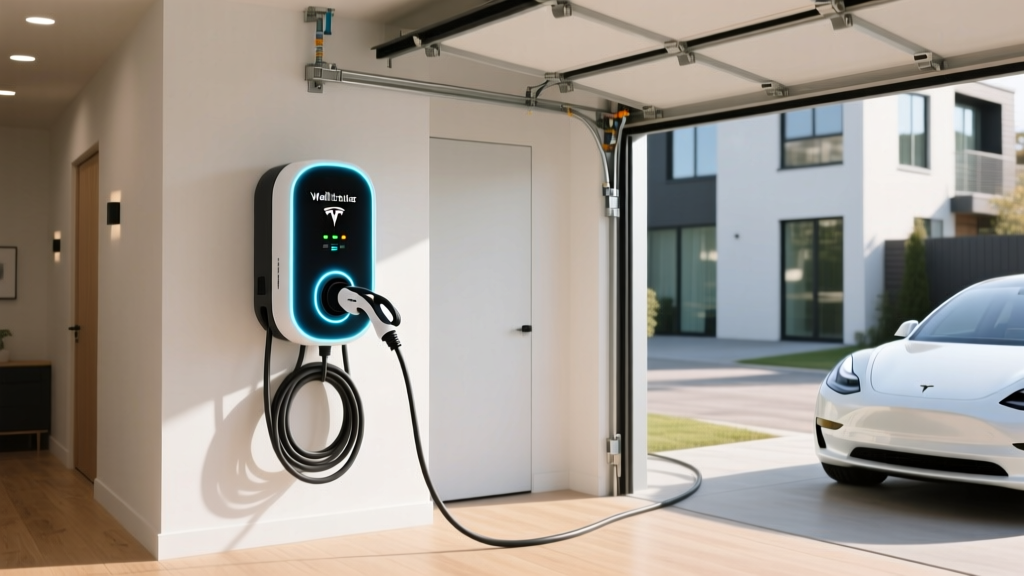
Tesla Wall Connector (Gen 4) — NACS
- Power: Up to 11.5 kW (48A) on a 60A circuit
- Connector: Native NACS; works with all Tesla and NACS-equipped EVs
- Cable length: 24 ft
- Smart features: Wi-Fi, OTA firmware updates, Tesla app integration, power sharing (link up to 6 units on one circuit)
- Price: ~$475
- Best for: Tesla owners and anyone with a 2025+ NACS-equipped EV who wants a clean, reliable, no-subscription unit
Emporia Vue + EV Charger — NACS or J1772
- Power: Up to 11.5 kW (48A)
- Connector: Available in NACS or J1772
- Cable length: 24 ft
- Smart features: Integrated energy monitoring (pairs with Emporia Vue panel monitor), solar-aware charging, scheduled charging, load management
- Price: ~$400 (charger) + $100 (Vue monitor, optional)
- Best for: Solar panel owners and energy-conscious users who want whole-home visibility
ChargePoint Home Flex — NACS or J1772
- Power: Up to 12 kW (50A) on a 60A circuit; configurable down to 16A for lower-capacity panels
- Connector: NACS or J1772 (swappable pigtail)
- Cable length: 23 ft
- Smart features: ChargePoint app, Alexa integration, scheduling, charging history, flexible amperage dip-switch settings
- Price: ~$550–$650
- Best for: Buyers who want maximum flexibility in amperage settings and a proven network brand
EnelX JuiceBox 48 — J1772 (with NACS adapter available)
- Power: Up to 11.5 kW (48A)
- Connector: J1772 native; NACS adapter sold separately (~$130)
- Cable length: 25 ft
- Smart features: Wi-Fi, EnelX app, scheduling, energy tracking, smart-home integration
- Price: ~$450–$550
- Best for: Budget-conscious buyers who want a well-reviewed unit with long cable reach
Grizzl-E Smart — J1772 or NACS
- Power: Up to 9.6 kW (40A)
- Connector: J1772 or NACS
- Cable length: 24 ft
- Smart features: Basic smart scheduling via app (Grizzl-E Smart model); standard model is non-smart/dumb charger
- Price: ~$350–$450 (Smart); ~$300 (Standard)
- Best for: Cold-climate users (rated to -40°F), outdoor installs, and buyers wanting a rugged Canadian-built unit
Claiming the Home EV Charger Tax Credit: Step-by-Step
- Verify census tract eligibility: Use the IRS §30C eligibility tool or consult a tax professional to confirm your address qualifies.
- Purchase qualified equipment: Any UL/ETL-listed Level 2 EVSE qualifies. Save the receipt and product documentation.
- Hire a licensed electrician: Get an itemized invoice showing equipment cost, labor, materials, and permit fees separately. The installation must comply with NEC and local code.
- Obtain final inspection sign-off: Your local building department will issue a certificate of completion or inspection pass—keep this for your records.
- File IRS Form 8911: When filing your federal return for the year the charger was placed in service, complete Form 8911 to claim 30% of total qualified costs (capped at $1,000).
Example: You spend $500 on a ChargePoint Home Flex, $1,200 on electrician labor and materials, and $150 on permits. Total qualified cost: $1,850. Your §30C credit: 30% × $1,850 = $555. If your total tax liability is at least $555, you receive the full credit.
Frequently Asked Questions
How much does it cost to install a home EV charger?
A typical Level 2 home charger installation costs $850–$3,000 when no panel upgrade is needed (equipment + electrician + permit). If your home requires a 200A panel upgrade, expect the total to rise to $2,350–$7,000. The §30C home EV charger tax credit can offset 30% of this cost (up to $1,000) if your address qualifies.
How fast will each charging level add range?
Level 1 (120V) adds roughly 3–5 miles of range per hour. Level 2 (240V) at 7.7 kW adds about 25–30 miles per hour, while a 48A/11.5 kW Level 2 unit adds 35–45 miles per hour depending on your EV's efficiency. DC fast charging at 150 kW can add 150–200 miles in 20–30 minutes, though the charge curve tapers significantly above 80% SoC.
Which connector/charger is compatible with my EV?
If you drive a 2025 or newer EV from Tesla, Ford, GM, Hyundai, Kia, BMW, Rivian, Volvo, or most other major brands, your vehicle has a NACS (J3400) inlet—buy a NACS-equipped home charger. If you drive an older CCS1/J1772 vehicle (pre-2025 VW ID.4, older Nissan Leaf, etc.), buy a J1772 charger or use a J1772-to-NACS adapter. For home Level 2 charging, all EVs accept AC power regardless of DC fast-charging connector type.
How much does charging cost per mile vs gas?
At the national average residential electricity rate of $0.16/kWh and an EV efficiency of 3 mi/kWh, home charging costs about $0.053 per mile. A comparable gas car at 27 MPG and $3.40/gallon costs $0.126 per mile—roughly 2.4× more. With an off-peak utility EV rate of $0.09/kWh, your cost drops to $0.03 per mile, a 4× savings over gas.
What electrical upgrades might I need?
The most common upgrade is adding a dedicated 40A–60A 240V circuit from your panel to the charger location. If your panel is already at capacity or you have 100A service, you may need a full panel upgrade to 200A ($1,500–$4,000). Alternatives include smart load-management devices that dynamically share capacity between the charger and other circuits, potentially avoiding an upgrade. Always have a licensed electrician perform a NEC Article 220 load calculation before proceeding.
Can I install the charger myself to save money?
While physically possible for experienced DIYers, self-installation carries significant risks: electrical fire, voided equipment warranty, failed home insurance claims, and code violations that may surface during a future home sale. Most jurisdictions require a permit and inspection for any new 240V circuit. Additionally, self-installed chargers may not qualify for the §30C tax credit if the IRS requires proof of professional installation. We strongly recommend hiring a licensed electrician.
Is a smart charger worth the extra cost?
Smart chargers ($50–$150 more than "dumb" units) offer scheduled charging to exploit off-peak utility rates, energy monitoring, remote start/stop, and integration with solar systems. If your utility offers time-of-use rates, a smart charger's scheduling feature alone can save $200–$400 per year—paying for the price premium within the first year. For homes with solar panels, solar-aware charging (Emporia, EnelX) can direct excess solar production to your EV rather than exporting it to the grid at lower compensation rates.
Sources: IRS §30C Alternative Fuel Vehicle Refueling Property Credit; U.S. Department of Energy / fueleconomy.gov; National Electrical Code (NEC) 2023 Edition. Tax credit rules are current for 2026 and subject to legislative change. Consult a tax professional for personal eligibility.