Understanding EV Charging Levels: Speed, Power, and Real-World Range Gains
The single most important distinction in EV charging is between kW (power, or how fast energy flows) and kWh (energy, or how much your battery stores). Confusing these two is the most common EV literacy mistake — think of kW as the width of a hose and kWh as the size of the bucket you're filling.
There are three charging levels available to EV owners in 2026. Here's exactly what each delivers:
| Level | Voltage / Amperage | Max Power (kW) | Miles of Range Added Per Hour | Typical Use Case |
|---|---|---|---|---|
| Level 1 | 120V / 12A | 1.4 kW | 3–5 miles | Overnight trickle; PHEVs with small batteries |
| Level 2 | 240V / 32A–48A | 7.7–11.5 kW | 25–44 miles | Daily home charging; primary setup for most owners |
| DC Fast Charging | 400V–800V DC | 50–350 kW | 150–1,200+ miles (equivalent/hr) | Road trips; 10–80% top-ups in 15–30 minutes |
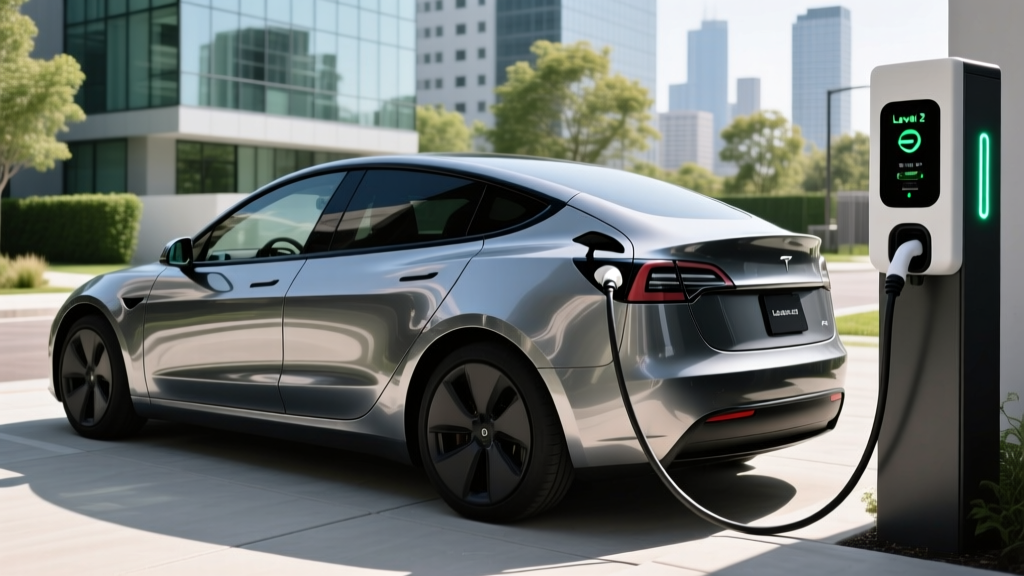
For context, a 2026 Tesla Model Y Long Range (75 kWh usable battery, ~320 mi EPA) charging on a 48A Level 2 circuit at 11.5 kW will add roughly 44 miles of range per hour — meaning a full 10–80% charge takes about 4.5 hours. On a 250 kW DC fast charger, that same 10–80% session takes roughly 18–22 minutes, though the charge curve tapers significantly above 80% SoC to protect battery health.
How Much Does It Cost to Install a Home EV Charger?
Home Level 2 installation costs vary dramatically based on your electrical panel's capacity, the distance from panel to charger location, and local permit fees. Here's a realistic breakdown based on 2026 national averages:
| Cost Component | Simple Install (Panel Near Garage) | Complex Install (Long Run / Panel Upgrade) |
|---|---|---|
| Level 2 Charger Equipment | $350–$650 | $350–$650 |
| Electrician Labor (2–8 hours) | $300–$600 | $800–$2,000 |
| Electrical Permit | $50–$150 | $50–$250 |
| Panel Upgrade (100A → 200A, if needed) | $0 | $1,500–$3,500 |
| Conduit / Wiring Materials | $50–$150 | $200–$600 |
| Total Estimated Cost | $750–$1,550 | $2,900–$7,000 |
The panel upgrade is the wildcard that shocks many homeowners. If your home has a 100-amp service panel (common in homes built before 1990) and it's already near capacity, adding a 40A or 48A dedicated circuit for EV charging may require upgrading to a 200-amp panel. A licensed electrician will perform a load calculation per NEC Article 220 to determine whether your existing panel can handle the additional draw.
Some utility companies offer rebates of $200–$500 for Level 2 charger installation, and certain states provide additional incentives. Check with your local utility before scheduling work.
Which Connector Does Your EV Need? NACS, CCS1, and CHAdeMO in 2026
The connector landscape has consolidated significantly since 2024, when Ford, GM, Rivian, Volvo, and most major automakers committed to adopting the North American Charging Standard (NACS), originally developed by Tesla. Here's where things stand for 2026 model-year vehicles:
| Connector | Brands Using It (2026 Models) | Adapter Needed? |
|---|---|---|
| NACS (Tesla-style) | Tesla, Ford, GM, Rivian, Volvo, Polestar, Mercedes, BMW, Hyundai, Kia, Toyota, Subaru | None for new vehicles; CCS-to-NACS adapters available for legacy CCS vehicles (~$200–$300) |
| CCS1 | Older model-year EVs (pre-2025), some Stellantis models, remaining inventory | NACS-to-CCS adapter needed for Tesla Supercharger access |
| CHAdeMO | Nissan Leaf (discontinued), Mitsubishi Outlander PHEV (older) | Limited public infrastructure; CHAdeMO stations declining |
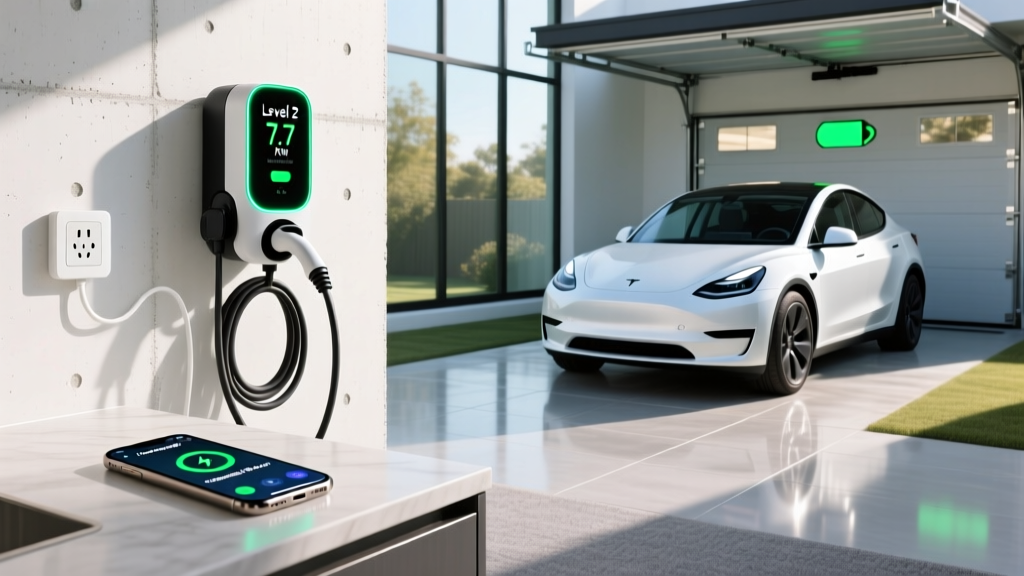
For home Level 2 charging, all EVs use the J1772 connector standard — or a NACS connector that accepts J1772 for AC charging (Tesla's NACS handles both AC and DC through the same plug). If you buy a universal Level 2 charger with a J1772 plug, it will work with every EV on the road using either the vehicle's native inlet or the adapter that came with it.
Level 2 Charger Equipment Recommendations for 2026
When choosing a home charger, prioritize: amperage (determines charge speed), cable length (25 feet is ideal for most garages), smart features (scheduling, load management), and hardwired vs. plug-in (NEMA 14-50 outlet). Here are top-tier options:
ChargePoint Home Flex
- Power: Up to 12 kW (50A), configurable down to 16A
- Connector: J1772 (NACS adapter included)
- Cable: 23 feet
- Smart Features: Wi-Fi, app scheduling, Alexa, load sharing
- Install: Hardwired or NEMA 14-50
- Price: ~$550
Wall Connector (Tesla)
- Power: Up to 11.5 kW (48A)
- Connector: NACS native
- Cable: 24 feet
- Smart Features: Wi-Fi, OTA updates, power sharing with multiple units
- Install: Hardwired only
- Price: ~$475
Emporia Level 2 Smart Charger
- Power: Up to 11.5 kW (48A)
- Connector: J1772
- Cable: 24 feet
- Smart Features: Wi-Fi, energy monitoring, solar integration, load management
- Install: Hardwired or NEMA 14-50
- Price: ~$400
Grizzl-E Smart
- Power: Up to 10 kW (40A)
- Connector: J1772
- Cable: 24 feet
- Smart Features: OCPP-compatible, app control
- Install: Hardwired or NEMA 14-50
- Price: ~$450
For homes with a 60A breaker available, a 48A charger (11.5 kW) is the maximum you should install — NEC requires circuits be loaded to no more than 80% of their rated capacity for continuous loads, which EV charging qualifies as. If your panel only supports a 50A breaker, you'll need a 40A charger (9.6 kW), which still adds roughly 35 miles of range per hour for most EVs.
Cost Per Mile: EV Charging vs. Gasoline in 2026
One of the strongest economic arguments for EV ownership is the per-mile fuel cost advantage — but it depends heavily on how and where you charge. Here's a realistic comparison using national averages:
| Scenario | Rate | Cost Per Mile (250 Wh/mi EV) | Annual Cost (12,000 mi) |
|---|---|---|---|
| Home Off-Peak (Time-of-Use) | $0.09/kWh | $0.023 | $270 |
| Home Standard Rate | $0.16/kWh | $0.040 | $480 |
| Public Level 2 (ChargePoint, EVgo) | $0.30/kWh | $0.075 | $900 |
| DC Fast Charging (Electrify America, Tesla) | $0.40/kWh | $0.100 | $1,200 |
| Gas Vehicle (28 MPG avg, $3.40/gal) | $3.40/gallon | $0.121 | $1,457 |
The takeaway: home charging on a time-of-use plan delivers fuel costs roughly 80% lower than gasoline. Even at standard residential rates, EVs cost about one-third as much per mile to fuel. The savings narrow if you rely primarily on public DC fast charging, which can approach gas-car costs per mile — though this scenario is uncommon for owners with home charging access.
According to fueleconomy.gov, the average 2026 EV achieves 3.0–3.5 miles per kWh (roughly 285–333 Wh/mile), while efficient models like the Hyundai Ioniq 6 and Tesla Model 3 Highland achieve 4.0+ mi/kWh (250 Wh/mile or less).
Charging Time Examples: What to Expect With Common Battery Sizes
Charge times depend on battery capacity (kWh) and the power delivery (kW) of your charger. Here are realistic 10–80% charge times for popular 2026 EV battery sizes:
- 60 kWh battery (e.g., base Tesla Model 3 RWD): ~4 hours on 11.5 kW Level 2; ~20 minutes on 170 kW DC fast charger
- 75 kWh battery (e.g., Tesla Model Y LR, Ford Mustang Mach-E Extended): ~5 hours on 11.5 kW Level 2; ~25 minutes on 250 kW DC fast charger
- 84 kWh battery (e.g., Hyundai Ioniq 5, Kia EV6): ~5.5 hours on 11.5 kW Level 2; ~18 minutes on 350 kW DC fast charger (800V architecture enables faster sustained charging)
- 100 kWh battery (e.g., GMC Sierra EV, Rivian R1S Max): ~7 hours on 11.5 kW Level 2; ~30–35 minutes on 350 kW DC fast charger
- 18 kWh PHEV battery (e.g., Toyota RAV4 Prime): ~2.5 hours on 7.7 kW Level 2; DC fast charging not available on most PHEVs
For daily driving, Level 2 home charging is more than sufficient. If you drive 40 miles per day, a 7.7 kW charger replenishes that in roughly 1.5 hours — meaning you can charge during off-peak overnight hours and wake up to a full battery every morning.
Electrical Requirements, Safety, and Code Considerations
A Level 2 home charger installation is not a DIY project. The National Electrical Code (NEC) and local building codes govern every aspect of the installation, and a licensed electrician must perform or supervise the work to ensure safety and code compliance. Here are the critical requirements:
- Dedicated Circuit: Your EV charger must be on its own dedicated breaker — not shared with other appliances. A 48A charger requires a 60A breaker; a 40A charger requires a 50A breaker.
- GFCI Protection: NEC 2023 (and the adopted 2026 version in most jurisdictions) requires GFCI protection for all EV charging outlets. Hardwired installations may be exempt depending on local interpretation, which is one reason many electricians prefer hardwiring.
- Wire Gauge: A 60A circuit requires 6 AWG copper wire (or 4 AWG aluminum). A 50A circuit requires 8 AWG copper. Your electrician will size wire based on run length and local code.
- Outdoor Rating: If your charger is installed outdoors (carport, driveway), it must carry a NEMA 4 or NEMA 4X weather-resistance rating. All chargers recommended above meet this standard.
- Permit and Inspection: Virtually all jurisdictions require an electrical permit for EV charger installation, followed by an inspection. The permit cost is typically $50–$250. Skipping this step can void your homeowner's insurance coverage for electrical fires.
- NEMA 14-50 Outlet vs. Hardwired: A NEMA 14-50 receptacle allows you to unplug and take your charger when you move, but some utilities and inspectors now require GFCI breakers for receptacle installations (adding $100–$200). Hardwired connections avoid this requirement and are more reliable long-term, as repeated plugging/unplugging can wear out the receptacle.
Frequently Asked Questions
How much does it cost to install a home EV charger?
A straightforward Level 2 installation with an existing 200A panel and short wire run typically costs $750–$1,550 including equipment, labor, and permit. If your home needs a panel upgrade from 100A to 200A service, total costs can reach $2,900–$7,000. Get at least two quotes from licensed electricians before committing.
How fast will each charging level add range?
Level 1 (120V) adds 3–5 miles per hour. Level 2 (240V, 48A) adds 25–44 miles per hour depending on your EV's efficiency. DC fast charging at 150–350 kW can add 150–1,200+ equivalent miles per hour, though practical sessions are measured in 10–80% charge times of 15–35 minutes.
Which connector/charger is compatible with my EV?
For 2026 models, most new EVs use the NACS connector. Vehicles from 2020–2024 model years may use CCS1. All EVs accept J1772 for Level 2 AC charging, either natively or via an adapter. For home charging, a J1772-equipped Level 2 charger works universally; for DC fast charging on road trips, check whether your vehicle has NACS or CCS1 and plan your charging network accordingly.
How much does charging cost per mile vs gas?
Home charging at off-peak rates costs roughly $0.02–$0.04 per mile — about one-third to one-quarter the cost of gasoline at $3.40/gallon and 28 MPG. Public DC fast charging at $0.35–$0.48/kWh narrows the gap to roughly $0.09–$0.12 per mile, still slightly cheaper than gas in most markets.
What electrical upgrades might I need?
The most common upgrade is a panel replacement from 100A to 200A service, needed in roughly 20–30% of older homes. You may also need a new breaker slot (if your panel is full), upgraded service wiring from the utility meter, or a sub-panel in the garage if the main panel is far away. Your electrician's load calculation will determine exactly what's needed before any work begins.
Can I charge my EV with solar panels?
Yes, but indirectly. Solar panels generate DC electricity that your inverter converts to AC for home use. Your EV charger draws from the same AC panel as the rest of your home. Smart chargers like the Emporia Level 2 can prioritize solar surplus for EV charging, ensuring you charge primarily when your panels are producing excess energy rather than drawing from the grid.
Is it safe to charge an EV in the rain?
Yes. All EV chargers rated for outdoor use (NEMA 4 or 4X) are sealed against rain, snow, and dust. The J1772 and NACS connectors are designed with safety interlocks that prevent current flow until a sealed connection is confirmed. Charging in rain, snow, or wet conditions is perfectly safe with properly installed equipment.
For the latest federal tax credit rules on EV charger installation (the §30C Alternative Fuel Infrastructure Tax Credit, which covers up to $1,000 of home charger equipment and installation costs), refer to IRS.gov guidance on §30C. Eligibility depends on whether you live in a qualifying census tract and meet specific requirements — consult a tax professional before claiming.