Why Home Charging Is the Backbone of EV Ownership
Over 80% of EV charging happens at home, according to the U.S. Department of Energy. For most EV owners, a Level 2 home charger eliminates range anxiety and cuts fuel costs dramatically compared to gasoline. But installation isn't as simple as plugging in an appliance — it requires understanding electrical capacity, choosing the right equipment, and budgeting for potential panel upgrades.
This guide covers everything you need to know: charging speeds, installation costs, connector compatibility, and equipment recommendations for 2026.
Charging Levels Explained: Speed, Power, and Range Added
EV charging operates at three primary levels, each with distinct power delivery and practical use cases. The critical distinction: kW (kilowatts) measures power delivery rate, while kWh (kilowatt-hours) measures total energy capacity. Think of kW as how fast water flows through a hose, and kWh as the total volume in the bucket.
| Level | Voltage | Power (kW) | Miles Added Per Hour | Best Use Case |
|---|---|---|---|---|
| Level 1 | 120V AC | 1.2-1.9 kW | 3-5 miles | Overnight charging for PHEVs or low-mileage drivers |
| Level 2 | 240V AC | 3.3-19.2 kW | 12-75 miles | Daily home charging for all BEVs |
| DC Fast Charging | 400-800V DC | 50-350 kW | 150-300+ miles (in 20 min) | Road trips and emergency top-ups |
Real-world context: A Level 2 charger delivering 11.5 kW (48A on a 60A circuit) will add approximately 44 miles of range per hour to a Tesla Model Y, fully recharging its 75 kWh battery in about 7 hours. For comparison, Level 1 charging the same vehicle would take over 50 hours — impractical for daily use.
Home EV Charger Installation Cost Breakdown
Installation costs vary widely based on your home's electrical infrastructure, local permit fees, and charger placement. Here's what to budget for a typical 240V/48A Level 2 installation in 2026:
| Component | Cost Range | Notes |
|---|---|---|
| Level 2 Charger Equipment | $400-$750 | Smart chargers with Wi-Fi and app control |
| Electrician Labor | $500-$1,500 | Depends on run length and complexity |
| Electrical Permit | $50-$200 | Varies by municipality |
| Panel Upgrade (if needed) | $1,500-$3,500 | Required if panel lacks capacity or space |
| Total (no panel upgrade) | $950-$2,450 | Most common scenario |
| Total (with panel upgrade) | $2,450-$5,950 | Older homes or high-power setups |
When Do You Need a Panel Upgrade?
A panel upgrade becomes necessary when:
- Insufficient amperage: Your main panel is 100A or less, and adding a 60A circuit would exceed 80% of total capacity (the National Electrical Code's continuous-load rule).
- No available breaker slots: Your panel is physically full, requiring a sub-panel or main panel replacement.
- Outdated wiring: Homes built before 1980 may have aluminum wiring or insufficient grounding that doesn't meet current code for EV charging circuits.
Pro tip: Many homeowners upgrading to 200A service also future-proof by installing a 100A sub-panel near the garage, allowing for higher-power chargers (up to 19.2 kW/80A) or simultaneous EV charging.
Connector Compatibility: NACS, CCS1, and CHAdeMO
As of 2026, the North American charging landscape has consolidated significantly, but connector compatibility still matters when choosing home equipment:
| Connector | Compatible Brands | Home Charger Availability |
|---|---|---|
| NACS (Tesla) | Tesla, Ford, GM, Rivian, Volvo, Polestar, Fisker | Widely available (Tesla Wall Connector, ChargePoint, Emporia) |
| CCS1 | Volkswagen, BMW, Hyundai, Kia, Mercedes, Audi, Porsche | Available (ChargePoint, Enel X, Grizzl-E) |
| CHAdeMO | Nissan LEAF (2011-2025), Mitsubishi Outlander PHEV | Limited; most new chargers are NACS/CCS |
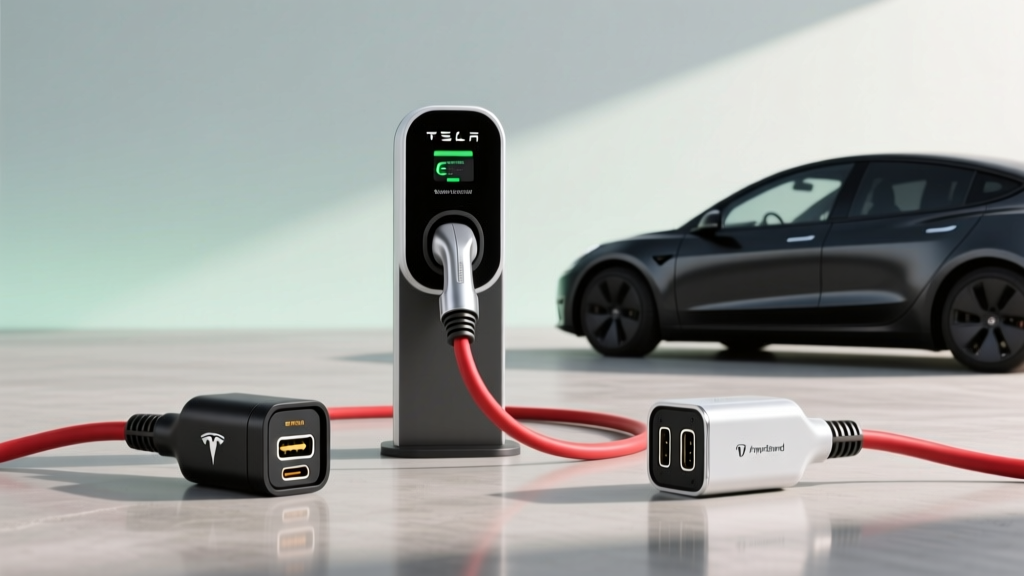
Adapter reality check: Tesla sells a CCS-to-NACS adapter ($175) for Supercharging non-Tesla vehicles, and third-party adapters exist for CCS vehicles to use NACS chargers. However, adapters add cost and complexity. For home charging, buy a charger with your vehicle's native connector to avoid daily adapter hassle.
Cost to Charge: Home vs. Public vs. Gasoline
Electricity prices vary by region and time of day, but home charging consistently delivers the lowest cost per mile. Here's the math for a typical mid-size EV (3.5 miles per kWh efficiency):
| Charging Scenario | Cost per kWh | Cost per Mile | Annual Cost (12,000 miles) |
|---|---|---|---|
| Home (off-peak rate) | $0.12 | $0.034 | $408 |
| Home (standard rate) | $0.18 | $0.051 | $612 |
| Public Level 2 (ChargePoint, EVgo) | $0.30 | $0.086 | $1,032 |
| DC Fast Charging (Electrify America) | $0.45 | $0.129 | $1,548 |
| Gasoline (25 MPG, $3.50/gal) | N/A | $0.140 | $1,680 |
Key insight: Even at standard residential rates, home EV charging costs 64% less per mile than gasoline. Time-of-use (TOU) utility plans that offer off-peak rates (typically 10 PM - 6 AM) maximize savings. Check with your utility about EV-specific rate plans — many offer $500-$1,000 rebates for smart charger installation.
Best Home EV Chargers for 2026
Based on reliability, smart features, and value, these chargers lead the market:
Tesla Wall Connector (Gen 3)
- Power: Up to 11.5 kW (48A)
- Connector: NACS (native Tesla)
- Cable length: 24 feet
- Smart features: Wi-Fi updates, power sharing (multiple units), load management
- Price: $475
- Best for: Tesla owners or households with multiple EVs
ChargePoint Home Flex
- Power: Up to 12 kW (50A, adjustable)
- Connector: NACS or CCS1 (select at purchase)
- Cable length: 23 feet
- Smart features: App scheduling, energy tracking, Alexa integration
- Price: $699
- Best for: Non-Tesla EV owners wanting robust app control
Emporia Vue Smart Charger
- Power: Up to 11.5 kW (48A)
- Connector: NACS or CCS1
- Cable length: 24 feet
- Smart features: Solar integration, whole-home energy monitoring, TOU optimization
- Price: $599
- Best for: Solar-equipped homes or energy-conscious users
Grizzl-E Smart
- Power: Up to 10 kW (40A)
- Connector: CCS1 (NACS adapter available)
- Cable length: 24 feet
- Smart features: Basic app control, durable outdoor rating
- Price: $449
- Best for: Budget-conscious buyers, outdoor installations
Safety and Electrical Code Requirements
EV charger installation must comply with the National Electrical Code (NEC) and local amendments. Key requirements:
Dedicated Circuit
Level 2 chargers require a dedicated 240V circuit — no sharing with other appliances. The circuit breaker must be rated for 125% of the charger's continuous draw (e.g., a 48A charger needs a 60A breaker).
GFCI Protection
The 2023 NEC update (adopted by most states by 2026) requires Ground Fault Circuit Interrupter (GFCI) protection for all EV charging outlets. Hardwired chargers have built-in GFCI; plug-in units require a GFCI breaker ($50-$100 extra).
Outdoor Rating
If your charger is exposed to weather, it must carry a NEMA 4 or IP65 rating for water and dust resistance. All chargers listed above meet this standard, but verify before purchasing for outdoor use.
Permit and Inspection
Most jurisdictions require an electrical permit and post-installation inspection. Skipping this step risks insurance claim denials and code violations. Your electrician typically handles permit filing.
Charging Time Examples for Common EVs
Real-world charging times depend on battery size, onboard charger capacity, and the charger's power output. Here are 10-80% charging times for popular 2026 models using an 11.5 kW Level 2 home charger:
| Vehicle | Battery (kWh) | Charging Time |
|---|---|---|
| Tesla Model Y Long Range | 75 kWh | ~5 hours |
| Ford Mustang Mach-E Extended Range | 91 kWh | ~6 hours |
| Hyundai Ioniq 5 (Long Range) | 77.4 kWh | ~5 hours |
| Chevrolet Equinox EV | 85 kWh | ~5.5 hours |
| BMW i4 eDrive40 | 81.5 kWh | ~5.5 hours |
Important note on DC fast charging: While DC fast chargers can deliver 10-80% in 18-25 minutes, charging speed tapers significantly above 80% to protect battery health. Most EVs reduce charge rate to under 50 kW past 80%, making the final 20% disproportionately slow. For daily driving, charging to 80-90% at home is optimal.
Frequently Asked Questions
How much does it cost to install a home EV charger?
A typical Level 2 installation costs $950-$2,450 if your electrical panel has sufficient capacity. If a panel upgrade is needed, expect $2,450-$5,950 total. The charger itself runs $400-$750, with electrician labor and permits making up the rest.
How fast will each charging level add range?
Level 1 (120V) adds 3-5 miles per hour — suitable only for PHEVs or very low daily mileage. Level 2 (240V) adds 12-75 miles per hour depending on amperage, fully recharging most EVs overnight. DC fast charging adds 150-300+ miles in 20 minutes but is impractical for daily use due to cost and battery wear.
Which connector/charger is compatible with my EV?
Tesla, Ford, GM, and Rivian use NACS connectors. Most other brands (VW, BMW, Hyundai, Kia) use CCS1. Nissan LEAF uses the older CHAdeMO standard. Check your vehicle's charge port or owner's manual, then buy a charger with the matching connector to avoid daily adapter use.
How much does charging cost per mile vs gas?
Home charging at standard residential rates ($0.18/kWh) costs about $0.051 per mile — 64% less than gasoline at $3.50/gallon and 25 MPG. Off-peak home charging drops this to $0.034 per mile. Public DC fast charging is more expensive ($0.129/mile) but still competitive with gasoline.
What electrical upgrades might I need?
You'll need a panel upgrade if your main service is under 200A, your panel lacks breaker slots, or adding a 60A circuit would exceed 80% of total panel capacity. Older homes (pre-1980) may also require wiring updates to meet current grounding and safety codes. A licensed electrician can assess this during a site visit (typically $100-$200 consultation fee, often credited toward installation).
Final Considerations Before You Install
Home EV charging transforms ownership from a logistical challenge into a convenience advantage. Before scheduling installation:
- Get 2-3 electrician quotes — prices vary significantly, and some offer EV-specific packages.
- Check utility rebates — many utilities offer $300-$1,000 for smart charger installation and TOU rate enrollment.
- Consider future-proofing — installing a 100A sub-panel now costs $500-$800 more but allows higher-power chargers or a second EV later.
- Verify federal tax credit eligibility — the Alternative Fuel Vehicle Refueling Property Credit covers 30% of charger and installation costs (up to $1,000) if you live in an eligible census tract.
With proper planning, a home charger pays for itself within 2-3 years through fuel savings while adding convenience that public charging can't match.